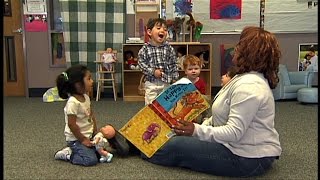
Community care licensing sets minimum teacher-to-child ratios for child care centers. Infants need one teacher per four children, toddlers one per six, preschoolers one per ten, and school-age one per fifteen. The video explains when aides count toward ratios and why centers should exceed minimums for safety.
Questions this video answers
One fully qualified infant teacher for four infants (1:4).
One fully qualified teacher supervises aides; each teacher or aide is responsible for the direct care and supervision of a maximum of four infants.
One fully qualified teacher for six children (1:6) with a maximum group size of 12 children and two teachers or one teacher and one aide.
One teacher visually observing and supervising a maximum of 12 children (1:12).
One teacher and one aide for every 15 children; alternatively, one fully qualified teacher and one aide for every 18 children is allowed (with the aide under direct teacher supervision).
Chapters
Community care licensing requirements about teacher to child ratios are intended to ensure that every child is monitored by a qualified adult at all times. In this video, we will address the minimum adult to child ratios required for child care centers. There are different licenses for child care centers, including infant, preschool and school age facilities.
Minimum teacher to child ratios are necessary to protect the health and safety of children in child care centers.
These teacher to child ratios are also designed to provide the developmentally appropriate support children of different ages need from infancy to school age.
Licensees should also consider ways to increase staffing beyond the minimum requirements to promote positive adult child relationships and high quality learning experiences for children in care.
Maintaining adequate ratios can be complex, particularly during transitions and daily routines. Licensees need a clear plan for handling these situations.
You are encouraged to view the video on supervision for a more complete understanding of the requirements and how to maintain proper supervision throughout the day.
What are the licensing regulations regarding the minimum ratio of teachers to children?
If you're happy and you know it, roar out loud.
Teacher to child ratios are based on a number of variables, including the number and ages of children in your care and the nature of the care you're providing at any one time, such as nap time or outdoor play.
In addition, it is important to note the difference between a teacher and a fully qualified teacher when determining your ratios. A fully qualified teacher has completed additional training and education in accordance with licensing requirements. Now let's look at the minimum or baseline ratios needed for each age group. Infant centers serving children from birth to age two need to have a minimum ratio of one fully qualified infant teacher for four infants.
In a room with more than four infants up to a maximum of 12 infants. There must be one fully qualified teacher responsible for the direct care and supervision of a maximum of four infants. In addition, that fully qualified teacher supervises aides with each aide responsible for the direct care and supervision of a maximum of four infants.
If your preschool center or infant center has been approved by Community Care Licensing to offer a toddler component, you must have the following In a minimum ratio of one fully qualified teacher for six children and a maximum group size of 12 children with two teachers or one teacher and one aide.
For facilities serving preschoolers or children over 24 months of age, there must be a minimum of one teacher visually observing and supervising a maximum of 12 children at all times.
The licensee may use teacher aides in a ratio of one teacher and one aide for every 15 children in attendance.
However, a ratio of one fully qualified teacher and one aide for every 18 children is allowed.
The aide must work only under the direct supervision of a teacher.
During nap time. The ratio can be adjusted to one teacher or Aiden supervising 24 napping children as long as there are enough teachers immediately available to meet the overall ratio. For school age programs serving children enrolled in kindergarten and above, a teacher shall supervise no more than 14 children and with an aide up to 28 children.
These ratios are intended as minimum required standards for health and safety. You may choose to increase your teacher to child ratio in order to better provide both small and large group activities for the children. Increasing these ratios also allows for more one on one time with individual children.
Which adults can and cannot be included in the teacher to child ratio. As described previously, teacher aides may be included in the ratio when certain conditions are met, including direct supervision by a teacher. The center director can be included in the ratio if actively engaged in teaching children. However, adults who provide clerical or custodial services do not qualify to be in the teacher to child ratio. This information is especially important to keep in mind as you develop a backup plan for teacher absences.
Children need adults to protect and care for them. As a child care center licensee, you are required to have enough teachers and aides present to provide for these needs. Let's review some key points about teacher to child ratios and centers. Minimum teacher to child ratios are dependent upon the ages of children in care. For infants, the minimum ratio is 1 to 4, for toddlers 18 months or older, the minimum ratio is 1 to 6.
For preschoolers the minimum ratio is 1 to 12.
And for school age children the minimum ratio is 1 to 14.
Ensuring that qualified adults are present is critical to the safety of the children and it's important to develop a backup plan for teacher absences so that the minimum teacher to child ratios are always maintained.