The AI Revolution Call
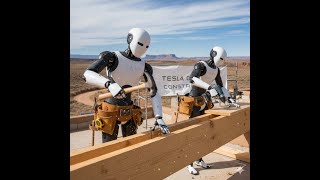
Cody Willard, Bryce, Craig, and AI expert John D. Oliveira discuss humanoid robots, Tesla's Optimus and chip strategy, TSMC's constraints, and space-based data centers. They weigh how AI and robotics could expand global output against skepticism about early hardware startups and timing risks.
Questions this video answers
Most Mondays at 5pm Eastern / 3pm Mountain.
Chapters
Evolution call. I'm Cody Willard. I run a couple of funds that invest in technology. Things like the AI revolution. That's Bryce, he works with me. Craig works with me. John D. Oliveira is An I, an AI expert. Worked in the industry for 30 plus years. It's 29 years. 28 every time I say 27.
98 to 25. Who's counting?
You know, roughly.
Roughly. I suppose John is counting at any rate. Yeah. So we get here on Mondays. Most Mondays at 5pm Eastern, 3pm Mountain. Bryce, Craig and I are all in New Mexico. Our funds are based in New York slash Abu Dhabi. Is that right, Bryce?
Yeah.
So we're global. Anyway, so is the AI revolution. Abu Dhabi is investing hundreds of billions in dollars and building their own sovereign AI. The UAE collectively is at least. And anyway, let's talk AI revolution. Tesla reported earnings. What else we got this week? We've got humanoid robots. Just continuing to. Let's say this xpang rolled out this incredible. Do you guys remember what it was called?
What their humanoids called?
Yeah, it's a cool name actually. But they rolled out an incredible humanoid. At least how it walked. It looked humanistic, not humanoid.
Yeah, they had to cut off a piece of the. The cloth on stage to prove it was a robot.
Yeah, it's. I didn't realize how unhuman the others were.
Exactly, John.
Now unhuman until you see this thing.
Yes. And you're like if you can pull up the clip, that'd be great to.
Show it it's got a spine or something.
Craig, while Bryce is finding that clip, Craig, will you find the cheesy silly robot that I put a $500 deposit down on that I don't think is ever going to be delivered?
I'll find. I'll find the Neo for you.
The Neo. Yeah. So look, I mean the fact is even right now, core weaves reporting earnings. The numbers were really good on the report. They're probably giving their guidance right now on the conference call as we are not on it because we are here for you guys. No, just kidding. But it's not like we're going to trade it after hours anyway. But guidance will be interesting. But look guys, I mean the fact is that all of the earnings come the companies in AI especially the hyperscalers who are really the ones who are driving this AI revolution. Building the platforms along with OpenAI to deliver AI to the masses over time. We're still in the dial up Internet phase of the AI revolution. It's still very early. This is the look at the way she like that looks like a person.
Yeah, it's like they're just faking it. You know, there's a little stutter in it which you feel like is like some person pretending to be a robot.
It's getting closer though. It's just amazing to see that. And this is just yet another. It's actually an EV company that's copying Tesla. I mean everyone just most EV companies, most vehicle companies, you know, follow Tesla's lead until they decide that they can't sell AI cars at a profit. But look, you know, this is really interesting to see. You can stop now, Bryce.
They said that they were going to do a vision Only Robo Taxi 2.
Getting rid of LiDAR, which is Tesla's playbook. Tesla got rid of LIDAR and radar on the full self driving stack five years ago, six years ago. It's been a while.
The. Yeah. Then some of the Model S's have radar or something on them and they end up turning them off. Yeah.
Craig, you got the other video and you're muted. Craig, you'll need to unmute yourself.
Yep. So this is the Neo. This is the.
This one does not look like a huge. Oh yeah, right there. No, right there. Yeah, you can tell where everybody's rewound it.
Yeah, there you go.
And this looks, this looks stupid. It is stupid. This will never be delivered. I put a 500 fully refundable credit purchase in there just in case because, you know, I mean, my job is to play with this stuff. But they look, if they, if they ship this Neo thing, it's going to be like you're going to have to allow some tele operator human being to see inside your house in order. It's just guys, I mean, and this is, I guess maybe the point here should be. And we'll talk more about Tesla's earnings.
Here in a moment.
Right. Bryce wrote a fantastic review of the. Not just earnings, but more importantly, last week they did the shareholder meeting. And you like, the amount of compute and platform building that Tesla has already built for the Optimus robot is worth, you know, upwards of tens of billions of dollars. And the platform uses the same, it's the same AI stack that they use for the Robo Taxi itself. And so it's not like they're starting from scratch. Whereas, you know, some random startup called Neo that's on Twitter trying to get 500 pre orders so they can spend that money. And you know what I'm thinking about? It might never get that money back. They're not that Money's not going to be like the company's gonna be gone in a year, man. Like it's silly. Now figure AI of course, is another one, Brett Adcock, who we do not have any faith in, but they've done some amazing stuff. Bryce, what was the name of that humanoid robot that someone was building that actually looked like it had flesh and muscles?
Yeah, it does. It's like it has real muscles, basically.
Yeah, I haven't seen an update on that one in about six months. But the one of the interesting. The reason we're talking robotics proto clone.
I've only seen the one hanging from a hook.
Yes, that one. The one hanging from a hook. Looks like it's creepy Rocky movie. Looks like Rocky could be practicing his punt his rib punches on it.
Yeah, yeah, creepy. Yeah.
So wild.
None of these robots would exist without the AI, LLM and physical AI platforms that Tesla's building. John, you sometimes explain the difference. Like Tesla's using Nvidia chips, which are the same chips for the actual processing of the video feeds that it's using to train its robots. It's using the same Nvidia chips that open AI or Microsoft use to build LLMs. But the robots are not using LL limbs.
They can but just for the part of communicating with them, but the other. Yeah, they're using like VLMs, like or VLAs Vision Language Action model, which is like it'll take, it'll take what it sees, it'll take language and it'll have that connected or mapped to you know, what actions can be taken. So but it's still. So yeah, same chip underneath because they both rely on heavy duty tensor processing or like arrays that are multi dimensional, you know, being computed very rapidly. And that's what they, that's what they all need.
So Price, you wrote an article maybe two years ago that explained how GPUs are like one military progression versus a CPU, which is what we use on our computer is like a line. So would you remember that analogy? Would you bring it up here?
Yeah, it's just the difference between parallel processing and sequential processing, which a CPU does sequentially. And it can do a lot of complex things and execute complex instruction sets. That's what ARM and risc and those things are instruction set mechanisms. You have all these different things like and, or if. But find all these things that you can tell the computer to do. And that's really helpful. But you don't really need all of that to do deep learning large language models where you have basically if you can Just boil it all down into tokens and do various vector based matrix math. You don't need a bunch of instructions. It's all the same stuff. And so you just process a bunch of data in parallel across a whole bunch of CPU or GPU cores rather than doing them sequentially. And so it can be done much faster because it's actually a very simple.
Calculation and you can do billions simultaneously if you wire it up all together.
Well, there's a great video of Mythbusters where they explain this using like a page painting the Mona Lisa. So they use a CPU to paint the Mona Lisa and like it, it does every single piece, but it has to do it in a certain order. And then it uses a jeep, like a GPU style to paint it and it goes. And it's all at once.
So yeah, and, and you know what the finished product is supposed to look like. But if you can do it in parallel, obviously you get it done 100 times, 200 times faster or something.
Right.
So, John, obviously though, there's Tesla. When it's interacting, when it's programming the VLAs, is it still using CUDA Nvidia software interface?
I think so, because that's at the level of where the stuff is in common. Like, I haven't seen it in use with the VLA kind of model, but I assume it is, you know, it probably is.
So, I mean, I know that Nvidia has specific CUDA libraries for autonomous driving. I don't know that Tesla uses those CUDA libraries or if they do it.
Themselves with, you know, and Bryce, do they not? Also, over the last few years they've developed CUDA libraries for humanoid robotics too.
Yeah, they've got like hundreds of libraries now for different things. And yeah, robotics is, they have several robotics libraries.
While we're on the chip side of things talking Nvidia, Nvidia, amd, Tesla, everyone who designed Google, anyone who designs their own chips. Almost, you know, 99 of those chips are made by Taiwan Semiconductor in Taiwan. Presently they were starting to scale the US side of the manufacturing. That works extremely well, but it's not there yet. Tesla. On the shareholder meeting, Elon got up and talked about a lot of things. One of the things I loved best, I've always loved best about Elon, is his just willingness to talk and not have a script and hide behind bureaucracy and boards. And like the very first question, someone got up and they're like, hey, Elon, it's great to have won the lottery and be here inside the gigafactory. With a few hundred other shareholders. But can we not do this somewhere that we could bring. We could do bigger. It could be bigger than Berkshire Hathaway. We could have 100,000 people attend. And Elon me, yeah, it's actually a great idea. We can do it at like the Austin Football Stadium or at and T stadium in Dallas or something. And I would assume at least one of the three of us who work at my funds will go next time if we can, because it might even still be a lottery. There might be more than 100,000 people that want to go. But you'll probably. We'd probably be able to get in at any rate, you know, that's great. And then the other thing that Elon got up on stage and riffed on a little bit was that he's literally dreaming chips now. He said he could basically riff off the top of his head the new AI5 chip that will go inside of future Robo taxis. Probably in the next few months, they'll start rolling out the AI 5. But as they plan to scale humanoid robotics, the Optimus robot, to hundreds of millions of units in the next five to 10 years. It sounds amazing to even say that number, but if they're talking about scaling that, you know, he's already picturing where the bottlenecks and constraints will be. And he said on the call that Tesla focuses on the constraints. And that's what they've always done. They thought lithium would be constrained a couple three years ago as all the other EV companies and car companies got into EVs. And so they built a lithium field and mining and refining operation. And they're about to turn that on. And sure enough, you need lithium right now. And thank goodness they've got that. And so he's picturing said he's going to build a Terrafactory, which would means that they could make hundreds of millions of Optimus chips in of their own and not have to depend on Taiwan Semiconductor. Side note, I did predict this to Bryce maybe six or nine months ago. I don't know why I didn't write about it, but it would be nice to have had that in print. But I'm not surprised because they're, you know, like Taiwan Semiconductor is the constraint on the AI revolution right now. Energy a little bit, but you could kind of get more energy quicker than you can get more chips, even as it takes a long time to turn energy on too. But it's easier, it's a lower bar and obviously not nearly as sophisticated to turn heat some variation of energy into Electricity and so it's. It. I don't know just thoughts on that guys. I mean Tesla's going to build their own chips.
I was watching some something about Samsung's plant almost not making it the one in Tyler, Texas and now it's got a new lease on life because Tesla came along and made a deal for making a 7s there which will be 2 nanometer chips and I suppose they're going to go in, you know everything.
Yeah, that's. He mentioned that on the call too that they've contracted. I've obviously have a long time been customers of Taiwan Semiconductor. They did a deal with Samsung recently so they can scale the chips for the robo taxis but Samsung doesn't have the capacity to do hundreds of millions of chips. Bryce, what was the number? It's like 10 million wafers of per.
Month was the goal 1 million wafer.
Starts or off by an order of magnitude.
Taiwan does a million and a half right now across the whole company. Yeah so it's almost building. You know it's two thirds of Taiwan Semiconductor would be a huge thing.
Let me ask quick question John. Do you have more faith in Tesla delivering a million high tech small chips in five years or Intel? Bryce.
I would do Tesla.
Craig, I, I can't go against Bryce.
Yeah, he absolutely can. For the record, at all times we have to be free independent thinking analysts.
Absolutely.
But Bryce doesn't know his.
So when it comes to Tesla, you know it's really.
You can't go against Elon. Like I love me some price but it's Elon you're betting on here.
John, go ahead.
Sorry I say trick question but Tesla, but I think in other words Tesla's not making it right. They're. They're promising it and making it, making it happen via the ones who.
No, no John, they're literally talking. They're going to build their own fab. It will be a Tesla owned and controlled and chips that make exclusively for Tesla.
Okay then I have to put a time frame on it.
Five years.
It's. It's tough. I mean I know you can't bet against Tesla but the thing I just watched this documentary on how these factories, what they go through and it's unbelievable and I know he could do anything right but this is like the stuff you go through to make one of those places work is crazy.
But John, you actually I'm glad you said that because you underscore the question, the reasoning behind the question. It is incredibly effing hard to deliver to build a Fab that can build advanced chips and to build it to scale to do a million chips a month. So that's why like intel hasn't like they've been trying for five years and they can't get it done. And now the US government has got it.
Yeah, I'll go with, I'll go with Tesla over them. But so agreed on this, this one like this one plant, this, the Samsung one. They every plan has a different problem based on like where it's located for them. They had a thing where they had to make sure they get rid of all like vibrations and so you know the, the like pylons where you make.
A.
Whatever circular hole in the ground going down to, to solid rock kind of they went way down hundreds of feet with 20,000 holes that, that, that they attached to rock below like 20,000 of those to get the underneath that whole plant.
That's what for the stability reasons.
Like a train going by five miles away causes such a slight little vibration that it moves an atom and it causes you to lose a yield.
Speaking of which, I didn't think about this Bryce. The first Terrafab will probably be on planet Earth. But the first semiconductor fab in orbit will, that's my ringtone will be in orbit. It'll be by Tesla in orbit, sent up by SpaceX before you get to.
A semiconductor fab in space which is going to be double extremely hard. Although there'd be some reasons.
It's even like because you underscore the reason main reason why is because like there's no vibrations, there's no dust. Like it's a perfect. But I know where you're going with this data.
But it also involves right now anyway it involves you know, 50 million gallons of water per day or something. So it's you know, insane all the stuff that goes into it. But I was going to say there's the, the Google thing right now that was also what comes first is it is a data center or a supercomputer in space. And that's getting talked about and for.
The record we are in print on that one maybe a year ago talking about that it's you know, there's going to be, there will be data centers in space in orbit. That the thing, the misconception that most people have is that because space is so cold it like you'll be able to run the data centers without all the cooling that is required here on Earth. But the flip side is that it is actually the atmosphere and the air itself that dissipates the heat and radiates the heat effectively. And without that air in space, in the vacuum of space, the radiation is actually inefficient. But they do. They can build these incredibly complex loops on these giant solar arrays that will have data center servers inside of them. And it will work. It's just. It's not as straightforward and easy as Kelvin It. Therefore, there's no heat. There's still.
There's a lot. Yeah, there's a lot to be worked out. And how about there? Aren't there three Chinese astronauts in space right now stranded on the Chinese space station because they got hit with some shrapnel of all the stuff flying around in orbit kind of thing?
I did not see that news. I'm surprised it wasn't on my feet.
In the last week or so. And it's like, so I wonder about these things, whether, you know, farther out.
You know, you know, I built a cryptocurrency dedicated to cleaning space debris because it is already a problem and it has nowhere to go but get worse unless we can figure out a way to start making it better. For the record, Elon has talked about the idea of taking starships and opening up a chute and going around and capturing all the space debris and then sending it off into deep space where someday we'll run into it in a another ship. I guess we're like doing this serious.
Well, the farther you get from the planet, the more you head toward infinity in terms like the amount of space that there is around.
You know, that's one of the things that I like to like to counterpoint to the concerns and even the reality of space debris is that picture how many boats there are in the ocean right now and how rare it is that two of them actually collide because there's a lot of space and then you can actually take it and you got an almost infinite number of planes. Yeah, you know, I mean, it's obviously by distance, but whatever, you know, every 10, let's call it every 50 meters is its own plane. And you've got miles and miles of planes before you go from low Earth orbit to mid Earth orbit. We're a little bit off track, but we're not really, because the AI revolution enables the robotics revolution. The robotics revolution, believe it or not. And Elon has finally started talking about this, which we also have been talking about for a couple of years. The Optimus robot is what's going to build the infrastructure for humans to go visit the moon and Mars. We won't. You're not sending people to Mars until humanoid robots have actually built some infrastructure.
That's the thing I've been saying for like since the beginning of the whole Mars things thing was number one, thank you, but no thank you, I don't want to go number two because it's like the level of risk for, for, for a long time to come is very, very high. But number two is of course put the robots out there first, you know, let them go build a nice comfy shopping mall. And you know, so when you, by the time you land in there, it's like, it's all just nice the, you know.
Yeah.
And now they talk about it.
You know what Elon says about Mars? He says he hopes to die on Mars, but not on impact.
Yes, right.
Yeah.
One clarification on the number that 1 million wafer starts is the number of 12 inch wafers. And each wafer has like 200, 300 chips on it. So we're talking about hundreds of millions of chips.
Yeah, I did say wafers, but I'm glad you clarified what that meant. So. And I didn't actually know the actual number.
Another thing, now that you talk about that, which is there's sort of, you're talking about the demand for just unbelievable supply. Like just make that, just get the supply coming because we just need endless supply. And that is true, it seems on the side of these AI models, whether it's anthropic, OpenAI, whatever, they have a voracious appetite for more processing. Whatever they get, they seem to be able to turn it into money. And so their latest deal is and.
Into practical real world AI. I mean again, the thing is that it doesn't get implemented overnight, but you're turning on feature sets and capabilities in the AI, LLMs and agentics and agents and everything else that eventually will be turned on by Coca Cola, UPS, Netflix, TikTokers, etc.
They're all working on it. And so put that step in between, which is first is the, the model suppliers turning chips into money. You know, like they get more and more chips and they have more and more tokens flowing and they're making money off of those tokens flowing. And then the tokens flowing is for those companies that are trying to do something with it to turn it into value. And it's having some success, but we'll have more, guaranteed they will have more success. And so there's that whole thing going on. And so you have like, what was it last week OpenAI with I think aws, they had to deal with Them for, you know, Bryce can tell us, you know, some ton of, of data center capacity. But ultimately what they're doing is it's just another way for them to buy Nvidia chip. Yes, indirectly.
John, it's interesting you underscore something, right, that it's like the price per compute unit is going to continue to decline on a exponential scale. Yes, the price per unit of energy is probably going to slowly, on a much smaller exponential scale, grow. But the price per token, therefore, is a, is going to plummet over time. The cost, I should say the cost per token is going to plummet over time. The capabilities of what you can do as the cost plummet because you're able to use trillions or what quadrillions of tokens to do some AI thing five years from now would actually probably depending on what that actual service that you're providing with that token processing is going to like. You can see how the model sort of scales over time where the LLMs and the hyperscalers and the cloud providers, the NEO clouds, the core weaves, all of them, over time will see their profitability per unit of computer rise because the pro, the unit of compute cost drops on a much faster scale than the energy rises.
Yeah.
You know, something I think that we gloss over and we probably ought to spend a minute on and then we can even wrap things up after this discussion. It'll probably be 20 minutes, if I had to guess. You know, there's a lot of talk about the AI bubble, and we've spent a lot of time talking about why we don't think it's a bubble. And you know, we're aware of quantum bubbles and bubbles in other sectors, but AI and robotics and space over time have so much more upside. And there's trillions of dollars of value that will be created. You have to make sure you're not in frauds and grifts and failures, but you're going to want to be exposed to these trends. And the reason we talk about this stuff, and the biggest mistake I've made in my career over and over is doubting the size, just how big this stuff really gets. And Elon a couple years ago, Sam Altman scam Altman, whatever you want to call them, they've talked about over time that it could get to a point where humans don't even need to work. The amount of robotic services and production and goods that are made with robots and the amount of interaction and data moving and reconciliation of numbers and checking like rope AI is going to make everybody 10 times more productive in the next 5 to 10 years. The white collar people robotics makes manual labor 10 or 100 times more productive over the next 5 to 15 years. Space opens up almost infinite growth of building more stuff that enables you to build more stuff, cheaper, better, safer, et cetera, including drugs, semiconductors, the aforementioned semiconductors, data centers, tourism, et cetera. I'm very cognizant of not wanting to come across as a blind permeable. But my brain really does explode when I picture the prosperity potential over the next one to two decades. Shorter the amount of time than I've been on Wall Street. I've been. I moved to New York in 96, so almost 30 years I have lived and breathed stocks and technology stocks specifically. And over that time frame it's been incredible. Like the gdp of the US economy is up 10, 12, 14 fold over that time frame. The amount of trillions of dollars that have moved around that you could have gotten your buckets in and built yourself wealth over that time frame is absolutely mind blowing and as bullish and excited and as a revolutionary believer in technology as I've been and I've written these things, but I could have been just bigger. I could have never sold anything. I could have believed in all of it. And I just wonder. We probably ought to just picture like acknowledge it is possible like much bigger chance than zero. Whether it's 1% or 10% or 50%, we could debate. But there's better than a 0% chance that the entire global and solar system economy, the entire gala galactic economy before my death, in 30, 40, 50, 60 years, whatever that number is, that it's measured in hundreds of trillions of dollars, I just. That's mind blowing and it. Look, we have to hope and, and that the free market, mostly free market systems that under which that is built enables it to be widely dispersed. So the poorest people in Africa, not to mention in Detroit and in Carrizozo here where I am right now, so that the poorest people in these areas are not hungry, that they're not wanting broadband, that they're not wanting AI infrastructure access, that it's widely dispersed in the whole, you know, we have tens of billions of human beings who are benefiting from the hundreds of trillions of dollars of economic activity 20 or 30 years from I don't know, just some deep thoughts that's all set up now you guys. You can riff on it if you want.
I just put, I put a slightly cold wet blanket on the timing of it based on humans ability to screw things up and thereby to kind of dampen the speed at which things could otherwise happen for whatever reason that we go get involved. Like I heard Karpathy, Andre Karpathi in some interview a couple weeks back and.
Tell everybody who Andrew Kaparthy is one.
Of the, you're like a former founder at Open AI. He worked at Tesla before that. And so one of the leaders, you know, super smart and just though I think people took him to being more bearish than he really was, I didn't think he was really putting the whole thing down. But he, but he was talking about a slower takeoff for the reason of, you know, maybe weakest link kind of thing. Like things have to go through bottlenecks and, and we humans seem to have bottlenecks all along the way for the implementation of stuff. So I, I, that makes me wonder.
About 20 or 30 years. I'm not like next year. I'm not like by 2030, I'm saying by 2050, by 2060. Yeah, the Galactic economy could be measured in tens of hundreds of trillions of dollars versus right now 100 trillion. It could be, yeah, a quadrillion dot more than that actually. So it's already 100 trillion the globe. The galactic economy could be a hundred x that.
Yeah. So ten quadrillion that the I okay, I agree. And it goes with the saying if you're, you're on the, the right side of the saying that, that, you know, people say that people overestimate what's going to happen in the next few years and underestimate what's going to happen in, in the longer term. And you are talking about the longer term and you're not underestimating and you're probably, you know, right about where, where that lands. But then you get into the one. My father used to tell this joke. Somebody would, he says, you know, this guy giving a speech at a science conference, whatever. And the person in the audience raised his hand and gets up and he goes, I've done the calculations and the entire world is going to be destroyed in 1 billion years. And the person who up giving at the front says, hold on a second, what did you say? Person repeats it and he goes, oh, I thought you said a million years. So like when you talk about like you know, 40 years from now, too many people are like, who cares? Like, I can't relate to your 40 years.
But literally over my lifetime, my, all of my life, all of my, my, all my assets are because I rode the revolutionary tech trends as they happened and I would have benefited Better if I just wouldn't have doubted it ever.
Yeah.
John. I mean Craig Bryce.
Yeah.
Just, just to add some nuance to, to that because I know in the beginning you said you didn't want to seem. And nobody thinks you're a blind permeable because you know, we know that there's transition periods with all this stuff. We're seeing some of it now with layoffs and different things. But I, I would like to say that the transition periods for the next 20, 30 years, you know, as we get going, there's going to be a lot of interesting things that happen to make all this happen. Like the unions are not gonna like, you know, in many moons ago I was in the ibew. I can only imagine what a Chicago IBEW guy is gonna say when a robot pulls up to a job site. You know, I think that's going to be an interesting thing politically. It's going to be some back and forth.
Just have diminished so much and they really don't have any political power anymore. I don't know. Like I, I'm, I'm not an anti union guy. I was on Fox Business and I almost a hardcore libertarian paradigm kind of thinker and I'm fine with private unionization of employees and people. But the political power of the unions has already diminished so much and it's not like it's about to come back or something. I mean, I guess there could be a pendulum swing and I could be.
Wrong about that, but I think that's where I'm coming from is the potential for a pendulum swing based on just everything. You know, in the super short term, but I mean the long term, you know, who knows. But I just do think that while we're getting to that, you know, 100 trillion number, you know, 10 quadrillion.
I upped it, bro. We're already 100 trillion.
Well, yeah, 10 quadrillion number. There's just going to be a lot of, you know, it's not going to be, it's going to be a very bumpy road, you know, and I agree on that.
100. I'm picturing 30 years from now where we are not how smooth and easy and equitable the whole thing's going to be. And it's going to be geopolitically like problematic because China's not going to want the US to dominate space and vice versa. And you know, like it's, it's very complicated and a lot of things have to go right. But the fact of the matter is an infinite number of things have Gone. Right. For us to be sitting here on these sand copper chips that were designed by light that now we're streaming live together, talking about the AI Revolution. Bryce, I can't wait to hear what you've got. Come on.
We've drifted into the ethereal, I fear. And it's very good, I agree, but it's a bit ethereal, I guess.
Here's my main point. I was thinking about it on a risk reward scenario because I am a hedge fund manager, and if there is a better than 1, better than 0% chance that AI robotics and space combine to create a $10,000,000,000 Galactic economy 30 or 40 years from now, and I expect to still want to have my investments around in 30 or 40 years from now, certainly for my children. If nothing else, then the. The worst thing that can happen to you is you match the S P500 because the hyperscalers become the S P500 like they already have. You know, you're a market guy. You do what the markets do over time.
That's not the worst thing. The worst thing is that you're not allowed to own private property anymore.
No, I'm talking about as a fund manager. I know.
I am, too. So if you own shares, and then between now and 40 years from now, because the same reason what we're talking about with the unions, but instead because people in general saying, I can't work anymore. AI took all the jobs.
Same thing, though. It's the. In that scenario, the markets crash and I perform like the markets. But if there's a better than 0% chance that investing in AI robotics in space creates trillionaires, don't you want to have your investment buckets out in front of that?
I think we can all agree on that.
Bryce, five years from now, it's. I gotta call Bryce out on something here. He's talking ethereal because I'm picturing this stuff. This guy wrote an article about Tesla, and I had to reign them in. I'm a Tesla lover. I'm a Tesla bull. I love the Optimus. I love it all. And I'm like, we gotta. This is a little new. You gotta take this down a little bit. You were picturing tens of thousands of opt. And you still could be right. For the record, I'm. I made you change the number in the article, but you were like, there will be tens of thousands of Optimus robots working in Tesla factories this time next year. And I was like, I think it'll be thousands, not tens of thousands. It's a little Bit nuanced, but like you do, Bryce, like you are a believer that we're going to.
Sure.
Quadrillions.
I agree with that. Just when you start talking 10, quadrillion intergalactic economy, it gets to be uncomprehensible. That's the hard part.
That's exactly why I brought it up.
10,000 or 5,000 optimized in a Tesla factory next year is a very concrete thing.
Okay, but Bryce, so is 30 or 40 years from now in the, in 30 years from now. 30 years from now is concrete. And I guess the reason I brought it up is exactly because we seem to dis. Like we don't think it through. And I think we're making a mistake by not really trying to picture the nuances, the interactions, the ramifications, the implications, and just the trends themselves and how they play out over time. Because we listen to Elon and these other guys talk about, hey, there could be, you know, an entire revolution of economics because people don't. You don't need brain power and labor anymore. And to just sort of be like, oh yeah, those guys are crazy. And not just be like, what are we talking about here? Because the AI really is incredible. The robotics are going to be incredible and space is accelerating. So it is like there's a good chance so many of these revolutions do have this incredible societal, economic, revolutionary impact. And we just should at least have had this conversation on YouTube so that we can point out in 20 years be like, hey, Bryce, you gotta send out that YouTube video where I predicted all of this.
I just did. If, if the economy grows 5% CAGR for 50 years, we're at 1.3 quadrillion. So that's not, that's not a very. I mean, you know, we've done 2% for the last 50 years or probably more than that. Really? I don't know.
Yeah, I think. Well, and even over the, like go back to the, to the electricity revolution and what's the kerbin? That would be the question. And then Bryce, So what does it take CAGR to get to 10 trillion. Probably only 10% from here.
Probably 6%.
No, it's not that fast of acceleration.
If it was five gets you to 1.3. Yeah, you. It's because it's compounding, so.
I know. I think you still got to go to 10. We'll find out. Let's make a bet real quick. Bet you one. One electron.
You'll bet me one electron? Yeah, I'll bet you one bit.
Well, that's a much bigger bet to Make. How many electrons does it take to make a bit in a Blackwell compute?
Right?
Still a few.
Bryce?
Yeah. I don't think AI is doing this math right. I said what CAGR over 50 years gets you to 10 quadrillion and it's like 4.6%.
That is hilarious.
You can't make it up. You can't make it up. But that's because again I'm just gonna say we're in the dial up Internet phase. That's where this, you can see it's going to be amazing.
But still it's basically what we're saying is 100, 100 back, right? From.
Yes, exactly. Over how many years? Did we say 20s, 50 years?
Yeah, it's in 100 bags in. How do you do that math with the X to the Y1 divided by 1 50th.
Even my mouse stopped working. This is frustrating. There it goes.
I asked ChatGPT, it said 9.44%. I don't know if that's right.
I'm gonna say it is because I pronounce.
What did you. Your chat said 9.6.
9.4.
Huh?
9.44.
I got 9.65.
That's about somewhere splitting hairs.
Yeah, yeah.
Anyway, look, it's not like that is a high bar. I mean that, that obvious. Like we have, we're talking about very developed economies accelerating from 2 to 10% for 50 years.
Right.
So I mean I'm gonna say that is a little outrageous. On the other hand, the whole point of what this, when we're picturing the end game of AI software and AI agents and being able to talk to goggles and building civilizations on Mars and building travel tourism of space and building fabs in space and robots doing building high rises and shining shoes and doing teeth cleaning. Like I'm saying 30 or 40 years from now, like even you know, it's the same. It makes me think of what Elon talks about here with the Tesla and him getting his pay package. He needs something like 35% CAGR on EBITDA for the next six years to reach the goals. And we're talking in a company that's doing 110 billion in revenue this year. So this is a huge fricking company and it's supposed to accelerate from single digit growth to 35, 40% annualized growth for five years in a row. But look, Elon literally is willing to put his entire paycheck on the line for those numbers. So I think it would behoove us to at least acknowledge that he's picturing this like he's betting his money, his career that he can deliver an acceleration the likes of which the economy is going to like. The economy is going to need to do these kinds of incredible growth numbers. 5, 10, 15% per year for a few years for Tesla to reach that kind of a number.
Yeah, but it's his company doing it, it's not the whole economy doing it. Right. There's not a way.
That's the whole point, John, is that if Tesla is selling hundreds of millions of optimus robots, that becomes a like the whole like becomes a third of the economy.
I have a epiphany on this last week and I meant to write it, but I didn't because I wasn't sure if it was just bubble, the bubble talking. I'm gonna put it out there, okay?
Please.
In a few very rare instances, there are times in history where the a shareholders overvalued a company. But because the company was overvalued reflexively, the management and the team in charge had to grow it to meet the valuation. Right. Most of the time it doesn't work right. But like Nvidia was kind of, I think Nvidia was always expensive. It's more, it's cheaper now than on a PE basis than it ever was when it was a $50 billion company. Amazon was always expensive. You know, it's, it's now it's reasonable and Tesla has always been expensive and it's still expensive. But like for the greatest companies of all time, they sort of followed that playbook. Most of them were expensive until they weren't anymore. And like it's this, like Tesla's such an easy one to picture because like, I mean I googled Elon pay package. I can't remember what the number was. $400 billion beta, EBITDA. And this guy's like, Tesla's pay package is pure fantasy. This will never happen. Shareholders should have rejected it. But I'm like, what, what would the bears want Elon to do? He's like, you write it can't be done. Let's just be the car company stocks. It's a hundred billion dollar company, $50 billion. I mean get a 90 drawdown. Elon has no choice but to make Tesla a robot AI company. It's, it's, it, I mean Tesla goes to, it's a, it's an order of magnitude difference.
So by, no, it's two orders of magnitude difference. Right, because it's either down 90 or up 10x.
Sure, right. But like you Can't. Unless you're a fraud. Like you could be a fraud. And if Elon was selling shares all the time, I guess that would be the counter argument. Right? But Nvidia.
Yeah, Bryce, I mean that, let's just say he, Elon could be taking $100 million pay packages in cash every year. He could be taking $2 options, strike prices for a few hundred million dollars more every year and he would forever have billions of dollars of cash sitting on the sidelines. But he is like, you're right, it's like, what's he going to do with that? Like, he's like, nah man, I'm going to Mars. Like I'm changing the universe. Like, and he's betting his entire net worth on that. Yeah, I mean, look, look, even if Tesla goes to $50 billion, Elon is still one of the top 300 richest people on the planet. So you know, like. But there is an two orders of magnitude difference in his net worth if he were to just be like, I'll take payments, I'll be paid, or I'll take this outrageously like trillion dollar valued pay package, but I have to create eight and a half trillion dollar shareholder value.
Is it all or nothing?
$450 billion EBITDA. Because that's how you get to eight and a half trillion.
Is it all or nothing?
Yes. Well, there are stages along the way. You know, he can get, in two years he can get 10% of it and in three years he can get another 10. But after five or six years it's, you know, like you're, and, and look, the stock has to have performed. It's built in there. We have, the shareholders have to double, triple to get for. Before Elon makes a dime.
Does anybody call him out for copying Shohei Otani? The way they do these contracts now they've got like a 300 million dollar deal for this baseball player is they don't give them hardly any of the money for a long time and they balloon it at the end and they're, in the meantime they're able to buy a bunch of other good players and make the overall team good because.
But John, that is a guaranteed payment to Sh Ohtani. Yeah, it's not a. Hey, if you hit 50 home runs a year for the next five years, like imagine that. Like, let's finish that analogy. The analogy for SH. Otani would be like, look, I want nothing, no paycheck for the next five years. And the, the Los Angeles Dodgers have to win the World Series every year. I have to be the leading batter, the leading picture and win the Cy Young Award every year for five years. But if I do that, you owe me a. Yeah, like a hundred billion dollars for him. Yeah. And even then the economics wouldn't work because the Los Angeles Dodgers will, like, they'll need to be a galactic baseball team before they're worth 100.
That's a new sport to make up the missing. Let's do the robotics analogy piece.
Don't you think that analogy, Bryce, isn't that about right? Like, like that's really what Elon's like. Like pay me nothing unless I'm the Cy Young winner and the leading batter. And Tesla wins the World Series every year for five years.
I know, I totally agree. And I was on the day of the vote, the shareholder meeting, I was talking to the AIs because you know, it was all that was on Bloomberg. I'm like, how? I just told. I said, here's the vote. How would you vote? And chat and Gemini. And they're like, no, we all vote no. And I was like, why? And they all were like, Elon has like, they were confused that it was a backward paying. It doesn't. His incentives aren't tied to it. He's going to pocket a bunch of money. Like, no, it's all forward looking. It is perfectly. Incentives are perfectly in line. And after I push back, all the AIs are like, yes, no. This is a clear yes. Shareholders should vote for this.
It really is amazing how often AI is still wrong.
Yeah. Stuff. You know, there's an anti Elon bias on the Internet and the AIs pick up on that.
Yeah, that's right. Yeah, it's. It does. Now that you say that, does it not feel like a lot of the LLMs, the Geminis and the open the chat GPTs have gotten like. It's all like. Because they all sort of shifted towards the flash or quick processing, quick search. Here's your result model. And that's what we each use most of the time for. Like that type of a query. Today I asked it about the CEO of a bitcoin mining company that I think might be fraudulent. And it was like, yeah, he successfully exited his first company. Na na na na. And then I was like, first company down this rabbit hole and there's nothing on the Internet about how it's successful except this guy being interviewed in fluff pieces. And they're always like, he successfully exited his first company. No, no, no, no. But there's no filings, there's no fundraising, there's nothing on the Internet about any of this success. And so I said to Gemini, I'm like, like these are all like what I just said. You're like, this is all fluff pieces. Like you don't have any idea if this was successful. And it's like, oh, oh yeah, you're right, my bad. Like what? So I wonder if maybe I need to stop using the Flash models. Maybe the only concrete help for the viewers of our show today is I think I'm going to stop using Flash models. I'm going to start using research models all the time.
Epiphany about the prediction market things. And we were talking about this this morning, Cody, but I'm, I'm all thinking about prediction markets. But Google, Google is doing a integration with Polymarket and so you will see Polymarket data come up in search results and that's cool. But what I just hit me though is also going to be great for Google because I already think Google has the best source. It's, you know, garbage in, garbage out. Right. But Google has the best sources of any of the other AI because they have the whole freaking Internet. But the prediction markets going forward, not only is it predicting things, but it will be a source of truth of what actually happened forever. Because you'll say that this vote, here's what happened and this thing did. Was the CPI 3.1% yes or no and forever. And then Gemini and will have access to all that. And so when you ask it, I think it should help with the hallucinations a lot because you'll have like this huge bank of underlying truth. What actually what actually happened. Because the Internet, like you said, you can put pieces, you can put your own press releases, you can, you can make your own truth on the Internet. But Polymark and Kalshi are going to be.
Yeah.
Ultimate sources of truth.
Yeah, that's a deep thought. And with that everybody. Yeah, that's the AI revolution call. I think that's the last word. I don't think we're topping that. Peace and love. I guess that's how we'll top it. Bye everybody. All right, see ya.
More from Cody


The AI Revolution Call: Tim Cook departs! Robot Marathon? And Amazon's $50bb side gig!

The AI Revolution Call: Mythos Mania! Is Anthropic just doing more hype? Or is this the real deal?





The AI Revolution Call: Anthropic vs. The US Dept of War, Iran, and How Will AI Work With Humans?



The AI Revolution Call: SpaceX Acquires xAI...Will SpaceX Merge with Tesla Next???