The AI Revolution Call
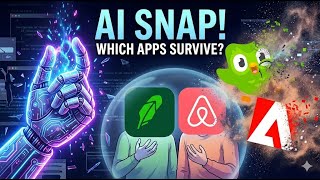
Cody Willard hosts Bryce Smith, Craig Delon, and John de Oliveira to map which software companies survive AI and which get absorbed. They break down OpenAI, Anthropic, Google, and Microsoft's competing strategies, debate whether regulation happens at federal or state level, and use a spectrum framework that weighs UI, data, and network effects to predict winners.
Chapters
Hello and welcome to the AI revolution. Call. I'm Cody Willard. That's Bryce Smith, Craig Delon, they work with me at 10,000 days. We invest in technology, including AI for many years. John de Oliveira is one of my best friends from college and to this day, still one of my best friends, and he has been working in the AI industry for 30 years. Not exaggerating, I'd like to say that every time because it's amazing. Like, not many people have worked in eight AI for 30 years. And John, literally in 1995 or something was like, hey, I think AI is going to be a futuristic thing. I want to be a part of it. And he has been planned, planning for 10,000 days or more to become the man that he is, an AI savant. He's gonna hate that AI genius, AI expert. He might be okay with expert AI.
Hard knocks life been around, made all the mistakes.
To quote either Annie or Jay Z, it's a hard knock life. All right, well, look, there's been a lot. Bryce, welcome back. You were gone last week rodeoing. You won like 15th place out of 500 people or something and got yourself. You won enough that you covered all your entrance entry fees.
Yes, I get to go. Get to go back next year.
Did you get a belt buckle? Did you get a cool belt buckle?
No, no belt buckles.
Get a belt buckle. Like three. The top three.
Top ten.
Top ten. And you were kind of.
Sorry.
It was the. It was the World Series of Team Roping.
Team Roping, Yeah. And what place did you get?
We were 26th.
Well, congratulations.
That's not six out of like 700 something, so.
Wow, that's great.
Terrific.
It's not. It's not easy. We drew. We drew some tough steers and so we were a little bit longer than we wanted to be, but we were happy to get through them and get paid. So that's all you can ever ask for in team roping.
It's called a bum steer. Yeah.
So at any rate, look, I think there's been a lot of news to hit on. I. I think we probably want to start, as Craig mentioned this morning to Bryce and I, that maybe even the AI executive order from Socialist Trump, at least the AI executive order did not entail the United States government taking some sort of equity stake in open AI like he did with Intel. But on the other hand, we got executive orders that might or might not be real laws or even real guidance. But the idea is that they like the hype behind the order is that we don't Want every, each and every state, 50 states to be regulating AI in their, each their own way. Ironically, I always think like the Republicans always pretend that they're yay, state rights. Yay. We're against big government, especially federal government, until they're lobbied by the large. Oh yeah, they also hate big tech because it's liberal. But yeah, until they're lobbied, until those checks from Google and Apple and everybody else start flowing and then they are like, all right, yeah, we want big government. We want, we want to regulate this stuff. And always it's regulatory. Capture the big meta, Google's, Apple, I own all these stocks. I'm talking against my book. While I'm ranting against this stuff, I always tell people, as an investor, my job is to make money on the most, you know, best but safest way of building wealth over the long run, including owning these companies that lobby the government for welfare and protections. But as a citizen of the world and a citizen of the United States and New Mexico and Lincoln county specifically, I fight the Republican Democrat regime and big government pretty much all the time. So the point being, like Google meta, these big companies lobby the Republican Democrat regime to create laws that protect them, that help them. It's not like this happens in a vacuum. It's not like some AI. Like, it's not like John D. Oliveira, who is, I don't think, either a Republican or a Democrat. I don't think he would complain against me stating that fact. It's not like he went in there, was like, hey, here's actually the best way to regulate AI. Looking at this holistically. No, it's the companies that are going to benefit from AI and this executive order that put together the order, like, that's how this works. Like Trump's listening to his bosses. And so at any rate, I'm a little torn because yeah, I don't want, I do get the logic. I don't want 50 states regulating AI randomly. Each state and every anthropic interaction has to like, somehow be done properly for each individual state based on where your non VPN IP address is. On the other hand, like I just said, I never want the Republican Democrat regime from the federal government doing anything because they're always captured and it's totally crooked. And what it does, it's going to hurt AI startups and it's going to help the entrenched cloud and AI companies, the biggest companies on the planet, remain entrenched and very profitable and dominant. John, thoughts?
If all these AIs are so smart, what do they care about this 50 state thing. Can't they just deal with this like with the right. Pinky.
I, I do like, I do like this counter argument quite well. Yes, thank you, sir. What the hell? Yeah.
Okay.
Price.
Yeah. I do think from a constitutional perspective there's argument that the feds are supposed to regulate interstate commerce. And I've long, you know, like with, you know, been mad about how much the government gets its hands in everything. But the reason the founders put that in there, that it's supposed to regulate interstate commerce is to prevent this scenario where states are playing games and you know, they're. One state has different laws than the others and it's restrictive and it's, you know, it can actually be really bad for property rights if property and stuff is treated differently under different regimes. And so there's an argument that was something like the federal, you could say that the federal bureaucracy has grown because the percentage of the economy that is now interstate commerce is so much larger now than it was in 1776. So it's sort of like, right.
Like the year 1800, your economy was 99% local. Like you went to the five and dime or whatever, your local shop, your little market, your farmer's market, or you might even barter with your neighbor with some corn and some pigs or whatever case may be it, but you weren't ordering even Sears Rock, J Rock, JC Penny catalog stuff back then. If you lived on the border of your state, you might venture ac even your, you know, literally on the border and your neighbors on in the other state. There could be commerce, there could be different laws treating that with you bartering your corn with the pig and so you didn't want that. But you're right, Bryce. Like, not only is it like the, you know, 99% of our economy these days is cross state. Like it's. You don't know where the servers are that you're watching this live stream. Like, and some of them are in space in Starlink. Right. Like literally it's a galactic regime at this point that needs to regulate some of this stuff if you're going to try to regulate it.
Right.
So it makes a lot of sense. It's a good point. Craig. You've got a high bar here. I'm not sure you're going to be able to top either John or Bryce. You can even just ask a question if it's too much pressure. Nice haircut, by the way.
Yeah, one thing that I was just thinking about.
Oh, no. Coming in.
Mute.
Oh, sorry.
You can't Hear him? Oh, I don't hear just you, Johnny.
Oh, okay. Well, you know, I was just thinking, you know, DeSantis and Bernie Sanders are on the same side of this issue. So it just wouldn't surprise me if we start seeing calls for an amendment. You know, that's the process to change it. Right.
So if, if that's an amendment, a constitutional amendment.
Yes, but why would I have one.
Person I can't hear?
I don't know, Johnny. It's technology.
Was it brilliant what he said?
He actually was a good point.
He.
I, I disagree that there could be. He's saying there could be an amendment at some point, but his point that he started it with is actually very insightful. That Republican DeSantis, mindless Republican DeSantis and mindless socialist Democrat Sanders are actually on the same side of this argument. They're against Trump, but they think states should be able to regulate it.
And I'm concerned about.
Executive order is probably not going. Like I was saying earlier, like an executive order is not a law if you truly do want to regulate it. Craig, you're right, you would have to. I don't know about an amendment, but you would literally have to pass some sort of a formal law through both the Congress and the Senate and all that that it takes forever. And of course that's not going to happen if Google and Meta and Microsoft are paying the Republican Democrat regime not to pass a law or if they are paying it, then it will pass. So yeah, so I guess in this case you can expect the Republican Democrats to come together at some point because their bosses told them to pass a federal AI law that restricts states ability.
Which you just thought was not such a bad.
I'm not saying it's the worst idea ever, but it, I mean as an investor, it's definitely good for my companies, but as a citizen of the United States, no, I never want protections for entrenched power.
Yeah, I'm a little concerned about the kind of restrictions that come from the 51st state, also known as the EU. They always come down heavy on, on what these guys are up to. And so, you know, it only hits. But that's a pretty big chunk of population that they.
Yeah, but not like it's not a big chunk of the economy anymore. Like, no, really don't need it. We're fine without the eu. That's enough.
Did you see some Elon or somebody? I think last week I was like, as you mentioned, traveling. So I only caught some of this, but they were, they showed a chart of the tac, the taxes that European tech companies have paid to the EU compared to the fines that American companies pay to the eu and the fine are much greater than the taxes paid.
10X. I'm betting 10x.
No, I don't think it was 10x, but maybe double or something.
Does that seem fair?
Well, I mean, it truly, I, I've said all along for 25 years, 30 years as an investor in Revolution Technology and, or you know, like, I've never been a bank investor. But you know, like, truly, it is the cost of doing business in this country that you lobby to get your laws passed and then you ask for forgiveness on the laws that you break. If you're a giant corporation. Good.
But then they made up GDPR and they ditched it like just recently or they realized that it wasn't kind of worth it. The whole laws for cookies kind of personal information protection.
Yeah, the cookies thing, my God, to this day, it, I, I and you know, even just like American sites, I went to Shutterfly to buy a picture. My grandfather. I found this picture of my grandfather, father and my grandmother hanging out with Alfred Hitchcock. Apparently they raised Alfred Hitchcock's cattle. Like, and you're pretty sure it was like trading cattle at some point. And my father raised his cattle. So anyway, it's a great picture, but I forgot where I was going with all that.
That about PII showing up on everything. You went to Shutterfly and you got.
Oh, yeah. So I went to Shutterfly to get, I wanted to print like this kind of thing and put it behind me. I thought it'd be cool to have a picture of my grandfather with Alfred Hitch. You can totally. It's like everybody knows the Alfred hit. Like everybody over the age of 40 knows the average Hitchcock silhouette, right? So anyway, I want to have that back there. I went to Shutterfly, an American website, and they're like, hey, you accept cookies and no, I never accept your cookies, but I do love cookies. I, I question, we can ask AI, but I want to know your guys's opinion. My wife and I fight all the time because at our wedding, at my birthday, at any party, she's always like, we're bringing a dessert. What would you like to bring? And my answer is always cookies or brownies.
I said, it's not a dessert.
And she said, cookies are not a dessert. John, can you believe this shit?
She probably says, Die Hard's not a Christmas movie.
Wow, that's a good argument too. That's tough. It is a Christmas time movie, but it is not A Christmas movie.
It's entirely a Christmas movie. It said so on Family Feud, so sorry. Anyway, it's in the same category. Yeah.
Quick poll, Bryce. Cookies. Dessert.
Yeah, for sure.
Crate or cookies. Dessert.
Yeah, they definitely rice.
Johnny.
Oh, yeah.
All right.
So it's a hundred percent in the statistically significant poll. I just did. I'll let my wife know that she's wrong.
Oh, yeah.
You know what else my wife always says? She's a. She. She's a judge now. She used to be an attorney, but now she's actually a judge. She keeps this phrase, though, because it's a good one. She always has people who are, like, fighting with their husband or wife or getting divorced and fighting over and stuff. She's like, do you want to be right or do you want to be. What's the second you want to be right?
Gemini Happy.
Yeah, you want to be happy?
Cookies are dessert.
Gemini confirmed.
Gemini confirmed.
I bet you that evil chat GPT that scam Altman probably says cookies are not dessert.
I'll find out.
Ask that fraud of a website chat GPT if cookies are dessert. For the record, there's another discussion I think we should hit on. Bryce was hitting up. It is or isn't?
Yes. Cookies. Cookies are dessert.
All right, I'm telling her.
I think you've got a bit of a bee in your bonnet.
I always have a B in my bonnet, Johnny. Where was I going with this AI? I don't know. I had another point, and you guys still really distracted it.
I feel good about that.
Price, you made a point today. Open AI. I said this in the call last week, but, Bryce, you sort of elucidated it better. Very succinctly. I thought that, like, the narrative right now is that open AI might be screwed like that. Google has beaten them.
Yeah.
And like, I'm no scam Altman fan. I truly think Sam Altman will not be running chat GPT/OpenAI two years from now. He's a liar. He's bad. His employees hate him. They fired him, and then he. They brought them back because Microsoft begged them to. Bad mistake Microsoft. The point being, I agree. Bryce, you said you think the narrative is overblown. I. Open AI is going to be a dominant force in AI five years from now, with or without Sam Altman.
Yeah, I just think they've reached critical mass.
So, yeah, they're clean.
That's the right way to say it.
They're Kleenex. You know, they, they, they. They have a brand. If you look technology wise, Google has Surpassed them like almost across the board. There's a good, I saw a good video on this recently where like looking at six different categories of AI, you know, all the modalities and Google, Google, Google, you know, it was.
But it doesn't matter. I mean, Microsoft has had the worst fucking computer operating system and products for 40 years and they still are the dominant operating system in the planet.
Yeah.
Critical mass on the desktop.
Yeah. On the laptop. Yeah.
You know, another thing that seems to be quite mainstreamed up right now is that Anthropic's business model makes more sense than open AIs. The focus on the enterprise and the guard rails that they put around their AI to try to keep it smart and the fact that you can't make videos, they didn't go down the video rabbit hole. So they certainly don't need as much compute. They also built their LLM from the beginning to need less data to train and less compute to process the same.
And there's that.
The other ones do.
They're still.
I've never used, I mean I've used Anthropic five times in my.
I use it every day, you know, like, I. Yeah.
What are your thoughts, John? Like, is Anthropic going to catch chat GPT at least in some ways?
I, I use it every day and, and I don't use chat GPT that often because, I mean I'm, I'm doing coding and Anthropic is still number one. Even after Gemini came out, people still consider Opus 4.5 to beat out Gemini on the coding front. And that's what. Where Anthropic put their focus. And I'm, and I don't see them talking about, you know, Anthropic, AGI or whatever. They're just winning in. They're kind of like the aws. And I don't mean that in the cloud sense, but just in being the thing that businesses rely on as infrastructure for, you know, for AI. And they're, they're doing great.
John, is there an argument that Anthropic hasn't made the right choice? Because like the goal for the AGI believers is like the AI should train. You get AGI when AI can train itself and correct itself. Right. Like, so therefore focusing the AI on software development is the clearest path to AGI is that.
Well, but Anthropic is, that is. Anthropic's focus is software development. I don't hear them talk a lot about, you know, the self bootstrap, although they've got to be doing as much of that as anybody. But now that AGI is. Seems as much of a. More of a like, moving target. What's up?
Moving target.
It's always been a moving target. You still can't get anybody to say, like, what does it even mean? But, you know, but when people talk about, are we going to achieve it? Instead of like, it's gonna happen on this date and whatever, it's like, ah, you know, it's gonna be. You're gonna see a little at a time. We're sort of already in it, but, you know, so it's a lot of hedging on that. And it's like, less. I don't think they talk about it that way as much, although they do a different thing. He's a different kind of scam artist in a way, the. The Dario Amade, because he's always up there doing the sky is falling. Yes.
And his approach is the right one. It's the ethical way of doing it.
Well, they are, you know, even though that is like, whatever about ethical, but in terms of safety, they are heavily focused on, you know, what's going to be safe to have the. The AI do. And the alignment stuff. And so they. When they were the first ones to go and stop a major cyber attack, like, the AI was the one who recognized the attack on multiple fronts and so forth, that that was kind of big deal. But when they go and say like this, you know, everything's. We were facing a lot of danger of this thing coming out and all dark, this and that, you know, they. They're pushing for more government regulation, centralized government regulation, while some others are more like, like, leave us alone. We have to be able to grow and that kind of thing.
I also want to say for the record that I think the guardrails are somewhat stupid and that all the focus on them is kind of dumb and that, like, we're just basically inserting subjective human, like, morality. And I mean, obviously you don't want it to be making illegal things. And, like, I think as long as the AI stays within the bounds of the law, it should be able to do whatever the user wants. And that's sort of the Elon approach. And I think that's like, what the Internet has always been like. You can't do illegal stuff on the Internet, but outside of that, it's free game.
You know, Bryce, the problem is, like.
We'Re not going to link to your website if you are calling for, you know, political revolution. Right.
No, you should.
If you want to have a substack that top calls for political revolution. You should be able to freaking do that. That's what the point of free speech is.
It was him but Bryce, the, the, you know, like the, the problem is there's 11 year old girls that are talking to AI and being told how to hurt themselves. Like that's. Is that against the law? Yeah. How do you stop. Like there are guard rails that are obvious that we. But I mean it's like. And it's not like I'm not sitting here saying yes, we should regulate. I am simply saying though that I do understand that there are like it should be on the parents always right to take care of their 11 year old and turn the channel on the TV if there's something they should. It's inappropriate for them and they should lock them off of AI interactions. That could be hurtful. But at the same time I have an 11 year old.
I.
She uses chat GPT. Have I checked her chat GPT? No. Now that I'm saying this out loud, what the am I doing? I better go check her chat GPT. That's ridiculous. Online.
Well it's not, it's not like it's tick tock. I mean that there's.
He's not on tick tock but she is on chat.
I'm saying that's a different, different kind of algorithms going on on, on one versus the other. And that's why have the risk. I mean social media should worry about kind of these, these things before the rest of it should.
You know it's interesting John. Right. Like I am, I don't. She does. She uses Instagram but it is my wife's Instagram account and she's not on any other social media. Never has had TikTok or access to TikTok in any way, shape or form. I don't have access and never have had access to TikTok in any way, shape or form. But without hesitation I have wanted her to embrace AI and learning from AI and using AI to answer questions or whatever it is. And I, I just think as a parent though probably reasonably for me to at least go look at the history in her chat.
Sure, yeah. But it's the rabbit hole is not as easy to find yourself down on a chat GPT or something. It's good, good idea to keep an eye on it, but I'm just saying it's not. And the thing about Bryce saying, you know, just as long as follows the law. Well again we're talking about like how smart these things are. They're not smart enough to deal with the 50 states and what those states might impose. They're not smart enough necessarily about the laws and how to follow them. So the guide, the, you know, the guardrails are helping with even, even that. Even if you just said, you know the law, you got to help them understand what that is so they'll stay in the right.
I, I do think like if, I mean, I think even with the suicide thing, I do think it's illegal to help somebody commit suicide. I do think that you can be charged with a crime for that. And like that's the doctor whatever is I can. Yeah. And so it just because to me, it just that's Elon's argument is like it's if you go beyond that, then it gets to be subjective censorship of information.
Yeah. But even if you just said you can't help people kill themselves, whatever, that's a card. Just say to the AI, follow the law. You've got to actually go into what the.
Sure. And I, I guess I do agree with that. I do agree with that.
I Same AI topic, slight pivot again here. You know, John, over the last six months I've, I, I for the last two and a half, three years, I called it the dial up Internet phase of the AI revolution because, because it is so archaic in many ways how we use AI to this day. We talked last week. I wonder. Low hanging fruit for my AI is to just manipulate my settings on my computer and search my emails for stuff I actually want without having to go type stuff and interface with the computer. I get that is very obvious. But along with that, as Gemini releases new versions as chat, all of the LLMs, the AIs themselves are improving constantly and subsuming other applications as they improve. And so for example, we used to use, I used to use replit. I think my boys here still use replit regularly, but I quit using replit. Subscription payment came up the other day and I was like, I think I'm done using Replit. If I do build an AI app, I use AI Studio Gemini. @ this point, it's become my de facto standard and I'm happy with it. And it felt like the last version of AI Studio Gemini Canvas, the platform upon which I build these AI apps. It felt like it leapfrogged or at least subsumed the capabilities of replit, which relet was an AI coding application. But it's literally built on Gemini. And similarly, I want to hear your guys's thoughts. Figma is a, it was an app for designing apps and it feels like I don't need Figma because AI Studio subsumed its capabilities and does them just as well. GitLab, maybe GitLab still has a spot. Maybe that's not the best example. Adobe is another good example. It's an obvious one. Along with Duolingo, people have obviously like, looked around and be like, holy, I can learn a language. And Google just rolled out a new language learning app off of Gemini that is a direct competitor to Duolingo. Zillow was down today. The stock was down today. On the news that Google search is going to have some features of listings in MLS listings, multiple listing service, real estate term on Google search results themselves. AI is the only reason that would even work. I mean, I guess Google could have done some heavy lifting and figured out how to do that, but it's an AI generated feature now. So the point being, it is interesting to sort of like, try to picture like how big when. When we talk about AI getting to AGI, we're like, it's a moving target, fine, whatever. But it is constantly like learning and improving and subsuming other apps, services, technologies. Thoughts on that? Are these other companies screwed? Is Google going to win it all? Like Amazon? Google, like the big ones that build the LLMs, the infrastruct? Yeah, we're going to have all of those features in the AI.
Anyway. So I think it was an old IBM saying and strategy, it was called embrace and extend that way back, you know, and that's what we're seeing once again. And it's like, oh, it's fine Figma that you're out there. And we're just going to help make it easier for people to make the Figma diagrams and things. Don't worry about it. It's great. And that's the embrace part and the extend part is more like envelop and take over. And you know, we see that now among just many different apps as you're describing. And I think there's an underlying thing which is, you know, how you can now, you know, generate crazy good images and infographics and all kinds of things like this. They're all still mostly pixel level. And when you start to be able to have the output of the AI happen in the language of the vectors that Figma produces. Because Figma is you're drawing lines and boxes and things like architecture diagrams. It's made up of stuff other than pixels. By the AI being able to describe into place this thing that is just manipulable, made of its objects kind of Thing then it takes over like so many more things and it's.
Comple. It's going to.
Happen. Yeah, yeah, yeah. F.
Compl. Maybe I should say because I, I don't think I pronounce f.
Properly. No, not quite. You got close. But f completely even then I can't say that.
Shit. Got it. I got nothing. Got.
Nothing. So it's. No, but I think it's, you know. Well, we've seen this before. Google back in the day taking over different things, but there always seemed to be kind of a wall they didn't cross. Like this real estate wall that they are crossing but where things were just too vertical. It's like, yeah, Google take could take us over.
Tomorrow.
But. But why would they bother? Because they could do that with these thousand other apps and you know, why are they going to go pick on us? So it's the, the wildebeest form of defense, which is there's a thousand of us, the lion's only going to get one of us, you know, so.
That. But I'm not sure that's true anymore, John. I mean think, I think that's the question, right, that it is actually going to be on at scale now that these wilder beasts are.
Attacked. Lions at scale. And I, yes, I was trying to stay away from the at scale thing expression because I hear it everywhere now. Yes, that's it. Yeah, I think it's every. It's going to be everywhere and then it's like becomes, well, what do people do other than that central company when this all is getting taken over? Can they go into a Google AI studio and you know, in a day produce something and is it a little bit. I want to hand it to open AI or anything, but they've gone down this, you know, sort of trying to mix social into what they're doing. Do you end up with the equivalent of like steam or something where there's people are like making apps in front of everybody else that are instantly available and usable that people go and extend out and whatever. Like what's going to happen with that capability of quickly making stuff as it take back over in a different way to let it extend out because they don't want, you know, the, the electricity producers don't want to make all the vacuum cleaners, so it's going to get back.
Out. Bryce, great.
Thoughts. I've. I've generally fallen on the side that their AI won't take over every single app. Certainly I think the market sees it that way right now, sees it.
That they will take over every.
App. Yeah, yeah, yeah. And that's why we've seen pretty much depressed multiples for software across the board. And I think it's, I don't know that anybody knows the answer to that question fully. And so that another reason why multiples go down, because there's uncertainty regarding the future of these businesses. And I think it's going to be a test of time if, if Salesforce survives, you know, if they have enough differentiated technology, enough data, enough lock in and it's, you know, that, that Salesforce is probably the biggest beast in the room, much less the smaller apps and the random single point use.
Applications. You know what, Bryce? I'd never really thought of just how the Venn diagram of software as a service and mobile apps cross, because at this point, Adobe is a software as a service company, but most people, a lot of people use it on their phones. Duolingo is an app company that people access their software as a service through the app interface on their iPad or their computer or their phone. But it's still a software as a service company. So Zillow is an app company, but it's still software as a service. And a few months ago, Craig, when you, a couple months ago, when you first started, one of the very first assignments I gave you that Bryce was also helping you with was like, let's go down the rabbit hole of these apps that could get integrated and actually end up benefiting from OpenAI. And it's interesting because Zillow was one of the companies that we talked about because they literally were part of this chat GPT app day. And it was like, yeah, you're going to be able to talk to your chat GPT and it will search the data from Zillow and give you the AI generated results of what you're looking for. And we were like, hey, that's really pretty cool. But we never did invest in Zillow for several reasons, including the fact that now underscored is the fact that Zillow still needs search and it still needs people to go to their website to search for homes. And if you can do that on a location basis using Google, it really does sort of undermine not only their software as a service, but their actual app itself too. So it is, there's a, there's CRM is probably the opposite side of the spectrum because their data and their penetration and critical mass inside enterprise is so deep that it might survive. Whereas like Zillow, you know, it's mostly a retail thing. I have Zillow app on my phone whenever I'm traveling in Guernsey or Hong Kong or El Paso. I randomly sometimes pull it out. I'm like, I wonder what the houses in this neighborhood cost. And, you know, it'd be easier to just ask Google, hey, neighborhood cost what.
Cody? What's the. What comes first, the big AI's taking over what these different software apps are doing, or software agents becoming users of those apps and keeping them alive.
Longer? I like how you phrase the question. You really framed it well, because I think that is the crux of what Bryce and Craig and I have spent the last two to three months trying to get our head wrapped around it. Phrase it one more time how you said that, John. I liked.
It. And one last thing I'll add to it, but so is it the AI central companies taking over these software apps that have been out there all this time, the Salesforce or the Zillow, or will the growth of software agents, those software agents become the new users and these companies. The new thing is, will these companies have to start thinking of their licenses as not per seat, but per year per user, whether that user is human or.
Virtual? I think, I think CRM Salesforce is already skating towards that description. AI agents being the driver of their future revenue growth, I.
Think. But as users of that software.
And then, and then Google itself, you'll be able to build an AI studio, AI generated app that interfaces with the cr, the Salesforce API, and it does some extra stuff. But CRM itself, probably that. That operating the user interface and the, the critical mass of users, the millions of people around the world that use CRM every day, probably don't want to be retrained on interfacing with Gemini to get those results. It could impact future customer growth. But I'm not sure that it really impacts Churn too.
Much. You know, it's anthropic again. They came out with MCP servers and it's this interface that all of these apps can use as the in between and say, hey, software agent, here's how you get at our data, here's how you use our stuff, here's what our stuff is capable of so that it makes them as like tools for the agent and the. And then so agents are just beginning to become really useful and powerful. And if they're out there doing that, then it's like. And then you wonder the next step after that is, does the software market itself to the. To the AI.
Agent? Is your zipper.
Broke?
What? Was your zipper.
Broke?
No. Why did you pull that over your.
Head? It's easier if you're sitting.
Down. Okay, wow, good.
One. See what I'm saying though, that it's like you start to go, okay, so it's agents that are using Salesforce. Humans don't even do it anymore. So now there'll be these like internal like little commercials running that are advertising like sort of to the AI. Hey, use.
Mine. You know, John, I don't know. Like this is, I think it's a $64 million question. As for tech investing too, is Duolingo doomed? If so, it's a short still. It's down 50% in the last two months. Wow. Or is Duolingo actually going to end up somehow benefiting by using anthropic or open AI in its.
Services? No, they're not a good.
Example. Like literally, you probably need to go on a case by case basis and try to figure out how valuable like Zillow has a lot of data that's not just MLS data. It's not just open source data that Google can pay for and or access for free. But is there enough of an edge in that data that it's valuable and enables it to continue to compete against Google search on a. Like it's beneficial to the end user to actually use Zillow instead of Google. And you're going to have to figure that out on a case by case basis because the potential for it to envelop and subsume the plat, the, the apps themselves is real. But the ability for apps and AI agents to exponentially create an ex. An inflection point of exponential growth for some of these companies is real. So if you can find the ones that are going to benefit, you're going to get some 5 and 10x returns over the next 5 years on this stuff. But if you buy the ones that are not actually benefit, you're going to get some 90%.
Drawdowns. Yeah, looked at the, look at the workflows, that's one thing it can do. Because if you see like a Duolingo, it involves the usage of. It involves humans who are ultimately like learning from it and taking in the information. And that's not something some agent could step in and do on your behalf. It's like that it can't go learn French for you, but Salesforce more.
So but it can teach you and probably more customizable. I think that's the whole.
Point. No, but that's different. That's so in the. Remember the original thing was is it the AI taking the place of it or is it the agent using it? So in the, in the world of is the agent using it, you could take a Salesforce. Salesforce stays existing and there are these software agents that come in and you know, find stuff out and see and set up like what's my pipeline and who should I call next and all of this. And Salesforce totally still exists to make that happen. There's a lot of built.
In. What it makes me realize is, look, there's user interface is important and people being trained on your user interface like CRM is very important. But probably more important in this day and age is the actual data itself and the knowledge of the data and the processes for sales. Customer resource management itself is probably the most valuable part of CRM. And that's opposite Zillow, that's opposite Duolingo. The Duolingo's data, at least on the language learning side, they're trying to get into music teaching and other like just tutoring stuff. But the language itself is truly open source. There is no data edge that Duolingo has. They're like, we have proprietary words in French. No, Google knows every word in French that Duolingo.
Knows. Yeah, I think, I think it's not just, it's not just the data. I agree this the data, but I think that before you were talking about, you know, UI and so forth. I go with workflow because it's like I'm back to the Salesforce. There is so much schema, you know, data structure at Salesforce that is so deep over so many years that what their advantage is, their moat is culture. What I mean is the culture of sales has been built around what Salesforce says. Here's how it works. So, so even whoever comes in, they can't just go and replace that. They can use it where it is. And that's why the workflow is going and making use of for the thing that exists. Where it.
Exists. Yeah, Bryce, you feel like this is like creating some substance around this. Like, like nebulous concepts that we've sort of been trying to get our heads wrapped around when we've talked about this stuff. Right. Like this is actually, this is.
Helpful. I, I feel like what I've gotten from this is that there is it just sort of a spectrum of apps and software that in the degree to which it's not, there's not a single answer for the entire industry. Because like at one end of the spectrum I see like banking and finance apps. Like there's so much more to Robin Hood than a user interface. Right. They have licensing capital requirements. They actually have to meet, they literally have to custody the assets. All these things. Right. That's very complex. Not something Google can flip a switch and do, even though they could probably build the UI for a trading app very easily. On the other end is the Duolingo thing where it's like basically the edge is the UI and the AI can build the UI overnight in minutes now. And so every, every SaaS application is going to find itself somewhere on that spectrum, and the ones below a certain threshold are probably going to go away.
Right? Yeah, like, that's it. Right. It's a spectrum of apps, and some of the inputs are UI schema, data, workflow. But on one end of the. Of the spectrum is Robinhood, and on the other end of the spectrum is Duolingo. And CRM is probably over here by Robinhood. It doesn't have licensing and, and trading access and API access to crypto and NASDAQ and New York Stock Exchange. And it doesn't have custodial. Like, it's not tracking things like that. But it is certainly over here towards that and Duolingo, Zillow. Those things are mostly user interface. Craig, I would like us to work on an infographic from Canvas on Gemini. And next week, let's show these chumps Canvas, Google.
Canvas. Does it let you use Nano.
Banana? Yeah, well, it's that you have to pick. You want to use Nano Banana or Canvas. It's like, like, this is another thing that drives me crazy speaking like AI is not smart enough to pick what the. Which LLM it should use when I tell it to make a video. Why do I have to every time be like, I want to code? Just go get the code, man. I don't want to.
Sort. All right, he's off the deep.
End.
There not be smart enough to.
Just pick the LLM that's best for me infographic. The answer is Nano Banana right.
Now. Well, all right, fair enough. Nano Banana.
Craig. Well, I would like to say too, I almost wonder if you should add an access to that when you start looking at the spectrum of what apps we as humans look at and interact with. Like, you look at Duolingo, like you said, it's basically all just ui. And then you look at Robinhood, which there's a lot that goes into that, and it's very like a sense of, okay, these are my finances, this is serious. But then when you look at the other access, you look at agents, like agents that are going to work with you, and then agents that just work on their own, and all of these different Types of apps, like, I don't know, at one point, are some of these apps just going to be ones and zeros and we don't even see them.
Anymore? And then, you know what, Craig, you make me think of is it's like there's almost like a very simple test, like, can I ask Google to trade a stock? No. But I could eventually ask Google to access my Robin Hood account and trade a stock. That is a possibility. Can I ask Google to teach me French? Yes. Can I ask Google to get Duolingo to teach me French? Yeah, but what, that's, what's the point? Like, it's an extra layer of. You literally need the Robin Hood app to enable you to access that trade, but you do not need an app to access a language. So this is really interesting, I.
Think. Very.
Interesting. Bryce. I think we need to really work on this tomorrow and Wednesday and think through some of the, like, critical barriers, right, to AI subsuming and enveloping literally. I think we probably need to create a spectrum of apps and start layering it in and before we do the infographic, have our brains wrapped around what's on that side of the spectrum, like Robin Hood, CRM, Zillow, Duolingo, and there's going to be a spectrum and we are going to think through and actually be able to talk much more smartly next week about whether it's user interface, data, workflow, schema, access, etc. That becomes the critical make or break for each individual software as a service slash.
App. Well, I think I really like.
That. JM John this is why these calls are so valuable for us. We really do get a lot of insights when we talk to you about this type of stuff. Because even your way of phrasing the workflow thing is what really sort of got this going, the.
Spectrum. I, I think on that spectrum at the far end of it, of the, of, of the, call it the good end, whatever for, for apps and their existence, I, I come back to that word culture. And what I mean by it is that, that the data and workflow and like what it's capable of and kind of the, the reality that it's setting up for something like a Robin Hood, you know, where it's like, remember when you're setting up one of this kind of account, you need to know about this and this and what you're working toward is this and all of the stuff behind that. It's rich, it's not easily replaced, and it isn't even just represented by, oh, we took your Data structure. We took all your data, we don't need you anymore. It's like. No, it was the combination of the data and the. How it needs to.
Get. Yes, that's. Yes, John, that's what the insight perhaps. I mean there's several things happening in my head racing right now, but it's exactly that. Again, it's culture workflow. It's not just the data that CRM has, it's not just the universe user interface that CRM has. But there is this like knowledge itself built around CRM data and user interface that is all encompassing. The point of it all is Salesforce, Sales management, Customer resource Management. The culture around Duolingo is learning in specifically language but they're trying to broaden that and there's just those types of things. There's going. We really need to think through the differentiators and the moats that exist or don't. And then I think Bryce, there's probably Craig, I think there is one or two names that we probably really ought to get back and revisit and maybe there's some incredible opportunities because there are most app stocks, most software as a service stocks. I think pretty much all of them even are down somewhere between 20 and 50 to.
70%. Can I ask this? Maybe this is an either. I don't know if this is on the spectrum or another layer but like intellectual property and licensing and stuff because that was also news last week was Disney did a deal with.
OpenAI. Absolutely, Bryce.
Absolutely. Sort of on the spectrum here with like the IP is data basically kind.
Of. Yeah. I mean what's interesting though is like you could literally create a knockoff Mike Mickey Mouse tonight on Sora and in two or three years you could make your own IP right overnight. So like is IP more valuable or less valuable in an AI world? I don't know. These are exactly what we need to think through. Like we need on the spectrum of like, you know what it might end up being like a cross graphic where this. The apps themselves go left and right on the spectrum and. And then the. The inputs of their value. User interface and like whatever's most valuable. Like true culture slash workflow, slash schema, slash data being the most valuable part on the top part of that spectrum. And then language and mean like completely truly open source data being the least valuable thing that you can.
Do. Yeah. Because like Netflix is also an.
App.
Right. But it's also IP company. Right. And it's. So it's got to.
Be. And it's basically software as a service. It's a video content software that you access individually every time that it's.
Serving you software and as IP in the brand. So there's a promise that the brand has. People hear Netflix and they think about, you know, I'm gonna go home, watch Netflix and whatever. And it's different than just, oh, we now have videos available on demand that such and such is it Netflix. You know, you're.
Right. There's, there's some like, like we have affinity for that content because we know over time all of us, except for Bryce, have enjoyed Netflix content occasionally. Bryce hates every show ever on.
Netflix. Yeah, but that's, See they, I, I think I thought the Warner Brothers acquisition was so stupid, but my favorite content is hbo, so maybe they knew that they had to get me. That's why they bought Warner.
Brothers. Okay, here's something though. You know, I think the one on the one hand, I think of Duolingo being on this end of the spectrum where they're just dead so easy to be sort of replaced what it is that they're doing. However, when you think of them like a Netflix, just the brand aspect of them and people are like, oh, it's Duolingo or whatever, then the one opportunity for them is to really take advantage of the AI stuff coming out and to introduce Duolingo V5, whatever the next thing and for have it and to have it be like real, real time people in a language immersed in a place where you have to go in and talk to them right now and it's gradually upping your levels with it. It's like they, they, the room for them is to come back out with an app because the only advantage they have is being Duolingo, not the app that exists.
There. My daughter is a Duolingo fanatic. I, I mean she literally uses that thing five to ten hours a week and she learns languages on them. But lately when I drive her to her guitar lesson on Tuesday, which a human being actually teaches her, she to opens up Duolingo and takes piano lessons and she's been learning piano on Du Lingo. And that is not something that Google is going to replicate. So that's where it's like there is some edge to the user interface. In that case, again, there's no edge to the musical notes. There's no like, there's no like proprietary data of music. But there is a proprietary interface that Google would have to like. I, I don't know. At the same time, do you not think in five years you're not going to be Able to tell Gemini, hey, I want to learn piano. Make sure that, like, there's a very realistic piano keyboard on my monitor for me to tap.
Into. I don't know how much it is. That is the TAM part of the spectrum. Like if. Because everyone would potentially like to learn another language. So that's a huge.
Tam. Tell people what TAM is, Bryce. Total addressable.
Market.
Yeah. And piano is more niche and team roping is another order of magnitude more niche. Right. And Google is not going to make a team roping app. They're just. I can say that with certain level of confidence, you know, But I think I could make a team roping app that would be very valuable with AI. You know what I mean? And so I, I feel like that's almost like in some ways a lot of this stuff is just not going. Like the long tail of apps, it's huge. And, and Google can't.
Possibly. I don't know, Bryce. I. Again, I'm having a little bit of a struggle because I'm picturing five years from now that AI theoretically should be smart enough for you to just talk to it and get whatever you were getting out of your app anyway. Hey, what. What rodeo should I be attending in the next five months? Make sure it's within a mile of where I am. Teach me how. The proper way to.
Lasso. My idea for the team roping thing is a lot of it is going to be about using it with other people to like, help you, like, enter the event page thing. So there's like the network effect side of.
It.
Right. And so duolingo has no. No network effects that I'm aware of. I mean, do you have friends on there that you like, you learn with? Is there some of.
That. Yes, there is, but it's. It's a. Related to that afterthought, not a feature, you know, related to.
The. The thing about the virality that you're talking about. They. What they do have is the, you know, incentivizing and motivating and stuff, which is done.
Micro. Yeah, she gets badges all the.
Time. They're huge on all the micro motivation. And that's something takes a while to build in. And something that the AIs are not yet good at is what they call taste like making good choices about like, I could do this or that that you asked me to do, and I can clone an app that exists and make it work like that app that exists. But to go, you know, it might be better if we do this with the user versus that, you know, they're not really good at that.
Yet. Guys, we're going to get close to wrapping up here. It's been an hour, but I'd like to just run through the inputs on this vertical spectrum that we're going to build here, please. If I leave something out that we mentioned for sure, mention it and if you come up with another idea before the end of this call, mention it and. Or text me if you come up with one tonight. Something User interface, data workflow, schema, access, culture, IP tam, Wiki, Wikified model where you've got people like Bryce is sort of talking about. Right. The value of his Rodeo app is actually going to be because other people are contributing stuff to it. So that's the Wiki model and then that thereby network effects become into play. I think we should also probably. Craig, you. I made you read Information Rules and you did a wonderful report on it for us. I think. Would you please grab each. I think it's. Every chapter has an information rule in it. Grab each one of those, lock in network effects, standardization, all of those. And I think we. I'm not sure all of them will fit on that vertical thing, but some of them for sure will and it will make it more holistic if we do it include all of those.
Last. Did you. Did you mention.
Workflow? I.
Did. Okay. And then I think of the thing you're just describing as being all these potential attributes that you can look at as when you're looking at the profile of a business like you know, Duolingo to. To Robinhood or something going like where do they fall on all these things? Right. So that's the. Gets that spectrum. But then there's a. Based on where you are on this thing, where are you headed to one or the other of being taken over by AI or incorporating AI into staying alive by incorporating.
AI. I feel like that's my left right.
Spectrum. Yeah.
Yeah. John, with your permission, when we start building this concept out over the next few days, we're going to be emailing you some of the updates and let.
You. That's fine. But you're right. No, I think you may be right that it's on those ends of.
That. I think so, but. But I'm not sure because I get what you're getting. We almost could build a 3D spectrum cross thing that stop is rolling his eyes at.
Us. I can't hear them so. But if you're. If they're on the way you said like they're on some spectrum or something. It's like Clear that the ones down this end of that continuum are all headed toward takeover. And.
Yeah, and it's funny, I just know I've done this type of stuff enough. I built frameworks like this, these concepts, conceptual frameworks, enough over my 30 years of investing as a revolution investor that I know I'm not. I know that we're on the right idea, but that I have no idea how this spectrum, this cross, I have no idea how it's actually going to work out yet. But we're gonna have to like start building it before we actually know what it is we're building even. But I think we'll have something interesting to show you guys next week. If I had to bet. Last.
Words. So I think that as a last word that all of this, especially as you start to say, well, where, where are things going? Where do they go? Etc, or my dog's trying to stand up and he doesn't do that very well, Keeping an eye on all of these modalities, understanding that who's good at what when it comes to generating images, understanding images, generating text, you know, making video actions, whether it's robot end of things or whether it's actions like, you know, taking over your browser or doing things out on the web. So it's like all those combination of things that the way that the intelligence shows up is going to be kind of showing up in these.
Products. I truly believe that most of that stuff is most of them will do most of that well over time. So I think if you're building an LLM and you've got the bill, the money to build more, you're going to get there. That's where it's like, I think there's going to be five or ten really impressive platforms of AI that will do. And again, I, I shouldn't have to pick one, much less when I go to one, what flavor of AI it's going to give me that. So silly. Bryce, last.
Words. Yeah, mine is just that, like, well, I was in Vegas this last week and I think it's just, it's still not an AI world yet. And it's sometimes when we do what we do, it feels like this is like, oh, this has happened. It's a thing that has happened. And really it's a thing that is happening and it's still so early. And like my examples are just like, you know, there's a couple of websites we use in the team roping world to like manage your handicapping. It's a handicap since everybody's ranked and things like that. And you look at these websites and it looks like they're built in the 90s. And I'm like, like how is nobody. Like how is no. Like I t. Like how they don't. Even if they don't have an IT guy, like they haven't thought about using AI to update the website. Like much less build something new, but just update it, make it work better. It still doesn't work that well. And like there's, there's fantasy rodeo, just like there's fantasy football and the fantasy rodeo. They don't even have an app. You have to go to their website and it doesn't work on like Android very well. And it's like, like the, the sizing, you know, doesn't like you have to turn your phone sideways to click certain things. And I'm just like, this seems so primitive compared to what we see happening at the same time with AI. And I know in the next 10 years all of that stuff is going to be updated. And so it just again just another anecdote about how early even the AI revolution is. Even, even though it's not necessarily, you know, first pitch of the first.
Inning, it's still like the first batter of the first inning probably. And it's large part, look, I mean the technology advances quicker, more quickly than the enterprise, the bureaucracy, the organization can pivot, it can't embrace this stuff over the first two to three years that it gets built. But the AI is getting to a point where it truly is just such a no brainer for every enterprise, organization, individual to start using it increasingly more and making their lives just more efficient and more productive. So yeah, so it is so early though. It's not. Nowhere in the very few places in the world are like us where we're immersed in it all day, every.
Day. I think just like, like sort of like it took a long time for every organization to have a social media account, right? Like now pretty much every company has an Instagram, has a Facebook, has a LinkedIn page. But that's not true of like an AI website or an AI is such a great.
Example. Like I truly like, I remember in like 2014 like people being like, I'm gonna go to school for social media management of. And I was like, that's a, that's a job. Like of course it is. Like I, of course it is. And so yes, like this is where even in like carousels in New Mexico, population 899 of them are over the age of 80. I'm like, you know what we Ought to do. We should buy the Spencer center over here that she built 50 years ago for the community that's empty right now, and put an AI development school in there and literally let the AI teach. I. I don't even gonna put any professors in there, but we're just gonna have like, access. We're gonna pay every LLM for access to their AI. And anybody can come in there and use the computers and the broadband and only for AI. You want to go surf porn? Sorry. Unless it's porn generated by AI, then maybe Sam Altman. Nothing. All right, Craig, I don't know if everyone can hear.
You. And then I have a final not. And then I have a final.
Quote. No, you already had your final.
Word. I have my final word, but not my final quote. A.
Quote. No, that. That is redundant. Redundant. Redundant. Craig, you got to give yours quick in case nobody else can hear.
You. But I'll be. I'll be real quick. I'll be real quick. So I went to the doctor on Friday and I talked to a third year medical student and she was super cool and she wants to be a radiologist. And I asked her, so are you excited about using AI to see more things, get more done, diagnose more patients? And she is like, I mean, I guess I'm just worried that they're not going to need me anymore. And I talked to her and I said, I was like, you know, there's got to be a human element to anything that's, you know, medical. But she was very incredulous in that she just, she. She was really hard to come around that she would be benefit from AI. So I will say, even in the highest levels of our society, are people worried about just being displaced? Even when I think they're. That's a little unfounded.
Right? I mean, I truly believe she'll just be ten times more productive. And there would have another hundreds of millions of people in the United States have access to whatever it is that she does with her time when she finishes her radiology as a professional. So that'd be a great thing. You want her to have to just review stuff, not have to look at every single thing and make the decisions herself. All right, John, you get the quote after my last word. My last word is, I got the meta display glasses in Thursday last week. I just made them turn on. I'm going to manipulate them over here. Let me get some music going. And I just. And I'm.
Learning. Yeah, I can.
Hear. And my phone's ringing now. Like, I can answer it. Hi, honey. How's it going? Nice timing. I'm still on my AI call. Can I call you back? I love.
You. This wasn't planned at.
All. I'm learning how to do it. Like, you literally can control this stuff in. I think it looks better in a jacket pocket than your pants pocket. But you can, like, control it in your pocket and not be all like. Like you.
Do. What are you doing with your.
Hand? Yeah, I'm wearing this band. It's a Neuroband, and, like, this. I just made the screen turn off. I just made the screen turn.
Back. I told.
You. It. Yeah, I just told it to play music. I just went home. I also can interface it on the side. I just turned off the music right there. I turned off the interface there. Oh, I didn't. I'm hitting the wrong button. I don't know what I'm. Maybe it's the middle finger. Anyway, there's a way to do all of it on that side, too. But I will tell you, it does feel like the future. It's incredible. It also feels like it's early. I can't watch a movie on here. I certainly can't do real augmented reality, much less virtual reality on these things, but they're.
Transitioned.
Yeah. Okay, thanks. IT thought I was talking to.
It, but for what it does, it's pretty.
Cool. It does. It is pretty amazing what it does so far. The maps themselves. I was telling the guys yesterday, I was driving home from Ruidoso, got in a spot where my cyber truck lost connectivity because it's on AT T. Verizon has a better network out here in rural New Mexico. So I had my glasses on while I was driving. They're also transition glasses, so they go, you know, sunglasses in the sun. Anyway, I was like, hey, I wanted to listen to the football team. They were all going on. I'm like, hey, what's the score of the football game? Hey, Meta. What's the score of the football games being played right now? And it literally answered it. It literally. It didn't do the Siri thing where it's like, would you like me to use chip GPT for that? Stupid. I can't do anything right. It literally was like, the score of this football game is that, and the score of this football game is that. And it listed all the games and it showed me the game scores on my display. It was very cool. And I know it's a very silly example, but they really are. It does feel like the future is coming. I think Meta itself has skated somewhere that now Google and Apple have announced they're trying to go to. But meta's ahead and it's going to be fun. Competition's good. Hopefully they won't go to the Republican Democrat regime and stop anyone else from trying to build visors, but they probably will. John, what's your.
Quote? It's from the 80s. William Gibson the future is already here. It's just not evenly.
Distributed. There you go. Very.
Good. Deep thought. Peace and love everybody. Thanks. Thanks Johnny. Appreciate you. Thanks Craig. Thanks Bryce. See you guys.
More from Cody


The AI Revolution Call: Tim Cook departs! Robot Marathon? And Amazon's $50bb side gig!

The AI Revolution Call: Mythos Mania! Is Anthropic just doing more hype? Or is this the real deal?





The AI Revolution Call: Anthropic vs. The US Dept of War, Iran, and How Will AI Work With Humans?



The AI Revolution Call: SpaceX Acquires xAI...Will SpaceX Merge with Tesla Next???