The AI Revolution Call: Are Large Language Models the New Operating Systems?
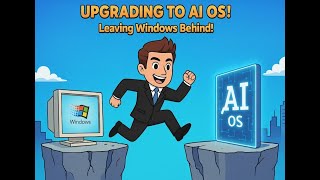
Cody Willard, John D. Oliveira, Bryce Smith, and Craig Delon debate whether large language models will become the new operating system. They compare current AI adoption to dial-up internet, discuss Meta's Llama and the difference between open weight and open source, and explore how banks are already using these tools in production.
Chapters
Hello and welcome to the AI Revolution. Call. I'm Cody Willard. 10,000 days hedge fund manager. Fund manager guy. It's Bryce Smith, my partner at 10,000 days. Craig Delon also works with me at 10,000 days. We invest in technology like AI. Long before that, years ago, we invested in smartphones. Before that, Internet. John D. Oliveira. It's been working in AI for 30 years. I'm not making that up. I know every time I introduce John, I say I'm not making that up. That's because most people didn't know AI existed 30 years ago. The only reason I knew it existed as. Yeah, I mean, you guys remember what was. John, what was the TRS 80 application that you could talk to? It was like a psychiatrist.
You mean like Eliza.
Eliza. Thank you. I was trying to say Alexa, and I knew that wasn't it. Yeah, Eliza. I mean, that wasn't AI. It was reasonable prompt precursor to AI. But do you. John, in 96, actually left Albuquerque, moved to Austin to work for what at what at the time was probably the leading AI company, private company in the world, I would think, John. Or at least top five or something.
Yeah, I think so.
The legendary Doug Linot Lennit.
Yeah.
Anyway, welcome. Good to see everybody. Thanks for being here. Thanks for watching. If you're watching, we love to have comments, snarky or not. Try not to be rude.
But questions.
Or comments, you can throw it on and I think it'll show up through our feed. We are, I think, pretty much every week. As long as it's working. We're on Facebook, we're on YouTube, and we're on X.
Yeah.
One of these days, if we really wanted to do, like, if get better distribution, we should probably figure out how to turn this into a podcast.
Yeah.
Yeah. I don't know.
I don't know.
The three of us don't have the bandwidth. John doesn't have the bandwidth. And I don't mean the Internet bandwidth. I mean the time bandwidth. At any rate, let's talk AI, John, Bryce and I, I, I want to do something first, and then I want to talk about Llama and some of the models that are out there. That. And just sort of competition around it. I've got some comments and thoughts on that and some questions. I've got. Craig, we lost your light. That. You got to keep that, whatever that white screen. You have to leave it on the white screen.
Okay.
I, you know, I just, I, we throw around terms like LLM, agentic, AI and things like that. And if we were on my show on Fox Happy hour. God rested soul. That show had soul. We, we would, we had a tip jar on the bar and if the guest used a, a term that jargon, they had to throw money. Real guests would throw a 20, some people throw five, a few people throw ones. But you had to throw money in the tip jar. And I think that I was just thinking about it today. We just, let's not use jargon. If we talk about an LLM, let's say large language model. If we say agentic AI, I mean maybe we should even just explain it quickly because one of the things that when we traveled the world, I don't know, three, we got back three or four weeks ago from a three week trip around the world and it was shocking to me how little most people use AI, much less are immersed in it, much less study it. And I, you know, it's, I'm a hedge fund manager who invest in technology so of course I'm immersed in it and studying it. But you start taking it for granted and it's one of the reasons you can end up living in a bubble if you just forget the perspective of most of the world. And it is the fact that when I say it's the dial up Internet phase of the AI revolution, I remember like asking my mom and dad, did you get my email? And they'd be like oh, I forgot to check this week. And you're like mom, I live on email. But this was 98, 99, right? Like I remember like show pulling a laptop computer and dialing up on AOL and showing my friend that you could go to websites. And he was like, can you see boobs? And I'm like yes, you can go to playboy.com and stuff. You could even just search for boobs. And you know, you fast forward to today and it's been 25 years since then. And I think everybody on the planet knows that you can see boobs on the Internet. And so I like that's where we're at. We're at the stage that people don't know that there's even like. And I haven't used them. Like you can have like a, a personality content talk to you constantly and it could be a sexy personality. And you know, chat. GPT last week was like, yeah, we're gonna let people do erotica. And so it is just so early in this and I think when we do these AI calls we tend to just sort of think that the people listening and that even just, and you know, we're not necessarily even Doing this for an audience. I mean we're doing it so that we could. The, the impetus behind doing the AI Revolution call on Mondays was because I have a friend who's been working in the industry for 30 years and I'm trying to study the industry to figure out how best to invest in it. And so that's great. But if we're going to bother doing this, we should remember the audience. We should remember that we don't want to just throw around jargon and AI terms that, and assume that the people watching have any idea what we're even saying.
I, Cody, you know, I thought was funny about what you said. There was that, you know, like LLM is jargon. So we're going to spell it out. Large language model.
And I'm thinking as if that helps at all.
You're right.
Like still I don't know what the heck that is, but it's like I remember that quote. What is it? Teaching is remembering what it's like not to know.
Nice. And your father was a teacher? Long time educator.
Yeah, yeah. And so you know, you, you and this might have been a, a Feynman line or something. Richard Feynman famous. Famous as much for being a teacher as for being. Right.
He's as famous as much for his professorship as his theories.
Yeah, yeah. So you know, you say, you go large language, what's that? That and you know, for even for us ourselves to make sure we understand and aren't glossing over and just going and saying words on top of other words, it's good for us to step back and you know, if we have to go and make sure in as brief a way as we can, that we can get across what this thing is we're talking about, then it helps make sure that we even really understand it ourselves. Because if we can't, maybe we don't.
You know, another saying, I have no idea who said this or if it's even attributable to anyone, but it's like you have to know a topic to truly teach it. And again, we're not like necessarily trying to teach the people watching about AI, but we are certainly trying to teach ourselves about AI. And as you just said, John, that entails not. It requires us not just glossing over quickly, concepts, terms, stacks, layers of the AI and how it works and just sort of knowing it. And so with that I just, I wanted to say that out loud and sort of talk about that a little bit. But let's jump into the AI call what I do want to Talk about for the topic today is Llama, which by the way, I am sure it's not a coincidence that it has LLM in the word llama very directly. It is an LLM. It is metas. LLM, Meta, formerly called Facebook. They would these days should probably change their name, their name to llama instead of meta because they're all in on the AI revolution. Although they're still doing the metaverse. The artificial reality and augmented reality are still very much a focus for meta. Point being, John, we don't hear. I was reading reports today talking about how to use AI, which AI to use, depending upon your skill level, your requirements, what it is you're trying to do, etc. Bryce and I seem to read these reports quite a bit that rank the LLMs against each other and yeah, we'll let one elite frog the next and. But they're all sort of in the same universe. I found it interesting though in this article. There was nothing about llama. It didn't mention Llama. It was like out of the top 35 LLMs, it mentioned Bryce. You remember a couple of the names that we hadn't heard.
Z.
Z, yeah. ZI. There were Deep Seek, obviously we know. But there were a few Chinese LLMs in this list. And I just, I called Bryce, I'm like, what's going on with llama? You never hear about Llama anymore. Seemed like they had a whole developer community that was migrating. Not migrating, but coalescing around Llama. Six months ago, a year ago, it was the main open weight LLM which meant that you. Not completely open source, but open weight means that you had transparency on how the different weights were set inside of the LLM. And I like John's face because he's like, I'm not sure if Cody's explaining that. Right.
I'm thinking about it like I think open weight is open source. I think open weight is like as open source as they get. But I'm trying to think.
I actually had, I went down the rabbit hole today and had Gemini teach me about the differences between open weight and open LLM open source.
I mean, because what they're not doing is including all the sources that went into like you can't go and take.
What they did actually that the two there, I think two major differences between open weight and open source. Open source allows you to actually see the data that the model was trained on, see how it was trained transparency.
That's what I was.
Weight does not allow you to see that. Yeah. Secondarily open you can. You still can be an open weight application, LLM application, but you can have requirements about who can use it and where and how you can and yeah.
That'S more like what's the license? Yeah, that correct.
Yeah, but if you're going to put like requirements around getting the license, is it truly open source?
No, no, you're right. Okay, so the rules, the rights on it, that's one thing. And the other being like just the, the whole, like were you given total kind of the whole picture of what sources like books and whatever and data.
Got or in Meta's case with Llama, they're not going to allow you to see all of the meta, Facebook and Instagram and WhatsApp discussions that it was trained on.
Right.
Those are internal data things that they're obviously not going to allow other people to use or see. So at any rate, John, your thoughts is. I, I had, I debated it with Gemini, I did some research and after my initial impression that Llama is on the decline, I'm not sure that's true. I, I like what's going on with Llama Meta.
It's on the decline with me. So really meaning that in our company we were using Llama, we had to use whatever we use had to be open source or open weight because it had to be that we weren't sending our data elsewhere because we have software for banks and we can't go and, and kind of take their stuff and send it elsewhere. You know, we have, we have to pass all the security tests for any data that we get a hold of that it stays with us and just is back to that one client. So we were using Llama, but we recently, I guess about a month ago, we stopped and we switched to OpenAI who put out an open source or open weight, I guess model that we can run ourselves. We don't have to send anything to OpenAI to use it. And that's the one we're now using.
Two questions. Why would you make that decision? And how hard was it to switch over?
It was a couple of weeks work for somebody. But that has more to do with how much code we have. That depends on this stuff. Because really the actual switch itself is you go into one little place where you've got your constant, that's like, what path should it go to hit? And you change that out. It's like, okay, now I'm on the other one. But then how it responds to things, and this is why we, you know, switched was we found that this, that this other new one for OpenAI was even better at instruction following when it came to doing agent stuff. So when it's like you tell it, hey, I've got this set of tools, which one should, you know, should I use next? And it comes back and says, oh try, try this one. You know, and it's basically, it's like this little loop that it go, this is how agent stuff works. You know, you, you, it gets in a loop where your code is going, tell me what to do next, tell me what to do next. And you're each time telling it like, what's available? I have these 50 different things that, that can be done. I can open a PDF file, I can, you know, convert this to that. I can read stuff out of an, a spreadsheet, you know, all these things that it can do. Oh, well then use this one and do that. Use this one and do that. It's telling it what to do and it did a better job of that. So, you know, we, and we were less concerned about how good either one of them is at answering some question or whatever because for the most part we're using it for its, you know, English ability, you know, to call upon other data that we already have. Because the answers are for us, the answers are in our stuff. You know, we have all the answers around banking and the specific questions about procedures and things and, and regulations. You know, we're track, we're, we're maintaining all of that. And for us, it's not about asking the AI to be specific smart. It's about asking it to be like a translator for finding the right things from what we have.
You know, all right, now how much over the last year, how much has that changed? The, like, are there people who lost jobs because you made it. You're using AI to be more, to do more stuff. How like are, are the people who work in the bank more efficient? Is the bank itself more efficient and less likely to be hacked? Or like, what is the reason you guys like, what are you doing with AI?
So I think it's early to go look for all the effects because they know that, that this is a real transformation that will have a big impact, but that it takes some time to get it going. And we've been just, you know, we're fairly new. We've, you know, maybe our first customer is six months ago or something. I might be a little off on that. But so getting them through using just their aspects of it, you know, it's more like they can see that it is just starting to save them time will save Them more time, let them be more efficient with what they're doing and basically let them punch above their weight. Because the little banks, these, you know, community banks have to kind of live up to the same kind of regulation following that the big banks do. But the big banks have whole departments for doing that and the little banks are, you know, struggle to do that. So it's kind of to do that for them.
It's interesting, democratizes the banking and regulation side of the, that business. For the smaller banks. John, two years from now, will with the projects you're working on be transformational? Will they be, will they have revolutionized community banking regulation procedures?
Yeah, yeah, I think, I think so. It's interesting. This was kind of the conversation that Andre Karpathi was having this week, guys, formerly at Open AI at Tesla before that. But he's off on his own thing now. You know, it's funny, I, I thought of him as being like the Richard Feynman of our day because he's really interested in the education side of things. And then right after I said that they came up next in the talk that they kind of mentioned Feynman, but he was, he's a kind of a soft takeoff guy. Which is the thing about like will AI the kind of effect it'll have on the world and everything, is it going to be like you wake up one day and just the world is different. That would be like fast takeoff or hard takeoff. And he's more like, it takes time for things to settle in and so forth. So he was just talking about this, you know, will it have that effect? Yes, it will over time. So two years I think is a good kind of time frame to say.
That's why. Yeah, that's why I, because you had said, and I think that goes back to my analogy of the dial up Internet phase because like you, we can see how AI will eventually enable us to wear meta glasses and get maps and talk and do all kinds of productive stuff. We can see that eventually you're just going to tell AI, take care of that. Like, what's my day like? Set me up. Where am I going? Eventually it'll even like have the, the Tesla cyber taxi waiting for you to take you to your meeting. And it'll, you know, the agent stuff, all of that stuff is going to revolutionize day to day interactions with data, spreadsheets, emails, calendars, human beings, all of it. It's going to get touched and it just saves us so much time.
I was just, I was just thinking about how, you know, like what's really slowing it down in a way, why isn't it just this overnight thing? And it, it seems to me like right now it's more. We're slowing it down. We, you know, people. Because look, already in. They're fairly recent. It's the case that you can talk to anybody in the world in almost any language in real time, back and forth that didn't exist, you know, even last year or something. You can get on with somebody and literally so I could have somebody Japanese here and I could be speaking English and everything I'm saying instantly being turned into Japanese and back. Why aren't people using that on a huge scale? You know, you can go and take this conversation we're having right here and have it instantly turned into any language and it would even like adjust the mouth and it looked like you're speaking that. Why isn't that happening on a large. It's already possible. So why isn't it?
People are slow to adopt. They're slow to start using stuff. Bureaucracy. Bureaucracy and legacy. See backward looking stuff inside of giant corporations and any giant group always slow the stuff on an individual basis. I'm 53 years old and I want to be cutting edge tech, but my 10 year old daughter takes my phone and shows me how to do on it now. Like it's crazy how quickly. And then like Bryce lives in AI. I mean, I don't know Bryce. You'll have to tell us what percentage of your day you're using AI. For me it's like 5%. It's not that much. And I'm trying to be an early adopter and it's still, it's. It alone is not quite easy enough for me to just.
But the thing is like, what do.
I still have to like figure out which program I have to use and where and when and login and password and all the bullshit that goes into making computer stuff work. And that's a nightmare. I just, I'm like, I'm just gonna print this stuff out and read it. I like my printer is still my like superpower around here.
Like. But we talk about. The thing is, you know that it's what you just said. There's that like people take time to adopt things and so forth and yet whenever this conversation is had, that's not what people are saying. The conversation is when are the computers going to be smart enough to blah, blah, blah. It's like, that's right.
That is exactly it. I mean they really are. And then also the part that we always Talk about that until you can give a prompt and get a 30 minute video based on the prompt completely produced and distributed on the Internet. It, it's still a very early stage of all this. Bryce, how much on a daily basis are you using AI? And then Craig, you're next.
I use it all day.
70, 80% of your day.
I mean it's just, it's like how, it's like asking you how often, how much time do you spend in the browser? Like you. Or how much time do you spend like if back in the day, like in Microsoft Office, you know, like that just to me it's where I do work basically.
Amazing.
Craig, I would have to say the same thing. I'm constantly looking at you brought up jargon and different things like that. When I'm doing research on different companies and different industries, especially with the new apps that's coming in with OpenAI, we've looked at a lot of different industries and just trying to figure out different jargons, different things and what these companies are doing and that. I use AI all the time to kind of give me like just some information here and there as I go other places. I constantly have it running because I feel like if I don't have it running, looking something up, I'm being inefficient.
John, in some sense it's translating for him in real time, right? Like it's translating jargon to better standard. John, how much do you use AI on a daily basis?
I mean, I question what all the time means as we talk about this because it's like what I do is I have this task that I'm doing that definitely involves AI. Like that task wouldn't happen if AI weren't part of that task. But how many times I'm hitting enter in chat, GPT or in Claude or you know, how many times?
Any task. Let's divide what I do into like certain tasks. I do research, I do writing, I do organizational, administrative stuff, legal stuff. And in any of. AI is somewhat competent in all of those areas. And if I'm doing any task within those areas, I'm Talking to the AIs that I use about whatever I'm doing. And I think because of the value that they provide, even like in legal things, right? Not that it's drafting every email I send, I don't like it to write for me in the first instance, but I think it's negligent not to ask the AI to double check you because it takes minimal effort to copy and paste what you've written into the AI and the potential for it to catch an error you've made, even if it's just a typo. In a professional setting, it does seem negligent to me to not like run everything you do through this thing that we're already paying for that takes five seconds to copy and paste into and use it that way. So when I say I use it all the time, it's like I'm not just literally talking to Chat GPT all day, but in every task I do, I do basically use it and in research and everything. Gemini ChatGPT I use both.
For work.
It's mostly Gemini.
I'm mostly in Claude now and, and I think it's got some features that open AI, you know, needs to catch up to, to be doing. Like this came out with Skills last week and it's like being able to build this little library of like, you know, instructions and like, hey, whenever this comes up, do it like this, you know, and combinations of just stuff in English or a little, little script if I, if I want, which it can even write, you know, but it's that, that kind of thing where it's, it's staying on the edge so that when you are like doing what you're talking about where, where like, you know, you're involving it in what you're doing, it's getting that to be more and more part of the workflow where it's not in the workflow. It's like you and it are both like, right, having the workflow come by and you know, it's paying attention to.
Everything Again this is when we compare the different, whether I'm using Claude or Gemini or Chat GPT or whatever one you want to talk, Deep Seek etc and when you even like. I don't pay much attention when the new re rankings of this stuff come out because it reminds me of like in 1998 reading about rankings of search engines and being like, which engine gets you the best results? And meanwhile Google was in a garage not even released yet and it killed them all. Another example I remember on the Windows Phone after the iPhone and Android were already in the markets, Windows big at one point their big leap frog forward was any picture you took on a Windows phone was automatically stored on the cloud and you could retrieve it later. And it was like I, I, I, I literally did switch to Windows for a minute. It was such a bad experience. It didn't last long but I was like, that sounds amazing. And of course now like these kids on the call with us, John don't even know that there was a time that when you took pictures, you couldn't go back and look at them later if you switched phones. Like it was literally stored on your phone and you, you'd have to delete photos and stuff. And so like, that is where the stage we're at. We're at the stage where like one where Claude might have this one thing that they're doing. It's a little bit better than the others. But in three years from now, that'll be archaic too. It'll be silly that they'll, you'll be like, you remember when like Claude rolled out skills? That was a funny thing. And now like, we all just talk to AI. It does whatever we want, however we want. You don't even have to log in.
So one thing, one thing in terms of where we are right now, I.
Think.
I don't know if we're pre Google in a sense, but we are starting to see some things about the thing we use. What it will be like, whether it's OpenAI putting it out or somebody else. And that is, it's not going to just be chat. It's not going to, it's going to be the new operating system, you know, it's going to be where you do. And like Bryce already treats it like that. He said, you know, it's like he mentioned the browser. Well, the browser was the new operating system. The browser made Windows irrelevant. And why did it make Windows irrelevant? Because it was the new operating system, you know? Right.
Everything, almost everything on a Chromebook that you could possibly do on a Windows machine because you're doing 99% of it on a browser. The Golf simulator program in my office, which, by the way, randomly stopped working last week after three and a half years of my addiction being fueled by it. I'm gonna have, I've got a guy coming this week to try to fix it. But like that, other than that, you know, like, you really do like our trading, our hedge fund trading programs run on Windows and they're archaic too. Even the programs that we use, they're archaic. They're like, they literally feel like 2003. And so it, you know, like we. Bryce has long said that Windows from Microsoft is at bigger threat of being displaced by AI than Google Search. And I've agreed with them since the first day he said that because I think it makes a lot of sense that it's, you know, meta glasses and other form factors are going to allow you to interface with your AIs, your AIs, your AI Agents and, or whatever else you're talking to. And the, you know, like the operating system itself just becomes ever less important. Another example would be, you know, I've got a Samsung TV right there and it's playing YouTube TV or Prime Video or whatever it is. Their operating system is not Windows and it's not iOS yet. All of the applications that want to have people watch videos developed an app for that operating system. So the more form factors you get, including Meta Glasses, I'm using that one because it's the most front and center timely one. We're going to Dallas on Friday, the three of us, not including John, because we want to demo the Meta Glass, the Meta display glasses, the version three that they just rolled out. And you can only buy them if you go demo them first. And there's nowhere in New Mexico or West Texas that has a place that we can demo them. So it was either Phoenix, Austin or Dallas that were closest to us and we're flying from El Paso to Dallas on Friday to go check them out and hopefully purchase them. If not, we will put in an order and get them shipped to us as quickly as they can be produced. But that example is here and front and center right now. And it is not on an iOS, it's not on a Windows. Tesla is another example. The operating system inside of The Tesla has YouTube. It's got Disney. Well, they took Disney plus off when, when Elon had a fight with the CEO over there. It must be apps built, purpose built for the Tesla operating system. There's always the talk that Tesla. Elon's even said at some point he hopes he doesn't have to build his own phone. But they might not build their own phone, but the operating system in the Tesla car will be the operating system in the Tesla robots. And you'll probably interface with them from Meta Glasses or from an Android phone or from an iPhone or from a computer or from some other wearable device that you talk to that contains your AI and is logged into all those devices and cars and robots and everything else.
And it's these purpose, these purpose built things. And the first example was your, was your television that can have their own, what seems like proprietary operating system, which is actually Linux.
Linux, yes, exactly.
But it's, that's the thing that lets them go. And it's, it's, it's open source, so it's the one that lets them go.
Why is Linux not a household word? Like it was truly one of. Without Linux, Windows Mac, Tesla, would iOS and Android exist?
Without Linux Well, Linux, they came first, Linux came second, but Unix became okay.
Unix is the one. Yeah, exactly. How the hell do I not know I should be saying Unix instead of Linux? Unix is one of the most important kernels in the stack that everything has been built upon. Yeah, why, why isn't that get more credit?
Yeah, it does among, among us nerds, but it's not a, it's never made it as a mainstream operating system. You know, kind of the thing people put in front of them. It exists. You can get.
Wait a minute. Linux was around in the early 2000s because Red Hat was reselling Linux. So Android and iOS were not before Linux.
Android is Linux. Android is, is, is, is Linux. IOS was built after, was built after the other version of. What do you call it was on the Next computer, which was what Steve Jobs made before coming back to Apple.
It ran, it became that operating system on next, became the Mac operating system at one point, right?
Yeah.
And it was like essentially, it doesn't matter, it was essentially Linux. Unix became Linux. Linux came around, I don't know, 1980 or something like that.
Imagine these days Unix would be like some sort of intellectual property pirate like squatter and it would be like getting payments from every operating system device that was ever sold. It'd be like the army holdings is in the semiconductor industry and it would probably be a two or three trillion dollar business. And I'll go further. Google, Apple, Microsoft would actually not have the market caps they have because they'd be paying a tax to the Unix IP every time.
And there's similar, I mean there's things like the Java programming language which you know, did get bought, was owned in a sense by sun, which got bought by Oracle, which got like, so, so some of that stuff is supposed to be open source but then got controlled or GitHub, which got bought.
Open AI. Anybody? Open AI supposed to be open source and then got controlled.
Yeah, yeah, yep. No big, big example. Anyway, yeah, so I, I thought for a long, long time about, you know, why hasn't Linux made it? Why can't. Because, you know, Apple has had the best desktop laptop operating system for a long time. It's just the best experience you can have using one of these things. But then it starts to annoy me as well and I'm like, you know, I want more of the freedom and it's why I still use like an Android phone instead of a, instead of an Apple phone is you get more control, you go into settings and you can do what you want as opposed to saying no no, it works like this, you know, and iPhone always pisses me off because it's like the people who use it are the ones who let their battery run to zero. They just, you know, it's different type of person.
Craig, how much juice to have on your phone right now? Bryce, how much juice do you have on your phone? John, how much juice do you have on your phone? Quick poll.
No. When's the last time you let your phone run to zero, is the question. Last night, right?
Last night.
Yeah, last night.
Mine's at 62 and I have 79.
Great.
Yesterday, my. I have 50 on my phone.
But, yes, it ran down yesterday, huh?
Yeah. I was listening to a podcast and I was enjoying it right before.
What is it with these. What is it with iPhone users that don't. Can't, can't manage.
I'm at 18, on my way to zero.
You know, it's funny.
You know, it's funny you say that, John, because I was. I'm actually in the market for a phone, and I was going to get a Google phone, and I was telling my family, you know, network effects are a real thing, because I was telling my family, you know, I really like the Google phone. We use Google at work all the time, so I think I'm gonna do it. And the uproar in, they're like, how.
Am I supposed to FaceTime with you?
Yeah, Bryce, that is the most annoying part of your transition from Apple to Google on the smartphone in the last month or so since you did it, is I occasionally be like, hey, Siri. Hey, Siri. FaceTime. Bryce.
I've created a FaceTime link with a message.
Join my FaceTime.
Send it to Bryce.
No, forget it.
You see what it's like when. When I'm in a. In a. In a. Getting in a text message chain, and then, you know, I send somebody some picture and then I get back, loved an image. Like, it doesn't show me the same way. You guys see it where it'll mark it right on the image. It says loved an image or laughed at a quote.
You know, John, do you remember when you could not open a Word Perfect document on a Windows machine and you couldn't open a Word document on a Mac?
Oh, sure, yeah, I remember that.
These kids don't know about this.
Oh, I do. I do.
Relating this to AI. See, we're going through this same thing over and over again. Yes. Doesn't repeat itself, but it rhymes. And right now it's rhyming with all these times we've gone through this crap before and where it looks like, oh, it's this amazing new thing that lets you do all this stuff. And it is amazing.
But it has happened as fast as.
Everybody wanted it to because it does happen as fast. People don't happen as fast.
So if you're watching this and want to learn more about some of these concepts, I've had Bryce and Craig both read this book over the years and more than once. Well, for Bryce and Craig just read it recently and he's now about to write a report on it that will probably share with trading with Cody and we'll send it out to the free list. Hey by the way Craig, we still got to start sending stuff to the free list. This has been a discussion now for three weeks in a row. We haven't sent one yet, so don't let us forget. But it's called Information Rules. Hal Varian and I don't remember the other guy author's name. Hal Varian was a MIT professor for many years and then he became chief strategy like technology strategist or something at Google for a long time. I don't think he's there anymore either. This is the book was probably written in 96 but it is a fascinating look at the concepts of how you can get locked into ecosystems, how that creates switching costs to go to another ecosystem, how standards get built, how standards that are open source are different from standards that become proprietary and just sort of what's that, John Carl Shapiro. That was it.
And how they.
Poor, poor Carl. I don't think he ever gets any credit. People just remember Hal Varian. But yeah, it's a great book. I encourage everyone to read if you're interested in investing and or just learning about technology principles and business models because.
That'S really now you can take that book, you can load it into Google Notebook lm, take a PDF of it and you can wait a few minutes and get back a custom built podcast of two people talking to each other about that book. You can load it into ChatGPT and ask any question about what it says in the book. Summarize, John, you can do that.
But I would like to interject there. Where do you get a PDF of a book like that? Like I actually had that thought today when I called Craig and I was like Craig, you ought to write a report. It'd be good practice for your writing skills because these concepts are really going to be integral to everything we analyze and look at. And I want you to sort of, you know, have this like I want you to immerse yourself in the concepts from that information rules book. And then I was like, ah, you know, he could totally just do that if he uploaded a PDF and then we could all have a discussion and have like. I could even ask the. What I had the thought I had.
I found it in one Google search.
I'm reading it right now. It's gonna say.
How is that possible? Because it's a. Like a. Someone, like there's a publisher that I would think wouldn't want that out there.
Really? Then what do you think open AI did when they created their model or every other or llama or everybody?
I didn't think every book would have a pd.
You can damn near find any book.
Everybody.
The Walter Isaacson, Elon Musk biography the other day.
Every single book. Pretty much 99.
All right.
And the.
All the corrected. All I was going to say was, I would like to not have to find that. I would like to just be able to ask Gemini to go do that itself.
Go.
I create me an LLM that only talks about that book, find the PDF and then create me a notebook podcast out of it too. And what are we probably six weeks from that happening, John? Six months? Like, it's coming.
It could do it now, I think.
It doesn't do it now.
Well, then you're using the wrong one. I mean, Claude versus Gemini. We were just saying these things are like, you know, leapfrogging each other. But it. It's like the important thing to kind of pull from what you're saying right there, though, is a good. A good thing to understand about these large language models, you know, is that they don't know that whole book. They. They. It's like you described it correctly, but I'm just kind of emphasizing the fact that it's like you can't just say, hey, Gemini, tell me about this book and this quote from it and this chapter and so forth. Because it doesn't have. It may have come across the book and processed through the book as part of it building itself, but it didn't end up with that entire book like, in it. And so it's a combination of.
John, is. Is there enough memory in the world in five or ten years in the computer data centers that are zooming around in orbit and on ships and in the desert, in the Gobi Desert and everywhere else? Is that. Will there be enough memory that One of the LLMs will literally have every. Will have it all stored inside of it? And I'll be like, hey, when I talk to you, Only have. Only talk about that PDF you've got stored in there already.
Well, because that's not how LLMs work or are built and they don't intend for them to work or be built that way. What makes them smart is the compression is the taking out and abstracting. So, you know, but we were talking about how, you know, Chat GPT or whatever it is becomes the new operating system. And as such you stop talking about the LLM and you start talking about the whole system that you're logging into and using. Will that have it? Yes, and I think it could be very, very soon because it's not about it having enough memory to have it, it's about it having the right way.
To access it all.
Yeah, and so it's get in there, ask the question, go after the right place, grab in what you need, answer it. That's like the aios and that is what is where we're heading. And we're starting to be.
Chat and Gemini and Claude are apps and then there are models underneath them. Right. Do you think the current chat bot app things, if you want to call them that are that OS level or is there a. Is it going to be something different? Will open AI come up with. I mean, I know they're working on hardware and things, but do you, do you think that Chat GPT is the os, that Gemini is the os?
No, I think, I think it's the kernel. So an OS has a little small smart piece in the middle and then all this stuff around it. And like Linux has a kernel and this is different kind of kernel, but is. So the. Now what we call this LLM, the model, etc. Becomes that inner piece. And the way that even it was, it was, I think Karpathi, Andre Karpathi, who described it this way maybe last year, was, you know how in a computer, you know, you have an instruction set and then it goes and it asks, it tells the CPU to do something, right? Every little time it's this, it's this one little atomic operation like go get that byte out of memory and put it into the, into the CPU chip. Now go do this with it and move it over here and change it to that. Every little one of those is an instruction. And now these chips run a billion instructions per second, right? So that is the loop that a computer, a traditional computer goes through. Now think of that kind of loop happening, except it's every call to the model is one of those and still that's at the internal piece of it. And around it is all that infrastructure to support agents and reinforcement learning and different models talking to each other and things getting read from and written to a file system and a virtual machine which looks like your own machine there, but is the one that's just the playground for the AI itself to do stuff to and to go look up the restaurant you want to eat at and make a reservation for you. So it builds up like that. It ends up with this new kind of kernel and it becomes this new environment that you operate with.
This guy is not artificially. Not artificial, nor intelligent, but he's a very good boy.
He's very intelligent. Computers wish they were as intelligent. He's maybe.
Maybe they wish they were as intelligent as some dogs. I don't know about this particular.
And he's conscious, which computers aren't. Won't be. Yeah.
All right, last words, fellas, what do we got? Craig, you're first. You're the newbie.
All right, I'll go first.
Throwing you under the bus first.
Go.
Oh, it's all good. I read an article today that I. I live to see the age of flying cars, which I'm very excited about. And the black fly, I believe the name was the Wall Street Journal guy flew in there and I was watching it and it reminded me something of Star wars and I just got so excited. So I'm hoping that we see more of that in the future.
Was it like a quadcopter on the inside?
Yeah, it is kind of like it's got two front, two in the back, but there was a bunch of rotors behind him. Like, I would say like there was at least four or six of them. And the way it launches is like almost vertical and then comes down and. And I think you. I don't know if it's for sale sale right now, I can't quite remember. But it gave me hope for the future that I'll have my own land speeder soon.
I want the. The binoculars that we used and to.
Check out the band.
What are they called?
The binoculars. To check out the Banthas.
Yeah, yeah, yeah.
Bryce, last word.
I sent this article to Craig today. It's Mark Andreas and why software is eating the Worlds from 2011. And it's really. I've read it before, but it's really good. And you can sort of replace the word software with AI and it's still true today. And it's just funny, you know, this is 2011 and he's like, you know, the dot com bubble was only 10 years ago and with scars of the. Heyday, of webman pets.com still fresh in investor psyche. People are asking, isn't this just a dangerous new bubble in 2011 he's arguing with people about software being in a bubble. And you know, Facebook and Twitter sparking controversy in Silicon Valley due to the rapidly growing private market valuation.
Sound familiar, man?
Those people and, and nowadays all we do is argue with people about AI is a bubble. AI is a bubble. And so he's like, he's like, I along with others have been arguing the other side of the case. I'm, you know, he explains, he has to explain who he is. Which also shows what a different time today. As if you are a tech investor. Everybody knows who Mark Andreessen is. He says, we believe that many of them prominent new Internet companies are building real high growth, high margin defensible businesses. In the end, I like this one. I like the best is he's like, instead of constantly questioning their valuations, let's seek to understand how the new generation of tech companies, what they do, what the broader consequences are for businesses and the economy and what we can collectively do to expand the number of innovative new software companies created in the US and around the world. That's the big opportunity. I know where I'm putting my money. I just like, I think it's, sometimes I think it's intellectually lazy to just sit around and look at a, pull up an anecdote of your favorite anecdote and be like, yeah, we're in a bubble. That's, that's period. That's the end of this discussion. Like for a lot of investors and, and people in, they think AI is silly or they think it's stupid, I guess I was watching a video on Twitter today, this guy just riffing about how dumb AI is and how it's all going to blow up. And this is, not only is it the dot com bubble, it's 10 times worse than the dot com bubble. You know, it's an order of magnitude and it's, and like you could have gone back at any point in the last 15 years and made a lot of those same arguments. And you, you missed out on historic wealth creation. And also you sound like an idiot. And so it sounds, it's funny, it sounds smart in the present to like be have this crazy argument about how, you know, we're in a bubble, but in 10 years you might end up looking like the fool. I bet.
I've written 30 articles in the last 15 years that have repeatedly pointed out that we're not in a bubble. That we could be going into a bubble eventually. And you know, I did call a blow off top at the top of the COVID bubble, which I think we had a bubble. Nobody can really argue that. And we had a crash after that that was derailed. The crash was derailed by the chat GPT moment. Of course, I don't want to pretend that there's not bubbliciousness in the market. I think a lot of the quantum stocks, a lot of the theme stocks, a lot of the AI stocks that are worth tens of billions of dollars right now are probably going to be worth zero at some point. But that doesn't mean that the AI that's being created isn't about to revolutionize the world. And it doesn't mean that we don't want to have our buckets out in front of the companies that are building the platforms and applications and robots that use the AI. And because if and when they do impact the economy and society as they're starting to and actually gets to a point where they're being used by 80% of the world regularly with agents and robots and everything else using that stuff, it's worth tens of trillions of dollars. There will be companies worth tens of trillions of dollars. And we need to be in front.
Of what I'm saying. Cody, most conversations today start and end with a bubble. We're in a bubble. We're therefore I'm not doing anything. And, and that's dumb and stupid. Like, that's what Mark Andreessen is saying. He's like, let's put the. Why are we sitting around arguing about valuations? Let's understand these tech companies and then go look at their valuations and if they're attractively valued based on what you think they're doing, then invest in them. But like, it's so much more honest to have that conversation and go through the rigor, like apply the intellectual rigor that you need to, to understand the businesses and which ones are, you know, attractively valued and which ones are bubbled up. And you shouldn't avoid. Like that's a fair discussion to have. But it's. I just, most of like mainstream financial news today is like, everything's in a bubble. Everything's in a bubble.
And your points dead on that it's like the, the S P 500 is trading at a 23 or 24 pe. That's high. It's like historically that's high. It maybe it's discounting that margins are going to expand with AI usage and robots over the next 5 to 10 years and the market could start trading at a 25 to 30 pe five years from now. That's not the discuss. That's not, That's a discussion that you and I tried not. We try not to have that discussion every day.
Right.
What are your thoughts on the markets have. I, like I might say that to you once a month. Like it. We, we want to understand the companies that we invest in, both long or short, and we want to understand their valuations. And that's why we do the rigor of modeling out 5, 10, and even 15 years of what we expect the companies to look like and how their revenues, margins. Hopefully there's an inflection point that comes along like Nvidia had when the AI hit. And so like that's, that's our job. That's right. Bryce 100 and the guys that you watch on CNBC and Bloomberg, the pundits and the many managers who go up there and poo poo everything and have opinions about markets and oil and, and telecom stocks and media stocks and quantum stocks and water stocks and everything else. They're not. There's no value there. There's no edge. You're getting there. And you know, again, like Bryce, I didn't, I don't look, I don't even have a quote machine anymore. I finally did it, you know that I literally gave Bryce my computer that had the only Windows machine in this office that was plugged in. Well, I guess the simulator has it. The only machine in this office that was plugged in with a quote application on it. I don't have it anymore. I don't have. I don't look at stock prices on my Mac. I got this big screen here and it's just empty because it used to be my trading screen. If I go on a phone call, I pull up notes so I can look at them while I'm talking. That's. I think that is such an important. You know, Warren Buffett doesn't have a quote machine famously. And that's the whole point that he doesn't. You can you ask Mark Warren Buff about the markets and he'd probably say something similar to us right here. Be like trading a little bit higher PE than historically.
That's all I've got for you.
There is no and therefore.
Right.
It's so tough to gain markets, especially short term too. Right. Then you're like, ah, I think markets are going to trade back down to an 18 PE or hey, I think this stock is 20 undervalued. Not. And I, I will never say that. I will never say that a stock is 20, overvalued or undervalued. That's a rounding error at that point.
Right?
We're looking out five years. Is a company going to have explosive growth or not? Oh, sorry, Those are my last words. Thanks, Bryce. That was fantastic. Everybody go read that paper. Software is eating the world. Mark Andreas in 2011, what it take you 15, 20 minutes to read, Bryce?
10. 10 minutes.
Yeah, I think you did read officially.
Because I sent it to, to Craig on Slack and I think, I think.
He did do an updated AI version.
You could almost replace a lot.
I think I remember that. All right, Johnny, last words.
So first, just to comment on Bryce's thing is like, if people say, you know, AI is a bubble, I take that to mean that they're saying that AI is like overblown, overrated. It's talked about so much. There was, whatever. AI is the most underrated, underutilized technology that we've ever seen. It is just getting going and already when you look at what it can do, it's mind blowing. As compared to what? As compared to the web, as compared to SaaS, as compared to the App Store? The app revolution, it's not like any of these things. It is totally underrated.
So it's like electricity. That's the analogy I always give. It's the electricity revolution all over again. Like all facets of society will be touched and transformed by AI and robots running AI over the next 5, 10, 15 years. And if you don't, 20 years. But this will take 10 or 15.
If you don't see that, if you're saying it's a bubble and you have a spare 15 minutes, half an hour, and you haven't been doing it, get into, you know, like a chat GPT or something and, and, and, and try some things. And after doing that, you still don't see it. Well, just give your money to me and I'll find something to do with it. But so that's. In any case, it is a religion.
There's a religion you can join called the Luddites if you would like, if.
You'Re, if you're really down that AI. And then, and then that's my comment on his thing and then my last word. No, I just, you know, it is, I thought, I thought of this just from seeing your dog. It is true that your dog is conscious. You know, he's aware, he knows when it's dinner time. He. There's a lot of things he knows and none of the AIs know and they're not going to. It's not like we go oh, when will AGI happen? And even then it's about kind of this intelligence of the world and stuff. But what we should be working toward in AI industry and I'm starting to see is filling in some of the missing pieces for what I call artificial consciousness. It's like don't worry about is it conscious or not worry about if it can remember what day it is and when the last time it spoke to you is and that it's been talking to you for a while and you have other things you have to do and so all time related things and memory related things. And all of this is possible and needs to get some concentration because it goes into being that sort of surrounding bit of kit that goes with the, with the AI model. So that kind of artificial consciousness is, is a, is maybe a fancy term, maybe too fancy, but that's the stuff that needs to get kind of filled in there.
All right, my last word is going to be that look, we bubbles don't happen in a vacuum. And even if there are bubblicious elements and companies are not, some of the companies spending hundreds of billions are not going to get all their capital back. The fact that the market is doing this is part of what makes AI accelerate and get distributed and get better. And so like again I, I don't know if Tesla is going to be trading at 350 or 550 this time in six months or even in a year or two. But if I do know that if Tesla pulls off robo taxis and then robots over the next 5 to 10 years the stock is up 10 to 20x from or even 30x from here, that I do know. And so if I think there's a pretty good chance that they get that pulled off, I want to have my bucket, my investment buckets out in front of that. And the, the bubble itself, whether it is like even if there is a bubble and all of these stocks get crushed 30 the, you know, the Mate, the Mag 7 goes down 30, 40, 50% and the market hates all things related to AI. For two or three years literally we had that with the Internet and what are we doing right here, right now, this entire call, the discussion, it's all being streamed on that Internet thing using electricity. And you wanna like you bought at, you bought Amazon at 90, it went down to 5 and now it, oh split adjusted. You bought Amazon at $5 per share, it went down to 80 cents and now it's at 220. So did you, Was there a bubble? Yeah. If you bought the top of the bubble, did it hurt? Yes. If you bought the very best companies in that bubble at the very top of that bubble, do you care? Yeah. You're still going to look back and be like, damn it, I could have made even more money because that's human nature. But you still made, what is that? Probably a good 500x on Amazon since the year 19. Since the top. Since the year 2000. March 2000. The top. All right, Peace and love. Thanks for being here. John, what's that price?
This is going to show the long term chart on Amazon.
Yeah, do it.
It's a good, good way to end this. Right here. Here's your bubble peak here. Somewhere on there, there, somewhere right there. March 2003 or four bucks.
Yeah. And then you could have bought it at a dollar at the bottom.
Yeah.
October 2002. Bryce, find that those of us who live through the bubble and the crash. 200. If you bought the bottom, if you bought the top of the bubble, you having, what is it? Adx? It worked out.
Yeah.
So anyway guys, be careful out there. There is a lot of grift, there are scams, there are silly stocks. There's a lot of stuff that is going to zero. Thousands of stocks every. Every five years, thousands of publicly traded stocks go to zero. And that will be true over the next five years. AI bubble, AI crash, AI revolution or not. That stuff happens. So be careful, you know, but don't think that AI is not going to change society in the world forever. Thanks everybody. That's the AI call today. Bryce, Craig, Johnny, appreciate you guys.
Thank you. Thanks everybody.
More from Cody


The AI Revolution Call: Tim Cook departs! Robot Marathon? And Amazon's $50bb side gig!

The AI Revolution Call: Mythos Mania! Is Anthropic just doing more hype? Or is this the real deal?





The AI Revolution Call: Anthropic vs. The US Dept of War, Iran, and How Will AI Work With Humans?



The AI Revolution Call: SpaceX Acquires xAI...Will SpaceX Merge with Tesla Next???