The AI Revolution Call
This content was created by Cody Willard. This content was uploaded by Cody Willard. This is a YouTube video titled "The AI Revolution Call" created on October 28, 2025. It features a conversation among Cody Willard, Craig Delon, Bryce Smith, and John Dio, who are colleagues at a hedge fund. They discuss various topics related to AI investments, the AI Revolution, Tesla's self-driving technology, and the strategic moves of tech giants like Google and Meta in the AI and virtual reality space.
Chapters
Welcome to the AI Revolution. Call.
I'm Cody Willard.
That's Craig Delon, Bryce Smith, John Dio, Cody, Craig and Bryce. We all work at a hedge fund, a fund business, a capital management business, and we invest in technologies like the aforementioned AI Revolution. John de Oliveira lives in an undisclosed location on the east coast, but he and I were very good friends at college, at the university. When I was in college at the University of New Mexico.
I was a Master's at the time.
Yeah, I think you. You got it. You were done with your masters while I was still going. But anyway, John and I got to be very good friends. Played a lot of tennis even together over the years. And he left college. He left New Mexico anyway in 1997. 96. 95. 95.
I'm going with no, not 95. I was still living there when I got married there.
Oh, that's right. So 98 maybe.
Yeah, 98.
So John left in 98 to go.
Work for Doug Lennox.
Open Psych.
Psych, like just Psychor?
Yeah, Psych Ward.
No, Cycor. C Y C O R P. I.
Was making a like Corp core.
So like Psychor, which actually was the name of something from some sci fi. So I think it was a play on something. It's like from Deep Space Nine or something.
Yeah, yeah. Bad science fiction in that case. All right. Anyway, have you guys heard about this AI Revolution thing? It's happening. There's like AI investments. I heard like you could invest in AI Google and.
Yeah, I can't keep up with the headlines.
Yahoo and AltaVista are the two leading.
AI hyperscalers right now, as far as I know.
So I get that right? Excitement.
Five years ago, IBM is the. Is the big compute leader. Big Blue. Everyone wants to work at Big Blue.
I can't get fired for buying Big Blue, Bryce.
Yeah, used to be you can't get fired for working there either. But then that didn't.
And nowadays they'll leave.
They'll leave you up your butt off over there.
But look, in all seriousness, let's talk AI Revolution.
We got some news, we got a few headlines to go over. A couple of things like that Bryce has a little thing he wanted us.
To talk about here.
We'll hit that in just a moment. You know, I will tell you that Bryce, Craig and Cody, that would be me, the three of us flew to Dallas last Friday morning from El Paso. Caught an Uber to a Best Buy in a Dallas suburb slightly north of Dallas, I believe. Maybe not quite a suburb, but we weren't Dallas Central Anyway, we went for the sole purpose of demoing the Meta glasses. Meta display glasses. Meta Ray Ban display glasses to be technically correct, they have an actual display inside of them and if you don't demo them in person at either a Best Buy or a Meta flagship store. Meta store of which there's like the flagship and nothing else anyway, you can't order them. So I thought we, it was, we were being remiss as hedge fund.
Technology.
Revolution investors if we were not one of the first people to play with, order and receive and immerse ourselves in the Meta Ray Ban display glasses revolution.
Hold on, John.
It is frankly a part of the virtual reality revolution, the augmented reality revolution. It's a step along this pathway. John, what were you about to say?
I should say, are you going to use that same reasoning for getting one of the first optimuses that becomes available?
Yeah, I hope that would be correct. A hundred percent, yes. That's why I bought a Tesla night in 2019, the 2018 full for the sole purpose of seeing if it was a good product and if I should.
Talk to you about that, but that's a side. It's about the fact that we own one of the first cars and we paid for FSD and they're not giving us FSD hardware. So what's that all about, John?
We asked Jamie Shores what year did he get his First Tesla Model 3 and how much did he pay for full self driving? Can you answer that question yourself? Paid?
I, when I, when we got it I thought was like 2018 but maybe not quite it's. But it was 2019. What was it? But it was a 10,000, 10,000.
Jamie paid 6,000 which is also I guess what I paid for mine originally in 2018. 2019 early and these days it's 8000. And your car does not fully self drive.
No. And we paid for self driving and we didn't get self driving. And for a while we heard they were going to upgrade. Oh don't worry about it. They'll upgrade the, the car at some point. And now they're talking about oh no, no, we're going to give you FSD 14 light. It's like light. You're going to give me light.
They never said that John. That is the buzz in the media that they're going to do something.
Somebody from Tesla said it.
So Bryce, did Tesla say they're going.
To give.
Working on an FSD light for hardware three owners?
Yeah, I just don't. I guess I'm taking umbrage with the Phrasing. I don't think they said FSD light, but I could be wrong. I've been wrong before.
FSD14 light. Because version 4d14 they can't the current version.
Well, John, as long as it does the job. Does it matter if they call it light or not?
It doesn't do the job.
So they're gonna Upgrade us to hardware 4?
Yeah, I think that's, that's what Elon has said in the past. And even as recently as six months ago on a conference call, he said they're just gonna have to bite the bullet and upgrade every Hardware three car to a AI.
This was like, oh, we, we feel for you guys. We'll. We'll make sure something works out. And then it made it sound.
In my car. I have a car with hardware 3. And worst recurring thing with full self driving is if you're driving directly into the sun at dusk where that angle is like straight at your front, it will totally screw up. It ran a red light the other day. It was about to miss a turn twice. It's about to miss a turn for me. And then I googled if other Hardware three people have had that experience and they said, they said yes. And supposedly hardware force has fixed the issue of driving into the sun.
I will say I remember having that problem when I had my hardware 3 model 3 and I have never. I don't.
I, I.
There are people that claim and I've seen videos on Twitter that purport to show that like a cyber truck with hardware for specs.
They all cyber trucks have hardware for specs.
Are is having that sun light at dusk issue. But Elon said on a call that they were getting to the point where they were literally going to be counting the photons around objects in order to be able to sort of decipher it even at the dusk. And I will tell you, I've never had a problem with the sunset or sunrise and driving full self driving in the cyber truck.
Yeah, probably does happen. It scared me the other day because it plumb ass ran a red light. I was. I've never seen it do that before.
It.
John D. Are you.
Do you feel like the $10,000 you spent on full self driving, even though it never attained autonomy level 5, no human being intervening or even paying attention at all levels. Was it a waste of your money?
I do feel like it was. They stole my money. Honestly, they. They said it was going to do a certain thing and I wait for it to do it.
I'm.
I'm fine.
With waiting, you know, the five years, whatever, for it to get there, but it has by the time it gets there to say, oh, not for you guys who paid for it. Yeah, yeah.
This is when Elon and Tesla really.
Do need to do some advertising, if for no other reason, to just sort of, you know, like explain what they are planning for this.
And they've got a million customers that are maybe not a million because not.
All Tesla cars or owners have fsd. What is the percentage price? It's a very low percentage. Right? Like 10 or 15 or something.
Really? Yeah.
So.
But we'll see what they do.
Yeah, it's a good question. It's funny that two of my college friends, Jamie and John, who know each.
Other and we've, you know, we hung.
Out hundreds of hours, if not at least dozens of hours in college together, and they, they along with the three of us all had a Model 3 in like 2018. Early adopters over here.
Holding out for the Model Y.
So, yeah, I want a Model Y.
Those are so nice.
My wife and I have discussed trading our Model S Plaid 2020. I think it's 2023 for the new Model Y because we don't need the 0 to 60 and 1.99 seconds. Even though it's fun and I do show it off about like, I bet it's been a year since the last.
Time I showed anyone Cheetah Mode.
And it's been at least a year since I like zoomed it from. Maybe not a full year, but it's. It's not very often that I'm like, hey, you want to see how quick this car can snap your neck back? And so the Model Y with all the latest AI and features and everything else and even that bar, it's just a beautiful car. So anyway, let's talk from AI Revolution stuff. What do you guys want to hit on?
Well, just last thing on that the car was from back then. Whatever. I remember when we got it, there was all the talk about, like, once it's seven years old, the battery is going to be not worth much and it's fine.
Yeah, that, that's all a lie. The, the batteries last 7, 10, 12 years and they might lose 10 or 15% of the range over that time frame, but you know, it.
No.
Okay.
AI Bryce. I guess, you know, like, there's a lot of, like every day there's new AI news.
I will.
I want to go back to something we talked a couple, three weeks about. Sora 2, the. The AI video generative app from OpenAI. Yeah, it's quite the buzz. When it was released, I read some notes talking about that employees at OpenAI did not like the, the, the rollout, didn't like having to try to maintain the features and security and safety for users and children in the app. And it's not like that's free. Like it's a lot of logistics, people and money that has to be thrown at maintaining a social media app with millions or tens of millions or eventually hundreds of millions or even billions of users like Meta has with Facebook and WhatsApp and Instagram. Thoughts? I mean I've, I have yet to see. I guess the first day I saw a few Sora 2 clips, but I have yet to see anything show up in my, it's like my wife's Instagram reels when we sit on Saturday and Sunday morning and flip through them or the drinking coffee or something like is Sora to a failure? That would be my question. I haven't seen anybody else talking.
One is like, is Vo. It had another release. Was it, is it on. On par with Sorrow?
I'm not even talking about the technology, John. I mean the social media app. The approach that open AI took by releasing a social media Tick Tock clone for AI Generative Video. I think it was a mistake. I don't think there's a, I don't think consumers want to sit around scrolling exclusively at AI generative 8 second nonsense clips. Maybe occasionally the best ones will rise to your reels or your Tick Tock feed.
Yeah. Like make it easy to get it into Tick Tock, you know, just mixed in with it. Make that super easy because. Yeah, by itself, who wants to be. Yeah, just like you said. So I think probably yes, but I think there's a bigger play from them which is just trying to be, you know, a platform, a place you go and just do all different things. And so we got, they're like, we got some of this, we got some of that. I mean X wants to do that with, you know, they've talked about it. They, I don't see them making a lot of progress right now with like shopping and all this happening from X.
Yeah, they want to become a super app. I would, I, I would consider, given the fact that we're already talking about OpenAI as like an operating system competitor, it certainly has attained super app potential status. The fact that you can use it to talk to Zillow or soon airbnb and other apps themselves, they can live inside of open AI and you interface with it with voice or typing or however you normally do it with chat GPT. But that being said, it, you know, like, it does feel like they're trying too hard sometimes. Like, I don't, I think this is an overreach and they, they don't know. I, you know, like tick. Meta was down like two or three days in a row after Sore 2 came out, like it was somehow going to steal traffic from Facebook. And obviously meta's come right back. The stock's right back to where it was before the recent. Probably higher after today. What's the point? What is what? Like social media. Have you guys downloaded Sora too?
No, and I think that the one thing is that they, they are doing a lot of like just getting stuff out there in, in different categories, like as fast as they can, even before it's all the way ready. Kind of like putting their, putting their mark, laying out the mark with like the web browser. It's not as good as, you know, Perplexity's web browser, but it's the OpenAI web browser. So, you know, they, if they keep coming out with stuff. So what they need to do is gain traction on several more of these to where people actually are starting to use multiple of them and easily move among them so that it is more, you know, platform like. And then they can, they can really make something happen. They haven't made it happen yet, but they, they have the potential.
John, hang on. I push back though, because open AI is like a startup and it's not meta and it's not Bite Dance and it's not Google with Chrome. And I agree that those products, Sora and the Chrome or the Google open AI browser have sort of flopped. But they're, I mean they, the Silicon Valley mantra is build fast and break things, and I think they're building fast and rolling out. And like, I don't, I think it's, it's sort of tough to judge open AI's management of Sora 2 by meta standards. It's not, I mean, they're in different worlds in terms of.
I don't think I'm judging it by their standards. I'm judging it by the fact that I've yet to hear anyone, even me.
People share the inspiration. Plenty of people share them on Instagram. I see Sora videos frequently on reels.
Yeah, but do you know anyone who's downloaded the Sora app?
I don't, but I have Android. I would download it if I could.
Well, I, I read an article today that 1 in 5 OpenAI employees is X Meta and a lot of the old OpenAI employees that have been there are really blaming Meta's culture just for seeping in and kind of throwing out, almost like throwing spaghetti at the wall and seeing what sticks. And to your point, Bryce, like, I agree it's a startup, but there is a lot of, you know, there's a lot of stuff that's coming out that, you know, you just wish you would see more from, like, Chesky, I believe his name. The Airbnb CEO just talked about how the Tools for development app just weren't there yet and some other things. And while promising, you know, there is kind of this feeling like, all right, well, what's the next big thing? Because even when, when the fifth model came out, ChatGPT 5, it was underwhelming, you know, to a lot of people. I think that was kind of the common consensus for a little bit. Even though it was still good, it didn't hit as big as four. And also Sam Altman said recently that in the newest update, they're going to re incorporate some things that people liked from four into the new model. So, yeah, I think they're learning as they go, but I agree with that.
Do you guys know who said build fast and break things or whatever? Bryce's quote was Zuckerberg. Exactly. So in some sense, like a Meta CP, Meta's culture seeping into OpenAI is exactly, build fast and break.
So that's what they're doing.
By the way, I think there's as many open AI people over at Meta, because he was hiring, hiring him away and stuff, but there's a little of each. But I think the break things thing is actually it might be the right thing to be doing. And there's a tension within open AI. You've got the side where the people are like the pure scientists trying to make AGI. And then you got the side where they're like, what's the next slop we can put out that gets more people interested? And the thing that bridges those, and you'll hear from, sorry to mention the name Altman, is that this idea of, look, we want to get stuff in front of a lot of people, that's the whole way we intend to get the world to be like, okay with this shift toward AGI, because AGI is supposedly going to just disrupt everything in a horrible way. People are like, oh, no, look what happened to us. But if you get them to be a part of it as it happens, then they can get used to it as it comes. So that's the idea behind it.
Yeah. I just think it's one thing if Google rolls out a half baked product, they get destroyed for it. Remember when their first Gemini model came out and it was producing very historically inaccurate images like Google can't get away with that. But if OpenAI throws out an app and it doesn't work and doesn't grow, like, I don't know, I just, I feel like it's like they sort of don't need to be perfect.
I guess Bryce, as much as I, I guess my biggest point in, in that question is framing it that there's an opportunity cost to OpenAI channeling time, energy and money and, and marketing into SORA too, when they could be actually channeling that time, money, the resources internally and everything into something else that actually has a better chance of catching traction as a mainstream product like open AI did with ChatGPT itself. Clearly they didn't know. Million monthly weekly users, they didn't know.
When chat, when it happened with ChatGPT, they didn't know. And I don't think they know now. So I think it's like you can say kind of a waste of money.
Yeah, I don't know, I just, it does feel like, I guess that's my point too is it does feel like they think even in their approach to like marketing and all these press releases of everything they're partnering with so and so all the time and investing with them or getting money from them or whatever it is and it feels like they're just throwing like everything they can at it and that. Whereas like Google forever. Bryce asked me the other day, why have I never doubted Google's dominance? Over the years there's been repeated threats to Google search, to YouTube, to all kinds of stuff that Google owns and controls and profits from. And my answer was that from the.
Beginning it seemed like Sergey and I've got.
What's the other one?
Larry. Larry and Sergey got it. It like got a vision like my approach to revolution investing and all of the like trying to view into the trillion dollar trends into the future. Felt like Sergey and Larry have always done that on an incredibly visionary level. And then they've actually executed including like.
One of the biggest things to me.
Was when they bought YouTube for like $2.4 billion or something, which even at the time seemed like they really got away with a free purchase of that asset. And clearly they have. I mean, you know, YouTube is probably worth half a trillion 250x from what they bought it for 20 years ago. So anyway, like Google has The resources to actually throw stuff on all over in different directions. And they do it a little bit, but it feels like chat GPT really does throw things around. I wanted to make one other comment, John. You talked about what they're trying to do, really, and first and foremost. Who are you texting, John?
My wife.
Such we're focused.
You know, I was waiting for, you know, you to stop talking, but that wasn't going to happen anytime soon.
So.
You know, Cody, I did want to add something to your point about opportunity cost.
All right, be quick because now he's paying up attention again.
Craig.
Go ahead, John.
No, Craig, what were you going to say real quick?
Well, I was going to say the opportunity cost of OpenAI putting so much time effort into creating apps for social media. They have 800 million users and they really put a lot of time in that story too. I mean, I'm not seeing as much of that content, but if you look at Pinterest, you know, some people scoff at Pinterest, but they have almost 600 million users, you know, active monthly. And they just implemented controls to do less AI content. And that is a premier scrolling app that people use for image boards. You know, I know a lot of people that still use it.
Yeah, because people on Pinterest don't want to see AI generative content. They're trying to figure out things they can buy for their house that exist in real life. Totally makes sense. It does, Craig. But you know, look, I, I just, it was a question of resources as much as anything on that, the platform side of things. John, why. I'm gonna let Bryce talk about why Meta is so focused on virtual reality, augmented reality and the Meta glasses in a platform context.
Bryce, you going to let me respond to your, your Google praise?
I wasn't going to.
Please go before it sounded like you were gonna. So just to, to, to counterbalance there. I mean, you talk like Google's just visionary about knowing what works, but I seem to recall a whole lot of. I, I remember labs.google.com and it was full of things that I liked that disappeared.
I went to, I was remiss in not saying that. Google is also amazing at cutting their losses. When they decide a product doesn't work, they don't give a shit how many users it has. They cut it off.
I went to a conference and saw Google there and went up and talked to them about their cool application, Google Wave, which lasted all of maybe a year. I was like, why did you guys take that away? It was so cool. Whatever so, so that didn't make it. But. And then, so they've done really great at innovating by buying YouTube. No, it's good. It's a good purchase for sure, but they didn't do it, they bought it. So you've got. Still, what's the thing that gets them the most revenue is Google search, which comes from 1998, 1999, I don't know. And then they went and built up around that. They got Google Drive, Google Mail, you know, Maps. They got the, those things, you know, did stick and became that other operating system that we talk about, you know, the operating system in the browser kind of thing. But I like, I just want to say, you know, balance that out in order to give OpenAI a break for, you know, trying things and seeing what's going to stick.
Fair enough. That's why I brought it up was so that you could argue whatever I said. Bryce, why is Meta in the building these, why are they spending tens of billions, almost $100 billion on virtual reality in addition to their 100 billion dollar AI investments?
Yeah, they want, they want to own the platform layer and not be an app anymore, which they've always been an app on Android or an app on iOS. And I don't know if anybody remembers, but probably, I don't know, six, five, six years ago, Apple changed its data and they would not allow, allow app companies to track what happens on the iPhone, you know, outside of the app. I don't remember exactly all the different changes they made, but when they did it, Meta tanked. And that was a lot of what they were selling, their advertisers was data that they were getting from, you know, which they could no longer get because of the Apple privacy changes. And so like Mark Zuckerberg was very mad about that. And I don't know if Google really followed suit with Android. I don't remember that being part of the drama.
They did, they did to an extent, but certainly not to the extreme that Apple did.
Yeah. And so anyways, from that point on, Zuckerberg, I've seen this in him say this in interviews, but he was like, he's like, I know. I knew from that point on I didn't want to be beholden to another company's platform anymore if I could figure out a way to do that. And so that's what his goal is, is with Meta Glasses now he's, he's the hardware platform layer and so no one can ever tell him, hey, you can do this, you can't do that. And what products you can ship, what colors you can use, what buttons your your buttons have to look like. I mean Apple really does control a lot. If you ever try to get like an app approved through the app Store, there's a lot of hoops you have to jump through.
So what's the operating system for the Google? The Meta Ray Ban glasses do we.
Know isn't a modified version of like the it's got to be Linux Linux thing?
It's not Android, it's Linux. Gotta be just like your television. Who are you texting?
Cody?
I am looking up on Gemini what the answer to our question is.
And yeah, Meta Horizon os.
Yeah, which is.
No, it's built on Android open source.
Which is it?
Android, Bryce.
It's built on top of the Android open source project. Yeah.
And what an amazing internal build Android was for Google. Oh wait, what a great purchase. But that's my point, John. Those guys go out and they paid 100 million bucks for Android and then took on Apple's iPhone to create a duopoly instead of sitting around. Whether they built it internally or not, the vision to done that is amazing.
What do they get for that? Yes, I mean they won, you know, Android one and they, you know, made it happen and people aren't buying Google phones that much. So if I buy a Samsung phone running Android, what is Google? Do they get some licensing for that or.
No, but they do get the right to put Gemini on there from the beginning and to make it all Google apps that are defaulted to and okay, they certainly, you know, and make Google search. The default search.
Yep. That's big.
If, if it's worth $20 billion a year to Apple from Google to be the do the default iPhone search engine, how. What's it worth internally? Probably $20 billion a year. They paid $100 million for Android.
There more. Are there more Android phones installed base than. Than Apple phones?
Yes, and just in, in general devices because think about it like the meta glasses, the cars that have No, I.
Was more thinking just the search engine running on the, on the phone. But yes, right. It's, it's, it's very big. It was very smart.
And guess what? Google is able to track with all of that personal data and they are the platform going back to Zuckerberg's problem with Apple, like Google never had that issue even when you know, like yes, they lot. Google lost the ability to track some of the stuff that people are doing on iPhones when Apple made that change. But Google already, you know, like that didn't really matter for them. Whereas like you know, 30% of of Meta's business got disrupted. At least not as pro. It was not as profitable after Apple did that because you couldn't target the ads as well as you had. But Bryce, you're about to say something.
Yeah, I was just thinking like on your question, John, like the Google sign on which most people, if you're a Gmail user, it's easy. You love to use Google sign in because click one button, you don't have to make a new account password, put your home address and all other bs right whenever you sign up for a new app or service. And I don't think we would have seen the ubiquity of the Google sign on if it weren't for Android. Like making anything that was built on Android and things you could use Google Sign on so seamlessly.
You know Bryce, that's a great point. I wrote an article probably 10 or 15 years ago when the, I think Facebook was the first or at least it was the first that I saw that it was like use Facebook to log into this website, this blog or shopping site or something. And I was like, oh my gosh, this gives this it enable. It was another layer and my vision was it was like another way of becoming a de facto standard for Facebook.
And soon thereafter Google did the same, Amazon did the same.
And now you see, you know, some websites or shopping or apps or whatever.
Will have four or five of these.
Like use this your Apple even eventually did it.
But I think Facebook was the first to do it.
And it's a brilliant idea.
It becomes exactly what you described it like. It's all the more reason for you to just be on that platform, number one.
And then number two, it enables the, you know, Facebook or Google to actually know what you're doing.
Right. It's better for the value of the first party data. Right. They would never know what you're doing. But when you sign in with Google they have all of that. Right?
Yeah.
What's the Cody, what's the kind of timeline or history of ad ad revenue, the shifting from when it used to be double click and you know, all of that. And then Google started stealing more and more from everyone everyone else's sites by having information just happen right up into the search results page. People got mad about that. But now is there a shift and is there more direct load happening to other things? ChatGPT I don't know what. But is there a concern from Google that oh no, where's our ad revenue going?
Not really, no. Google and Meta dominate ad revenue on the web. It's not even close. Amazon is probably third or fourth. Yeah, Apple gets a little bit in their app store but you know when I've got a, an app. Yeah I've got an Amazon TV at home. When I hit pause I get a progressive pop up ad on there or something, you know and, and so and prime also has ads etc. And then obviously when you're on the Amazon app itself it's like hey, here's a sponsored link of sponsored product that you're searching for. But Google still dominates that by far. They, you know, they actually bought DoubleClick. I don't know if you.
Yeah, but I mean they dominate the pie. But is the pie changing size in terms of how much of the dollars happen into ad revenue versus something else? No.
You mean for Google specifically there. Well look, I mean I just want to finish the thought process that like the trade desk Roku, like there are other app loving like there are competing platforms of advertise digital advertising movements happening and those guys are, I don't know if they're taking market share but they grow with the market along with Google. I'm sure there are Es and flows and some of that stuff over time but Google remains the dominant ad platform on the Internet. It is still very much ad driven product. The, the revenues of the company are vast majority are still ads and Google search results and things of that nature. But certainly subscriptions are a growing part of their revenue. There's you know, whether you can sign, you pay 10 or 15 bucks on YouTube not to get ads. I I'm a YouTube TV subscriber. That's 80 bucks a month or 120 bucks a month. I don't know what it is. Something like that, like that stuff is certainly growing. But yeah, Google still lives on ads and, and search.
I thought that would be the only thing that they would care about really. So as they grow other, you know, if their ad revenue is not at risk then why bother with all these other things?
Oh but it is always at risk.
The prisoner dilemma of the AI revolution among the major a the major tech companies is real intangible. They Google does know that if someone else gets to better AGI closer to AGI before Google does, there is risk to their existence. It's existential risk for each of the the dominant tech companies to not invest in AI. And and besides I mean Google is always like Bryce has talked about before that 2001, 2000, the year 2000 Larry and Sergey were talking about the ultimate end game of, of Google was to become an AI company. So it is part of, part and parcel of their strategy from the beginning is to be here and to dominate AI. Bryce. What? Tell me the, what is the. You know where I'm going with this. What's the epiphany you had about Google?
It's. It's not my. I saw tweet and it was right. I. I don't know. That's right. It's a good theory that Sundar Pichai, CEO of Google, was playing 40 just chess this whole time. They had AI, an AI chat bots internally. And he said this, this, this part's true, though. Google did have AI power Transformer powered chat bots that they were using internally before Chad GPT rolled out and Chat GBT came along. And they sort of saw it and were. And Sundar's like, okay, that's cool. Reason being the reason he let Chad GPT exist because they were current, they were then under litigation with the Department of Justice or antitrust. Google was, Google was. And so he lets them exist and grow and threaten Google all this time. And then, you know, we get the antitrust ruling, I don't know, three months ago, and lo and behold, why did the rim, why did the government not break up Google? Was because the threat of ChatGPT. Right. So Sundar let ChatGPT exist willingly to save the company from a breakup, and then, you know, knowing he could crush them later on anyways. Yeah.
And so it's literally like, it's. John, of course, you remember when Bill Gates and Microsoft took and invested in Apple and the only reason that they did that, they saved Apple. Like Steve Jobs came back to Apple and Apple was about to run out of money. And Apple, I think Steve called Bill and was like, dude, if you let us go under, there's no more competition. You're actually an outright monopoly and you will be in a lot of trouble. And so Microsoft was like, yeah, we better throw Apple a bone. And they saved Apple so they would not be a standalone of Monopoly. And I think this is a exact, exact analogy for that. Why wouldn't Sundar be like, yeah, go ahead and go play your little games with your chatbots and when Google is ready to release, we will just go ahead and destroy you like we do everybody.
Anyway.
It'S a good story.
You're not buying it.
I was at a workshop for Neo4j, the graph database, and there was this guy from Google there, and he kept trying to make everybody be aware of how they came out the transformer first. You know, they're the ones who invented it. And it's all. And all this other stuff. People are getting so hung up on these other people doing this thing, but they're the ones who had it. It was just sounded so jealous.
He's no sundar. That was not the CEO.
That was a random bloke.
Right.
It was somebody who would know more. Somebody who actually worked at the. At the company versus the one up top who's trying to understand what's happening down within. So.
So anyway, I thought it was an interesting business strategy if not a true story.
Yeah, it is.
Yeah.
All right, Bryce, what did you want to run through today?
Well, I just. I wanted to look at the. That Tesla stuff that I sent over.
Let me find your screen.
Yeah, let me find. Let me find the tweet and then I will share it. But the Tesla just had a tweet showing off some of their new capabilities with AI training video models. Where'd you guys go? Share. And so let's share screen. Okay, so this is the post, but this video is not real. This is a simulation of what a Tesla would be seeing with its eight. Whatever, eight cameras.
Here, Price. Read the tweet. Set the context by reading the actual tweet. It's actually. It lays it out pretty well.
Right. To push self driving into situations wilder than reality, we built a neural network world simulator that can create entirely synthetic worlds for the Tesla to drive in. Video blows. Fully generated and not a real video. So then, you know, there's a few more examples here. We can synthesize new challenges such as a pedestrian or a car cutting in.
Now zoom in a little. Bryce. It could zoom in on. Because it's. Yeah, there you go. These are. These are synthetic lead generated videos.
Yeah. Well, the one on the left in this example is original. And then it may cut across, I guess is what they're saying.
I see, I see.
Yeah.
That's in Waco. I know where that's. I've been. I've driven on that road. Okay. We can make the AI drive in older challenges. Yeah, no drives around the dog.
All right.
And he said you can. Oh, yeah. This one, you can. You can control the fake Tesla and drive it in the video like it's a video game. So this guy is driving in the simulated world.
Oh.
Huh.
If that helps train the model, I guess.
I'm not sure if this is helping train the model or not. This looks pretty erratic. I guess. I don't know. Or maybe he's driving so he can confuse the computer and like pull out in front of the computer. I don't know what's happening.
I don't know. But the other ones, I mean the fact that it's just synthesizing the whole thing, it's like it needed more data and so they made it.
This is Optimus an example of video that they made a simulation for.
Yeah, read the tweet for this part too. Bryce, what's it say about Optimus?
The same thing for. Works for Tesla.
Yeah, same thing works for Tesla Optimus. So there. So to long story short, what we're showing there is Tesla is saying that they are training full self driving and Optimus robot not just with real world video inputs from like Tesla cars driving around, but. Oh, what happened to our.
Can you guys see us?
I can't, no, it's all black now. Did you stop sharing? There we go.
There we go.
Stop sharing.
Nope, I just did it again. I accidentally. There you go.
Thanks, Bryce.
Yeah, that Tesla's actually like creating fake video to train that then Optimus trains from and full self driving trains from. And obviously it can create infinite number.
Of scenario, long tail scenarios, random things.
That John's Hardware 3 Tesla Model 3.
Might someday actually get a download to help with.
It's. It's long been the challenge of the full self driving is that it's a long tail problem. Right. That it's not that hard to train a car to drive between the mustard and the mayonnaise on the interstate. Right.
But.
Really, no, never heard it.
That's great.
That must be a hillbilly cowboy thing. And anyways. But yeah, I mean you can imagine that you could just prompt that simulator to come up with crazy edge cases storms like children playing soccer in the street in the middle of a hailstorm, which would probably never happen in real life. Right. You could prompt that in the simulator and have the car figure out how to drive and handle that.
You know, it's interesting though, Bryce, you.
Prompted us listening to you say children playing in the street, playing soccer in the street in a hail storm. And we all could picture. We could simulate like, you know, like, like virtually in our brain. We can all picture, oh, if I were driving in a city and there were kids playing soccer in the streets in a hailstorm, I would go really slow.
Like you, like you literally like you.
Trained your brain right.
Then you're like, ah, if that ever.
Happens to me, I'm slightly more prepared.
Than I would have been otherwise.
Right.
You know though, I remember in college One time I saw this guy is leaving a concert. I think a Garth Brooks concert that my father came to town for. We're not big Garth Brooks fans, but it's Garth Brooks. So anyway, anyway, after the concert we saw this like guy terrifying a woman, screaming at her in the street and people sort of were walking by and we sort of stopped and it got really almost scary that like the guy was going to hit my father and me. And he was a big old dude and I was scared. And I do remember at that moment being like, I wish in my brain I could have like prepared. And that's not the only example of that in my life. But you know how like times in your life when you end up in this long tail event where you were ill prepared for. I should have like yelled at that. I shouldn't have said that. I should have done this. I should have left. I should have gone like there's like.
And you.
And so like we all sort of do simulate reality in our minds so that we are prepared. And this is Tesla's AI's version of that.
And not just Tesla, well, the other part of Tesla too with Optimus and other companies. And it's this thing called a world model where you have this stuff getting created that can be whatever of these different scenarios that, you know, long tail means it's not going to happen. It's going to happen once in 50 years or longer and who knows when. And to be able to kind of compress that down and have all the odd things happen in a short window and then have the, whether it's car or robot or whatever sort of train on that thing occurring. Because we had talked about this well back with Nvidia and them creating a world kind of that, that software robots could happen in. And there was that one where it would have this hand that would spin a pen on it, you know, balanced on it and kind of do that thing that some people can do, that trick of having the pen go around like this. And then when it got good at it in the cartoon world, but it had the main kind of kind of physics figured out from there. It went into the real world. And a real world robot was able to do it because it, it wasn't just a picture of something like it is with the car. That's all it needs to be, but it was actually the, the physics involved and everything. How heavy is what part of it and what's going to happen.
John, do you know how hard it like so let's you, you train the video, you Train a model with the videos that watches these crazy videos, let's say, Right. A bunch of education. So you've trained this neural network. I said a new neural network based on what it saw. But now you have to teach that. Okay. Like you. The vid knows what to do when it sees this video. It knows it needs to turn left and things. How hard is it to train the car's computer to, like, control the steering wheel and the gas and the brakes? You know, I mean, because there's, I think, like, there's the input and the output is. Is there that much of a difference in training?
No, I think it's super easy, actually. I really think the hard part is it knowing what it needs to do. Because then, I mean, drive by wire can happen with a remote control. Now you take the remote control out and you let the computer be the one that's driving by wire. But if it has the right sort of inputs into that thing for what to do, which it's going to have given the training, well, then there's only.
There's only a handful of things it can do. It can break or accelerate.
It can turn left, it can turn.
Right and go forward, it can go back.
Whereas with a robot, it's very hard. Right.
There's an infinite number of things it can do, right?
A lot of. Yeah, right. Like.
Well, they're degrees of freedom. Everything is a.
Is a degree, but not just degrees of freedom. Like you there. There's an infinite number of things I can do with my fingers.
Well, the. It's the combinations which get almost infinite, and then there's the time for something starting or stopping, and then there's the force for how much it's pushed down. There's a ton of things that. Right.
And I guess that goes back like.
In the car analogy.
It's not like that. The. It can accelerate quickly or slowly, but it's either accelerating or slowing or reversing. Like, those are the options. Whereas the hand. One hand can go forward and the other can go back and they can flip someone off or give them a high five.
But Kung Fu, right? This is like. Now the. The optimist is like sort of doing some kung fu moves. And it's like, yes, but by a training and software where it can do like 10,000 simulations per second or something. You know, it can go through all of the possibilities and not all, but as many as need be kind of thing. So that when it's moving its arm out, you know, at that point all that matters is that what's up in here, not what it does with its foot. You know, for that part of it, it's like it, it. You're reducing the, the choices down so that you're not. I mean this is like Starbucks, how many coffees?
It's a great question. I, I had. I thought you, I was picturing you talking about the car. But the Optimus, there's an infinite number of things that can learn to do moving left, right, this, that, the other. What part of the body.
It just seems complicated to me because you have like 10 actuators, five motors and like a lot of things happening at once at that mode that the robot brain has to control. And I feel like that looks. Is very complex. But maybe if it watches the video and it learns how to do it, it just knows to apply this much voltage, it matters.
You can learn so much faster. You learn way faster when you have a software world to operate in. Because that really does transfer. If it goes and throws up a ball and then goes down and catches it and it does it. In the software world that. Yeah, it was the guy from Nvidia who said, you know, I think his name is Fan, Jim Fan. He said like all that you. When you get into the real world, all that is, is just, that's just one other virtual world that just happens to be real.
Yeah, I see. Super interesting.
I had a question about that because in that thread somebody brought up something interesting is that in the generated worlds you can look at the letters, but the letters are not actually letters. There's nothing to read. Now I was looking up how Tesla's kind of look at information and process it. Like do they actually need the words there or is it more like context? But I wasn't quite sure. John, do you have any insight on how not having the actual words there will affect the training? And I'm sure that'll just get better over time.
But in some cases you want to not have information that is going to like, might affect your training in a, in a, in a bad way. Like it wasn't relevant. You know, if you pass this sign and it could have said Billy, Mary, Bob, sue, anything, then it's like you trained by. Oh no, I learned to stop. It was only when it said Susie, you know, and it wasn't, wasn't relevant, you know. But then again you have like. Was it with Google's tool? Was it Google Lens or Google something where you'd like. And ChatGPT does it too, I think. But you would like hold it up to a parking sign A really complicated one. And I'd be, can I park here? And we go, yes, because it's Thursday at, you know, 502 and this one part of it covers that. And it's like totally understanding. So sometimes you want to understand and sometimes your understanding comes from compressing out the things that don't matter.
And I would think also there would, Craig, that there's times where the car, the speed limit sign is going to be obfuscated anyway and the car needs to again, be trained for not being able to see that the speed dropped or there was a stop sign that was obfuscated, something. And it needs to be training for those edge case scenarios when it can't see those signs. So nothing happens in a vacuum, including the training of the AI. Last comments, last words.
Do I go first?
Yes, Craig, you're first this time. You're the newbie. All right.
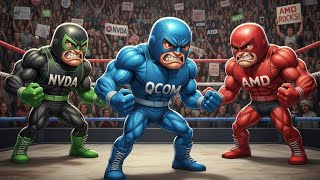
Well, I don't think we talked about it too much, but Qualcomm is now in the arena fighting with AMD and Nvidia. They'll be launching their new chips starting next year and then more in 2027. I kind of wanted just to get everybody's take on that, but I just think more competition is better in this space. You know, AMD is kind of on the back end. And if Qualcomm's coming out with something that says it's cheaper and less power, you know, draws less power, I think that's phenomenal and just fantastic for the industry. And we could see it in their stock price today.
Craig, what's crazy is just how constrained the supply is for all of this stuff. And that's where like in Nvidia would sell many more chips every quarter if they could just get more chips made every quarter. And this is true for all of these companies. And then you mentioned AMD and Nvidia. But we also can't forget that Google and its TPU chips are literally competing against these things too. In the sense that Google signed a deal with was it Anthropic late last week for billions of dollars of AI inference processing, which, you know, anthropic doesn't care where the processing is happening happening, as long as it's happening as much and as quickly as it possibly can. And so instead of, you know, like it's being processed on Google, competing chips to AMD and Nvidia, now we've got Qualcomm. You know, even Intel's got a wannabe inference chip that's sold eight units in.
The last seven years.
But the the what the, the exciting part of the Google of the Qualcomm chip is as Bryce explained it to me, that was your cue, Bryce.
Yeah, no, so we have Qualcomm chip uses a different memory architecture. It's called low power density double double data. LPDDR is what it's called. And I'm looking it up. Low power double data rate. And Qualcomm is the largest supply consumer of this type of memory in the world because they use it to make the chips for the smartphones. And so they, they have a lock on this supply chain of memory which is important because all of the other AI chips for, from Meta, from Google, from Microsoft's, I mean, you know, these are in house chips, including Nvidia's, AMD's and Intel's all used high bandwidth memory, which is HBM and that is severely supply constrained. And so if HBCM. What?
HBCM?
No, HBM. High bandwidth memory. Okay. And HBM3 is the latest and greatest version of that. And so Nvidia has a big, like they've tried to lock up the HBM market with sk, Hynix and those guys by signing long term deals for capacity and paying them in advance and all these things to keep an edge on that. And so if Qualcomm can figure out a way, if these chips work like they say they will, they can use this really cheap memory and it's actually a lot larger. High bandwidth memories is good for high bandwidth. Low LPDDR is good for big like storage. So you could put an entire model, like a 500 billion parameter model on a single card on one of these Qualcomm chips. Whereas on Nvidia chips or others you have to, they call it tensor parallelism. And the different chips have to work together to store that model in its memory. So anyway, I learned about all this this morning after the press release came out, but I, I thought it was interesting. The reason I, I say all that, and it's interesting is because I was afraid when Qualcomm put this press release out that they were just chasing, that they were desperate to have an AI chip. We too are in this game, you know, because the stock has been lagging and underperforming the socks by a huge margin. So I, you know, did some research, I was like, you know what, there's actually an edge here. Qualcomm has a real edge because they are experts in using LPDRR and you know, maybe this could work. So it's a good news.
Yeah, I just exactly That I, when I first saw the news I was worried that it was just me too kind of stuff. And this was substantially different enough on a architectural level that it really could be a competing. And Bryce and I and Craig now too, we have an internal rule in our firm to always focus the. The premise is that the most economically and energy efficient solutions always win over the long run. And if Qualcomm has, and it sounds like this is very energy economically energy energy and economically efficient approach to inference, you're not going to train on this stuff, but you will what you, the models you've trained. When random people like Cody, Craig or Bryce or John uses your model, it can, it'll go and infer the stuff and probably be cheaper on a per compute pure, per pure energy basis. And so that would be like that's if, if, if Qualcomm can become Even just a 5 or 10% market share holder of inference data center chips. It's. We don't have any data center in our models that we built for Qualcomm internally looking out and it was already one of our favorite positions because of the robotics kicker potential. If it now has an AI kicker to boot, I mean we have to go rebuild our model entirely and add AI potential revenue and then if it.
Becomes actually the most energy and economically efficient way of doing inference, it'll actually become the dominant inference platform and that would be worth trillions of dollars. And market cap of Qualcomm is currently not measured with teaspoon.
John, quick question on that. It's not. There is no issue. Right. If you train the model on Nvidia, Cuda software, all that stuff, there's no issue. You could download the weights. Right. And put them in a different chip.
Yeah.
And, and AMD or Qualcomm could inference it.
Yeah. I just your. The way you write the code to make it happen. If you're like oh we want to work on our next version that could have some stuff where it's called caught up in, you know, how Cuda was set up with Nvidia, stuff like that. The model itself. No thank you.
And that's again what we liked about Qualcomm was it was like we're not going to go try to compete against Nvidia on training, but if we can be more energy efficient on the actual inference and compute processing of it all like that's, that's a great market opportunity for Qualcomm to play in. We love Qualcomm for two reasons before today and that was because the meta glasses that we talked about earlier, Snapdragon chip from Qualcomm is what runs that. And then I think there will be hundreds of millions of robots five years from now that will have Qualcomm 5G LTE modems chips inside of them, which is what powers our Android or iPhone. So John, last words. Craig, your last word was a question and I was actually. Great last words. I appreciate it. Well done tving right there. Johnny.
I, I thought this story was interesting about coming out of China about asml. They, you know, have an ASL ASML machine there for the. Whatever deep ultraviolet lithography, which is like, you know, underlies all of what's going on. When they're like this, you can't do without them. Just like Taiwan, you know. So there this China called tech support. I just said, hey, we need to get this thing working. It stopped working. Whatever. The techs go out there and they find out that it doesn't work because the Chinese took it apart to reverse engineer it and couldn't put it back together together. And so I don't know what's going to happen there with. I mean it probably, I would say they kind of broke the sticker on the thing that says, you know, to.
Get your warranty is voided if you remove the sticker.
They actually. And I heard, I didn't realize, but there's parts of the machine that are so like black box that like opening them destroys them. You know, you, you literally can't, you know, open it up. You've got so much.
The rumor has long been the ASML has booby, booby trapped all of their EUV machines. And so those engineers could be in danger.
If not.
I don't, I don't think.
Yeah, Bryce, I don't think it's like the Israeli pager thing.
No, I, I like to think it is. I like TNT strapped to the inside.
No, no, I think it's movie trapped like on itself. Itself. Itself destructs like Mission Impossible is like, you know, this should blow a bunch of glitter all over the lab.
Exactly.
Liquid glitter everywhere.
If you could do that with more, you know, of the intellectual property that gets. Finds its way into China, it'd be interesting. But they've apparently figured out how to, how to go and do that, which is interesting for them.
But it is also underscores the just the miraculous nature of what were these. These systems that build the systems that build the chips that build the systems that we use to watch Netflix at home. Because ASML is like using Laser lights. And like it makes no sense. When you go study what ASML is doing to make chips, like your mind, you literally are going to be like that. That's not right. They're literally just cutting a slot with a laser light that then whatever, it's insane. They're not going to be able to put it back together. It's not a role they shoot.
I saw this video.
What's that?
I saw a video explaining how they create the extreme ultraviolet light which doesn't exist in the natural universe. That's what UEV stands for. And so they, they shoot molten tin into a chamber and then shoot the molten, the droplet of molten tin with a laser. And when that laser hits the molten tin, it turns into plasma, which emits extreme ultraviolet light. And that's how you get uv. And what's crazy is when it shoots it into that chamber, you have multiple cameras tracking the dot of tin so that it can precisely aim the laser to hit it. And that happens 50, 000 times a second.
It's like a particle accelerator. I mean in terms of the, the complexity. And then tsmc, what goes to build a plant in Arizona and people are like, yeah, good luck. Because when they made what they made in Taiwan, it was like on a Thursday when it was humid out. And this. And that's like they're trying to imitate exactly everything about how this happened because it's not, it's almost like the, the ASML thing where it's just so complex to try to imitate it.
The most amazing thing to me out of the.
Not the most amazing.
All of it.
Mind blowing.
The least amazing thing out of all of this is that ASML gross margins. You like, you talk about a monopoly. Like you literally. You can't buy this stuff from any other company on the planet. You know what ASML's gross margins are?
55.
52 to 55 for. Yeah. Bryce.
Oh my.
Right. It's not like, it's not horrible. Like you're not Walmart gross margins. You're not Alcoa gross margins. Yeah, but like a monopoly, like Nvidia is a monopoly on the training side of the AI data center chips. Gross margins. Bryce.
Sorry, I was reading. What was the question? Gross margins for Nvidia, oh, 75 company wide is like 69.9 right now.
Yeah. And at one point it hit 85 a couple three quarters ago.
So like that's, that's, that is monopoly gross margins.
What asml, what is this is a European, like I'm a communist Socialist. I can't take too much money for this product or something. Why are they not charging double their price and get their gross margins up to 75%?
I don't know.
The costs are.
I think the ts. I think the Taiwanese are damn good negotiators, is what I would say. They somehow are like, you know what? Screw you. I don't know how they do it. I don't know what your bluff is.
Yeah, what is your leverage? You're like, well, I thought if you charge that much for your machine to make the next generation chips, I'm not buying it.
We'll build.
We'll build it in house.
I guess maybe the only leverage would be like, we're only buying one, and other ways we'll buy three.
I don't know. John, last words.
Let's wrap this up.
We're running an hour and 10 minutes. Yeah.
No, no words. Nothing.
That was my last word. Was the chat right?
Last word?
No, I had mine. I. I answered Craig's question and talked about Qualcomm.
Over to you, Cody.
All right, I.
I guess I'll just.
Share my entire screen. This one. Share. This is. Can you guys see this here?
Yeah.
Yeah. This is an AI song that my mom sent me from her visiting her cousin or my dad's nephew in Nashville. I don't know why it won't play. You guys can't hear it, can you?
No.
Can we play Founder Mode?
What's Founder Mode?
It's my favorite song right now.
Oh, yeah.
Yeah, sure. Let's finish it with Founder Mode. It's actually got a video. Mine was almost cute in a family kind of way.
And this video sort of makes fun of technology, but it's. I think it's. I think it's funny.
It's.
It's a badass video.
Let's just keep it real. Share.
Share your screen. There you go.
All right, everybody, this is our last word.
Founder Mode, full screen. Bryce.
Burnout got. No, it's the fried Just sell the dream and watch them try Micromanage till they snap Pack the calendar no time to nap Promised equity change the best burn through talent Called it a T It's not toxic it's found to mo not reckless I disrupt the code don't plan, don't sleep no more alone Just grind and gut it Found a mo Stop burnout It's time to mow no boundaries when you're in the zone move fast break trust yeah, that's the O. No one's wrong here it's found in MO Laid off half the crew on Zone.
That's it.
More from Cody


The AI Revolution Call: Tim Cook departs! Robot Marathon? And Amazon's $50bb side gig!

The AI Revolution Call: Mythos Mania! Is Anthropic just doing more hype? Or is this the real deal?





The AI Revolution Call: Anthropic vs. The US Dept of War, Iran, and How Will AI Work With Humans?



The AI Revolution Call: SpaceX Acquires xAI...Will SpaceX Merge with Tesla Next???