The AI Revolution Call: How Will You Use Wearable Tech in 2026?
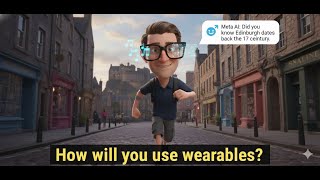
A conversational YouTube livestream (host Cody Willard with Bryce Smith, Craig Delon, and John Dio) discussing AI adoption, workflow integration, infrastructure (optical interconnects, chips), recent industry M&A/transactions (e.g., Groq/NVIDIA discussion), wearable/display glasses (Meta), multimodal AI trends, energy constraints, and predictions for 2026. The speakers mix personal anecdotes, product impressions, and investment-oriented takeaways.
Chapters
I just had an epiphany as we go live here. Welcome to the AI Revolution call. I'm Cody Willard. Bryce Smith, Craig Delon, they all work trading with Cody. We tech invest. That's John Dio, he's a tech expert. AI man. He's been working in this industry for 30 years. Not even exaggerating. You know what we need at the beginning of this video? It has a slot, I just saw it and it's like hey, put your. Wait, does this say are we on live Go?
Yeah, yeah, it says I.
A premium account on X is required to create. Oh, you know what, I think I might, I have to update my credit card on X to get it to go live there.
We should do that because that's basically where all of our viewers come from.
Oops.
I see it on here though.
I know, but it's literally telling me right now I have to, I mean.
I see it on Twitter, I'm on Twitter.
It doesn't have a check mark thing.
I don't care. We'll come, we'll figure that out for next week. Here's what I was going to say. It says right there at the beginning, it's like, hey, do your intro, you know, run your intro video before the call starts. How are we AI guys? Any self respecting AI guy would have made an incredible AI generated intro. 8 second video for our weekly AI call. Dude, AI revolution. What are we doing.
Craig?
Oh great.
How have you, how did you not think of that?
That's what you're here for, Craig, is to just.
That is it man.
AI generated videos. @ any rate, Craig, play with that. You have one week to come up with a very funny and or really cool intro to our AI Revolution call. Hello everybody. It's the AI Revolution call. Let's hit.
It. I mean, did Cody miss, when was it last week when I was on with you, Bryce? Did Cody miss the, the graphic that I did.
From. You know what, I actually I, I, if I could have figured out how to give you guys a thumbs up during the video, I would have, I actually tuned.
In. Oh.
Okay. Yeah, it was very.
Easy. Yeah, it was a, it was.
Incredible. The detail of the video, of the image and everything and its.
Accuracy. Yeah, one.
Shot. Yeah, one.
Shot.
Yeah. That's.
Impressive. Interesting. John. I met with one of our friends that works in the AI division at Google after we spoke that day and he was sort of talking about the same thing. But what was interesting was like, he's like in the software development life cycle, this AI is taking over all of it. Like every person in that deal is using AI now, you know, and I think that's the same thing you were saying, right, Is that. But that was just good anecdotal evidence from none other than Google that, you know, the entire stack is now sort of morphed into, you know, AI is a layer underneath every part of the software development life.
Cycle. I was hearing one more thing that, to go with that, which was that, you know, there was all these benchmarks for this language model is doing really well at this and this one's good at that and so forth. Most of the benchmarks, they kind of run from 0 to 100%. Like how much of the test set is getting done. But there's one benchmark that doesn't have an upper limit because it's how many hours can a agent system go? And while still effectively producing, they have run it at the 50 level and 80% level. Like doing, doing the work of a knowledge worker and getting half of it right, getting 80% of it right, that kind of thing. And that number is working its way up to 2 hours, 4 hours. By first quarter it's going to be like 8 hours. It's going to be. So you're. And by the end of 2026, it'll be over a week. And what this guy was talking about, this was getting at, he's another kind of professional in the field was saying that when it does that, the jobs of all the people who do that kind of work, they don't go away. They actually become more important in a way. But it becomes necessary to radically shift your workflow because what you'll be doing is setting up the work for the AI to go do for the next week. And you're responsible for it. You're accountable for what gets produced. You're checking where the problems are in it and so forth. But you've got to be, it's like, could you right now give one of these things like a week worth of work? Would you know what to say to set it up to go, go off for a week? That was the.
Question. Yeah, no, John, it's a. I, I think the way you frame that is perfect because it's the workflow itself that is my personal biggest hindrance to using AI. More than like enough. I don't use AI enough because it's just not integrated into my workflow yet. I try to come back to it. Try. Just right before this call, I spent 20 minutes on Gemini and chat GPT talking to it about what Cody Willard's predictions for 2026 might be and getting in arguments with it. And I actually got a couple good ideas, concepts if not actual ideas from the discussion. But it's not an everyday thing for me yet. I. I have friends. I think that. I think Bryce and Craig are both more. Let's call it affluent in gp, in GPT, in AI ing. And I struggle. Just the workflow part of it. I know I could make it more integral to my life. I know it could make my email flow better. I know it could do all of that. But you know, I've spent 35 years sort of with this protocol that I approach work with and I'm struggling out to. To truly immerse myself with.
AI. Gotta say, I. I have the same. You know, maybe the problem set is different, but the, the fact of trying to get into a new way of doing things and working with it and so forth, that the struggle is.
Real. Yeah, Bryce, you guys, I think Craig, you guys were both smirking as I was saying.
That. I was thinking of lots of jokes and digs to throw in there, but I'm not gonna do it because it's holiday season.
So. That's so nice of.
You. Yeah, I wasn't thinking of any.
Digs or anything, but how could you.
Not? I would say.
That. I would say that I've done.
A lot of different things in my life. You know, I haven't done like the same thing for 30 years. So every time that I've tried something new or I'm always trying to find. Find a way to do it easier or make it easier for myself. And AI is just the ultimate tool for that. So I haven't been cursed with the blessing of having like just that workflow that you've been doing forever, which is nice. But you know, when I come into something and it's kind of different or ad hoc, you know, I have to find a way to just let's go ahead and get this done, make sure it's right. And how can I make my life easier so I can.
Maximize. I'm like into this whole. What do you call those productivity tools, like notion and things like that. But it always, to me the, the metaphor for this is the guy across the street when I was growing up had this like, maybe it was a Thunderbird. I forget what it was exactly, but it was like always up on blocks and the thing was supposedly like really great performance, but since he was always tweaking it, he was never driving it. And that's how it's been with My kind of, what do you call, personal organizer type stuff is it's. I'm always kind of trying to find the right one and switching and I don't kind of settle in. Now Cody, he has for 30 years, however long sort of settled in and tuned and whatever, and he's got like, here's how I work and get stuff.
Done. Then the, you know, as I said that though, I was thinking it's like, it is interesting. I, I research stocks the same way I did since 1997 when I couldn't afford a Bloomberg terminal. So I used Yahoo. Finance and open Free sources for my, you know, data for my filing readings, my transcripts on Seeking Alpha. I've been doing that for 20 something years essentially, and that's my approach to it. But I have had other jobs, right? I mean, I did the fight the TV gig thing for two and a half years and that flow was very different. And frankly, I think it's one of the reasons I probably didn't like doing that job very much was that I struggled to sort of get into the flow of that job instead of like my, my brain likes to think about revolutionary technology trends and how to invest in them, not necessarily how to build my followers and my brand on Twitter and tv. By the way, we are now back on X. I went ahead and signed up while we were talking. So I, I thought I got an email telling me it was like 390 bucks a year, which is partly why that seems like a lot. I'm not sure I should like read that before I just sign back up. That was probably 10 days ago. He never got around to doing anything about it until right now. It was $84 a year. So I wonder if maybe I'm on a lesser tier now or.
Something. There are different tiers of X.
Subscription. I'll figure it.
Out. Because you get like, I think if you pay up, maybe with the $350, you get like the Super Pro.
Gro. I think that's exactly what I was about to say. I think I probably paid so that I could play with Super Grock. And like I just mentioned, I haven't used Grok in. I mean, I read X basically every day at some point, but I, and I enjoy the Grock commentary when people are like, grok, is this true? Is Jason Calcanis a piece of. And Palmer Lucky is right to hate him. I'm like, yeah, he is. I'm on that page. What do you say? Grock and Grok is like, well, here's the facts and it lays it out a little bit. And basically, I think it explained why Jason Calcanis is a piece of. Wait, did I say that? Like. Sorry, chamath. Wait. I don't mean to say those guys are pieces of shits, but they are, so it's hard not to.
Say. He just. You can't, you know, you take.
The. I don't like the bad guys. And Palmer Lucky is like. He's funny because he doesn't take no from nobody on X or anywhere else. He and Elon have enough FU money that I guess they just say whatever the hell they want, anytime. But Elon rubs me wrong about half of his tweets. Palmer Lucky. I'm always like. I feel like I'm rooting on. I'm always. Yeah, that. Go after that guy. Get him. Don't let him talk to you like.
That. Wait, I think you got mixed up on which podcast we're on. Welcome back.
Okay. Welcome back to the all out.
Podcast. I like their intro song. It's.
Good. Do they have it? I've literally never seen the.
Clip. Well, you should just watch the first 30 seconds for the.
Intro. So, Craig, are you telling me those all in pieces have an actual intro video and you haven't made us one.
Yet? I was like, john, stop.
It. You're throwing me under the bus.
Again. I'm sorry, but we need our video. John, you better quit talking about.
It. I will make a great one. It would be the.
Best. We need to figure out if we can put an outro video at the end of these videos too, because that would be funny, you know, different. Like the beginning video on Cheers vs the exit video on.
Cheers. Craig, have you gone to onto.
Suno? No, I have.
Not. Get us a little bit of theme music by with a little bit of jingle to it and have it say something about Cody and. And that'll be the. The intro music.
Okay. Yeah. And I'm assuming Suno is where you go to, like, make AI music and stuff like.
That. Yeah. S U N O dot.
Com. Got.
It. That's one of them. There's a couple of them.
But. Yeah, well, I like to get.
Creative reserve time for, like, paid promotions. Like, you know. This episode is brought to you by whataburger. I love.
Waterburger.
Okay. Just to make it fair, like, it's not just, you know, their competitor is Yu.
Ydio.
Yeah. Udio or.
Suno. Speaking of product.
Placements.
Okay. I'd like to add a.
Display. We got them.
In.
Yep. Bryce. Well, I got mine. Bryce got his Craig, apparently they did not have the large like we, we had frame size 2 or standard, I think. And you went with the bigger frame size and it, they, you got an email today saying, sorry, you'll get it.
Someday. Yeah, they gave, they gave us a $100 gift card, you.
Know. Oh yeah. And you asked me, by the way, the answer to your question is just keep the gift card. You go buy yourself something fun at Best Buy as a Chris Extra Christmas bonus out of the.
Universe. Thank you, Cody. I appreciate.
It. I like how he pretends to be nice when, when everyone's.
Listening. Yeah, yeah, didn't bother answering in real.
Life. All right, well, let's talk about some real AI.
Stuff. I want to talk about the meta.
Classes. Bryce, go.
Go. Well, actually that was a product placement. We will talk about these in a moment. You mentioned you spoke to our friend at Google who helps run their AI part of the company, basically. I guess, I mean, I, I, it's hard to say that because like Google probably has like 5000 people working in AI stuff at this point. And so our friend doesn't run all of those people, but he is a, in a very established, long time Silicon Valley Mag 7 rock and roll star. Bryce, can you just tell us what were like you actually did tell me, but if you'll tell the crowd here what like what are the main two or three takeaways insights you had from talking to Daniel about the AI revolution the other.
Day? Yeah, I think the first one is just that he said, you know, they had Gemini three months before it was released to the public. Weeks at minimum, I think, depending on where you were within the organization. But he said, you know, everybody knew it was going to be good and then it turned out to be really good. And he said that, you know, just, it's incredible how the morale and the spirit of the employees at Google has changed now that Google's back on top. You know, stock price being at 300 all also helps with that. I'm sure, you know, many of them own the stock, so I mean.
But that's just anybody working on AI at Google has some options, right?
Yeah. And so he, you know, he was just like, hey, you know, we're excited, we feel like we're doing well, momentum is strong. And so that was just, you know, an anecdote. I thought that was cool in terms of the technology. You know, we talked a lot about infrastructure. What he's doing now is getting the data. If I understand them correctly, the data to get onto the hardware is a significant problem. For training. And so you have to figure out like software, you have to use software to get the data manageable so that it can fit on the chips and be useful somehow for training purposes. And I guess that's quite a problem that they're working through. I thought that was interesting. We hear a lot about like this data, that there's not enough data out there. To me it doesn't seem like that's actually an issue anymore. They're using I think synthetic data. They figured out how to get around that issue. My other big takeaway, we talked a lot about like networking and the interconnect and Google, I think, and this is all, you know, everything that we talk about is all very public stuff. But like they are using optical networks to connect their chips and the racks and they've, I think Google has a proprietary system they've created to do so with TPUs. If you're in the Nvidia world, like everybody that's not Google, you're using Ethernet or Nvidia's proprietary NV Link and InfiniBand. But it does seem that there is a lot of momentum in the optics space. And basically the reason that is is because you can only fit so much memory on a chip, whether it's a TPU or a gpu. And that's sort of a fundamental constraint. But if you can separate the logic processor from the memory and the data storage, you'll unlock a lot of capability. And the way you do that is with fiber optics that moves data at the speed of light. If you're using copper, there's latency that's unacceptable even if you're just moving a few hundred yards across a data center or something. So I think this training has moved beyond just building a really good chip to building a really good system. And part of the system integration is going to be using fiber optics, I.
Think. Well, that's part of it. But in the same issue about lining up the next set of data that doesn't fit on the chip but needs to be pipelined onto it as fast as possible is kind of why Nvidia just didn't buy Grok. You know, that's. I wonder if you guys.
Have. Yeah, just to like, let's hit on that headline. So actually people that don't sit around on Christmas holiday weekend reading headlines about technology news might not know Nvidia took $20 billion of their giants cash stack and gave it to a company that's a startup semiconductor. They actually sell semiconductors. Not just design, but they design their Semiconductors and it was, you know, slightly different architectural platform approach than the Nvidia way. And my dad, or Brett's dad, Brett's grandfather asked me, Bryce's grandfather, I mean asked me on Christmas Day when that news hit. He was like, you know, I was just telling Bryce about it and he heard us talking, he said, is that, is that Nvidia taking out a competitor or buying it for a technology? I was like a little bit of both. A little bit of both. Takes out potential competitor and leapfrogs them with some technology, gives them access to some leapfrogging technology I should say. And it's not exclusive, right Bryce? That's what the headline screams.
Right. Although it's a total end run around any trust law, you know, so they basically hire all of the employees except for like one guy that's going to run the shell company and then they do a non exclusive licensing agreement for the technology and that's, you know, they, they pay $20 billion to not own the.
Company.
Right. And, and to have a non exclusive license. But they don't say how they're, they're not giving everybody like favored nations pricing. So you know, Nvidia is like going to be like, yeah, we'll pay you guys $10 million for this on a ongoing monthly basis. And anyone else, it's a billion.
Dollars. Right. I do think that they have like a Neo cloud service that the company is going to continue to run. So you can like, you can go on grok.com right now and ask questions like you can chat GPT. That's still going to happen outside of Nvidia. But other than that, most of them clarify.
This. This is not the X Twitter Elon Grock with a K. This is a chip company, Grok with a Q which was around first. John, what does the term Grock come from? I bet our boys don't.
Know. It actually comes from the dictionary. But it's last, first place that I, I know of it being used was in Star Trek but back in the the six 1965 or so. But to Grock is to deeply understand.
Something. I did not think it was Star Trek. I knew it was had somewhere in science fiction. That's why I threw it over to you and acted like I knew the answer but they always wouldn't. It's trying to get you to give.
Me. Well they had all the buttons back in the day. You go to the convention would say I Grock.
Spock. So.
Okay. Anyway John, let's clarify. You've been to a Star Trek.
Convention. I was 14 years old and I met William Shatner and I did. Yeah. So, you know, if I were any younger, I might be embarrassed. But at this point, I'll just say it.
Proudly. I had the chance to meet William Shatner at Fox. He was in the green room next to mine and I heard his voice and I ran and hid so that I wouldn't meet him because I didn't ever. I. I don't want to pop my. You know, you don't want to meet every idol you've.
Got. And Captain Kirk, he's 100 now, isn't it something like.
That? I don't.
Know. So anyway, thing about. Yeah, he's got to be.
90. He's not.
100. Yeah, yeah, 94 years.
Old. 94. So cut you down the middle on that. So point closer to.
Me. I'm taking the.
Win. Last surviving original Star.
Trek. Is.
He? No, I mean, you've got like Nurse Chapel that and stuff like that.
So. You got any.
Tribbles? Tribbles? You got tribbles? Yeah. The worst episode of the worst.
Episode. My employees have never seen Star.
Trek. Like the Star wars.
Episode. Yeah, we gave that as an assignment in this morning's weekly strategy call that they both have to watch two episodes of the original Star.
Trek. Yeah, it's nothing like. I mean, Star wars is not real. This is the stuff that really matters. The original Star Trek, it's, it's. Every episode was like a morality play where it was covering some kind of theme and just.
Really. It was also based on humans on Earth and like real law and like maritime concepts for ships, tips. And it's a great, it is a great idea. The execution doesn't stand up as well as it should. Watching some of those apps. I tried to make my wife and oldest daughter watch a Star Trek original series episode with me a couple weeks ago and they didn't make it through about five minutes and they're like, yeah. And then I tried to explain to them that all of the technology we use today, much of it comes for was like conceptualized back on. Yeah. The start. Original Star Trek. And she said, which was a bigger influence on today, Star wars or Star Trek? And I said, star Trek. It's not even a discussion. And we actually went to AI and got it confirmed by three different.
AIs. Yes, it's abs.
Absolutely. We have bored Bryce and Craig at this point.
John. So. But back to the Nvidia Non acquisition. I was gonna say, yes, they both cut out a competitor and it's not, but they're not like burying the technology they will incorporate. Because GROK actually had some great technology, great architecture for kind of. I followed them before, you know, before there was the other Grok and you know, if you see like an animation visualizing like how the chip fills up all of its memory for every pass through where the Nvidia and other stuff sort of sparsely uses the memory, it's a really.
Valuable. Well, it's. You said valuable, but I thought you were going to say it's a very energy efficient, cost effective way of doing it too, if I.
Understand. Yeah, and I mean in terms of like getting on the at inference, getting the most kind of tokens per second coming back, they had everything beat. It didn't matter what others were using. They were like 10.
Times. With Craig, a couple of things. Some of the stuff we assigned this morning on research. Let's get started. I think Bryce, you've already started a spreadsheet of optical networking companies. And let's, let's. Let me look at that list. I haven't seen it yet. If you did start it, you probably sent it to me and it was, you know, just on a drive or something. But if you will, I'd like to look at that and let's spend some time tomorrow discussing that. Craig. Also I just was thinking, you know, we've got somewhere. Bryce and I put together every article I have written for trading with Cody and anything else we could find over the years and we're sitting here working on this Revolution Investing book. Let's upload all of that to Gemini, ask it to deep think its way and siphon out any evergreen articles that are in there about Revolution Investing and our approach to things. I bet we could. We were talking about that earlier, obviously, Bryce, and just as we were saying that, I bet we could probably leverage some of that in all of this. And the reason, what made me think of it is one of our primary tenets of our approach is the most energy efficient, the most economically efficient ways of doing stuff always went out over time. And I shouldn't say, we shouldn't say always, but almost always there's always exceptions where certain things can get too big of market share. This shitty Windows computer that you guys are probably looking at would be an example of.
That. Will do. One last note on the Groq thing. The CEO of that company helped design and build the Google tpu. And so then he started grok, his own company. And you know, part of it is just, I think talent acquisition too. I think Nvidia is probably very interested to get that guy on.
Board. Yep. Intel. It just, it just is such an afterthought at this point. Yeah, I just, I don't know why he even said it out loud. It just made me think. It's like Grok is worth $20 billion and intel, you know, it's doubled it, but recently it was like worth 80 or $90 billion. Like, yeah, Grok has probably not even a billion dollars in annualized revenue.
Yet. It's the right kind of processor for today's scaling.
Stuff. Yeah. Google says Grok has an estimated 500 million in revenue, up from 90 million last.
Year. So there's some growth right.
There. So 40 times revenue.
This. Yeah, hell, that sounds free. With that kind of growth, Nvidia.
Bought. Well, they didn't buy them though.
So you know, Nvidia burned.
Cash. Well, kind of interesting though. Like what happens to the people. I didn't heard they took all the employees. I heard they took the, the executives and you know, like the one they care about for designing it or whatever. So what happens if you're an employee at Grok or one of these other ones that gets sort of left behind into the company that didn't get acquired. So the normal kinds of stuff doesn't happen with the transaction and they don't get like, do they just not get the payout they were there.
For? I thought one of the deal points was that most all the employees that had stock would get to cash out at 20 billion.
Valuation.
Okay. Again, somehow not part of an.
Acquisition. Yeah, somehow liquidity event, but not actual.
Exit.
Yeah. You know, the answer to your question, John, is I don't know that anybody really knows yet because I think this is a new. You know, there are some very high paid corporate attorneys somewhere who was like, hey, here's a workaround nobody's done yet. Here's a loophole we could try to.
Exploit. It's been done at least four times recently. Microsoft.
Recently. That's what I'm saying, recently. But up until a year ago, three years ago at most, this like when, when Microsoft went to go buy a company about the company nowadays they're like, yeah, we're not buying the company. Nothing to see here. We own.
Everything. This is us not buying the.
Company. This is us not buying the company. This is us giving all of the owners of this company lots and lots of capital and we're hiring all the people that work.
Here. Not buying it.
Though. Nothing to.
See. I want to shift topics a little bit here, but when I was Preparing. We're publishing an article with our top five predictions. And I just asked the AIs what their predictions were for 2026, you know, not what it thought mine would be. And all of them talked about energy a lot, energy constraints and all that stuff. And I think there's some truth to that. I'm not. Not making light of it, but it. It's funny to me in the market that there's like all this talk about AI, bubble. AI doesn't work. It's not productive, it's not helping, not benefiting the economy. But there's like, nobody is out there. Be like, oh, copper isn't a bubble. Or energy is a bubble. Or.
Silver. Silver's got nowhere to go up because it's a store value and there's AI. Something needs.
Usage. Yeah, both of those things can't be true at the same.
Time. Yeah, Bryce, I actually, it's funny you say that, because I think actually both of them could be untrue at the same time. AI is not in a bubble, but energy and copper are. That's literally what I wrote here. I'm on number nine. I'm gonna either have to do. I'm the boss, so I can do Cody's top 10, and you guys can do your top five, or I'll have to work with Bryce and Craig and get it whittled down least a six. Maybe I'll give myself a bonus one. At any rate, I'm on number nine, and it is opt. No, that was the one I just typed while you guys were talking. Number eight, the electricity prices don't go up. That's one of my predictions for next.
Year. All of the AIs would disagree with you. Every one of them was so convinced that that was like, the number.
One. Well, they care. The AI is like, I need that.
Electricity. Exactly. It's existential for the. No. You know what's funny though, Bryce? This is I. As you're saying that my ink. My first instinct always is, I love it when nobody agrees with me. You've seen it. I'll go into a value investment conference and pitch Tesla and literally get laughed out of the room. And it's my. Like, I'm more confident that moment than I would be if anybody patted me on the back. It was like, hey, that's pretty smart, Cody. I don't want that ever. I want everybody to think I'm an idiot all the time and then just end up being.
Right. You got.
It. Yeah. Thanks, John. That I. I got it. That I'm right. Or that everybody thinks I'm an.
Idiot. Oh no, no, I.
Don'T. At any rate, as you said that with the AI thing my first instinct was like hell yeah, every AI disagrees with me. But I have no I, it's proven over time that usually when people think I'm an idiot on something like technology, investing, trend idea thing, I'm gonna, it works out for me more than it doesn't. I have no idea. AI might know better than me. It's going to be interesting. You know what I'm going to do? Craig, make a note please. When we finish our top five prediction stuff we need to run them back through the AI and ask it like to digest it, look at it upside down, tell us where we're wrong and even get some arguments with it. But more importantly, let's look back next year at this time and actually do a review of our top five predictions when we give our next predictions for next year. Bryce, on that note, Craig, on that note, I've done some top five predictions for the next year stuff in the past over the last 10 to 15 years on trading with Cody. Let's go find some of those and hopefully they make me look really smart and we can use them. If they don't make me look like really smart, we can also use them because it's okay, I don't need to always look smart, just most of the.
Time. I did run my predictions through the AIs and asked him to handicap the odds and tell me what it thought the odds of every one of them happening was and that was interesting. So yeah, yeah I did, I, I'll, I'll save it because it's, it's our work that's coming out so, but.
You gotta watch out for the sycophant problem. So instead ask it, don't tell it what your answer is, just have it give you its answer and then, then go make the.
Comparison. Well, it definitely, it didn't agree with all my predictions. It's, you know, some of them it said were definitely long shots, you know, 10, 20% chance of happening, maybe some 80.
90S. Johnny, would you like to do your top five predictions for 2026 so we could include it in our article this week for our subscribers because you're the only guy who actually does AI and we would love to have you.
Contribute. Yeah, I, I, I think about that. I'm definitely, they wouldn't be as, as market based, they'd be more in the technology itself, which is.
Fine. I, I, I just, you know, our training with Cody's subscribers and the people watching this know who you are and they value it. And I think I would, I would value seeing your top.
Five. Like you can translate it into what its effect on things is. But I think that there's going to be a fairly dramatic overlapping of.
All of.
The, I'm forgetting the word, but the like, us, voice, video vision, multimodal modalities. Yeah. So getting to where the modalities kind of merge and it's become sort of one thing and we stop talking about all the pieces. That's going to be, I think, a big.
Direction. That actually is a good segue to.
These. There you.
Go. I've found the new Meta display glasses and the band with which I control it, you know, can also control it on here, but you can control it on here. I actually need to turn it on to be fascinating. I quite like them. I, I, I, I actually put them on and play with them sometimes and like, just like, hey, show me a map of where I am. And oh, that's so amazing. I, I just, it's still novel for me. Well.
Help. Like, we don't see what you see. So you're now they're starting to project some stuff onto it so that you can.
See. Yeah. So right here on this eye here, if I turn it up and look, I can go to the settings and turn up. That's the volume I need to Bryce. Yeah. I can turn up the brightness and you can actually start to see it a little bit here. Let me get to the.
Set. And although it might look tiny to us with doing your eyes super close to.
It. Yeah, no, it looks pretty amazing. There's.
Brightness. It's like a whole screen worth of stuff that you're.
Seeing. Turning up the brightness now. I'm trying to. Anyway, this is why Bryce got frustrated, because it's going to take a little bit of practice to get good at this stuff. Hold on, I'm almost there. I messed up. I went back out of it. Okay, there. Now I've got it as bright as you can see it. Maybe if I turn them around. No, I don't think you guys can see them apparently. But yes, right here on the right lens, I got to turn back.
Down. That's bright.
Right? I have a reflecting screen that it's transparent. I can see through it. If I go like this with my middle finger, it disappears entirely. But if I do this now, it comes back on. I can ask Meta a question. It's answers print right there for me to see. It also talks to Me. There's headphones obviously in here, but.
Is it like a screen worth of stuff or is it a small.
Screen? So I got apps. I can play music, make a phone call. You can also just talk to it and ask it to do all of that stuff. I think my favorite feature I haven't even used yet, but I will be using it when I travel in the next two to three weeks globally again and internationally. It's got it. Not only does it translate in real time when someone speaks another language, I think it only has Spanish, French and. What's the other one?
Bryce? I think.
Italian. And it's like only romantic languages at this point, but it actually prints it in real time and you can see the translated version of what they're saying in your eye and it, you know, as you're listening to them and you can engage in real time. But I find them, I'm very excited. I think, I don't think they look terrible. I wouldn't say I, whoa, wow. I look handsome in these things, you know, but they're all right prices. They don't look good on his face. And you know, like, we have different face shapes, so I can see that they need different form factors and things to come out. But I think more importantly, it is the beginning of it all. Like, this is the worst it's ever going to be. This is. You remember Google Glass? I actually have a pair of those from 10, maybe 12 years ago at this.
Point.
Yeah. And this is the next iteration of that. It took another company and 10 years before someone tried it again. But I think Meta is getting. This is all about where Met is trying to go. They're not trying to turn this into a trillion dollar. Version 3 of Meta. Glasses with the display are not going to be a trillion dollar business, but they are a step along the way to getting to ar augmented reality and virtual reality platform that will be worth a trillion dollars. So, you know, I think I'm. If I were giving it a rating of 1 to 100, I'm calling it like an 84 right now. I think they're really cool. Not truly. Absolutely mind blowing. Like the first time he played with an iPhone, but. Mind blowing. Bryce, what are you, like a 40.
12? No, I don't hate him that.
He threatened to kick them and break them. I was like, no, no, I.
Dad. Yeah, I just, I struggle with the look when I wear them and that's the main issue for me. And then I've had trouble getting the wristband to like work consistently and that's Sort of in my two.
Big. Do you not have them with.
You? No, they're in my truck, I.
Think. Is your truck outside? Would you go get them so we can see just how bad you look and then we can all make. No, it'll be.
Hilarious. Is it run, Is it Linux.
Based? I'm gonna guess yes. It's its own operating system. Right.
Right. Yeah, it was a variation of Android, which is.
Linux. Oh, okay. Yes, but that's. Oh.
Yes. Yeah, that's Linux. So yeah, they, yeah, they can't start from scratch on that, but it gives them. So yeah, they kind of chose their kind of piece they'd aim at. But it's. Although it looks like it's just glasses. If the whole social thing flows from that or if people being in the world and you kind of owning the, that piece of the real estate of, of their attention or whatever of them, you know, what do they see where they go, you know, the, the owners of Facebook would love to know, you know, where. What, what are you seeing at any given moment so that you can kind of. Where you are right where you are like. So I can adjust their.
Impressions. Lots of advantages for advertising. Craig, you've talked about. Tell.
Them. Yeah, I mean the first time we went to get them and, and started talking about them, I was, I looked at this really cool vending machine in the airport and I'm like, what if you just had on metaglasses, you look at the vending machine and then like a giant Coca Cola polar bear just comes on top of there and, and cracks open an ice cold Coca Cola. But in your glasses. I mean, so cool. And I mean, talk about driving engagement. I mean there's just a. Augmented reality is definitely something that I think is not talked about enough because you know, VR is, is a little more interesting to a lot of people. But augmented reality will definitely have the, the advantage when it comes to advertising. And it's going to be everywhere once the wearables catch.
Up. You made me want a Coke, but I didn't have a.
Coke. Just confirm that it's a highly customized version of the Android operating.
System. So theoretically then it's a low lift, easy lift. Nothing's easy in tech. But theoretically, most Android apps could conceivably run on these glasses. And John, because what you're talking about is all true, I think these, this concept combined with the Oculus. Speaking of Palmer Luckey concept itself gives Mark Zuckerberg and Meta that potential dominant platform that other apps can be built upon, that they get to Own. They get to control the data, they get to control the access to it, they're going to profit, they'll tax everything on it, just like Apple and Android, Google do in their app stores. So I think this is that. It is yet another example as AI becomes more agentic and just multimodal and we're able to talk, look, think, interact with our fingers, etc. The less we use this, the less we do this, the less we're doing this. Bryce has been saying for two years that the Windows operating system is at bigger risk of being displaced by AI than Google Search. And I thought that was a very impressive, intelligent, important insight into this stuff for a long time. Because it is like, I don't need even I. I need my phone. I guess it still is connected to the phone. So maybe it doesn't displace Apple's operating system per se, but there's also the. You know, within three or four years, you could absolutely have a Qualcomm 5.5G, 6G chip in these glasses with their own assigned phone number. Who the hell needs even a phone number? You could have your own SIM card in there, phone number, or not have all your WhatsApp and everything else in there. It's its own operating system, it's its own platform, it's its own way of engaging apps, all the different things you want to do, services, advertising, you name.
It. So get kind of a competitive metric and maybe it needs a new variation. Is this like, share of attention? What? You know, when everything was done on the phone or the laptop or something like that, you'd be like, well, what slice of attention is TikTok getting, is Twitter getting, is YouTube getting and so forth? But now the meta introduces like a new surface for the attention to happen on, and so they extend out. Where can attention occur and introduce a whole bunch of new, you know, attention opportunities through.
That? Yeah, John, I. As you're asking the question, I had an epiphany. I like this one, Price. I mean, Craig, write this down, please. This is going in my prediction somehow, and it's certainly in the book that, you know, attention span's not finite. Attention span is darn near infinite. We used to just sit there and watch one monitor in our living room. Or we used to just listen to a radio program. We used to. Before that we just read a piece of paper. Then we started listening to a device and that was our attention. And now how many people are sitting there with a podcast in one ear, a TV playing movies on the tv, reading their phone Answering a text message, looking at a map on their idevice. Like there's, it's not, there's not a finite amount of attention. There's 8 billion people 24 hours a day that could consume probably 5x what they currently attend to attempt.
To what's your. So take that a step further. So if that's true, then it's not a zero sum game or it's.
Not a zero sum game. That's my point. You can. There's a world where Netflix, TikTok, Meta, Facebook, Google, the AI revolution calls YouTube, cable TV, movie.
Theaters. Yeah. So the, the one kind of thing was like where is that attention happening? Like what surface is it? On what planet? Another is what's it being expended on? You know, is it videos? Is it, you know, people writing programs and doing stuff? Is it some other kind of streaming? So like all those different options. And so to bring up the friends of yours, OpenAI, you know, and the fact that they're sort of also seeing this as, you know, we're just not, we're not just in the business of coming out with some language model. We want to play in all these areas. You know, they, they talk about input devices and everything. So the latest thing I'm hearing is, you know, OpenAI's big competitor, OpenAI's big competitor might turn out to be like Apple, as Apple really gears up their Google partnership and they, all of the ways in which they have the ability to kind of be in front of people with their stuff and then to make not just AI happen on those, but all of the modalities, all of the, you know, kind of lifestyle things that happen with AI, maybe they're better at it that once they get into it, yes, they kind of, they, they were slow out of the gate, but maybe once they get going they're better than like an open AI at what's the set of ways to get that experience to happen for the, for the.
Person? Exactly what we're saying. I think that's a very well put explanation of what we're trying to picture here is that there's some, there's a lot of value to existing data and existing portals, platforms and portals. Your portal to AI, your portal to the Internet, your portal to content. And those established portals have lock in and switching costs that are inherent in them that will make it next to impossible for startups to truly displace them. Not impossible, but next to impossible. You know, if I were still on tv, I could totally get away with like, I look like A TV personality with these glasses, they are a little like. I can see what you're saying, Bryce. They're almost like. It's almost like I want, like I put these on and it symbol. Symbolizes that I want people to look at me, look at me. I'm the cool glasses guy. Where the other ones. Oh, they're up to my house. The other ray ban version 2 meta glasses just looked like. You wouldn't even know. Like they're just normal glasses. These are a little bit more attention.
Seeky. Well, but they needed to because when they went to three is three. Right. It's doing the. The projecting. That wasn't happening on the. On the previous one. Now even that one, two, now three. Another thing it does, besides giving you a thing you can read is it sees what you see. Right. So you can ask it questions about what you're looking.
At. Two did that also two had.
Glasses. That's what I.
Said.
Yeah. The thing that was there for two and continues to be there for three.
Is. Yeah. The thing that's better about it with three is it literally puts out what it's saying. So, like, if it's talking too fast, you can sort of read it and go back and scroll.
Down. But now you can combine those capabilities. The thing that was there with two and the thing that introduced with three and. And do stuff like. Can you get overlays? I don't know if it probably doesn't do that because overlay would be like more like what, the VR stuff? It's the AR aspect of Apple.
VR. Yeah, no, it's not doing that yet. I know what an overlay.
Is. It's not, you know, you move and it stays. Because I love this.
Thing. But that's what I'm saying. The Oculus does that. That clearly is. By the way, Bryce is at the same operating system for the Meta displays as there is in the Oculus.
Yeah. Oh, I don't know about that. I don't think.
So. That's a different form of Linux. But I mean, even it might.
Even be a version of Android that's different. It might not be either Linux or Android. It might be something. It's Palmer Lucky. What did he design it.
On? I'm saying Palmer Lucky probably was on Linux and Andreal itself is probably on Lennox. Because it's when you want to go and make your own version of an existing operating system. You can't do it with Apple, you can't do it with Microsoft, and you darn well can't start from.
Scratch. Google Says it's the same core.
Os.
Okay. Yeah. And I mean, if. If you're looking to get developers on your platform, you want to use a os. Somewhat familiar.
Right? Doing a good job of that. There are what. There's Probably a couple 300 apps in the Oculus Store, I would guess. At this point. I haven't played with the Oculus in a little while. I probably ought to borrow my.
Daughter'S Oculus and it's called Quest for.
Record. Oh, it's not a. Called.
Oculus? No. They switched to Quest and like.
Two or three years ago, but now it's the Oculus Quest. Is that just that version of.
It? Nope, all of.
Them. It's like quest one, quest five, like quest.
Three. Like meta quest three, meta quest two. 3.0 pro.
Yeah. Hey. Hey, Cody. I mentioned a while back there was still Facebook at the time. I think that I was into this whole gesture input stuff, and I was searching all around what had I get. And I had the glove, and you could point at things and do things like this. And one of the ones out there was called the. I think it was called the mio. And it. It was. I was just looking into getting it and found out it got acquired by Facebook and they acquired it to shut it down and kill it. Well, not totally kill it, because this many years later, that thing on your wrist, is that.
Technology? Get out of.
Here. Yeah, they. They.
Re. See that. Zuckerberg had a plan 10 years ago, when you thought he was just shutting it down. He actually had a vision. He was skating to. It just wasn't ready.
Yet. Yep, I just googled that. It says that the. The. The technology is surface electromyography, ES emg, which translates nervous system electrical signals into digital.
Commands. Does it mention the meo, I think it was called, which was. So there was a device that was separately sold, not owned by Facebook, and it got acquired and it was worn a little higher up, like here, and it did the same thing. It picks up your signal so that you don't even have to barely.
Move. You know, I think Bryce, I. I think these also are probably better for content creators like influencers. If you're an influencer. These would be pretty amazing to constantly be streaming, sending pictures. You can add pictures straight to your stories, you can live stream straight to your stories. You can do your Instagram reels. You can do all of that creation from these glasses. And I don't do any of that. So I. That a little bit of this stuff is lost. Some of its value is lost. For me, like I've never even looked at the Instagram app on here. Let me look at that right.
Now. The Instagram app just lets you message send DMS on Instagram. Oh really? Yeah. You can't like look at reels or, or the actual Instagram feed. John, it says, it's saying that the meta neural band was in. Came from technology from a company called Control Labs. Like, like.
Ctrl. Yeah. Go to, go to my O MYO and you can still find the wearable. MYO is gesture control arm band. It was probably.
From. Okay, so saying meta acquired. So here it is. Before the acquisition of Control Labs, the most famous concern consumer neural WristBand was the Myo band. Meta eventually acquired the patents for Mayo through technology the Control Labs developed. So I do think it ties back to.
That. Yeah, yeah, we may be talking about this again. They just bought out a meta, just bought out Limitless, which is a pending company and they shut that down. So you never know. Yeah, they make, they made like.
These pendants, like a wearable AI.
Device. Yeah. And they, they stopped selling them. But I'm assuming that maybe there's some technology in there that they will incorporate in the future in another iteration of some type of wearable. So I'm excited to see, you know what the next thing coming.
Is. Cody, you met the guy who was the officiant at my wedding. I haven't been in touch with him for a long time, but he was a doctor. He talked about this back in 96 about pager jewelry that was like, you're gonna have jewelry that is like functional. Here we are years later and.
You know, you know what? I can't. This is really annoying. I don't know what happened to my display. Can't see anything.
Now. You turn the brightness down too.
Far? No, it's just not on. It's not a second.
Ago. And also, I do absolutely love my like version two METAG.
Glasses. Yeah, you.
Do. I wear them all the time. I love them when I ride horses, especially if we're on the ranch because it's all hands free. Phone calls, texting, googling, listening to music and so you can imagine your horseback. It's not that easy to get your phone out of your pocket and. Yeah, really, really not. And then taking, you know, I have tons of cool videos and.
Stuff. You heard of a Bluetooth earbuds as well? You heard of.
Those? Yeah, but that's not practical. I mean like you have like the problem. I. What I don't like is like you still want to Hear what's happening around you and if somebody's yelling at you or, like, if you're working in construction and things, you know, like, my granddad never let us listen to music because he started our construction business because it's not safe, you know, like, you need to be able to hear somebody yelling at you if there's something coming towards you or if you're in the way. Yeah. So with the meta glasses, you can have music going and still hear what's happening around you. So it is quite. You know, it's a lot different than just having earbuds.
In. Same thing with restaurants, too. You have to be aware. So I mean, that's.
Another.
Right. Well, and also just you take pictures of the helicopters over your head and stuff while you're gathering cattle. And you wouldn't do that with Bluetooth.
Earbuds.
Right? Yeah. That's a big.
One. Does it remember if, like, is it videoing everything you're looking.
At? It would if I asked it.
To.
Yeah. In little.
Clips. Yeah, yeah. It can.
Record. You can set it up to three.
Minutes. Three.
Minutes. Mm. It's interesting. Yeah. So I got Applaud for. For Christmas here. This is.
Applaud. What is.
That? What is a voice recorder that when you. You got a meeting going or whatever, you know, the end of the meeting, you stop it and then it makes the recording and then it does the transcript and the summary and the kind of analysis and bullet points and to dos, and basically it tears apart and puts back together your, you know, your. Your.
Meeting. That's.
Interesting. Sort of like Google Gemini. We use it to record all of our meetings now, you know, that are digital. But that would help you with the physical meetings, I.
Suppose. Yeah. And you would also hold it up to you, like attach it to the back of the phone and then, you know, you're on a call, whatever. You're getting a recording of that as well. Not if you're got the Bluetooth in, but it'll at least do that. Yeah, it's just this little. I mean, this is. It's in a. It's. It's hard to get.
Out.
It's. It's in this little leather case, but it's this super little device, just like a. Basically like a credit.
Card.
Sick. I have a question. So we were talking about predictions earlier. So what do we predict the next iteration of the meta glasses are going to be like? What do we think is the next. Like towards the end of the year, if they release another one, what.
Do we think the look will be back toward two because they don't do this on purpose. They want it to look like normal glasses, but, well, what else would it be capable of? I don't know. Anyway, this is the.
Thing. Sick. Wow. Yeah. My opinion is that you'll. At some point they'll add. Make it both eyes, or at least have the option to have both eyes, screen in both eyes, larger screen, more clarity, and then have, you know, it'll just be the same as like computers where, like, they'll get smaller, more powerful, more battery life. Right. You just. You keep iterating and make different form factors. As the compute itself becomes more powerful, then it enables more apps to.
Be built on it faster, like more.
Responsive. I think that's going to be the big thing. Whenever you can just scroll on Instagram, watch reels and, you know, just as you're walking down the street without having to look at your.
Phone. That's what we need too. I mean, people desperately need to be staring at Instagram and TikTok more than. Than they currently.
Do. Zuckerberg needs.
It. Yeah. And then eventually, I don't think it's the next one, but say within five years, three to five years, optimistically speaking, you'll literally just be like, hey, meta, go dark. I want to play. I want to go virtual reality mode. It actually was. Thought I was talking to and everything. Just shut it down and you're not going to see. Or it'll. You'll go, hey, go complete AR mode and augment everything with my Disney robot stuff. Yeah, and it'll do that. But I think you'll have the, the. That one's lower bar to be able to at some point have it basically shut down. And then, you know, you could probably. You'll see people wearing those. Was it the Australian.
Sunglasses? And those is up the.
Side. Yeah, it's got the leather strips on the side. And you'll have that and you'll. You're. It's not going to be quite as good as Oculus, but it'll be.
Close. Have you seen the Stargate kind of app for the. For Apple's VR? So I just saw like a video of it. So the guy puts the stuff on and he's in like his regular room, you know, and he just sees his room and then he sees this big device, you know, taller than him, and he looks around the corner from it and he can see like off into another world. And then he goes walking out of his bedroom into that other world. And he's just there and it lets you if you look down and he does it in the outdoors, in a different one where he, you know, he's got lots of open field to work with. And if you look down, the Vision pro, yeah, and he can see the grass. So it's like, it's like slightly letting the regular world show through just enough that he's not like tripping over something. But like when he's. As long as he knows it's open out in front, you know, he walks in and he can choose from all these different worlds to step into. And then he looks behind him and he can see his own bedroom back through the other side of that start. It's really cool.
Effect. So that's coming to these glasses in the next three to five years. All right, last words, boys. Ladies and.
Gentlemen, this is sort of random, but I had a thought while you were talking about something you said piqued my interest. So you said we won't have phone numbers. And I've been thinking for a while. Why does the phone quality, sound quality suck compared to the quality you we hear right.
Now?
Right. You know, it's the scratchy old phone system. And so I asked AI and it's like, yeah, you know, the what? The pstn Public switching Kodi, you know, whatever this is. And like a lot of, even though we're on voice over IP on our phones, still a lot of it's going to that old infrastructure and, and it's optimized for reliability. Not when you're talking. When you're.
Talking.
Yes. But I'm like, that's just, I mean as bandwidth gets better and better and we have more bandwidth and it's ubiquitous, especially with Starlink, that system is going to go away and we will have all IP based communication. And I think you're probably won't have phone numbers. It will just be based on your identity, whether it's WhatsApp or another app. And you're just gonna be like, call Cody Willard. And it will call them on your preferred app over at IP channels, not over the public telephone.
Network. Yeah, right. I mean, you know, when we're in Abu Dhabi and Dubai, right, we use, in Hong Kong, we use WhatsApp sometimes, only you can only get a sometimes. You know, you never really know why sometimes. But you'll randomly like your phone. I can't call my wife in the United States. It's like I just won't go through and then I'll go to WhatsApp and dial it and it will work. Or sometimes you can't even do it on there. But yes, I like exactly. Bryce, it's already you can you. How many of the hotels in Abu Dhabi already don't have phone numbers? They only have a WhatsApp number. You cannot. They do not answer the telephone. They answer a WhatsApp.
Phone. Right. So I think there's implications. I just hadn't. I never gone that far down that rabbit hole logically. But for the. I don't know if the telecom providers will probably pivot and be okay, but I don't know how much growth there's gonna be anyways. The starlink. But the companies that supply the actual infrastructure, the Ericssons and shit of the world that make that actual telephone infrastructure and that shit's going.
Away. I can't imagine Ericsson the same ones that supplied that supply the 5G equipment too. So it's. But it is. And Bryce, you're right. It's just that like it's sort of like the Yellow Pages like the, the PSTN, the actual SS7 dial through telecom systems that existed even 15, 20 years ago. You know, they're, they're. No one's in investing in them anymore. They're not putting in new switches. My parents in rural New Mexico, not rural but you know, town of 8, 000 people in a mountain town, beautiful resort town. I had the same phone number for 40 years and the other day apparently like this system switched over off of PSTN and they lost their phone number. They can't get it back. Call my parents home house phone now and it's Peter Lee. This number doesn't exist. That's the only reason the PSTN exists right now is to play that recording to.
People and like I'm sure there'll be a way to figure out like 911 and those kind of.
Things. The other thing though is my mom had told me over the last several years that her telephone, her landline was less reliable than her cell phone these.
Days.
Really. And she had been pissed because like she couldn't like people couldn't call her sometimes she couldn't get a dial tone sometimes like it just didn't work. And yeah, so like already this with all of its Wi Fi, LTE 5G and eventually Starlink connectivity is always going to be a more reliable system.
Than. Probably got the one like.
This. Yeah, I think that's what he's.
Getting. He had to hop in his car, drive down the block. Yeah, we knew that's what we.
Were. Hello? Hello? What'd you say, John? I Had to drive down the block to get to this phone call real.
Quick. I've got a banana in my ear. I can't hear.
You. Yeah, what'd you say? I've got a banana in my ear. I can't. I, I did as I was over there. See this? And this will be our. My last word for the day. SpaceX. Oh, I gotta replace it. Whoa. Public this year or not. I don't know. It might be one of my top five predictions. SpaceX doesn't come public in 2026. It d be different. They wait two more years. But anyway it's very exciting. You guys probably know we've been long time SpaceX investors over 10,000 days. So I just saw that was over there grabbing the phone. What'd you say? Hold on, Elon's calling. Hi.
Elon.
Yeah. Oh, you are going public. All right, cool. I prefer.
Better. John.
Craig.
I'll. I'll just say I, you know I've been waiting for open AI to release something like an Alexa or something that they're going to put in their house. You know they've been talking about it but Sam Altman recently said, I mean he was more optimistic about getting the IPO done next year than getting the, the physical thing done. So he. I'm thinking I, I'm. I'm going to predict that that doesn't come out till probably mid to late.
2027. It's an interesting thing that actually that it underscores just how financialized our world is that it's easier to pull off a trillion dollar IPO than it is to pull off a device that put goes into people's homes and that you can talk to when in reality like Bryce. We could take that Nvidia computer. Oh, Bryce got me an.
Nvidia. I didn't know if he got it for you. I wanted to, I wanted to.
Ask you but yeah we couldn't get it to work. It's. It's a developer's computer and we're not developers. We're gonna need to get a little help. We're bringing it to Craig to see if he. Because Craig builds computers and.
128Gig. 128Gig.
Box. We got the cheap one. Whatever it.
Is. It's the Jetson Orion Nano is what it.
Is. Yeah, yeah, yeah, yeah I know.
That so but exactly that like I, I would think any like if we collaborated with John and our friend at Google, I bet within a week we could take with we buy the top end but not the cheap one. Let's get the $8,000 Nvidia Nano, whatever it is thing and get, get deep seek on there. And I guarantee, not guarantee, but I would think within a couple, three weeks we could collaborate collectively and roll out a device that actually is better than Siri and would be just as good as what Sam Altman's trying to roll out. How can he not. How can it be easier to do a trillion dollar IPO than to build that device in this day and age? You can put, you could roll out 10 different form. You could have this on your desk and have it actually like that would be cool. Like an old fashioned telephone form factor. And you're like, hey, open A.I. call my mom. You know, you're like hey mom, what are you doing? Show project a video on the wall of the Netflix clip. Yeah, put my face in.
It. I think they should just use the word chat as the call to the device. Also think that is the cleanest. It's like the, it's like the movie for like the. Yeah, I dropped the G. It's cleaner, you.
Know. No, I think Cody, you're right that we could because it basically to make it as simple as possible. Think of the voice, the interactive voice version of.
ChatGPT.
Right? Not the. Where I can press and record a little bit and whatever, but the one where you just talking with it. You know, take just that capability, just talking, get in a box, push a button or don't push a.
Button. Literally make it, make it edge. LLM when you say doesn't even need WI fi, doesn't need to be connected to the.
Cloud. No, you want to go cheap. You, you use it with WI fi because then you don't have to make it be.
Local. Okay, Even cheaper to go WI fi. Make it happen. But yes. Couldn't we do.
It? Yeah, you say hey chat. You say hey chat. And it goes, yeah, I'm here, what do you want? And you just. And it already works. It's just not in a phone or a. Whatever it's in, it's in the.
Little. That's what I'm saying. Like the pendant company. How hard could it be? Just do a pendant version of it, do a button version of it, do a flower button version of it to an American flag button version terminal of it. Have a, have a spaceship starship one that you could talk to and like what's the complication? Can't just put this stuff on everything. I'm starting a new company. It's going to be called Willard Battery and all it is is going to be battery operated, cool stuff that you talk.
To. Okay. And I'm going to compete with you and call it anything else. Okay, Last word, Johnny, Last word. So different topic. AI So I haven't really had time to play with this, but I just want to say I really still think that this stuff happening with graphics, like with Google's latest graphics ability there, the Image Pro whatever that has the other name of now in a banana Pro whatever is chat CBT level breakthrough because you basically any you talk about communication and you were talking about real time. Two people talking. I'm talking about like what gets like written down for someone else to read what you.
Publish.
And. And you can now make a comic strip, a piece of art, an infographic, slide presentation, all this stuff that you can then kind of talk your way through any corrections on. And it's phenomenal what it can do since it's getting the text right, since it's reaching into its knowledge in order to produce the stuff. You know, you make little maps of things, whatever. There's so much that can be done that hasn't been done that I'm just really interested in getting more into it and seeing what. What could be done.
There. Amen. Always remember that the every single thing in AI is the worst it'll ever.
Be.
Sorry, Bryce, did you have a last word? Do we already do it?
Craig? Mine was the voiceover.
Ip. Oh, his last word went on for. You.
Know. Yeah, mine was about the. The open AI.
Thing. All right, well, my last word is pneumonia microscopic silicon.
Mechanic.
Gnosis. That is the fragilistic.
Expology. No, no, that's not a. That's a made up word. Pneumonia, microscopic silicon mechanic anosis is coal miners Anti.
Disestablishmentarianism. That's a good one. That's a real.
Word. What's the orthographic tendency? Do you know that.
One? This is really kind of drifting off, but that's.
Okay. This is why. This is why all the people too. It is to hear us.
Etymology.
Greg.
Yeah. Music for next.
Week. Craig, bring me a cigar. I look like I. That's what I. I need a cigar. I look a little bit like Merl. Who's Uncle Merl? Uncle Milty. Milton. Mil. Milton. Merl. I could totally. Oh, I could do it. I need to get my hair like Milton pearls. My face actually does sort of look like.
His. Get ready for your impersonation of.
Him. It's not compliment to myself, but.
I was going to say right as we hang up, you can start doing your impersonation of.
Him. That's.
It. Uncle Milty. You guys even know who that is? Bryce Milton.
Burrell? Yeah, yeah, I'm looking at him right now. He's old.
School. I leave you guys here will be my last words. In all seriousness, it's actually a pretty good deep thought. I thought many years ago that it's amazing how like the limited distribution of radios made of radio content comp. Creation, the limited amount of creation that you could do, meant that anybody who created content quickly became famous and legendary over time. So Uncle Milty, Milton Berle was like radio star, but when TV started, they were like, still only three stations. And they were like, hey, let's at least take some of that stuff that's working on radio and put it on tv. And so then Milton Earl became an even bigger star and eventually was in movies and everything else. And I thought to myself, even at the time when I got my breakthrough@thestreet.com When Jim Cramer published my first article, I remember thinking to myself, this is the golden age of the Internet content creation. There will be infinitely more distribution outlets for people to build on. But if I can build my brand on his content, my name on his content, and you know, like, I'm clearly no Milton Berle in fame, but I literally ended up with my own TV show and run a hedge fund these days, in large part because I showed up every day. And at the time, nobody really understood how they could be bringing content, how to like, I. I benefited from being in the golden age of the Internet blog. That's what I'm trying to get to like. Milton Berle benefited from being in to close the loop. I look like Milton Burles, so it all makes sense.
Now. Got.
It.
Thanks. Goodbye. Appreciate you, john. Thanks, bryce. Thanks, craig. See you.
Guys.
More from Cody


The AI Revolution Call: Tim Cook departs! Robot Marathon? And Amazon's $50bb side gig!

The AI Revolution Call: Mythos Mania! Is Anthropic just doing more hype? Or is this the real deal?





The AI Revolution Call: Anthropic vs. The US Dept of War, Iran, and How Will AI Work With Humans?



The AI Revolution Call: SpaceX Acquires xAI...Will SpaceX Merge with Tesla Next???