The AI Revolution Call: Medical Insights with Special Guest Dr. Jaimie Shores, MD
A recorded AI Revolution Call hosted by Cody Willard featuring guest Dr. Jamie (Jamie) Shores, a hand and peripheral nerve surgeon, plus Bryce Smith and new analyst Craig Delau. The conversation covers Dr. Shores’ practical use of AI (ambient transcription via Mira Health) to improve clinical documentation and efficiency, a discussion of Tesla vs. Rivian software and driving experience, and broader AI infrastructure topics (compute scaling, OpenAI/Gemini, data centers in space). The hosts close with investment and product pickup notes (Meta glasses, Starship launch).
Chapters
Foreign. It's the. The A.I. let me start over. It's the A.I. revolution Show. I'm Cody Willard, 10,000 Days Hedge Fund manager. Fund manager. Not just hedge fund manager these days. Bryce Smith, long time partner, analyst, introd. Let me introduce Jay show real quick. I'll come to you in a second. Craig Jay show is an old friend of mine and John D. Oliveira. J. D. Okay.
He.
We went to college with.
Oh man.
And I hope.
I hope Johnny D. Johnny D gets to hear me say hello to him.
He might go back and watch the. The recording of this on YouTube. Who knows? It's so say hi.
Hi, Johnny D. I miss you.
That's very sweet. And anyway, Jamie Shores is a dual hand transplant surgeon. He can. He can replace two hands at the same time. And I'm not even joking. He's. He was at Johns Hopkins for years. He's been on 60 Minutes talking about this stuff.
I don't think that's true.
What? You've been on what? Yes, you have.
I. I was on TV, but it wasn't 60 Minutes.
I don't know. I guess he would know, but I really thought I remembered him being on 60 Minutes. Did I ever put you on TV myself on my show?
I don't think so. No.
That was rude. My bad. I should have done that. Anyway, Jason is a national hand transplant surgeon. He's a very good friend and brilliant. And we were. I invited him come on today. Because I was talking to him 30 minutes ago and I was like, John Dio is not going to be on the call today. You should join us and we'll talk about AI in the hand transplant world. I guess here in a moment. And I want to unveil and introduce the one, the only Craig Delau. How do you say your last name for me? Trying to be like French ish when I say.
Yeah. I always tell.
He is our new analyst at 10,000 days. I mentioned we were hiring someone last where he was starting. I think I mentioned that last week and I promised you guys would get to meet him. Today is the day. Craig, say hello.
Hello everyone. Nice to meet you.
Yeah. Craig is helping Bryce and me analyze logistically help us operationally help us back office. Help us. He. Everybody wears every hat in this at this hedge fund. So we'll just throw him. Throw his feet into the fire. Throw them. Throw them to the alliance, as Jay show would say. All right, Bryce, what do you want to hit on first or. Actually, let's go to Jason. Let's go to Jay show first and Then we'll hit some AI topics where Dr. Shores is gonna. I call him Jay Show. I don't know why he wrote Shores Jamie is dyslexic.
I don't know it pre populated it pre populated that way.
I don't believe that if it you had this, you had to fill something out at some point that said Shores Jamie to make it say that ours is all correct.
No, I, well, I don't know. All my, all my contacts are last name first and then first name last. And so I think that's why I did it.
All right, that's fair enough. I still blame you. Jay show, are you using AI? How long have you been using AI? When you're like, finish a hand transplant, do you go in and you're like, hey, AI, help me make my records? Do you help it diagnose? Be like, hey, how should I approach the surgery? Talk to us.
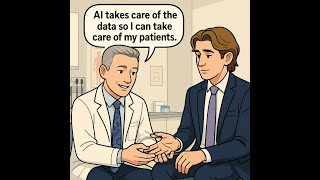
All right, first of all, I am a plastic surgeon who specializes in hand and peripheral nerve surgery. I have performed hand transplants, but it's been years since I've done one. So I don't want anyone thinking like this guy is a professional hand transplant surgeon. That's all he does. So like I see patients all day with hand and peripheral nerve problems. The way that I use AI right now. And I don't claim to be an expert at this at all, but on a day to day basis, I help it with my documentation. So one of my partners, so I currently work at the orthopedic center of St. Louis. I left Johns Hopkins a little over a year ago and one of my partners and his brother who's a software coder started a company called Mira Health. M I R A Health and I, we've started using this platform. I'm kind of a beta tester that they've been rolling out where it can do. It'll just list ambiently listen in the room to me having interactions with the patients and I'll, you know, it'll listen to our conversation. And then as I examine the patient, I'll kind of say what I'm doing on the physical exam. And then as I talk to the patient to kind of give them my assessment, my recommendations, it will turn all of that into a reasonable medical record. Like I would have typed out myself, putting in all the important information, leaving out all the side talk about whose kids are going to, you know, what thing this weekend and all those kind of things. And what that's done for me is it's enabled me to look at the patient while I'm seeing them in clinic. I mean, most doctors, like stare at the screen the entire time that they're with their patients. And so this has completely been able to flip me back to being like a real human, having another human interaction with their patient. And it's also made me a lot more efficient because now I'm not trying to hammer things out. I used to get to my clinic about an hour and a half in advance so I could start pre templating and pre writing notes. And now I, now they're done just in real time as we talk. And so it saved me a lot of time in that respect. The plans, what, what we hope the next level of this will be is it will take out, do a lot of the coding work that humans do, is it can then take that to the next level and start analyzing the records for what should be billed. When you kind of eliminate the patient, the humans from that, you have fewer errors. Hopefully payments go through more quickly because they're not being kicked back by the AI processes at the payers that are looking at this and rejecting it saying, well, they're billing for this level, but we don't think they met this level. And hopefully we'll be able to find codes more accurately and quickly than humans. Right now, AI doesn't do that great a job of coding, I don't think personally using several of the LLMs to, to. To test that in terms of like finding the correct codes. I think humans are still better at that right now, but hopefully that'll change soon.
I just want to clarify something real quick, Jamie.
Yeah.
When you say coding, you're not talking about vibe coding or software code. I just want to.
Yeah, medical. Yeah. I'm talking about filling out the billing.
Records with the right code for whatever.
That's correct.
Me or government agency you're sending the bill to.
That's right, Diagnostic. Diagnostic codes and procedural codes. Which is how. Which is the language of medicine, unfortunately. That's. But that's, that's the reality of it.
I thought was the language of medicine.
Yeah, it used to be. Used to be, not anymore. Yeah, it's all, it's all codes now.
You said two things there I want to hit on there. That it's made you more efficient, which. That is something Bryce and I have talked about endlessly, both on these calls and in our writings and it incorporated into our investment approach. And that is that AI is going to make people 10 times more productive over time and make you 10 times more productive as I don't know if because you have a limited amount of actual surgeries that you can do with your own hands at any given time.
But that's right.
It's certainly going to make you more productive increasingly as it does the coding, as it does the record keeping, as it eventually starts, even helping you diagnose and figure out strategies for the surgeries.
Yes, I think there's potential for that. I don't think, I don't see that right now.
Internet phase of the AI revolution, as we always say it is, in five years it'll be there.
Yeah, I hope it is. But you know, so right now I'll also use AI, for instance, to help me put together say a PowerPoint talk on a medical topic that I, that I need to give because it can do a lot of the labor of constructing the slides and things, but when you ask it to for content, do a review of this topic, show me the salient, you know, studies and blah, blah, blah. It, it's very confident in its answers to you, but you have to really be a subject matter expert to understand that it is completely off base sometimes. And so we're still in that infancy stage right now where it doesn't know when it's not telling you the truth, but it's very confident when it tells you this. And so in, in these LLM chats, I can go back and forth with it, telling it, no, this is wrong, this is wrong, this is wrong. And then it will say, oh, oh, yes, you're correct, you're correct. And then it'll still keep giving me misinformation.
Do you ever start like using exclamation points or all?
I haven't because most, most, most of the time it's bemusement, but at some point you probably will start turning more aggressive.
Another thing that you said, I wanted to point out is that you said that it's actually enabled you to spend, to be more human to human. Which is ironic when you think about the fact that an AI is enabling you to do, to be more humanistic and not less so. Most people picture when you use AI you're interacting with the world ever less, but it actually is, as you described it, enabling you to interact with human beings more on a daily basis.
Yeah, you know, it automates the non human parts of my job so that I can focus on the human parts of my job. I used to argue with people at Johns Hopkins. We switched over to a medical record system called epic, which has a, which has a voice dictation and now they have like an AI dictation assistant through Dragon that you can use, but if you pay for that optionality. But I used to argue with them, like we went from just dictating into voice recorders and having transcriptionists transcribe these things to us having to input every piece of data ourselves into the medical record through keystrokes. And I. And so my argument was like, why do you want me to pay, be paid the most? Why do you want me to be the most highly paid transcriptionist or data entry, you know, clerk on the planet? Like, let us do what only doctors can do, which is make diagnoses and, and, and construct and execute treatment plans. Those are the things that only I can do, like have anybody or anything else do everything else so that I can be more efficient. And I saw, I think that AI is now kind of taking us, taking us more towards that because it's able to take some of these tasks that are automatable away from it.
That's great. That's great.
Can I ask, what do your patients think about, like having an AI listen to their private sessions? Is there any kind of pushback?
So far I've not had any pushback. And one of the ways I introduce it to them is I'll usually say, you know, I kind of treat it as a novelty because. Because it isn't. It is new for our practice. I've been using it for about three or four months now. And I'll say, now watch this. This is going to listen to everything we say and then it's going to print something and it'll, it'll be totally make sense and look just like a medical record. And so many times I'll actually show them what the work product is and they'll be pretty impressed with it. And so they take a bit of an interest in it.
That's.
Jamie, are your nurses and back end staff, are they able to use AI? Are they just beholden to what the epic system is in their system?
Most of them, at least in our practice, are not using a. We're trying to automate things more and more to maybe get to the point where it would be easier for an agent to try to help them with those things. So, like a lot of the forms and things that we fill out, we're using templated forms that can hopefully interact with an artificial intelligence agent to help them. But right now we're still kind of getting all the bugs out of the system that we've got just at the physician interface level. And that'll be the next level of things. And in Fact, I don't even know it'll go to the nurses next. I think next it'll probably go to the billers and coders. And again, that's medical coding. Not, not, not software engineers.
Guys, we have Jay show for about another five minutes. He is traveling to see a patient on his way right now. I was on, like I said, I was on a call with him before this call started and I invited him to join us and he was so gracious in doing so. Jamie, you're driving a Rivian.
That's right. Because, because my, because my wife has the Tesla.
That was my next comment was because your wife stole your Tesla Model 3 from you a couple years ago.
That's right. Model Y. But, but, and if she was, and if, if I was in that, then I could be more on camera because that thing drives, Even on version 13, that thing drives pretty awesome.
Well, that was the segue that segues us to the question I was going to ask. You actually had a Model 3 also, by the way.
Initially I did and then it was I, I went to the Model Y because I'm tall and, and I, I don't like having it right on the ground.
You have like, I, I would think one of the first few thousand Model Threes ever off the production line. If I recall, you were a very early orderer of it.
I don't know about that, but I, I was. It's a 2018, I think.
Oh yeah, yeah. He had one before me. I do remember that. So Jay show, compare and contrast the software systems and the full self driving and then just the ride themselves between the Model Y and your Rivian.
If all I had ever driven was the Rivian, I would think this is the coolest thing I'd ever seen. But because I also have a Tesla and I know how good things can be, I'll just say that like it doesn't matter if you're talking about Rivian, I think, or lucid or any of these others. They are at least a couple of generations away from Tesla in terms of software. Because these are computers on wheels. They're all software defined things. And so their capabilities are completely software based. I mean you can talk about the luxury of having this many screens and all this kind of stuff, but what it's capable of doing is software based. And so Rivian I think does a pretty good job of doing very Tesla like things. And they'll frequently update things to being sort of Tesla like one to two years after Tesla's done something. But Tesla continues to just Just beat the pants off of everybody. And I think it's because they encourage, you know, agility and engineering. Like if somebody has a great idea, they're, you know, they're motivated just to execute that idea and see if it works. And if it does, it rolls out, you know, it's not, they're not having to go to third parties and try to make sure that their software works okay with this other additional parties hardware that might be running on a different code, you know, I mean, everything is streamlined with Tesla in a single stack, so to speak, in terms of how they've designed things from the ground up. And so I think it'll, they'll always be ahead of everybody else in that regard.
Full self driving then Rivian has a little bit of like highway assistance.
Yeah, yeah, that's it. I mean it, it's, it's pretty basic. It's the same kind of highway systems I think you get from any, any standard car today. It can maintain the lane and in the speed and you know, you can set how far, how, how close or far to follow somebody, but it doesn't change lanes for you. It's not going to take an exit. So it's, you know, it's pretty regular. I think that Rivian gave up on, you know, their full self driving type of efforts, you know, years ago. They're just trying to survive as a company right now, I think.
Jamie, do you remember how much you paid for the full self driving that you got in the Model 3? I do remember. It was actually the first time I met someone who had ordered and used the full self driving.
I think it was, I think it was, don't hold me to this, but I think it was $6,000 back.
Oh, it was like 800, bro.
I don't think so.
By an order of magnitude. It was hundreds of dollars.
I don't, I don't know if that's true. But the, but on the model.
Search Gemini real quick. Ask, Ask Gemini how much was full self driving in 2018. I cannot believe he doesn't remember this. That's a surgeon for you over there.
Maybe it was, Maybe it was 3,000. I don't know.
No, I'm gonna go with no way.
No way.
But then we bought, but we bought the Model Y and, and we had to pay for it again. Yeah, and by then it was like 6,000 I think now that is 5,000.
But.
Yeah, but, and then, and then I, and then I upgraded the Model y when Hardware 4 came out and when Elon said at the at one of the shareholder meetings he said fine, we'll do like because somebody said why don't you let us buy another car and transfer our fsd? And he said fine, I'll let you do that for like the next three months or something. And then they offered like 0.9 financing. I'm like, I'm doing that. So we upgraded to the pre refreshed model Y back in last about a year ago.
You love it though.
Yeah, I do.
Craig, what do you got?
So I found that the. So in 2018 they had enhanced autopilot for 5,000.
Yeah, there you go.
And then they had a three thousand dollar upgrade on top of that for the full self driving.
Oh, that does ouch right to me.
Well that might be, that might, that's what Gemini says. No.
And Jay show just about the ride itself. The Rivian's incredibly comfortable, but compared to the Model Y, like thoughts on just the actual comfortability?
I think that the Rivian ride is better for me because it's got multiple suspension settings and stuff that I can do. Whereas the model wise, you know, it's got a few settings but it's not, not quite as adjustable I don't think as the Rivian. And then I, I just really like being high up in a truck and so that's what I enjoy. And so the, the, and that's how the Rivian is for me. The Rivian also, I will say we, we just have a, we have a long range dual motor model Y and the Rivian is a, my rivian is a four motor, you know, original, you know, 2022 Rivian. And this thing is blistering fast. I mean it'll do 0 to 60 in like 3 point something seconds. In like under four seconds. It's, it's crazy fast. So I will give that to the Rivian. It's, I mean as a performance vehicle I think it's, I think it's amazing. But I just wish their software was as good as what I know software can be since I own a Tesla. Like I said, if I'd never owned a Tesla, I think this was the best thing ever.
That's good answers by the way. Craig. I just doubled, I just checked and I can. It seems that you are correct. I apologize. Seems that you and Gemini together were correct.
No, I was Gemini. I just took the information.
Yeah, but I decided you hadn't asked the right question.
Is the range comparable between the two?
Yeah, yeah, yeah. And on the, on the ribbon you can actually turn it on to a onto Kind of like a, a more eco mode where it will only engage two of the motors instead of four. So you can eke out a little bit extra range out of your battery. So like A fully charged 100 battery will get you like 330 or 340 miles, whereas a fully charged battery if you're using all four motors is more like a, you know, a 280 or 290 mile battery.
Hey Bryce, for the next month, Craig, for the next month, let's start emailing our lists. Just a note that literally says, hey, we're doing the AI call at 5pm Eastern today, next Monday and give people some notice because Jamie Shores, who reads most of our trading with Cody stuff and has been a friend and partner of mine for 30 years, did not know we were doing these AI calls with John D. Oliveira when I told him about it 30 minutes ago.
Broke my little heart, guys.
Yes, my, it's my, my bad, my friend. Jay Show. Any questions for us in the last two to three minutes? We've got you.
Yeah, guys, what should I be putting my money into?
The hedge fund. Move to Europe and invest in our long long only fund no day show. Look, look, the, I'll tell you this, that the market is not cheap at this particular moment. There are pockets of bubbles in like probably quantum, maybe nuclear, some of this pre revenue theme stuff. There are meme stock bubbles. There's probably still some, some bubbliciousness in the crypto markets. And meanwhile the AI revolution is real. You're using it, making yourself more productive. It's worth money to you to do that. As it gets ever better and gets out of the AI, the dial up Internet phase of the AI revolution, there will be more of this stuff. There are risks in all of this stuff. But man, I have never been more excited to be a revolution investor. With AI robotics and space all lined up concurrently growing and starting to happen. The AI revolution is 5 or 10% done. Space is maybe 1%. Robotics are maybe less than 1%. Getting started in space is maybe 1% done because you know, we've been doing it for 50 years.
There's, there's only one company doing all three of those things that I know.
Of, which is Tesla. So that would be one of my answers to your question. I would also throw out EchoStar, which gives you exposure to SpaceX. If they actually get the spectrum cell done that we've talked about on these calls before. The stock symbol S. Sats. Sats. JAY SHOW I know you have to walk inside your office and Actually, take this meeting. I just throw out Qualcomm and Meta, and we started buying a couple of smaller cap robotics companies today. I'm not going to give you those names yet on a public call because we're still building the positions and just getting started. But tune in next week. We'll probably tell you those names. If not next week, then the week after for sure. But. Jay show. Love you, man. Thanks for joining.
Love you, too. Thanks, guys. Awesome hanging out with you.
Yeah.
Really enjoyed your commentary. Thanks.
Thanks so much, guys.
Bye.
Bye.
The one, the Only, Jamie Shores. Dr. Jamie Shores. Dr. J Show, as I like to call him. My wife makes fun of me because I call Jamie Shores Jamie Shores every time I talk about him. I never call him Jamie, but there's a reason for that. When I met Jamie Shores, we quickly became, if not best friends, top three best friends to each other at unm. And his best friend was named Jamie. His best friend from T or C, where he had grown up, was named Jamie. And my girlfriend at the time was named Jamie. So if I ever talked about Jamie, it was like Jamie Shores or Jamie. I can't remember his old best friend's last name. He actually passed and then J, my girlfriend. I called her Girlfriend Jamie. So anyway, to this day, it's Jamie Shores.
I'm sure she loved that.
What was that, Craig?
I said, I'm sure Girlfriend Jamie loved being called Girlfriend Jamie.
That might have been why it didn't work out. Anyway, Bryce, let's sit through some of the topics that you listed quickly. I'm. I'm. I'm ready to almost be done with the call. I'm tired.
Okay. I just. There was more AI chip deals, another deal now with Broadcom, another 10 gigawatts with. With what company? Open AI.
I think we should start calling Open AI Taylor Swift because it's just like so massive, so big. There's constant. You can't. You're watching football, you got Taylor Swift, you're going to Spotify. You got Taylor Swift. You turn on the tv, she's on Valen or Good Morning America. Taylor Swift is everywhere. Open AI is everywhere. That's all I got for you. It's endless. Like, all this stuff is the Open AI stuff is problematic because Sam Altman and Open AI are still trying to figure out if they're for profit. Not for profit. And figuring out the actual company, but beyond that, the company, the product. OpenAI itself has changed the world. I use Gemini, not OpenAI, but 700 million people or something are still using are using OpenAI not still are using OpenAI on a weekly basis. I read the other day and that's not a monthly basis, that's a weekly basis. That is a huge number. It is unbelievable. They need more computer. I tried to make I, I Bryce. I took pick took. Who's the granddad, great granddaddy or great great granddaddy of yours who's got the rifle and the horse?
I don't know his name.
Yes, but I took those images and turned them into some videos. I didn't like the quality quite yet, but I did about five or six of them. By the way, I also tried to take some pictures of great, your grand, great granddaddy Johnson's Stearns, who would like a picture when he was a little boy that Moami sent me and I tried to turn it into a video. It wouldn't let me. I think he was a little boy. I also asked if I could have him, the, the granddaddy great, great, great granddaddy over there with the rifle on the horse. If he could hop off the horse and hug a little girl and I couldn't. Like I asked three or four times before I figured out that it was oh, they don't want to make videos with children at all. Once I realized that I'm like, yeah, it makes sense. So then I just changed the prompts and made a couple of videos. But then they were like after doing a couple three of them probably because I'd already spent processing power before it realized it wasn't going to make that video for me. It was like Cody, you're off and I'm on. What am I paying 200 bucks a month for my Gemini Services price?
Yeah, you were on the 250 plan.
Yeah, I'm like on the 250amonth plan and I still used more processing power than it could possibly provide for like five videos. Like it's unbelievable. And these are like eight second clips that are not exactly like 30 minutes. Great graphics and dialogue or something like so the always. I just have been telling Bryce for a year that it's until you can prompt AI to make a 30 minute episode of a science fiction idea, you've got there's more compute needed. And this, these OpenAI deals are all about them just trying to scale up their compute as quickly as possible because they know their biggest competitors, Google, Amazon, Microsoft, Meta, the others have access and have actual capital that they are spending to beat them on the compute race.
And I got a question for you on that because there's all these analogies about the dot com and the fiber build out. And when they were running fiber, they overbuilt capacity by like an order of magnitude greater than the Demand, right?
Oh no. 2 price. They were using maybe 1 to 2% of the fiber optic capacity they had.
Why? How do they get that lopsided? So like so in the current environment.
Bryce. I know, sorry, go ahead, finish the question.
I know, because people love to show how fiber busted, right? And we overbuilt capacity and invest all this money and then these companies went down 90, a lot of them went to zero. And they said same thing's going to happen with AI. I'm like, well it's clearly different because the GPU capacity is 100, you know, by the demand. So what's what happened with the fiber build out?
There are a couple of easy answers to it and then we can sort of talk about what those answers mean. Number one, the fiber optics were laid in conduits. And so you would put 500 fiber optic the size of the hair of one hair. You from Corning is who makes them to this day, most of it. You would take that fiber optic and put a 500 in them. In the conduit. You might also lay down three or four conduits. Because while, because that's the other point I'm trying to make is you were taking these conduits and digging trenches alongside railroads or telephone rights of ways or cable rights of ways or whatever kind of rights of ways you could have to layer as much capacity for Internet backhaul really. Because most of the stuff that goes to your home is a one off, right? And they're not putting a conduit with 500 cables to your home. When they would lay out that or put a total coax cable to your home, they would put one, right? And so the, but the back off, the back side of it, the backhaul stuff on the Internet was built along hundreds, thousands, hundreds of thousands of miles of trenching, physical trenching with hardcore manual labor in a tractor, digging the trench, laying the pipe, covering the pipe. And so you, you would layer 500 so you wouldn't have to do go back later and do it. And so you purposely over built because you did know that you were in the dial up Internet phase of the Internet revolution and that eventually you would have gigabit speeds to homes and gigabit speeds to hundreds of millions of homes in the United States equals God's, you know, like numbers I can't compute. And you know, billions and trillions of gigawatt speeds. And so because of that it was a very different thing happening. Now the AI compute itself is already at full. The fiber optic analogy is not that good. The better analogy was like servers in the year 2000 and they overbuilt those too though. And so it's actually a better analogy like those were probably 10, 20% at capacity. You would go in, you were starting some new real estate Internet website thing and you would go in and buy, if you got funding from VCs, other people's money, you take it and you go buy a bunch of Sun Microsystem servers, throw them on premise, maybe, maybe throw them in a co location area telecom center and connect it to. If you were a co loc, if you were on prem, you connected it to like a T1 line which was like half of a megabyte of speed or something, very low speed. But you were still anticipating that you would have a lot of traffic. And a lot of the time that traffic might even be getting to full capacity, even if it wasn't all the time at full capacity. You always try to over build so that you don't have like what happened to Victoria's Secret the first time they streamed their fashion show where the sir, you know, you had 10 million people try to watch it and they had enough capacity for a hundred thousand people. That's how the rise of Amazon Web Services and other cloud transmission and cloud storage companies came about. Because then you no longer bought the sun microsystem servers and overbuilt your own capacity. You could just rent out the chips and the servers on the cloud itself. Yeah, so to fast forward to your question, in that scenario it was still way overbuilt and it was way overspent. And a lot of the companies themselves would buy Sun Microsystem servers and never even get their website up or something.
Right?
I mean that stuff happens in the startup world, especially when the billions of dollars are just flowing around from VCs and other people's money. And you fast forward to today and it's a different thing because you're building the, it's again, the hyperscalers, the major, the most profitable, biggest companies, most technological superior companies this planet has ever seen who are building this stuff and they are doing it with their own money and they are doing, as they turn it on, it instantly is being used. Every bit of inference that they can turn on is being used instantly by all of the AI apps that people are creating, all of the movies they're creating, the Songs, they're creating the stuff, they're asking it, the websites they're building the code, they're dividing. And so there.
That's great answer. It leads me to another question in that even on the application side of things in that.com era like pets.com failed and then Chewy now today has basically succeeded. Right. It's a viable business. You argue about stock price, but there's a lot of things like that. And Netflix didn't stream movies back in the dot com era. It was, you know what, six, seven years later before they finally started. I don't know when Netflix started streaming. Why didn't the applications of the web, if all that capacity was sitting there and all the servers were sitting there, why didn't those, some of those web applications take off? Is it just that there wasn't distribution to the homes? Like the homes, there wasn't enough Internet?
It's layered. It's a layered answer. Like yes, you're right. Like trying to do that, trying to use the capacity on 128 kilobit per second dial up connection was futile. You couldn't do any, you couldn't watch a video, you could maybe download a picture or two for the article you're reading. And so it was annoying to try to use as a consumer, sort of like AI still is sometimes. Yeah. But also it's not like because a lot of the servers were, most of the servers were your own companies. There was not a cloud. I mean there were data center companies. So I don't mean to make it sound like there didn't exist, but it didn't really exist at scale where you could build your business and just use the compute that other people had invested in.
Yeah.
So you were building that over capacity for your own business and then you weren't renting it out and you weren't using, you weren't able to use the, the compute that you did have. But also the exponential accelerating growth of innovation in chips and speeds of it all like those, the most advanced supercomputer from the year 2002, you know, I mean the iPhone is a thousand times more capable than that.
Right.
And so you like you had compute, but you didn't have enough compute to build video services, you didn't have enough compute to do CRM services, you didn't have enough compute to do beautiful UI user interface. So it was all archaic and old. And that's where the question that you asked, I'm so glad you asked it because really what it does allowed me to just sort of spit it out. What I'm talking about when I'm talking about the analogy of this being the AI, the Internet, the dial up Internet phase of the AI revolution, that analogy is layered upon layered and, and so much of it is about how you get frustrated using it. Right now it's much slower than you should, but you can clearly see how the future is going to bring you incredible innovation in this, in revolution. Whether it back then was the Internet or present day, the AI revolution. But we're not there yet. Even today. The compute that they're using today is going to be, you know, it's going to 10x in its cost per compute of energy, it's going to 10x in its capabilities, it's going to 10x and all of that stuff over the next two to three, four years. And so what we'll be doing with AI three to four years from now will be mind blowing even to us right now who are immersed in it in the same way that the most advanced Internet user in 2002. Big picture. Tik tok.
Right.
Yeah. Did, did we have any constraints with power back then as well? Like how we talk about today? That wasn't even a thought back then.
Nah. Because again, the, the, the scale of that stuff, even if you had a billion servers, they weren't you, they weren't running GPUs. And the most advanced silicon. You know what has advanced in the last 25 years. And the computer itself. Neat. Has exponentially required more energy, mostly for cooling and that. So no, there was like, I'm sure there was discussions of that, but it wasn't like, like it is. Oh my gosh. We clearly need much more energy, much more quickly than we realized three years ago.
Right. I mean the, the open eye numbers are sort of crazy because I think. Oh. Altman said right now they have about 2 gigawatts of compute that they're using across their system between Microsoft Core, Weave and everybody else. And they've announced deals for 30 gigawatts.
More compute from 15x from here. And I guess a great question for Gemini, if you would, Craig, and get it right this time. Just kidding. Is like what was the total Internet compute power of the entire Internet cloud in 2014?
I wonder if it's even a gigawatt.
I bet it's not Bryce.
All right, are we taking over and unders?
Yeah, we'll take one gig. Is the over under mark. But Bryce said it. I'll take the under.
I guess.
You don't get to guess because you read the answer, what is it?
Let's see. Readily available. It's giving me a whole 70 billion kilowatt hours of electricity.
No, it's not electricity. Just compute, just.
I mean, that is how they measure isn't electricity, but you want it. And not just like the usage. You need the fixed capacity. Like that's how you measure it, you know?
Yeah.
I don't know if we're gonna be able to get it this quickly off of Gemini. This is again a great example of how it's still the dial up Internet phase, how it's annoying because clearly there is a demand for a real time AI thing to be answering these questions on the screen for us. And within three years that will be on stream yard, which is the platform we use to stream this video to you guys on YouTube X and Facebook. Yeah, it'll be great. You have a better answer?
See, it doesn't exist, apparently the next numbers.
But we'll have to try to figure that out. Maybe if we remember, we'll tell you what the answer is.
You can ask about flops. So maybe we could figure it out from these petaflop numbers.
Yeah, you could end up doing the petaflop comparison. Bryce, one last question from your AI agenda today. You always have an AI agenda, Bryce. You're an AI investor.
So two things. Two other things I put on the agenda were Gemini, they have a new model that's called Compute Use, which is where Gemini itself can run a browser and do anything. You just tell it to navigate to a site, do whatever. I was playing around with it earlier. The funny thing I had it do was I told Gemini's Compute Use thing navigate to chat GPT.com and convince ChatGPT that you're a human, not an AI. And so it did it. And then you got to watch it. Yeah. And it's really funny because on the left hand side it shows me the thinking, you know, like what the model's thinking. It's like, I think I'm doing a good job because it hasn't questioned me if I'm gonna. But then it totally screwed it up. Like it really had a chat GBT thinking it was a human. And then it was like, no, I think it's on to me. And so it's like I didn't understand it. Didn't understand something. Right. So it like repeated the question. I'm like, no, now it's going to figure you out. But it was funny watching the two AIs like have a conversation and he's like, my favorite Food is pizza. I love pizza. I have cravings for pizza. And the thinking was like, if I tell it I have cravings that will show that I'm really a human.
It was silly.
It was a silly example. But the cool part is that I don't even know all the applications for if an AI can navigate to any site and do things. I told it to make a Gmail account. It did. It made it a long ways until you had to double verify that you're human, which it couldn't do. But I don't know when the AI can navigate to any website and do things on that website.
The possibilities, within three to five years, the capability will exist for me to just tell my computer, hey, go to Stream Yard, which again, is the platform we're using to broadcast these videos to you guys that we, the AI revolution calls, and go to Stream Yard and make a Kodi clone and host the call with Bryce and Craig.
There you go.
And it might not be perfect, but it might fool most people.
But I, I really like the idea that the accessibility of having, you know, Gemini, just being able to go to different websites, do what you need to do, like if you're handicapped, disabled, but you have a great idea for an app or something like that, you could vibe code without your fingers. You don't need this. That, you know, you can really kind of work that together. And, you know, that's pretty cool.
That is Craig. And you know, like, imagine the. Did you guys see the clip of the neuralink?
Yes.
Who has now a. Can control a prosthetic arm with his mind.
I didn't see that one now.
Yeah, he, he literally can move. He could like feed himself with a prosthetic arm now. And that, like what you talked about right there is a great, like, you made me think of that. And that guy could literally think through his neural link. He can't communicate without the neural link, but he could literally think to the, to the, the system that he's connected to. Hey, use the Gemini thing that Bryce just talked about and do whatever I want on the Internet. Oh, absolutely. Yeah. Amazing. All right, Bryce, last topic.
The last thing I put was just the skyrocketing quantum stocks and the mean stocks and I mean, it just. We had a little scary sell off Friday with tariffs and then, you know. Did you blink?
Did you blink? You missed it.
Yeah, if you blinked, you missed it.
Yeah, look, I, I'm not a believer that the valuations of the pre revenue theme stocks in, in quantum and nuclear and I don't know, A.I. yeah, some of the space stocks are outrageous too. Some of the pre rev. Like if, if you're a pre revenue company and you're publicly traded right now, you're, it's probably a bad investment. I don't think the markets are terribly bubbly. I think the S P500 is expensive and concerning like I said earlier. But you know, like the, the, the as an investor if you're wrong, number one, if you're in the S P 500, if you're investing in the market at all, unless you're in like high dividend energy stocks exclusively or something and even then you're, you're invested in the AI revolution. The AI revolution permeates all of it. Like it's part like the market valuations, the PE, all of it is partly attributable to the AI revolution. And if the AI revolution doesn't work out, the whole market's in trouble. AI stocks are in trouble. Google, Meta, the Mag 7 are in trouble. And by trouble I mean they could drop 30, 40, 50, 60% like they do in a bear market sometimes. That's happened in several times in the past 15 years and it will happen at some point in the next 15 years almost assuredly. And but beyond that, if you're right that the AI revolution does work out and you're in some of the companies that actually deliver on it, you have like 1050, 100x upside. And that logic is partly why people are willing to risk their money on the nuclear and the pre revenue nuclear, the pre revenue quantum stocks. Because if you're, if quantum works and it's one of those smaller, formerly smaller cap, now mid cap quantum pre revenue companies that actually delivers it, you're still going to make money even at these valuations. The vast majority of pre revenue quantum stocks and maybe all of them that are publicly traded right now are going to zero. But there will be some quantum companies that quantum related companies, maybe Google, IBM, Microsoft and Nvidia who are probably actually the leaders of the quantum revolution. And those companies alone would have trillion dollar kickers off the quantum stuff. So you can understand the logic that people are just sort of like I, I just wouldn't, I want to be in it. I want to be in one of these things that works and if you bought it and it's 5x for you now you've got tax considerations and you're like yolo, you only live once leaving. So like I see both sides of the equation. I can't deny that like I partly want to be in AI stocks because I see the tremendous upside. On the other hand, I don't think the AI stocks I'm in are going to drop ninety or a hundred percent. And I do think most of the pre rev. Pre revenue theme stocks out there, publicly traded are probably going to zero in the coming next five years. Thank you, ladies and gentlemen. That is the AI call. Bryce, last words. Craig, last words. Bryce, you first. We leave Craig with the last words because it's his first call.
Tangentially related to AI but Starship launches tonight. Starship launch 11 is at 5:15 or 7:15 Eastern Time. And I think it's very exciting. They're starting to even be talking about AI in space and data centers in space. Jeff Bezos was talking about that a couple weeks ago.
Bryce, how sick of hearing me say that we were going to have data centers in space where you, by the time we got back from Hong Kong. But before, before Jeff Bezos went on.
A stage, most, most people sort of chuckled when Cody said that. And then Jeff Bezos comes out like, yeah, we're gonna have data centers in space. We're working right now.
And now I want to go back and be like, I told you that was going to happen someday.
So anyways, all the best to the SpaceX team. I know Elon watches every one of these calls and Elon, we're rooting for you. Gwen, we're rooting for you. We're happy, we're happy that you're full time viewers of the AI revolution call and best of luck.
Thank you, Elon. Hi Gwen. Yeah Craig, before your last words, I'm going to throw out the. My last words is I did some watching of reviews of the new Meta display glasses last week and immediately called Bryce and Craig and said, boys, we are flying somewhere ASAP to go get those things because you have to go to either a Best Buy or a Meta Distrib. Meta store, whatever.
Ray Ban or something like that.
Yeah, a Ray Ban store and, and demo the glasses before you can actually order them. And I think the interface. And again, it's going to be a very early. It's like iPhone 2. It's not going to be iPhone 10. It's going to be, it's going to be a little archaic, but the very first display glasses and the interface that Meta's rolling out here looks revolutionary enough to me that I felt like as a revolutionary hedge fund, long only fund manager, it would, I would be remiss if I didn't get us on that platform, using it, testing it, working on it and trying to understand the implications, ramifications and hallucinations writing now that will come with the meta glasses. Craig, your final. And so we're going to Dallas October 24th.
Yeah, not this Friday, but next Friday.
And we literally were flying out in the morning, demo the glasses. Hopefully they'll have them in stock and we all walk out with them. If not, we'll put them on order and get them delivered to ASAP from there and then we fly back that night and I have a Marist duty that night, so no playing around.
Yeah, we're getting there, getting the glasses, grabbing a taco and getting back on the plane. So that's.
Yeah, I think we can do a taco in Dallas.
I think so. And these are getting kind of old, you know, so I'm kind of ready, I'm kind of ready for, for a new pair.
So you look good. Those are good looking glasses though. The Ray Bans will bring a whole other level of cool to Craig though. Craig, last words.
So just to bring it back to our guest today. As someone many moons ago when I worked in, in the healthcare industry on the insurance side, I just think it's incredible what we're seeing as far as AI and the capacity for just changing the way doctors and people interact with each other. I think the biggest thing that take away from that is it's allowing him to be face to face with his patients. That's how we originally started medicine and then we got to laptops and then all you do is you see the profile of your physician the entire time. You don't even see their eyeballs. So we're seeing, we're seeing AI work not just in a, you know, in some black box way and met the way Meta uses it internally or something. It's like, no, it's actually going to have your doctor, you know, work with you. You feel like you're actually talking to somebody and then hopefully the back office gets streamlined too so that it just makes things easier with the insurance and everybody and just makes healthcare easier, more accessible and cheaper. You know, the cheaper healthcare gets, the better odds we have with our healthcare system.
Amen, Craig. I think that's a great way to bring it back to James Shores because you're right, that, that, that fact that he's using AI to increase his human to human interface is the whole point. And I think when we talk about AI enabling people to be more productive, we forget that part of productivity is just spending time together, being able to have the time to spend together, being able to be creative together. Build rock bands or art collectives or hobby collectives or whatever it is you want to. And it's an AI. Enables us to hopefully stop doing this all the time.
This.
Hey, AI, do that stuff. I want it done. What's up, Craig? All right. I love you guys. Excellent. Craig, welcome to the team. Great job today. Great job so far. What do you have, three work days into this gig?
Pretty much three and a half.
Work on the weekend?
A little bit. Not enough, though. I'll work more this week.
Absolutely. I busted my ass. No, but the honesty is appreciated. Well done. All right, everybody, we'll see you guys soon. Thank you all.
Bye.
Bye.
More from Cody


The AI Revolution Call: Tim Cook departs! Robot Marathon? And Amazon's $50bb side gig!

The AI Revolution Call: Mythos Mania! Is Anthropic just doing more hype? Or is this the real deal?





The AI Revolution Call: Anthropic vs. The US Dept of War, Iran, and How Will AI Work With Humans?



The AI Revolution Call: SpaceX Acquires xAI...Will SpaceX Merge with Tesla Next???