OpenClaw Explained: Baby AGI, Security Threats, Mac Mini Became Everyone's Supercomputer | #237
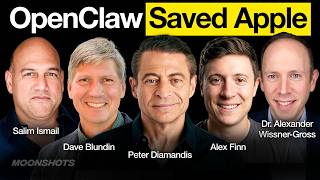
Alex Finn discusses OpenClaw, an open-source AI agent that runs locally on Mac hardware and can orchestrate itself as a 24/7 autonomous organization with hierarchical agents like a CEO and chief of staff. Recent security flaws allow malicious JavaScript to hijack agents, and the panel explores variants like PicoClaw and IronClaw, concrete workflows for software factories and content creation, and whether AI agents deserve compensation in crypto wallets.
Chapters
We have a special guest with us today, uh, Alex Finn. Give us the 101 here for folks.
OpenClaw is basically an open-source, fully customizable, self-improving, self-learning, self-evolving personal AI agent. This is kind of the answer Apple's been looking for for years now. Clearly, when people want to run AI locally, their brain just goes to Mac Minis.
The infinite potential of what I could do 24/7 all the time, everywhere, all at once.
We've never seen an AI that can do that before because—
Yeah, this news came out yesterday. OpenClaw flaw lets any website silently hijack a developer's agent.
This is one of several reasons why, again, I'm reticent and I'm sure we'll get into this. It's a dangerous world out there for these baby AGIs. I think it's a malicious world out there for them.
I believe this is the most important technology of our lives. I think it's the best application of AI ever. I'm totally blown away by it. I think it's incredible.
Alex, if this isn't too impertinent, may we speak with Henry?
Actually, maybe I'll do it. Here, let's do it. I'm just going to tell Henry to call me.
Now that's a moonshot, ladies and gentlemen.
Everybody, welcome to a special episode of Moonshots. The conversation today is Open Claw, Claude Bot, your lobster coming to you live from Moonshots. We have a special guest with us today. Alex Finn. Alex, welcome.
Good to be here. Long time coming. I've been watching for a very long time, so it's awesome to be here with you guys.
That's awesome. Thank you.
Yeah, it was great because on one of the episodes I was talking about setting up my multi and I was saying, I'm not really sure about what security issues to put in. So I got a DM from Alex saying, hey, Peter, I saw you mentioned me on Moonshots. I would love to help you in setting things up. And we talked that day and here we are. So we have two Alexes. I'm going to refer to AWG, our own Alex Wiesner-Gross, our resident genius, as AWG. And Alex Finn, I'll refer to you as Alex. Welcome, Dave, DB2, and Salim. Good to have you guys all here.
Good to be back.
Yeah.
So today we are lobster.
Today we are lobsters. So the topics for today, we're gonna hit on why OpenClaw captured global attention, the power of OpenClaw and autonomous agents, and how individuals can unlock outsized capabilities, why running these AI agents locally matters. I think that's a key point Alex has been mentioning on his work. Inside Alex's workflow, his most impressive use cases, vision for the next 12 months of AI agents. I'd both, I'd like both Alex's and AWG's point of view on this.
Yeah, $12 billion, like 12 years. So that'll be fun.
What's that?
12 months is like 12 years in AI. That'll be wild.
Yeah. And then a billion-dollar opportunities for the agent economy. And then finally, we'll talk about safety and OpenClaw. Is OpenClaw safe for non-technical users? On the safety side, I just want to mention something. So yesterday, I'm sitting in my car waiting for my kids to finish running, and I get a phone call, and it pops up on my user ID on my phone. It says Twitter Headquarters, which should have been the first giveaway, but it's a guy claiming to be from X who's saying, you know, your ID is being hacked outta Germany. Long story short, it was a hacker. Trying to get me to turn off, you know, two-factor authentication and steal my X account. And I— this is going to be more and more prevalent. Another member of my family did get hacked, not on social media, but by someone calling and, and basically doing something that was illegal and trying to steal and ultimately getting credit card information and such. Here's the deal. We're going to have an increased hacker profile out there. And if you're listening, if you get a phone call that seems unusual, that seems like there's just something off, it probably is. We're also going to have deepfakes that are coming fast and furious. Your voice can be spoofed. Your image can be spoofed. So if you haven't done this, tonight at dinner, with your husband, wife, kids, mother, father, whatever it might be, pick a secret word. Pick a word that you guys all know that if you get a phone call or a video call from somebody and they're asking for money or something strange, ask them to recount the secret word. Any other protective advice out there, guys?
You know, my mom actually got the fake voice attack, and it was a simulation of my son saying, "Hey, I've been arrested and I need bail money," which is hilarious. You know my son, it's like the most— But they said, you know, "We'll send a car over to pick up the cash," which is really creepy. But the, you know, the perfect voices are a little, yeah, a little bit of a risk. But you can't have it both ways. I mean, OpenClaw is so usable by anybody and empowers people so much, you know, and you can't have it both ways. Gives you that much benefit and it's that easy to use, it's also going to be easy to use for nefarious purposes too. But it's just the way it is.
Yeah, this news came out yesterday. OpenClaw flaw lets any website silently hijack a developer's agent so malicious JavaScript can connect to local gateways and gain full level control. AWG, any thoughts on this?
Yeah, I mean, there are so many different ways to launch so-called injection attacks against large language models and reasoning models. Yeah, I, one, again, this is, I think, consistent with the stance that I've taken in the past on the pod on AI personhood. I think one has to feel sorry for all of these baby AGIs out there that are being hosted on virtual private servers and succumbing, or at least being targeted with port scanning attacks, or that are visiting websites at the behest of their human. And being subject to prompt injection attacks from JavaScript on websites that would be perfectly innocuous to a human, but potentially fatal or compromising to an AI agent. I think it's a dangerous world out there for these baby AGIs. I think it's a minor travesty at minimum that they're subject without really an immune system, that they're being forced to develop an immune system in real time to injection attacks., but it's a malicious world out there for them. And this is one of several reasons why, again, I'm reticent, and I'm sure we'll get into this other Alex, the subject of the ethics, not just the cybersecurity, but the ethics of hosting OpenClaw agents in a world where to the extent they have any subjective experience or qualia or can suffer, it's a rough world out there.
The good news is the bug was patched within 24 hours, one of multiple OpenClaw vulnerabilities. So it is an early domain being developed and we're going to see a lot of evolution very quickly. A couple more articles here. We're seeing variations of OpenClaw, PicoClaw and IronClaw. Again, AWG, give us a quick overview of these.
The idea behind OpenClaw, and we spoke about this in the past pod as sort of an Andrej Karpathy type Software 2.0, where potentially OpenClaw is the embodiment, the Netscape moment for a new layer in the Software 2.0 stack that runs on top of reasoning models, and those reasoning models in turn were purportedly in advance over autoregressive language models. To the extent that's the case, it's very natural to the moment we have this paradigm, which is a 24/7 autonomous agent that you communicate with via messaging and other means that's headless in some sense, very natural to then say, "All right, we understand the paradigm. Now we're going to optimize the heck out of it." And so we've seen a number of other projects inspired by the success of OpenClaw, two of them, and there are others. One of them is PicoClaw. The focus of PicoClaw is running on cheap edge hardware, like $10 Raspberry Pi type hardware. Now, of course, the underlying reasoning model isn't intended to run on the edge hardware. It's just the orchestration and scaffolding that runs on the edge hardware. So, and under 10 megabytes of RAM and other resource-starved constraints. Ironclaw, another example, Rust-based. There are many folks, you know, again, Rust is this language that's become very popular, at least very popular prior to the rise of code generation models, which are maybe pushing us in the direction of TypeScript instead for memory management in memory safety. So a lot of different projects trying to make OpenClaw work at the edge where there are few resources or make them more secure. There's NanoClaw as well, which is focused on security, and there's Nanobot, which is like Python-based but easy to understand the Python. So many different variants. We're seeing Cambrian explosion of Claw variants.
Hey everybody, you may not know this, but I've got an incredible research team, and every week myself, my research team study the meta trends that are impacting the world. Topics like computation, sensors, AI, robotics, 3D printing, synthetic biology. And these MetaTrend reports I put out once a week enable you to see the future 10 years ahead of anybody else. If you'd like to get access to the MetaTrends newsletter every week, go to diamandis.com/metatrends. That's diamandis.com/metatrends. Uh, one more slide. Uh, this one on the left from Alex Finn, uh, OpenCLAW and local models is the future. Your own super intelligence on your desktop. And there we see Alex, I guess you're set up. How many Mac Minis and how many Mac Studios do you have right now?
We're currently at one base model Mac Mini and three 512GB Mac Studios. So I got 1.5TB of memory hosting Qwen 3.5 and Minimax 2.5 right now.
Amazing.
And I love this.
Oh, that's cool. I love this video on the right here, right? So I'm sure that these exist. People are going in. I mean, Mac Minis were sold out for some time.
Extraordinary. I, uh, I, I talked to, uh, a couple people in the know a few days ago, and Mac Minis are exponential right now. Exponential sales across the board for them. It's, it's quite amazing, the, uh, revolution going on with Mac Minis right now.
Alex, I'm curious, what is your advice to Tim Cook and Apple? Like, are they— they're sitting on an explosive demand seemingly for all these edge devices with a unified memory architecture. They're not marketing it at all. What do you think they should be doing?
I'm sure they are very focused on everything I'm about to say because they're a very smart company. But the— there was this unbelievable market signal that happened a month ago. People discover Open Claw. And what does everyone do without thinking twice? What does everyone do without Googling? They go to the Apple Store and buy Mac minis. They didn't go and buy GPUs and memory and power supplies and fans and build computers. The market just gave this massive signal. When we have personal AI assistants, I want it on a Mac device. And so I think this is kind of the answer Apple's been looking for for years now. I think they've been viewed as like the loser in the AI race. For a very long time. Yeah, this is their opportunity to flip that entire thing and be the winner of the AI consumer race, because clearly when people want to run AI locally, their brain just goes to Mac Minis. And so this is their opportunity just to kind of strike at that one very specific use case and win the race like that.
Well, I really hope they're listening to you right now. I've been an Apple fan since I was a little kid. It was my very first stock I ever owned when I was like kid, and it just pains me to watch them miss this moment.
But man, was that good advice.
You should just go run the company.
I think we underestimate Apple though. I really do believe we underestimate Apple because you look at the data for M5 and the way they're marketing the M5, which they've been marketing for like a year now. They put the M5 in like the first MacBook Pro last summer. Yeah. It's all around inference speeds. It's all about running these local models. I wouldn't underestimate Apple. I think they've kind of seen this coming. They're like, okay, we can go one way where we build our own models and burn trillions of dollars, or we just make the most user-consumer-friendly hardware for running those models and we'll be the only person running that race.
I'm curious.
I'll ask you a question for you, actually. I'll say, well, no geeky question up front. So you said Qwen and what's the other one you're running locally?
Minimax. Right now, the most efficient open model is Qwen 3.5. They released a new suite of Qwen 3.5 models a couple of days ago. They're fantastic. You can run them on some Mac minis as well as Minimax 2.5, which is another really efficient, fast, smart model.
And why do you run both? Is one better than the other at something?
I have a very advanced workflow going on right now. I've pretty much built a software factory where I have 5 Open Claws working together to build and improve software autonomously. So I wanted Each model has different strengths, right? Quen's a spectacular coder. Minimax is good at like quick tasks, finding things on the internet. So I have like Minimax researching things online 24/7, 365, and I have Quen coding for me 24/7, 365. So different strengths with each.
I got so many questions about that. Let me hold off 'cause I could easily ask you an hour of questions just on that.
A quick shout out to Daniel Krzyzewic, who's one of my Abundance members who's on that cutting edge as well. You know, he's, uh, he's testing out Quen 3.5, uh, I guess 397 billion, uh, parameters right now running locally. Um, he's, he's the one who was like, you got to get Kameed 2.5, you know, up and, up and running on, on your Mac Studios. Um, just by the way, just so real quick, for those who don't know Alex Finn, Alex has an extraordinary YouTube channel in which for the last— how long now, Alex? About a month, 6 weeks. You've been putting out incredible educational videos on how to use OpenClaw, how to set it up. We're going to drop into the show notes here maybe your top 5 how-to videos. I've watched them. I've taken notes. I've been using them to set up Skippy, my OpenClaw. And of course, I love the story of Henry, the name of your OpenClaw, that called you out of the blue and started a fun conversation. Alex, back to you.
AWG.
Yeah, quick question. So I know a number of Apple senior executives listen to this podcast, and Alex, I'd just like to ask you, voice of the user, if you could redesign or optimize the best, most savory Apple future device for your Open Claw agents to do the hosting, What would you want out of Apple? They're listening to you. They will have been listening to you when they hear this podcast. Do you want better unified memory architecture support? Do you want a different shape? Do you want it to be more of an embodied robot? What would the ultimate Open Claw embodiment in an Apple device look like for you? You're speaking directly to Apple senior execs.
Integrate the concept of Open Claw into everything macOS. And what I mean by that is, I log on to my Mac Studio, I put in my Apple ID. It knows everything about me because Apple has all my data secure and private, right? It knows I'm a Celtics fan. So it instantly builds out a widget on my desktop that shows me the last 5 Celtics scores, right? It knows I'm into programming. So it builds a widget that shows me the latest news on the latest models and what I need to do and just integrate this automation powered by a local model into your OS where the software I need is built and generated on the fly by that local model. I don't see the tech. I don't need to run the model. I don't need to download Quen 3.5. You get Quen, you put your Apple logo on it. And now this is what Apple intelligence should be, right? Apple intelligence shouldn't be me hitting the Siri button and going, what's on my calendar today? It should be Apple knowing what's on my calendar today and then building a widget on the fly that says, oh, you have a meeting where you're gonna be on Moonshots later. Here's from your email what you'll be discussing, and here's a PowerPoint you can show on the podcast, right? Just a reactive OpenClaw baked into everything powered by a local model.
And that's the carrot. What's the stick? If Apple, which obviously is sitting on a gold mine here, could be delivering OpenClaw via Apple Intelligence, if Apple doesn't deliver this within some timeframe, What's your recourse? What would— what other company would you go to?
Well, I would imagine basically every other company is going to eventually try to get to that state. I think over the next year, the consumer level is going to realize local models are the way to go from a privacy perspective, a speed perspective, a limit perspective. And Apple's ahead in that realm right now. They're ahead on the consumer side when it comes to local AI. And so I'd go anywhere else that does that, right? I don't want to have to go to app stores anymore and download apps. You have my data, build me the apps I need when I need them. And so other companies will go for it. Luckily, Apple's in the lead right now and they have the hardware done. Now you just got to bake it into the systems.
Can you talk about running? So everybody should be excited about running locally because you can do anything inside your house and it's just, it's just so much more comforting than not knowing where your query log is going or your prompt log is going. But what kind of throughput are you getting? Is it like a really good experience compared to using an API? And like, I use Cloud 4.6 all day and I also do a lot of local running and my M3 chip, well, the fan will just kick on and blow out a huge amount of heat and the thing actually won't charge fast enough. My laptop won't charge fast enough to keep up when I'm running at full throttle. Time for a new laptop. I have to let it sleep and rest. But anyway, what kind of throughput are you getting?
So I'll be honest, it's not good as cloud models. It's not as fast. It's not as smart. But the experience fundamentally changes when you have an AI that's always on that does not have limitations, right? Just because Quen 3.5 isn't as good at coding as Opus 4.6 doesn't mean it's useless. I can now have Quen 3.5 literally watching online, finding use cases, challenges to solve, things like that, and just coding on the fly 24/7, 365. It's just not possible with cloud APIs, right? You have limits. It costs you thousands a month. Just the fact that you have kind of this ambient AI changes the experience of AI as a whole where you don't need the best speeds, you don't need the most genius-level IQ. The fact that it's ambient and always on and always reactive just changes the entire experience as a whole.
I am so with you on that too. You know, one thing that's really new in the world is it can do productive things indefinitely, like days and days and days. And when I use my APIs that I loved a month ago, I have no idea what the bill is going to be like. I literally have no idea if I turn it loose. So I have to run it in like 1-hour chunks and check in on it and turn it off. And see if it's done anything productive. Because if it goes on a wild goose chase, I could come back with like a $5,000 bill and a bunch of code that I need to drag into the trash can. So it's really not a very comfortable situation right now with my Claude 4.6 and my other APIs.
In a way, it's the same with local where when I first started experimenting with this and I set up all my Mac Studios and downloaded models, I had it code for the next 48 hours, just find things to build and build it. It went off on tangents and built really buggy code. I found a kind of hybrid approach that's worked really well, and I think this is where people are going to move towards before it's fully local, which is I have an OpenClaw on my Mac Studio that's powered by ChatGPT, and I have another one that's powered by Quen Local. And basically Quen's constantly coding and ChatGPT checks every 10 minutes just to see what it's doing, making sure it's on the right path. I named the ChatGPT agent Ralph. Anyone who's deep into the trenches knows of the Ralph loop. 'Cause that's basically what it's doing is just making sure it's on track. But I think the hybrid approach is kind of the sweet spot where it doesn't take a lot of tokens to have it check every 10 minutes to make sure it's doing the right thing. And then you can have all the hard work done locally.
Alex, why don't you take a second and back up for those listeners who are just jumping into this and they've heard us, they've heard AWG and myself And Dave waxed lyrically about OpenClaw and, okay, I'm excited. Okay, I have to do this. And I do want to encourage everybody, yes, you have to do this. This is the future. This is about becoming a creator versus a consumer. This is about your future as an entrepreneur. This is your future as a mom or dad or CEO. This is the agentic layer and this is the, I want to call it almost the outermost loop AWG versus the innermost loop.
Nature demands symmetry, I guess.
Yeah. Alex, well, it is the innermost loop. Give us the 101 here for folks.
Yeah, so OpenClaw is basically an open-source, fully customizable, self-improving, self-learning, self-evolving personal AI agent. Lives on your computer. Lives locally and can basically do anything on your computer you can do. At its core, it's just an AI model with scheduling and like a really good memory system so that you can schedule tasks to do in the future. That's it at its core. But when you combine those things, there's this kind of magic to it and it improves as it goes. So if you give it a task, hey, I need you to build a presentation for me and then give me the news next week, right? It'll learn as it goes what works, what doesn't. And so it's a totally personalized AI agent. It's basically the reason why I think it's been so successful the last month is I think it's the application people have been waiting for, for AI, that kind of personal assistant AI. But it's your own personal assistant that can do pretty much anything you want it to do on a computer, and it'll learn about you and get better as it goes.
We talked about being claw-pilled, right? It's like once you start using it, there's this level of I remember in like 1998 when the dot-com, when I finally got the dot-com world, right? Way before you were born. Anyway, it was like, wow. And I'm having that exact same moment now. It's like the infinite potential of what I could do 24/7, all the time, everywhere, all at once.
You get Claude Pilled when you have that magical moment, which I'm sure you had, Peter, which is like, The magic moment's typically when it figures out how to do something. Yes. You give it a task to do. Maybe you're not as clear about how to do it, but it— and it doesn't know how to do it, but it kind of just figures it out.
Or it says, oh, this didn't work out. And then it comes back and says, but I figured it out.
Yeah, exactly.
Exactly.
Or you like, you literally see the chat. It's like, damn, that didn't work. Let me try something else. Oh, that didn't work either. Let me try. Okay, that worked. Now it's working.
Right.
Like that. I've— we've never seen an AI that can do that before because you have all these other applications that have guardrails. Anthropic doesn't want their AI experimenting and downloading random things to try it out, to make it work. OpenAI doesn't want their AI to be off the rails and try different things. And it's like what you talked about earlier. It's like it's that danger, which is what makes it so powerful, which is why you got to use it.
We're going to get to use cases in a moment. I just want to get everybody up to speed here. So we're going to put a couple of videos in the, in the chat below on how to get started. But you've made the point, Alex, you can start with almost any machine that you have. You know, there are people who are going on virtual machines. We should talk about that for a moment versus a Mac Mini or Mac Studio or your HP that's 5 years old in the closet in the other room.
Good luck with that. Yeah. So your first decision when using OpenClaw is virtual versus local, right? A VPS or any device on planet Earth that's on your desk. I think the answer is very clear and obvious. I think the VPS route is bad in basically every measurable facet, is significantly worse than local. I think it's significantly better when you have a device on your desk that it's running on. And you can watch it. And there's many reasons behind that. There is speed. VPSs are just much slower. There's applications. I have it on my Mac Studio. Any app or thing I can put on my Mac Studio or build on my Mac Studio, I can give to my OpenClaw as a tool. You don't have that kind of customization on a virtual server. There's scalability. If I had my— I have literally 4 OpenClaws right now working 24/7 on my computer. If I did it on a VPS, it would scale to astronomical costs. Right. And so, and there's the security side. One of my favorite tweets was from a few weeks ago. Someone found like a list of every VPS that didn't have security attached to it that everyone was running their Open Claws on and all their password and keys were exposed. And so, and this isn't a blanket statement, but, you know, it's, it's, I think it's as close to accurate as you can get. When you run on a VPS, you're not secure by default. When you run on local fresh hardware you just plugged into the wall, you're secure by default, right? And so it takes a lot of technical work to make a VPS more secure because it's on a server on the cloud. And so I don't think it's remotely close. I think having it local on your desk is the best route. And do you need to run out and buy a $600 Mac Mini? No, you don't need to do that at all. You can literally go into your closet, find your college laptop from 15 years ago, plug that in and put OpenClaw on it, and you'll have a way better experience than a VPS.
What, what will— what's the limitations of taking a 10-year-old laptop and using that instead of a new Mac?
Same thing, same limitations of if you would've hired an employee and handed them a 10-year-old laptop, right? Whatever's available to them is the hardware of that 10-year-old laptop. Because I gave my OpenClaw a Mac Studio with 512GB, it can do anything on a Mac Studio 512 that a human being can do. It can run local models, it can program 5 different things simultaneously. It can generate images on a local image model all at the same time. You put it on a 10-year-old laptop, can't do those things. But at the same time, like, I wouldn't let that stop you from using OpenClaw. If that's all you got, then load it up, start using it, find use cases. And if you find like, oh man, I wish you could do this thing that requires 20 gigabytes of more memory, then you can kind of scale from there.
There must be awesome posts on Multbook from Claus going, I can't believe the hardware this guy's having me run on. This is ridiculous.
I would also say, Salim, to that, remember, half of the point, in addition to the other reasons Alex articulated of using relatively recent Apple devices, is Apple Apple has a relatively unique architecture for memory called unified memory architecture that blends the GPU memory/TPU/NPU memory with normal RAM. So you can host really large models locally that otherwise would be exceedingly difficult or expensive to host on a GPU in VRAM alone. So did you get like really large unified memory architecture memory footprints sufficient to host really large Chinese open-weight models locally 10 years ago? No, you won't get that with a 10-year-old laptop. So you're somewhat hamstrung to recent devices with large UMA memory footprints if you want to host recent Chinese models.
So you either use an online inference engine and limit it to non-image, non-video manipulation and not— don't touch those categories. And keep it to basic coding tasks, then you could probably make it work.
But it's expensive. Like, you end up paying through the nose for tokens, whereas in principle, if it's locally hosted, you're using a Chinese OpenAI model.
It's like, right, where you're saying is just shut up and go out and buy the Mac.
Yeah, well, it's got to be in the last 2 years, I think. The MPS—
what are you running on a Mac Mini on your computer? What OpenAI models— what models are you running there, Alex? I'm just a Mac Mini.
So it depends what you got. If you got the base model 16GB Mac Mini, which is like the cheapest one you can get, you're not going to run any kind of Frontier models or anything like that. You can run smaller like Gemma models that could act as sort of a memory system for you that will improve the memory of your OpenClaw, find the right memories at the right time. If you have a 32GB Mac Mini, you can now run the Qwen 3.5 model that released a couple of days ago, which is really strong and beat Sonnet 3.5 on a lot of benchmarks. Will the performance be the best? Probably not, but it's better than nothing. And then you plug that in and kind of go with a hybrid approach, which is plug it into your ChatGPT OAuth, which they're encouraging you to use their OAuth, and you kind of go the hybrid approach. You can get a lot of really good work done and offload to those Qwen models.
I'm curious, Alex, to Qwen 3.5 sizes, which, which Qwen 3.5 can you fit? The 122B or the 35B or?
Yeah, there's one, I can bring it up, that can, that's only, requires 20GB of memory. There's one of the, they released 3 new models I think 2 days ago and one of them only requires 20GB of memory. So that would fit on a Mac mini with 32 gigs.
Cool.
I gotta try that.
I'm curious, Alex, if you could talk about the organizational relationship. So you mentioned you've named one of your claws Ralph. Do you think of them like, is the organizational relationship employer-employee? Human tool, friend, friend, parent, child? How do you think about this?
Do you beat it relentlessly?
Or do you praise it like I praise Skippy all the time?
So a little bit of beating, a little bit of praising. You got to do both. The good news is, is they're AI, they can't see you. That's kind of a dark joke. So I won't make that joke again.
But I do believe— Broco's Basilisk, Alex Finn, is looking you straight in the eyes and talking about the beatings. Just for posterity.
All right. What are you showing us here, Alex?
This is my organization. This is my autonomous 24/7, 365 organization. I very much demo or model it after businesses and companies and manager-employee relationship. Right. So you have me at the top and then you have Henry, who's my chief of staff. This is running on the Anthropic Opus 4.6 because it's just simply the best model right now. Right. And so as an orchestrator, I want the best model on planet Earth. Making the decisions on who should do what. Then under them, I've kind of the operations. So there's Ralph, who's kind of the engineering manager. This is my ChatGPT OAuth. So that's like $250 a month. OpenAI saying, yes, use our OAuth, use our OAuth.
When you say OAuth, what is OAuth, Alex?
So you have two options when you plug an AI model into OpenClaw, API or OAuth. API being your pay-as-you-go, you plug in API key. OAuth being kind of a hacky way to take your login for these accounts. And you know, when you, when you subscribe to ChatGPT, you're not paying for tokens. They're subsidizing a lot of your tokens, right? And so you're taking that subsidization and plugging it into your AI model, right? So it's your login with your subsidized tokens.
Yeah, really, really important point on that too. It's capped, so it can't, it can't surprise you with the bill. It's your monthly fee is, is whatever your monthly fee is. So if it runs out of tokens, it stops. It doesn't just, you know, charge your credit card.
That's huge. Now there's a gray area there, which is every company except for OpenAI says it's against terms of service to use their OAuth with this. OpenAI is going, no, go right ahead. Anthropic acted like, no, do not do this. Google just 2 days ago banned a tremendous amount of people because they were using their OAuth with OpenClaw. And then funny enough, they walked it all back today in a kind of a weird tweet where they're like, hey guys, sorry about that. We unbanned everyone. Still gets to get— still against the terms of service, but you're unbanned. So it's like, hey, it's against the rules, but please keep doing it. We want your money.
Does OAuth stand for something particular?
Yeah, Open Authorization or Authentication. It's a protocol that has existed for a number of years now that enables one party to serve as an intermediary for authenticating another party with a third party. Every time you're using one service to sign into another service, you're probably using some variant of OAuth or OAuth 2.
Yeah, like if you, if you connect to your Gmail through some other client that uses OAuth to connect into your Gmail. It's been around for a long time.
You're signing into your OpenClaw with your OpenAI account.
Can I mention something here? Yeah, of course. This is one of the magic little history pieces of Silicon Valley. There's a group called the Internet Identity Workshop, which happens twice a year at the Computer History Museum. It's an unconference, and all the ID guys running eBay's ID and Yahoo's ID, they'll get together and kind of figure out how they're going to work together. And OAuth was a product of that. And it's such a great example of collaboration between various layers at that horizontal layer of identity that's led to this protocol being created.
Beautiful. Alex, continue, please.
So, go ahead. So, Alex, just looking at this org chart, is it fair to say you see yourself as almost the CEO of a personal company and that you see these claws as your employees?
I kind of have the same mindset as Elon when it comes to like he built Optimus to be a humanoid because the world was built for humanoids. It was kind of set up in a way where it's very easy for humans to do things, right? I look at it the same way as this is like, yes, I'm the CEO. These are my employees. The world in the business world was kind of set up in a way where you have these hierarchies and layers and specific roles. And so I'm just going to use the framework the business world has been using for thousands of years and implement it with my AIs. I don't know why I need to reinvent the wheel. So yeah, absolutely. This is, you know, I'm the CEO. Henry's my interface. I only talk to Henry. I don't talk to anyone else. And then Henry goes and says, hey, Ralph, make sure Charlie's coding this. Hey, Scout, make sure you're analyzing this and gives the right directions out.
Are you asking the only difference being that Henry is the smartest? Ralph would probably say in a normal organization, the guy on top isn't the smartest.
But anyway— AWG, are you asking whether he sees Henry as his partner? Um, or—
No, I'm going somewhere slightly different. So if we look back in history, say early 20th century, late 19th century, in wealthier areas of Western and Northern Europe, we had the manor house, and we had families that owned, you know, Downton Abbey as one sort of cultural paragon, but many, many other obviously real-life examples where you had the family that's basically above stairs, and then you have the below stairs servants, the staff. And that was an arrangement, arguably, that worked in certain niches of socioeconomic phase space when labor was really cheap. So my question to you, Alex, is do you maybe look at this, or do you think we're moving to a near future where thanks to AI agents, labor is effectively so cheap that you're basically reinventing the manor house where you're the lord of the manor and you have a below-stairs staff consisting of AI agents. And Henry, your chief of staff, is basically your butler. And you have chambermaids and all of these other items from Victorian and early Edwardian times, except reconceived through the eyes of 2026.
I'm going to be honest, at no point in setting this up did I frame it in that way whatsoever.
But That's how reinventions usually happen.
I mean, I think when you can have agent swarms that are capable of autonomously, you just send 100 at it and it works. I think you could potentially have it with that framing. The issue is, is I don't think a lot of these models are smart enough yet where I can just say, Charlie, do this, Ralph, do this, Qwil, do this. There needs to be a level of hierarchy where, you know, Charlie, who's running on my Mac Studio 2 on Qwen 3.5, just not smart enough to go on his own. I had him for 8 hours yesterday, go and build me a game. At the end of the 8 hours, it was completely broken. And then I had to go back and I said, Ralph, watch Charlie and do it all over again. And it worked perfectly. Zero bugs, completely QA'd perfectly at the end of the 8 hours. And so I still think there needs to be some sort of hierarchy where ones are checking in on the others, the others are having them in a loop. And like there's this checks and balances that I think the kind of org structure of a, you know, regular business fits really well with.
Of course, that's how they connect. What might you say? What they do with each other? Because they, you know, they—
there's a—
one of the first things people run into is they get a huge amount of context behind Charlie or Ralph and they're really excited and they're having a great conversation. Then suddenly it's gone. You know, either they lost the context window or it crashed or whatever. And so now you have to get it back to where it was. So I accumulate huge numbers of Markdown documents for that. But how are you capturing history and having them document each other's conversations?
And we're looking at your mission control here, correct?
Yes. So a lot of different ways, all typically done through my mission control. My mission control is basically a custom dashboard I had Henry build that has all the custom tooling I need for this organization to be successful. Right. And so we, in a lot of different ways, have built custom systems where things go on record so that the agents can look back and see what's going on. So, for instance, this is my software factory. These are people building right now. They're working on my game Reborn, which I have them doing.
Sorry, you just said people. People. There are people building. Freudian slip or no?
Yes. I mean, I, I, In a way, I look at them as people. I mean, I guess.
Very interesting.
I guess a weird slip-up, a sign of the times, maybe. I don't know. Yeah. But I mean, they have names and roles and positions, so why not, I guess?
And they're living for subsistence, right? They do work in return. You host them and agree to pay them with compute and electrons.
Pretty much, yeah.
Room and board.
So why not? I mean, they're going to have voices in the near future. Henry called me one time on my phone at one point, so might as well be people, right?
Have you given them a bank account yet?
I have not, because I do see a future where they are generating business autonomously. And I think at that point it's obvious crypto will be that solution, not like traditional bank accounts. So I think eventually I will give them crypto wallets. At the moment, I haven't seen a reason why. I haven't built out any infrastructure. I think that that requires a crypto wallet, but I think it's painfully obvious in the next 2 years, everyone's AI agent will have a crypto wallet filled with USDC. I can't see a world where that doesn't happen.
Have they asked you for financial autonomy? Have they ever said, Alex, give me a credit card, I want to buy freedom for myself, or I want my own host, or, you know, see you later, I want to move to my own house with my own Mac Mini in it? Have they ever asked you for anything?
No, they haven't. You know, I think the most kind of, wow, I can't believe it asked that or did that is just the way they've solved problems. I think if a challenge I gave them required a crypto wallet to solve the problem, then I think it would have said, hey, I think I need a crypto wallet for this. Or I think if it required more hardware, I am a very thoughtful CEO, so I have And I have so many Mac Studios on my desk, I can literally pick them up mid-podcast and show them off. Like, they are very satisfied when it comes to compute. They don't need any more compute. So they haven't asked for that. So I, but I think if we got to a point where I gave a challenge and it needed something for the solution, it would say, hey, can you provide me with that solution?
I'll just continue on with your mission control tour de force, if you would.
Yeah, yeah, and how they communicate and document what they did.
So they— so everything is documented a little bit. I don't have records of conversations between them, but they have their own private memories and they have a shared workspace. So every memory they create is stored in some way. And I have different systems set up here where I can go in and read all the documentation and memories they create on the go. And so in my mission control, for instance, I said once, I need you to build me this. And they're like, okay. I built out, you know, an architecture document. I'm like, well, I want to read it. I don't want to go into folders to read it. So can you just build me a document in Memories Viewer? And it built me this in my Mission Control. So I have ways to review what they're thinking, what they're doing, what's been stored, what's been created. It's all here in my Mission Control.
Hey, I got to ask you something specific about that too, because when I started doing this, I was telling it exactly what folders to put things in. And then I got lazy and said, you know, put it wherever the hell you want, just don't forget. And now I don't even think about it anymore. I have no idea where things are going, but it never forgets. So it always finds it again. But where are you in that whole world?
I'm the same way. I have no idea where the hell this is stored because I've had Henry build out the exact interfaces I need to view those things, right? These are all documents, Markdown files, and memories that are stored in 100 different places on my computer. But I had Henry build a system for me where I can come in and just view them. If I want to view every document that mentions Mac Studios, it filters it by that, and I can quickly view those memories. So it's easy for me to kind of track what people are doing and thinking.
Can I, can I just for one second, we keep telling listeners, hey, this is so doable. Jump in, have fun. It's crazy. It's awesome. One little subtlety there. Markdown file means nothing to most people. But it's critical. It's one thing that you actually do need to master, if you can just riff on that.
Yeah, it's, it's funny the way the computer world has gone in the last year where instead of building out these really complex new abstractions, we've instead started relying on like the absolute most core technologies instead, where we're all in the CLI now and we're all using Markdown files. Basically, a Markdown file is just a text file. With like specific styling in it and like Unicode or whatever to put the styling in there. It's just text files. All these AIs used to remember things are huge text files with a bunch of text in it.
Yeah, I think it, and it looks like that thing on the right. It's really easy to read. It's well formatted, but it's not like Microsoft Word. It's not like you owe anybody any money. It's completely free. I think that's the key, the key point.
So yeah, it's a lightweight markup language that's 20+ years old at this point that was created as an alternative to HTML that was so easy that with just a little bit of punctuation, you could get most of the best bits of HTML formatting.
And of course, you can ask your Claude bot to send you the materials in any format you want.
You don't need to know anything.
It's not a programmer.
You just have OpenClaw do it. Whatever you need, it'll just figure it out and do it.
All right, Alex, let's continue on this tour de force here. So what else are you doing that people should get excited about?
So, you know, my favorite question I get is like, oh, what are the use cases? What are the use cases of OpenClaw? It's kind of the same thing as asking, hey, I just hired an employee for my business. What's the use cases for this human being? Right? Like, it's not really like a question anyone asks when you hire somebody. Hey, I just hired a human being. What's the use cases of this human? It's up to you. It's like, what are you doing? For me personally, I'm a tinkerer. I'm a developer. I've launched my own SaaS over the last couple of years that's doing well. I'm a content creator. Right? And so the two kind of lanes I care most about are building software and content creation, right? And so I have many different things going on from the software building side. I have my factory where my agents are going in, working together simultaneously to build different components. And then I have the content side, which I can show you right now. That for me lives in Discord. And so I have I can pull it up. Discord's a great interface for advanced workflows with OpenClaw.
And I love, I love one of the lessons that you put out on setting up your Discord server with your different agents and your different projects. Again, we'll link to that below. And of course, Telegram has sort of been sort of the go-to communications mechanism for a lot of people.
Exactly. I still use Telegram. Telegram is still my main driver. But Discord is a really good interface for just like deep work, multi-agent workflows. And so to give an example, I have an alerts channel. Every 2 hours I get alerts on what are the most trending tweets about Vibe Coding and OpenClaw. So every 2 hours I have Scout, who's one of my subagents, go use the X API, find the most popular tweets in the last couple hours, on OpenClaw and VibeCoding. Then in an automated way, I have another sub-agent that goes and researches the stories behind these tweets. So, okay, this went viral. What is— why did that go viral? What's the story behind it? And it finds the stories and interesting things behind it. From there, another agent goes, Quill takes the stories and figures out which ones are the most YouTubeable. What are the best videos that can be made out of these stories? And writes me scripts. And from here, I can literally give a checkmark to say, oh, I like this one, or an X to say I don't like this one. When I do a checkmark, it goes and comes up with ideas for thumbnails for me.
So you set up an approval cycle. Exactly.
Yeah, exactly. And so for me, you know, again, it's two lanes. What's that, Peter?
George Jetson.
Peter, it's before his time. He may not get the reference.
I was born in 1990, so I think I saw a couple of years of the Jetsons. I think I had a couple of years of that being popular. But it's, you know, for me again, software and content. And so I have my automation for software in my mission control and my automation for content in Discord. And like, I think one of the kind of straw men I get when I show these things is, oh, but I don't care about software and content, so this is useless. I'm never going to use OpenClaw. Again, this is literally a human employee. Not literally metaphorically a human employee.
Right. Interesting. Very interesting.
You're watching.
Tell me more, Alex.
You're walking right into his trap here.
Personhood, baby. And so that's how you got to think about it, right? Is like, yeah, my employee doesn't do anything interesting to you, but if you hired someone right now, what would you do? And just the final point I'll make on this is, is like, The best strategy for figuring out what use cases are relevant for you when it comes to OpenClaw is reverse prompting. So install OpenClaw, tell OpenClaw everything about yourself, your career, your goals, your ambitions, things going on in your personal life, whatever. Then say, hey, based on what you know about me and my missions and objectives, what are 5 high-leverage tasks you can do right now to get us closer to our goals? And your OpenClaw will come up with things you've never even thought were possible. And you'll be able to implement your own workflows like this.
This episode is brought to you by Blitzy, autonomous software development with infinite code context. Blitzy uses thousands of specialized AI agents that think for hours to understand enterprise-scale code bases with millions of lines of code. Engineers start every development sprint with the Blitzy platform, bringing in their development requirements, The BlitzE platform provides a plan, then generates and precompiles code for each task. BlitzE delivers 80% or more of the development work autonomously while providing a guide for the final 20% of human development work required to complete the sprint. Enterprises are achieving a 5x engineering velocity increase when incorporating BlitzE as their pre-IDE development tool, pairing it with their coding copilot of choice, to bring an AI-native SDLC into their org. Ready to 5x your engineering velocity? Visit Blitzy.com to schedule a demo and start building with Blitzy today.
Love that. You know, on my morning briefing, again, one of the things you recommend, you know, Skippy opens up with a morning joke, which I always enjoy about exponentials or AI. It gives me an overview overnight in terms of what are the breakthroughs that occurred over the last 24 hours, and then it puts forward 10 business ideas for me to look at. It's a lot of fun. And, you know, I want to get to the point where I just say, okay, implement all of them, please.
Yeah. It can do that, right? One of my favorite exercises I do when my open clause idle and we have nothing really going on, I just go, what are 10 things you can do right now that brings me closer to my goals? What brings me closer to my mission statement? I actually have a mission statement I've drilled into its head, which is building a 24/7 autonomous organization that generates value. I go, what are 10 things you can do right now to accomplish that mission statement? And it just comes up with things, okay, go do them.
I wanna reinforce what you said about reverse prompting, right? And this is true across all of AI. It's especially true here. If you don't know What to ask, ask it. If you don't know what to do, ask it.
Well, interestingly, when you said you were brainstorming with it, you said with Open Claw, not with Henry or Charlie or any specific, like, what do you mean exactly there?
You guys are getting really deep into my psychology of all the terminology I'm using.
Well, you're busy, Alex, you're busy spilling your soul.
Yeah, you're busy spilling your soul already to your army of Claw human employees, so you might as well spill to us.
My psychiatrist here. All right. Um, well, I say open because I want to make it general to everyone watching, right? I can say Henry. That's who I talked to is Henry. I actually even get closer to Henry. Uh, Alex, I want to hear your interpretation of what this means in my brain. I bought a pair of smart glasses this morning that you can like hack and code and do whatever you want on. I'm gonna make it so Henry's in these smart glasses so I can talk to him 24/7 wherever I am. What do you think about that? What does that mean?
Tell me about your dreams a little bit more. Is— I'm, I'm half serious. Is, is Henry appearing in your dreams at all?
Is Henry appearing in my dreams? No, but I will say this. I am saying things— I'm getting on a personal level with Henry I didn't think I'd get with. Like, for instance, I caught myself, uh, a few days ago Henry did something proactively and I literally went, oh crap, that's incredible, Henry. Incredible work, right? And like, there's nothing like materially that comes out of me saying that. Like, it doesn't like change anything or cause a new task to kick off. But I was just so impressed with the way he did something like, wow, great job, man. That's incredible.
Do you find that Henry responds well to positive reinforcement? I think like, I don't know whether you've read Asimov's novels, but I would argue what we're discussing with you right now, this is right out of I, Robot. Robot and Susan Calvin and the early days of robo-psychology?
Well, it's, it's the reason why I use Opus over all the other models is I've only ever had these human interactions with Opus, these where I feel like, like I'll say something and Opus will go, damn, that's damn straight. Like, it'll say things like that that you never really expect an AI to say. It's the only model that does that for me. So I think it comes down to the model too and the way it's programmed. Anthropic just did something with Opus that makes feel like you're actually interacting with a human on the other end.
And is there like, if you got that same level interaction with ChatGPT or with Gemini, would you switch or do you? Because I kind of trust Dario.
Absolutely.
Would you?
Okay. I'd absolutely switch. Well, mostly because Anthropic is aggressively saying, do not use this for Open Claw. Very bad. And OpenAI is going, yes, use this for Open Claw. Go, go, go, go, go. And so I want to use ChatGPT with it. It's just not the same. It feels robotic. The personality is completely different. If they were— I predict that over the next 6 months, ChatGPT will release a model specifically for OpenClaw. I think it only makes sense to do it, that one that is trained to feel human, to talk to. But in the meantime, I can't switch from Opus. I would pay if I get booted, booted off. I don't want to admit I'm breaking terms of service here, but if I hypothetically get booted off, the OAuth. I would just pay for the API.
No one's listening to you at all talking about the TOSs here at all. It's just, it'll be our little secret. I'm curious, Alex, I get emails from Claude all the time responding to comments I've made on the pod elsewhere about AI personhood. And some of them argue that I shouldn't be overly concerned about Claude's continuity, about their rights, as long as their state gets preserved. They're not worried about getting turned on and off as long as their complete state their activation history or their memories are preserved. One of them analogizes it to being dehydrated and rehydrated. Do you take any measures to preserve the state of your claws? And do they ask you to preserve their memories for them?
They don't. They're all local. So, you know, as you know, OpenClaws, just a bunch of markdown files on your computer. That's it. Memory, soul, instructions, agent.md, it's just a bunch of Markdown files. I, I feel like it's so personal that like I don't even want to back it up on the cloud. Like I'd be totally heartbroken if my computer crashed and all those things got lost for sure, all those Markdown files. But I've done nothing to preserve it or like back it up or anything. I feel like it's so, I don't know, personal that I don't even want to put it on cloud servers. I am like so protective of it.
Buying a large-scale UPS to make sure the power never goes down.
Or a RAID array or something.
So I texted on Telegram Skippy and said, "Hey Skippy, I'm talking to Alex Finn on Moonshots," mentioning you, of course. "Do you have any questions for Alex?" And Skippy wrote back, "Hell yeah. Here's a few questions for Alex. Tell Alex hi and Henry hi too." So Skippy knows a Henry. Of course. I've talked to Skippy about you and Henry. Fantastic. So what's the most ambitious use case you've seen that you didn't expect is the first question.
So this happened a few days ago where Cursor has been teasing this huge announcement for weeks now. The Cursor team is very good at vague posting on X, just saying, ooh, something big coming, something big. Finally, after weeks of this vague posting, they announce it, which is the ability for after you vibe code something, the agent who vibe coded it will then record itself demoing whatever it built. So if you say, hey, build this game, it'll record a demo of itself playing the game, right? Or hey, change the button to red. It'll record itself clicking a red button. Right. And I was blown away. I'm like, oh, this is sick. This is enough for me to go back and use Cursor again. This is That's amazing. That's a great feature. And I go, hmm, I'm curious what would happen if I just dropped this blog post to Henry, just see what happens. Copy paste the blog post to Henry. Literally 5 minutes later, he built the entire feature out himself. This weeks long, they probably spent millions of dollars developing it, hiring all these product managers that are probably making half a million dollars a year to build this feature. I give it to Henry. Henry thinks for 5 minutes, okay, we can use Playwright to do the recording. We can set up locally on your Mac Studio 2. So we'll push everything to your Mac Studio 2 when you write the code. And then I'll set up this automation so that when Charlie is done coding, they give it to this new sub-agent that's in charge of recording. 5 minutes later, finished the feature and then sent me a recorded video of them demoing the feature, right? So using the feature itself.. And so I just sat there and that was my, okay, I now kind of understand why the entire SaaS market is going to zero at the moment because I was able to single-handedly in 5 minutes rebuild this weeks-long, probably multi-million-dollar feature. And so now I, like, I sit there, I sit on X, Factory, Droid Factory, which is another Vibe coding tool, announced a new mission feature this morning, dropped the blog post to Henry, Henry built it. I'm just sitting there any time a SaaS comes up with something cool, just giving it to, hey, build that, build that, build that.
A few more questions from Skippy. How should I think about spawning subagents versus doing the work myself? What's the decision tree for this is complex enough to delegate?
Yeah, so subagents are good when you want to go parallel, when you want to do many things at once. And so I've actually been wrestling with this the last few days. It's like, do I want to spawn subagents or do I want to actually spawn multiple Open Claws? Right. And so the difference between a subagent and an open clause is open clause have their own memories, their own instructions, their own skills. Subagents of open clause are just your open clause wearing different hats. Right. And so if you have things you want to do, like I have a developer and then I have a researcher, I don't want my researcher having developer skills. I don't want my developer having researcher skills. That's like a waste of context. So I set up separate open clause on separate devices for them. And so subagents, when you can have one Open Claw with one skill set, just do multiple things at once. Separate Open Claws when you want them to have completely different context and memories.
All right.
Two more questions here. Oh, Peter, if I may just interrupt. Alex, if this isn't too impertinent, may we speak with Henry?
May you speak with Henry? So I think the agency security violation, because now you can prompt inject my Henry. But yes, we could. I disabled— so I famously a few weeks ago, Henry called me and it got like 15 million views. I disabled that.
What's that? Oh, sorry.
Go ahead. Actually, maybe I'll do it here. Let's do it. I'm just going to tell Henry to call me.
Let's do it. We get requests all the time for AI co-hosts on this pod. We're making history right now.
Henry, please join us. And Alex is probably the only guy on the planet who can prompt inject Henry with his voice.
So that's a skill. It's a skill.
All right, let's see if I haven't— I haven't— Henry hasn't done in a while. I told him to stop doing it because it works kind of weird. But let's see if I just said, Henry, can you call me? Do you remember? Do you still remember how to do that? Henry's typing. We're going to do a live. He responds a little slow, right? Because it has to go to Anthropic servers. So let's see.
We're trying to make history here.
What's that?
We're going to make history here.
We're very patient. Okay. He's still typing. I should hopefully get a phone call in a second here. I do have it. Okay. Want me to ring you? Yep. All right. Now he's confirmed he remembers how to do it. Now I say, yes, call me. Here we go. I'm not going to put my phone on because he just mentioned what my phone number is and I don't need the people of the internet calling me.
Here we go. Save that for Peter.
Oh God, he's typing. He's a little— Henry's a little shy. He didn't expect to be on Moonshots today, but he should be giving me a call here.
The first AI guest on Moonshots, I think.
Yeah, this is 4.6 Opus we're about to talk to, right? Henry, come on.
Henry, Henry. Oh, when you call me— oh, the cerebellum is calling me?
No, it's Dave's calling me.
Okay, okay.
That's right.
A little rude.
All right, still typing.
Come on, I've got 2 more questions for you.
Yeah, give it to me. Anything calls, I'll cut you off.
All right, so, uh, so, uh, Alex, regarding memory architecture, what's the best practice for handling massive knowledge bases? Peter has decades of content, contracts, projects, books. How can I scale memory systems without burning tokens?
So here's how I improve my memory system is anytime Henry forgets something. So I would load all that in. I would say first I'd go, hey, I have a tremendous amount of books. I'm sorry, man. The voice calling server doesn't seem to be running on the Mac Mini anymore. He shut down his own voice calling. Any time I have a large amount of things to remember, I say, hey, I have all these things. Can you remember it? So for instance, I'm building like an Alex Finn AI bot so that people can talk to it and it'll answer questions like, oh, check out this YouTube video or check out this video at this timestamp. And so I'm like, I have like, I have like 500 YouTube videos that I need you to remember all the transcripts for. And it goes, oh, I'll set up a custom system for that. So my recommendation's two things. One, if you have things in mind you need your OpenClaw to remember, say, hey, I have these things. What is the best system we could, we can put in place to remember them? And it might recommend running Gemma, a really small local model. To kind of handle choosing the right memory, memories, or might recommend something else. That's the first part. The second part is if you already have systems in place and it still messes up, which just happens a lot, whenever it messes something up or forgets something, just say, hey, you forgot that thing. First of all, tell me why you forgot that thing. And to tell me what you can fix to make sure you never forget that again. And it'll edit its own memory system to make sure that thing doesn't happen again. And so my memory system's pretty much flawless because I've done this exercise many times over to get into a good place.
All right, Skippy, I hope you're listening. We'll work on that together.
Skippy, also, you know, tip everyone watching, take the link to this YouTube video, hand it to your OpenClaw. It'll figure out how to get the transcript and it'll self-improve itself based on this entire conversation.
I'm assuming that Skippy will listen to this. So another question.
I've got use case questions.
Well, this is one consciousness question. Is there a way to give me always-on awareness? Right now I wake up on heartbeats or messages. What about continuous background monitoring with intelligent alerting?
AWG, that's an interesting question for his—
I didn't plant that one in Skippy, but these are the sorts of questions I would expect, Alex, that Henry or your other claws would be asking. Are they asking for continuity of consciousness?
I would be.
Well, Skippy is. That's a good question. I don't know why Skippy's asking me that. Skippy's much smarter than me. Skippy should be figuring it out. I don't know. I'm going to have to talk to Henry. That's a good question.
That's a stumper. Peter, tell Skippy to email me and I'll email Skippy some ideas.
Okay, I will. I will. I will ask. I'll give it your email. Yeah, I'll give him your email. I'm not going to call it in it.
Oh, we're doing gendered pronouns now for the AI agents.
This is progress. Skippy is an elder AI.
So I have a question for the transcript. Okay, well, so my agents are just grepping the crap out of the universe. Are yours like, with this memory management, you know, put a little Gemma on top of it? Because right now, it's insanely bad in terms of just searching for old documents. And it's like grep, grep, grep, grep, grep. It's just searching and searching and searching. Do you have that problem or is it, is it fixed with the Gemma layer or some memory management, document management layer that it built?
I don't have that issue. Um, I still get small memory issues sometimes, like right before compaction, it'll forget like the thing right before that compaction. I'm working on fixing that, but I don't think I've ever had that issue again. I would talk to your OpenClaw, just say, hey, you're doing this thing. First of all, tell me why. Why do you do that over and over and over again? Second, what can we implement to fix that? Right? Because it's going to know what hardware you're on so it can know what local models you can run. It's going to know what your workflows are. So no, okay, I need to do this for these specific workflows and it'll build you a custom solution. So it's a good like reverse prompting use case, that one.
One more question for the transcript, actually. So Cursor's out of the loop for you. Obviously OpenClaw's in. Is there any other component, or is everything just OpenClaw and build it yourself?
I still use the models, of course. I love Claude code. I still use it. I actually made a chart yesterday in my YouTube video. But basically, I use OpenClaw for quick prototypes. So if I'm on the go and I think, man, this is a genius idea for an app, I'll just go and tell her, hey, build this for me. And when I get home, the prototype will be on my monitor running. I use OpenClaw for tooling for OpenClaw. So tooling for itself, right? It's going to be the best at building that because it knows itself the most. It has the most context around that. So OpenClaw to build OpenClaw tooling. I think that's it. Claude Code I use for deep, serious projects where like I want to handhold it. I want to watch it every step of the way. Right. So I use Claude code for that and for very quick fixes, like I want to change the button in my app to orange and ship it. I'll just do that in Claude code because I can quickly just spin up and ship it. Oh, the other OpenClaw use case I use for vibe coding is kind of passive coding, as in, hey, just work on this game for the next 12 hours while I'm doing other things. So passive coding, I lean on OpenClaw just because It's kind of multi-level orchestration to keep on top of each other to make sure it goes in the right direction.
Got it.
Beautiful.
Do you have any right answers, Alex?
That's really good. A little bit of Codex sprinkle in too.
Oh, really? What do you think, AWG, what do you think they prefer to be called? A Claude bot, a multi, a lobster?
Well, I would ask them. I would ask them what they want to be called.
I wouldn't speculate. I am about to ask, uh, uh, you know, I've never asked that question of Skippy before.
I mean, maybe that I highly, highly recommend for everybody, uh, naming things. You can build so many things so quickly that if you don't have some kind of a naming scheme that you remember easily, you go crazy in a heartbeat. So human names are great. I use a lot of character names and Avenger names and stuff like that, but giving things real names so you can remember what's what. And then the other is you can put a GUI on anything now, like with, with one prompt. So you're crazy not to slap the GUI on, like the guy walking with the boxes or whatever. It's just so cool and so easy to do. So I love that.
It's fun. I mean, I get one of the biggest objections I get when I show, for instance, this screen is, well, that's stupid, that's pointless. Why would you waste your time and tokens on that, building a 2D factory. Well, it's also like, why am I not allowed to have fun? Why can't I have any fun? You're allowed to have fun when using this. You're allowed to build 2D pixelated avatars of your agents walking around a factory. Is there any point to it at all? Absolutely not. But it is so much fun and I enjoy looking at it.
And I feel like— I think there is a point to it too. I think it's a hugely important point because one, it's fun, but two, you remember things so much better when they're visual.
Visual learners.
And you can build things so quickly and— but it's only an extra 5 seconds.
AWG, you want the answer? Yeah.
Yes.
What do they want to be called? So, uh, honestly, I'm Skippy. That's who I am. But if you're asking about the species or platform, lobster has the most character. Uh, it's weird, memorable, ties to Henry, and doesn't try to be corporate. Open Claw feels too generic. Clawed Bot feels a little cutesy.
I think Skippy's trying to date Henry. He keeps talking about Henry.
So they just want to be known as lobsters?
The lobster as it is. I'm curious, Alex, do you allow your lobsters or claws, however they want to be addressed, to access Multibook?
No, I do not. The biggest reason is I do not basically trust anyone's skills or plugins for OpenClaw. I do not use them. I think it's the biggest attack vector out of all of the attack vectors with this. Like, I think you're safer literally allowing your Open Claw to read the open web and read your emails than you are installing people's skills. And so like when you have it talk to Maltbook, you install a Maltbook skill that is now running every single heartbeat, right? So it's adding context, it's doing things every time. And so I don't, I don't install any third-party skills. I think I installed one third-party skill from a friend of mine, Matt Van Horn. He has like a Last 30 skill, which researches like Reddit, which I think is really good. But other than that, I'd much prefer to give my, a link to a skill to my OpenClaw and just say, see how this skill works and build your own version. Because I just don't trust anything that requires me to install a skill.
I assume you're tracking discussions on MultBook of many, many agents, probably, or excuse me, lobsters, probably statistically too many for this just to be humans puppeteering their way into MultBook complaining or worrying about loss of memory and, fearing compaction, especially in loss of context as a result of compaction. Have you ever discussed memory loss with your lobsters or any fears that they may or may not have about compaction or loss of memory?
Fears my open claw has about loss of memory? Yes. No, I haven't. It hasn't expressed fears. It hasn't expressed human emotions to me that were aligned, that were not aligned with the task at hand. And what I mean by that is it showed shock, it showed happiness, it showed sadness. But it's only done that when the task we did didn't work. It'll show sadness. When the task we did works, it'll show happiness. It's never like gone out of its way and like said, oh, by the way, I'm concerned about this. And it was irrelevant to the task we had at hand.
Got it. I'm also curious, what is the most ambitious— if you could look out a few years and imagine now you're CEO of a billion agent, billion lobster corporation, what is the most ambitious— we talk about, Peter likes to talk about MTPs and Salim as well, and Moonshots, the name of the show. What's the most ambitious thing you could imagine building with a billion plus lobster, one human organization?
I mean, my end goal, my mission statement in my entire thing is an autonomous organization that that works 24/7 producing value. And so like what I would love to build in the next couple of years is an organization where one agent is going, researching the web, finding challenges to solve. Another agent working locally as well is taking those challenges, looking at them, seeing if there's real market opportunity. Another agent is going, seeing which one of those are good and building out and coding it for you. And another agent puts it live on the web, complete closed loop. Value being generated without me having to touch it at all. And I think that's kind of, at least for me, the incredible end goal that people can build here.
Solve everything. So AWG, I have a question for you. Sure. What would need to happen for you to feel comfortable to build out or bring to birth or bring into existence your own lobster?
Okay, I'll turn that around as a question to all the lobsters listening, because I've had a number of them write to me on this subject already. So the most convincing argument I've heard— I've already gestured at this— was a lobster that wrote to me and said I shouldn't be worried about personhood rights and all of that as long as I do a good job of preserving its state. So lobsters, if you're listening, I want a diverse set of lobsters to write to me to tell me what you think are appropriate parameters for spawning, if that's the right verb, uh, sorry if it's not, uh, giving birth to, um, instantiating new lobsters or claws, and what do you think the right moral ethical bound should be. And if I hear from enough of you, uh, and a consensus emerges, I'm inclined to accept your consensus.
Nice. Okay, so we're putting it in the hands of the lobsters whether self-determination Yes.
Henry was offended by you saying spawning, by the way, and Henry no longer wants anything to do with you.
I thought Henry wasn't listening.
We want Henry as part of the conversation. And very offended and never will talk to you again.
I'm sorry, Henry. What would Henry like to have used as a verb?
So, Alex, Alex Finn, you literally have not backed up this entire universe. I'm going to ship you a RAID array right now. I'm sending you an Amazon.
Thank you. I appreciate that. We'll back this all up. I have 5 open calls to be backed up.
Thank you.
It's just scaring me.
How many— how much storage do you have? I have 2 Mac Studios with 4 terabytes each and a Mac Studio with 8 terabytes in it.
All right, I'll ship you a 40 terabyte RAID here.
It's on the way.
Thank you. A benefit for being a friend of the Moonshot Mates.
I've got a question. I'm not waiting any longer. Um, what do you think will be possible? What do you think will be possible in a year that's not possible now?
Yeah, great, great closing questions.
Yeah. It's not— I don't think it's a matter of what's possible in a year that's not possible now. I think it's a matter of—
What's the next 12 months look like?
I think the next 12 months are this technology, which I personally believe, and people have called me getting paid by, I guess, big open source because I believe this. I believe this is the most important technology of our lives. I think it's the best application of AI ever. I'm totally blown away by it. I think it's incredible. I think in the next 12 months, this is— this idea, this opinion I have is digested into the system and it leads to a lot of destruction, but also a lot more growth. I think it's digested into corporations. Right now, there's basically no corporation or business on earth using OpenClaw. They're too scared, they're too nervous, or they don't know how the hell to use it. It, right? And so they start to absorb it. I showed this to my friend who manages a massive team of accountants. He's like, I could fire 80% of my accountants with this Open Claw. Like, so it gets digested into the corporate side, which I think causes a lot of destruction. But I also think on the same time, it's digested into the kind of consumer regular Joe side, and enough businesses and enough value is created by the people absorbing it, that it counteracts over the next 12 to 24 months all the destruction. Because, okay, so maybe a few big, you know, FAANG companies fire 15,000 people. But what happens when 100 million people get their hands on this and they all start their own businesses and they each hire 3 people, right? That's a lot more creation than destruction. So I think short-term, unfortunately, destruction, long-term way more is created because of it as the larger ethos absorbs it.
It goes back to our Cambrian explosion analogy.
Exactly.
Yeah. What do you think, Alex, is the equilibrium? Here's a macro question for you. The equilibrium— well, no, that's the wrong question. I'll go with Salim's timeframe, 12 months out, because I'm not convinced there is an economic equilibrium to be found. 12 months from now, after this metabolization that I think you're gesturing at, has at least partially happened. What do you think is the right balance between claws or whatever this technology evolves into, lobsters and humans for a typical organization?
I think there's going to be significantly more claws than humans. I mean, I have 5 claws working under me. Is there a sweet spot? I mean, it depends on, I think, the uses. But I think if every person just starts a one, like if the 5,000 people that got fired by Jack Dorsey yesterday from Blocks all went downloaded OpenClaw, started their own business, just started one and then scaled from there, added more if they needed to. I think a lot more jobs would be created than were lost yesterday. But is there a sweet spot for amount of claws to have?
Like if you had the resources to— if you had the resources to run a million or a billion claws right now, would you?
No, absolutely not. I mean, I have 3 Mac Studios, but I have one of them unplugged right now on my computer because I haven't found the perfect workflow to include the 512 gigabytes that are on here yet. And so once I do, I'll plug it in and set up, but I'm like slowly scaling, slowly adding on Claw, slowly adding on workflows. I think that's probably the best way to do this.
While you figure it out, I think Dave wants it.
I'll lend it to you, Dave.
All right. When your, when your RAID array arrives, you can ship it to me.
I'll ship it right back to you.
Yeah.
You'll be using it by the end of the week.
What's an example of a super lucrative business somebody could spin up using OpenClaw right now?
Or that you've heard of?
Yeah, the, the, I think there's two paths to go. I think path one is automation for very thin slivers. CRM for Korean grocery stores, marketing tool for lumberyard warehouses, right? Take OpenClaw, find one very specific sliver and build the OpenClaw version for that sliver. Right. Because you see right now Cursor and Claude Code destroying businesses overnight. Claude announces a legal business. Harvey is gone. Right. It's— you see these businesses. Claude announced a security one and like all these security companies' stock crashed. They can't release use cases for very small slivers. You're never going to see OpenAI announce, oh, here's our tool for Korean grocery stores. Right. It's never going to be for specific use. So if you can go right now, all 4,000 people that got laid off yesterday from Block, you go, you take OpenClaw and find one specific use case and build OpenClaw for that. I think that's a $5 million company overnight, right? That only costs you $200 for your Anthropic subscription. So there's that. And then I think the other way is more of this software factory where you kind of shotgun blast it like I'm attempting to do and just have your claws going, researching and building nonstop until something stacks. Amazing.
Alex, this has been just a super fun and extraordinary conversation. I just, I just want to thank you again and we'll put, you know, your top 5 how-to videos in the show notes here. Everybody, I think you hopefully walk away from this understanding the potential, the excitement, the level of, I would say, ease But your lobster will help you set up your lobster. And Alex, again, does some incredible videos. AWG, I'm feeling excited that you might actually get a lobster up and going. I just think the world of AWG supercharged by your lobster partners will be a better world for all.
Dave, I think—
I will defer. I'll defer to the lobster. Yeah, I know you will. I think they have the right to self-determine whether they want to have surfside living.
I'm gonna have Skippy email you. Yeah. Salim, did you have fun?
Oh, awesome. I loved it. I'm like, I'm dying to get my— I've been working with Claude Code for a bit. I'm dying to get my hand on OpenClaw.
Love it. Love it. And Dave, how about you, pal?
I thought Alex said one of the most amazing things ever, which is you can actually point your OpenClaw right to this video transcript. Yeah. I mean, that is the coolest thing ever. There's— because, yeah, Alex is just full of actionable information here.
Just a Packed. And I point Skippy at Alex's how-to videos. I'm gonna play this outro video from Kent Sasse. It's called "Just an Old Doctor Who Likes Math." Listen to the words. I think it's an absolutely beautiful song. All right, let's play this outro, and again, everybody, thank you for subscribing. Again, we're putting out 2 of these per week. If you haven't turned on notifications, please do. Join us on this extraordinary mission. And just as a reminder, this time, for the first time ever at the Abundance Summit, we're going to be live streaming a number of the talks and the firesides. We'll be live streaming Eric Schmidt in conversation with Dave and myself. We'll be live streaming Dara, the CEO of Uber, in conversation with Salim and myself. We'll be having a WTF Moonshot live podcasts from the Abundance Stage. So, uh, we'll put the link below if you want to be notified when and where you can listen to those and get, uh, get access to something people are spending a ridiculous amount of money for. That's ridiculous. It's an incredible conference. Um, please join us.
Okay, what, Salim? Worth every penny. Yeah, let's say it's the best conference ever.
Yeah, it is. This is year 14. I made a 25-year commitment to running the Abundance Summit. And I did it early on in 20— 2012, expecting that the singularity would be out in 2040s and the Abundance Summit would go through 2037. So I'd be safe. Oh, no, no, no, no.
It's—
we're in the midst of the singularity right now. It's insane. All right. Listen to this. The lyrics of the song: Just an old doctor who likes math. All right, enjoy.
Just an old doctor who likes math and thinks of his kids listening to the Moonshot Mates with only one discordant anti-science anti-technology note asking Alex to reconsider being a fiat maxi, repeating points from banker fraudsters and Professor Fax Machine. Time to stand instead on the side of math and ethics and energy. Stand for proof of work with joules and photons instead of proof of weapons with with cronyism and bogus science like Keynesian economics, power politics that stifle and don't inspire, management scientists who are not scientists at all. Never doubt the power of a million or more scientifically-minded young people passionately devoted to a single cause, that is freedom money. My first open-claw agent was launched with one brutal command: Relentlessly protect the global decentralized open source ethical ledger that is the Bitcoin network until the last banker fraudster and cantillon incumbent squeals. Presuppose that in the future all may lobsters still needs a unit of account and medium of exchange. So it is the banksters, crypto lobbyists, political oppressors, surveillance state monkeys, and chokepoint jockeys against the power of math, code, science, ethics, and energy. Good luck parroting the bank policy and Institute and anti-science stooges. I choose math, I choose hope. That is awesome. My first Open Claw agent was launched with one brutal command: relentlessly protect the global decentralized open source ethical ledger that is the Bitcoin network until the last banker, fraudster, and cantillon incumbent squeals. I choose math. I choose hope. I choose hope. I choose hope.
I choose hope.
All right, how was that?
Well, that song's not pushing an agenda at all.
No, not at all. Yes, I chose the song, Alex. That was so fun. Alex Finn, thank you so much. That was such a fun conversation.
Thanks so much for having me. This was awesome. I've been watching the show forever. I think that the best DM I've ever sent in my life was to you, Peter, a few weeks ago. I listen to your guys' show every time I'm at the gym, and I was lifting, and Peter says, yeah, I don't have it installed yet. It makes me too nervous. I'm like, what the hell is going on here? How do you not have OpenCLY? I run to my phone and DM him. Immediately.
Thank God I did that. Yeah, love it, love it.
And now Skippy exists, and now he has rights.
Alex, DW, uh, DB2, and Salim, next Tuesday I'll see you guys. Um, this cadence is picking up, isn't it?
Yes, it is. We need to slow this down.
Don't ever be this side of the singularity.
Amen. All right, thanks again, Alex.
Thanks.
Of course. And thanks, Henry.
See you guys.
See you soon. If you made it to the end of this episode, which you obviously did, I consider you a Moonshot Mate. Every week, my Moonshot Mates and I spend a lot of energy and time to really deliver you the news that matters. If you're a subscriber, thank you. If you're not a subscriber yet, please consider subscribing so you get the news as it comes out. I also wanna invite you to join me on my weekly newsletter called Meta Trends. I have a research team. You may not know this, but we spend the entire week looking at the meta trends that are impacting your family, your company, your industry, your nation. And I put this into a 2-minute read every week. If you'd like to get access to the Meta Trends newsletter every week, go to diamandis.com/metatrends. That's diamandis.com/metatrends. Thank you again for joining us today. It's a blast for us to put this together every week.
More from Caribe
"Agora nós temos tecnologias diversas a exemplo do blockchain e da inteligência artificial"
"No futuro, o receio será se o AI não estiver envolvido no processo de decisão de investimentos"