It’s always more than curls! 👋🏻 Get ready to be inspired by the incredible Zoe 🏄♀️

Zoe, a parasurfing athlete ranked fourth in the world, lost her leg below the knee in a 2015 car accident. She talks about recovering, facing sexism in medical settings, and how the Curly Girl Method helped her manage hair changes from trauma and medication. Specialized prosthetics cost £11,000 per leg, and she's seeking sponsorship for the World Championships.
Chapters
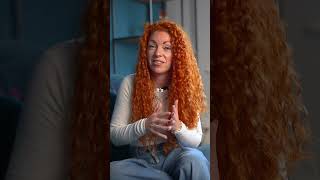
Hi, I'm Heather Curls at home, coach and founder of Curly Girl Method Club and CGM Club and our range of CGMC products. I'm here today with Zoe, who reached out on our Instagram with a particularly inspirational story. So I'll introduce you to Zoe.
Hi, everybody, I'm Zoe. I'm from Bournemouth and I am a parasurfer for the England Parasurfing team.
That's such an amazing title. That's incredible. And can you tell me or us a little bit about your story and how you came to have those medals?
This is gonna. Yeah, the dogs. The dogs want to talk a minute.
I can't blame them.
So I grew up in Bournemouth, so I always had a bit of sort of like a, you know, I always had a love for the ocean. And it's really annoying, isn't it?
I can't hear them.
No, no.
Honestly, like a little scuffle of feet, but not.
Okay, I'll carry on. So, yeah, I always loved the ocean and did a lot of swimming, bodyboarding. Tried a little bit of starting when I was traveling, but haven't really time to get into it. And then I just returned from traveling about a year. I was doing recruitment consultancy, so.
Oh, really? I worked at Manpower way back.
I know.
I did the tech desk too, so it's such fun.
Yes. I had like, just kind of straight out of traveling job and I was on a mission to run the Great North Run.
Okay.
Marathon thing. And so I was training loads. I was running up and down all around us. Living in Oxfordshire then. And I was running home from work and my best friend, who I'd been traveling with just happened to drive by and she was like, oh, so hop in the car. We'll be, you know, we're going out. It was Friday night. Hop in the car. We've got a few minutes and we'll be. We'll be home quicker. And I remember doing that thing when you were having a workout where you think, I don't really want to cut it short, but we were going out. Yeah. So hopped in the front and I had my feet on the dashboard of the car, which obviously you shouldn't do, but I think I was. Whether I've made this up in my mind or whether or not this is something that happened, I think I was taking my running shoes off.
Okay.
And we were driving down a national speed limit country road and somebody just came up the. The other side and you would. There's a bollard in the road where you're supposed to Stop and wait as the traffic passes. But he was driving a Audi TT and obviously thought he could make that turn. So he suddenly just turned right in front of us. So we had absolutely. We had really no time to react, but enough time to see it was going to happen. So we hit him and the airbag went off whilst my left leg, sure, was on the dashboard. And an airbag goes off at like 250 miles an hour. So it's kind of the equivalent of you're putting your foot on a landmine. So my leg just shattered, like completely just shattered. My ankle was virtually, like, imploded within the joint. I spent a long time trying to reconstruct my limb because I suppose at the time I'd never really met. I'd never really met an amputee, for one. My version of an amputee, like, in my head would have been somebody that was just like, in a wheelchair or. Yeah, of course, somebody that was completely disabled, basically, was my understanding, really. And I had probably a limited understanding of disability, full stop. And so I fought really hard and had a pretty good, like, surgical team, but I was very little you could do. I had no mobility. Constant pain. A series of sort of setbacks, and eventually the, the decision was made that my leg should. Should be amputated. Quite a lot of nerve damage above the knee, but had enough, like, physical strength that I was able to continue to use that, although I don't always understand what my knee is doing because. Because of the sep, you know, the nerve injury. And then I had my knee, my leg amputated below the knee via epidural. Can I just add in 2015. Wow, that's.
Yeah, a lot, isn't it?
Wow. Yeah, it was a lot. It was a big kind of. It was a pretty intense sort of physical and like, mental journey to go on, if you like.
Yeah, of course.
Wow.
Yeah.
And I suppose truthfully, by the time I had my amputation, I was pretty much okay with it. I'd. I'd gone through like a long time of being pretty desperate to, to save my leg and when it didn't happen, I was like, okay. I'd almost like had that severance that you get almost like from the end of a relationship. We were like, okay, we're done. Yeah, we're no longer benefiting. Yeah.
Tired of.
Yeah, I was tired out. That's probably the exact thing, you know, way to describe it, really. I didn't have any more energy to give to that pursuit. No. And then when my leg was amputated, that was February 2015. I had a prosthetic and was walking by April. And then it takes maybe like a couple of years really for like a full, full, full recovery.
Yeah.
Because you get a lot of swelling and the prosthetic obviously is designed as to how your leg is at that moment in time. And then two weeks later you might have lost swelling and no longer fit. So there's lots and lots of fitting and different sort of stuff that goes on during that period. So yeah, about two years later I started kind of exploring ideas of getting back into just walking, really initially walking and kind of getting out and doing stuff, going out, doing more with my friends and being physically capable of sort of, I don't know, standing at a gig, you know, something like that or anything. And then just before lockdown, I started looking at getting into surfing and went to the wave, which is a man made pool, so it's an artificial wave pool in Bristol, and went there and had a few lessons and it wasn't that long after I'd started when somebody said, hey, have you ever heard of parasurfing? And it just went from there. Now I'm fourth in the world, I'm the gold medalist for the England team and I'm going back to the world championships again in six months, hopefully. So that's so incredible.
Turning that adversity into absolute strength and having that talent and hard work that must be physically so draining. I dance, so when I've been dancing, it's like if I've danced for a long period, you know, if you're training for something, the exhaustion is huge, isn't it? You must have dedicated so much time and energy to get there.
Yeah, yeah. I surf like relentlessly last year with a kind of drive that was almost a bit outrageous.
Yeah, sometimes it's needed.
Yeah, I think it was like, like
relentless energy towards that, that quest.
Yeah. And I, you know, I do have that kind of obsessive nature as well. So if I want to do something,
I'm like, you know, tenacity is a superpower. I've got it in bucket loads for, you know, just certain activities. A bit similar. When you have something of mind, sometimes there's nothing too much to really just give it your all.
Yeah, well, you for sure need that on a recruitment desk as well. Yes.
When you have 76 people calling sick on a Sunday morning. So this is an absolute vibe. I'd really be keen to find out how your hair and how your appearance and discovering how to look after your hair came in with that in that time.
Yeah. So I think if I take it right back when I first was told that I was going to lose my leg, one of the consultants actually said to me, oh, you know, if you were a man, we would have amputated your leg on the night. And I remember, think I remember being.
What a statement.
Right. And I was like, why is that? And he said, oh, you know, girls, women, you just don't deal with things as well because it will affect your appearance. You'll never be able to wear a
pair of heels because that's the defining for a female.
No heels out. Which, by the way, is not true. You can get rails raised, him or prosthetics, anyway. And I was literally outraged. Yeah. You know, why have I just been. Why have you been putting me through surgery after surgery, after surgery? Although it wasn't my surgeon, actually, it was another guy. But why have I been put through this when a chat would have already recovered?
And, you know, that's so much mentally. Gosh, what a statement.
Yeah. So much misogyny. Yeah. Anyway, I ended up having a conversation with, like, a NHS psychologist who told me it was utter rubbish anyway, that the men normally look fine and then fall apart within six months. And by that time the women have transitioned into going out and being okay with it. Yeah. And that typically we have lower levels of depression and anxiety after limb loss than men. But one of the things, nonetheless, that is a factor when you lose a limb is that you look different. You know, you can't get away from it.
You.
There's a kind of. There is an altered sense of who you are, which starts with way before you, you know, like right at the start when you kind of. Your physicality and what you can and can't do changes. So that makes you feel potentially different. You know, I was always really sporty and kind of an outgoing person and became like a poorly person whilst all my mates having fun. And then you move into, like a period of time when you've lost your leg while you're in a wheelchair and you. You don't wear a prosthetic because you're still unwell, so you're going out and about and everybody when you have a amputation thinks that they have the right to ask you what's happened. Super weird. I think it's a bit like I have. I haven't had a child, but I think it's a bit like when you're pregnant and people just like, touch your tummy.
Yeah. This sort of face whereby people never touched my tummy. Not on purpose. It's just a natural.
Somebody said to me the other day, I hope you don't mind me asking, how did you lose your leg? I didn't even. This person was in the opticians. And I'm like, you know, for one, a lot of people are born with congenital disabilities. You don't have to lose a leg. You can be born without one. Cool. And also, just the audacity of it. Like, you don't need to know so suddenly, like, in public to be kind of pitied or. Or at least stared at. And I. I did a bit of work on it with a friend of mine, and I. And I recognize, actually, that I, too, would stare. And it's quite an important sort of. Part of coming to terms with that is that actually it's just different. It doesn't mean. It's like. It doesn't mean you're a freak or that people are revolted, but it's the same as if you see anything that's potentially different in an environment that you're not expecting. Especially, I think, on, like, a young woman, people always, like, what. Because they can't quite work it out. Doesn't fit into any mold. Like veteran or, you know, standard sort of things that, like, that happen more
so that people are aware of or that socially people are aware of or if maybe.
Yeah.
Witnessed or known or seen. Yeah.
So I don't really fit into any of those molds. I get a lot of attention. Yeah. 1. And so suddenly you just feel very. I wouldn't say unnecessarily felt insecure, but very kind of out there.
Yeah.
One of the. One of the things that I've never actually been somebody that likes straightening my hair. So as a kid, my parents used to brush my hair. Oh. Yeah. So, like, I just had hair, like, you know.
Oh, we've all been there.
My dad still to this day says, why do you. Why don't you brush your hair?
It's so messy.
Brush it. If you brushed it, it would just look a lot better.
You should pull out evidence. Evidence it was not better. Dad.
Giant Chinese grass. You know, like,
I. I, on occasion when I go into London or out. Out for a particular place, that I can be more out there and confident to do. So I've been known to brush my hair out entirely just to wear it out.
Yeah.
Because it looks nowadays because it's so different. I wouldn't dream of doing that. When I was 12,
The day I found hair gel, and it was revolutionary.
It was a moment.
It's A real thing. Yeah. But yeah, I always actually liked having curly hair. I liked that it was a bit different. I suppose I didn't ever kind of aspire to look like I was like. I don't know, I like the fact that curly hair kind of for me represents like a playfulness, like a kind of. It's lie. It's different. You always sort of got a quirkiness to like that your hairstyle. For me, it represented who I wanted to be as a person as well, uniformed, you know, straight hair, like Jennifer Aniston, like every single person had.
I think sometimes that can be down to your personal experiences as well as. Well, the way that happens. Because certainly when I was younger I used to pay my brother in chores to iron my hair in desperation to just have this straight hair. And it only ever lasted five minutes because it was humid or windy or it start, you know, raining even the slightest and it would be 3 foot wide in a minute. Still, relentlessly, on a weekly basis, I'd clean the whole house in exchange for him to iron my hair with a real iron.
Yeah, yeah, yeah, yeah.
When he left for the army when he was 17 and I tried to recruit my youngest brother to do the same, it was hilarious because my youngest brother just ironed it like that rather than as a process. So it's at that point I really had to give it up. But this was before ghds existed and things like that.
But yeah, I remember I. I got, I straightened my hair very. I had a very brief spell of it when I was at uni. And I remember like there was a kind of contingent of people that said it looked amazing.
Yeah.
God, you just look so like neat.
I think in all honesty, that's probably the. I always. Because I had curly hair, so it was curly most of the time, but when I would straighten it, I would look totally different. And people go, oh, it looks so nice straight.
Yeah, yeah.
As a teen I really lent into that. It wasn't so much I didn't like having curly hair, but. But to be able to change how you look in that five minutes, to look, to stand out less. As a ginger with really curly hair, when I straightened it, I would stand out less. And that made me more comfortable.
Yeah.
Rather than feeling that vibe, I always felt like I fitted in more when I straightened it.
Yeah, yeah, that makes sense. Yeah, I, I never kind of. I mean, for one, I'm not a redhead, which I think does make a difference because that is an extra kind of variable, isn't it?
Yeah, definitely.
Yeah. Whereas I think now that the culture towards that's a bit different. It's much more celebrated. There's more. I feel like that anyway. Like my knees. Ginger. Yeah.
I think it says it's quite fashionable currently and people just aren't as outwardly mean as maybe back in the day. Because, like, my son is ginger and he's aware he's ginger. But I don't think it's the sort of defining, really.
Yeah.
You know, like, it's not.
It's not. He would be bullied about.
Yeah. Do you know what I mean? Whereas. But then I think people are a lot kinder and they teach kindness a lot more in primary schools and things. There's more awareness to. To that and how. What would be unkind to say and say so aware of it at a much younger age seems to make a difference.
But. Yeah, hopefully, anyway.
Yeah.
Yeah. So I always kind of embraced the curl, if you like, but I'm. I kind of. I suppose I was. I've. I was always lazy with it. I was lucky that my. My hair is quite like a. It's a defined curl, like it will. It typically wants to sit in a ringlet. Yeah. So I actually do think I was quite lucky in that sense. And it matched my absolute complete lack of interest in it. So it allowed me to just flag having nice hair without doing anything. And then I suddenly had this cocktail of drugs in me. Yeah. I've gone from pretty healthy in, you know, in my 20s and then just suddenly, boom, you've got like. I had drugs to make me sleep. I had drugs for suppressing my central nervous system because I had nerve damage, oxycontin, morphine, and my hair started to completely change texture.
Yeah.
So instead of being able to hold any moisture, it was incredibly thin and starting to look like there's bits of it still that kind of are like that, but it was like this.
Yeah.
The whole way. So it. Instead of having any of these curls, it was kind of. It looked like it needed a damn good condition all of the time.
Right.
And actually that really just fed into my kind of feeling crap. Just like. Oh, you know, they didn't even look nice anymore because I'd always enjoyed my hair. And then I, Yeah. Just started to, like, Google, basically. Yeah. I. My mum, who's always been a passionate fan of my hair, found your method and bought me a starter kit.
Yeah.
Yeah. I didn't really have, like, kind of. I was lucky because I didn't have anything to do at the time, so I was like Full in, you know,
down the rabbit hole you go. It's so much fun.
Like, if, you know, if you're in that initial part where you are trying to change your routine and you feel like your hair doesn't look how you think it should look.
Yeah.
Transitional period where you start shifting. I didn't mind because I was at home. I didn't have any pressure on myself. I just loved the progress. And it happened actually, for me really quickly. I had that kind of almost transformation back. Yeah. To having a. No. I don't normally do my hair in the shower and normally do it over the bath, so. Yeah. Over there. But, you know, like, when you. When you can kind of hold your hair and you know it's going to be a nice curl.
Yes. Yeah.
And then other times when you're like. So it started. I started having that again and just. Yeah. It just made. It just makes such a difference whether that's vain. I don't know. If it is, I'm fine with it. Yeah.
I was gonna say, if it is, embrace it. I think, like, if you've always had something. For me, it was slightly different. You always searching back for. For that satisfaction of knowing how. I think a lot of it comes from that satisfaction of knowing when you repeat the process, that more or less it's going to come out the same.
Yeah.
Where I found it was a real journey for me to try and get to that point. And it took me a really long time to. To feel better, like curly. Because every when I was doing it, I was getting the same result.
Right.
Rather than it being squiff one week and then not another. So I sort of gained that element of control. If I do these things, I'll get that result. So if I go to. To bed with my hair wet in a bun, it's not going to turn out great, like. But then it's back in your power that you can do it. I think.
Yeah. That's great. That is actually really important as well, because it's a big reason why people panic when they've got curly hair, is like, I'm going to a wedding. I remember specifically, just not that long after I'd had a prosthetic. It was my stepsister's wedding, and it was like one of those first times when I was kind of going to be out and about and I thought, I'm going to wear a dress. It was quite warm. Just going to go for it. And I bought a really nice dress. I felt like I looked nice. And then I started doing my Hair in the morning. And it was. It wasn't going to work. And at this point, this is before I started doing the Curly Girl, I was using shampoo. So I do do a single shampoo, obviously, super strong, filled with single. And because it was. Because it was so damaging, it would look. It wouldn't move.
Yeah.
It would curl still. I never really lost my curl, but I had no. It would be a bit like, you know, if a strong wind, it would all fall out.
Yeah, definitely.
And so I washed it. Didn't work, did it again? Didn't work. Put in a ton of ton. A ton. A ton of wax and gel.
Everything. Everything's the key there, isn't it?
Then it's so crunchy, it looks like Twiglets on my head. So then I wash it again to try and get. And it's like that sort of stuff. Yeah. Before, when you don't have any method or routine, that's what worries people. That's why they go to a straightener.
Yeah. Well, that's how the cookie crumbles. I spent years thinking it's just the way it is because I've got this and I don't have that that, you know, like, I've got these curls and they just won't do what I want them to do or whatever. But once you've done that, learning around it, you realize that shampooing twice is never going to give you that result. And I think labels make me so angry because I. When I started to have a bit of money when I was working, I spent more and more, like, on hair products and things. My hair got worse because the more, like you say, I'll put some wax on it, that will make it sleek or whatever it is that it says. You're reading it going, that is the answer to my everything. And you put it on, it doesn't work. And it's so frustrating.
And I think also there is a kind of beauty industry vibe, but not so much, I don't think now, but there was like, 10 years ago where you have, like, your hair curly on scruffy days. Yeah. You know, like. Like, if you be in your P.
I'm doing the laundry.
Yeah. And then you. There'd be a night. There'd be like, the vibe that if you went out like that, you weren't really making an effort. Yeah. I've seemed to have luckily fallen into an industry where having curly hair is exactly what you.
Perfect.
Yeah. So everyone's always like, oh, my God, I love your hair. Thank you.
You're probably the only person on the beach with volume.
Yes. Everybody else has got it in their eyes. Yeah. So, yeah, I'm in a place now where I just fully embrace it and it's. Yeah, it's great.
It's so cool. It's almost like an epiphany. Mine, I can literally pinpoint. I was walking on the school run, not very exciting, but I had a nice dress on from Tesco's because that's how I roll. And it was like £6 in the section. I thought, yay, it's got, got, you know, it's summery. And I just thought, this is great. I was walking to school and I felt really like chipper and I thought, God, that's the first time I've ever felt like that when I've just like not specifically done my hair.
Yeah.
If that makes sense. I was like, I was feeling really good because even in the past, if I'd maybe bought a dress or whatever and I put it on but my hair had gone awry or something, I didn't feel like 100%.
Well, you don't, do you? Especially when you've got. Well, I know you used to have your hair short as well, didn't you?
Yeah. And shaved at the side. I slick back.
Oh.
Just. I've had my hair green, purple, blonde, black.
Struggle to identify with it.
Yeah, I really did for such a long time. And then I always find it sort of a shame that it took me so long.
Yeah. Was beautiful now. So you can be.
Can love it now. Used to be the bane. Bane of my life, but not anymore.
Yeah. Now how. What an amazing sort of transformation that now it's. That it is your life like. Yeah. Part of you and your business and the progression that you've made in business with it. Like I just, just, I just love it. I just think it's a fantastic story. So.
Oh, amazing. And very. Lastly, I just wanted to speak about sponsorship and how that works with you and whether or not we can reach out to anyone in our audience and give you some exposure there on how we can help and support your inspirational story and how you move forward with everything you're doing.
Yeah. So at the moment, surfing is fully self funded. All the athletes within the England team or competing on the international circuit pay for the, for all the travel, all the equipment, everything. And for me, that includes costs of prosthetics as well. So, I mean, a single surfing leg is £11,000, so it doesn't come, doesn't come easy. So, yeah, I'm on the hunt this year for some sponsorship. It's probably not as much as people think it is to sponsor a para athlete, and it would just enable me to make the journey to California in November, when I'll be competing for England at the Worlds with the bid. Hopefully that it will get into the Paralympics for 2028 LA, which is what we're all hoping for. And the decision will be made probably at the end of this year. So I've got to get there, I've got to retain a medal and then I've got to get myself to the Paralympics. So any financial help of any kind would be super, super, super welcome.
Amazing. Well, we see if we can find anyone here that's able to support you, because I think that would be truly incredible if.