💇🏼♂️ 150+ salons, multi-million dollar exit and the 15mins haircut with kristian solheim
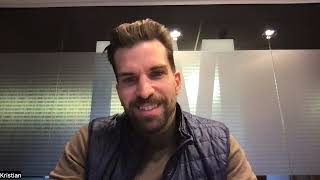
Kristian Solheim built Cutters, a Norwegian salon chain that cuts hair in 15 minutes with no frills, into 150+ locations and sold a majority stake in 2019. The model strips away washing, phone calls, and chit-chat to maximize throughput. Stores hit NOK 2 million annual revenue with 30% margins and four-month payback periods.
Chapters
Welcome to another CEO Wisdom podcast with Christian Hauji Solheim. He is founder at Cutters and now born member, was CEO there for the past 5.5 years or so. Cutters is in the Bergen area in Norway and it's basically the Uber of aircuts. And just not sure why this model hasn't spread throughout the world because yeah, it's amazing. And yeah, we're gonna discuss about the science of scaling a hair cutting business. Yeah, I still order my my haircuts on WhatsApp, as I told Christian. And yet I just don't like moving. And as a digital nomad, you know, I've had my hair cut by hundreds of folks and some of them were good, some of them were bad. So I guess bringing some recurrent quality, some quality control here. The business, a great idea. Cutter is a big business. 400 million in annual revenue, a bunch of employees. So this is going to be an exciting one. This podcast is brought to you by my podcasting company. If you want to start scale, be invited by two podcasts. It's called podpire.com podcasts are great ways to grow your business and believe it or not, they're monetizable. Lot of people, they just give up on podcasting because they don't see any cash coming out of it. So I have a nice backend including, but not exclusive to po, to podcast sponsors, to having your guest subscribe to newsletters and so forth and Mastermind. So hit me up on podbear.com. chris welcome to the pod. Can you tell me a bit more about yourself and about Cutters?
Sure. So I'm from Norway, based here in the northern part of Europe. I had no experience starting any companies or anything related to the hairdressing industry at all before I started. My dream, actually when I was younger was to become a professional ice hockey player. So that's. That was my goal when I was younger, but it didn't happen. But luckily I was also focusing a bit on, on the schoolwork, so I ended up with a master's in economics. And I mean, long story, long story short, a lot of coincidences, me and another guy ended up deciding to try to start this hair saloon concept. And actually the first time he called me talking about this, I thought that he was joking because none of us had any experience in the industry. I mean, we had talked about starting different types of businesses before, but not anything like this. But he had actually come across a concept in Japan that is quite similar. So we have actually been very, how do you say, we haven't copied them, but we have been very inspired by a brand in Japan actually that we saw worked out. So we decided to try it out. And the concept is super simple. It's basically 15 minute haircuts, a fixed low price and only drop them, and that's it. But what we have done instead is that we have been cutting basically everything from a traditional hair saloon. And it's something called, I think the name is Blue Ocean Strategy. I was not actually familiar with this when we started it, but I saw that this is actually what we're doing. So it's actually about cutting out basically almost everything you have in a traditional industry and then you're left with one small part and then you sort of create your own market within a big market without having to compete with everyone else. So, I mean, yeah, that's what we did and we started and worked out quite well. So.
So, yeah, so you have an academy, you have multiple stores, 15 minutes haircuts. How's that possible for a woman?
Yeah, you know, when we started we thought that we would do it in 10 minutes because that's what they did in Japan. But. But then we just, I mean, we just had to do a lot of testing. And that's also one of the things I learned when we started a company that it's so smart to just go straight out and start talking to your customers and test your product or service right away so that you can get feedback and then do some tweaking and then launch again. I mean, the opposite way to do it is to sit for yourself maybe for years, use a lot of time, a lot of capital, and then you eventually launch something you think is perfect and then you end up realizing that, oh, the customers may not want to have it. So I mean, we just went out to the customers and talked to them and tested it out. And I remember me and my co founder went home to our first hairdresser together with a lot of other people just testing how fast can you do it. Then we took the time on the haircuts, we took the time between the cuts and we saw that, okay, 10 minutes, yeah, maybe it's too fast, but 15 minutes, yeah, it can actually work. And we're still going to be so much more efficient than everyone else. So then we just went for it. And you know, it's so many other things you can cut out that is saving you a lot of time. For instance, we don't have hair wash before the haircut. The hairdressers are not able to take any Phone calls coming into the store, they are not interrupted by anyone else. It's so many of these small things and all this chit chat you usually have in the beginning we have just cutting it out and only have the haircut. So I mean yeah, it is possible. So
I like the concept as a client too because sometimes you know, I had haircuts that lasted for 50 friggin minutes, you know, like I don't have 50 minutes to spend in a barbershop. So yeah, it's, it's a pretty cool concept. Then why only drop in? Because you mentioned the Ubert of hair dressing salons that you mean that it really scaled and why, why did only drop in and why not being able to make a reservation?
I mean what we see is that we were able to get a higher utilization. That's what we call so the amount of haircuts a hairdresser can do per hour. So it's easier for us to get more, more volume when we do it like this. And a perfect scenario is that you always have waiting time on your stores. Obviously not too high because then it's a bad customer experience. But you always have a few customers waiting all the time because if you do, if you do the booking in advance, it's harder for you to actually use all the time you have available. But maybe it's something we're going to do in the future. But let's see. But when it comes to this Huber of the haircuts, we've always been focusing on the, on the tech side of the business. It's definitely not the most tech heavy industry, the hairdressing industry. So I mean what we're competing with is probably most, not, not, not the most technical companies. But still we're focused on this since day one. And one obvious reason is I think most of us know it. If you have been focusing on tech the last years, you have been getting higher valuations. So I think that's, that that's just one thing. But, but on the other side we have been doing it to give our customers a better customer experience. We have been using technology to make the day of our hairdressers as efficient as possible and we've also used it to be able to scale as easy as possible and without adding too much overhead. So we have a pretty good tech platform that we use both out towards our customers but also a lot of things we do internally to create an efficient as good working day for our employees.
Interesting, because the pre reservations, I mean I'd only accept them if they drop the cash, you know, like obviously. And if they don't show up, they lose their full deposit. So that, yeah, we could be loyal to the 15 minutes. And the only problem behind that, that you're going to reply is that if they're late to their meetings, right, and then there could be a policy that if they're late, you know, it starts on the second 15 minute slots and that they have to pay for that too. So that, that could be a potential solution. How many locations you have? Because 400 million a year, that's, that's fat, you know. So did I read 150?
Yeah. So. And we also started basically expanding in Norway. The first store was in Norway, then it went quite well. So we've continued to expand in Norway and then we also expanded into some of our neighbor countries such as Sweden and Finland. We also expanded into Denmark and the Netherlands. But that was during the pandemic time, right before the pandemic was hitting us. And that basically led to us having to shut down the stores in Denmark and Netherlands because it was, I mean it was a crazy time. We were shut down, we couldn't travel. It was just impossible to scale up in those new countries. So now it's back in Norway, Sweden and Finland. But I really believe that this concept would be appealing basically everywhere in the world. And it's also different. So it's not the same as everyone else. So I think that this concept can, can really be something that could work a lot of different places in the world. So I'm excited to see where this company can go and yeah, how did
you get the idea from Japan? You know, because there's a bunch of business concepts and innovation. Japan is so fascinating that we can bring elsewhere in the world. How did you get that?
You know, all the way up until I ended my studies, I never thought about starting my own company. But at that time I started working for a Norwegian startup without taking any salary, without taking any shares. It was just to learn. And then I was doing that at the same time as I had another job. I was actually. That's also just totally random. But I moved to Italy, Rome, working for the United nations right after my masters. So I was doing this during the day and then I had a startup that I was helping during the night. And here I met what later became my co founder and we just started talking about starting a lot of different things and actually we wanted to start some type of app because that's what was cool back in those days. And yeah, I think luckily none of the ideas we thought about starting ended up being a company. So my co founder then later came across this concept in Japan and he just loved it. So he started using it. He really liked it. He couldn't understand why you didn't have anything similar anywhere else in the world. And that's just when he called me and he was just like, yeah, maybe we should try it. In the beginning I was a bit skeptical, but after thinking about it and looking a bit into the markets, I just had to say yes to it. So he called me on a Friday. I thought about it during the weekend and Monday morning I went into my boss and I said, I'm quitting. I'm going back home to open up hair saloons. So, yeah, a lot of my colleagues were laughing and a lot of people in my home country were laughing. But that's, you know, that's how it is when you start. It sounds silly until the day it suddenly works.
Yeah, and it did. Big time. So just to be clear, when you say 400 million, it's in USD.
No, that's in Norwegian Kroners.
Okay. Yeah, that's what I thought. So, yeah, it's two. You make 230k per salon, right? Something like that.
Yeah. But you also have like a run rate. So you always, as long as you grow, you always have actually higher run rate per store.
Right. So yeah, so that's 35 million just for the. The audience. 200. 200k ish per salon or, or maybe a bit more. Um, what's the profit margins on that? Like, if I'd start like an identical company, what could I expect on.
I think the, the numbers per store is probably like 400,000 USD or euros. Yeah. So because you also have the ramp up and the, the fact that you're opening a lot of stores at the end of the year, so you don't have the full year on them. But. But yeah, that's true. And also, you know, the currency in Norwegian is so low now this year, so you should have asked me for a few years ago. Then it would have been much higher in US dollars. But you can expect 30 margin on the stores.
30%. Okay, so 30 profit margins. So out of 35 mil a year. Yeah, you bring home 10 mil. And then how, how many co founders are you guys?
Like three right now it was me and. Me and this guy I met in Italy, Rome. Andreas. So it was the two of us and then in 2019, we sold a bit more than half of the company to a private equity company. So at this time we had a lot of interest from different types of companies. And I think the main reason, one reason was obviously that we were growing very fast. Another reason was that we were able to grow without actually having to bring in that much external capital, which is quite rare when you start your own company. And we found what I would call the secret sauce recipe that I actually also didn't know about before we started. But we're very low investment costs in our stores. We were able to earn money on the stores basically the day we opened them. And then we have something called negative working capital, which is the fact that, let's say you, you as an hairdresser start to work in January, then you will not get the salary before late in February. So you get money before you have to pay money. And all of that is resulting in what we saw was a payback time on around four months. So from we did investment to we had money back, it was four months. And that's crazy low. Usually it's like years. So we had a lot of interest from private equity companies also some industry players and some family offices. And yeah, in the end we sold to a Swedish private equity company the summer of 2019. And then we have now been working with them also for some years now. So the goal obviously when you sell to private equity is also to sell it again at some point. So what we're working with now is to. Yeah, making the company as good as possible and then sell it again. But what not that many people know is that we also almost sold the company one year before to another company, but something happened internally in that company almost on the signing day. So it was no sale then. But I think was good for us because then we had one more year to grow and get a higher price price the next year. But it's always very hard to know when the best timing is. And also in cases like this, it's also about the value you can create together up until the next exit. Exit again as well.
Right. And now you still have 5, 10% shares or less than that.
Yeah, I think it's 12 I have now.
Okay. And when you sold, let's call to that company, like 10 million or something like that.
The price of it. Yeah, was. It was much higher.
Much higher. Very nice.
Yeah, congrats on that.
That's very significant. And yeah, lots of up and downs for the audience. You know, like when you grow, go through a due diligence process and then you have the company last minute tell you no, that's really, really Frustrating. They should actually pay for your time and all the energy you invest in that. You know, you can't really do that. And yes, as you can see in the case of Elon Musk and Twitter, you can sometimes get sued if you are claiming to buy a company, require tons of their time and you influence negatively the company and then at the last minute you pull out. Yeah, that's not really nice. Do you feel that your background as an athlete has helped you lead that company in the right direction?
Yeah, I just want to just comment quickly first on this, on this thing regarding due diligence as you say. It's. Yeah, it takes so much time, but actually just to support them because it was actually something that happened that they couldn't do anything about. But I mean I remember we were so, so young at this time and it was like the first time we just saw the possibilities to get some money for ourself as well because we had been going without salaries for many years, etc. So it was quite crazy because I mean when you're so young, you start to think about everything you can all stupid things you can buy with money and you're like making plans for a cool car you can buy and then just suddenly no, no deal. So yeah, it's crazy and it's affecting you and it can be affecting you in a negative way. But to your other question, as an athlete, I think it's a lot about the same things. You set a goal and you do everything you can to achieve that goal. If it's as an athlete or a business person, or as a family person or whatever it is, it's quite similar. You set goals, you do whatever you can to achieve them. So yeah, I think it's a lot of things you can learn both in both ways that you can take both from business to that lead world and also from that lead world to the business world. So yeah, absolutely, yeah.
Super, super impressive. Did you ever fetch these offers or did these companies just heard word of you? They saw that the company was growing in headcounts on LinkedIn. They had various signs and data signs that the company was ripe for acquisition. Did they find you out or did you reach out to them?
We were a lot in media, so we were a quite well known brand and in our home market, most of the country know who we are. So they, I would say in the beginning they found us because we were so much in the media. We also very strategically used PR to build the whole brand basically. So that's first process we were approached by some companies and then we knew it was a lot of interest. So in the end, one year later, we, we had a lot of talks with different investment banks and we landed on one investment bank and then we did like a proper process. So then this investment bank talked with a lot of possible buyers and then we had like a proper process that was lasting for more than half a year. But yeah, it started being just basically companies contacting us because they had seen us in the media, they had seen our stores popping up everywhere. So.
So yeah, what's next for you now that you're chairman? What's, what's your next big company?
Yeah, I mean, now as a board member, I'm obviously still involved from the side and trying to support from the side, but it's only been some view, it's only been a few weeks. So it's quite, it's quite a new experience. So maybe if you ask me in half a year, I will give you a better answer on how it actually is. But I mean, it's still extremely important for me that the company is doing it well. And we have a big goal together now to do another exit at some point. And also, especially now in the beginning, I'm also probably going to help a bit more than I'm going to do later with all the onboarding and making sure the new CEO has everything she needs to succeed in the role. So, I mean, it's still a lot of work just from the side, but obviously, I mean, you get, you will get much more time now as you're not working operationally in the company anymore. So let's see what's gonna happen. But yeah, maybe a new company one day.
But last question. What does your daily routine looks like as a former athlete? How do you take care of yourself and your brain?
I'm actually doing. I'm very interested in learning and trying new things. And during the years, both as an athlete and also as a founder and CEO, I've been testing and trying a lot of things. And things that work for me is obviously I have to train every day. If not, I'm getting crazy, so I have so much energy, so I have to work out. Then I'm eating healthy, I'm not drinking any alcohol. I'm always searching for optimal feeling for the body. I've been meditating for many years, which have helped me a lot. It was especially helping me a lot during the pandemic when we had a very tough time. I think for five years ago, I tested out quitting reading mainstream media Because I'd read it so many places that, that you should try to quit it. And I did. And I've never started again. So I'm not reading. I haven't read mainstream media for five years, I think. And for those listening, if you haven't tried, I mean, try it. It's amazing. And, and I'm, I'm guaranteeing you, you will, you will get to know the most important things happening in the world anyway. And obviously you can, you can listen to podcasts and reading specific things, but the mainstream media is usually just a lot of crap. And then another thing, I'm not watching any television. I mean, if you think you have not enough time during the day, just stop watching television. You're getting so much time from doing that. So. And yeah, and then I'm writing diary. That's. That's helped me a lot as well, every morning and every evening, just to make better understand what I'm using my days on. And if I'm achieving my goals enough, if I'm on track on achieving my goals, it's. I mean, it's very. Things get very clear when you do this diary morning and evening. So that's at least some of the things that have actually helped me a lot. And it's also helped me not getting burned out, which a lot of my friends and colleagues have been during these eight years. And I think it's very, it's very common now to get burned out because you can be contacted 24 7. Some years back in time, we didn't have Internet, we didn't have social media, we didn't have phones. It was not possible to reach you 24 7. But now you have to. So I mean, you have to set your own boundaries. If not, it's. At some point, I think a lot of people will get burned out if you don't set the boundaries. And that's also one thing I have done. I'm not doing emails and I'm not on my phone the two hours before I'm getting to bed and also the two first hours in the morning. So always have some free time where I'm not interrupted, which is also. Yeah, I mean, it's just so amazing actually to do that.
Love that. Well, Chris, thank you so much. Where can people find out more about you?
Probably LinkedIn is the best. So if we just link to the profile in the episode, I think that's the easiest thing. And obviously for the people in the countries we have, we have business. You can also visit the website on cutters, dot no. Or se? Or Fi, depending on the country you're in.
And I'm Charles Cormier, your host. That was another CEO, wisdompodcast.com.
More from Charles


Founder Wisdom: the audiobook, version 2 (5 hours of stories from founders and CEOs)

8 CEO Questions I Love Asking: the audiobook (64 founders answer, in their own words)





