50,000 website design customers in 2001
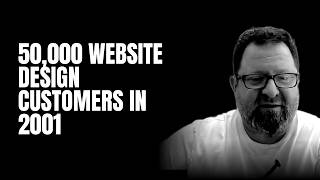
Gene McCubbin built a web-design agency that served 50,000 customers by selling $50-per-month website packages starting in 1995. He sold the company for $7-8 million in 1997, then pivoted through SEO and pay-per-click services before moving into reputation management with RepuViews.com as WordPress and AI site builders commoditized the agency business.
Chapters
Welcome to another Founder Wisdom podcast. We have Gene McCubbin with us today, the president at PopLabs. Uh, yeah, we're going to talk about social media PR strategies today, reputation management. Gene, I'm glad to have you on. Can you tell us a bit more about yourself and what you've been up to?
Sure. Um, I am a serial entrepreneur. I've owned, uh, 3 of the larger web design and digital agencies in the Gulf South over the last 25 years. I've been in this space since I was in my early 20s and not anymore, obviously. And, uh, um, my largest company was an Inc. 500, 5,000 company 4 years in a row. Grew it to about, uh, about $10-15 million in revenue. And I've had 2 successful exits. So, um, long history in the web space.
Nice. And what got you into the agency space?
You know, it's funny, I think way back when, kind of the mid-'90s, when the internet and kind of the dot-com thing was first coming out, I was in telecom and I was just beginning my career and that looked like the hot thing to migrate into. So I got involved in a couple of early-stage startups and just got to become, you know, kind of an internet guy. But I'm not a coder. I wasn't really a coder. I'm not a coder. I don't I don't know how to code. I mean, I know the basics of it, but I would not be considered any good at it. I'm really more of an operating guy and a salesperson.
Interesting. And yeah, you started in '99, right?
So '95.
Yeah, '95. Were agencies even a thing back then? Like, I think they were like a brand new concept, right?
Yeah, I mean, back then you still got on the internet from your dial-up ISP. Or maybe you had DSL if you were, you know, hardcore. Um, and, you know, most businesses didn't even have a website. They were just starting to find it. And most of the people who actually built websites back then, you know, they would call them a, um, a webmaster was kind of the term they were using. It was usually the guy that did, you know, wired the computers up. He was kind of the default guy that started building websites. So yeah, it was pre-agency model. Google wasn't even around back then.
Wow, that's, uh, yeah, that's some time ago. I, I was born in '93, for reference.
Wow.
And was it hard to get clients back then, to have them care about the internet?
No, I mean, it was pretty easy to get clients back then, but you were— the, the knowledge of the client's knowledge base was just non-existent. I mean, they didn't know why they should have it. You would have conversations with people about why should it— why they even needed to be on the internet, that sort of thing. Um, I mean, Amazon sold books back then. That's all they sold.
And the ticket size back then to your service, what was it? And what did you produce for them exactly? It's like search engines, for example. I'm not sure when they exactly bought, maybe like 2001 or something. What, what did you first sold? Or was probably website before search engines, right?
That's right, it was just websites back in the beginning. We sold a, um, we sold a $50 a month website with a super early version of a kind of a content editor. And I say super early, like comparative to today, like the comparison of, you know, an 8-bit video game, Nintendo, compared to today's video games, like nothing even close. Um, And we, uh, we sold them actually through, back then, uh, their local phone company. They— everybody still had regular local landlines, and we billed them through their local landline. We sold, uh, about 50,000 customers. I had about 40 employees just full-time selling on the phone.
50,000?
Yeah, about—
how is that possible?
We had a lot of salespeople making a whole lot of phone calls. It was all phone-based. Cold calls, all cold calling, a lot of sales.
What was the script? Is like, uh, hey John, I searched you online, didn't find a credible website.
Pretty much, it's pretty much the whole thing. Yeah, and for $50 a month we could build you a website. We, we targeted businesses that, that were, uh, had just gotten a DBA, so brand new businesses. Okay, but the, you know, the business—
Texas only, or do what? In Texas only?
It was all over the US.
Okay.
I mean, it started in just Texas, but we had call centers, uh, in San Diego and Indiana and Chicago. Um, of course, in Houston I had a large call center. So it was a volume business. They wouldn't stay on very long. They'd either develop a better website down the road, but it was getting people when they were first in the door. Um, and I sold that business in '97. to a small public company.
Yeah, $250K a month you were making with that one. Did you have—
the turnover was really high. The customers would leave. Um, the bulk of them would start, and then either they enjoyed their website and they wanted something more, you know, more custom than what we were giving them. Um, so they would leave after, you know, 4 to 6 months. The bulk of—
in Canada, wasn't that like Yellow Page kind of model?
Very much like a Yellow Page model. In fact, that's kind of what it was. The whole model was a Yellow Page model. See, you were— how did you even know that? Because that's before your time.
Because my first business 10 years ago is Facebook ads to realtor, and Yellow Page was still selling websites to realtor in Montreal, Canada. So yeah, and then they were pretty sucky website. Also, they did ads for realtors back then. But yeah, similar to you, I had like a business with that level of scale right back then. I mean, not— we would sell $300 a month. A Facebook ads package to realtors, and I scaled that one to $30K MRR, but I sort of like exited that one because realtors were such shitty clients. So why did you exit that one?
Because the turnover was too high. Turnover was too much of a— I mean, we did a lot of volume, and when you get to that level of volume, you've got to— if you're not replacing a large number of customers every day, you're losing a large number of customers every day. So while the revenue was nice, it was just like a Ferris wheel of work. And as the model got bigger and bigger, there wasn't really a growth opportunity. And what I saw come the late '90s is kind of Google coming out and the search engines were really starting to become more of an applicable thing. I saw the ability to move upstream and move more to kind of an SEO model. And then later, pay-per-click came around. So combining SEO and pay-per-click with something that's a more custom product and really kind of evolved from a Yellow Page model, very much a Yellow Page type model to more of an early stage agency selling SEO and pay-per-click at a $300 to $1,500 a month price point.
And the exit, before we get to that next one, right? Like the exit, was it painful or was it an easy flowing process and was it life-changing money when they acquired you or?
Well, I had raised, this is my first company. I was 25 when I started it. So we'd actually raised about $2.5 million in investment capital. I had a partner, so at the time of the exit, I only owned about 20% of the company. But it was still a nice hit of money because it was sold to a public firm. So it was about a $7.5 million, $8 million deal. So, you know, it was still a little chunk of money, but, you know, and got my experience. But we were already having trouble working with the investors, so I was kind of— learned a lot. Out of that, out of that deal, man.
That's, that's so crazy. Uh, I mean, if you looked at yourself compared to your friends back then, it was like, yeah, I made it big. I've sort of won the fucking lottery.
No, uh, you know, got to buy my first house, my first Mercedes. Um, you know, had at that point already had 3 kids, so it had a lot of things to spend money on. But yeah, it was, it was nice, uh, nice a nice increase in my, you know, financial capabilities.
And then the PPC agency, I was in 2003-ish after that one, or—
Yeah, so I started, actually got approached by some guys. My background before all that was in telecom.
Okay.
And in those days, you know, you, there was a big business in reselling long-distance services, MCI, AT&T, Sprint, that sort of thing. So this is really pre-cell phones. You know, the BlackBerry was just starting to come out. And I was approached by some guys who had a large telecom company and they wanted to do something on the internet. They didn't know anything about the internet. I'd already had that success. So they approached me and they wanted to put all the money in. So they put in $5 million into an agency and we grew a model that is an agency model, but with a real heavy sales-oriented focus. So the same, you know, very, a lot of salespeople on the telephone. But we were selling a $300 to $1,000 a month product. It was a fully customized product. We had our own, you know, CMS system that we developed. So it was a— had a lot more stickiness in terms of client retention, and we were able to build a pretty large business with that. Didn't have anywhere near the problem with attrition. But yeah, that's combining— we included pay-per-click ads in the price point. At that time, customers just didn't even know how pay-per-click worked, you know. And, uh, so we, we actually— they paid us and then we personally spent a percentage of that money on pay-per-click ads. They didn't pay Google directly, they paid us. And so that was— that worked well. I mean, what happens is the technology evolves, right? And then the consumer knowledge base gets better. And as they get more and more knowledgeable, that squeezes the both the profit and the value that a service provider is is able to give them. I mean, it wasn't too long later that WordPress came out.
Yes, that was my next question. Yeah, when did it come out?
Founded in Houston, where I, where I live.
Really?
Yeah, Matt Mullenweg. Yeah, Matt Mullenweg came in my offices. I've got video of him in my office back when he just started, and he was training, like, doing kind of a, a training thing with my employees, teaching them what to do. I still got videos of that. And who knows, you know, that guy's probably worth a billion dollars today.
So, right, but now Lovable has eclipsed WordPress, right? Like now WordPress is no longer relevant nowadays.
You think? I'm not familiar with that, really.
Lovable, yeah. Lovable is like what everyone uses nowadays. It's a prompt-based website builder, so you can just like say, hey, build this, and it will build like a brand new landing page in seconds. Looks really good also.
It's AI-based.
Yes.
Yeah, I mean, the whole world of web design is like dramatically changing now. And with what AI can do.
Yeah, it's a European company also, Lovable. It's a wild card. It really took the market by storm. It's one of the most valuable private companies in the world. So there's always stories, you know, of like sleeping giants. Even Google can be considered one of these nowadays. They've been totally disrupted by ChatGPT. Of course, they're coming back with Gemini, but they still lost billions, if not trillions of dollars in market cap. Right. Have you followed that?
Yeah, I mean, I see it. I'm deep diving into AI. What's funny is I would see my largest agency, you know, at its peak in 2012 or so, um, you know, we were doing a lot of revenue. Um, I had partners and investors, and— but the model itself, just like the one I talked about a second ago, it gets, you know, commoditized. The services that you're offering are no longer you know, worth what you, what you need. That I built this model, this infrastructure that requires a certain amount of money, and without that money I can't support that infrastructure, right? And all of a sudden your product that you were getting $1,000 a month for is free, or nearly free. You know, combined with the way it kind of works in the service business is, you know, you were an expert that day, and then these kids come up out of high school or out of college and they know more than your highest paid employee knows. Just because the nature of technology in the youth and how they use it. So today, you know, kids literally coming out of high school or in high school have skill sets that before we paid six figures for, you know, and it just doesn't even make sense.
Which is great, by the way, because me, when I hit the work market, I was a bit confused. It was like How can I get paid right? And I felt that the school didn't really prepare me for all of that. And actually, school doesn't prepare still most kids for the AI wave that's coming. Just today I was checking Alpha School, which I guess are close to you, right? Alpha School in Houston and Austin, right? They are building like AI-first kids, right? I think that's really important. But to just come back to what you were saying, why not invest a good chunk of your money into SaaSifying what you're doing, right? I guess that's what a bunch of agency owners did. I think even Slack, right? Like Stewart Butterfield, he invested in Slack because he ran this design agency of some kind. It was like, couldn't find a better tool for his employees to chat on. Well, he created Slack and then he SaaSified Slack and Slack became this multi-billion dollar company. And that's not an isolated story. There's a whole bunch of fucking companies that were agencies first and then became a software model. Why didn't you do that?
Didn't have any software to develop. So in about 2010 or 2011, something like that, I just started winding it down. And so I ended up selling off a large chunk of the customer base. I kept the brand and retained the, you know, customers I had personal relationships with or I still had kind of consulting relationships, that sort of thing. But I let the company— what I retained, I let it start to attrite out and focused on investments, other investments. And because I wouldn't say my enthusiasm was gone, but I certainly didn't have any clarity on how I'm going to make money in a service business. I would say I was a little tired of the service business. You know, we— I had found my father was a vice president of wealth management at what is now Morgan Stanley. And, uh, he, you know, so I knew a lot about stocks just being raised with somebody who's in the stock market business. And what I did in my agency is I found a niche of finding these penny stock companies and then rebranding them. And when we rebranded them, their stocks would jump, right? So there was a very, very profitable niche that we were— do I— yeah. Right. So, but we would rebrand them because most of the time those companies have had trouble and they've got some sort of kind of new model but still have all the dead, you know, the skeletons in their closet, you know, metaphorically. And in many cases, you know, not just figuratively, their website is just as dead, their financials are dead. So we would go clean—
tarnished.
Yeah, they're tarnished. We would go clean them up, and we did. They jumped from 5 cents to a dollar a share. So it was, it was that division was netting $1 million a year plus, netting. Um, and then would you take a percentage of that jump kit?
Could you do that legally?
Like, uh, yeah, you know, that's— so that's one of the biggest mistakes I ever made is no, I did not. Um, and I should have because I was afraid that that was probably insider trading, and so I just took my payments in cash. In retrospect, I would have rather taken all the, the stock and then defended myself if it became a problem. But, you know, again, life lessons we learn. But I had a bunch of employees like who managed that kind of group for me that just got together and went and left all at the same time and took about half that business with them. And so again, at the end of that, I was just like kind of tired of the service business, to be quite frank. It's, you know, built— not that they've been bad businesses for me, they've done well, but to, you know, my experience in the, in purely in the pure service business is it's, is it you get commoditized and your, your people become competition. Your customers learn how to do it and don't need to keep paying you. So it's— if you don't eventually, like you said, kind of SaaSify it or come up with a technology to support it that's defensible, then, you know, you end up with just a hamster wheel. You know, might be a big hamster wheel, but still a hamster wheel at the end of the day.
Yeah, no, I know what you're getting at. Um, I've— I mean, the last 10 years I've run agencies, right? You on your side for the past 30 years. And I've really tried SaaSify. I'm still in the midst of that. I've, uh, Rebranded my last agency. We were called Top Leads Agency, right? We rebranded it to GTM Ventures. So we're a venture studio now. So take equity in our clients. They also pay us retainers, right? Like to do go-to-market as a service. But now we take equity in them, and sometimes we take full equity bets if we're really bullish on a, on a company, right? And then, then if I own equity in them, they build the software for me, right? So I'm the GTM and fundraising arm, and they take the full technical backend to things, and that can bring me to another level of scale and wealth, which is intriguing, right? You said your investment—
have you had any success with that yet?
Yes, uh, yeah, for sure. Like, um, I— no exits, but, um, clients that pay me retainers and their value keeps on going up, and I can see like their financials like doing very well, right? Um, I also have my fund on this side as well, so sometimes the equation is like If I'm gonna do free stuff for them and take equity, shouldn't I just like invest a big chunk of cash in them and I hope, uh, these returns span out? Because my energy is like super, uh, limited nowadays and time, right? So I'm always trying to make the best out of that. So it's, it's pretty complex equations, but the thesis is also if I invest in a strong founder and they fail at their current companies, I can place them on another bet of mine, right? A good company idea or software idea I have. It's a complex process, but it's certainly fun as well. And sort of like managing a portfolio. Your investment, you said, I guess, was mostly stock and real estate. How did that pan out?
Some real estate, stocks, of course. And but something like what you did, where I've made some, you know, client, shared risk returns, and one of them in particular paid off very well. Kind of like, do you watch— are you in— where— you're not in the US, right? Where are you?
Oaxaca. I'm from Montreal, Canada.
Montreal. So the US version of Shark Tank, uh, have you seen Mr. Wonderful?
I mean, yeah, I don't like him much. I have my own Sparks Tank, by the way. Uh, I have my own show. Yeah, that's like Shark Tank.
Very cool. Uh, so, you know, his models that he always pitches people was basically a revenue share model. He takes equity and then he gets a revenue share model. And yeah, we can talk endlessly about his personality and whether what he's doing is fair or not, but on a lighter level, I like a revenue share model if the deal becomes successful versus a pure equity model, because there's so many things that can blow up a pure equity deal, as you know.
Yeah, fully agree with that. On GTM Ventures, uh, this year, like, we're doing GTM like 3 different ways, right? Product-market-fit, partnerships, and podcasts is like our 3 main warhorses. But we're also doing closing as a service, right? So closing as a service is directly everything we close for you. We're going to take a percentage on this. So yes, I'm bullish on that. Shark Tank Kevin, I love this guy, has a great brain, but he keeps dissing founders and I'm not okay with that, generally speaking.
He's just kind of an asshole. I think that's some of that's marketing. You know what's funny though about that guy is he— where he made all his initial money is like one of the worst corporate acquisitions in the history of the world.
Yeah, uh, what was that again? McGraw-Hill acquired him, right? Or something like that.
He had a software company, I forget the name of it, not Broderbund, but basically like a kids learning company. Again, this is old school, way back in the '90s when they're—
yeah, glorified Head Deck.
CDs at Office Depot with like Kids Math Blaster and that sort of thing on it. And, uh, whoever it was that bought it, Mattel or somebody, paid like $3 billion. Yeah, billions. And the whole thing fell apart like within 8 months after they bought it.
Yeah, catastrophic. But it's like, for the founder on the other side, Kev, is like a big deal. Yeah, yeah, it's like major home run. But yeah, that guy is really smart, right? But he also betted on Sam Bankman-Fried. I'm not sure if you follow that one, but yeah, FTX, and that went to shit. He was their main spokesman. So like talking about reputation, right? Like that's a good segue to what you do. What the fuck would you do if like this guy's the main spokesman of FTX and he's paid, right? He's getting like paid probably $250K a month to be their spokesman. FTX goes to shit, then he goes to you. What would you do for him at that stage?
Gosh, you have to put out a lot of press for something that, that, that obvious. I think you have to kind of go on an apology tour. You're going to pull a Kanye West, you know, apology tour almost.
But there's, there's a difference. Kanye's reputation nowadays is still total dogshit, and Kevin has a very good reputation nowadays. So I think he did something well here. I'm not sure what.
I think the American public, as a general rule, you know, just doesn't understand crypto. It certainly didn't understand crypto, you know, back then. The people who are adherents to it, who under— you clearly understand it, they all know what's going on. The ones that don't understand it, they're just like, it's a confusing thing, you know. And then they kind of feel like— I think the, the public is so forgiving of celebrity-type people. It's just part of the drama of watching that person be a celebrity is, oh, of course they made a mistake. They got a divorce. They got this. That's part of what we're paying for is to see their, you know, their very human lives played out in real time.
I agree with that. And if you ask me, like, FTX is— Sam Bankman-Fried didn't hire the right PR firm, if you ask me. Right. Because SBF is not necessarily You know, one, in my opinion, he's not like evil intent and criminal. He's just like very much on the spectrum. He got destroyed and checkmated by his main competitor, right? Binance.
Right.
He didn't control the press wave, right? Like of all the people being like, holy fuck, they're in trouble. And that's how they went bankrupt. And that's how he got to jail. So what do you have to say about like hiring the right people? PR firm as a, as a make or break in some industries like crypto, especially in these days?
Well, I think beyond his PR, I think he had, you know, a disastrous, um, lack of controls financially, you know, just using the money as if it's a personal bank account. And he's ahead of it in, in all of his PR until you're not, right? And then it's just like, in essence, a Ponzi scheme that just falls upon itself. But, you know, if you followed that case and you looked and like that girl Carolyn, whatever her last name was. It's just basically, it was like a handful of nerds on the spectrum who had empowered each other by being that enclosed group together and just completely ignored all of the old school stuff that's required for a company to be a giant public company dealing with money. Forget that it's crypto, you're a giant company and you're dealing with people's money. you have to have, you know, safeguards in place, and they didn't. They didn't have any, you know, like, unbelievable lack of safeguards. So, you know, I think sadly that's why he's in jail. He might have been able to— he might have been able to survive the press messes, but once they started going under the, the, you know, the sheets and realizing this is actually theft, you know, now you're in trouble. You actually—
it was the perfect target, right? Because, yeah, like you said, um, no guardrails. There's still, like, believe it or not, there's still a very large chunk of very important companies that have, like, no guardrails whatsoever, especially on the private side of things. But legislators were looking for a fucking target to give an example of someone, and there goes SBF right in front of them. So yeah, it was impossible for him not to get wrecked.
Yeah, yeah. I mean, it's like you say, I don't think the guy was evil. I think he was just, you know, way in and over his head and didn't have, you know, thought he was maybe too smart for his own good and, you know, got caught. Yeah, same. But what's interesting to me, if you look at some of this just every day, you know, you look in the news or some new AI company doing something I can't even figure out what they're doing, who just raised, you know, $6 billion at a $40 billion valuation. Who's got, you know, no revenue yet or almost no revenue yet. How are these things gonna, you know, I think there's gonna be a, a come, you know, part of my French, come to Jesus kind of moment in that world as well in the near future. But, you know, not for a while.
I guess the main point is like there's a market perception, right? And you absolutely need to understand these, these fundamentals, especially, yeah, if the press and the people are gonna decide of your, your fate, right? Um, SBF was— is now a bunk— bunkmate with, uh, Diddy. Like, that's another guy, a case of guy that didn't calculate mathematically the impact of his actions, right?
Right.
A system that went counter him. It's— it's— it was obvious that he was gonna get fucked, like, sooner or later. Um, I think people need to calculate things more, right? Like, are you building a system that is building up and up and is protecting you, or are you headed for a gigantic fucking hole that's going to take you whole? Gene, thanks for coming on today. Where can people find out more about you?
So we didn't talk much about it, but I have a new company. I finally got re-excited about the whole space and it's called RepuViews.com. So it's a combination of reputation management, which I think most of us, at least in our space, know what that means. With intellectual property management. So, kind of bridging the gap between managing the reputation and protecting it. So, that's where they can find me, repuviews.com.
There you go. That was Gina and Charles Cormier for another
More from Charles


Founder Wisdom: the audiobook, version 2 (5 hours of stories from founders and CEOs)

8 CEO Questions I Love Asking: the audiobook (64 founders answer, in their own words)





