Ahmad Alsharqatli, CEO at AYM: Crypto, FTX, Founder Life
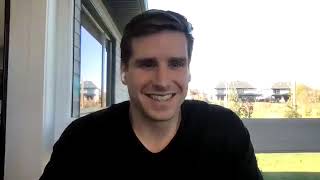
Ahmad Alsharqatli built Aimbot, a crypto trading platform with 3,000 clients and $100 million in monthly volume, after 15 years in financial markets and Bitcoin mining since 2013. The non-custodial platform charges tiered fees and targets 3-7% monthly returns, though regulatory constraints keep it out of the US and concentrated 90% in the GCC region.
Chapters
To another edition of Founder Wisdom Podcast, today we have Ahmad Al Shakatli with us. He is founder at aimbot and CEO. We're gonna have a nice talk about crypto and all his entrepreneurial experience. Gonna be super fun. So Hamad, can you introduce your. Actually I should say Ahmad. Ahmad, can you introduce yourself and tell us a bit more about your companies?
Charles, first off, thank you for having me. I really look forward to this. Absolutely. And by the way, you said my name perfectly. So currently I'm founder and CEO at Aimbot. And at Aimbot we develop next generation crypto asset investing and trading solutions. So we're on a mission to change the way people invest their funds and generate wealth. And our vision is to make passive income accessible to everyone and to make it as easy as a click of a button. In fact, our motto is just press on and this is what we strive towards every day.
Super cool. I want to talk about your background first so that people understand who you are. So you started in forex, risk management and investment and wealth management and so forth. Tell us about these early experiences and up to your first entrepreneurial experience.
Absolutely. So I'm going to give you the watered down version of this. So I don't take much of your time just on this question, but I started in financial markets 15 years ago and my first exposure to algorithmic trading, I've traded everything by the way that has a chart. I've traded options on the weather, I've traded forex, equities, gold, commodities, whatever you can think of, I've traded maybe most recently one of the most far fetched things I've traded was the chart of the COVID infection rate. Long story short, I got started trading full time in 20, actually.08, just after the credit crunch and my first exposure to algorithmic trading was in 2010. I worked with my professor at the time and he was working with the east with the, sorry, the bank of England to develop an algorithm that would counteract. They had their doubts that some kind of private party was working on a financial model that could estimate the upcoming interest rate changes and they wanted us to test it if that was statistically significant. In 2015 was my first exposure exposure to crypto. Actually I pivoted trading full time crypto in 2015. My first exposure to crypto was 2013. I was one of the lucky ones to get early exposure and I started mining bitcoin. At the time we called it farming bitcoin. So I farmed Bitcoin for 45 days. I farmed the equivalent to 36 Bitcoin. And then I decided it wasn't for me. Yeah, imagine I used the Raspberry PI. Have you ever seen a Raspberry PI? You use one?
Yeah, I've seen one. I've never used one. But like 36 Bitcoin. Did you cash out of that or are you still holding some?
Believe it or not, I sold them for 80 cents on the pound, ATP on the. On the GBP. Yeah. So it got me around $2 a dollar and 8 cents at the time. It's ridiculous. And then 2015 I started, I moved my trading full time into crypto. 2017 made loads of money just like everyone else. 2018 lost most of the money I made and then some. And at that time I started working at what is the Aimbot algorithm right now. I worked with a few developers until in 2019 I settled on one. He's currently my co founder and CEO and the CTO. Sorry. And what started off as something that we're developing for personal use is now we have over 3,000 clients, over $5 million in assets under management, and we generate trading volume upwards of $100 million a month.
Do you think that some people trade on the time change that we just experienced? They predict that billions of dollars are going to be lost throughout the world because of this stupid time change. And they take arbitrage of that.
Look, Charles, this is a very interesting conversation. For me, arbitrage obviously does exist in financial markets and in general in our lives. There is opportunity for arbitrage. But I am one of the proponents of the efficient market hypothesis. And basically what it says in a nutshell, is that everything you need to know is reflected in the chart. So even in my charting I'm entirely data driven. The same way our algorithm has been programmed. Everything we need to know is in the chart. And there's a famous saying by Bernard Baruch, one of the best traders of all time, he says, show me the chart and I'll tell you the news. But if I may zero in on your question more concisely, perhaps you were asking if billions were lost in terms of the time change or what was it exactly?
Yeah, well, every year the there's like multiple time changes. I think it's four times a year, something like that, or twice. And you and I said it was bullshit and it actually is because there's time change to reflect the amount of light I believe that there's throughout the world. But a bunch of people forget to change their time and so forth and they lose Meetings and so forth. So my question was, is there a bunch of companies or hedge funds that make bets off that and know that some companies are going to lose out or some customers are going to pay less or going to be late in their payments or whatever because of that and make money out of it?
I'm pretty sure there are. I'm pretty sure there are. I'm telling you, I've traded some far fetched instruments. I've traded weather options in Florida. I've traded. I'm pretty sure some people traded that.
Yeah, for sure. Weather can be super interesting. Yesterday I was watching Netflix series called Earth Storm and basically there's the tornado alley in the US and there's farmers in that area. And apparently with climate change the tornado alley is getting bigger and bigger and bigger. And I would certainly bet that yes, some people are unfortunately going to lose their livelihood and there's a bunch of funds that are making these sorts of bets. But yeah, that's kind of sad that the same time. But yeah, I bet there's a bunch of people making fortune of that. Coming back to your experience because I also want to talk about this one, the CrossFit one. So you started Fit Hood CrossFit in 2016. Tell us a bit more about that one.
Okay, actually I'm going to get you to fit with CrossFit, but before I do that, I'm going to circle, maybe take a few steps back and talk about my entrepreneurial journey.
Sure.
I graduated in 2010. I opened my first business in 2013. It was an equity crowdfunding platform. It was called Iknitabi. And this is my greatest success perhaps to date and also my biggest failure or my greatest regret as well at the same time. And I say that because as a 21, 22 year old, basically what happened, we started this business. It was an equity crowdfunding platform. First in the region. We went for Sharia compliance and it was kicking off, it started off great. We funded six businesses for a total of around $3 million in our first year of operation and ended up selling it in 2014 for around $250,000. And for a 2122 year old, that's a lot of money. So I say it's my biggest success because my first business was success. I got a success, I had an exit. But also it was my greatest regret because I recall very vividly after this first endeavor we thought my co founder and I, he's still my co founder by the way. We work in all businesses together. But I remember very Vividly. We thought we knew everything and that we couldn't lose. So we took the money, put it together and started two new businesses. One of them was Foot CrossFit. And I kid, you know, I can't say the business was bad. The gym business, I, I thought at the time it was a great idea to make your hobby your business. And the first lesson I learned for me personally, yes, definitely, you have to be passionate about what you're working on. I'm very passionate about what I do right now, but I, it's definitely not my hobby because at some point I started hating my hobby when it turned into a chore. So this was my first lesson with fit to CrossFit. The next lesson was if you're going to do something as big as Airbnb or Uber or Facebook or Tesla even that's going to change the world or even if your business is something as small as a supermarket, it takes the same amount of discipline, dedication, time and effort. So if you're going to go for, if you want to become a founder or entrepreneur or start a business startup, whatever have you, you might as well go big or go home. Honestly. This was the next lesson I learned. Basically what happened. We used to each have a 9 to 5. So we'd go work at the gym 6, 7am, take a do our 9 to 5, finish our 9 to 5, get back to the gym at 7pm and stay there until 11pm and at the end of the day, just for an extra $501,000 a month, it just wasn't worth it. So we decided that the business, it's time to cut our losses with fit with CrossFit. That's the story of the gym, essentially.
That's super cool. And did you like CrossFit before? Like, why did you decided to get into CrossFit?
Oh, I, I'm still a huge fan. I still do it religiously every day.
So you're gonna do the games?
I said no. No, as a business, no, as a hobby. I love it. I do it every day, a couple of hours a day. I feel healthy, I feel strong and I'm in shape. I can do anything I want. I'm good at sports. It keeps me focused. It's an investment in yourself.
Yeah, for sure. But you know, I got, I'm still into that logic somehow that if I invest some of my time in a health type of business, then that will have like positive effect obviously on my health and it will help with my longevity. That thesis is somewhat good, but it's also Skewed because it can make you like, not like health as much as before. And these business are not the most healthy as per se financially most of the time, you know. So you also need to factor that in the equation. But tell us a bit more after that, like how you got into crypto again and how that led you to aimbot.
Absolutely. So Charles, this is the, perhaps the full story of aimbot. In 2017 I turned $25,000 into about $2 million in between September 2017 and January of 2018, cashed out some of it and the remaining, the remainder of it just, it's worth $30 today. Just put it into perspective. 90% of coins disappeared. So there were about 404,500 tokens or crypto assets in 2018, February, out of which in 2020 less than 30 remained or less than 50 remain. Most of them disappear. So as the crypto asset market continued crashing in 2018, I decided that I was going back to trading the market rather than investing in holding long term. And honestly, trading crypto is amazing. Contrary to popular belief, crypto is one of the most technical assets out there. It's more technical. Technical analysis applies to crypto. It's very common thought for people to say, ah, technical analysis doesn't apply to crypto. No, it's one of the most technical classes I've ever traded. So I decided I was going to develop an algorithm and I've worked with over 15 developers. I've hired some of the top developers in the world through Toptal. Toptal is a platform like Fiverr or Upwork. Yeah, absolutely. I love it, it's great. They are the top 1% of the talent and every time I got to a certain point of the algorithm, that logic, every one of them failed. So in 2019, early 2019, I kind of gave up on the algorithm until June of 2019. Facebook post by practically random stranger at the time. Now my co founder and CTO Naji, and he was looking for someone to help him develop the trading algorithm. I reached out to him, one thing led to another. Eventually we scheduled the meeting, it was a Friday, I recall, and I went in with zero expectations. But honestly, this time I had a plan and I was going to skip the entire logic, the entire algorithm, and ask him to jump head first into that same brick wall which all the prior developers failed. And I asked him, naji, is this doable? And I remember his response very clearly. He told me, yes, it's doable. There is nothing that's not doable in tech. So I thought at the time, this guy is either a or he's a genius. And two days later he calls me and reinforces my thought that he was a. Because he claims it was done in just under two days. So I scheduled another meeting. Yeah, the very next day, it was a Monday. He came over to the office here where I'm sitting, and turns out it was done. So we got to work doing that. And In January of 21, it was ready for beta testers. I managed to round up around 250 beta testers. And honestly, at this point, Charles, our goal for the algorithm was to use it for our personal trading. Trading, crypto functions 24, 7, 365. Extremely tiring, very easy to miss out on trades, extremely volatile, 90%. People are losing 90% of their funds in the first 90 days of trading. So we initially, yeah, absolutely. That's an FCA statistic, actually. So we developed this so I can use it to trade my own funds. And before we knew it, turns out people really wanted to buy this product. So we made a few tweaks here and there, added some onboarding processes, launched a website. It was built on WordPress. It took us like two hours. Me and my other COO actually developed it took us two hours. It was very basic. And six months in, we find ourselves with over $5 million in assets under management. And the business was going great. So I kind of put everything on hold and focused on that. Prior to that, I was doing consulting in blockchain and completing my master's degree. So I was consulting for private and public entities locally, regionally, and internationally. And I'm now doing aimbot full time. Sort of how it worked out for us.
Super cool. So kind of started as a hedge fund and turned much into SaaS nowadays, right?
It. It actually never started as a hedge fund. I literally developed this algorithm so it can trade my own funds. I never thought people would pay for something like that, but when they wanted to, I was like, okay, I can take advantage of that. And I turned it into a SaaS model like you said. So we offer it on a software as a service right now.
And the question is, like, if the algorithm is that good, why didn't you just fetch investors go with hedge fund models via the SaaS model?
Okay, so a couple of things comes to mind, Charles, and for me to be able to answer that properly, I need to circle back into our first month of operation. And before I do, just the value proposition of aimbot, as in as a product. What we're doing, we don't market it as a trading bot. It's an alternative investment vehicle. If you have $10,000, you have few options you can utilize term deposit, manage funds, etc. We offer the exact same thing and our value proposition is it takes 50 minutes to get started with an aimbot account. Zero prerequisite knowledge or know how is required or user intervention throughout the process. No technical know how your money remains in your account where non custodial, we never have access to your funds. And our product can generate 3 to 7% a month consistently, regardless of the underlying market conditions. Whether it's crashing, whether it's mooning, whether we're in a bull bear market, sideways consolidation, we make money for our users. Now the issue was in our first month of operation we did like you said, we weren't offering it on a SaaS basis, we're offering it on a performance based fee solely. So we used to charge 25% of monthly profits we helped generate for you. And with just 16 clients, we found it extremely difficult to contact every client and say, hey, we made you this month $10,000. You asked 2,500. Most clients never picked up. Some clients paid us on time without us even reaching out. And the absolute majority of the 16 clients were always no, you didn't make me 2,500, you made me 500. So we were like, okay, hang on, this is not scalable, it's not sustainable, so let's just charge membership fee up front. Now you also asked me why we don't offer it to institutions. And the answer to that is also is quite, quite simple actually. It's simpler than the previous one for us to be able to do so. And we were in talks with a number of investment banks back in November and the number of the top financial service providers so that we can plug in aimbot to their financial services offerings so that they can offer it to their clients. But for us to do so we need the licensing. And what we do is basically we undertake regulated activities that do require investment and sort of banking licenses. So until we do obtain these licenses, which is still a work in progress, takes some time and a lot of capital. Until we are able to do so, we are only able to offer our service on a B2C basis, as we do right now.
Okay, and what's the pricing model here? I see that you have like multiple packages. So let's say that I want an alternative investment. I've got 100k to invest, like how much should I pay and what are my options? You know Vs your investments. Because not only do I have crypto, but I, I mean I can invest in containers, I can invest in a bunch of things. So like why would you recommend your platform and this type of investment?
Okay, so first of all the we offer the tiered base pricing model and we only have one type of membership. It's an annual membership and one of our members values or One of the goals of Aimbot as an entity and us as the founders is to truly democratize and make algorithmic trading available to everyone. Aimbot as an algorithm, as a product, as a platform will give you access to make data driven decisions and trading decisions and allow you to trade exactly like institutions and pros do. And it also provides you with real time data analytics and monthly reporting and client success managers the same way hedge fund or an investment bank in Wall street does. So we wanted to make sure this is available to everyone which is why we offer it on a tiered pricing model. And it starts all the way from free for life. We have a membership tier that's free for life. You can sign up, gain all the perks and it's free for life. And it goes all the way up to our. There's pro. Basic Pro if I recall correctly, I'm sure one of the guys here with me, I have the team working around me. We're actually launching a new product right now as we speak. So we have a few tiers, goes up to gold, platinum and black. And the black tier opens up for people whose capital exceeds $100,000 and it's priced ad hoc. So it starts off at 1.5% per annum, goes down as your capital goes up. Different tiers will unlock different features, different perks. It's all available on aimbot.com if you're interested or anyone listening is and why I would advise people to invest in Aimbot. Look Charles, if you compare my offering to any other financial service provider and I say this confidently, by any metric, we absolutely blow them out of the water. Compare us to a hedge fund. We are able to beat the market. Compare us to hedge fund. We have no lookup periods, we are non custodial. You can withdraw your money at any time. Compare us to a term deposit. We are able to make money consistently every month regardless of underlying price conditions. So we offer the same risk. Compare us to existing trading bots will require zero user intervention, use zero knowledge. It's just literally you just click on, just press on. Even the button says just press on and you're good to go. You don't need any underlying knowledge in trading, crypto, financial markets or even how to set up your account. It's literally as easy as I'm sure you've visited the website once and it asks you to log in with Facebook and Google. It's literally as easy as login with Inbox your exchange and you're good to go.
Are you mostly present in the Arab world or do you go also worldwide when it comes to your clients?
Okay, so this question is not as easy to answer because technically as a business now you can be sitting in a garage in Jordan and wherever and you can offer your services to anywhere in the world. But because the services we offer are regulated and required KYC AML processes, we are very picky with who we offer our services to. For example, US citizens can't use the service because they're subject to different laws and securities laws as to people who are in England or Europe for example. So right now 90% of my clients reside in Saudi Arabia and the Emirates, GCC in general and the remainder would be in Jordan. We do have few clients all over the world, Mexico, India, Pakistan. But as the our primary focus, we focus region wide. But we do plan to expand as we obtain the first license. We plan to gain the licenses in other jurisdictions as well. So we can expand it.
Cool. And would you recommend crypto nowadays because we've seen it in your September results. There's been pretty much a bad month for BTC minus 15%. Your platform did almost twice as better, but still it seems to be going down in value just like tech stocks. So would you recommend crypto nowadays as an alternative investment?
Look in a nutshell, if your investment time frame or horizon is a year or two, this is not something to throw in the kids tuition money. But in a nutshell, yes, it's a great time to buy crypto. But for you to be able to confidently make this decision, there's a couple of caveats. First of all, this was Bitcoin's first test. This was the first time in Bitcoin, Bitcoin's 14 year history and it was Bitcoin's 14th birthday yesterday. Actually the white papers, since the white paper was published, but it's in its first time in its 14 year history or 13 years something history that we're in a bear market in traditional finance. So the Fed central banks are tightening monetary policy rather than quantitative easing or loosening monetary policy. And honestly I had hopes that bitcoin would decouple from risk assets right now and would genuinely act as A hedge against inflation. But it seems that we're not there yet. And if you consider all the monetary policy built into the bitcoin blockchain, it doesn't make sense. The only thing that makes sense or the only justification I have to it right now is that regulation is still not allowing institutional money to be onboarded into crypto properly. So retail is panicking. But if we look into the bitcoin monetary policy, it has a limited supply. It has an emission rate or a money supply that is issued at a decelerating rate with a bitcoin having every four years or so. And it's, it's, there's the difficulty. I don't want to get this, I don't want this to become a very technical. But given its monetary policy, it really should be increasing in value. I think it's only a matter of time. I work on the forefront of the blockchain regulation globally. I advise and consult for multiple private and public entities. And it's not a matter of whether crypto as a whole and bitcoin in specific will be regulated. It is being regulated. In fact, to me, I see an arms race happening now as to who's going to be first to regulate and make use of this industry, which is honestly poised posed to disrupt finance as we know it.
Yeah, I mean, we're only scratching the surface here. It's already over. I think you've added a bunch of cool insights when it comes to crypto. So we need to do around to some time. Where can people find out more about you and your company?
I'm actually everything you need to know is in aimbot.com so a y m dashbot.com and we have great support staff, customer service. Anything you need, you can reach us anytime.
Thank you, my man. Have a good day.
Thank you so much, George.
More from Charles


Founder Wisdom: the audiobook, version 2 (5 hours of stories from founders and CEOs)

8 CEO Questions I Love Asking: the audiobook (64 founders answer, in their own words)





