🛢️alcoholism, podcasting and sales with jeremy funk
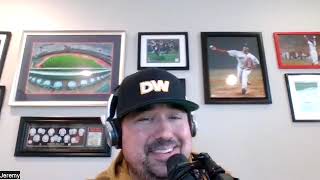
In this episode of the CEO Wisdom podcast, host Charles Cormier interviews Jeremy Funk, CEO and founder of Funk Futures. Jeremy recounts his journey from a history and American studies graduate in New Hampshire to a tech and oil‑and‑gas sales professional, detailing early roles selling storage hardware, a pivot into the shale boom, and subsequent positions at Energy Navigator and Seven Lakes. Recognizing the limits of representing a single product, he launched Funk Futures three years ago, offering contract fractional sales and recruiting services for emerging energy‑technology companies. Jeremy openly discusses his struggle with alcoholism, his rehab experience, and how sobriety led to a 70% revenue increase and improved personal health and relationships. He explains why he started podcasting—first with “Tripping over the Barrel” and later “What the Funk”—as a means to stay relevant, build credibility, and showcase industry personalities. Jeremy shares his nuanced view on the ethics of fossil‑fuel production, emphasizing clean‑energy practices, carbon capture, and the role of engineering in reducing emissions. He also reflects on fatherhood, describing how having three children has reshaped his work ethic and perspective, and offers thoughts on education, advocating for real‑world applications of classroom concepts. The conversation concludes with information on how listeners can learn more about Jeremy and Funk Futures.
Chapters
Welcome to another CEO Wisdom podcast with Jeremy Funk. He is CEO and founder at Funk Futures. We're going to talk about sales, we're going to talk about podcasting, oil and gas, energy and tech and technology if we're lucky. Jay is located in Denver and we're going to have some fun today. Pre spoke to Jeremy about a month ago and Jeremy has a hell of a story, so stay tuned for that. Potbire.com is presented this podcast. Podfire is my podcasting company. If you want help scaling or monetizing a pod, you can go to potwire.com Jeremy, welcome to the pod. Welcome and tell us a bit more about yourself and funk futures.
Charles, thank you very much for having me on. You reached out to me cold. I thought we had an awesome conversation, got to know you a little bit, kind of told you my story, and we both decided this would be great to. To have me on. So my story. Yeah. Name's Jeremy Funk. I'm the CEO and founder of Funk Futures. I'll get to that in just a minute. I grew up in a small town, Plymouth, New Hampshire, Middle of nowhere, kind of in between Boston and Montreal. Very cold, very much the sticks. Was born in my house. Kind of random, different time. In 1979, graduated high school, Plymouth High School in New Hampshire. Went to Brandeis University just outside of Boston. I was a double major in history and American studies and actually found out this week that my advisor passed away. He was pretty old, but somebody. It kind of allowed me to reflect back on my time in college, which was obviously very special. And rest in peace to Professor Cohen. Um, graduated from Brandeis 2002. You know, humanities. I didn't really know what I wanted to do, but, you know, in the early 2000s, I was starting to see business opportunities pop up in. In two areas that interested me as it relates to sales. One was in pharmaceutical, medical sales in that arena, especially in the Boston area. And the other was technology. This was sort of right around the first time tech boom where you saw technology really exploding. The Internet was becoming much more of an accepted thing at that time. And I was like, you know, I'd like to get into sales. So kind of kicked tires a few different ways while I was waiting tables and bartending to make ends meet. And then one of my best friends from growing up said, hey, why don't we do something different, man? We've all lived in New England our whole lives. Move somewhere, we got nothing tying us down here. None of us have significant others. We don't have jobs. That are keeping us here. And I said, sure. And then another friend of mine said, sure. So three of us loaded up two vehicles, got in our cars, and decided to throw a dart at a map. And we ended up in Boulder, Colorado on Halloween of 2003. So I've been in Colorado now for almost 20 years. Very quickly got into selling technology. I might be dating myself a little bit, but the first technology product that I ever sold was a company called Left hand Networks. And I used to sell 1 TB storage boxes, a physical box that we would sell to medical companies and really anybody who had decent amounts of data. It used to cost $20,000 for one terabyte boxes to store your data. And I remember everybody at that company saying this, this industry is going to explode. And as that happens, pricing will come down. Now, if you look at what does it cost for a terabyte of cloud data on your phone, like $2.49 a month, something like that. So that industry has really shifted. Lived in the Boulder area, the Boulder kind of startup technology scene for the first five years of my career. And then my big break, late 20s, I got a random call from a recruiter saying, hey, there's this oil and gas technology company just outside of Denver. They like your profile and they're exploding. And my thought was, man, didn't oil and gas die in the 80s or something? Is this really still a viable industry? And they said, oh, look, there's this shale revolution happening right now. They're figuring out new ways to extract oil and natural gas out of the ground. And as you see right when you fill up your gas tank, prices are going up late 2007. You want to get on this right now? So they showed up, wore a nice suit, nailed the interview, and they said, all right, you can start next week. So my first day on the job, the price of oil was about $138 a barrel, which is close to the all time high. And it was awesome, man. There was just so many great opportunities. There wasn't a lot of software or technology available to those companies. And things were just moving off the shelf, selling like hotcakes. Fast forward a year later, the market starts to crash. Oil and natural gas prices take a major dip. And then there was no more popping bottles at the office. Significant pay cuts, layoffs, reduction in force, slashing 401s, just trying to stay afloat. So I really got introduced to oil and gas and the cyclical nature of being tied to a commodity price very quickly. My first year was quite a indoctrination into that space. But I loved it. I loved it. Was starting to make really good contacts. And when you work for an accounting ERP system like I was at that time, you start to develop partnerships with other companies. And I started to become close with some of the other partners and because of that was recruited to another company called Energy Navigator to help them put their, their kind of spot on the map in the US they'd had success in Canada, Calgary is a pretty large oil and gas hub and they wanted to start creating business opportunities in the U.S. they hired me, they hired a few other folks. We had a great run. I was there from 2010 to 2013 when I took a job running sales at a startup which had some really innovative technology called Seven Lakes. I led sales at Seven Lakes for about four years. Seven Lakes had a tremendous trajectory, was one of the fastest growing privately held companies in the US in 2014 and 2015. It was really fun on to take a company that was really small, be able to scale it really fast, sit in on some investor meetings and almost get like a hands on MBA per se. Had built really good contacts based on my time in the industry to that point. It had been almost 10 years in 2017 when I left Seven Lakes and I thought I started to get this idea for it doesn't make a ton of sense for me to be representing just one single brand, one single product. I have the contacts people generally like to buy from people that they like and trust. And if I have one product and I try to sell it to a friend of mine and they don't have a need, well then what do I do? So I started to evangelize this idea of maybe I could put together a group that does kind of contract sales for a number of different companies and solve a bunch of different needs, helping some of these earlier stage companies scale and get indoors. They'd have a harder time getting into, but just didn't have the gall to go and get it. You know, wasn't until kind of after Covid spending a lot of time at home, struggling to sell some product in the downturn of COVID that I just said, you know what, it's time for me to do this. So almost three years ago, I decided to launch Funk Futures to do contract fractional sales for emerging energy technology companies. And I've also complimented that with recruiting and placement because if you think about it, fundamentally, a smaller company that's looking to get a foothold in the market will see a lot of value in working with a fractional resource. It's less expensive, they just need a couple of wins to justify then bringing in a full time team. But there are larger, more established companies that won't have a need for a fractional resource. But those companies need to hire full time people and I know who the right full time people are to place in those companies. So it's been a fun balance. Now doing this for three years both in the contract fractional sales space and in the recruiting space primarily focused on oil and gas, oil and gas technology, then having a lot of fun, man. Things as an entrepreneur are tricky, right? There's a lot of different challenges that you have to deal with almost on a daily basis. Working in the business, working on the business. Also have a podcast myself that I'm going to have to run after this one to do a recording, but just really, really happy with the, the place that my business is at right now and what the future looks like. So thanks again for having me on. And that's high level, kind of my story, right?
And where comes the challenges in there? Because I saw your LinkedIn post and you and I talked about that last time, year ago, your health rapidly declined. You know, we talked about the importance of mental health. What challenges did you face and how did you resolve these?
Great question. So I think one of the things that was challenging for me after being a full time resource for 17, 18 years of my career and then all of a sudden here I am as an entrepreneur, right? The guardrail sort of completely came down and I started feeling like things were just crazy, right? I've got to manage people, I'm married, I've got three kids and my mental health, my physical health was not in a place where I wanted it to be. The stress of running a small business was catching up to me. I felt like I was consuming too much Alcoh and I decided to step away. I actually checked into a rehab facility about 430 days ago and decided to pursue a life, sobriety, which has been incredible for my business. I think revenues are up something like 70% literally since the day that I decided to get clean and sober. But it was for a few reasons, right? Both from the sake of my mental health, my physical health, working on relationships, my marriage, being a better father to my kids, but also dealing with a small business that was growing. You really have to be present basically at all times. There's, there's no holidays and, and you know, it's been really positive for me. So kind of have taken a different path and as you can probably tell from this. I'm a fairly outgoing, gregarious person. You know, I don't need alcohol or substances to be social, and that's kind of been a big takeaway for me. But yeah, in a really fun place mentally right now. So appreciate you bringing that up.
What about the podcast? Why did you decided to launch it? What were your objectives and do you feel that you're still meeting those and that you can scale that?
Good question. So, you know, where. Where did the idea of podcasting come from? My. My good friend, if you see my hat right now, it says DW. Colin McClellan, Jake Corley, the founders over at Digital Wildcatters, had this idea and we're starting to tiptoe into being kind of the media company for the oil and gas energy tech industry. And as part of doing that, they wanted various different personalities to start building their brand via a podcast. So going back to 2017, 2018, they were saying, hey man, you should start a podcast. I said, what would I even talk about? They're like, yeah, you'd figure it out. You know, you like talking to people. There's a lot of personalities out there. You'd figure it out. I'm like, yeah, I guess. Well, what really changed was Covid happened. So as somebody who's been in sales, been in marketing, business development, a big networker, all of a sudden you lose that outlet. You don't get in front of people. So how do I continue to get in front of people, stay relevant, have conversations with people? In a time where you're saddled up in your home, podcast was the perfect outlet for that. I wanted a partner. I reached out to my good friend Tim Loser. Sadly, Tim passed away from cancer last year, but was a great mentor, friend, partner, the best co pilot I could have possibly had. And we started a podcast called Tripping over the Barrel. Our whole objective was to expose personalities within the oil and gas and energy industries and give people a sense of the faces behind what actually happens behind the drill bit. So he and I did 97 episodes together just before he pass away. And after that, I took a little bit of a break, decided, you know what, I want to keep podcasting. It's something I really love and sort of rebranded a little bit. I started my podcast called what the Funk, which is effectively sort of the same thing, just interview style, kind of like this, bringing together interesting personalities within the oil and gas and energy and energy technology space and give them exposure while also learning and staying relevant. Myself, I didn't really come into it with having any objectives of what I wanted to accomplish. But I will say it's been very positive from a business standpoint where somebody is considering hiring you or doing business with you. You know, maybe they go on LinkedIn, they probably go on Google. They want to find some information about you. At the point then that somebody comes to me, they've probably listened to a podcast, right? They've probably seen that I have a podcast. They think, all right, this is somebody who's a subject matter expert, somebody who's relevant in the space, and somebody who's well connected, and all those things are true, but perception becomes reality, right? And people see that and they say, okay, this is somebody who I want to do business with. And it helps check a lot of those credibility boxes before we ever get into a potential conversation around doing business. So I love it. I mean, I'll. I'll probably keep podcasting for, as, I don't know, the rest of my life. Like, this is a fun thing for
me to do in oil and gas. What are the ethical implications? You know, like, the planet's not doing well right now, and I think, like, the one of the last thing we need to do is burn more fossil fuels. So what's your take on that?
How much time do you have? I'm just kidding. So it's interesting, right? I think that I agree, right. The planet has been warming, and it is important for the world to produce energy where there continues to be an increased demand for energy year over year, month over month, day over day, but to do so in the cleanest way as possible. The positive part for the oil and gas industry is some of the best engineers in the world are those who can figure out how to go two miles deep into the ground and then a mile east or west to find exactly where the best pocket of oil or natural gas is. So now these people are tasked with a new challenge. It's okay, how can you do that? But also extremely limit the amount of methane that's emitted into the air. And I think the industry has done an amazing job, especially here in the United States, to both sequester that carbon. Carbon capture and sequestration is kind of a hot term right now. Effectively, look to ways to use the emissions that are coming off the well to power more energy, whether it be bitcoin mining or things of that sort, and really find ways to eliminate and limit greenhouse gases. It's pretty fascinating to see, but I actually think in some ways, oil and gas will be at the forefront of creating ways to eliminate the amount of fugitive emissions that go into the earth. We'll always need oil and natural gas. We'll need wind, we'll need solar. I'm somebody who's very just pro energy in general, but also, of course, we need to produce it in a way that is as ethical and as clean as possible. And I think we're seeing some positive trends moving in that direction. Fundamentally, though, if you think about it on a global scale, in the United States, we are a very clean producer. How can we police what's happening in China and other places where maybe they don't care about the planet the same way that we do? So it's a nuanced conversation. I don't think it's black and white. And I do think that oil and gas is doing a great job of taking a lead on how can we produce energy and how can we do it in the cleanest way possible. Techniques, engineering technology will always evolve, but I think it'll be fascinating to see how can oil and gas lead the charge, improve. We can produce energy cleanly and responsibly.
Right. You're. You've been a dad, and you're still a dad. You had at first two children, now have five.
Right now I have three. Family of five. Three kids.
Three. Three. Okay, three kids. Any parenting tips for a guy like me that's about to have children? How did it impact your career? How do you juggle with that? What's your parenting strategy here?
Thank you, Charles. I love that question. And I think my answer might be a little bit counterintuitive. So I think the fear before you end. Congratulations. The fear that you have when you're about to have your kid is, this is going to disrupt everything. I'm not going to get the same amount of sleep. How am I going to focus on my business? And all of sort of my own personal desire, desires that I want to achieve and accomplish as I move forward. What I think happened for me, and I've seen this happen with other people that have worked for me that I'm friends with, is once you have a child, you start to see the world a little bit differently. Your responsibilities have now grown. Your capacity for love has increased, and that happens with every child you have and everybody that you add to your family. But I really think what happens is you start to live in a way that you see a picture that's a little bit bigger than just yourself. So personally, once I started having kids, I actually started working harder, right. Because I really felt like, okay, now I need to be responsible and Care for others. I'm a dad now, right? And every time you have another child, kids are an expense, right? There's more that you now need to earn, there's more that you need to do and take care of to be able to be a responsible parent for your children. I've been really fortunate that my wife Eliana, she works for a nonprofit. She's sort of taken the lead on dropping the kids off, picking them up, you know, really kind of being there for them and allowing me to build my career in a way that I've wanted to build it, but it still takes two. I was saying to a friend, my wife has been gone eight nights this month and somebody like me who's like a hard charging businessman can struggle with that, right? Like how do I stay focused all day? And typically I work at night a little bit also. And now I've got to put my computer down and actually pay attention to my kids, make sure that they're fed and bathed and cleaned and go to bed on time and all those sorts of things. But it's all really positive. You really just start to round out, I think, more as a human and see the world a little bit differently than you do without children. So I think you're going to love it.
My plan is to build my own school and have 15 cos a day, teach my children and have them make money as soon as possible. So it's like a weird experiment and almost controversial one, but I feel that children, that the educational system is bs, you know, I'm always questioning the underlying assumption, like why, why have the child from an eight to five and come back with like one plus one is equal to. Why not like have them in the, the business market as soon as possible and have them have their own independence. That's all I ever wanted. And they can have fun at the same time, they can still play and have their friends and do sports. What do you think about that? About me questioning that assumption?
Well, you may look at it differently once you do have children. I think it's an ambitious goal of yours to do what you're talking about. Have CEOs effectively teach your children, possibly even homeschool them. I think that's awesome. I think it's noble. I think a lot of it does depend on the school itself. We've been very fortunate that there is a public bilingual school just a mile from our house. So my kids have grown up speaking fluently in Spanish as well as English, which we speak here, which is amazing. And I think people in other Places would spend a lot of money to send their kids to a bilingual school. We're fortunate enough to have it as our kids public education. So we love the school that my kids have gone to. My experience wasn't quite as great growing up, but I think they just all love their school and they've got sort of a really special outlet to be part of the school. And fundamentally though, what I did question and struggle with when I was in school is like, like math or history or whatever it is. Like how does this apply to when I'm going to get out in the real world? And I was working on my 11 year old Sydney, her homework the other day and it was cool. She was working on fractions and the fractions were associated with like, all right, if you have a $58 meal and you tip 20%, how much is that? To me that's really relevant stuff, right? That's important and gets them to wrap their head around. Okay, how do you actually tip a server in the real world? Same thing with if, if a salesperson sells $100 widget and they get 20% right? How many widgets do they have to sell to make $300,000 in a year? Like that's the type of thinking that I think is really important. So always tying it back to something in the real world is, is very valuable for them. I think the issue is a lot of schooling doesn't do that. But for me personally those were the things that I enjoy seeing for my children. And I think that's probably a longer conversation you and I could have off of offline.
Right. Where can people find out more about you, Jeremy?
Yeah, so my website is funkfutures.com www.f U-N-K f u t u R-E-S.com I'm pretty active on LinkedIn. That's my primary outlet in terms of social media at this point. Not very much so on Facebook or Instagram, Twitter and all that. But the name's Jeremy funk. I'm on LinkedIn, I'm not hard to find and podcast is called what the Funk on the digital Wildcatters podcasting platform.
My name is Charles Cormier, host of CEO Wisdom Pod Gaza was Jeremy Bunk.
More from Charles


Founder Wisdom: the audiobook, version 2 (5 hours of stories from founders and CEOs)

8 CEO Questions I Love Asking: the audiobook (64 founders answer, in their own words)





