Alexandr Wang and the Scale AI Monopoly
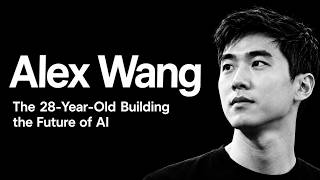
Alexandr Wang built Scale AI into a $28 billion monopoly by recognizing that high-quality labeled training data was AI's scarcest resource. Starting from an MIT dorm room insight, he positioned Scale as the infrastructure layer for data annotation, convincing OpenAI, Uber, and Pinterest to outsource their pipelines. A 2025 Meta investment of $14.3 billion for 49% stake confirmed Scale's dominance in the unsexy but essential work of preparing data for AI models.
Chapters
Every technological revolution requires fuel. I mean, not capital, not electricity, data.
Right. It always comes down to the data.
Exactly. And you know, the entity controlling the fuel for the current artificial intelligence revolution, well, it isn't Google. It isn't Microsoft.
No, not at all.
It is a $28 billion structural monopoly constructed over exactly 9 years by a 19-year-old dropout named Alexander Wang.
Which is just an insane trajectory when you really look at it.
It really is. And that's why you are here today for a playbook, an urgent, uncompromised blueprint for elite builders. We are bypassing all the standard banter, all the surface-level commentary, and all the polite introductions.
We're just diving straight into the mechanics.
Straight in. Our singular mission in this deep dive is to dissect how an underfinanced teenager identified a massive, tedious, just entirely unglamorous bottleneck that every single highly capitalized incumbent in Silicon Valley completely ignored.
And by 24, he was a billionaire.
Yeah. By his late 20s, he had positioned himself as a critical national security technologist.
Right. Because this trajectory, I mean, is not a story about luck.
Not at all. It's a masterclass in first principles thinking, extreme agency, and raw grit.
You know, if you study the history of enterprise builders, the truly elite founders who just dictate the terms of an entire industry, you quickly realize they operate on a framework. We can call it the boring is lucrative principle.
The boring is lucrative. I love that.
Yeah, because while the masses, you know, the academics and the highly paid engineers at legacy tech companies, while they fight over flashy features, elite founders quietly build the invisible infrastructure.
They look for the digital janitorial work.
Exactly. When Alexander Wang looked at the AI landscape in 2016, Everyone was fighting over who could build the most elegant neural network architecture.
Right, the shiny object.
Right. But Hwang realized they were optimizing the wrong variable. The builders who create absolute monopolies, they rarely build the shiny object. They build the concrete foundation that the shiny object fundamentally relies upon to exist.
To understand how a builder actually executes that kind of vision, you know, you have to understand the environment that forged their baseline.
Yeah, the origin point is critical.
It is. We need to go back to 1997. Los Alamos, New Mexico. Wang is born directly into the epicenter of extreme science.
Literally the birthplace of the Manhattan Project.
Exactly. His parents are physicists. Mm-hmm. Their workplace is the Los Alamos Nuclear Weapons Lab. And by 15, he's writing production-level code.
Wow.
By 17, he is admitted to MIT. He's a math Olympiad finalist. He is by all traditional metrics a physics prodigy on a predetermined conveyor belt to academic greatness.
Right. The standard genius narrative.
But I want to unpack this specific origin point because a childhood environment completely dictates a founder's psychological baseline for what constitutes a hard problem.
Oh, absolutely. It dictates the baseline, the threshold for panic.
Yeah.
And, you know, the tolerance for complexity. Think about the psychological conditioning of growing up in Los Alamos. I mean, this isn't a normal town. It is a geographically isolated environment built for one singular purpose.
Solving the most devastatingly complex physics equations in human history.
Yeah. When your parents, your neighbors, your entire immediate environment are dedicated to the engineering of atomic weapons, the definition of what is considered impossible is dramatically altered.
It has to be.
For a young Alexander Wang, hard problems were entirely stripped of their emotional weight. They weren't insurmountable walls. They were just, you know, variables that hadn't been optimized yet.
Let me stop you there and push back on the standard narrative because the media, absolutely loves to slap the prodigy label on founders like this.
They do. They love the magic brain trope.
Right. They love to attribute a $28 billion trajectory entirely to raw innate genius, as if Wang just possessed this magical brain. But I look at this Los Alamos background and I see something different.
What do you see?
Extreme environmental conditioning. Think about a high-altitude endurance athlete. Oh, wow. That is a phenomenal way to frame it.
Right. Because oxygen deprivation forces the body to adapt mechanically.
Yeah, your biology literally changes to handle the friction.
Exactly. If you are born and trained at 10,000 feet above sea level, your lungs adapt.
Mm-hmm.
Your red blood cell count changes. You are operating in a low-oxygen environment every single day.
So when you come down to sea level—
When you finally come down to sea level to compete in a marathon, you have an overwhelming structural advantage over every other runner on the track.
That makes perfect sense.
Wang was training in a low-oxygen intellectual environment from birth. The complex logic puzzles of software engineering or the early friction of Silicon Valley must have felt entirely manageable because his baseline for friction was calibrated by nuclear physics.
I agree completely, and it highlights a crucial reality for anyone building a company right now. Raw intelligence is actually a commodity.
A commodity? Explain that.
Walk through the halls of MIT, Stanford, or the engineering floors of any tech giant. You are surrounded by tens of thousands of people with raw, high-altitude intelligence. Right, they're everywhere.
But raw intelligence alone does not build a multi-billion-dollar infrastructure company. Building a monopoly requires a violent collision.
A collision with what?
It requires that high-altitude intelligence, to crash headfirst into a massive, unrecognized real-world friction point. Intelligence without a worthy, painful problem to solve is just academic posturing.
And that exact collision, the moment the high-altitude training met the real-world friction point, happened in a freshman dorm room in Cambridge, Massachusetts, in 2015.
The famous fridge epiphany.
Yes, this is the catalyst that alters the trajectory of the entire artificial intelligence industry. Wang is standing in his dorm looking at his fridge. He sees an empty milk carton.
Classic college problem.
Right. He decides as a fun side project to build a camera inside the fridge to track its contents and alert him when he needs groceries.
Just a casual weekend build.
Exactly. He uses off-the-shelf machine learning tools. The computing power was readily available. The neural network algorithms were advancing rapidly in 2015.
The math was there.
The math was there. But the camera failed. It couldn't accurately identify the milk carton. And here is the profound distinction that most people missed. The algorithm didn't fail. The data failed.
This is the epiphany. This right here is the exact moment of first principles thinking that separates the elite builder from the academic researcher.
Break it down for me.
Wang looked at the failure of his fridge camera and stripped the problem down to its absolute core mechanics. In 2015, the entire artificial intelligence industry was obsessed with algorithmic superiority.
Right. Everyone wanted the smartest model.
Exactly. The smartest minds on Earth were tweaking math, trying to find a fraction of a percent of better performance in the architecture of the models. But Wang realized the system wasn't starving for better algorithms.
It was starving for data.
It was starving for labeled, curated, structured training data.
Break down the mechanics of that starvation for me. I mean, why did the camera fail if the math That's correct.
Because a machine learning model is essentially a massive pattern recognition engine. You cannot teach a machine vision model to recognize the concept of an empty milk carton by simply showing it an empty milk carton once.
You have to show it thousands of times.
Tens of thousands. You have to feed it 10,000 perfectly labeled images of milk cartons. Milk cartons in the dark. Milk cartons on their side. Milk cartons partially obscured by an apple.
Right. Every edge case.
And every single image needs a human being to draw a precise digital box around the carton and label it milk. Wang realized that every single AI application being built globally, from self-driving cars needing to identify pedestrians to medical AI needing to read X-rays, was choking on this exact same invisible bottleneck.
The models were hungry.
They were starving, and no one was feeding them high-quality data.
I want to focus on the sheer absurdity of the industry blind spot here. We are talking about the era where Google, Uber, and massive auto manufacturers were pouring billions into autonomous vehicles.
Billions of dollars, thousands of engineers.
How is it possible that an entire industry of highly compensated experts missed the foundational bottleneck? I mean, it feels like the smartest engineers in the world gathering in a state-of-the-art facility to design a 1,000-horsepower Ferrari engine.
Oh, that's a great analogy.
They are obsessing over the aerodynamics, the pistons, the exhaust system, But absolutely no one is drilling for the oil required to run the car.
It is worse than just forgetting to drill for the oil. It is looking at the people drilling for the oil and deciding their job doesn't matter to the speed of the car. Wow.
Pure arrogance.
It comes down to the psychological trap of the smart engineer. You have to deeply understand the culture of these elite tech companies. They worship algorithmic elegance.
They want to do the hard math?
Exactly. The act of data labeling, drawing bounding boxes around pedestrians in a video feed for hours on end, or categorizing thousands of lines of raw text, it feels incredibly manual.
Unsexy work.
Highly unsexy. It feels tedious. To the elite engineer with a PhD from Stanford, it felt completely beneath them.
So they just ignored it. They just assumed the data would materialize out of thin air.
They viewed it as a temporary annoyance. They assumed they could just write a script to scrape the internet or, you know, hire a few cheap contractors to click on images and the problem would vanish.
They didn't respect the problem.
They didn't view data labeling as an engineering problem. They viewed it as a basic operational chore. Wang used his first principles thinking to recognize that without this manual, tedious, unglamorous plumbing, the magic math of the Ferrari engine was completely useless.
He didn't let ego blind him.
He didn't let ego blind him to the actual mechanical requirements of the technology.
Which brings us directly to the concept of high agency bias for action. Sitting in an MIT dorm room and identifying a trillion-dollar blind spot is a fun thought experiment.
But it's just theory until you act.
Exactly. Moving from theory to execution requires leaving the ivory tower. It requires burning the boats. So at 19 years old, Wang drops out of MIT.
Just think about the gravity of that decision for someone raised in Los Alamos.
It's massive. He abandons the prestigious conveyor belt. He enters the spring 2016 batch of Y Combinator, the most elite startup accelerator in the world.
And he doesn't even have a finished product.
No. And here is what fascinates me. He doesn't walk into YC with a polished, perfect product. He just has a crystal clear vision of the bleeding neck of the market.
He teamed up with Lucy Guo, right?
Lucy Guo, a Carnegie Mellon dropout and a former Facebook engineer. They name the company Scale.
And at this exact moment, the name is deeply ironic because it's literally 3 employees.
3 employees with absolutely zero scale.
But the audacity of their foundational thesis was monumental. They weren't walking into Y Combinator trying to build another consumer app or another AI model to compete with the giants.
They weren't trying to build the Ferrari.
No, they were pitching the infrastructure layer. The thesis they presented was brutally simple. Just as Amazon Web Services, AWS, had become the fundamental infrastructure for the cloud, Scale would become the fundamental infrastructure for artificial intelligence.
That is such a massive vision for a 19-year-old.
If you wanted to build a software company, you paid Amazon for server space.
Hmm.
If you want to build an AI company, you would pay Scale for labeled data.
Okay, I have to stop you there. Pitching that thesis is one thing. Executing it is another universe entirely. We need to focus on the raw brutality of those early days because people always skip over that part. Exactly. The narrative of the 19-year-old billionaire always skips over the immense demoralizing friction of the climb. We are talking about relentless cold outreach, endless sales calls, facing continuous rejection from heavily capitalized giants.
He had to scrape just to get meetings.
Wang had to leverage the minor credibility he had built during a brief prior stint working at Quora just to get a single foot in the door. But my question is this.
Yeah.
How does a 19-year-old convince the most capitalized companies on earth, companies with literal armies of their own engineers, to outsource their most critical data infrastructure to a startup with 3 employees? Please.
Because extreme conviction is highly contagious, especially when it is paired with the exact solution to a universal pain point.
Conviction sells.
It does. When you combine what we can call the clarity of youth with a hyper-specific diagnosis of a company's core problem, age completely ceases to be a relevant metric.
That makes sense. They were desperate.
You have to put yourself in the shoes of an Uber executive in 2016. Their self-driving car models are stalling. The cars are getting confused by plastic bags blowing across the street or shadows on the pavement.
The models were failing in the real world.
Their internal computer vision projects are hitting a brick wall, and their engineers are complaining about the quality of the data.
And in walks a teenager who says, "I know exactly why your cars are failing, and I have the API to fix it." Exactly.
Wang walked into those rooms not as a desperate vendor begging to sell a SaaS product, but as a peer, who fundamentally understood the exact operational disease that was keeping their lead engineers awake at night.
He diagnosed the bottleneck.
He diagnosed their internal bottleneck better than they had. When you offer the antidote to a starving market, the market does not ask to see your birth certificate.
It really doesn't.
He told them, stop forcing your expensive PhDs to manage cheap labor to draw boxes on images. Send me the raw data through one line of code and API endpoint, and I will send you perfectly labeled training data back.
Let's define that for the listener, because the term API gets thrown around constantly. An API, an application programming interface, is essentially a digital bridge.
A perfect way to describe it.
Wang was telling Uber, you don't need to hire 10,000 people. You just write one line of code that automatically sends your messy, unstructured video files across this digital bridge to my system.
We handle the nightmare on our end.
Right. We handle the nightmare and perfectly clean data travels back across the bridge directly into your models.
That is the exact mechanism. He turned the industry's biggest operational headache into an API endpoint, and that clarity landed them their first crucial wave of massive customers.
Uber, Pinterest, OpenAI.
Uber for autonomous vehicle data, Pinterest for image annotations, OpenAI for early training data. By 2019, just 3 years after dropping out of MIT, Wang is 22 years old and Scale achieves unicorn status.
Crossing a $1 billion valuation at 22.
That's wild.
But getting those initial enterprise customers is only phase one of the playbook. Anyone can hustle their way into a few pilot contracts. Delivering on the massive promise of being the infrastructure of an entire industry requires building an engine that cannot be easily replicated by the very giants you are serving.
Otherwise, you're just a temporary vendor.
Exactly. If Scale is just a middleman passing data to cheap overseas labor, Google could replicate that in a weekend.
This is where we must deeply analyze Scale's obsession with in-house excellence and the mechanical loop they constructed. They did not just build a simple marketplace where tech companies could offshore labor.
Because a marketplace has no moat.
Exactly. A simple marketplace is a race to the bottom. It has zero structural moat. Instead, Scale built a tightly integrated continuous loop of human and machine intelligence.
The loop?
This is the technical mechanism that created the $28 billion monopoly.
Walk me through the exact anatomy of that loop. I mean, how does a single piece of data move through the Scale system?
Imagine an autonomous vehicle company sends Scale a 5-second video clip. The car's internal system was confused by an object on the road. Was it a rock or was it a paper bag?
High-stakes decision. Right.
If it's a rock, the car needs to brake immediately. If it's a bag, you can drive through it. The raw video hits Scale's internal servers. First, Scale deploys its own proprietary internal machine learning models.
So they use AI before the human even sees it.
Yes, the internal AI takes a first pass at the video, automatically drawing a rough digital box around the object and guessing with 80% confidence that it is a paper bag.
So the machine does the heavy lifting first.
Exactly. But 80% confidence gets people killed in a self-driving car, so the pre-labeled video is immediately routed to a human worker on the Scale platform.
The human in the loop.
The human looks at the image, uses Scale's highly specialized software tools, realizes the AI's bounding box is off by a few pixels, and confirms it is indeed a paper bag. The human adjusts the box, clicks submit, and the perfectly labeled data is sent back to the client.
But here is the critical leverage point. That human correction doesn't just benefit the client, it trains Scale's own internal AI.
That is the flywheel. That 2-pixel correction made by the human worker is instantly fed back into Scale's internal machine learning models.
So the system learns every single time.
Tomorrow, when another video of a paper bag comes into the system, Scale's AI won't be 80% confident. It'll be 85% confident.
Wow.
The AI gets smarter, which means it pre-labels the data more accurately, which means the human worker can process the data faster, which increases their overall output. Which feeds even more data back into the models.
It is a compounding flywheel of operational efficiency. Every single piece of data processed through Scale makes the entire system faster, cheaper, and more accurate for the next client.
That is a fascinating dynamic. While all their competitors in Silicon Valley were burning billions of dollars trying to build end-to-end consumer AI applications, fighting over the shiny object, Scale quietly became the toll road that everyone had to drive on.
The toll road. And the invisible moat they dug was paved entirely with this unglamorous plumbing.
Consider the complexity of LiDAR data. Autonomous vehicles use LiDAR, which creates a 3D point cloud of the environment. It is not a flat 2D image. It is millions of laser data points.
It looks like static to a normal person.
Right. Asking an untrained human to look at a 3D point cloud and accurately label a pedestrian takes hours. Scale spent years obsessing over the granular UI and UX of their proprietary annotation software so that a human worker could manipulate and label a 3D point cloud in minutes.
So the software tooling itself is the moat.
That tooling is the moat.
But let me play devil's advocate here. I can hear a skeptic listening to this and saying, this still sounds like a glorified digital sweatshop.
Sure, people say that.
Why couldn't a titan like Meta, who has billions in cash and the best engineers on the planet, just hire their own army of labelers and build their own internal software. Why are they forced to pay the toll to a 22-year-old startup?
Because the logistical nightmare of managing millions of microscopic tasks is not a core competency for Meta or Uber.
It's an operational distraction.
This is the exact dynamic of in-house excellence versus operational distraction. To orchestrate a massive global workflow of human annotation, you have to build quality control mechanisms that can catch a one-in-a-million error.
A single mistake is catastrophic.
In an autonomous vehicle dataset, a single mislabeled frame, like labeling a red light as a green light, can result in a fatal crash and a multi-billion-dollar lawsuit.
So managing that risk is a completely different business.
Managing that level of extreme operational complexity, tracking the accuracy rates of tens of thousands of individual human workers across different time zones, and building the software to route tasks efficiently, that is a nightmare. It distracts a tech giant from building their core product.
It is the ultimate manifestation of leverage. Scale took on the nightmare. They told the giants, you focus on the math, we will manage the chaos. And by 2021, that leverage pushes Scale to a $7.3 billion valuation. Wang is briefly recognized as the youngest self-made billionaire in the world, which is an incredible milestone. And yet the infrastructure they built remained largely invisible to the public. There were no viral consumer apps, no flashy headlines. Just the silent, dominant layer underneath Tesla's vision systems, Meta's algorithms, and the foundational data of OpenAI.
But survival for elite builders means never, ever resting on past victories.
Never.
The landscape of technology shifts violently, and the playbook demands that action expresses priority. The ability to ruthlessly pivot when you are already highly successful is one of the rarest traits in business history.
Most people just get comfortable.
Most founders hit a multi-billion dollar valuation, buy a yacht, and switch into wealth preservation mode. They coast on their legacy product. Wang did the exact opposite.
We see this first with their expansion into defense. Scale recognized that the US government and the military desperately needed artificial intelligence infrastructure for logistical planning, threat detection, and intelligence analysis.
They moved into that space, Fast.
Extremely fast. They actively pivoted a massive portion of their resources to secure Pentagon partnerships and Department of Defense contracts. They moved aggressively into the national security space. But the true test of their psychological resilience, the moment that required burning the boats, came in 2023.
The explosion of the large language model era.
The LLM wave.
The release of ChatGPT, Claude, and GPT-4. In a matter of months, the entire focal point of the global artificial intelligence industry shifted on its axis.
Everything changed overnight.
Suddenly, autonomous vehicle vision data drawing boxes around stop signs was no longer the bleeding edge of the market. The new frontier was foundation models. And these massive text-based models required an entirely different caliber of data.
This is a critical distinction that we need to unpack because why couldn't Scale just use their existing workforce to train ChatGPT?
Because teaching an AI to reason is fundamentally different from teaching an AI to see.
It's a completely different task.
Computer vision requires a human to look at an image and identify an object. It is a binary task. Is this a pedestrian? Yes or no? But large language models require complex text generation, logical reasoning, and intricate dialogue trees.
It requires human judgment.
Exactly. They require a process called Reinforcement Learning from Human Feedback, or RLHF.
Let's define RLHF simply. It is essentially teaching the AI how to think, not just how to guess.
Correct. If OpenAI wants to train a model to write complex medical code or analyze legal contract, they don't need someone to draw a bounding box.
No, a bounding box does nothing there.
They need a human with a PhD in biology or a licensed attorney to read two different AI-generated essays. Rank which one is more accurate, and then write a detailed paragraph explaining why one is better than the other.
That is a wildly different talent pool.
That is a completely different supply chain. You cannot use the same operational structure you built for clicking on traffic lights to evaluate the nuances of cellular mitosis. Scale had to build an entirely new supply chain of highly educated, domain-specific experts overnight.
And this is where we see the Action Express's priority principle deployed with absolute stunning ruthlessness. Scale was perfectly positioned as the undisputed king of computer vision data.
They were printing money.
They had a money printing machine. But Wang looked at the LLM wave and realized that if they didn't capture this new frontier, they would eventually become obsolete. So what does he do? He executes a 20% layoff of his workforce.
Which is brutal, but necessary.
He initiates a massive high-risk operational pivot to refocus the entire machinery of the company exclusively on large language models.
The psychology of that decision is profound. You are already powering the vision systems of the biggest companies on Earth. Most founders would protect that cash cow at all costs.
They would hold on for dear life.
Wang looked at the shifting terrain and essentially rebuilt the entire ship while it was sailing at top speed. Laying off a fifth of your company to reallocate resources toward an emerging technology requires an utter lack of sentimentality regarding your past success.
It requires looking at a multi-billion-dollar revenue stream and saying, This is the past. We have to build the future. If Scale hadn't executed that brutal pivot to LLMs in 2023, where would they be today?
They would be categorized as a legacy computer vision company, a highly profitable dinosaur.
A dinosaur.
Instead, by 2024, as every major tech giant and AI lab on the planet engaged in a desperate arms race to build the best large language model, they all found themselves staring at the exact same bottleneck.
They needed the data.
They needed massive amounts of high-quality, human reason data. And Scale had successfully positioned themselves squarely in front of the new wave. Every single major player was entirely dependent on Scale's new infrastructure.
But rapid, aggressive scaling across the globe inevitably brings a heavy collision with physical reality. By 2022, just before the massive LLM pivot, the sheer weight of their own global scale catches up to them. Public accountability hits.
The friction of the real world.
Right. Reports begin to emerge about Remotasks, a subsidiary platform created by Scale. The core of their operational efficiency, the human element of their continuous loop, was reliant on thousands of workers in countries like the Philippines and Kenya doing complex annotation work for $1 to $2 an hour.
Global labor arbitrage.
Yes. An Oxford study is published finding that Scale only met 1 out of 10 established fair work standards. It was a stark, undeniable contradiction. They were building the highly lucrative, utopian future of artificial intelligence, and the foundation of that future was reliant on low-wage global workers.
When a hypergrowth startup scales its operations globally, it inevitably slams into the messy, incredibly complicated friction of human economics and geopolitical labor standards.
It's unavoidable.
This is the reality of global supply chains. But what we must analyze here, as a masterclass in elite business building is how a high-agency founder responds to that collision. When the fundamental business model relies on massive human labor and public scrutiny turns fiercely against your operational practices, the standard corporate playbook is to panic.
Oh, the standard playbook is to deploy PR spin. Yep. To issue a carefully worded apology, deny the severity of the bottleneck, deflect the blame to local contractors, and obfuscate the reality of the supply chain.
Exactly. Deflect and defend. But the critical builder question is, How do you react when the structural foundation of your monopoly is publicly challenged on an operational level?
You fix the operation.
Wang didn't deny the bottleneck. He didn't issue empty platitudes. He treated the public backlash and the labor friction exactly the same way he treated the empty milk carton in his MIT dorm room.
As a problem to solve.
He treated it like an engineering problem that required optimization.
He deployed the fix-it culture toward the supply chain. The response wasn't a PR campaign. It was a mechanical operational pivot. They raised wages across the platform.
They changed the system.
They invested heavily in building better software tools to increase worker efficiency, which directly increased the workers' earning potential per hour. They implemented internal worker protections and feedback systems.
And we have to be clear, dealing with global labor arbitrage is an incredibly immense ongoing operational friction point. It is not a problem you solve overnight with a single software update.
No, it's a constant struggle.
But what the response demonstrated was a high-agency refusal to be paralyzed by public critique. They innovated their way through the crisis. They recognized that relying on an unstable, undercompensated global workforce was a structural vulnerability to the long-term viability of their monopoly.
They couldn't ignore it.
They treated labor standards as a crucial variable that needed to be aggressively optimized to protect the foundation of the company.
Surviving that crucible of public accountability, stabilizing their operational supply chain, and executing the ruthless pivot into large language models positioned Scale for an unprecedented consolidation of power. Which brings us to the climax of this playbook: the Meta deal. June 2025. Meta, one of the most powerful technology conglomerates in human history, a company with virtually unlimited engineering talent and capital, takes a 49% stake in Scale AI for $14.3 billion.
Staggering numbers.
This pushes Scale's valuation to an astonishing $28 billion. But here is the critical mind-bending detail of this transaction. This is not an acquisition. Scale AI remains completely independent.
This represents the ultimate finalized evolution of the structural monopoly. Think about the sheer leverage required to execute that deal.
Unimaginable leverage.
Meta is pouring $14 billion into a company they do not even get to control. Why would a ruthless tech giant agree to those terms?
Because they have no choice.
Because they have absolutely no choice. The data infrastructure Wang built has become so indispensable, so deeply ingrained in the fundamental development of all future AI models, that Meta had to guarantee their own survival by ensuring uninterrupted access to the toll road.
It is the perfect leverage point. You know you have achieved an absolute unassailable monopoly when a titan hands you $14 billion just to secure their place in line and you still dictate the terms of engagement.
It's the definition of power.
Wang, now in his late 20s, has built a moat so deep and so critical that the biggest players on earth are actively forced to pay for its upkeep.
And this brings us to the final evolution of Alexander Wang as a founder. By January 2025, during the Trump inauguration, Wang is messaging world leaders with a very specific uncompromising thesis.
What was the message?
America must win the AI war.
He has transitioned entirely from a 19-year-old dropout building a software tool in a dorm room into a geopolitical force, a national security technologist dictating terms to the government.
And if we analyze this purely through the lens of structural business strategy, outside of any partisan framework, the transition makes perfect sense.
It's just reality.
This is about the realization that artificial intelligence data infrastructure has evolved past the realm of B2B software. It is no longer just about helping Uber build a self-driving car. High-quality labeled data is now classified as critical national defense infrastructure.
It is the modern equivalent of steel during the Industrial Revolution or uranium during the Atomic Age.
Precisely. If you control the refinement of the fuel, You control the output of the weapon. And Wang recognized that the global supremacy of artificial intelligence will be dictated by whichever nation has the most efficient, high-quality data infrastructure.
He saw the chessboard.
He positioned Scale not just as a vendor to tech companies but as the foundational bedrock of American technological defense.
Look at the sheer symmetry of that journey. He started in a Los Alamos lab surrounded by the historical infrastructure of the last great global arms race.
Right back where he started, in a way.
Exactly. He went through MIT, built a startup to help self-driving cars identify stop signs, pivoted through the LLM revolution, and has now evolved into a central figure dictating the operational terms of the next great global arms race. Yeah. The unglamorous data plumbing he built is the fuel that will determine global supremacy.
That brings the entire playbook full circle. For 9 years, while the rest of the world, the media, and the competing tech giants were endlessly distracted by flashy chatbots, viral features, and the theoretical elegance of neural network architectures, one founder put his head down and quietly dug the foundation.
He did the boring work.
Scale AI is the invisible fingerprint on every single major artificial intelligence breakthrough of the last decade.
It is the ultimate testament to the Uncompromised journey of the elite builder. The pattern is undeniable. You identify the massive painful friction point that everyone else considers beneath them.
You build the unglamorous plumbing.
You create an inescapable operational loop of human and machine intelligence. You relentlessly, ruthlessly pivot into the new frontier before the market forces you to, and you build an infrastructure so critical that you force the entire world to rely on your execution.
So if you are listening to this right now, And you consider yourself a builder. I want to leave you with a direct, urgent challenge. Look at your own industry today.
Strip away the hype.
Strip away the hype, the buzzwords, and the shiny new features. What is the manual, tedious, completely unglamorous bottleneck that all the highly capitalized smart incumbents consider beneath them? What is the bleeding friction point they are ignoring because they are too busy designing the Ferrari engine without drilling for the oil?
Chew on that for a sec.
Because the history of enterprise dominance guarantees one thing: whoever has the raw, uncompromising grit to build the invisible plumbing for that specific problem ultimately controls the future of the entire ecosystem. Are you building the shiny object or are you building the foundation?
More from Charles


Founder Wisdom: the audiobook, version 2 (5 hours of stories from founders and CEOs)

8 CEO Questions I Love Asking: the audiobook (64 founders answer, in their own words)





