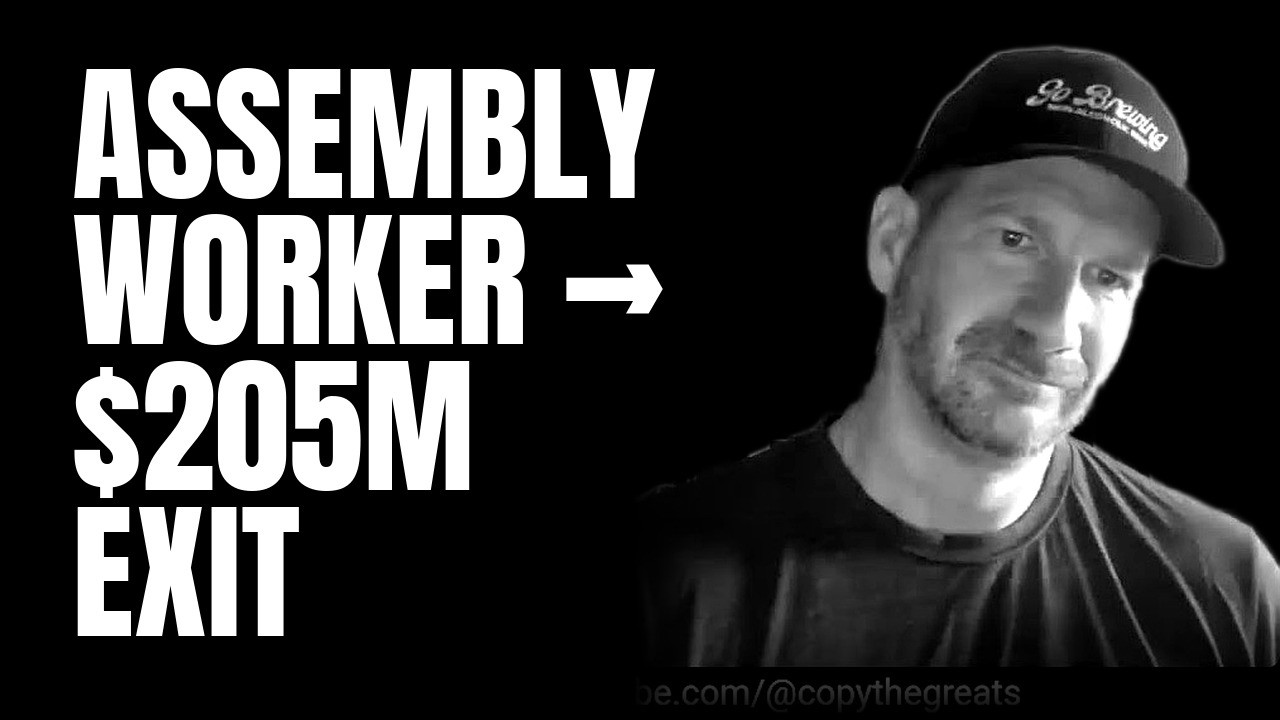
Joe Tura went from assembling cars at a Chicago Ford plant to founding Dealer Inspire, a SaaS platform he sold to Cars.com for $205 million. He's now building Go Brewing, a non-alcoholic beer brand that reached 8,000 locations in one year by combining rapid product development with tech-enabled distribution.
Chapters
Welcome to another CEO Wisdom podcast. We have Joe Chura with us today. He's CEO, founder at Go Brewing. The guy went from assembly worker to a $205 million exit. Go is now in 8,000 locations. I believe you told me Joe was the fastest growing brewery ever. So that's, that's quite impressive.
I'm not sure about ever, but as of last year, we were the fastest growing in 2025. So that list came out just a month or so ago. Out of the night.
Well, it could qualify as ever, right? Because competition is pretty harsh nowadays. Like, it's crazy.
Yeah, especially in the beverage and CPG space.
Yeah, tell us a bit more about yourself. First, Go Brewing, and a quick version, fast story of yourself.
Yeah, Goat Brewing launched in 2023. We brewed in my garage in '22 to try to get a product that tasted good. We launched primarily direct-to-consumer online on our web— Shopify website, on Amazon, and got distribution a year or two later in many states. We're in 35 states right now and, and growing, and I have probably the top sales now or amongst the top on Amazon for any sales for beer. I have a beer club with subscribers and I love what we do. We also spun off and created a couple other products, an electrolyte beverage. We have a microdose THC product. I don't know the future of that given the state of the federal government and what's going on there. But my background before that, I came Started off at the Chicago Assembly Plant when I was 20 years old and worked my way up on the assembly line building cars, put on seat belts, B-pillars, scuff plates, all these parts on cars, and really found myself in a position where I needed to figure out a way out of there. And the only way to do it was to get and graduate school, get a diploma. So I was bringing my textbooks into work reading 15 seconds in between building these cars. And I did that for 5 years. Whoa. Graduated, um, got to the marketing sales division at Ford, found a love for digital marketing. Um, when I was a kid, I was into Commodore 64s, programming. My brothers were into video games. And I, um, just like refound that passion and started a digital marketing agency in 2011. Software company, Fast Follow, 2013. Ended up growing them to almost— this is accurate— to be almost the fastest growing automotive company in tech. And within 5 years sold them, had 350 employees, to cars.com and pretty much bootstrapped that whole venture.
That's one of the craziest stories I've seen. What's your background? How were you like as a kid? Like, and demystify the assembly worker. Like, why did you go work as an assembly worker when you had so much ambition in you?
Mm, good question. I don't know if I had— I might have had like this deep-seated ambition, but I felt like I was completely lost and stuck, actually. I found out I was going to be a father when I was 19. I couldn't even take care of myself, honestly. I was living in a— sleeping in a hammock in my friend's apartment in the Chicagoland area. And, and when I found out I was gonna be a father, I'm like, I need to grow up. And I watched my father really, really start his demise after my parents got a divorce. And I saw his struggles. And I saw this kind of occurring in my life quickly when I saw him when I saw myself in a similar position of like, as soon as I had my daughter, my— her mother and I broke up, and I was like, what am I going to do with my life? And I could do two things: I could be successful, or try to be, or I can fall in the same lines, uh, as, as my father did. And really, that kind of gave me some motivation to say like, I'd like— I want to do something more with my life. But I think growing up as a kid, I was always into different things. I was, I was really into sports and athletics, but at the same time, I would gravitate to computers. I'd gravitate toward finding how to build code, and I would spend— I'd rather spend like 8 hours building, writing code, or copying code. I didn't like really write it originally to make spaceships go back and forth while my brothers were playing like, uh, you know, Tecmo Bowl or, uh, you know, different, different games. And, um, And then I would like also be a little bit into sales. I would like go and like make shit out of, out of like wood, and I would go try to sell it at school, I recall. So I always had that like entrepreneur spirit, but I really kind of lost my way in high school a bit, and then I found, refound myself while I was faced with the, uh, the time at the plant, right?
10 years you lasted at that plant, and you would study in the meanwhile, um, but you did make good money, right, compared to your friends back then. So you also like stacked up. When was the moment you knew you had to leave and launch your first marketing agency?
It was after, so I had a, not to get too much in the weeds, after 10 years at Ford, I left to actually be a car dealer. I thought, I kept seeing more and more successful people. In fact, some of the richest people in the world are car dealers, and I would see that, and then all of a sudden that was my aspiration. And I'll pause here for a second and say like, your aspiration to me, what I found is, was only as big as the environment you were in. So at the plant, my dream was to be like a manager at that plant. But when I got out of the plant, it was to be a car dealer. And then when I got out of that, it was like, you know, so it was like my world kept expanding expanding. But I, yeah, I'd love to be a, be a car dealer. I did that for 2 years and really found myself in a place where I didn't love that, uh, and I didn't see myself there. And I fell into like kind of like a— one of the lowest lows of my life was 2010. And, um, and this was after I left Ford, a 10-year career at Ford, became a car dealer, and really found myself in a position where this isn't working out. And found, uh, found a love for digital marketing and started like dabbling and teaching myself SEO. And I built a website to outrank Ford Motor Company to explain Ford benefits, and I put Google AdSense on there. And I just, I kept like tinkering, and I was like, wow, if I'm gonna like have a service, I need to eat my own dog food and really learn it myself. And I, and then I started to listen to like podcasts like yours, like Jason Calcanis had a podcast called This Week in Startups, and I would listen to 10 episodes a week of that and just learn and educate myself on how business really works and how to, and how to think about creating a business and this, and like the difference between a C corporation and, uh, and an LLC. And I really kind of took all of that data in and then decided at one point, um, as I kept having these ideas for car dealer websites, like maybe I could do something along this line. So partnered up with someone, we're like, well, let's start do an SEO because we're really good at that and that doesn't take as much of a technical know-how. So, uh, that's kind of how it started, man.
That's crazy, 10 years, um, at this company. So Launch Digital Marketing became Dealer Inspire, right? Like, tell us about how that happened. Is that the same beast or—
Yeah, it's, it's a good question. So 2011, created Launch Digital Marketing with a couple partners and then As I became more educated on the value of a potential SaaS business, I realized that I should actually create a separate entity, make it a C corporation, and, and start to build a SaaS company. And that whole idea behind this D1 Inspire was to feed off of Launch and Launch feed off of it, because they were both really in the, in the automotive industry. So think about Launch as like services, like we would go in and do marketing services for a car dealer, and Dealer Inspire was a software platform. So if I had both, I could have customers in both companies. So I literally had two companies. 2013 is when Dealer Inspire was created. By 2015, I— or I'm sorry, by 2018, I sold it. So 5 years. If anyone knows about QSBS, it was 5 years and like 13 days by the time I sold it. And then Cars.com purchased it and also purchased Launch Digital Marketing as well.
And who was, um, well, before we head into whoiscars.com, I think I've heard about it some time ago. How did the $200 million exit feel to you? Was that a validation of all your hustle? Were you already wealthy when that happened?
No, no, I hadn't paid myself for a while. I was, I was getting, uh, when we first started Launch, the only capital in the business was, uh, the third kind of partner of ours. It was me, uh, me, my, my, my really good friend Matt, and then a third partner who had an advertising agency who's— has since done like Super Bowl commercials and a bunch of stuff. And his investment wasn't us, and it was like, here's your laptop and here's $5,000, like, and that was it. And then we were off and running and we had to figure it out. So when that— when we were able to pay ourselves from that company That's when we, that's when we started kind of Dealer Inspire. And Dealer Inspire, we didn't take a paycheck for, for years. So I know I was far from wealthy. Uh, like, the, the, the difference, in fact, like, when I think I sold, uh, you know, I might have had, uh, I don't want to say like $50 in my savings account, but it wasn't, it wasn't much at all.
So what happened after that? Did you just go out and buy a Ford GT or I ran to the bank to make sure it was actually real, to be honest with you.
And I was like, this is just kind of surreal. Um, probably, you know, I, I did, I did a, you know, I had a few things. Um, but the one thing that I really wanted to do is, is to think about my family and the hardships that they might have with paying for their kids' colleges. So I actually took them out to dinner and announced that I would pay for their kids' higher education. And yeah, and, and I feel, I feel like that was better than giving them, um, you know, anything monetary, just to kind of take that stress off of them. And since then, that money's been put in a trust and just accumulating interest and earning, earning, uh, dividends, you know. And, and the The kids were relatively young, but they're now getting to the age where, you know, they're going to be going to school soon.
Who are your models when you were building these companies? Were you obsessed by Henry Ford by any chance?
You know who I really admired was a guy named Alan Mulally, and he was at Boeing, really helped Boeing turn Boeing around. And when Ford was going through significant, significant issues when If you recall, 2008, GM filed bankruptcy, so did Chrysler, and Ford didn't. And Ford brought in Alan Mulally, and Alan Mulally turned it all, turned this whole thing around. But not only was Alan Mulally someone who did that, but just the way he carried himself. He had this charisma about him. He boiled things down in a very simple way. He actually, um, went in there, and the first time he had this executive meeting, everyone came in there and they had to do like green, yellow, and red signals to talk about their parts of the business. And everything was green. And Alan's like, how can everything be green? We're losing billions of dollars a year, you know, we might have to file bankruptcy. So he started to really introduce this idea of like radical transparency within the Ford organization that had been like really kind of used to this old way of doing things. And, uh, and just seeing him in person and, and, uh, and observing him really kind of inspired me. And, and I would, when I would speak, I would try to emulate him a bit because he had this just charisma about him that was, that was amazing. So, so he's one. And then I would say, like, outside of that, it was really like the way that the, all of the kind of archetypes that were on This Week in Startups, like, meaning like all the guests that Jason Calacanis had on, I would start to like just like learn from constantly, and I would go down a rabbit hole. And like his podcast was, was rich with information about like how to start up a business. And in fact, the lawyer that I got that told me about why I should create a C-corp at the time was an advertiser on his podcast. So that's a plug for for you, Charles, and any, any people that want to advertise on yours, that really— I mean, it was like, I'm sure he— they got a lot more customers than me from that, but it was, it was a good way to, um, know that I was going to get an attorney that actually knew what he was doing when it came to creating a business that, you know, you could potentially sell one day and how to set it up, because that's really important.
And you spent almost 5 years in M&A at Cars.com. What was that role about?
Not quite 5. I stayed on as the CEO from— for Dealer Inspire from 2018 to 2021. Went to LEAVE, became the Chief Innovation Officer there, and then I, I got to, uh, run— um, they wanted me to really focus on innovation, looking at companies and just thinking about where the whole industry was going. So I, I did that, and I was able to be a part of purchasing companies, go out and vetting them and seeing how they plug into the Cars.com ecosystem.
But why M&A? Because it doesn't seem you had experience in M&A other than being acquired at Dealer Inspire. Why did they put you in there? And that's a pretty fun role, by the way. It's like mergers and acquisitions, like the best job ever.
Yeah, I mean, I was a I was the innovation idea guy of the business, right? Like, that's why, you know, Inspire grew, is that like we were the most innovative tech platform. We were competing against billion-dollar companies, yet we came ahead because we were thinking about how to do things differently. Well, they wanted my brain on like, well, who else is doing this in the space? So I wasn't the guy that was doing diligence on these companies. I mean, I would do soft diligence in the sense that like I would fluff out bullshit. I would, I'd really kind of ask hard questions, and I knew the business so well that, like, like, I saw how, I saw how things connect, just like I'm doing in the beverage space now. I could see how things connect in a way that may not be obvious to others. So that's really what he wanted me there for.
And were you guys a good acquisition for Cars.com?
Oh yeah, yeah, we did it. We did a few acquisitions, actually one in, one in Montreal. Yeah, yeah.
With, with what company? How, uh, what company did you acquire there?
Um, it was an automotive website company there.
Okay, automotive is very strong in Montreal for some reasons. Uh, yeah, lots of cars. Uh, it's sort of a car culture. I mean, it's not that different, I guess, from other places in Canada, but, or the US. But yeah, Go Brewing, you were successful and you decided to throw yourself in the the mouth of the beast again? Why launch a brewing company in 2021?
You know, it was really one of those things where I knew there was more for me in life than to sit on a beach and, and, you know, just think about my past. And I also was struggling. I watched my father, as I started to talk about his story a bit, I watched him, um, suffer from alcoholism. He ended up passing away. I was watching my brother kind of head down that same path, and I started to get these cravings for alcohol that, uh, that I knew weren't healthy. Like, I, I was blessed enough to not wake up and feel like I had to drink, but at 5 o'clock and on weekends, I was having these cravings that were crazy. And then— I shouldn't say crazy, but I developed them over decades of drinking, right? But it was like, man, I really want a beer. Once I had one, I wanted a few more. And, and I found myself at the height of COVID in 2020. My wife and I were— I was way more out of shape than she was, but we just weren't— she— we just didn't feel optimal. We felt— I was 250 pounds and, and I just did not feel good. And I was like, what am I doing all this for? I'm gonna die of a heart attack. So we, we did this challenge called 75 Hard, abstain from alcohol for 75 days. And, and I got through that time period by drinking non-alcoholic beer. I found it as a, as a tool. It really helped me get through these periods of cravings. And then I started to feel incredible. I started to feel like I had superpowers, like literally. And I had mental clarity, and that the bags under my eyes were starting to go away, and I was starting to get in shape. And, and just all these great things started to happen. And I was like, man, there's something here. And then, Charles, at the same time, Andrew Huberman and these podcasters start to talk about the effects of alcohol. And I was like, man, like, in 5 years from now, are people going to be drinking as much? And it felt like a crazy concept back then, but the answer I kept coming to was no, they're not. And I— and then like a couple other things happened. Um, I kind of follow signs, not to yoga babble, not to, uh, yoga babble this, for lack of better words, but like I follow signs from the universe a bit to say like, okay, well, you have this idea, this is great. But then other things started to happen. Like, I had an event called Go, and at the end of the event, I had— I didn't want to hand out, uh, beer, so I handed out NA beer. And I had no way to, to continue this relationship with the people at the event. So I was like, what if I could build a brewery and just focus on, on NA beer? And then Again, another sign from the universe came, and the company I was subleasing— or that Cars.com, um, actually subleased one, like, half my space because we had $30,000 of marketing space post-COVID to a cidery. Well, that cidery vacated their current spot, which is perfect to start a non-alcoholic brewery. And so it was just like all these things started to happen. And then really kind of the final catalyst was when I started working on the business I felt this joy again that I had been missing for a long, long time. This like hands on keyboard, building email flows, coding, like thinking about the business. And I was like, man, this is what I was missing. Because my, my company at that time, I grew to 1,000 employees, you know. So when you have 1,000 employees, you have thousands of clients, you're not dealing with innovation anymore, you're dealing with fires every day.
Oh man. My first company was Beatsy, and I vowed never again to return to physical products. But I know what you're saying when I look at your company, right? Because the branding is amazing, right? Like, the energy seems there. What is your moat, right? Uh, why did that become so successful? Is it the brand? The branding? Are you also husband and wife into that one? Like Um, tell me a bit more about, yeah, the unfair advantage you have.
Yeah, so, uh, tackle the husband and wife quick. I had full intentions for my wife and I to be a bigger part of this and do this more together, but very quickly that, that trailed off. She, she had more, uh, passion taking care of the kids and being at home, and, uh, and I'm just like work on the business so much because it's so fun for me.
But who's behind the branding? It's so good.
Oh, thank you. I, I, it was a lot of it was a vision I had with my partners. Uh, we initially started with like the logo, with like really trying to understand the persona of the business. Had an agency initially help us with the packaging that doesn't look anything like it does today. And, and then we would like hand draw a lot of our, our cans. Actually, my, my cousin who's super talented would, would work on that. With me so I'd have an idea. And all our— a lot of our beers that are in the market have deep meaning to them because I wanted to, like, if someone double-clicked on a can, I don't want to just be like a lager. Like, Disarms, a Buddhist parable about facing your fears and demons. Sunshine States, about my friend who overcame, uh, cancer and went from a DNF at an Ironman to winning her, her age group. Burning Down is about my friend who who had a successful career as a reality TV star and decided to burn it all down and start over, and he became an ultra runner. So like, I really wanted our brand to be about something and be about storytelling because there's so many great stories out there that, that aren't being told. Um, so that was, that was the idea, and we've kind of, um, played off of that ever since. And I think our mode is, is a few things. One is, um, we are, we are the most efficient beverage company, I think, that will ever exist for a few reasons. One, we control our own manufacturing. I could go from idea to get it online or on Amazon within 30 days. So, so if there is something that's hitting that should hit, like, I'll give you a quick example. If Andrew Huberman talks about magnesium threonate, right, I could get that in a beverage within 30 days. Like, I could do that.. And we've done things like that. So I can like, I can see kind of what's coming and then act on it quickly and then test it online. And because we already have our manufacturing, it's a sunk cost. It doesn't cost me a lot incremental dollars to be able to do that. The, the second thing is taking all of the knowledge of tech that I had. I'm building the first agentic CPG-driven CPG company that would blow your mind if I showed you everything it can do. From not, not only just the marketing standpoint and the efficiencies, but how these things talk to one another and how we can understand at a retailer in, in a state that's far away from where we're at if something is, is, has a slower rate of sale than it should and what to do about that and how to take action on that, but to do it in a way where it scales.
And how do you find your ambassadors, your your athletes? Yeah, who's in charge of reaching out to these guys and making the deals happen?
We don't really have big deals. It's like we have ambassadors that are our customers. So that's the other thing is like, I always think about like what's your right to win in business? And I shouldn't say right, but the difference of like us versus Miller Lite, And Miller Lite could do a sweepstakes tomorrow and look at way more customer data than we have, but we have really good customer data on people that have purchased from us that are loyal fans, and those folks tend to become the best ambassadors that we could possibly have.
Yeah, I love it, man. Where can people find out more about you, Joe, and the company?
Me is joetura.com. I have a contact form there and a bunch of other stuff. And then for the company, is gobrewing.com. You can— the best thing you could do for us if you got any value out of this podcast, and I hope you did, is go to our Beer Finder and see where we're located, where the beer sold by you. If it's not by you for whatever reason, you could purchase online and on Amazon.
That was Joe and Charles Cormier for another
More from Charles


Founder Wisdom: the audiobook, version 2 (5 hours of stories from founders and CEOs)

8 CEO Questions I Love Asking: the audiobook (64 founders answer, in their own words)





