🧠 Aubrey de Grey: AI, in silico, LEV Foundation, Alpha Fold, Nanobots, OpenAI and Sam Altman
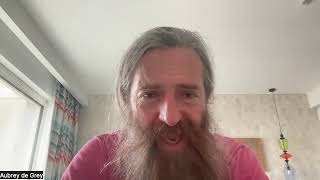
Aubrey de Grey, president of the LEV Foundation, estimates a 50% chance of reaching longevity escape velocity within 12-15 years through gene therapy, cell therapy, and AI-driven drug discovery. He argues high-tech interventions are the only realistic path to defeating aging, while diet and exercise can only modestly slow it. AlphaFold and AI-guided experimental design are accelerating research, though human judgment remains essential.
Chapters
Welcome to another edition of the Longevity Wisdom Podcast. Today with us, we have a legend, Aubrey de Gray, president and CSO at Lev foundation, co founder at Sense Research foundation, which we all know, and Viento, we're going to talk about longevity, what Aubrey is up to nowadays, and everything in between the science and where longevity is going nowadays because lots of new breakthroughs. I've certainly been following David Sinclair quite a lot nowadays, really hopeful about everything that's happening in the field. And obviously I've been following Aubrey for quite a while. He's probably 20 to 30% responsible for the obsession I have with longevity. So thank you for that, Aubrey. Welcome to the pod. Can you briefly introduce yourself, tell us a bit more about Lev?
Sure, yeah. So as you say, I am Dr. Robert de Grey. I created this new foundation, Lev foundation, quite recently. It's kind of my next step beyond Sens Research foundation. Our main focus is to take the next step in terms of the science, which is to essentially to combine rejuvenation interventions, damage repair interventions that individually have some promise, some benefit, to see whether we can get synergy, where we can get more than the sum of the parts, so to speak. And we do a bunch of other things. But that's our main flagship research program.
Right. Tell us about where the science is nowadays. I made a bold projection the other day. You made also some bold projection, but mine was that in less than 10 years, I'm 80% confident that we'll crack the living forever code. What do you think about that one?
Well, my goal, my prediction is only slightly less optimistic than yours. I say that we have a 50% chance of getting to that point within 12 to 15 years. And of course, I've defined that point rather precisely in the past. I call it longevity escape velocity, which is, of course, what the name of Lev foundation comes from. The idea that we won't have fixed aging completely, but we will, for practical purposes, have fixed aging completely because we will be improving the therapies that postpone aging and that rejuvenate us faster than time is passing.
Right. We've seen various ways or paths to probably get to immortality, quote, unquote. I've seen various paths show way more promise nowadays, namely AI or in silico, for example, or RNA or stem cells, for example, While some others, for example, dietary ones, I feel they're a bit more limited, the blue zones and so forth. I think we've thoroughly explored that. We've also seen people, people taking it to an extreme. To my pleasure, by the way. Brian Johnson, Investing millions of dollars into him on a yearly basis. What do you think is the most promising path and what do you think about what Mr. Johnson's doing?
So in terms of what's more and less promising, I think you have it broadly correct that at the end of the day, we're only going to make really decisive breakthroughs against aging using these rather high tech approaches, Gene therapy, cell therapies, you know, things that. The kind of things that I'm working on, of course, that's why I'm working on them. The things that we already have, which are more at the level of diet and lifestyle and exercise and so on, are definitely not to be discounted. Those are things that may be able to slightly postpone the health problems of late life in some people, or perhaps in most people, but they're definitely not the holy grail, as you say, more or less. What they do is they slow down the process of aging, the accumulation of molecular and cellular damage in the body, but they don't repair the damage that's already there, or at least only to a very minor extent. So that's essentially why their effects are rather limited. Now coming to Brian Johnson. So obviously I know Brian quite well and I absolutely applaud what he's doing. Of course, in terms of what he's doing to himself privately, that is very much a matter of personal choice. He happens to be very wealthy, and so he's able to put a seven digit amount of money per year into his medical care and his rate of aging. And, you know, everyone's entitled to do what they want with their money. But what I am most interested in, in terms of Brian, is the fact that he is very much in the process of putting out there the details of what he's doing, what worked, what didn't work. One thing that I talked with Brian about quite recently, which he very much understands, is that everybody's different. For example, Brian's very, very focused on sleep regularity. He makes absolutely sure that he gets the right amount of sleep every night and he has a particular schedule for sleeping and so on. A lot of people would say that's probably overkill, that you don't really need to be so rigorous about that. A lot of people probably don't need to be so rigorous. It doesn't really do them any good. Right. So a huge amount of this comes down to the very simple idea that you've just got to pay attention to your body and recognize that you are your best doctor. The person who's going to be able to judge the best, the most accurately, the most reliably, what you should be doing and what you shouldn't be doing. But of course, what Brian's doing is spending a lot of money pushing that envelope. And the relevance to people who don't have his kind of resources is that he'll find things out that can be done without much money.
Right.
That may, you know, optimize and modify the recommendations that we can give to the general, to the wider world. So, you know, I, I think it's easy to oversimplify what Brian's doing and think of him as, you know, this selfish rich guy. But that's not true at all,
right? I think, well, listen to Piers Morgan interview nowadays, and there was this guy, this very grumpy old man that was really harsh on Brian and was like, dude, the guy's trying to forge a path for the rest of humanity and gonna tell him that it's. Anyway, it's all by. I kind of canceled the Piers Morgan's after that just for giving these people a platform. I think it's really sad. What do you say to all these longevity haters? People that, you know, don't want us to make some progress or that just don't love life enough to live it forever?
Yeah, well, of course there's a lot of different ways to be a longevity hater, but honestly, I'm a lot more charitable about those people, about that kind of person than most of my colleagues are. My take is that, you know, this irrationality about aging, trying to pretend that it's a blessing in disguise, is simply a consequence of the fact that for the last few millennia we have known that aging exists, but we haven't had the faintest chance to do anything about it. And therefore, we've had to find some way to put it out of our minds. And it doesn't matter how irrational that is, so long as it works. So long as we can trick ourselves into believing that aging actually is a blessing in disguise. Which means that right now, when we have rather recently got to the point of having some idea how to deal with aging, we can't do it yet. But in the foreseeable future, you know, it's only now that that attitude of denial has become a problem. Until then, it was rational denial. It actually made sense to be illogical about aging. So, yeah, I mean, it's a big shift and I kind of, I think it would be overkill, overly utopian, to expect a high proportion of the general public to just switch gears just like that on the Basis of new information.
Right. Is it fair to say though that most people that are against longevity do not like life enough to continue living it or foresee a disastrous future of AI just taking over and torturing us? Kind of.
So I think, I mean, I think the question is which way does the causality run in that? I don't think it's mostly a matter of people are pessimistic about the future, therefore they don't want to live a long time. I think it's mostly the other way around. The people have decided they want to pretend they don't want to live a long time because they don't want to get their hopes up and they ramify and justify that with these stupid arguments.
Right. No, that makes sense. I think maybe some of them are afraid as well that if there's this ultra wealthy person a la Brian Johnson, which is why he has so many haters, or Peter Thiel, for example, if these folks get to live forever and just compound the way they've been doing in business and their wealth and their power. So yeah, I guess there's a lot of folks that are afraid of that. My next question for you is. So we discuss about many paths and we're seeing a real revolution happening in AI right now. Obviously there's a lot of hype, but what are the recent discoveries that have impressed you other than AlphaFold or you may talk about AlphaFold for example, but how is AI going to really like forge a path for longevity moving forward?
Right, So I mean, look, well, let's start with AlphaFold. That was an astounding breakthrough. And the only reason it wasn't even more surprising than it was was because it felt followed AlphaGo and its various variants which were themselves just an amazing breakthrough. We're only at the cusp of learning what machine learning in its modern form can actually do. There are rumors out there that new versions of AlphaFold that exist right now are way, way better than what existed before. It's a big disappointment that a few months ago DeepMind did not participate in the CSAP competition, the protein volume competition. And of course, you know, they don't need to, but there are still definitely, you know, I would be astonished if I were not astonished, you know, by where AlphaFold is now, two years after it was able to wiped the floor with the competition at CSAP last time. So that's important. But yes, you're quite right, there are many other ways in which AI and machine learning can help. There is another group also led by an old friend of Mine, Alex Averonkov. The company is called Insilico Medicine, which is focused on using machine learning for drug discovery and is making great progress, which is why it's doing so well commercially. And of course, beyond that, we have to look at the possibility for AI to help us to shorten the path towards comprehensive damage repair here. The issue is, you know, you gather data and you've got to try and see patterns in it and see what to do next and so on. And it's, to my mind, quite likely that scientific experimentation will be quite substantially accelerated when we start using machine learning to optimize the decisions we make about which experiments to do next. You know, that's always the choice that scientists have to make, right? They have to say, okay, we've got these hypotheses. We need to find a way to distinguish between two hypotheses that are both fairly plausible based on existing data, but which are incompatible with each other. And so we have to come up with an experiment that shows that that's sometimes a lot easier said than done. So, yeah, that's the kind of thing that I would expect AI to be moving into fairly soon.
Right. And about in Silico, I'm about to have them on the pods. Do you think we could actually. And I mean, that's incredibly complex, but building some kind of human body in silico, so using computation and having AIs kind of lead its own experiment at scale 100 times faster than we do in the lab. What do you think about that?
Well, you have to take into account that when you're asking software to draw conclusions from some input data, the quality of the conclusions depends on the quality of the input data.
Right.
And the quantity of the input data. That was really probably the single biggest message that we got a decade ago when machine learning took off. So at the end of the day, it's going to be a. Insofar as AI is going to hasten the defeat of aging, it's going to be very much teamwork between the intelligent computers and the humans who are doing the work and using judgment to decide what to do next.
So let's say that because, by the way, these are some of my ambitions and I'm thinking of how I would actually do it. And I think the first step would obviously be hardware, which is my nightmare, because hardware is usually really hard to have some kind of moat, right. A la Apple, if you want. And companies like levels exist right now, constant blood glucose monitored. Obviously there's the Apple watch that I think they're going to develop some technologies to track the blood. I think it was infrared that they're using and so forth. So let's say that I come up with this device that can constantly track many pieces of data on humans. And I use this data to four models. Then I use AI to constantly improve that. And finally I can make in silico test and instantly see if I would release this biochemical in this person. I would see X results. What do you think about that path to.
Well, right. I mean basically the only thing you have not said there that you need to say is the closing of that loop. In other words, you get to that point that you just got to, but then you have to try it out. And your confidence that the drug that comes out of that chain of inference will actually work may be a good deal higher than your confidence would be today when we're not using AI so much. But still it's not 100%. You still got to try it and see what happens. And of course to the extent that it's not 100%, the cases where it, it doesn't succeed, where the drug doesn't work, this is something that can fall back into the beginning of the chain and iterate and get a better result the next time. So I don't think it's really going to qualitatively change the debug cycle of drug discovery, but it is going to quantitatively change it enormously. It's going to speed it up and make it take fewer cycles to get something that really works.
What would be the best non invasive way to do that? Would it be Apple watch through raise? Do you have any ideas of how we could do that? Or would it be better to just pop a pill and have some kind of nanobots going in my blood?
There's no one answer to that. It depends on what you're trying to address. You know, remember aging is this very, very, very multifactorial phenomenon where lots of different, different processes going on semi independently as in this bunch of crosstalk between them. But you know, they essentially, they all go anyway. And these processes generate different types of damage in the body which generate in turn different types of pathologies later on. So you know, there will be, it's going to be very process specific, very mechanism specific. There will be some things where you can use wearables to get good information. There will be some things where the, the way that you actually address the problem is by oral administration of a pill or whatever. But there will certainly be other things which on the one Hand, in terms of detection, you need to do more than that. You need to, like, take a blood draw or a biopsy of some kind to figure out what's going on. And then in terms of. Also in intervention, one may simply have to do something that requires ejection rather than oral administration. So, you know, you can't generalize here.
A lot of your time is spent on creating conversations and kind of advancing the scientific state of longevity. I call it mental sparing. You know, like sparing your ideas and getting solutions out of problems and identifying problems, which is the classic scientific method. Getting to hypothesis, analysis, conclusions, and so forth. I want to ask you nowadays with the Lev Foundations, what are you working on that you feel that will really advance the state of longevity?
Wow. I mean, of course, everything that we do is geared to advancing the state of, well, hastening the defeat of aging. So probably 20% of our money, excuse me, probably 20% of our money goes to advocacy of one sort or another, which is a lot more than I was spending at Sens Research foundation five years ago. And the reason it's a lot more is because the time is right that, you know, audiences are more receptive, including even, you know, government audiences, which is, of course, where we have to get to in the due course. But then beyond that, in terms of the research, the main thing we're doing is this flagship project called the Robust Mouse Rejuvenation Program, which essentially involves taking interventions that repair this or that type of damage and giving them to mice, but not just giving them one at a time, giving them all in combination. The idea here is that damage repair is inherently a divide and conquer problem. It's something where you have to address different types of damage that the body's doing to itself with different types of therapy. So you'd expect that in order to bring that whole process under, whole collection of processes under control and thus keep people healthy for a lot longer than they otherwise would, that you're going to have to apply a lot of different things to the same people at the same time. So what we're doing at Sens Research, I'm sorry, at Lev foundation, is we are combining the. The kinds of things that we were developing individually at Sens Research foundation in order to get more than the sum of the parts.
One of the surprising theme or surprising way I've seen of creating massive breakthrough is how OpenAI and Sam Altman reunited an elite team of scientists to get in one room, which is, well, to me, it seems really hard to do. First, there's ego Second, there's convincing them to leave academia and so forth. If we could reproduce that in the longevity world to create breakthroughs, how. How could we do that?
Yeah, well, so as you say, Sam. Well, actually, not so much Sam, but more. Jeff Bezos and Yuri Milner have done more or less that with Altos Labs, bringing a lot of scientists together. All they need to do is throw really massive amounts of money at the people and it worked. And, you know, that can be done again. But really, you know, you don't necessarily need consensus. This is not like the Manhattan Project where everybody had to work together to get a result as quickly as possible Here. The way to get a result as quickly as possible may actually be to celebrate and embrace diversity of thinking and get people to work independently just as long as they can be. They can actually work rather than spend their time writing grant applications.
I want to first ask you about your. Your supplement stack nowadays or your current routine, and then we'll.
This is going to be very quick because I don't take any supplements.
Right. You used to. No. Or did I hallucinated that. Right. Yeah. That's probably Ray Kurzweil that I. My brain. Okay, so what's your regimen nowadays? Let's call it that way.
So there's often. Comparisons are often made between Ray and myself because, of course, we're both prominent longevity enthusiasts and crusaders, and yet we are at opposite ends of the spectrum when it comes to supplements. And the question is why? Right. And it's not because we have a sharp disagreement about what's appropriate and what isn't. This is something that people often overlook. The difference is that we are just different people. Metabolically. I am at the ridiculously lucky end of the spectrum where, you know, I can eat and drink exactly what I like and I don't even need to do any exercise and nothing happens, you know, like just nothing happens. Whereas Ray is really very much at the opposite end. He had a lot of cardiovascular disease in his family, and in particular he came down with type 2 diabetes in his 30s, which is, you know, it's not unheard of, but it's pretty rare. So his supplement regime arose from that. He decided, well, I've got to fix this, really. And he tried the standard of care at the time, and it didn't really work. In fact, I think I remember him saying at some point that it made it worse. So he figured it out. He's an inventor. He figured out for himself what was going to work. And it has worked. He doesn't have A, he's in his 70s now of course, and he doesn't have a trace of type 2 diabetes. So you know, it's, it's a very personalized thing. Every different people's metabolism are very different. So the only general advice that one can give is pay attention to your body.
Right. And you also monitored these, some of these bio signals in you, like do you monitor blood glucose after you've ate? So did you obviously made some tests on, on yourself with these findings, right, that you don't need supplements?
Well, right. So I mean, yes, it's not just self analysis, it's not just saying okay, I seem to be doing okay, therefore I am doing okay. I have also had the good fortune over the last 20 years to have been tested a total of, I'm going to say seven times now, really high end tests that, you know, measure 150 different things in your blood and they measure all sorts of physiological and cognitive and, and other tests. And yes, I always come out way younger than I chronologically am, which is heartening. It means I must be doing something right. And of course it means that the rational thing to do, even if it doesn't seem like the right thing to do, the rational thing to do is to be very conservative and just if it ain't broke, don't fix it as they say.
Right. You also seem to be a pretty chill dude. I'm not sure if this is genetically, but do you have a routine every day in which you go chill out, walk at the beach? What's your trig there?
Close to that. I have a hot tub in my yard and I do spend a lot of time in it looking at the sky. Right.
Which is cool. But in the last few years, I mean you've occupied various roles some people have pretty much hated on you. How have you kept your stress levels to a reasonable level? What do you think about that?
There's a couple of things about that. First of all, intrinsically I've got a thick skin. You know, I went to the same school as Churchill. You know, it's like, you know, I don't have much difficulty facing down opposition. I've been doing it for a long, long time. Fifteen or 17 years ago, when the ideas that I have put forward were new. Most people didn't understand them, most people in the academic community and I faced a lot of acrimony, you know, people who thought that what I was saying was unscientific. It took me quite a few years to, let's just say, explain myself to the world. So now the things that I was saying 20 years ago are completely mainstream. But it took a while, so it's not, you know, I've kind of chosen that life, you know, I've chosen the heretics path in life with my eyes totally open, if you like. Then, you know, there's also the fact that I've got a lot of fans, you know, I'm a bit of a polarizing character, I guess. You know, I'm out there quite aggressively saying what I say and telling it like it is and pissing a lot of people off. But that is something that appeals to a lot of people who know that if nobody has the guts to piss people off, then things don't happen as rapidly as they could. And so, you know, I, I, I, I, I'm not short of, of, you know, people who confirm my high opinion of myself.
Right. And one thought that came to my mind, you're not really doing the controversy on, on purpose, I would guess, or you don't mention stuff that is incendiary like a lot of people that we see like always front, front page do nowadays. It's just that you did the research and you just communicate what you found. I don't think you're the type to kind of try to frustrate people, which is something that needs to be mentioned here. For folks that do not know about you. My next question is related to age, obviously, and in your case, like how?
Let me stop and respond to what you just said because it's an important point that I didn't get to. Mostly the things that I'm controversial for is not what research I've done or overseen and the way I talk about it, rather it's how I predict what's going to happen in the future. In particular how soon it's going to happen. That's what a lot of my colleagues run away very fast from. Because you know, there's a very strong entrenched culture in science to avoid over promising and under delivering. And I believe that in basic science, where your goal is to understand nature, that's fine. But we're not doing basic science, we're doing medical research. Our work is humanitarian. We are in the business of saving lives and alleviating suffering. And to me that means that is absolutely essential to take risks, whether, you know, to take the risk of being wrong in order to help people to understand that what we're talking about actually is real pioneering technology that has a good chance of coming to fruition in the foreseeable future.
Right. And this is Quite rare in the scientific community. You have that CEO next to you, that founder ness of you. You not like super business oriented, but like 20% most than most scientists out there. And risk taking is like part of that. That's the DNA. And I believe that if you try to make some predictions at least, and I mean scientists do it all the time with hypothesis, but on the level you're doing, I think you get better at it because you can quantify if you're right or wrong how many percent of the time and so forth. So I believe it's a bold step, it's an essential step also for the science. So thank you for doing that. Regarding my last question, how old do you think you're going to live and do you think you're going to live old enough to see singularity?
Well, that depends on two things, right? It depends on how long I live and it depends on how soon the singularity happens. But I don't really think about the singularity very much. I mean, the technological singularity was defined decades ago. You know, a lot of people still take the view that it won't happen at all. That the idea of a point at which machine intelligence becomes autonomous enough to essentially direct its own self improvement, you know, that a lot of people say that's just not going to happen. That's just like there are inherent limitations based on how much information the intelligence has. I have an open mind. It's not something I feel I can remotely call myself an expert on. So we'll see. However, if we ask the other question, how long do I think I'm going to live then? Actually, you know, it's something I just don't think about, even though I am an expert in that area. And the reason I don't think about it is because it doesn't bother me. What bothers me is what gets me out of bed in the morning is the humanitarian imperative of this. The fact that every day that I succeed in bringing forward the defeat of aging, and I'm hoping that I'm doing that about once a month, you know, every single day I save 110,000 lives, which is how many people die of aging every day, right? Worldwide, you know, it's very easy to get out of bed for that.
Just want to share one thought and that was with the AI letter calling for pause on AI. And I was a bit drastic on that. I wrote on my Twitter that, sure, you can go ahead and kill 20 million people because that was the math of 110k people dying per day. Something around these lines. What, what is your, your stance on that AI letter?
So I saw the letter and of course I've seen a lot of stuff around it. I was friends with Eliezer Yudkovsky 20 years ago and he obviously takes an even more extreme stance. He says we shouldn't just have a six month moratorium, we should just stop this whole thing completely. Other people are saying the exact opposite. They're saying the safest thing to do is to go full speed ahead and have as much diversity of development as possible. Honestly, as I say, I can't remotely consider myself entitled to have an opinion on this. There are people who thought, very smart people who thought about it a lot more than I have and who know a lot more than I do about where the technology currently is as well as where it's likely to go. You know, it's like those people having an opinion about how rapidly we're going to defeat aging. I wouldn't pay any attention to their opinions because they just don't know as much as I do. So, you know, I mean, I think, you know, it's not something I ought to have an opinion about.
Right, last question. If people want to have you as an advisor or a co founder, what does it, does it take and do you do these types of deals? Like we've seen David Sinclair start his own supplement, which I thought was quite interesting. Do you do any of these types of deals?
No. So yeah, David and I are good friends and we're very similar in some ways. We're both very, you know, courageous and iconoclastic and so on, but we are chalk and cheese in other ways. One of those ways certainly is that he's very entrepreneurial and I don't have an entrepreneurial burning my body. So no, I don't co found things. I don't invest in things. I don't do any of that. I do, however, advise everybody, you know, for free. I choose to, you know, pay my bills in other ways because if I take compensation of any kind from a group that I advise, then that creates a conflict of interest situation. It diminishes the extent to which I can advise other people. I mean, obviously I'm not talking about confidentiality here. Obviously there's still that, but it's very different from conflict of interest. So no, I maximize my ability to help by doing all my advising for free.
Thank you for your service. Aubrey, where can people find out more about you about Lev and how can people help the aging cause?
Well, so of course we have a website, lev foundation. Levf.org and I'm sure you'll put that in the show notes. I only have one email address. I don't do that thing of having, you know, a public one and a private one, only looking at the private one. So, aubreyvf.org you can find me there. You can find me on LinkedIn and Twitter and everything like that. I, you know, I, I have for many, many years taken the policy of being very much a man of the people and being very approachable. And it seems to have worked in terms of my ability to create a community and to help the growth of this community. So, yeah, I'm easy to get to.
More from Charles


Founder Wisdom: the audiobook, version 2 (5 hours of stories from founders and CEOs)

8 CEO Questions I Love Asking: the audiobook (64 founders answer, in their own words)





