barbara ann michaels - jester of the peace
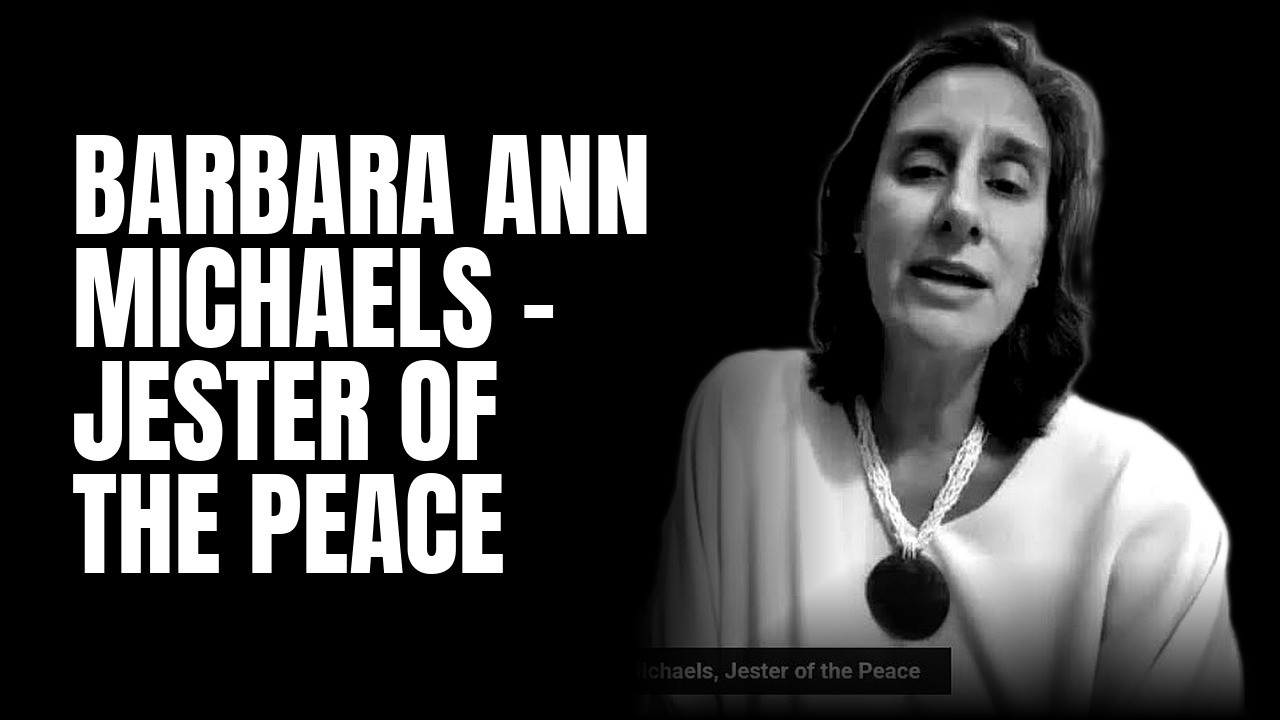
In this Founder Wisdom podcast episode, host Charles Cormier interviews Barbara Ann Michaels, known as the "Jester of Peace," about the role of humor, clown theater, and play in personal resilience and business culture. Barbara shares her lifelong immersion in improvisation and clown theater, describing how she turned a coping strategy for failure into a career. She recounts a pivotal moment at the Celebration Barn where a disastrous performance and a supportive teacher taught her to "laugh with" failure, shaping her devotion to the art form. The conversation explores the contrast between New York’s prevalent sarcasm and the kind‑hearted, community‑building humor offered by her immersive Brooklyn experience, Humorville, which encourages participants to practice laughing with each other. Barbara introduces concepts such as "inside jokes" as a hidden language that accelerates trust and resilience in teams, and discusses why many founders avoid humor due to corporate filters and fear of offense. She also references her "Circus of the Heart" podcast, which showcases stories of hard experiences that become funny, fostering empathy and open hearts in business. The episode touches on the science of play—how laughter triggers dopamine and serotonin, improves health, and strengthens social bonds. Listeners are directed to her websites jesterofthepeace.com and humorville.com for more resources on humor as a wellness practice.
Chapters
Welcome to another Founder Wisdom podcast. Today I'm on my cell phone trying to figure out Wi-Fi stuff. We're with Barbara Ann Michaels. She's the Jester of Peace, an interesting person altogether. She even has a museum. I think it's called Humorville in New York. And we're going to talk about humor today and about laughing it out, which I think is super important in business. That is taken way too seriously by a lot. And yeah, for me, um, yeah, this has been a therapy, like laughing it out. I started this newsletter, I think last year, it's called Founder Humor, and it has helped me release the stress valve a lot. So Barbara, welcome to the pod. Tell us a bit more about yourself and what you've been up to.
Thank you. Uh, he's so humorously— we have to find joy in the journey everywhere. And humorously, you've been biking around trying to find good connectivity, and this podcast The podcast has already dropped out twice. And so, like, you couldn't be talking to a more positive person about going for it no matter what, which is what we're doing right now, considering that we have background noise and the Wi-Fi already dropped out twice. So finding joy in the journey is really important. And if we don't, it's extra hard. 'Cause you could be sitting over there being like, oh no, what am I gonna do with my technology? Or you could be like, you know what? We've got what we've got. And that is really the energy that founders and entrepreneurs of every kind and human beings of every stripe really need. We need to be able to rise to the occasion, whatever is happening, and look for the best in it. Now, that doesn't mean that hard things don't happen. I'm not suggesting that joyfulness, pleasure, happiness, and delight are always what is necessary. It's more like, how can we have a baseline of being able to improvise with the journey of life? Since we all invent every moment of our lives anyway, understanding that things are going to be up and down. And humorously, everything I just said is my coping mechanism for a living. I have a background in clown theater. I have a background in improvisation, both for 30 years. I'm an audience interactive experience designer. And my coping strategy is 100% finding joy in the journey. And when someone said to me, did you make your coping strategy into a career? I said, oh yes, I did. And I think that a lot of people do. I mean, I think if you look at what entrepreneurs choose to do, a whole bunch of other people are also making their coping strategy into a career.
I wouldn't call it a coping strategy of mine, but like optimization coping seems pretty hard. So what were you, uh, coping from? Like, what was your life before you got into humor?
You know, I don't actually remember because I come from a very small family of really private people who I adore deeply. And one of the ways that I've always been able to help us find each other and help us connect is through finding shared humor. And that's something that I've been doing my entire life and learned from them actually how to do. And then I became a theater kid when I was a little kid. And once you're a theater kid, you're a theater kid forever. Anybody else out there who's listening who's a theater kid, you know what I mean? Like, the arts never leave you alone. And even if you're a musician or a painter or any kind of creative person, once it's in you, once it starts to reveal itself to you, it never leaves you alone. And it's important for founders and entrepreneurs to remember that because whatever we're creating is going to be tick-tock. It's going to be tinged and touched by those core creative practices that want to live through us that probably arose when we were kids. So I don't really remember a time that, that I didn't have humor because I was a theater kid and an improviser from being a teenager on until now, which is many decades later. However, I do remember a time before I was able to laugh with failure, and the before laughing with failure and after laughing with failure is like a different day. And so I, you know, young people are all judged on particular scales. Some of them are judged by sports and some of them are judged by academics and some of them are judged by beauty or whatever it's going to be. And I happen to have been a smart kid who was appreciated for being a smart kid. And so with that comes like, I better have the answer, otherwise things are going to go wrong. And that kind of of stress about doing it right can live with people for the rest of their lives and can get in the way of people taking positive risks. And so when I went to study clown theater for the first time up at the Celebration Barn, which is a few decades ago now, I was an absolutely terrible clown. I wasn't funny. I was trying to use making jokes. I was trying to be a stand-up comedian. I couldn't figure it out. I didn't understand why people were laughing when they were. It was just— phenomenally confusing. And I thought, well, okay, this is obviously a complete failure. And I'm— however, I had so little ability to process that much failure that I actually fell on the stage and started to cry, which is really embarrassing. Just, I was on the stage totally crying, being like, I can't figure it out. But my teacher, whose name is Julie Goel, she came over and she was so kind to me and she was smiling and laughing and stroking my hair. I mean, keep in mind, this is a theatrical class that I realized in that moment that all the failure I thought I was having, I wasn't actually having because the clown theater art form is actually about laughing with the ups and downs and the failures of life. And by failing that dramatically in such an embarrassing way, I was actually starting to do it right. Which is really amusing. And that was the first time that I let myself off the hook completely and fully in a moment of failure. And then that changed everything for me, and I became completely devoted to clown theater. And when I say clown in the USA, a lot of people think about birthday parties and balloon animals and things like that. And that's not what I'm speaking about. I'm talking about the actual theatrical art form of finding joy with the ups and downs of life. That's a community practice. And so life after having compassion with failure is like, yay, it went wrong. Yay, the Wi-Fi dropped out. Yay, we— the food didn't arrive. Yay, like, what's the opportunity in the face of this failure that we just ran into? Like, that life is completely different than, oh my gosh, I'm failing, it's over. Because if I had said to myself, Well, I'm terrible at this. I'm never doing it again. I wouldn't have a career. I wouldn't have continued to be a performing artist. I wouldn't have been able to influence the journey of people's hearts. I wouldn't be part of a movement for humor and wellness around the world. Like, but people stop themselves because they can't find compassion for failure, and they stop themselves because they can't find laughter in the journey. And so that's the big before and after that I have, or one of them. I mean, I'm sure there's more.
Yeah, it's a great story. I like it. Um, but you've always been in that, right? Like, uh, most humans, what, they listen to some humorous— sometimes they laugh, right? Like, should people have a better relationship with humor? I guess, uh, also it's, it's, it's interesting that in America and Canada it's more prominent because there's free speech, right? And it's just a good way to release a pressure valve because there's so much noise and so many people trying to hijack your attention and life happens with kids. And I mean, you're in New York, right? It's a very noisy city. So what's most people's relationship with humor in New York? Let's take for an example.
You know, that's a really, really good question because New York is known internationally for being a hotbed of sarcasm. And sarcasm is a really tricky, high art form. In order to be that quick, that provocative, to turn things around, it's really a skill. And it's not the only kind of humor because sarcasm can really also divide people and people can feel really hurt by it. And Humorville—
I feel that's the sarcasm most New York New Yorkers use it like as a weapon.
Well, as a weapon, but also as a way to connect. I mean, New Yorkers find each other while traveling, and it's humorous to me. However, and also Humorville, which is the tourist attraction for your heart, which is my immersive arts experience in Brooklyn, is all about kind-hearted, positive humor and laughing with each other. Sarcasm is often laughing at each other, and the kind-hearted humor that Humorville is about, there's not really a place for people to practice laughing with each other. And so Humorville is that, and it's kind of a— it's kind of its own little zone in the, in, in the midst of the New York sarcastic universe. And I really appreciate sarcasm because it really takes talent to do well, and it's just one part of the spectrum. So we have to have a place for people to practice laughing with each other and in a, in a, in a warm, understanding way, which is what Humorville is for. And Even that, when people come to Humorville, 2 things will happen. One that I contend with when people come to Humorville, one of them is people saying, I'm not funny, I'm not a comedian, which means, which translates into, I can't use humor in my life unless I'm a paid professional because humor is dangerous. And if I fail, the stakes are really high. or if I hurt someone, we can't recover, or we're going to hurt the relationship, or whatever it is, which mostly comes out of sarcasm, actually. I'm not funny, I'm not a comedian, because it isn't a high art form. And so we contend with that and have to move into laughing with each other and finding the resonance with the things that we've overcome. And then in addition to I'm not funny, I'm not a comedian, the other thing is people come to Humorville And I have to say, when they come into the space, you can only get it right at Humorville. You can only get it right, do it right, say it right, feel it right, express it right, intuit it right. You can only get it right here. And then I immediately have people being like, oh, I'm sorry. Oops, I did it wrong. Oh, I'm a bad artist. I'm not good at that. What am I going to do? And if I just keep on saying, you can only get it right at Humorville, you can only get it right at Humorville, you You can only get it right at Humorville. Eventually, it starts to sink in because we're living in New York City and also on the East Coast of the USA in cultures where people are measuring each other constantly. You can only get it— eventually, by the end of the experience, which can take 2 hours, people are saying to me and to each other, oh, you can only get it right at Humorville. Oh, you said the wrong thing. You dropped the thing. The thing fell on the floor. You can only get it right at Humorville. And The thing about that is, if you can only get it right at Humorville, if it's true at Humorville, it can also be true in our life. And if you can only get it right in your life, what if you can only get it right in your life? Then how does that change the risks we take, the thoughts we think, the things we go for, who we choose to talk to, who we choose not to talk to? What if you can only get it right in your life? Then what?
Yeah, yeah.
And that's an aspirational thought. It's not completely true, and because things have consequences, and what if it's way more true than we think?
But I think one key, uh, importance here is that people need to not have filter when they go into humor, even though some things might not be funny or might just be wrong. I would encourage to have like no filters at the start, and then, I don't know, have some kind of public. But for example, me, and the proof of that is like making fun of yourself, right? It's like all my quirks all my founder weird habits or VC weird habits. I take notes of them and I try to satirize them to hundreds, right? Just— and that is funny, right? Because you're like painting a portrait of someone extreme and it's like, oh, that's funny that it's real, that these people are like that. I think, yeah, humor is like a community thing. It brings people together. It's like, oh yes, I get it, right? This is actually somewhat true, and that once you ridicule the crap out of it, then it becomes funny. I also think humor is like, um, it's a measure of intelligence too, right? Usually if you can crack jokes, that means that you can think differently, and also that it generates like all the feel-good chemicals, right? So it's extremely useful in business. Um, but I see very few founders or operators using humor in the business. What do you think is that? Do you think that this is because the corporate world is stuck up and has like all these filters and people measure themselves and it's all too serious? Tell me a bit more.
Yeah, it's the— it's, it's partly the difference between laughing with each other and at each other, because laughing at each other is actually dangerous and can take apart relationships. And humor can fail and often does, but we, we can find humor even in the fact that humor failed. if our hearts are open. So one of the things that— well, the other thing is that in business, people are overly serious because humor can feel dangerous and because there's cultural differences in humor. But people want to work with people who feel like friends. And if we take away the friendship values, which are sharing the stories of our lives, laughing together, finding pleasure in the journey, creating inside jokes. If we take those qualities away, we actually impede business because ultimately people are the most enthusiastic and want to do the best work with people who feel like friends. So we have to put the friendship values back in business. One way to do that is to create inside jokes with people. The sooner 2 human beings or a group of human beings or a whole room or a conference full of human beings have an inside joke with each other, they feel like a little community. They have something that nobody else knows. It's like a hidden language. I call inside jokes the hidden language of business because as soon as an inside joke pops up, then people feel resonant with each other. And every time you say the thing to each other, and it could be something that makes absolutely no sense, like blue pandas on the moon. If people have a joke about blue pandas on the moon, every time it's like, you know, there's blue pandas on the moon, everyone's going to start laughing and feel connected because they're tapping into the inside joke that they created. So In a business context, the sooner that can happen, the faster business will go. Even if that is counterintuitive because people are trying to be serious, to take business seriously, except taking business seriously impedes fun and fun fuels business. So it's paradoxical, but the sooner we feel like friends with people that we work with, the better all the business is going to go and the more resilience we're going to have when things go wrong. Because if we're only serious and things get worse, we don't have anything to release the tension. And so we have to practice humor with each other as founders and entrepreneurs, because if we don't, when things get bad, it'll just get worse instead of having some way to release tension through humor with each other that can allow us to spiral up and not down.
I'm sort of going to challenge the, I don't know, appealing to pretty much everyone and not making people unhappy because that's almost impossible, right? And I think if you're trying to go like too general, you're just not going to be funny at the end. If humor is like tribal, doesn't it mean that I can crack some joke that I don't know? I'm a founder and I crack jokes about VCs, right? Because it's sort of us versus them. And also, if I'm a founder and I crack jokes about ridiculous founders, I'm one of the founders. If I'm one of them, doesn't that make me immune? And it's like, dude, if you don't like that joke, I'm a founder too, and I'm like that too. So doesn't that protect me in the end, or is that— is that not a protection?
That's, that's funny. So the series that you have about making fun of the founder journey, a bunch of which I've read, the headlines for it are super funny and they're so sarcastic. And you, you know, like you're really on a pinpoint with it. Those function as inside jokes because if you are an entrepreneur and you read those headlines, from the series that you have, there's recognition there. And it's like, oh yeah, right. Oh yeah, those people who do that. Oh yeah, those people who do that. One of the things that is different about laughing with each other, and what you're doing touches it, and there's another layer of it too. I have a podcast called Circus of the Heart, which is specifically for people telling stories about times from their lives in business, but also in personal lives and also in health and Relationships of times that were hard. Hard then, that's funny now. We're celebrating each other in our resilience now, but in order to tell the story, we have to go back to when it was hard and then go through the process again. And you can see it on someone's face, like if someone's telling a story that was hard then, it brings people energy. You can see them start to laugh. Talking about something that was difficult, but having with the with the person who's telling the story, and so that's a way to laugh with each other and celebrate each other in a really kind-hearted way. And it's also a really good way to get to know somebody. I highly encourage at a networking event, strangers on a plane. whatever it's gonna be, family reunion, find those stories from each other's lives that were hard then that are funny now, and it will bring out the kindhearted laughing with each other. The other thing is that telling stories that were hard then that are funny now, people put down the things that supposedly divide us, whether people come from different demographics or have a different station in life or whatever it is. If someone's laughing with their health journey, breaking both their legs, almost drowning, Getting booed off stage. These are a bunch of the things that I've interviewed people about. Death. If people— and it's not that the original thing is funny, because it's not. There's this too-soon period. But when someone finds humor along the journey and people share it with each other, it builds the relationship in a— I'm going to say in a loving way. Even if we're in a business context and we wouldn't be like, oh, I love you, man. But it's a way to have our hearts open. And we have to have our hearts open in business to trust each other. You can't trust somebody if your heart's not open. And so there's a role for sharing these stories that were hard then that are funny now across our lives. And that creates community really quickly. And people will be willing to listen to people who they think are different than them just because laughing with what was hard feels impossible, which is why I call it Circus of the Heart because people go to the real circus. to see things that are impossible, and emotional impossibilities, either laughing with what was hard or forgiveness. And as we share those tales, and there's about 40 of them on my jesterofthepeace.com website, people from all walks of life, everyone has stories that were hard then that are funny now, and it really bonds us together and shows us our shared humanity.
I just think humor is fascinating because as humans we have all these rules, right, set by society with laws like living as civilians and Sometimes talking about them out loud in a very brash way releases that tension, then that causes laughter, which releases dopamine, serotonin. If you're in a crowd, it's also communal, right? Of like, ah, it's, it's like, yeah, we're all under the same roof here, and that, that is ridiculous. And it fosters like this sense of community, right? It's such a fascinating topic, right? And the science behind it. Uh, have you gone like deep that rabbit hole as well? Like search like— Why there's so much interest behind humor and how it holds a society together, sort of.
Yeah, there's— I mean, I know from my life experience and having done intense work in healing spaces, like I spent a little bit of time being a pediatric hospital clown, and that's where people are really up against it as a family. And the role of humor is vitally important. And the role of humor in releasing that tension so that people can have more energy to go forward. There's a lot of science on play and there are— To the science of why play makes life better or why play makes people stronger or why play improves people's health or why laughter creates breath, which makes people— there's a lot of studies on it. It's very easy to go down a very inspiring rabbit hole. But the thing is, you know, there's a lot of rabbit holes available. And if you happen to go down the rabbit hole of why playfulness is going to make life better, that's probably going to lead to a better life because it's going to be a lot of evidence why we should go out and play right now.
Barb, thanks for being on and bearing with the 4G, if not 5G connections at any moment, and the wind and all the chaos. Where can people find out more about you?
Yeah, it's been fun to watch your hair going like in the wind. And I also— and I know, right? And I also think that if we're going to have a conversation when the Wi-Fi is inconsistent and there's wind in your hair, this is the humor, is the conversation to be had. So I think it's pretty perfect. JesterofthePeace.com, which is J-E-S-T-E-R of the P-E-A-C-E. Humorville, my history, the key, and also the overall movement for humor and wellness, which is also under the, under the moniker of Humor is Human, because humor is human and humanity, because we are designed physiologically, not even beyond emotionally, we're designed physiologically To find joy in the journey together, release tension, and have more energy so that we can be who we really want to be. So I really appreciate a jovial spirit and for putting your own or listening to you.
Thanks. That was Barb and Charles for.
More from Charles


Founder Wisdom: the audiobook, version 2 (5 hours of stories from founders and CEOs)

8 CEO Questions I Love Asking: the audiobook (64 founders answer, in their own words)





