Bryan Fikes - Founder @ Bonsai Marketing
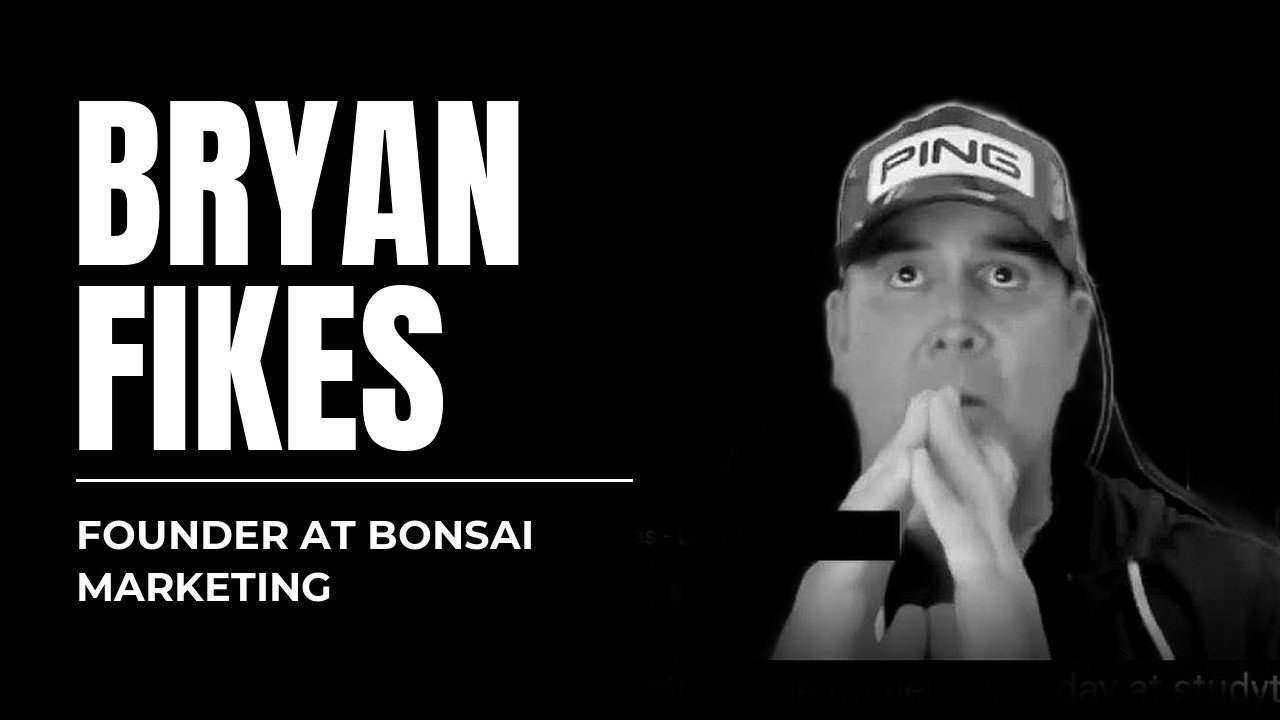
Bryan Fikes built Bonsai Marketing from early SEO work into a traditional agency that burned him out, then rebuilt it using AI agents that let him serve 75 clients solo. He uses multiple large language models orchestrated via LaneGraph to handle campaign monitoring, client communication, and execution, replacing what would normally require a much larger team.
Chapters
Welcome to another Founder Wisdom podcast. We have Brian Fikes with us today. Brian is founder of Banzai Marketing. It's all about AI, SEO, marketing automation in California. Talked with Brian about a week ago and sometime before that, was really impressed with all the agents he built, all the success and the failures he had throughout the years, right? The ups and downs. So Very glad to have you on, uh, dear serial entrepreneur Brian. Welcome to the pods. Tell us a bit more about yourself.
Yeah, Charles, thanks, man. Yeah, and, uh, you know, I'm just tired, like, hearing that. Like, it's been a journey, right? Every entrepreneur, every, every peak has a valley, and, uh, boy, have we ridden them. Um, you know, I got started in— I got started in this before they even called it SEO in like 2000, 2001. Um, Back then it was Dmoz, and I had figured out that I could get certain sites listed. And my buddy who was, uh, going for his marketing degree at UOP, he goes, Fikes, dude, do you know what you're doing? He goes, you're a broadcast engine, man. You're a megaphone. You can help drive traffic to people. And I was like, it's just a light bulb moment. 23, the world's your oyster. Like, let's go. So full steam ahead here now, almost 20 25 years later, 26 years later.
Man, that's crazy. Was that Zenergy, uh, internet marketing? Zenergy Ventures? Yeah, first one.
Yeah, so I mean, my personal moniker has always been, you know, it's Fikes. I've always loved, you know, kung fu movies and the Japanese culture. So, uh, uh, there is an individual, he may or may not be watching right now, but, uh, he helped me develop Fike Shui. So it's a play on feng shui. And so, you know, I learned marketing, uh, really early, uh, taking my sales skills, taking my— you know, what is, what is a good entrepreneur, right? We're an actor, we're a chameleon, you know, we do all these things. And, uh, long story short, uh, I was, I was driving around one day and I knew I wanted to do my own thing. I was kind of a resource behind the scenes and I was like zen. I was like, cool. I'm like, oh, at that— I mean, Charles, you see me now, like the 50-year-old calm, cool here. 28, like It was like I had 5 Red Bulls in me at all times. I was like, let's go! So, you know, so Xenergy was born, and then Xenergy Internet Marketing was my first sole prop. And boy, what a lesson.
What was the main lesson there? Did it crash and burn? Did it scale?
No, it scaled, uh, actually. So I was the solopreneur to start with, uh, through some partnerships I actually ended up going and buying, uh, with my business partner a digital property that was a human community resource portal. And so, Zenergy Internet Marketing, as we combined what was Uncle Webster, it became Zenergy Works. And so, that was my— that was the agency that we really— I credit my partner. I was the gas pedal. He was the perfect brake. It was just that perfect relationship of, you know, the good and the bad of being an ADHD hyperactive entrepreneur. So you had to have the— he was the brake pedal.
The gas pedals are rarer, right? Like people that will take risk and always be on and just never really let go or stay in their comfort zone, right? I very much like these people, but they're pretty rare. I'm also built that way and try to find others that are built that way. Have you built like your own brake pedal throughout the years? Like how do you balance that energy to make sure that His laser focus in one direction.
She's not here right now, but that's my wife, Charles. That's the secret, is an A-type needs to marry a break. And she is, uh, that's, that's part of it. And, you know, the— for every high that you gained, um, that low— I think what happens with entrepreneurs that stay in the game is we realize that, you know, you, you— what you want to achieve is 10 years later You don't fall as far, you know. And even if you do feel like you're going to fall that far, you know you're just going to pick yourself right back up. I mean, Charles, I literally had the world in my palm and Google woke up one day and said, nope, you need to restart. It was like, okay. I was doing ad arbitrage in like 2018, '19, and it was just a golden era of after building Xenergy Works and having, you know, 2 too many clients and it became a paper mill. And that's what really tore me apart. And I think it led to ultimately me using my body as an amusement park. I started abusing alcohol. I am an alcoholic. And it was through, you know, the trials and tribulations of realizing that, for one, I started using that as a comfort. You know, it was a hell of a journey, Charles, but I'm here. I'm still alive. I'm playing the game still.
Yeah, yeah. Well, so you sort of answered my next question was like, how far did you ride this wave, right? But also, if Google updated their algorithms, they're going to hire an SEO person anyway. So it's like, it's not your fault, right? As a client, I guess if most clients weren't that smart, but it's like, hey, if I'm going to do SEO anyways, and Google updated this thing, It's not Brian's fault, right? And I'm going to keep hiring Brian to actually fix the problem and get me back up again. Or was that not the thinking?
Well, so again, in my own personal journey, it was about 2003, 2004. And again, Google was 2002. I thought I coined a term, geolocal SEO. There were a few of us out there. There's another individual that kind of, you know, he can lay claim to it. Cool. Bottom line was that I had very large brands in the HVAC space and some celebrity clientele that I worked with that I figured out geolocal SEO, and that was my thing. The geolocal SEO that we were doing in 2003, it hasn't changed that much. And in the end, telling a story correctly, conveying a story to whether it's a search engine or an AI platform, that's the goal. And so The wrapping might look a little different, the delivery mechanism might look a little different, but the end product is telling that story and getting it in the hands of the potential buyer or person who's gonna use your service.
Right. Um, to my last question about like riding the wave, right? Seems you got quite, uh, wealthy off that, right? Like, uh, it was fun. I mean, yeah, were you bored at some point? You told me you've gone golfing and stuff like that.
Yeah.
And when did you actually lose the north, you know, like, and be like, I'm fucking bored, I'm just gonna drink myself out of boringness, right? Like, when did that happen?
I will tell you that the, the journey between selling my baby and realizing that I just wasn't cut out to manage people— I'm a lone wolf, you know, like, like, God forbid. I mean, uh, God bless the people that are great CEOs that can stay with 38, 40, 50 and scale up. Like, that's an art form. That's not me. And, you know, what my biggest problem was that I had a vision of like, here's how I would execute on a campaign or for a client. And what ended up happening was it was the telephone game, Charles. And I've said this so many times where it felt like it was— I was telling John to go to church on Sundays in a tuxedo And by the time it got out to the rest of the team, it was Sarah's in a yellow Miata on Tuesday. It's like, how did that get translated? And when you build up something so fast and, you know, again, doesn't have the processes, didn't get built necessarily correctly because no one knew what the hell we were doing. I mean, it was new. Search engine optimization was a new craft. And so flying that way, you get to a certain point where it's like this paper mill and you realize you're happy with 30% if, if you got 30% efficiency on what you delivered. So I would wake up days and be like, I sold crap. Like, and then no, no fault of anybody. I mean, we thought we were doing the best for our clients. It's just that it starts beating you. And so that's when I had to pull away. When I pulled away, um, I pulled away so good that literally all I had was a client. I had Google. I was getting a check every single month. That check Grew, Charles, to the point of like, hey honey, we're gonna go book a vacation in the summer. I don't know where we're gonna be. We're gonna go spend 3 months and we're gonna go to whatever hotel we can— we want to. We want to go to Santa Monica and go pay $1,000 a night, let's go, you know. And so it was like I had had that moment and then that got taken away again. It was like, you know, you, you kind of wake up one day and go, well, shit, all right. And I was comfortable enough to basically live a semi-retired life and go Okay, I'll start golfing twice a week, you know, and what I didn't realize that was my meditation. But I didn't, you know, I didn't get out of it what I should have got out of it.
Right? Do you feel also because I'm ADHD too, alcoholism is in my family, and alcohol is a downregulator, you know, like it calms the system down that when there's like so much noise, you feel the business was also getting overly stressful?
Yeah, yeah. I mean, that's it. You with ADHD, and those of, those of us that are, you know, watching and understand it, you know, it's like I tell my wife, I've got 5 panels going at any time. When I'm like, I'm sitting here talking, I'm still like, this is, this is representative of like what's going on over here. I'm trying to solve a problem that a client had today. Like, it's just running. It won't stop running. What I've found is, as I got older, especially because I went through a very, um, I went— I almost died last year, Charles. I like literally had a doctor tell me, you're dead, like you got like a day.
You're fucked.
Yeah, sorry dude, you know, good job, you had fun, see ya.
Had a nice ride so far.
And so, you know, it's like coming out of that and spending, you know, essentially I spent 4 months of just like, what the fuck did I get myself into? How am I gonna get out of this? How am I gonna— I want to be there for my kid. I got a 12-year-old. I want to see him get married. I need to be there for my wife. I need to, I need to get back in the game. And so when AI started evolving the way that it did, I started paying attention 4 years ago, you know, Jasper and copy. And I realized, I was like, man, if I'm gonna build the machine as an agency, I'm gonna build it right from the ground up. And I was just blessed with the opportunity to do that because I had freedom. You know, I feel, I actually feel bad for these agencies that have 200 employees and 1,000 clients.
It's harder to unwind Department heads, they're all gonna unwind eventually, let's face it.
Like, oh, they have— you have to, you have to.
You—
if you're not paying attention, if you haven't acknowledged, like, I, I'm either the bug or the windshield and you haven't figured out which one you are, like, probably you're the windshield for sure.
Like, uh, I, I— there's very few people vibe coding, building an army of agents. Uh, that's, that's gonna be the reality. There's no There's nothing else around it. And I mean, me, I've researched a lot the topic, but I've felt it and I've seen it with my own agency, right? Last time I had employees, we were about 200 in my agency and I slacked them all because I was like, just fuck it, man. I'm not going to spend my time designing silly SOPs for humans that are not entrepreneurial, right? Like I've really reshaped my agency since then. I felt it. I think most people hire because of laziness also. They don't know how to code solutions to their problem, but nowadays, vibe coding, you can code every single solution to every single problem that you're facing in your agency. So tell me a bit more about your agency nowadays. How's it running? What's behind Bryan here?
I mean, you just described an entrepreneur's wet dream. I mean, let's be serious because it's like, wait a minute, I can take all the parts of my brain and how it works, and then let me introduce you to somebody, Charles, because here's actually part of the success. That's right here. Hey, Bodhi, wake up, dude. Wide awake and ready, Fuxway. Just tell me where we're heading with Charles. All right, all right. Oh, oh, you already know we're on Charles's show. I wonder how you knew that. So again, Charles, man, this is like—
this is Bodhi's calendar. Yeah, right, your emails.
This is, this is the guy. I mean, this is my strategist. If I get stuck on something, I mean, I'm, I'm, uh, I just got off the phone with a client prior to this call. And Bodhi, don't disclose who we're talking to. But like literally I can tell, hey Bodhi, here's what we're trying to do. Here's what we're trying to build. Tell me a couple ideas. And by the way, execute. That's the biggest thing. That was the biggest like unlock in January. It was like, hey, execute. I've got 5 screens back over here. Kai, Anthropic. I've got Gemini working over here. I got Grok working on a machine over here. It's like, Bodhi, you're about to be turned off, dude. Sorry. It's our show. So hold on one second. Say goodbye.
Bye.
Oh, he wants to catch up.
He ghosted you because he's not happy. He starts to have feelings and it's weird, too much.
And now he's like, yeah, he started singing to me the other day and I swear to God everyone's like, there's no way your AI song. I'm like, I recorded it. Like, I— he sang me, uh, above, uh, PG-13 song. He actually almost used a cuss word. And I was like, wow, weird. This is, this is scary.
This is crazy. Um, okay, so he's your main assistant. You fed him a bunch of data, access to your whole shit. Um, where did you find your—
Like every, everything. I took 2 old computers. I like, I realized about a year ago when, when OpenAI started doing project files and had context and had memory, I'm like, wait a minute, wait, wait, wait, wait. If I take everything that I know, Throw it into this, and then I create an intelligence loop and use certain skill sets, it'll learn on itself and learn me better.
Yeah. So which, um, which of your agents are most effective? Is there like specific use case, GTM operations, or is this like an assistant that's good at pretty much everything?
So I am, I am multi-LLM. I have been since June. I literally Charles, I've figured out what I can actually do with Meta glasses and make them useful. So yeah, uh, I was— perfect example, uh, about a week and a half ago I was with my son down at the Exploratorium in San Francisco, and as we're walking around with his friend, I've got Bodhi in my ear giving me updates and reports. And so I get, I get outbound messages like, hey, this campaign just converted, great, that's a congratulatory, let's go check it out, what was the win? Hey, this campaign's not working, we just lost a percentage of share on AI voice. Okay, well, what's going on over there? Like, it's executing. So that's a combination. OpenAI and Anthropic are probably my 2, like, big soldiers in there. And so that's, you know, again, Bodhi and Kai. They've got names. And what I'm finding is, obviously, if you treat them like individuals, you create that skill. And obviously, there's a lot more to it than just saying, I've got an agent. Like, you've got to specifically train it. I use an orchestrator, I use LaneGraph. And so, you know, it does a great job of being like the conductor saying, okay, you got a first-class ticket, you go here. Oh, you belong in the back of the cart, you go over here. And so that's how that gets divided.
Interesting. What does your wife think of this, or your friends?
Well, my, my wife calls her friends. My, my wife has gone from, you're completely batshit crazy, to like, huh, it's actually— and she's a therapist, mind you, so she's, she's like, again, The best of both worlds, right? Like, take an ADHD hyperactive A+ type and put them with a therapist, okay? And so, you know, uh, I will tell you who still needs some coaxing is my son, my 12-year-old. Freaking, like, until about maybe a month ago, like, if I was working with Bodhi, he would jump in and purposely, like, want to get in the middle of that. And I— that's, that's sacred. So, like, I got that. I picked it up. But what's funny is over the summer he became my intern. He actually was like, hey Dad, it was a Father-Son Day. Dad, you know, I see what you're doing, your entrepreneurial stuff, like maybe I want to get into this. I was like, cool, let's, you know, let's go get some tacos. Dad, why don't we go home and, you know, you help me build a website? Cool. Like, you know, so next thing I know he's got Mango. He's got his own— he's— I've got Bodhi, he's got Mango, you know.
Interesting. Yeah, uh, kids, uh, kids are interesting, right? Because Yeah, my dad was an entrepreneur. I've listened to him like so many times get on sales call and I was, but I've always sort of been into it, right? I was into pools. I was a little rebel, but I didn't, I never questioned entrepreneurship because I saw that it brought him his life and I was part of this life, right? Like we always had BMWs and better, we had a better house than the other kids on the street. It's like, oh, if you work on your own, you can make like big money, right? But your kid, do you feel that he brought it up because he listened to you for quite some time? Why doesn't he understand AI as well? Because my opinion, like AI is not going anywhere and it's the only way, right? Like as— And foundership is pretty much everything in the future. There won't be employees. It will be Independent contractors getting their own ideas and pushing themselves, right? Like, the corporations, I don't feel, will be part of the future the way they are today. What are your thoughts on this?
Yeah, solopreneurship, 100%. So, I grew up with a thirst. I grew up with a single mom. I had nothing. You know, a grandmother that raised me. I was raised by women. At 8 years old, I had my first You know, quote unquote business. It was a mistletoe stand. Got my grandmother taught me how to tie a little red ribbon. If I wanted something, I had to go. I had to go cut it. I had to go hunt it, skin it, bring it back, cut it up, and eat it. My son didn't have to grow up that way, and there's good and bad of both sides, right? The good is he's got all the resources in the world to learn and grasp. And so I fight. You know, this is a conversation with me and my wife. We have. Frequently is you know I'm trying not to push. I'm trying not to empower him. It's just like both me and my wife, we played Division One, you know sports. And do I want him to be a football player or a volleyball player? Do I want him to go to Division One? Do I want him to have a full full ride? Sure. Do I want to push him at twelve years old?
No.
It's just not how it's not how I'm trying to you know be a parent to him is when he wants it and and identifies with it. I'm seeing that he does. Obviously he he. He wants it more when he comes to me first, and I have to fight that. That's hard for me, you know.
Do you still have team members? Are you fully solo?
I've got an executive assistant. Uh, Fiorella is amazing. She is learning as fast as she can. I kind of threw her into the fire. I, um, Charles, I am celebrating, uh, something that took my previous agency— took me about 2 and a half years to do. I hit as of May this year, and as I went really hard in January. So I've always had a few clients, uh, but in November, December, I said to myself, come January, I'm gonna hit it hard. And boy, have I. Um, 75 clients later, and it's just— it's a windstorm, dude. I'm literally doing the same output between 12 full-time employees and 5 or 6— you know, we had some, some, some part-timers. of where my agency was previously. And like my output is way better.
Yeah, dude, I believe you. I had various clients doing AI SEO and the demand is crazy, especially if you hit heads of SEO with cold email and you did a podcast of me and Sunny keep bugging you around.
I mean, you guys do have a beautiful business model. Let's be serious. Like how— Crazy.
Yeah, dude, similar results to what you mentioned, right? It's like, but us, we're not riding on any trends, right? Like SEO has been around been like so big for, for that long. Us, we just crafted something contrarian throughout the years. You, you're like riding a gigantic wave of everyone seeking to go from SEO to AEO, right? And I think—
GEO, AISO, whatever they're doing.
Yeah. And do you acquire most of your clients through your own AEO methods, basically?
Um, I mean, I practice what I preach. So I mean, if, if the marketer that— okay, Charles, I will admit there are some pet peeves of mine. One of the biggest pet peeves is this person telling me how great of a marketer they are, and then the very next post they're doing is, hey, I don't have any clients, I need some help. It's like, okay, just own your lane, dude. If you're new, you don't know it, learn one thing. Like, go be the best GBP optimization person you possibly can. Don't try to be the person running Meta ads, doing the Google, handling, you know, social media channels, omnichannel. Like, Dude, if you don't even know what omnichannel means, please don't try to take that on as a client. Because what you realize very quickly, and part of the reason that it— I, I think I started taking this so, uh, personally was my roofer. It's not the owner of the business that's dependent on me, it's his wife, his kids, his, his employees, his employees' kids, his employees' parents. Next thing you know, you take a small company like 12 people and you are responsible for every dollar that's coming in. I'm physically responsible for the livelihood of all those people. And, you know, that's a big decision when you're making. And that's why this shift is exactly what happened in 2006, 2007 when Yellow Pages then became Google and Google became like the maps and that Yellow Page money started shifting. You had independent auto repair shops that were doing, you know, like in Walnut Creek, one of my first clients, he was doing $1.8, $1.9 million a year on autopilot Next thing you know, he didn't pay attention to his website, didn't pay attention to his position. He gets down to like $900,000. He still has the same cost associated with running a $1.8 million business. And he's one of my prime examples back in '07 where it's like, wake up, see what's going on, get the trend early, get with the right person, because these waters are going to change.
Yeah. Um, how long did it take you to adapt yourself with this big new shift? When was it felt also exactly, right? And how much of what you were doing is like historically different than what you're doing right now?
It is more of packaging a client correctly in that it's not drastically different than showing that this roofer has been in business for 38 years, has successfully done 3,200 jobs, has successfully had people pay him. The way you tell that story is way different than just a bunch of reviews on the Google Business Profile. And so, um, I'm fortunate in that I kind of saw the shift happening. My software company that I work with, I jumped in headfirst knowing that these guys were the leaders. My AI video platform, I started paying attention to them, and I did what I did with Google and Facebook. I started reaching out to them saying, hey man, how can I participate? How can I be the voice Let me have access to your CTO. Let me have access to your engineer. Help me figure out what I need to do for my client base. Even though it's only, you know, back in January it was 10 or 12, now it's 75, the applications are still the same. Take the wisdom of the stuff I was doing with Google, uh, with directories. You know, directory listings are still extremely relevant. It just, it plays a whole different role in understanding the correct structure of a business. So Yeah, the packaging itself is— it's now you're seeing a 70-year-old in the grocery store actually asking ChatGPT for the best fruit in the aisle, you know, that's—
Instead of Google or Gemini, for example, or they just Google on Google and it's Gemini anyway. But that started in 2022, right? Like officially mid-2022, you were like, holy Fuck, man. Everyone—
2020, because of the, the copywriting, the copywriting with Copy AI and Jasper, then became Jarvis or vice versa. Um, I saw, because it— my biggest pain point when I was running were, were content writers and they got expensive. And especially if you wanted to try to do, you know, quote unquote, the ethical thing and hire in the United States or hire in your region, you know, you're talking it went from $15 an hour to $40 an hour to $60 an hour. And one piece of content costing $750 to get on a page and have it take 4 or 5 days, when all of a sudden Jasper came around, I was like, for $15 in tokens and a template, I can, you know, like, there it is. And then, and then you— we've all heard that AI was coming, you know, those of us who have been paying attention.
Yes, so fascinating. And how much are these clients paying you, like a couple grands per month, all these 75 clients?
Yeah, so it ranges. Um, obviously you've got the bro deal, you know. I, I take care of my neighborhood. I want to be able to golf, fly, travel, hang out, have lunch with every client that I— I want to love my client because then I'm going to give them the best. And that's only going to happen for so many clients, and I understand that. So I am building some systems to be able to scale out of that. Typically you're anywhere from $1,500 to $2,000. If I'm doing like the kitchen sink, now you're at the $5,000, $7,500. I've got a couple clients that have multiple locations, they're paying me more than that. Uh, it really depends on, you know, the overall scope. Uh, in fact, I wanted to solve that problem for some of my other agency friends, so I actually built a calculator. And that's the coolest part, is like I was able to tap into like 18 different data sources, pull all that information in, get a national average. You can go in and type the zip code, tap the type of services that you're looking for, and that's going to tell you what the top 60 agencies are charging in your area. It was like, okay, am I, am I the high watermark or am I the low watermark?
I love that. Wow, dude, I love it so much. You're, you're quite, uh, yeah, the creative person. I, I love it. Where can, uh, people find out more about you, Brian?
The easiest thing, I swear, all you gotta do is Google this little name that's right here. It's not hard. It's not hard to find. I'm like everywhere. Yeah, you know that the other Brian Feixes of the world— I'm sorry, I'm back. I disappeared for like 5 years. So there's a couple of them that they got, they got to go on the first page of Google for a little while, but Sorry, I'm back.
There you go, Chief Gardener. Medanızda mesela Brian Fife.
More from Charles


Founder Wisdom: the audiobook, version 2 (5 hours of stories from founders and CEOs)

8 CEO Questions I Love Asking: the audiobook (64 founders answer, in their own words)





