Bryan Hughes - Clear Day Strategies
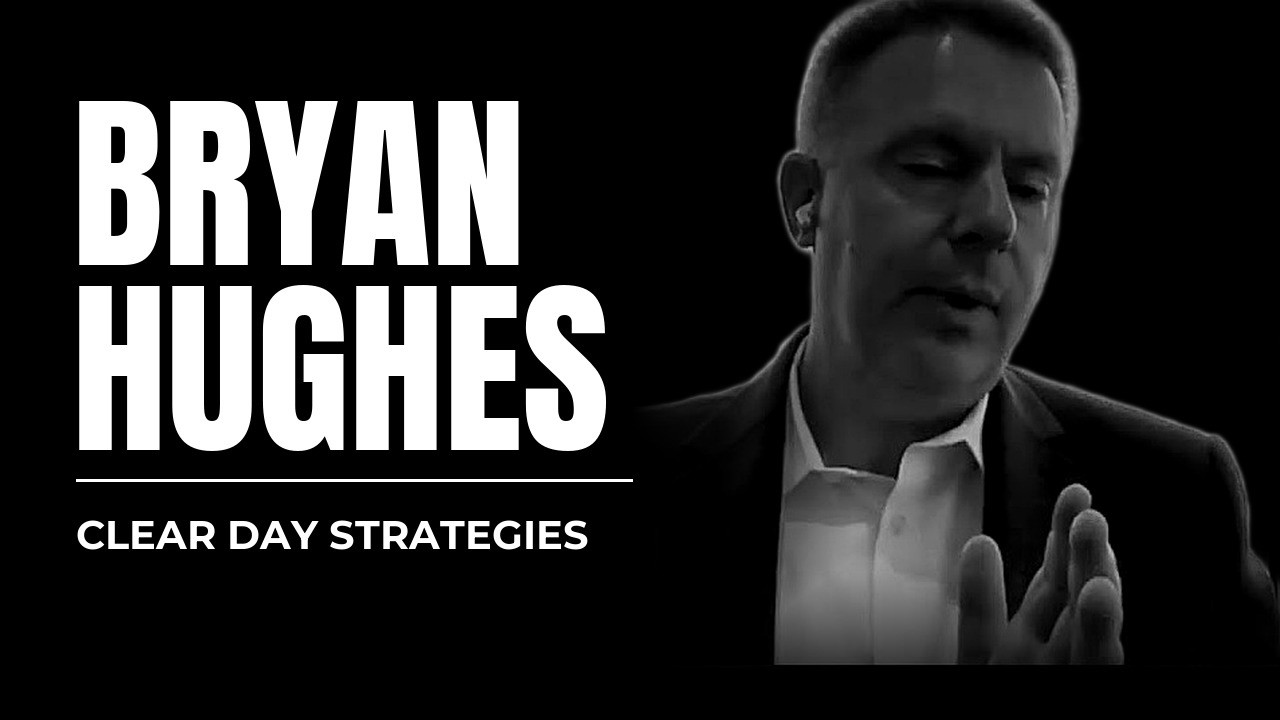
Bryan Hughes runs Clear Day Strategies, helping companies stop losing talent to toxic leadership. His book Toxicity defines the problem as self-interested leaders who hide their damage from standard assessments. One West Coast firm cut labor costs 30% by fixing its culture.
Chapters
Welcome to another CEO Wisdom pod. We have Brian Hughes with us today. He helps, uh, orgs stop losing their best people, uh, it's all about leadership, uh, culture recovery. He's a best-selling author, board member, keynote speaker, usually in Salt Lake City, today in New York, uh, principal at Clear Day Strategies. So Brian, welcome to the pod. Tell us a bit more about yourself and what you've been up to.
Yeah, I appreciate it. I'm glad to be here. So yeah, exactly what you said, right? I help organizations stop losing their best people. There's a lot of challenges that are created, and sometimes it's helping executive leaders and owners to understand that direct connection between what they see on their P&L and the type of culture that they have. And that's what I spend my time helping people do.
And your book Toxicity, interesting title, but fairly accurate in corporations especially, right? Like, shit can get pretty toxic there. What was the thesis behind the book? And yeah, whatever you accomplished with that book.
Yeah, absolutely. So the, you know, behind that book, it actually came out of my, my doctoral dissertation, right? People use the word toxicity, but it— people use it to mean different things. And because of that, nobody could actually solve for for it, right? They might say, okay, it's an abusive environment. Okay, well, abusive is different than toxic, right? Toxic by definition is when you have a leader that is self-interested, meaning that I'm going to accomplish what I want to accomplish, but I'm going to do it at the expense of you, or I'm going to do it at the expense of the organization. Rather than somebody who says, I'm going to maximize my bonus. I'm going to hit all my targets, but I'm going to do it by helping the organization achieve their goals, meaning helping the people. And so, when you remove that self-interested nature, then you can remove some of the toxicity. Now, the biggest issue was, right, we can talk about that logically, but toxic leaders do quite a bit of damage. And while we can remove a toxic leader, most organizations just walk past that. They're like, okay, it's no longer going to be an issue, but there's actual psychological damage that those kinds, as well as maybe physical damage that those types of leaders cause. So part of the, or the majority of the book is spent time on how can an organization actually help their organization recover.
You've been part of various organizations, uh, in your career, managed over $750 million P&L, uh, 4,000-ish employees. What kind of toxicity have you seen and felt firsthand? What motivated you to become a guy that would actually write on that?
Yeah, no, I think that's, that's a fair question. I think everybody has dealt with somebody that they've reported to in the past that was that self-interested, you know, really just kind of toxic individual, right, by, by that definition. And, you know, the thing about it is it doesn't have to be a CEO or a president or somebody with a fancy title. It can even be a direct one-to-one relationship or a team leader relationship. So because we'd all dealt with that, I felt like, okay, hey, I wanted to— I wanted to see how I can help people navigate through it. But it's so prevalent. And one reality about toxic leaders is they're generally highly intelligent. And so, they slip past most of the radars, right? They know how to get past the assessment test. They know how to get past the typical screening mechanisms. So, when they get in and they find that a culture is conducive or allowable for their kinds of behaviors, then they'll thrive until such time as they want to exit.
Like a virus.
100%, and more so even, or take a virus to the next level, is the symptoms are easily dismissible because you get the highly intelligent person, right? High energy, you know, they've got great—
and their KPIs are on track, right? Like everything on the surface looks perfect.
Yeah, or they know what to say. So when they, when the KPIs do start to drift off they can deflect it and say, oh well, it was this other person, or it's this, this guy that I fired.
Exactly.
Yeah, you've seen that before.
Do, do they have, uh, mugs like this? Uh, the toxic leaders? No, no, that's me, by the way.
No, but I think you gave me a great idea for new merch lines, so thank you.
Yeah, I'll send you more details on the back end of that. That's my side quest, side humor quest. Okay, so you've been running that company since, what, a decade now? Like, what was— and you've accepted roles in the meanwhile? Like, are you full-time into ClearDay? Like, give me a portrait of your career nowadays.
Yeah, yeah. So for the last year, I've been full-time in the role that I am right now, right? So I do workshops, I do direct consulting, I do coaching, etc. Et cetera. So I've been doing that for a year. I had done it from like 2004 to 2009 as well at a different level. It was much more granular and prior to my doctoral studies and research on it. And then, you know, back then when at least here in North America when the economy crashed and, you know, '08, '09 really jacked up my world a little bit where even some of my best clients became accounts receivable. So I moved back into the corporate space, did a few runs with different companies, and now I'm back at it.
And you run your dad business with your wife?
Yeah, it's amazing. My wife is an IO, or so, an industrial and organizational psychologist. So, if you've ever taken an assessment test, for example, or ever worked with somebody on succession planning, that's the kind of stuff that she does. And so, where I work maybe with organizations on the one-to-many, um, while work like with teams of leaders. She does more direct kind of one-on-one coaching.
Got it. Um, what does the business look like nowadays? You do some workshops, some speaking gigs, but you also have consulting gigs that are recurring, right? So give me a portrait of the business, where the business comes from, also the ticket price of hiring you, for example.
Uh, you know, depending on the engagement, the relationship, you know, is where the, where the price comes from. You know, if typical to other others in this space, right? So if I'm, if I'm speaking at a keynote, um, you know, that can be, I don't know, you know, $5,000 to $10,000, uh, depending on the duration and, and, you know, expenses, stuff like that on top of that. Um, you know, if I'm doing a workshop like an all-day, right, I've got kind of a flat, flat fee that's, uh, that's an hourly, you know, plus a little more for the extra travel. You know, most of that, the engagement of the client side comes from initially— how to say this— initially it came from relationships that I had in the private equity sector, right? Where I may come in and work with a team of CEOs that the sponsor has across all their different platforms, and then those CEOs may bring me in to work with their their top leadership. Um, it probably the first 6 months I didn't even really do any outside marketing. You know, now I'm doing quite a bit of content creation and other stuff just to help get the word out there and, uh, you know, develop. But yeah, still a lot of it comes by referral, which is good. And there's a transient nature to the roles that I spend time with, either, you know, at a C-suite level or other. So when they go to another organization, if I've done done well by them the first time, then they'll have me, you know, work with their new company as well.
Interesting. So you've got like a huge network from having spent most of your career in corporate. You're building content nowadays. You thought of launching your podcast? Like, would that be a fun strategy for content and get even more clients?
Yeah, you know, just it being myself and my wife at this point, and most of what I do has to be me. I can't delegate it to other agents or whatnot to do work. So I'm trying to balance that time of both doing the work as well as soliciting and selling new business. So I've been on podcasts, you know, I do maybe 1 or 2 a week and, you know, try to keep the topics and stuff differentiated. I probably will do a podcast, but it may be another year or so. Just I got to balance out, honestly, the content creation side, being that that's newer for me to do. Putting out 10, 12 pieces a week takes quite a bit of time and mental energy that's new to me, right? We all have to learn new things, so I guess that's good.
Yeah, I have a fully automated podcast system. Don't have to spend lots of time. In your case, it'd be genius because clients could hear the product before they buy it. So it's like they speak to you, you coach them live on the call, right? It's like, hey, maybe try this or that and see if there's a pain and give them medicine, right? I think that'd be genius in your case. Um, doing the work, so that's like more 50, more than 50% of your day, right? Like just the consulting gigs and all of that, like every day at least 50% of your day spent doing something, is that correct?
Yeah, I mean, I would say, yeah, I'd say closer to 80% of my, wow, of my day is actually doing the work.
Okay, that sounds like a lot of, uh, work. So what type of work, uh, do you do for clients specifically? Is it a personality assessment? Is it quizzing their current employees? Give me like a A portrait if I hire you as a consultant, what you do for me?
Yeah, a lot of pre-engagement data review, right? And I've got some tools and frameworks I've built in, but it's taking all kinds of data, everything from employee surveys, engagement numbers, absentee numbers, all of this data, right? And reviewing that through a framework frameworks and lens to be able to identify what kinds of questions do I need to ask. Then yes, to your point, right, it's sitting down with different leaders and, and having to take the time to let the answers come organically, right? If I can't just survey, there's some psychology around how to actually extract the right kind of data that we need. Because to get to a tangible result, I have to actually deal with quite a bit of intangible or qualitative data and information, and that, that takes time. We are working on some tools. We've, we've developed a few tools so far that, that both allow a lower barrier of entry for, for clients. They just want like maybe some superficial information with some guidance and feedback, some early detection warning signs, things that they could do. We're continuing to build some of those out to go from kind of freemium to to more premium pricing instead of having such a high, high bar. But also it's to free up some of our time. But it's again, it's translating a need that, that everybody has, but not everybody's willing to recognize because there's pride and other issues at stake as well.
Well, I mean, toxicity by definition, right? Like as humans, most of the time we just let it pull up and try to ignore it as long as we can. Not to get philosophical, but yeah, I mean, that's what we do with our trash. That's what we do with our sewers, right? So we, as long as we can't see it, right? And we can live under the illusion that it's not happening. We'll just let it fester somewhere. And I think that's why you might, your services might be in high demand. Also, there's a lot of cowardice, right? In corporation, people don't want to have to do that shitty work and find out like where all that toxic material is clogging and have to chop heads, right? But that needs to be done and someone needs to be hired for that. I guess that's the less fun part of your job, right? It's like, uh, confronting someone with data. How do you do that part?
Um, you know, assuming that somebody is, is at least remotely interested in it, you know, one of the things that I try to do first is show them how the reality— so for example, like, I could share with you that in service industries, because this is recent, uh, recent work over the last year, in a services business, right? Distributed workforce services business, 30%, or maybe up to 30% of what they spend in direct labor costs is directly attributed to the poor quality of their culture. Meaning that if they were able to perfectly solve for their culture health, that they could reduce their labor expense by 30% without even cutting a single head. Now, we're never going to get to an ideal because we're dealing with human beings. But it's just that point, that realization. And so many people in executive roles are thinking quarter to quarter. They're looking at their dashboard when they need to be looking up through the windshield, right? And seeing instead of how do I make this, how do I meet my numbers this quarter? It's, yeah, I still got to meet my numbers this quarter. But what do I do to make sure that the same quarter next year I'm actually exceeding target? And what kind of capacity can I build into my people? So assuming I've got somebody that's at least remotely interested in that, Then from them, the data, it makes logical sense. And usually, the time is spent helping them not feel so bad about it, right? That, hey, this is just data. It doesn't mean we got to fire people. This doesn't mean we have to hire people. It's just what do we do with this data? Then we build a roadmap and a plan based on what that data says. You know, when we look at the easy solutions, people will say, oh, okay, well, I've got too much employee turnover. I've got low employee engagement scores and they all say that I'm not paying enough. So I need to pay more. Well, no.
Okay.
You throw money at the problem. That's not going to solve it. It never solves it. Pay is like number— even for like Boomers and Gen X that are still in the workforce, that's like number 3 on the priority list. And for later generations, it's lower. But when pay becomes what people bring up, it means that you failed on all the other areas of of meaning and belonging and learning and development, coaching, all the stuff you talked about when you hired them that you never delivered in your brand promise. And so, we can sometimes solve for employee engagement turnover issues without spending a dime, right? I mean, maybe you've cut headcount way too lean, or maybe you're not paying market, right? There should be some other conditions. But sometimes it's, look, let's fix for some of these squishy, touchy-feely cultural things but they don't cost you anything. And then you retain your people, which helps you retain your customers, right, or grow your customers. And then you, you get to see, you know, accretive improvements in all of your, your margins without shifting your, your headcount, right, up or down.
Do you feel corporations will survive in the next couple of decades? Isn't the future fully entrepreneurial and corporations not owning these people? And, um, yeah, I have mixed feelings with corporations for sure. What do you think about them?
I would agree with mixed feelings, right? I think, I think more corporations will struggle to survive for all the reasons that you pointed out, right? Entrepreneurialism, and then you add in, um, kind of the democratization through technology and AI. I think that's gonna, that's gonna be there, whether it's— I'm gonna say medium businesses, um, to large businesses. Those that survive are those that will return the human element back to business, right? Let's, let's take the 30 to 40% of your day that's currently spent on minutiae and let's use technology to automate it or just eliminate it completely. And then let's upscale what it is you're spending your time doing, right? We get people leaders that have direct reports on an org chart, yet they spend most of their time staring at a dashboard or report. Well, when you take away the dashboard and the report because that's all automated, what are they going to do with their time? We have to get back to teaching people how to lead. How do you have a performance conversation? How do you actually coach somebody? How do you actually develop your talent? Not your talent, but the talent that works for you. Business schools haven't been teaching this really for, you know, a decade plus. It's not part of our muscle memory. And so the people that get it, they'll get it, and they'll, they'll not just survive, they'll thrive.
And nowadays, uh, the clients you coach, how big are their organizations and how many employees can you reach as part of your a contract, right? Give me, give me like a use case, a precise use case of a client.
It can vary, and this is probably my fault for trying to, to serve all my, all my clients where, where they're at instead of having more of like a package system. Um, if I'm— if there's buy-in at the top, I can have far greater levels of effectiveness because if I can work with layers of leadership teams, then they will take that and employ those, those techniques and that mindset throughout their organizations. It can be felt. And so I've done that with organizations, you know, 10,000, 12,000, 15,000 employees. If I'm starting at like a smaller level, like a divisional level, right, then I'm pretty much confined to that level. There's only so much that can, can go upwards. I mean, John Maxwell talks about that, that leadership is a 360-degree, right? So I may end up coaching somebody to not only be the best leader for their team, but maybe how to start influencing up or sideways or laterally in an organization. But if I don't have that direct contact, I may not have the same level of reach.
And how hard is it to reach to employees at scale and trying to have an impact at scale when there's like 2,000 employees? That sounds like impossible for one guy like you to— impact and influence, right? So do you mean like coaching the CEO himself so that he can deploy the mechanisms, right? And yeah, how do you deploy your strategies? Basically what I'm getting, because strategy is cool when it comes to deploy it in a corporation, it's incredibly hard and messy, right? And chaotic. So how do you make sure that you have impact pretty much everyone that's in your, uh, target?
For sure. Yeah, yeah. If you're dealing with companies at scale, if I'm not, if I'm not there with the CEO and the C-suite as a whole, right, that I know that there's going to be a lid that keeps me from being able to get that far because they're the ones that'll take it. I coach them, I coach them, that small group, right? And then I may help them equip them with some dashboards. Again, we talk about dashboards, but equip them with some tools and frameworks that they can use for development. But the reality is, like you said, that there's, there's the strategy. It's just as much mindset as anything else. And if I can shift the mindset, then from there, yes, any tools that I provide, they help, or sometimes they'll even come up with their own tools, or they'll reuse existing tools that they have that are already in their ecosystem. But it's the mindset that's shifted, and that's, that's really where the execution happens. Otherwise, everything's just a values poster on the wall, right? And it's that touchy-feely presentation. Everybody feels good and they walk out and then nothing changes, or it changes for like a month and then they go back to their old behaviors. This isn't about that, right? This is— there is a follow-through and follow-up. And so, yeah, I'm not meeting with every single person. I don't, I don't come into a company, you know, all-hands meeting and, and talk for an hour and then just think that that's going to change the the world, right? No, it's, it's, it's the ongoing coaching of their team. And then we go back and we re-review the data for validation. So, you know, if these were flags, we investigated, found out it was really an issue, we deal with it. Then let's work backwards from there and say, okay, this is still an area of risk, we need to actually double down on this.
Have you ever worked with a client that's just not savable? It's like too deeply, toxically ingrained, and, uh, there's no way you can save the org and culture crap and companies just not doing well and it's about to go down, or what?
I mean, I haven't had anywhere like a company's gone under, um, but usually you'll see— I've seen significant CEO changes, right? So middle market and above, uh, organizations where there was just too much pride. So one of the realities with toxic— so if you have toxic leaders, especially at the top, when you remove that toxic leader the next leader that comes in is effectively going to be impotent. They won't be able to get anything done because there's what's called a trust tax. And Stephen M. R. Covey, I think, coined that phrase. But a trust tax that the trust level is so low in the organization. They don't trust the next person that's going to come in. So performance doesn't improve. Right. None of the metrics improve. So then the handlers, whether it's the board or somebody else, they're like, okay, we're We're done with this next CEO. And you end up churning through 2 or 3 CEOs till either A, you get somebody that comes in and recognizes that we need to actually heal the organization. I know that again, that's a squishy word. Or you just cycle through so many of your employees that you don't have any employees left that were around during the toxicity. And you've just kind of whitewashed everything and you've started over with a new company. I see that a lot in the private equity space and in middle market companies just because number one, they've got shorter timelines. But because the focus is so centric on top line, bottom line, and maybe a couple of core metrics, KPIs around customer retention and the culture stuff isn't considered. So, it creates for a non-sustainable relationship unless you do it.
Any favorite case studies of yours, Enron, WeWork, of toxic cultures and downfalls?
I mean, I've used all of those, you know, in different, you know, different scenarios, right? It's— those are usually one person and maybe not so much the culture, right? I mean, you mentioned Enron, right? You had a CEO that had a CFO that was susceptible, right, to those influences rather than having that true independence you're supposed to have. And you can legislate those around, right? I've got a company I can't name the name, but a company I worked with out on the West Coast a couple years ago, and they, they had over 100% turnover in their client-facing staff. And there was a bunch of other outside issues that were happening as well with the organization. But they just, they got in and they, they followed the program, right? They, they considered What do we need to do to improve the employee relationship? Actually, ahead of even the customer relationship. And within really about 18 months, I mean, there's a trail to change and shift culture. But they became one of the highest performing divisions in this larger organization. They were the fastest growing division, but they became one of the highest performing because they solved for the one thing that was really holding them back the whole time.
Yeah, I can see lots of organizations needing that, you know. Yeah, like big consulting firms, right? Like nowadays, I feel they, they recruit still the smartest, but they can't retain them. They, you know, then they have like these internships programs, but, and then these companies are trying to figure out how to scale, right? Some of them have been involved in scandals related to taking clients that maybe they shouldn't have taken. So, and they're highly incentivized on, um, yeah, they're like trying to, to bring, um, movement in these clients of theirs and, and big change, right? And in exchange of like big payouts. I would see like big consulting firms as a pretty good fit for your, um, for yourself Wall Street historically has produced like a historically very high amount of toxic companies and banks that have gone under, right? And toxic leadership, I would say. I guess, yeah, there's obvious examples like Stratton Oakmont, right? Like that from, from the get-go have been, you know, like fostering this type of culture, but Yeah, no, it's going to be interesting to see where the playing field goes in that space because corporations with AI and the rise of entrepreneurship, I'm not sure how many of them is going to be sticking around. And I tend to think that employees are liability, in my opinion. It's pretty much everything will be agentic in 5, 10 years and employees won't be happy to be let go of, right? But yeah, like what would you foresee in the future regarding AI?
Well, you know, it's interesting you mentioned the consulting firms and I've got friends at Bain and BCG and Accenture, right? There's great, great people doing great things. But it's forcing systems into businesses rather than recognizing the human capital that they have, which goes into your point about, you know, everything moving to agentic. I think there are businesses, yes, that will completely eliminate the majority of their headcount as AI just continues to get better and better. And I'm a big advocate of AI. I spend a lot of time in service businesses where AI is just not going to replace everything. The whole question is, what do we do to upscale what the humans actually provide? And I mentioned that with leadership in the future, but it's, look, if we can chop off the bottom, 30, 40, 50% of the minutia and slide the work capacity and capabilities up to the right to do the things that only AI can do, right? We've— especially with so much emphasis on agentic, I appreciate that. But there's— what about then training the models? Because you get— I think Dean Gray talks about digital drift where you get this idea that, excuse me, these models are trained on data that's not always accurate.. And so agentic inside of an organization in a closed loop, okay, that's, that's fine. Um, but it's how can we use AI as like a Socratic partner to actually, um, upscale and, and coach people along the way, right? I think there's, there's a lot of room, room for that. But we'll have a division, we'll have a division for sure.
Brian, where can people find out more about you?
Uh, hey, they can go to my website, cleardaystrategies.com, and then either under my name, Brian Hughes, or under Clear Day Strategies. I'm on all the socials, uh, you can find me there.
This is Brian and Charles Cormier for another
More from Charles


Founder Wisdom: the audiobook, version 2 (5 hours of stories from founders and CEOs)

8 CEO Questions I Love Asking: the audiobook (64 founders answer, in their own words)





