♟️🇳🇬 chess in slums africa founder tunde onakoya
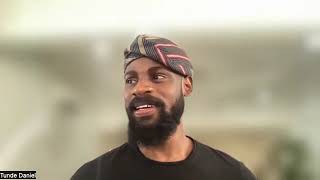
In this Founder Wisdom episode, host Charles Cormier interviews Tunde Daniel Onakoya, a Nigerian national chess master and founder of the nonprofit Chess in Slums Africa. Tunde shares his personal journey from growing up in the Lagos slum of Korodu and being out of school to discovering chess, which became a lifeline that opened doors to education, travel, and broader aspirations. He explains how Chess in Slums Africa uses chess as an accessible, low‑cost tool to provide education, mentorship, and technology to children living in extreme poverty, particularly in communities like Makoko, the world’s largest floating slum. The conversation covers the cognitive and social benefits of chess—improved memory, concentration, delayed gratification, confidence, and identity formation—and how these translate into better academic performance and life choices for the kids. Tunde describes the harsh realities of slum life: lack of clean water, nutrition, schooling, and the risk of children falling into crime or drug use. He frames poverty as a “birth lottery” and argues that privileged members of society have a responsibility to act as conduits for equitable opportunities. The interview also touches on the organization’s impact stories, its online presence (website, Twitter, Facebook, LinkedIn, Instagram), and future plans, including a promised chess match with the host. The episode blends personal narrative, advocacy, and practical information about the nonprofit’s mission and operations.
Chapters
Welcome to another Founder Wisdom podcast. We have a special guest with us today, Tunde Daniel Onakoya. He is founder at Chess and Slums Africa. Really cool organism because for those that, those that follow you, you know that I like chess. I am not good at it. I am an oscillating 800, 900, a thousand at my best. Think the highest of God is like a thousand 100 rating on chess.com Tunde on his end, he's a national champion, and he's rated 2, 400, something like that. So basically, it's fair to say that I, I don't, I don't even think he's 2.4 times better than me. Must be like 5 to 10 to 15 times better. And I would estimate my chances of winning against him at 0.002%. Um, by the way, today we're gonna cover the his company, his nonprofit Chess in slums Africa. But next time, we're gonna schedule a game so that you can see what I'm talking about here. I'm not kidding. Like, chess is, is more than guts. You know, I play speed chest, and I practice my gut decisions. I actually stopped, so I'm, I'm, I'd be quite rusty, which would be even sadder. But chest is very, very cerebral. It's about memorizing plays. And yeah, Tunde definitely has more of these mental maps in his brain than mine. So let's see how it goes next time. This podcast is brought to you by podfire.com if you want to start scale, be invited to podcast. That's my podcasting agency. If you want to meet cool folks like Tunday, talk business with them. Talk helping people talk chess. That is the way to do it. You can grow your network as well, have masterminds like I do. And yeah, let's hope that I keep touch with Tune Tunde here. I really think that we can make something cool here. And finally, podcasts. Yeah, Create leads and generate clients. They can even be used for that. Podbuyer.com Tunde, can you say a little hello? Tell us a bit more about yourself and Chest in Slum Africa.
Hi, Charles. Thank you so much for having me on the podcast. And I honestly don't think you're a bad player. You know, every master was once a beginner. Right. And if you really put, you know, dedicated effort to improving your return. Right. I, I, I've come to learn that people don't necessarily get better by playing chess, you know, obsessively. Right. You really don't learn much by Just playing, you know, repetitively. Right. You actually learn more by studying and understanding, you know, theory and, you know, basic principles. I think that, you know, it stays with your knowledge that you gain from studying, you know, stays with you. So, yes, I'm excited for a fun match and see how it goes. Again, thank you.
And for you,
I mean, there are people that will beat me hands down and 100 games probably won't be able to win one, you know, so chess really is in levels. I mean, there's Magnus Carlsen, the world champion, that is, you know, eons ahead of everyone else. So, again, my name is Tunde Nukoya. I'm a national master of chess in Nature Nigeria from lagos, Nigeria. I'm 28 years old and I'm the founder and convener of Chess in Slums Africa. So Chess and Slums Africa is a nonprofit organization that uses the game of chess as a tool to help children living in impoverished communities get access to education, mentorship, and technology. It was founded some five years ago and like, the general idea behind even using chess as a tool to stage and intervention in slum communities, you know, really does stem from my own personal story, because I grew up in Islam as well, you know, in a place in Lagos, Nigeria, called Korodu. And I was out of school for a number of years. But chess, you know, really did change my life. It gave me an opportunity to find myself. And now I like to think of it. I like to think about the work that I do with chess and slums as doing the same thing for other children like me, so they can also get, you know, a chance at education. Right. So chess is the means to those ends, not the end in itself, because we're not training them to become masters. I mean, some of them go on to be exceptionally talented, but the goal really is to give them a beginning education and help them be the best they can be.
I love chess. I started in primary school. I was my school champion, and yeah, pretty much stopped after that. But chess taught me a bunch of things. You know, it taught me to be competitive. It taught me me to think ahead. So planning it helps me memorize move. It helped me stayed poised under a lot of stress. And I've even restarted playing chess not long ago, like I told you with Chess.com and it was my favorite toilet sport nowadays, after a stressful day, I was just chilling on the toilet playing chest, and I played speed chess. And I. I thought it would improve my CEO decisions. It did, but I kind of gave up on all games. Nowadays, because I didn't like, like the, the gamification and the serotonin brought to my brain, I felt it was like an addiction. It was like, so fun. But I still think it has humongous mental benefits, especially for young kids. I would guess in the, in the slums, the life is hard. A chess game is somewhat affordable, right? You can. And they can entertain themselves, learn some moves, become great students of the game, and hopefully that. That consistency, that habit, that discipline of constantly practicing can waterfall into other aspects of their lives and potentially even bring them out of the slum. So what. What is the. The typical scenario at play here? And what skills can chess bring to these kids that they can transfer into their own lives and improve their lives?
All right, thank you. So, you know, chess is such an interesting game. I mean, it's a board game. And, you know, I remember, you know, a friend of mine used to say that or watching people play chess is like watching paints dry on the wall. You know, it isn't of much interest to people that do not play the game or do not understand the rules of the game. And a lot of people have this wrong perception that, oh, it's too complex, it's too complicated, it's too hard to learn, it's too cerebral, you know, but the truth is, anyone can learn to play chess, right? And it's very simple to learn. Yes, it is complex, and you can get complex, especially when you're getting to points where you need to master a lot of patterns, you know, start delving into, like, the much deeper intricacies of the game, right? But just like any learning endeavor, any endeavor in life, right, it does require a lot of hard work and commitment, right? So chess, you know, is. Is a highly cerebral game, right? But the beauty of it isn't just in a lot of those cognitive benefits that it has, right? I mean, there's empirical research like gross dendrites in on both sides of the brain. You know, it helps you really understand, you know, strategy in a very practical way, right? It helps you, you know, improve memory, concentration, focus. So a lot of the discipline that is learned, you know, in that process, you know, it stays with one. And for me personally, one of the most important things chess has really taught me, right, Is the, you know, understanding of delayed gratification, right? The power of focused thoughts. And I can see for a fact that, you know, I've learned more from chess than. Than I ever did, you know, from. For college or from school even. It has sort of become my philosophy of, you know, you Know, my life philosophy, even so, in the context of what we do at chess is slums. And for the children that live in this advantage, disadvantaged communities, you know, there's a different essence to it, right? And this is why, you know, it is important to me. And I like to say that it is just so much more than a game, right? It is an identity. And for the children that live in poverty, in extreme poverty, in the slums, that have no education, that have no food, that have become victims of their parents poverty, one thing that is a silent consequence of that poverty, of that situation is they will never get to know what they can become. They will never get to live out their potential. Most of us have had the privilege of education, of good parents, having basic amenities and infrastructure, but for millions of children in poverty, they will never get that. So the idea really was teaching them chess as a way to give them that sense of agency, that identity, right? That they can also be thinkers, that they can be intellectually inclined, right? That they can gain ability to do something. And that's the beauty of chess. When you work hard at it, you see results like in real time, right? So being able to just change the entire premise rather than, oh, children in poverty from Africa are suffering like this is a child, despite all all of this, now has the capacity to play chess and be good at it, right? Some of the kids that we've trained have become champions, you know, and a lot of that has, you know, even reflected in their academics, in their confidence, right? Because now they have their own identity, they have a skill, right, that gives them that sense of belonging, that they belong somewhere, right? And this is again, this is the sudden consequence of, of poverty. It goes beyond just not having money or being hungry. It's that there's no sense of self, there's no agency, right? You're defined by your circumstance only, and that's the only life you get to live. So being able to teach the kids chess has helped us to achieve that beyond even the cognitive benefits, because the cognitive benefits for a child, why their thoughts are still forming is incredible, right? They begin to learn how to think critically, they begin to learn how to think creatively, right? And that is education. Education is the capacity for thought. So teaching them chess is a way to give them education, but more importantly, it's a way to help them build the confidence that they need, you know, to face challenges, right? And all of this really does cumulate in helping them find a community and find a place in the world. And that is a global one. Because chess you know, is a global sport that is played and respected by people from all walks of life. So there are no disparities. It doesn't. Whether you're old or young, what matters is your ability. And, you know, teaching chess to children in those places, it reflects that and it gives them confidence that they need to triumph in other aspects of their lives.
Right. Tell me about A Day in the Life and Slums Edition. So what does A Day in the Life look like? Because obviously I've never lived there. You've. You've been there as a kid. So what would that look like?
Yeah, so the reality there and the, you know, in the ghetto, in the slums, is the very. The very lack of basic amenities. You know, clean water, sometimes, you know, out of school children, right? The millions. For example, in Nigeria, there are over 20 million children that are out of school who can afford to be in school, right? And, you know, it's a really sad situation, right, because, you know, Africa has the highest, you know, illiteracy rate. So. And the world is constantly evolving. So there's that, you know, high rate of children out of school that are getting involved in gangs, you know, and all these other vices, drugs, you know, criminal activities, right? Because there's basically no way for them to discern. They don't have an education, right. And there's very little guidance and mentorship, right? So it's a lot of that. A lot of vices, like a lot of hunger, right? There's no food. Sometimes children are terribly malnourished. So even their brains don't go through the usual, like, cognitive developments that it should. The nutrition they should get from food. You know, they miss out on all of those benefits, right? Because they were born into this disadvantaged situation in this community where, you know, there's very. There's a lack of resources, there's a lack of infrastructure, lack of basic amenities. And one of the slums we work in, for example, is Makoko, is the largest floating slum in the world. So in this place, people live on wooden stilts on black water. So the water looks really black, almost like sewage. A smelly. The defecates in there, but they bathe in there and they still drink water from there, right? So it's a lot of health, you know, hazards even, right? But they don't know any better. So most of the residents are fishermen. It's a fishing village where they paddle on kenners and they live right on. On the lagoon there, across the lagoon, on water, right? So it's a very, very Sad, sad situation, right? Because, you know, resources are very limited and you know, a lot of people are missing out on that. So it's extre. In a way that is almost unimaginable, right? So this is like the situation, this is the circumstance, right? And this is why, you know, initiatives like this are important, right? So we don't just let the single story of the slums define the people that live there, right? Islam is just a place. It doesn't define the people that live there. The people that live there are the real treasure, it's the real capital. Right. And the surrounding circumstances can change if you can empower those people and give them the right access.
Wow. If I would drink that water, I would probably die. That's a reality. Yeah. First few weeks you, you mentioned victim of your parents poverty. I found that really intriguing. Can you tell me more about that?
Right, so think about the birth lottery, the ovarian lottery, right? You're born randomly into, you know, you don't get to decide where you're born. You're either born white or black, or you're born in Europe, you're born in Africa, whatever, right? You don't get to choose that. It just happens and you find yourself in this place. So the sad thing is, you know, a lot of people will not get to win that ovarian lottery. So they get born into poverty, into extreme poverty. And I think this really speaks to our ability to be more empathetic as a society, right? Because for most of us, you know, we've been shielded by that privilege that we were born into, maybe a wealthy family or a family that can at least give you the very basic things, right? There are millions of other people that were born into a different scenario, circumstance altogether because they didn't win that lottery of birth, right? So it is important that, you know, at the intersection of our own privilege and another person's oppression, right? Another person's disadvantage, that is where we find real opportunities to pay it forward for people like that, right? So I think the onus is in society, the onus is on the privileged ones, right? To become conduits, right? And be able to give, especially the children that have lost, you know, the lottery of birth to be able to give them some equitable, you know, opportunities, right? We should be able to create an equitable future that includes all of them too, right? Because like I said, when a child, you know, loses the, that lottery, that ovarian lottery, right? They're born into a situation that they cannot change. To be so hard to break out of that cycle, imagine you're born to two illiterate parents in a village, you know, somewhere deep, deep, deep, deep, where there's no Internet, where there's no, there are no schools, there's no clean water, you know, you have to walk several miles to the farm and work hard in the sun. And that is the only reality you'd ever know because we are products of our immediate environment, right? So how do you even expect that child to have dreams beyond those confines? It is impossible. You can't say, oh, believe in your dreams, because the dreams are confined to the reality that they know in that place. So they can only aspire to maybe be a farmer, a local farmer, whatever it is that they've seen. So the only way to really expand, you know, their imagination is to show them a world that is much bigger than that, right? To help them see that, oh, this is the potential you have. And it can be bigger than this place, right? And you must understand that sometimes, you know, the place where you're born is not where you belong, right? You belong where you think you belong. So I think all of these things I, I feel deeply, is our responsibility as a society, right, to bridge those gaps. And I know this well because I was also born into a situation like that. But chess gave me a lifeline. The first time I ever left my community was because we went for a tournament. That was also the first time I ever saw a computer. You know, that was the first time I saw a lot of things. I saw high rise buildings and that helped me aspire to be more, right? So despite losing the lottery of birth and not being born with a silver spoon, you know, I could have greater aspirations because, you know, I had seen that, oh, there was success that was better than this and I could aspire to those levels of success even, right? So this is my entire understanding, right, of, you know, children being born into a situation that they can change and they become victims of that situation, right? So when they become victims of that situation, which is their parents poverty, the only script they get to act out is that script that life has given them, you know, true birth. And, you know, it takes a lot to come out of that, you know, without help, right?
Let's book around two, we'll play chess that time because I have way more questions for you, like delay gratifications, like how can we bring Internet to Africa? And how. And what is the typical scenario to a kid in this slum? Does he turn to crime and so forth. So I have a bunch of questions additional questions for you. Until then, where can we find out more about you?
Tunde oh, there's a lot just Google Tunde on a choir or Chess and Slums, there's a lot of content. But for Chess and Slums as an organization, we have a website, Trusting Storms africa.com we're on Twitter, we are on Facebook, we're on LinkedIn, we're on Instagram as well. Me personally, I spend a lot of time sharing my thoughts on Twitter. So you can follow me on Twitter, underscore od Instagram, tune in choir. There are a lot of videos, you know, especially about our impact stories, the children that you know, we've helped find a place in the world again just using Chess so you can read a lot of those stories and we really hope it does give people something new to believe in.
I am Charles Cormier, host of founder wisdompodcast. Com. That was Tundate Daniel.
More from Charles


Founder Wisdom: the audiobook, version 2 (5 hours of stories from founders and CEOs)

8 CEO Questions I Love Asking: the audiobook (64 founders answer, in their own words)





