CPA firms, nomadism and ChatGPT with Martin Popiel, CPA
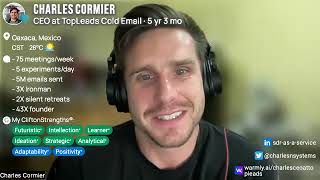
In this Founder Wisdom podcast episode, host Charles Cormier interviews Martin Popiel, a CPA‑turned entrepreneur who founded Modern CPA Firm, a digital‑marketing agency dedicated to accounting practices. Martin shares his personal journey from studying finance, working at Deloitte, and becoming a CPA to launching a niche agency that helps CPAs modernize their branding, lead generation, and pricing. He discusses his digital‑nomad lifestyle, currently based in Tulum, and how location freedom fuels his entrepreneurial mindset. The conversation delves into the CPA industry’s typical demographics (average age ~55), resistance to technology, and the challenges of prospecting slow‑adopting firms. Martin explains the agency’s hybrid prospecting model—leveraging peer‑to‑peer referrals, inbound content, and targeted outbound (LinkedIn, cold email) to attract higher‑quality clients and justify retainer fees of $2‑4K per month with ROI timelines of 3‑4 months. They explore the impact of ChatGPT‑4 on SEO, copywriting, and personalization, emphasizing that AI enables scale but true differentiation will come from hyper‑targeted, personal outreach. Martin also outlines a forthcoming SaaS platform that functions as a marketplace for accountants, offering staffing solutions, a knowledge base, and a community hub to streamline growth. Looking ahead, he aims to productize agency services for predictable outcomes. The episode wraps with broader reflections on entrepreneurship: staying open to diverse mentorship, constantly expanding one’s comfort zone, unconventional views on home ownership, fractional property ownership, and the potential for ultra‑affordable housing driven by AI and robotics. Finally, Martin offers a cautious take on universal basic income, noting his conservative fiscal stance and the need to understand funding sources.
Chapters
Everyone, welcome to another founder wisdom pod. Today with us we have Martin Popiel. He's a CPA and founder at Modern CPA firm. Martin, welcome to the pod. Can you introduce yourself and tell us a bit more about modern CPA firm?
Appreciate for having me on, Charles. So, yeah, Martin, I'm a cpa. So a few years ago I started Modern CPA firm which is basically a digital marketing agency specifically for accounting firms. So I left the industry about two years ago and now I've fully committed to servicing firm owners.
And you're a nomad. So where are you based at? You're in Tulum, right?
Yes, right now. I'm currently in Tulum.
Since how long have you been there? And do you plan on committing to the digital nomad journey and keep on traveling?
Yeah, I mean that was like one of the main motives to get into the entrepreneurial space is to have that kind of like freedom to travel. So I. Last year I was living in Thailand for a few months. This year I got to Mexico in January, so I'm going to stay here till May. I'm originally from Canada, so I'm just trying to avoid the winter weather.
Every year, yeah, I get more vitamin D, which is a beautiful solution. Vitamin D is like one of these vitamins that are very much underrated in asthma and it helps with testosterone and so forth. And, and I think that people that are not like biohacking in this day and age, especially when you play in the entrepreneur world that is very competitive, I think you, you kind of missing out. So that's, that's such an underrated factor. And yeah, obviously freezing your ass off every day. I mean, there's benefits to the cold, but yeah, not having the sun is kind of depressing. Especially when the sun goes down at five, not sure or four, you know, like you're not even done with your work day and everything gets dark. So fully understand you on that. What's your background? You've been a dual sport athlete as you mentioned. Like what's, where did you get there?
Yeah, so it was an interesting journey. So yeah, in university I played basketball and football and I was kind of, I was always intrigued by entrepreneurship, but there wasn't, you know, like a conventional route, especially when you go to university. So I studied finance. Then I ended up working at Deloitte and in the audit department and I got my cpa. Part of it was, you know, to just make sure I had like some sort of safety net, you know, coming out of university. But after I got my designation after A few years, you know, I was kind of evaluating my options. Typically after, you know, like the three, four year mark, you usually either go into industry or you, you know, you gun it for partner. But none of the options were really sitting well with me. And I think like there was that ick, you know, that, that just always told me, you know, that voice to go for it. And especially, you know, at this age, it's like, you know, there's no better time to really kind of take that chance. So yeah, that's basically how I was kind of. I've also been intrigued with like the online space, you know, with marketing. And I identified there was like a huge gap between, you know, accountants and how their minds work and how they operate and you know, their perception of marketing and, you know, what's really out there. So that's, that's where I saw the opportunity and I just went for it.
So I saw some keywords of years when it comes to describing this CPAs or this industry in particular. Old school mentality, lack of innovation, inefficient inefficiency, long hours and so forth. So I don't often target CPAs on my side, but I know that they are somewhat like this. Yesterday I read a post about someone mentioning that software industry is going to be the first industry to be drastically affected by AI. Why? Because we are a bunch of early adopters and we like to automate stuff. Right? Well, CPAs, accountants, lawyers, they are, they, they move slower so they will use more employees. They're not like that hot with technologies and so forth. For these reasons, I don't prospect these folks too much, although they're very much interesting and I'm always interested on the number side of things and speaking with CPAs like you. So with that being said, modern CPA firm. What. How are you guys prospecting these folks knowing that they're mostly slow adopters, they're slow to kind of make decisions. And do these folks make up good clients? Do they stay with you guys for a while once you've hooked them up?
Yeah, yeah. So how would I would describe CPAs? For the most part, first of all, the average CPA, and don't quote me on this, but I think the average age is 55. So you can tell obviously like how that's going to translate into their behavior. You know, a lot of times like you'll hear like, you know, I've been doing it this way for 20, 30 years and you know, why would I change now? And that type of thing. But a lot of Times, what I've noticed is that they're problem aware, but not necessarily solution aware. And I think especially when it comes to the marketing space, they could be quite skeptical. So they can be, you know, and I could, I could speak to that too. Like I was, I was, you know, although I was interested in it, I was pretty skeptical about marketing too. Like, especially when you take your, your university classes and you're learning about, you know, the four P's and everything like that, you're like, okay, you know, this isn't really that useful. But when you really start to kind of connect the dots and being like, okay, so what pain points are you experiencing right now? And how can, you know, digital marketing resolve these types of things? That's where I kind of started to understand, especially, you know, being a CPA and them trusting CPAs more so, you know, your average kind of marketer reaching out. Like, I'm sure every business owner has their inbox flooded with opportunities, but when you're hearing it from another CPA and they really understand your perspective and what you're going through, I think that's what really resonates with them. And I feel like that has much more of an impact when you're prospecting. So that, that's been super helpful for us. And then, you know, getting to again, like being able to connect the dots and understand what their pain points are, what are they experiencing and how we're able to overcome those with the solutions that we offer.
Your main offering is branding CPAs. I do think some of them understand branding to look crisp, professional and so forth. So tell us about the initial pain points of a CPA and how do you make them understand that branding is important and that branding can convert into dollars whether it takes two or two months or two years.
Yeah. So when it comes to branding, I think, you know, the, the old way of branding is, is almost like reputation and the industry. Same with, you know, lawyers and doctors and dentists historically has been referral based. So I think that's where they really buy into the branding is okay, you know, we keep our reputation, we offer high quality services for, you know, our referral partners, things like that. But I started to introduce the idea of more of an online brand and the pain points that they commonly experience. It usually falls in one or two buckets. It's either low quality clients or staffing. And the reason because they have low quality clients is because they're referral based. So they're doing, you know, their taxes for their cousin and their, you know, cousin's aunt's brother, you know, and now they're giving discounts, which is more of a burden on the staff. Now they're overworked. Now they don't have enough income to pay their staff. So you can kind of see how it trickles down. So that's where we promote and encourage to build a online pipeline, to build a pipeline of high quality leads. They'll pay more for your time and as a result, you know, you get to pay more of your staff now. You don't have to take on as many clients. So again, it's more of like a strategy, high level approach rather than just being like, okay, we'll get you a high quantity of leads, we'll stuff your inbox with hundreds of leads. There is no, in reality, there is no accounts that really struggle with leads. It's more about getting those, you know, the ones that fit their client profile from their target industry geography, things like that.
What's the price elasticity in the CPA niche and how do you make them digest, say like 5k per month? Like, how hard is it for you to justify these prices?
Yeah, like, I think that takes some time. But it's funny because you kind of use the same strategies to them as you encourage them to use with their clients. Right. If I'm like, okay, if you're serving every industry under the sun and if you're, you know, doing every service from tax prep to audit to bookkeeping to everything, now you're stretched thin, you know, now you're offering a variety of services to a variety of industries versus focusing on one industry, positioning yourself as an expert within that industry. And now you're able to justify higher pricing because you're offering custom solutions to that very specific audience the same way we are. I could have done a marketing agency that's generic. And when you're first starting out, it's tough to turn down clients from, let's say, other industries. But we really believed in the long term vision of we really want to figure out what is the best way to service accountants. And then that way in the long run, you know, it's able to justify pricing because if, you know, we're able to get them, let's say to your example, like the 5K per month, if we're able to get you three clients at 5K per month, then it justifies that, you know, 5K retainer for us. So it's funny how that kind of works between, you know, how our approach works and then how we encourage them to do the same and it's kind
of the nature of things. And your, your price point typically, how much do you charge and how long do you mention that it takes them to get their return on investment back? Which is always a challenge as an agency.
Yeah, that's definitely the challenge. And I think especially those CPAs being numbers focused, you know, they don't really act on emotion, so you really have to justify that. But again, I think our experiences as CPAs were able to convey that. So I would say, you know, our price points depends on the packages. We offer a variety of packages, but usually between 2 to 4k a month and they usually start to see results like we maybe three, four months down the line depending on the strategies. Like, as you probably know, you know, SEO is a much different, you know, horizon rather than, you know, cold email or LinkedIn outbound or something like that. So it really depends. But we really focus on that to make sure that, you know, they're getting their roi, because I know they'll be checking the numbers on us eventually.
Have you thought of offering them cold outreach via LinkedIn or via email?
Yeah, yeah. So that's, yeah, that's basically. So we do a blend of inbound. I'm a big believer in inbound long term, but you know, just building that pipeline, you get higher quality leads, it's an easier close rate, things like that. But I think, you know, as you mentioned, the challenge with an agency is you need to show results as soon as possible. Because that's just the nature of it, right? Like, you know, smooth onboarding process, making sure that, you know, they're seeing their return on investment. So we do a blend of both is basically we'll start out doing some outbound campaigns, you know, get them some early wins, but then in the long run we want to make sure that they have a sustainable strategy.
How will the recent ChatGPT4 advancement will affect SEO, cold email and LinkedIn outreach and US agency owners anytime soon?
That's a good question. And I know you're a big AI guy, so I know you probably have a good answer to this, but I think like, I think being more personal like is obviously chatgpt. The biggest selling point is it's super scalable, right? Like you don't need as many copywriters. You know, you could have all the scripts you want, all the content you want. So now I think it's more about being hyper targeted and really hitting the pain points and being as personal as possible. Like we've all gotten LinkedIn messages that, you know, hey, you know, I saw we have mutual connections, blah, blah, blah, or you know, hey, I'm a cpa, I know that you're struggling with staffing or I know you're overworked. I know this is what's going on. So I think like ChatGPT definitely helps with, you know, generating that type of content faster, whether, whether it is scripts or you know, blog content, social content, whatever it is. But I think the way to stand out will be more being more personal now and, and being the hyper targeted, kind of like the niche marketing that we spoke on earlier.
You're working on the SaaS. Tell us a bit more about it and how it will fix these pain points.
Yeah, so basically the SaaS, it's got a variety of solutions, but one of the main things is it offers a marketplace for accountants. So it gives the opportunity for accountants to, you know, almost like an Amazon where they can kind of shop around and you know, look for different marketing solutions for them. Staffing solutions is obviously a big one. So kind of connecting, you know, different staffing providers to different firm owners. There's also other elements that we include. A knowledge base that can help more of the earlier on firm owners to, you know, how to operate more effectively, you know, how to, how to build an appealing brand, things like that. And then lastly community so they can kind of base, they can kind of network and understand, you know, maybe some of the more experienced firm owners can share their, you know, experiences, trials and tribulations, things like that. So it's basically a growth hub for accounting firms or I should say for firm owners to, to scale their firm.
A funny thing just happened. I just remember that I ordered pizza yesterday and I left it out, out of the bag. I just wanted to share that I felt the need to share that you
left it out of the bag?
What do you mean? I ordered it from Rapine. You probably use it for as a nomad as well. And I just remembered that. So it's bread. It's like a boulangerie. And yet I forgot the pizza in there, so I'm not sure if it'll still be good. Fun fact when you come to Oaxaca. Yeah, there's this nice place called Bulang related to, to a last question here. Probably have two more. But do you think you'll have Deloitte as clients anytime soon?
That's the top dog. So I, I don't think so. But you know, we never say never.
They have nice branding though.
Yeah, I think I saw, I don't know if it was like A polar study, but they have, I think, the most powerful finance brand in the world, which I definitely believe. So I'm definitely, you know, thankful to have experience there and, you know, be part of that.
What turn do you see yourself or your businesses taking? You've taken the SaaS turn. So that's also a turn that I'll be taking. My agency, we're becoming more and more of a PwC slash a Deloitte, which is a consulting firm, and fixing my client's problem, for example, their product offering. Right. So telling them, hey, maybe you should focus on, on this niche, but also your product. Can you try to improve that, that or offer something better? Alex or Mozzie style. What direction do you see you and your businesses taking the next three years?
That's an interesting question. I think being more productized, like having more standardized solutions. So I think, you know, one of the challenges early on as an agency owner is that, you know, you're trying to, to you're trying to cater to all different types of clients needs and everything. You're testing out different strategies like we touched on, you know, with cold email and different tools and things like that. So in terms of, you know, the growth hub that we're building is getting a more productized, pro proven process where again, it's like the same idea of like you order something on Amazon, you know what to expect, you know, when you're going through the product description, you know, you know, you know, the, the policies, everything that comes along with it. So that would be my goal is right now we're, you know, kind of like we're always reiterating, there's always challenges with that. But I think getting it more productized and standardized would be the ultimate goal for myself.
Love it. If you would have to send a message to younger folks like you and I had to start somewhere and start their own business and decided not to follow the common 9 to 5 path. What would it be?
I think, I think be open. Like, I think it takes a certain perspective to, you know, pursue the entrepreneurship route. And I think especially in the accounting industry, I think they, you know, everyone knows accounts like they're very conservative by the book. And I think just having open ears and really exploring, taking, you know, having that spare time to read a few extra books, you know, listen to a few extra podcasts to really broaden your perspective. And you know, I think like in part of that too, like as I was traveling, that's what became more of my value is I got more perspectives of different areas of the world. And then that's why it became one of my top priorities. And I think in the accounting industry, that's not necessarily possible. So you really begin to understand, you know, what, what are your guiding principles, what kind of direction you want your life to go to. So definitely be open, definitely explore. And you know, one other thing I would recommend is like, don't get mentors from the exact same space as you. I think that's one of the biggest things is if you, you know, you go to a big firm, you're going to get matched up with a mentor that took the exact same path and they're going to tell you to do the exact same things versus getting a mentor or someone outside of the space. You know, now it's a complete different angle. So. So I think that's like one of the, one of the things that I learned too is, you know, making sure that you're stepping out of your comfort zone in that sense.
Yeah, different perspectives. And for me personally, the digital nomad life is just one tools that I have in my arsenal to constantly think differently. You know, your environment's quite important, and when you change environments frequently enough and you get, you go in completely different environments, your brain adapts. And if there's one skill that humans need in this AI age is the capacity to adapt and constantly get out of your comfort zone and learn out new things and cultures. What do you think about this?
Definitely, I always say this one thing. I believe a comfort zone is always dynamic. It's either shrinking or expanding. So I always try to make myself, you know, if I'm staying in the same situation for months turns into years, your comfort zone begins to shrink down much more. So for me personally, I always try to throw myself in different types of situations. You know, throw yourself, go to another country for a few months, you know, learn new skills, something. So it's always expanding because otherwise, you know, like, like your confidence and, and you, you don't believe in your capabilities when you're staying in the same spot for a long time. So that's one thing that I really prioritize is get out of the comfort zone, throw yourself in the fire, you know, throw yourself in the deep end. All the different types of sayings, but I'm a big believer in that.
As a finance guy, do you believe that buying a house is a good investment? Well, I mean, you're more than a finance guy, you're also an entrepreneur. So what do you think about that?
You know, I'm gonna have a hot take on this One, but I think, you know, I'm from Toronto and the housing market there is crazy. And I think it's just an ideology, like a western ideology to own a house. You know, I got something on my own and I understand that, you know, like it's an asset and whatever, but I think it kind of comes with what I was saying earlier, broadening your perspective. Like there's other ways to, you know, other assets to get. There's obviously stocks, you know, crypto businesses, buying other businesses, things like that. And I think, you know, even when you understand the rest of the world, like, you're like, I know. I think in Switzerland, for example, I think there's only, again, don't quote me on this, but I think there's only like 34% home ownership. Right. And they have a complete different approach and culture to it, rather than the American dream of I need a house, you know, and this is my true calling and something like that. So I know that's, that's a bit of a hot take, but I'm not buying into the whole you need a, you need a house at least, you know, like as one of your first options.
Yeah, if I would get a house, it would be on a life quality basis and the ROI would mostly be from me having better energy and having all my tools in one place, rather than being a financial tools because, yes, as entrepreneurs, we have better options. For Switzerland, the price of ownership is extremely high. I remember renting a very basic normal Airbnb for 300 bucks a night and normal apartment when I was on a connection flight there. So, yeah, definitely high prices and your hot take. I agree with it. We're in the same boat. I would add two other things that. And these are even more controversial, but since we're at it, let's do it. The first one is that everybody is going to deploy a very interesting platform for nomads, which includes fractional ownership. A guy actually sent me a link recently. I think he's in Tulum. I might connect you together. And it was, yeah, fractional ownership. Right. I replied to him that it was interesting. I wasn't sure, like if it made sense, for example, to buy 10% of a property and stay there like part time of the year. But there will be like more of these innovative solutions. And three, the most controversial one is that I believe that $500 home is going to exist in less than 10 years from now, not only because of the advances in AI, but when you think about it, you can dig a hole in the ground and you can have a machine that truth like just melting the ground can create solid walls and so forth and can be a bot. And that, that is, it may seems, may seem far fetched but I do believe that's going to be a thing because one of the only fundamental Maslow pyramid need that we haven't cracked it. Which is one of the most important, which is housing hasn't been cracked yet. It's still very much not affordable to buy a house. The whole banking industry was also built on that. So yes, a lot of resistance. A lot of actors in that industry like realtors, real estate investors. So we're going to see lots of resistance but ultimately the crazy ones are going to crack it. Just like Elon cracked the electric car. He didn't made it affordable. Right. But still he had tons of resistance from all these oil powerhouses that were resisting the change. But ultimately there's going to be the, the $500 house in less than. I mean I said 10 years just to be a bit more conservative. I'm going to say 15. You can quote me on that.
Yeah, I think, I mean they still have those like, I don't know where are they like the, the box houses or something where they're like fully mobile and they're very cheap and you know, eco friendly things like that.
So like a tent.
Sure. They're gonna not, not a temp, but it's almost like a container and you build like a house in a container or something along those lines.
Yeah. So you know, very expensive, you know, because you can. So for, I mean I'm not sure if you're referring to the full metal containers, but these cost like minimum 10,000 bucks and for the same price you can build something like that, the walls and, and all of that to some very similar price. The, the equation is. Yeah, everyone's overcharging. Right. And you're from Toronto. I'm from Quebec. Quebec main, the, the main industry is real estate. If you want to make money in Quebec, it's real estate, it's construction. That's if you scan the Quebec list of millionaires that you'll see like a good 80% of that being being made on that and humans just overcharge. We're seeing Boston Dynamics develop quite quick. I yeah, robots will do the job and then the cost of energy will go to zero. So basically having a bot build your house will cost almost zero. Resources will be fetched by bots and if these bots cost almost zero while just buying the their hardware, then that, that is equal to a revolution that is equal to a very cheap house. Then the last missing piece of that puzzle is government selling the terrains. Right? So they, they still try, they still make an awful lot of money off that, plus on taxes. And you will see government try to, to fight for that. But governments are also losing powers more and more. They're, they're realizing that they're not now becoming just like businesses and they're competing against businesses ultimately. So yeah, a couple of controversial points here.
Definitely, definitely. Like, I think overall, like, you know, like, because we're entrepreneurs, I feel like it really suits, you know, our lifestyle of having the flexibility. Like, you know, I don't want to be doing maintenance on the house. Like, I like telling my landlord that, you know, hey, I need this fixed and then, you know, I'll just come back the next day or something like that. And just even having the freedom to just leave, you know, give it 60 days notice and you know, go live in Mexico or wherever you'd like. So yeah, definitely, definitely. I wouldn't say that's a mainstream opinion, but I'm definitely not buying into the, you know, homeownership is mandatory type of narrative nowadays.
I met a lot into university basal Basic income Sam Altman recently, so he's the CEO, founder of OpenAI. Recently released that he's working on Warp Coin. I'm going to have these folks on my podcast as well and basically they're trying to identify humans identity, right? Because once you get AGI, you can get various fake identities. So it's going to be like biometrics, right. And since bots are not going to catch up as quick as online AGI while it's still physical. Right. It's me, so I can be authentic. Right. And why they're doing that is that they plan to deploy AGI pretty soon and that would create so much resources for the world that yeah, they could basically distribute free cash. One quick question for you. If there would be AGI, you know, how socialist Canada is and how much Covid shoots. We got free Covid money during, during the COVID would you take university basal basic Income if it exists?
I mean, like, like personally, sure. I don't know, like I, I, I'm not educated enough on this topic, but my initial instinct is if it is like where is, where is it coming from? Is it going to be from a taxpayer's pocket? You know, things like that. Like I like when it comes to economic policies, like I would say I'm pretty conservative. Like I would rather, you know, just, you know, pay as minimum minimal taxes as possible. But yeah, like, I would just kind of have to understand more and get more sense behind the numbers of where that universal basic income is coming from. Sure.
It's a nice problem to send to your brain and just to try to understand what would happen once UBI exists. So yeah. Martin, thank you so much for showing up today. Where can people find out more about you online?
You can follow me on LinkedIn or Twitter. I believe it's just Martin popiel. Or visit moderncpfirm.com.
More from Charles


Founder Wisdom: the audiobook, version 2 (5 hours of stories from founders and CEOs)

8 CEO Questions I Love Asking: the audiobook (64 founders answer, in their own words)





