David Lieder - Owner of Lieder's
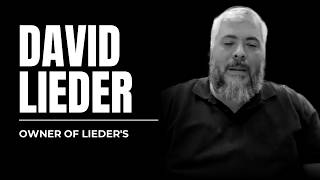
In this Founder Wisdom episode, host Charles Cormier interviews David Lieder, owner of Lieder's, a Los Angeles deli that specializes in Shabbat takeout and catering. David recounts growing up in a large, food‑centric family as the son of a rabbi, where early kitchen responsibilities taught him systems thinking and endurance. He describes how he turned a niche idea into a business by creating the ShabbosFoodLA brand, building a simple website, and leveraging SEO to attract a local and tourist Jewish community. The operation originally ran only Thursday and Friday, serving one customer at a time, but expanded to online ordering, small‑scale retail, and larger catering orders. David explains how the takeout‑only model insulated the business during COVID, yet the pandemic coincided with Passover, forcing a rapid shift from bulk orders to thousands of small, individually packaged meals—a logistical nightmare he managed through pre‑built systems. He reflects on the rise of antisemitism after the 2023 Israel‑Hamas conflict, noting how food serves as a bridge in the community. Looking ahead, David plans to add daily service (Sunday‑Wednesday), overhaul his operating system, and eventually open multiple locations worldwide, integrating AI tools and hiring younger talent. He also shares personal coping strategies, moving from reliance on energy drinks to healthier habits, and the challenges of balancing comfort‑food menu items with personal health. The conversation blends personal anecdotes, practical restaurant advice, and broader reflections on community, technology, and growth.
Chapters
Welcome to another Founder Wisdom pod. We have David Leder with us today. He's the owner at Leder's since 17 years. Maybe I'm not pronouncing that right, by the way, but it's a delicious restaurant, or delicious looking. It's my type of food. It's a deli. I think delis are like my favorite restaurants from all the types of foods. Deli, probably Yeah, Mediterranean cuisine, which is also daily, by the way, and then Italian. So eager to discuss about the restaurant business because I don't have a lot of founders in that side of the business on a daily basis. You're based in LA, right, David? Tell us a bit more about yourself and your background.
Yeah, so far LA. LA is where I built the business here, uh, 17 years so far and counting. Um, I grew up, I grew up around food. I grew up, uh, one of 14 children. And I think already by age 10, I was in the kitchen cooking, helping out to feed 14 kids, 3 meals a day, and then Shabbats with guests. You know, we're about 50 people every Shabbat, you know, Friday night dinner gatherings and Saturday lunch gatherings for Shabbat. It was an operation, to say the least. Living through that, growing up in that, and And I think that's where I learned my first systems.
14 kids, that makes your 4 and my 1 look very small in numbers. So how was that like growing up around so many siblings? Was it chaos? Was it beautiful? Was it something in between?
All of the above, but there was a lot of beauty. And I remember the best parts of it because that kind of gave us the tools to the endurance to kind of be entrepreneurial. I think it's very entrepreneurial, the same similar qualities, you know, growing up in a bit of chaos. There's going to be chaos no matter, no matter what in a large family. So I think that, uh, those, those are kind of the tools that I picked up from my childhood.
So your mom was CEO, like what was your specific role in the, the kitchen vs your siblings? How was that? Give me the structural org.
Well, it depends. If I misbehaved, I was the dishwasher. But if I was good, which I usually— I was one of the ones that was more obedient. I love to be around the kitchen. And so I was mostly— we were all cooks. We all learned how to cook. My mother used to divide the Shabbat menu of like 15 items. One per person pretty much, and she would sit back and take care of other stuff while everyone else chipped in in the kitchen, kind of like a group, you know, coming together every weekend to cook.
So how does an obedient kid become an entrepreneur? I was a little rebel, and I attribute me being a founder, like, probably 90% to that reason, right? Like, I was a little fucker, never listening to pretty much anyone. Um, How does an obedient kid become an entrepreneur?
You know, obedience is relative, number one. You know, I was more of the, you know, probably under the radar.
System hacker, hacking the system just for the reward.
Yeah, I wasn't the loudest. So, you know, it's what's underneath is what matters. But, you know, I love being around the kitchen. I would always help and I would take on more responsibilities than I should have or you know, pick up the slack for my siblings sometimes. I was obedient for the most part at home, and then, you know, I had to be, you know. I was also, you know, being on the outside, I was also like a rabbi's son, you know. My father's a rabbi, so I had to be a certain person on the outside as well. That helped shape me.
Tell me about your dad. How's it to grow up around a rabbi?
Yeah, it was, it's a whole experience, you know, being a child of a public figure comes with its pros and cons. And, you know, a lot of, you know, I look back at, you know, incredible memories and a house that was always full and busy and, you know, having guests every weekend for Shabbat dinners. You know, it kind of kept us in a certain lane, you know, with guardrails that you're, you know, you're representing the rabbi as one of his children, that I need to step up when I need to step up. I need to be above board and, you know, make— behave for the most part as a child and amongst my peers.
So spirituality was always like a the base layer of the iceberg under you, I would guess.
Yeah, it was definitely those elements were always around us, you know. He, he was more in education than in, uh, you know, leading a congregation. His role as a rabbi was more in education in the schools.
And when did you first launch the business? Was it the family business at first? Uh, because it's really fucking hard to launch a restaurant and to keep it alive. So yeah, I'm curious about how you launched it, how did it go at first, when did you start seeing that this would scale and that this was getting public recognition, and how you survived in the tough moments? COVID, obviously.
Yeah, yeah. So we're— first of all, I would like to say we're not a traditional restaurant, uh, you know, and that's kind of been my Achilles heel, like always the yin and yang of what can I do and what I should, you know, go against the grain, be different. I, I always felt I was different. I will never fit fit or conform to a traditional restaurant style because the foundation of my business is, is a business, a restaurant that's only open 2 days a week for Shabbat, which is Thursday and Friday, a specific niche. And, and I struggled so much with trying to take advantage of mainstream tools that are out there for real restaurants, right? I mean, restaurants that are traditional open 7 days or have high weekend traffic and things like that, I can never find support outside the traditional way to help me build my business in the form of tools. So, uh, having a 2-day-a-week business, it started very, very small with one customer. It started as a passion, you know. I always knew I wanted to be in food, but when I started, I started before I moved to LA, in Florida, a little bit as a student. I was like private chefing on the side And then I realized what it takes, and then I realized the commitment. I realized the late nights. I realized the culture in the kitchen. You know, there's a lot of things there that I did not see myself being able to, you know, once I settled down, have a family, build a family, and be able to operate a food business like that. I didn't see it coming together as a possibility. So when I got married and settled down in LA, I tried to do other things for 2 years. I went into finance, I went into skincare. I managed a skincare company, um, and then it started calling me back in different ways. And then I started moonlighting again, you know. I needed extra income. I just had my first child, and, uh, it needed— I needed more income. And it forced me to attract, uh, ideas from other people who knew that I had a background in food and when I was a student and they said, hey, come cook for us, come cook at my school, like, you know, I started cooking at night for like a vocational school. And then when we moved, our local rabbi said, oh, I know you are in food, why don't you help us sell us some food every Shabbat, every week. And then it clicked for me. It was a dream of mine to have some sort of food establishment. And Shabbat is something I feel very connected to. My childhood memories are very much related and connected to the Shabbat large table growing up with tons of people. So being— start to form this vision of, you know, I want to offer and go into this niche of Shabbat takeout.
That's incredible. Um, most people would be like, yeah, 5 days a week you're chilling and 2 days of the week you're like, it's intense, but I'm pretty sure you're not like twisting your fingers like the, the 5 days before the 2 days, right? What are you doing before like the actual D-Day, and is it still as chaotic as day 1?
Yeah, that's, that's a very interesting question. I was thinking about that recently. You know, I used to get the comment, especially in the beginning, uh, you know, what do I do the rest of the week? Your, your business is only 2 days a week, Thursday and Friday. Even when it started was always Thursday and Friday. But when I had one customer— started with one customer, that was the only way it could start. Get one customer first and then you have— and build on that. So it didn't require more work than showing up Thursday. I would go to the restaurant supply place, buy ingredients Thursday morning, go to my kitchen, prepare Friday, finish the touch-ups and deliver it. That was it. It was just me. So that's People used to ask me, and I used to joke, I sit on the beach 5 days a week. I said, I sit on the beach, and you know, this is LA, we have beaches, and as a joke. But some of it was true in the beginning because the beginning I literally had nothing to do and I was struggling. I didn't have enough income, one customer, and then I had to make a decision. Ultimately, it took me a few months, it took me a while to basically go all in and say, this is it. There's no like maybe or dabbling. Trying it out. I have to make a decision to— nothing else is an option. This is it, and I gotta put my 100% effort and work every single day to build this business.
Interesting. So what do you do these 5 days? Finance, operations, recruiting, sales? Give me the full picture.
Um, well, back then it was— I was very young and, you know, trying to make ends meet. So it started— I used before I went into food, I would do anything. I was hustling to do anything to make some money, to bring home money. We didn't have money. So I learned, I taught myself how to build websites early during my— before. This is with Joomla, you know, Magento back then. So I just aged myself. But I got the book, you know, How to Build Websites for Dummies and learned a bit of HTML, basic, very basic, not even more than that. And, uh, found some people I pitched it to, local people in my community who needed a personal website. So when I started my business, I built my website. That's what started my first step. Let me build a website for my business. And since I knew how to, I did it. And then I realized that, uh, what should I call my business name? I need a name. And then I thought— I was learning SEO back then. I got the book SEO for Dummies as well. So I decided, you know what, let me pick a name that is exactly what I do. So I, I picked a name called ShabbosFoodLA. That's exactly what we do. Dot com. And I got that URL, GoDaddy, and I was like, I'm gonna rank very well for Shabbat food if I— my name is Shabbat And that's what happened. So I was building slowly, slowly traction online, but back then, people— it's a very localized business, and people who were starting to become interested, you know, we kind of had to teach people what we do and that you can buy food for Shabbat. It wasn't a common practice at that time. Now it is. Now we kind of trained You know, build it, they will come. We've kind of trained the community that it's better and easier and all around the best thing to do is to buy ready-made food for Shabbat so you don't have to spend the whole Friday in the kitchen preparing for your weekend. So we started getting tourists because tourists don't live locally, they don't know the local establishments, and we started getting tourists, small little families that would be staying at nearby hotels because they found us on Google. And we weren't set up for like a retail operation. We were in a synagogue kitchen in the back of a building on the second floor selling only to other shuls, like to large catering size. Our first customer was shul. The first 20 customers were shuls, shuls of synagogues, synagogues that serve food after service on Saturday mornings. So that was kind of the niche that I started the business based on.
And that leads us to the— to today, I guess. You do e-commerce, right? So it's not only Friday and Thursday. I can order food right now if I want to, right? You're just not going to be in-store open?
No. So for, for many, many years— well, even today— we are only open for retail, for small one-person orders. Thursday and Friday. Unless you have a catering-size order, we will offer catering during the week. We do offer online, you can order for larger groups, lunch meetings, business meetings, things like that. So if you're a large group or an office meeting or an event or party, we, we do catering deliveries every day.
Okay. That's pretty cool. And how have you seen your business grow? Tell me about the COVID times specifically. How did you survive that? And then let's talk post-COVID after that, the good times.
So COVID for us, we were actually positioned ready when most restaurants, traditional restaurants, sit-down restaurants, fine dining restaurants were not, because our business model is to-go. Is takeout. So we already have our takeout packaging, our labels, our bags, our boxes, our logistics. Everything was already— was ready because we do that daily. We've been doing that since the beginning as a takeout model. So it didn't hurt us in a way where we had to switch to that from sit-down because we never had a sit-down. We were always a takeout model. But where it did kind of our horror story from COVID is COVID was right before Passover, and it started to unravel as, you know, very close to Passover, where we realized very quickly that it's not going to be communal family gathering for Passover. And Passover is a big, big part of our revenue for the year, where we cater— call it like Thanksgiving dinners, for those who don't know. It's like a entire family, generations, grandparents, parents, kids, everyone comes together to have a meal for the first night of Passover. And, you know, we switch our business model to a Passover, you know, because it has special regulations of what you can eat, what you can't eat. It's a whole process for another conversation. So Passover, it switched from having, you know, 200 orders of 10 people, let's say, just to make it simple to understand what happened. We're, you know, 200— we're set up in all our systems that we've developed over the years to be able to, you know, kind of do catering, switch from bulk, let's say, 200 deliveries to 800 deliveries because everyone broke down into smaller groups once COVID happened. So our Passover systems went out the window because we're not set up, we weren't ready to handle to transition to a logistical nightmare that happens breaking everything down into small increments because everyone had to do private Seders. A lot of people did it via Zoom. And so that was our— the hardest part, navigating that.
And, and, uh, but the community, uh, struggled, right? Like, how did you sort of jump in to help, like, fellow restaurant owners in your community to sort of survive and bear the shock?
Well, in Passover, we were the only people able to do Passover, and we still— like, there aren't many, if any, other large operators like myself who cater for Passover because Passover requires a complete, you know, switch in your operations.
Can you give us numbers, like, of what that implies, uh, that Passover— like, how many meals? Like, the the logistical sum numbers, like, help us understand.
Uh, it's— so we're basically— we have a 2-week window to prepare food that will feed probably, you know, 5,000 portions of food across 40 different menu items in different increments to different locations, you know, and temperatures. And you have to finish on time. There's no delays, or there's no room for error.
How do you manage your stress during these periods?
You know what, I've learned it, you know, for many years I struggled, you know, I used to use a lot of energy drinks and, you know, nicotine. I still love Red Bulls. Yeah, I didn't say I don't love it, I just say I used to rely on those as a crutch, the crutch, but the last 2 years I've been on a journey of upgrading areas of my life little by little in health and in mind and spirit, trying to do things healthier. And I've actually got to a point, and this year was— I felt it the most— was where I enjoy it and prepare myself for it, and I go in with confidence versus like, the storm is coming, what am I going to do? So it's, it's just experience.
And isn't Israeli food like pretty keto?
Israeli food is just a few items on our menu. We have a menu that's much, much bigger and more encompassing. It's not, you know, but yeah, a lot of our food is, you know, keto-friendly. Yeah, I would say there's some Mediterranean influence in our food, but we're, we're more like a traditional European background in our food.
Less healthy or what?
Yeah, there's a lot of comfort food. There's a lot of comfort food. And as you can see, you know, my figure doesn't just happen from keto food. There's a lot of comfort food attached and in the menu, which makes it even more challenging, like our previous conversation, to, to stay healthy physically and to lose weight physically while operating a business.
I feel that on your end, not just like the COVID events, right? But when did the Palestinian attack on Israel happen? Like in '22 or something, right? Is the date that— '22, right?
'23.
'23. '23. It's the day I got married, which really fucked up my wedding to some degree. So, um, how did you react to that? How did the community react to that? That was another big shock, right?
Yeah, yeah. It's, it's— I think the world has not been the same since. At least that's the way we feel in our community. Jewish community feeling the exposure. It just exposed the level of antisemitism that exists, and it actually grew. And, you know, so much— I don't want to get all political now, but when the events happened, I was actually catering a job. It was a holiday, one of our Jewish holidays, Simchat Torah, where we had a 3-day catering event for, you know, feeding 1,000 people. And I walking to the— it was at a synagogue, and I was walking to the synagogue in the morning, and someone stopped in the street to hear what happened. And also, we don't have access to internet on our holidays. We don't have phones, we don't have communication, we don't drive. So we're just like, you know, piecing together the news as it's unfolding, you know. And I'm walking to synagogue to set up for an event, and the whole energy is different and changed and scary. And it was—
I remember clearly, it's traumatic, right?
That's an understatement.
Yeah. And how did the community get back up? Because antisemitism, sure, but LA tends to be a bit more open than other places in the world. You still feel it nowadays?
Yeah, definitely. Uh, there's this constant stories and instances that we read about, that we hear, we experience in this community in LA. Just the other day, someone, you know, almost got stabbed at a shul, a synagogue up the road. Vandalism, graffiti, people driving through the Jewish neighborhoods to incite, you know, just— it's— we live in a different time.
But your weapon against that is food. It's bridging people with food, isn't it?
Yeah, food is supposed to unite and bring people together, you know, across cultures, and supposed to be something that is nourishing physically and also spiritually. So it's a big responsibility to be involved in food, and it's not taken lightly.
What's next for you? I told you about my dream to finance and possibly operationally intervene in Michelin restaurant? What's left on your bucket list?
That's a good question. Yeah, I have some immediate goals and I have some long-term goals. My immediate goal is to expand to daily operation, to daily offering. So it's taking something that's been working for 12 years at this location that we currently have and completely throwing out my systems that I iterated and iterated of every day for 12 years and starting from scratch in a way of adding in Sunday to Wednesday, uh, menu and addition and a whole new operating system. So that's my biggest rock for this, uh, for this year, and it's happening in the summer. But my long-term My long-term vision, and this is a piece, a foundational piece of my long-term vision, is to open many Lider's locations around the world. And in order to do that, I need to have a well-rounded business model that, you know, we're paying rent every day. We're in a prime location for foot traffic. We're in a Jewish community where to be closed and people walk up to our door every day and see it closed and to see, I, you know, I'm sitting inside, I see people trying to get in and you know, the customer acquisition cost is a cost that we invest in, and then they come and then it's closed. It's not good for the brand. It hurts the brand. And we've known this for a long time already. We just haven't had the mental capacity to start building out of that mindset. And now we're doing it.
Do you have any operators in mind that you could be like, hey, here are the keys to this one, you take that one while I take care of expansion?
No, I'm not there yet.
Unfortunately.
No, I'm just keeping my head down and really just focusing on one thing at a time and just attacking that concept with violence. That's it. This has to be my focus, otherwise it's not going to happen. It's kind of an all-or-nothing question.
And again, but I think you need to also possibly hire like young and very ambitious people that could take it because there's young folks out there that want to own their restaurant. I'm not sure about the advice you'd give them, but me, it's like, before opening your own restaurant, maybe try out my restaurant, right? And see if you have fun doing it, if, uh, you can scale it, if you can understand the full business. And if you give these young folks some shares, right? They have the energy, have the brains. It's like the perfect trade-off.
Yeah, what, what's— what I like about that idea is that you know, especially with AI. You know, I have a 16-year-old son, and for them, AI— they're coming into the workforce already with AI training and like as a given. And it's like, I'm all into tech. I loved building websites before I had a business. I love tech, and I try every day to incorporate AI into my workflows. And I have such a tight schedule, and it's— I can't do it quick enough. You know, I'm just trying to do one thing at a time. But what's appealing about a younger workforce is the AI part of it, where they can get it right away. They understand and they can help me renew our business where we're a very AI-centered business. And that's kind of the long-term.
I'm going to allow a point to center yourself as well. Just remember the time when you had one kid. Right? Like you had that kid, one, you were struggling financially, two, you were probably overwhelmed. You scaled to where you are today. You survived COVID, right? Like most restaurant owners did not survive COVID. So you had systems already. So I guess like, yeah, take a little breather. Just observe the micro empire you built. It's pretty impressive, right? And just being grateful for it, right? It's like sometimes just getting yourself out of the noise. And it takes a lot to get out of that.
Yeah, for me as an entrepreneur, I live in noise so much. I want everything to happen fast. And once I get an idea, I'm like, you do it and try to deploy it and have it start working in the background. And I jump.
And hopefully it's successful. But it's time to take another risk and get yourself out of that, which is fucking hard, by the way.
Yes, I've installed a few safeguards along the way, people that, you know, hold me accountable to the clear vision and are able to stop me and say— not just my wife, but to be able to tell me, hey, that's a good idea, but not for now.
Yeah, I like the words, the word safeguards. Like, if I fall under combat, then you're And your second, your second in command. Oh yeah, your kids could be very much that. I'm not sure how old is the oldest, probably like 10 or something like that.
So no, my oldest is 18.
Oh, that's, that's ready. That's a product that's ready, ready to deploy in, in combat.
Oh, she has some, you know, schooling still going on, you know, in her plan.
But schooling is like, is they're making children AI obsolete. Haven't you seen that? Like, they, they're actually trying not have kids use AI. That's dramatic in my opinion.
Yeah, I mean, it takes away their thinking capabilities.
Shout out to my AI school. Let's finish the podcast with that. David, where can people find out more about you and your business?
On Instagram, David Leder. So it's D-O-V-I-D, David, but with an O instead of an A. Lider, L-I-E-D-E-R, or my business page, Follow the Leaders, on Instagram and LinkedIn. I enjoy LinkedIn lately. I've been sharing a lot of my thoughts on LinkedIn, my business thoughts, and trying to help other kosher operators avoid the mistakes that I made along my journey and, you know, trying to create that kind of support system.
More from Charles


Founder Wisdom: the audiobook, version 2 (5 hours of stories from founders and CEOs)

8 CEO Questions I Love Asking: the audiobook (64 founders answer, in their own words)





