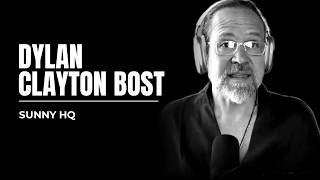
Dylan Clayton Bost built a 25-person design agency that collapsed in 2008, then founded Sunny HQ, a managed WordPress hosting company that now runs on AI-driven automation. One employee now supports hundreds of clients while Dylan works just 1-2 hours daily, a shift he credits to limiting work to four hours a day after years of burnout.
Chapters
Welcome to another Founder Wisdom Pod. We have Dylan Clayton Boss with us today. He's the author of The Seven Mirrors, pretty interesting book. He's all about writing and speaking on patterns that run, run our lives. And he's the founder of Golden Seagull Media and Sunny HQ, which we're gonna talk about today. Previously from Dallas, now in San Miguel de Allende, Mexico. So, Dylan, welcome to the pod. Tell us a bit more about yourself and what you've been up to.
Yeah, thanks so much, Charles. You know, I find I'm 55, and I find today more than ever I'm busy just enjoying life. I have, you know, in general, taken what I thought was a one-dimensional existence of optimizing and producing in work and really expanded that out to my family and you know, taking my— we've moved outside the country and really helping our children enjoy and kind of expand their understanding to there's more to life than just working. And although that's important, but, but really kind of finding your, finding your focus, finding your passion, and living into that. And so it's, it's been a, it's been an incredible year the last year. Like you said, I've wrote a book. I'm in the middle of publishing that. I also run Sunny HQ, been doing that for 10 years and starting a new company with my wife. And just really, it's interesting to have a lot of different projects and wake up every day with that sense of not just what the day is going to bring, but what kind of adventures can we have.
Love it. And you've run Sunny HQ for 10 years. Believe your first company was Ulanguzi, uh, tell me about your business beginnings.
Yeah, so I've always been, um, you know, when I look back, an entrepreneur, um, from the time I was— I went to design school and architecture school, and I always ran a side business. And, um, you know, I, I don't know, it just never seemed attractive to me. I did have a couple of, let's say, jobs, but, um, I was really more and more comfortable in that world of just figuring it out and, um, and wearing all the hats. And so I started a company called Ula Nguzi, like you said, a branding marketing agency, um, a couple of years after graduate school, year and a half after graduate school. And, and it was, it was a fantastic ride, you know. It was interesting. It's— I had no business starting a business, but I didn't know that, so that's cool, right? I think that's how you do it. And, um, started it with a partner and with really a singular focus at that moment of building websites. And that grew into an agency about 25 people, and we worked with just a broad variety of companies over 10 years. And it was a beautiful opportunity until it wasn't, until I kind of really crashed and burned that whole thing. And that was really a turning point in my life for starting to understand myself and starting to really dig into what do I want. What I thought I wanted was all the stuff, right? I thought I wanted the awards and to, you know, I think when I think about it, you know, as it's different from today, you know, I liked running a company. I liked being that guy. I was really good at it and I am good at it. But But it was a different facet of that, right? And I think that that's why it ended up crashing is because once that didn't work anymore, once I asked myself the questions of, why am I actually doing this? Like, what value do I bring to the world other than obviously supporting, you know, my family and other— and supporting our staff? It kind of lost its meaning. Financial pressures hit. In 2008, like they did for a lot of people. And that was kind of the capper, right? That put pressures on me that I wasn't prepared for. What started, you know, the kind of unraveling started before that, but that was kind of the icing on the cake that was just like, can you deal with this? And I couldn't. And so I rolled out of that and then kind of wandered around for a little bit before starting Sony HQ. But yeah, that's the history.
And Sunny HQ, you do WordPress websites. I dropped out of WordPress probably a couple years ago, switched to Lovable and AI tools. Is WordPress still relevant nowadays?
Yeah, WordPress is huge. Um, you know, it's still the largest install base on the planet. I mean, we're looking at 90 million websites roughly. I mean, don't quote me on that. The last time I looked, it was a few years ago, it was about 80 million. But it is, um, it is a meaningful part. And the reality is it still fits. And we use a lot of AI tools. And WordPress 7.0 just dropped, which has a lot of MCP connectors and is fully agentic. And but even that, right, the reality is there's, there are, I think, a small percentage of people who even understand what that means. And we're really in the beginning of what AI can do. And, you know, end customers are kind of delving into it, but at the end of the day, it's super, it's no less complex than, you know, websites were honestly 20 years ago. I mean, it's just a different kind of complex. And so our role in that is we're a different kind of host. We look at hosting, and I did this from day one, I recognized early on that what I saw, and I did this at Ulaan Guusi, because we started, we built websites and did ad campaigns and whatnot, and then naturally people needed the website hosted. And what we ended up doing was, is really a full-service host, right? So we not only put it on a good server package, but, but we also managed all the maintenance of the server, the application, all the support that the customers needed. And honestly, when I started Sunny HQ, that's what I saw. People desire that. And the fact that there's a huge gap in the marketplace, if you ask, I think, 100 different companies right, what they think hosting is, and then you look at what you know it is in the marketplace from GoDaddy and WP Engine and Kinsta, all these guys, the gap is the fact that most of the, even the best of those, right, offers simply a container for you to put your website, but everything that it takes to run the website, they don't really offer. Yeah, they'll, they'll answer support ticket. Most of the time they're not helping you fix it. They're just saying, hey, it might be this thing, or hey, have you done these things? And that's the gap that we fill. So for our customers, they're hands-off 100%. They simply manage their content. We even help with that, but we do everything else technical that keeps that website running. And that's the real difference.
Interesting. So how do you get your clients, and, uh, how many clients do you currently have right now?
Uh, we have about a little over 400 customers, and, and it's It's referral, it's search. Now it's, I mean, now it's a huge move over to, of course, ChatGPT and Claude and Grok and all those. You know, we started down that process of just moving content, rewriting content, restructuring pages to be more receptive to those environments. And it's really paid off. I mean, the reality is it was exciting to see, you know, so 3, 4 years ago, right, you would spend $50,000 to do search engine optimization. You would wait 6 to 9 months or 12 months and cross your fingers, and yeah, maybe it worked, maybe it didn't, but it was a huge bet in the beginning. It still is needed. It's, you know, you have to do it if you want to be found, but it is this animal of trying to find the right partner and trying to work the right things and keyword stuffing and all the things, where today we simply wrote a lot of different content, rebuilt our website and really got serious about what do large language models need. And what was wild is we launched, for instance, the first pilot program last year, about 20 different web, 20 different landing pages all around e-commerce. And we saw sales within a week of that. I mean, it was like night and day. I couldn't believe it. I mean, and every sale, right? Unlike before where We have a few people that maybe just buy right off. Most of them come to us and have some questions and that's, we get it, right? Moving, I say moving a website's like moving your house if your house was invisible. You know, it's this big change for a lot of companies and they're nervous about it. But here was a case now, they were coming to us and saying, ChatGPT said you were the people, so I want to work with you. What do we need to do? That was this huge shift. So not only were the leads fast, but the leads were way further down the funnel than ever before.
And who's your ideal customer persona? And from what I'm understanding, it's mostly inbound, it's, uh, geo and SEO. That's how you get most of your leads?
Yep, yep.
And then, I mean, the full control on like, uh, who actually buys from you, but maybe you have a picture like small business owner, what niche, what titles?
Yeah, I mean, the, you know, the business size is, is all over the board. I mean, we have mom-and-pop, small, you know, yoga studios, brick-and-mortars, but we have also multinational companies that have, you know, 20 different installs. So the common denominator, it's a decision maker. I mean, it's very, you know, if it's a large company, it's a VP of marketing that's talking to us and making that decision, or it's the owner of the company. And that is the only common denominator there. I mean, it's basically that the buyer is one who recognizes some pain point. And this is usually 90% of the people come to us have the same story. I have all these problems and they're not getting addressed. And that's hosting, right? The website's, you know, it's fast, but, or in some cases it's not. But in every case, right, they have work that needs to be done, fixes that need to be made. It could be as simple as plugins that have never been updated in years or a theme that's out of date that hadn't been updated. It's not supported in years. And they're, they're talking to the original developer. And that's the difference. Developers, in my, in my experience, these guys like to build sites. They don't love to support sites, right? They do because it's kind of— they're hooked into it. But that's where we fit. We do basically all the work that no one else really wants to do. And then when it falls inside a company, usually that work falls on either the marketing department or IT. And both of those departments don't want to do it at all, right? The marketing really wants to focus on content. IT wants to focus on all the other technology, but they're like, I don't want anything to do with the website. I'll let you know, or I'll give it my stamp, but I want someone to handle that. And so that's really, it's a challenge for us sometimes because, you know, we don't have, it's not like, I mean, we can deal, you know, we can work with all law firms or dentistry or large companies. So we do a lot of campaigns in those areas, but in reality, if you look at our customer base, I mean, it is such a wide range of companies that there's no real common denominator other than people that finally realize, hey, I'm spending $1,000 in time or $2,000 a month in time, and you're telling me you can do that for $200 or $300? Well, that's a no-brainer. And that's the reality. I mean, you come to us and that's all we do all day long. So we're really good at it and really fast.
And is the business growing, or is it more of a lifestyle business?
Um, we're in a real growth phase right now. You know, I'd say in the, in the last, um, you know, it didn't really take some time off, but we got into that lifestyle world where it was supporting staff, supporting our families. And, and, and really with the, um, because we bootstrapped it and we've chosen to do that, um, um, you know, really in the last year, 2 years, um, it's really taken off in a different way. And a lot of that is with the help of AI. We've been able to do a lot of things for ourselves in the, you know, in an estimate of the tens to almost maybe $100,000 of things we've been able to do for ourselves that we would have had to purchase. And we just haven't had to do that. So it's given us the ability. We've built a complete customer end-to-end interface for our business processes to work. We've built, rebuilt a complete new website We've rebuilt or built an entire marketing department so that we can help customers with GEO and SEO and social. We've built an Agentic engine that helps us even be way better at the support side of our business. So, we don't use that on the customer side, so our customers only talk to human beings, but what it's enabled us to do is be really fast and efficient and much more error-free than ever before. So, it's enabled us too to reduce the amount of employees that we need from what was a low number in the beginning, you know, we can have a single employee support probably about 200 customers very efficiently. So that's been a game changer for us. And of course, it's helped us not have to reach out to, you know, pay thousands of dollars a month to get new business where we're doing that all of ourselves now.
And in the past, you said that you scaled to a level that was sort of unhealthy, right? And burnout, like what happened there? Um, and how do you make sure that you're not like going that direction again?
So yeah, I mean, that happened with Sunny HQ, um, very different business. So the, the ad agency, branding agency world is a very subjective business, right? It's all based on hours of time. We did our best to base things on the projects, but at the end of the day, it comes down to an hour a day. And so, you know, I spent my time running the business trying to get the work, getting the work, managing the work, you know, managing the people that do the work, and then reporting on the work, and then doing that over and over and over. And so that cycle would never really end. So different from the business. And I was only focused, a big key, focused really only on the business and not on my family. So when I rewrote the book in Sunny HQ, you know, the One, what do I want out of my life? And what do I want for my family were about half of the decision. So yes, I needed a customer, and I wanted to know what service I could provide. But it was built around this idea that I don't want it to, you know, I don't want it to need more than 4 hours a day of my time. And of course, in the beginning, it was, it took more than that. But the reality is, you know, that's where I am. And in fact, I work maybe an hour or two in the business today, more in a managerial role.. And, and it was respective of what I wanted for my family. And a big part of that too was, was developing a service that was subscription-based. I mean, renewable revenue is, is huge. And that's what I work with a lot of customers now is just helping those that are hourly find parts of their business where they can convert that into some type of subscription, some type of membership that they can sell. Because that helps to build, of course, value in the company and lessens the time on their knee. Obviously you can serve, you know, a million people with the same service that you could serve one in the same amount of time, then the obvious, you know, the math is there.
Interesting. And your book, um, what is it about? The Seven Mirror: A Guide to Remembering Yourself. Um, seems, yeah, that life pivot that you had was pretty significant, right? And you've probably talked with other, like, founders that had a similar thing in which they sort of forget about themselves and their families, sometimes their values, right? What inspired the book? What is it about? What are the 7 mirrors?
Yeah, so the 7 mirrors is a recognition framework. And so it's not, it's not a self-help book. It kind of falls in that category. But what I see, you know, a self-help book is, is assuming that the reader is broken. And I don't believe that any of us are broken. I believe, like myself, that we've literally forgotten who we really are. Maybe we've never really explored who we are. So the book was written, you know, really, like you said, from personal experience, and really having the time to sit with it, having the time to really sit with, with an understanding of those patterns that created that first business and created that crash. And then, and then two, because I had the advantage of seeing how I'd done something different and, and evaluating that in the same way. Um, so it's, it's, it's a book not about you becoming someone new or some higher version of yourself. It's literally about, you know, what I did and what a person, the reader, can do to strip away the things that don't belong to you and really discover yourself. And with the goal of you finding more joy in your life That may be a career change. It might be literally just making small tweaks so that you can literally enjoy your career. You can enjoy your work. And equally important, that you can really enjoy your family and you can build a deeper connection with the people around you.
Interesting. And what's life-changing about this book? Because there's a lot of books talking about burnout and about quote-unquote, work-life balance, right? Like, what's game-changing about this one?
Well, I think that, to me, the biggest thing is, and look, there's a lot of, there's really a lot of great authors out there and a lot of great, got a lot of great things to digest. I think the reality is what I would push anyone to is just to ask yourself these deep questions about what you want from life. So maybe my spin that's a little bit different is it's, it's more contemplative. I mean, there, it's, it's led with with personal stories, and then actual practices. And then I'm very clear in the book, like, here's a mixture of things that work for me. And I'm going to talk about a lot of different things. But you really need to find what works for you. I think, and there's a lot of breadth in there, because I think a lot of times, you know, and look, there are a lot of, there are a lot of procedures, a lot of processes, a lot of things that do work. Um, but two, often we read these things and we attach to it for a little bit, and then we're like, oh, maybe that's not working. Um, you know, the idea here is let's really allow yourself the time to digest what you're feeling and connect with your body. Ask yourself some deep questions. See what this other guy's done, right? See what Dylan's done. Maybe connect a little bit with that and see And then start to apply those practices after. So it's not, it's not, "Hey, you know, here's this thing, do it!" And then here's a bunch of examples. And so it's a, there's a little bit, I guess it's a little bit more elongated than that. The reality is, it's, look, try to connect with something. And because it, look, I'm not different than a lot of other people. And that's what led, you know, to me writing the book is, after talking to people over the last 5 years, let's say, I started to see a lot of patterns and people saying, "Yeah, that's me too. Not exactly, but here's how that happened to me." And so the reality is, I know that what I've been through is, in my life, is, will connect with people. I understand that, that the reality is not my exact story, but pieces of it. And so it's really led with that idea of, "Here's something you maybe can, can reflect on, and then here's how you can apply it in your own life." And for you was like track stopping, right?
Like you had to stop everything. What was the, when was the moment you understood that like you needed to pivot here? I don't think I ever had that moment 'cause I've always been on the optimization side of things and I do a lot of preventative stuff, right? I take vacations and, I mean, I was never like the greatest at that, right? I'm, at the end of the day, I'm still a workaholic. I love work and I love like working on something that lights me up. But at least, yeah, when I sense that I'm stressed or at least I have stuff in my calendar that prevents like me from burning out, I haven't hit like a hard wall. Or maybe, maybe I did and maybe I didn't even realize, right? But when, when's the time that you knew that, yeah, you needed to pivot on your end?
Well, you know, for me it came at a crash, right? It came at personal bankruptcy, came at losing the business, it came at almost losing my family. So, um, that though wasn't the turning point. It was really on the way back up where I really had a real— it's hard to see stuff when we're in it. Right. So in that time of this, you know, this low point. Yeah. I mean, I only had one way to go, but I still had to make the decision to do that because it was definitely a time in between that first company and the second when I was like, you know what, I can just coast, right? No one's really noticing. We're making just enough money that it's not— yeah, we can't really go do anything, but the kids are fed and happy and clothed. We have a house. And, you know, I was licking my wounds. I was, you know, still grieving, you know, the ego that was lost, the business that was lost, the complete failure. But it was really the time that I had, which, you know, wasn't a short— some people can go through this in a really short period. For me, it took a while, right? It took day after day of doing this. And finally, in one afternoon, really just saying, like, I can do more than this. I want more than this. I don't want my kids to see this kind of melancholy, mediocre, complacent version of their dad, you know, because that's not who I am. Um, and so it really took, honestly— and that's one of the whole premises of the book— it takes time, you know.
It—
we can read a bunch of stuff, we can practice the things, and we can move through them, but unless we have time to integrate what we're learning and really reflect on it, then there's a there's a really high likelihood that it won't take. So, you know, you may have, maybe you've worked through it, um, you know, but the reality is too, as I look at, you know, I love to work too, I love what it brings, but I also saw that for me with a wife and 3 kids, right, that, um, I wasn't really connecting with them. So what I was doing is providing, and I was like, check, right? I'm providing, I'm taking them to soccer, I'm doing this, I'm doing that. Yes, I'm there for homework, but I'm not present for those things. And I didn't know how to do that. I didn't really know how to sit with my child saying they're uncomfortable about, you know, presentation that day. And, and other than try to fix them and go, oh, here's what you do, what you do is this, because I've done it before, right? But that's not what they need. They need their father to be present, to just hear them, right? Maybe reflect something that I hear back to them so that they can learn from it. And so that's the big kind of turning point is really— and then now, and I'm still on that path, I'm still learning how to do that. I'm still, you know, falling into those old patterns of, of, oh, I can fix that. I'm 55. I've done a whole bunch of stuff. I failed a whole bunch of times. I don't want you to fail, so this is what I would do. In reality, they need to fail. We need to catch them, but you've got to be around for that and introduce presence. And that's something that I had to develop over time.
Yeah, that makes a lot of sense now that you say it that way. I mean, I had like, uh, pretty significant business failures as well. Uh, didn't go legally bankrupt, but it could have been qualified as that, right? Like owing like multiple six figures, uh, on my first serious business and closing it down. That was pretty brutal. And the hangover of that lasted at least 3 years, right? And the hangover is more than psychological. It's just like having to pay someone, uh, like every month large quantities of money for a fuck-up. Uh, yeah, that was pretty long. But yeah, it makes all tons of sense. I ordered the, the book, the chapter 1 on your website, so eager to read this, Dylan. And, uh, yeah, till next time, where can people find out more about you?
Yeah, if you're interested on the Sunny HQ side, just sunnyhq.io. And like you said, on the book, dylanbost.com. And you can just fill out a quick email address and I'll send you the— we'll have the book as we're finishing the development edit, so probably about 3 weeks I'll have that first chapter out to you and anyone else who signs up. And I look forward to, to feedback and, and just hopefully you find some enjoyment in That was Dylan and Charles Cormier for another fun
More from Charles


Founder Wisdom: the audiobook, version 2 (5 hours of stories from founders and CEOs)

8 CEO Questions I Love Asking: the audiobook (64 founders answer, in their own words)





