Elena Itskovich, PhD - Founding General Partner Nest Catalyst
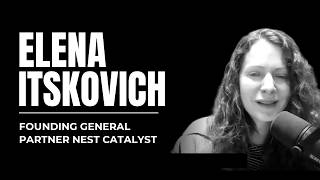
Elena Itskovich, founding general partner of Nest Catalyst, bridges Israeli scientists and U.S. venture capital through a program that mentors researchers, helps them start companies, and invests in early-stage life-science startups. Her portfolio includes Endocure, which makes robotic ultrasound devices for endometriosis and cancer monitoring, and FresenT, targeting cancer-stem-cell recurrence. Early-stage biotech founders face fundraising scarcity, regulatory complexity, and the challenge that payers often differ from end-users.
Chapters
Welcome to another VC Wisdom pod. We have Elena Itskovich with us today. She's a PhD, founding general partner at NAS Catalyst in Palo Alto, advises and mentors a bunch of companies, deeply technical, I'd say, by scientists for scientists. She's also an international speaker, board member, and yeah, she works for nonprofits as well. So lots of things, Elena, great brain. Tell us a bit more about yourself and what you're up to.
Thank you so much. So yeah, I'm a scientist by training in biology, stem cell biology, and genetics. I studied autism as well. So try to cover a lot of things that are, that I find interesting. And at some point realized, started to work with different networks, start to realize that scientists are not doing enough entrepreneurship, which is the opposite of what I want. I want to have more science-based companies in the world. And decided to build Ness Catalyst. And as you mentioned, I'm also a board chair for American Friends for an organization in Israel called Jordan River Village. It's a camp for children with disabilities that we're very proud to support from here.
And when did you first get into the VC game, to the capital game? Because yeah, I saw your background, obviously you're technical, you have a PhD. Why go into VC?
Right. Well, it's actually through my husband. So my husband started a company called Aetbay. It's a cyber insurance and security company. And I've seen him, you know, build the company, raise over time, start to learn more about the VC world and trying to sort of understand how it's operating and start to see parallels in biotech. We moved to the Bay Area about 8 years ago, started to see companies being built in life science and started to see the parallels and what works in, in other industries and why I think it doesn't work in for life sciences. Um, so when I started to build NesCatalyst, it was really a pilot. I didn't know if it's a nonprofit or a for-profit. I just knew that I want to see more scientists building companies as an engine to, to change our world. Um, and gradually I realized that if I want to be super aligned with our founders, I want to be able to invest in them as well. I think it's, it's the way we, the way it really aligns us and keeps us focused on making impact.
And you started your life in Israel, which is also a hub for biosciences. How would you compare Israel, Palo Alto? And yeah, tell us a bit more about your earlier life.
Right. Well, actually, I started my life in Russia. I immigrated to Israel when I was 8, and I was in Israel from 8— when I was 8 until the end of my master's in neuroimmunology at Weizmann Institute. And then we started our tour around the world, as I call it. I spent some time at MIT and Cambridge, UK, and here at Palo Alto doing my postdoc first at Stanford and then doing this at Catalyst. And I am very sort of— our program, for example, is for scientists in US and Israel, and it's really because Israel is You know, it's really well known for its entrepreneurial spirit. It's a startup nation, not for vain. There's really a lot of reasons that become— make Israeli founders successful founders. One of them is that we always build for the American market, but also the resilience, the dedication, the entrepreneurial spirit that we get. 2/3 are uprising there. But on the other hand, biotech has been slow— slower in Israel. It has very strong science, um, research institutions are, you know, world-renowned scientists are really leading in their field. Um, but for biotech, a lot of it is, you know, actually the same as tech. It relies on, on this connection to U.S. So it's partly why we do what we do is we make sure that our scientists, our founders in Israel are connected to the ecosystem here. And it's an integral part of the program and to the fund as well.
Right. And nowadays you do so many things, right? You're an advisor. I saw also you were in biz dev and PR at some point, a podcaster as well. Like, what does a day in your life look like?
Right. Well, honestly, podcast I've been doing for a few years and I haven't recorded in a while. I should really go back to it. It was a amazing opportunity to connect with other, with founders and investors in the field. So I'm mostly, I'm focused on the entrepreneurship program. We're building out the fund. It's still in the building process. And the board, being board chair for American Friends, I just returned from our retreat in Boston for our board. Sorry, in New York. And I'm also an advisor with Endocure. It's a company that's doing imaging for sort of taking ultrasound imaging and really leveling it up, allowing for very high resolution. It's sort of— I spend my time doing 3 of those things in addition to being a mom of 3. And but it's really when I was growing up, when I was doing my undergrad, it was really following what I care about and what interests me. Um, and those three things really combine those very nicely.
And you have like three PhDs or something like that?
Yeah, biology from Cambridge and then a postdoc from Stanford. It's sort of the, the next level.
Okay, that postdoc, you did it on autism? Why?
Yes. So when I was doing research at MIT and then later on during my PhD, it was focused on stem cells and understanding how stem cells differentiate, how they become specialized cell types. And then I really wanted to bring it into closer to clinic. So when I joined Stanford, it was joining a lab that was doing research trials with patients. And they were treating children with oxytocin or vasopressin. These are hormones that affect their social connectivity. But using technologies I've used, I studied in MIT and then in Cambridge, it was around this technology that called induced pluripotent stem cells. It's the ability to take cells from a person that already developed, but then reprogram them to become stem cells and then differentiate them, make them into any type you want. So that technology actually allows you to start studying for example, autism. So studying how the neurons behave from children that you already know how they function, how they respond. So when I came to Stanford, it was my sort of idea of combining the two. So there was a trial that was going on. We knew that there are some children that respond to treatment and some that don't. And my idea was to take their cells, create neurons out of them, and then actually test why, how biologically cells from children that respond to treatment and don't respond to treatment, what is different? Why? Because we knew that they're responding and some are not responding, but we really still don't understand why. So, that was sort of a coming full circle for me. But then I joined during, just before COVID And when COVID hit, we couldn't see the patients. We, at some point, stopped collecting. Well, even when the trials resumed, we stopped collecting cells from them. So really from a very ambitious project, it became an impossible one. So I left, but that idea I think is very powerful, is connecting the loop. Because what we usually do is, you know, we do experiments in cells and then in mice and then in humans, and then we see this sort of outcome and that's it. But I really think that we need to go back to the biology, learn what we can so that we can have better trials, better drugs. And so on.
And when you advise founders, is it on a technical perspective most of the time? Why do people hire you or have them sit on their board?
So the way we— so mainly the way I work with companies is through Nest Catalyst. So Nest Catalyst is an entrepreneurship program for scientists. We partner with them around incorporation, and then for about 6 months, we bring in different advisors and mentors from the industry, people that build companies, the people that advise companies, investors, and everyone that really can shed light this early stages of entrepreneurship in life sciences. And we ask them all the questions of how to really build a company. So then I partner with the founders that go through this program, help them to think about how they're connecting, how they're building their companies, what kind of people they're bringing in, what is the focus of their technology and how they're sort of transforming the technology into actual solution to a product. I connect them with the different advisors and people that take part in our program, and I help them to get funding. So I connect them with other investors, um, so that they can level up and start building what they wanted to set out to build.
And give me examples of companies you've worked with so far that have been home runs. I see, uh, Freezen, for example, Endocure. You've done a couple that are quite intriguing. Give us an overview of what they do and why they are they could be moonshots.
Thank you so much. So there are definitely moonshots. Honestly, both FresenT and Endocure are sort of a little bit of outside of the Nest Catalyst program. So Endocure is the company that's doing a robotic arm for ultrasound. It connects, um, it's a robotic arm that can connect to any ultrasound, then it can automatically scan the abdominal space. Because it scans automatically, it can actually collect many samples. Many images together and combine it into one, uh, 3D rendered, uh, sort of video almost that you can later analyze, um, using either people or doctors or eventually with an AI. And the idea there is because you get very high resolution of those 3D rendered images, you can actually start seeing very small lesions and changes So it's called Endocure because it was developed in order to diagnose and to see the lesions of endometriosis, which are really very small and usually the sonographers miss. But now we can actually monitor cancer treatments and so on because it sort of really replaced MRI and it's not invasive, it's not expensive. So you can start monitoring treatment trials or treatments in patients in different cancers that are related to abdominal space. You could monitor, of course, endometriosis as well, as well. So they have the potential to integrate into many different processes. FresenT is a company that started Natasha, Natasha, that actually started Nest Catalyst with me. She was sort of really bringing the perspective how it is like to build a company as a scientist. Their company is, is developing a cure for So in cancer, majority of cancer you actually can treat, but it recur. And the reason that it recur, that it comes back, is because there's a small population of stem cells that linger in the body and it's very hard to treat and to remove. So Fresenius has developed, has understood a lot of biology around the metabolism of stem cells and how to actually target those stem cells. So they did IndieBio. It's a program for companies building in biology as well. With a lab space and incubator in New York and San Francisco. And I'm very proud to see them growing because it's really this recurrence of cancer. It's something that's very hard to treat.
What about the femtech, baby tech? I have a wife and we just had a baby, so that I think these segments are very intriguing. Femtech, why? Well, it's more from a statistical perspective. I think it's underserved, right? We live in a man's world and think women has been disregarded. It's not a woke thing to say, just a fact, you know. And I think that market— now women have more buying power as well. They make as much, if not more, than men in many places. And yet women's health is treated more seriously. So I think that's a gigantic opportunity. And baby tech— I think parents are so anxious and they start treating the development of their child scientifically, uh, while like our parents were just like winging it, sort of. Uh, what do you think about these two segments and markets?
Absolutely. Femtech is— it's— or women's health is part of our focuses for, uh, Nest Catalyst. Uh, Endocure is of course doing endometriosis. Um, one of our companies is doing, um, it's called Latiti Diagnostics. They're doing antibiotic susceptibility test that is rapid and affordable. So when women come in with urine infections, they're treated with broad-spectrum antibiotics. And broad-spectrum antibiotics are not great because that's not the best treatment to the woman, but it also affects all of us because then there's a development of resistance to antibiotics because we treat too broad-spectrum versus just selecting the right bacteria to treat. And they're developing a very rapid and affordable diagnostics that can go into any clinic. So, and UTI is of course much more prominent in women. So very important. It's a huge opportunity. It's not just that women have the power to build, to buy, is that there's huge opportunities because they weren't developed. The drugs that were developed were not really targeting women. There are a lot of diseases like heart issues, like UTIs, like many others that are either different or more proportionate, have more proportionate in women. So absolutely a very important target market to target. For babies, I agree with you. I think it's challenging to raise kids. And I think there's still not enough around our world. We actually had a very interesting company in our first cohort. It was based on a research that was done by one of our founders that understood that there's specific transporters that are expressed in women that are responsible for the composition of the milk. So in their case, they were studying zinc transporter, and they found out that there are women that just, that zinc transporter is mutated. So nothing in their body is affected. They can produce the milk, But the milk will not have zinc. And it's actually a huge problem. It's relatively rare. But when it happens, children are not— children, babies are not thriving. And no one understands why. And what eventually happens is they see that they're not thriving and they're just replacing the woman's milk into formula. And then it's sort of resolved. But in reality, then they lose all the advantages of having breastfeeding. And what they could do is actually supplement zinc if they understood where the problem is coming from. So there are a lot of opportunities, there are a lot of places to intervene, both to prevent disease and to treat disease. Super, super important.
Tell me about your, uh, Portco's, the main challenges that they face. Is it fundraising? Is it go-to-market? Is it product? Is it slowness of product deployments? Tell me about their, their main concerns.
Right. So we're mainly working with companies that are either doing therapeutics or platform technologies for development of therapeutics, diagnostics. So usually the go-to-market is, is important, but it's, it's something that will sort of integrate once there is a good product. So the companies we work with are quite early. So their challenges is around fundraising, of course, but Because, so if you think of a sort of regular company, or a regular tech company, then there's the risk of go-to-market, there's the risk that you're building something that no one wants, there's the risk of really reaching your audience. But you can build usually a lot of those things, right? Like, you know, you work hard enough, you'll build the app you've decided, or the sort of, you know, some kind of product. In biology, you add, have an additional risk of biology. So let's say you actually build the drug that you were developing, but then will it really work in humans? And there's this huge regulatory risk and so on. So many investors unfortunately find it, well, not unfortunately, but that's what happens is that, well, it is unfortunate, but there are ways around it, but they find it too risky, right? There's additional risk that other companies don't have. So the amount of investors that are willing to invest in early-stage life science companies, be it angels, be it VCs, be it, you know, it just, it's all much more limited. And a lot of the time, companies like that rely on governmental funding, right? We all want to have a therapeutic for recurrence of cancer. Like, that's something that every person you ask on the street, do you want to have that drug available? Everyone would say yes. But no one, not many investors are willing to fund it. So you need to have an ecosystem that supports early-stage innovation. And that is a big trouble, sort of limiting factor for building companies in life science. But the other things we talk with our founders about is building a strong team. That's something that is not always obvious. It's not just about building, you know, understanding the technology and building the right product. It's understanding the process that you will need to have when you're developing a product. So how does R&D look like in pharma companies? How does the regulatory path look like? What are the doctors, sort of the medical team, that will be involved in? Because one of the problems is that you're developing a product, but your customer is not your user, right? Like the ones that will be paying for that drug are not the end users. So there's the whole system that you need to understand and figure out and tailor your solution to the actual ecosystem that you're targeting. So a lot of challenges around those areas that we're trying to help solve.
And isn't that shortening with FDA loosening up?
Or it's not really loosening up. Um, they are trying to be more creative recently, and it's very curious to see where it develops. They're trying to bring AI into, uh, clinical trials, into applications and review of processes. Um, it's— there's honestly more uncertainty currently, um, rather than optimism. But I'm an optimistic person, so I hope that yes, they'll find ways. They understand that this FDA process is very cumbersome, it's very long, it's very expensive. It's expensive, it's expensive to build companies in, in life science, um, and partly, or a big part of it, is because those clinical trials are so, so expensive, right?
And the go-to-market part, do you usually go after a team of technical and non-technical? Um, what do you see in that aspect? Can your founders sell most of the time?
So our founders are, they don't really sell, right? Because it takes years to develop the technologies, but they need to. So the way we see it is a little bit like, like A16Z when they were starting their fund, right? They identified that there's the technical founders and the, or they call it technical CEO and professional CEO. And they saw that even though most of the successful companies are led by technical CEOs, most of the VCs are still pushing into sort of bringing in what they call the professional CEO. So, we see our founders as technical founders, scientists, or sort of, it's a different type of technology, but that's what it is. But what a16z, I think, understood well is that you need to bring those sort of build those ecosystems around your founders so that they can level up where they see need. So what we are building is, we call it Advisory Crew. So it's people from the industry, whether it's people that are experienced in the R&D and pharma world, whether it's people that are experienced with the go-to-market, with marketing, with building teams, with sort of doing work around HR and bringing in the right people to those companies. And we connect, make those connections so that they're not alone. They can, they can rely on building in different partnerships and bringing in different people. They can help them in the different aspects. And for selling, you know, once a biotech becomes a commercial company, it's really like building another company on top of it. Most of our companies are not there yet. We're very new in the space, but it's definitely something that you can see biotech companies sort of when they reach that stage that either they need to license out, so they need to really strengthen their BD team, or they're becoming commercial and then they need to build the commercial side of things.
Isn't there a more creative way to get revenue sooner? That is legal, obviously, like not necessarily deploying product, but I don't know, partnerships or creating a software piece that you will use later, but that you may license to a potential partner earlier. Like, to me, waiting for 3 years is hell as a founder. It's like, defeats the full purpose of being a founder. Being a founder is like, yeah, about moving fast, potentially breaking things. I know in your industry you can't break too much things, or—
no, you can't, you can't.
Um, but yeah, like, just getting revenue sooner and not depending on an entity to do that, or maybe deploying in a jurisdiction that is less heavy on the the cycle of things, right? Like, what— any thoughts on this?
Yeah, absolutely. So definitely companies in life science— well, first of all, not all life science companies are drug companies. There are companies that are doing diagnostics, that's easier and faster. But there are companies that are doing platform technologies. So for example, developing a unique, um, um, you know, there's— we didn't mention AI, but you can build like an LLM for a specific parts of biology and then license the technologies to, or sell those technologies to different partners, pharma companies or others. And then you have a more of a sort of B2B standard type of model. And there are also companies that are doing, you know, direct to consumers. There are a lot now, a lot of consumers that are based on sort of scientific discovery. So definitely those opportunities exist. For most of the companies in biotech, you know, it's not really selling, but it is building those partnerships and creating revenue by partnering. So a lot of the companies in our cohorts are platform technologies. One of our companies, for example, in our first cohort are building gene delivery. So in gene therapy, we already know how the therapy looks like. We know how to fix genes. We know how to use different genetic components in order for it to be drugs, but it's very— it's still very hard to actually deliver those gene components to the right cells, to the right tissues. So our company, it's called Envoya Bio, they're doing gene delivery sort of particles that can partner with different drugs. So one of their— one of the ways to build such a company is to partner with different pharma or other larger biotechs and sort of develop a drug together. So someone brings what sits within the particle, and then Envoya will build the particle that perfectly suits that drug. On one hand, it's a, it's a great way to create early revenue. On the other hand, it's hard, it's, it's challenging to build those partnerships because it means that if you're really running to FDA together, then it means that When FDA approves, it approves what sits inside, but it also approves the envelope. So you need to build this credibility with your potential collaborator that you're gonna go this, do this together for the long run.
There you go, Elena. We're already on time, but yet so much more to discuss about. So we did a round 2. Where can people find out more about your business?
So I'm available on LinkedIn, Elena Itskovich. Find me on LinkedIn. We have a page for, and a webpage for Nest Catalyst as well. Always happy to chat with interested people.
All right, so it's Elena and Charles Cormier for another VC
More from Charles


Founder Wisdom: the audiobook, version 2 (5 hours of stories from founders and CEOs)

8 CEO Questions I Love Asking: the audiobook (64 founders answer, in their own words)





