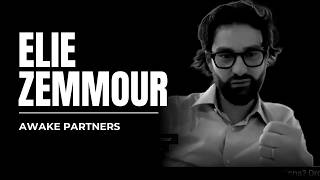
Elie Zemmour co-founded Awake Partners, a Paris firm that connects European startups with investors through warm introductions rather than traditional VC. The business charges a retainer plus success fee, generates deals through a podcast and LinkedIn, and plans to launch a fund in a few years.
Chapters
Welcome to another VC Wisdom Podcast. We have Elie Zemmour with us today. He's enabling European startups to raise funds through Awake Partners. They invest in seed and Series A. He deals with a lot of family offices and back offices. He's a podcast host as well in Paris. Elie, welcome to the podcast. Tell us a bit more about you and what you've been up to.
Thank you very much, Charles, for the introduction. So yeah, as you said, I've built this company 4 years ago. And since that moment, my goal and my focus is to raise more and more capital for European early-stage startups. I started my career as an IT engineer. So any link with the VC or the finance at the beginning just started as a side business. Making connection with people here in Paris. You know, the startup ecosystem is really great. So I started to connect with startup founders, trying to understand their needs and their issues. And I realized that the main issue was always the same, like startup founders need money, but they don't know how to find it and where to find it. And on my, my side, I had like a couple of friends working in a VC, and I realized that they were looking for startups. So the connection was easy. So this is how I started to, yeah, to connect startup and VCs. And step by step, I had my first deal closed, a $500,000 deal that allowed me to leave my job and then to launch Awake with Mathieu. And that was the beginning of the story.
Nice. And there's few that actually launch VC funds in France, in Paris. Uh, did it feel weird to launch your own and to invest in American companies? Like, uh, was that considered contrarian?
So on our side, we don't directly invest. We are more like enabler, as you said at the beginning. Like, it means that on, on one side we have mandate for startups looking for, uh, investors, and on the other hand we have actually, yes, investors. And there are a lot of investors in Europe and especially in Paris that are looking for startups. So yeah, we are a kind of a bridge. For the American market, we are not allowed to work with the American market for now because of the license that we don't have, but we are trying to have partners with other investment banking and so on. So this is a next step for us, you know, as a European-based company. Okay. Working in the startup ecosystem, the next step is always the US. The first step is to be good in Europe and then to go to the US because it's a bigger market, as you know. But yeah, this is the first step to work in Europe.
Now, are you seeing like a revolution, renaissance in Paris companies with Station F or Gare F? I forgot how it was called. Yeah, it seems like there's so much talent nowadays in Paris, right?
Yeah, yeah, actually, uh, it's been, I think, like something like 10 years, uh, and we saw a great acceleration since Macron was elected and wanted to create, you know, the, the startup nation here in, uh, in France. And yeah, of course, thanks to Xavier Niel, uh, that built and co-founded Station F Of course, Paris is now one of the biggest places in Europe for the startup. And actually, this week there is also VivaTech here in Paris, which is one of the biggest events here in Europe related to startups. So yes, I think that in 10 years, France has made a huge progress in the startup industry and ecosystem. And I'm talking a lot about this ecosystem, actually, because we have been able to create a lot of different actors that are able to collaborate. It's not easy to open the first door here in, in Paris. You have to, to know the, the good people, but when you know the, the first good people, then the other doors could open easily. Um, it's— and the next step, I think, will be to create this big synergy and ecosystem all over Europe, not only in Paris, but between Berlin, uh, London, and, and so on. So this, this is still the— what we miss, in my opinion.
Interesting. So yeah, the funding— like, all the most promising Paris founders, when they go for funding, is it raised outside of France mostly? Is it like 80% raised in the US, and there's like a brain drain effect?
That's a great question. I would say that it will depend on the stage. For really early-stage projects, I think that the easiest way to raise money in France is to stay with local investors. Could be angel investors or local VC funds. And then when we talk about the Series A, this is the great moment to go to the European VC, so to open new market. And I would say that it's more during the Series B and plus that the entrepreneurs are looking for the United States. But I feel also that, yeah, Europe wants to keep the brain here. And but it's hard because on the other hand, in the US, like you have so much, so many capitals. So— Yeah. It's always the same debate.
Interesting. And what do you feel is your moat as a VC? What's your advantage? Why should they accept your capital and not the other VC next door?
Um, I'm— you mean like between Parisian-based VCs, or—
No, any VCs. When you invest in a company, why should they take your capital?
We don't invest.
Oh, you help startups, uh, get funded, right?
Yeah. So how could they choose between two VCs, you mean?
Uh, well, yes. Or why would they decide to go with you other than like an investment banker, let's say?
Okay, okay. There are many reasons. The, the The first reason is that thanks to our podcast, Sur la Place, where we bring investors to talk, everyone knows, everyone knows in France actually that we are really, really close to the VC ecosystem and that we know a lot of people. So they know that by working with us, we will actually do the work and introduce their project to the best VC network. So I think this is the first step. The second step is that we are still a small team, so we are very agile, so we are able to, yeah, adjust the strategy depending on the situation. We know that fundraising is very long, so you will have to, yeah, change the positioning a lot of time, so yeah, several times. So we are able to do that. So I think that it's, it's really that. And yeah, of course, the track record that is in our website, website as well.
And why not launch your own fund?
Yeah, this is a great question. This is actually in our plan, but later in the future. You have to keep in mind that we are not part of this ecosystem at the beginning. On my side, I am just an IT engineer that succeeded to raise capital, like, just by connecting people at the beginning when I started 4 years ago. I even didn't know what seed or Series A means. Like, I, I didn't know actually. The first meeting I did with a VC, he was talking about seed. I spelled it S-I-D.
I even didn't know like what I, I thought it was a real seed, a garden seed.
Yeah, yeah, but I, I didn't know anything. Even VC, I wasn't able to know like I didn't know what does it mean. So I think that, and with my co-founder Mathieu, we agree on that, that we have to do it step by step to create our network, then our track record and so on. And beside of that, we really like to push the startup and support the startup to achieve their goal. This is also a great satisfaction for us today to do that. So maybe in 2 or 3 years, we will start to, yeah, raise money for our own fund. But this is, yeah, later in the roadmap.
Interesting. And what, what are the main pains of the founders that you work with normally?
The, the first, the first pain is that most of the early-stage founders, they just don't know how to raise capital. People think that it's just a matter of, okay, I'm looking for €1 million and I'm able to give 15% of my company and that's it. But it's way more complex than that. To raise capital, you have to prepare yourself, you have to prepare the data room, the materials, the valuation, the equity story. And it's not about raising right now. You have to prepare the 3 next steps, the 3 next raise. So this is the first pain point. People just don't know how to do it, to deal with that. And the other pain point, I think, for very like, um, technical people, like engineering people and so on, it's just about the network. Like, if you don't know the VC analyst or the VC partner, you can send thousands of cold emailing, it will not work. You have to know the guy you target, and this is what we bring also on the table to our customers.
And do you pitch on their behalf, or do you use their name when you pitch them to VCs?
It depends. It depends. When I'm in discussion, in a one-to-one discussion with a VC, of course I pitch for my customer, but sometimes, and it's even better for early-stage startup because when, as an investor, when you invest in a company, you mainly invest in a, on a man or a woman, like the people behind the project. So you have to meet with them. So both, both cases are, are possible.
And in France, you're not subject to the broker-dealer laws in the US. You can sort of be in the middle? So you can't deal with US companies on your side, or what?
So in France, there is no broker license. So if, if we are talking with startup and professional investors, it's a B2B relationship, so we are allowed to, to, to be in that position. It's more complex when, when we deal with angel investors, so this is why we, we don't. And to deal with the US-based company, we can work with a startup that is based in the, in the US, but we present like European investors, it's okay. But if we try to deal with American investors, it will not be, uh, okay. So this is why we, we don't.
Interesting. Hmm, that like places you in a different game. It's pretty interesting. So what, uh, percentage of your service is a system versus you personally referring them to some of your personal network?
You mean when I start to work with a project?
Yeah, because for example, right, like me, I do cold email campaigns for founders, but I also refer them to personal friends that could be intrigued in investing to them. So even if I'm not in the equation, they can have a system that they can run on their own side without Charles in the equation. But if Charles is in the equation, he can drive the Ferrari better, and he can also refer personal deals, right? So what percentage of your, uh, service is a system? Yes, like personal references.
On our side, we have decided from the beginning to only work— like, 100% of the introduction that we do are with people that already knows, like, know Awake Partners. They don't know me personally, but they know the company because they have discussed with an analyst from our company, from VisitCode, from our company, or from with my co-founder. So the answer is 100% of our work is with what we call warm introductions.
Got it. Interesting. And they pay a couple of thousands per month to, to get that. You also help them with their pitch decks, their website, their profile.
So our work is to make the deal what we call investment ready. So we want to be sure that—
Investible.
Yeah. If I bring the founder in front of a VC and the VC is okay to invest, like everything is ready, you can sign and then everything is ready. So this is why we take like retainer fees at the beginning. It's a one-time fee depending on the size of the deal, of course, and then a success fee at the end of the closing. So yeah. And of course, we will build the data, the full data room, basically. So the deck, the financial forecast. And this is why we also have a team here in Paris to support, because otherwise, like, it's a lot of work.
Tell me about your podcast, Genius Strategy, obviously, right? Like, to— for deal flow, for content, for growing your brain, for having fun at the same time. Um, how did that change your, your business and your mindset?
Yeah, at the beginning, I think it was a year and a half ago, Mathieu, so my co-founder, came to me with like, okay, we should talk, let our customer talk about us in a podcast. So I was like, okay, could be cool, but who is going to watch that type of thing? So we tried, and at the beginning only with our customers. So with the startup that we were supporting, we had a couple of results and then we thought about like, what do our next customer want? What does our next customer want to see in our podcast? And we realized that the main value for us was to be connected with the investors. And this is how I started to invite the investors I was really close to.
Okay.
And then as a snowball effect, we had a couple of views and then we continued. And this is— this changed our life because today we propose to startups to be in touch with investors and we show them that we are in touch with investors in this podcast. And beside of that, the investor that came to the— that are coming to the podcast, they bring a lot of value to explain how to how to deal with the VC, how to deal with the fundraising and so on. So at the end of the day, it's super useful even for the startups that are not working with us. It's super powerful. And yeah, for us as a marketing purpose, we have more deal flow. We have better connection with the investors because it's not that often that you have the time to— and the investor has time to discuss for an hour with you. So it allowed me to go into the very, very like precise detail of the investment thesis and so on, and to know him better as a person as well. So then my next email or my next WhatsApp, I'm sure that he will read it and that he will consider it. And for the other VCs that are looking at the podcast, it's also a competition between the VCs. So the— they are— they, they saw that Romain was in the, in the podcast So they want to be in the podcast as well because they want to discuss with me, to have the visibility and so on. So yeah, at the end of the day, it's really good for us.
And you do one a week and it's physical?
It's physical and we do twice a month. And hopefully in September, we will start to add one episode more a month and then once a week. This is the target.
And your deal pipeline, what percent comes from podcasts vs your LinkedIn posts? Give me a full idea of your GTM strategy.
Yeah. So we have built a very, very strong GTM strategy thanks to different channels. The first channel is of course LinkedIn. So I do a bit of outreach and also people, thanks to the podcast, they come to me. Then there is this YouTube channel. And then the last that is super, super relevant is all the startup events that I attend physically. So as VivaTech, Hello Tomorrow, there was the EU Startup Summit in Malta. And I would say that it's like 30%, 30%, 30% more or less. For the shares.
Interesting. And on the co-foundership side of things, how did you choose your co-founder? Why are you guys a good combo?
Yeah, Mathieu and I, we met when we were like 6 or 7 years old, uh, playing football together. Then we had completely a different way during the study and the university and even the first job. Mathieu was working on the startup side from the beginning as a sales, but also as a chief of staff, you know. So he saw on the startup point of view how to raise money. And on my side, so you know what I did. And we decided to launch because we have discussed and he wanted to launch something. And it was like, we did it very naturally. At the beginning, it was just a partnership. And then after having the first deals closed, we decided to build the company, and we are very, very different in a way. Uh, Mathieu manages all the back office. He does not, uh, meeting. On my side, all my day, my work there are the same. It's 15 meetings per day, so it's a 30-minute, 30-minute, all day long without any break. But Mathieu is not able to do that, and he doesn't want to to do that as well. So this is why we are so different, and I think that we are, yeah, complementary.
Interesting. And where is your company going this year? What's the priority? Is it growth? Is it serving existing clients better, less churn? Because at the end of the day, if you help them raise, they can fire you, right? It's like goodbye. So what's the priority in front of you to have the business grow even more?
So of course it's to close more deals because, you know, when you close a deal for someone, you gain trust and you know that for the next deal he will renew. So this is not an issue on our side. And we want also to scale the podcast up and maybe also to create different type of other businesses such as maybe like software or everything linked to the fundraising. But we are using a lot of AI in our processes, and we realize that some of those AI could serve also other investment banking or other startups. So we want also to explore that, that way, in order to have also more revenues and to, yeah, to, you know, to diversify.
Interesting. So top goals this year, like your top 3 goals?
Top 3 goals, sign 5 more, having 5 more closing, launch, being able to launch 4 episodes per month, and And the third one is, it's a surprise.
I cannot—
Surprise, surprise. Yeah.
Um, I was reading some of your question— the answers to some of the questions I sent you. Posting on LinkedIn, um, did you get success on that? Like, how much is that, uh, part of your GTM strategy? Because I rarely convert anyone directly from my post. I think they like seeing some of my points of view. I view LinkedIn mostly as an authority channel, not a top of funnel. How, how have that been different on your side?
It's, it's exactly the same. You, I think that I had one customer that, uh, directly came from my post, like he liked, he commented, and then sent me a message, and then I, I, I, I, I, I, I did the mandate. But otherwise, as you said, it's just to show to the rest of the world that we exist, this is the way we think, because this is super important. And we realized it like really later, uh, when I started to post on LinkedIn, we were just saying like, you know, very basic things to, to post, like as everyone was, was doing. And we realized that— I realized that there is no value to, to do that. To do that, if you, if you say like, uh, everyone, no one will read it. And as soon as I started to express what I feel, what I really think, I saw the metrics going up. And yeah, of course, there were no customers, but then when I discuss with someone, he goes to my LinkedIn page, he sees the number of subscribers and the number of posts and so on. And as you said, yeah, it's for authority mainly. Yeah.
I agree. Interesting. Um, the anxiety part of being a founder was another cool answer that you, uh, dropped in these questions of mine. So how, how do you work with your own anxiety and mental load of being a founder and all that stress?
Yeah, uh, it's funny because a lot of friends of mine doing like with this AI pump, you know. Everyone wants to, to launch something, but everyone wants to launch a project, but when they will realize all the sacrifice that you have to do to deal with all the stress that you have to deal with when someone is not paying but you have to pay your salary, uh, you are waiting for an answer from someone because otherwise you cannot pay the salary or pay the rent, whatever. So all this pressure is really, really intense. On my side, it was really hard to manage at the beginning. I even like felt almost sick because of that at the beginning. But then I started to grow and then you know how to manage it. And yeah, one of the biggest challenges as a founder, in my opinion, is to manage the time. The days are too short. Yeah. And it's really stressful because you have so many things to deal with. And when you get older, you realize that, yeah, months are shorter, shorter, shorter, and the year is shorter. And at the end of the day, you, you have time to, to deal with nothing. So at the end, you want to help everyone, you want to have meeting with everyone, but you don't have time to do it. So you have to prioritize. So yeah, this is the way, uh, I try to manage the— yeah, everything is like that, prioritizing.
I think sometimes like a mentality, right? Like when you're— it's good to be on an urgent path, it's good to be on a warpath once it's work day, but I think like that the back end of the day needs to be about recovering, right? And the recovery part, it's not about getting shit done and feeling bad for doing that, and it's a strange dichotomy, right? Because then you can compare yourself to Elon, that is just on all the time, but then is that the right comparison? I'm still playing potentially trillion-dollar games on my end, but I'm not having the same playbook as these guys. I think these guys are burning the candle by both ends, right? And they'll die at what, like 65 or something like that?
Mm-hmm.
Well, at 65, I'll still be running on all my 12 cylinders, right? And I'll be surpassing them at that stage. I'm very patient. And I'm a— my background's like in biohacking, right? So I do think about these things a lot of time. And yeah, some folks could say that this is an excuse, but my obsession, ultimately what I'm truly good at is— I'm good at a lot of things, but one is energy management.
Mm-hmm.
Right, it's like managing my energy and being patient and just striking with full force when it's the right time, and that doesn't happen like all the time, right? So, and I think that's also like an AI moat. AIs can't strike right now by definition, right? They won't even know when there's like a one-in-a-lifetime opportunity, right? And when that happens, you need to go all in, right? But in bed, for example, I don't think of business, right? 'Cause then I'll dream of business, then I'll have shitty sleep. You are. Affect me the next day, right?
So you are strong, but I think it's really personal and it depends. But on my side, I know that I am a very anxious, uh, I have that in me as well.
Yeah, my mom's very anxious and I, I, my genes are mostly my mom, so I had to change that.
Yeah, but it's, it's super, super cool, and I think that is the, like, the top one skill that you would that I have to develop and to work on. Because as you said, otherwise you will not— I will not survive. Sometimes I'm working and I feel that I'm not breathing. Like, it's crazy. But step by step, I feel like—
Let's take a deep breath together right now.
Yeah, that's great.
Oh, that feels good. I have another tip for that. It's called L-theanine. What is that? These pills, L-theanine. It's what is the active ingredients in tea. Tea has like caffeine and L-theanine mostly and satchins and other stuff like that, antioxidants, right? But L-theanine is the chill factors in tea. So you can buy them in pill form and—
Okay.
Today, I call them chill pills, right? Mine is like double strength, but it's not addictive and it's not like, it's not strong enough. It's not like THC, right?
Okay.
You take one of these and today I had to take one, right? 'Cause I got like really frustrated with a team member that I considered betrayed me, right? Like crossed me. And when that happens, like, yeah, you're gone. And I had to take a chill pill, right? Obsessive folks like you and I, we can obsess about the good stuff and be very productive, but when we obsess about the bad stuff, we can get in downward spiral, right? So I had to take one of these today, uh, L-theanine. Shout out to L-theanine. And of course, workouts. You work out?
Yeah, yeah, a lot. I do a lot of sport, but as I had a baby a few months ago, I had to, to lower the sport, uh, level. So yeah, it's always a balance, like you have to, to manage with the wife, with the work, with the friend, with the family. So, but with the obsession, I think that it's also a skill that, uh, as you said, that we— a founder needs to, to have, like be obsessed with something, like, because otherwise you would think positive. Yeah, being positive, being obsessed, because otherwise you will you will just forget.
Yeah, you'll burn yourself. And even Steve Jobs, right? Like Steve Jobs got in feuds with a bunch of people and that was just a waste of his genius, right?
Yeah.
Should always focus on like positive stuff and so forth. I think talking with your co-founders well, right? Like just talking it out so that it gets out of this crazy fucking mind of yours and you stop like downward spiraling and obsessing about one thing, just like talking it out, right?
And this is why when I talk with friends or people that want to launch a business, my only advice is don't do it alone. Do it with someone else, because I realized working with Mathieu that we were both obsessed, we were both stressed, but not on the same topic. So this is a way to go ahead because I have some feeling, but my co-founder has totally, totally opposite feeling, and it, it helps to, to go ahead.
Yeah, different personalities, right? Like, um, my co-founder, Sunny, is also that way. He's more on the calmer side of things, less warlike, less, uh, aggressive, I would say, which helps, right, to counterbalance. And for the kid, by the way, like I'm also in that phase, right? And I fully understand you when you're saying that we don't have enough time. Like I'm feeling this like today, right? Like this, the week is like meetings pretty much all the time. Then the weekends I'm supposed to work on my business, right? But I only have time to do one thing. I didn't even check my emails this weekend. And then I need to do that LinkedIn outreach thing. I need to do like this and that and this and, It's a bit frustrating, but it's a phase, right? Like mine is 2 months old right now, so 2 months and a half. So we're getting more and more time. And again, I think it's like that patience factor, right? Because if you get impatient, you start burning yourself, you start burning other systems, right? Like your daughter's super, or your kid's like super important, and your wife as well. These are other systems, right, that need some energy so that the flywheel can keep going. And if you neglect that, then your wife will get pissed, then your business 'business will be affected' and this and that, and they'll break the whole fucking thing, right? So it's like about being patient but also taking risks here and there, right?
Yeah, this is not easy, but this is the, the best, uh, the best travel.
Yeah, when, when you're like a problem solver, this is like, this is fun stuff because it's complex, because it's challenging, right? Thanks for being on, Eli. Uh, where can people find out more about you and Awake?
Thank you very much, was a pleasure to discuss with you, Charles.
All right, so I guess Elie Zamora on LinkedIn and Awake Podcast.
More from Charles


Founder Wisdom: the audiobook, version 2 (5 hours of stories from founders and CEOs)

8 CEO Questions I Love Asking: the audiobook (64 founders answer, in their own words)





