🏅 escaping africa's war as a track athlete with eric dahl
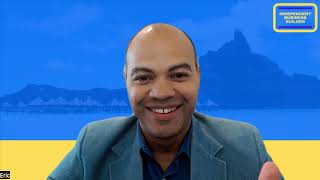
Eric Dahl fled Liberia's civil war as a child and later pursued Olympic track before a hamstring injury forced him to rethink his company. He built a systematized business that runs without him, using the same discipline he learned as an athlete to document processes and delegate. Now he helps other founders do the same.
Chapters
Welcome to another Founder Wisdom podcast with Eric Dahl. We're going to talk about business systems today. He's the founder at Dal Integration Marketing, former librarian, track athletes. We're going to talk about that. He escaped Africa. It was war torn back in his days, and it's now the US In Oregon or somewhere near there. And yeah, excited to talk about that today. This podcast brought to you by podpire.com if you want to start scale be invited. Podcast. Find. Find sponsors for podcasts. That's my podcasting agency. Podcasts are amazing. To learn, to meet new people, to get subscribers, followers, leads, and even clients. So podpire.com for that. Eric, welcome to Pod. Can you tell me a bit more about yourself and your company?
Yeah, sure. So. So just like kind of you alluded to earlier, you know, so for me, you know, this all started, you know, back in 1991, so when I was 10. And, you know, so I'm half Liberian, so. So Liberia, if you don't know where that is, that's West Africa. And my dad is from Eugene, so he's actually Caucasian, so I'm. So I'm mixed, if you guys didn't guess. But what happened was we had this, you know, this really terrible civil war that erupted. So, you know, at that age, and in one fell swoop, they told us, oh, you're only. Only gonna be gone for two weeks. You know, just pack a couple bags. And we end up being gone forever, you know. And so, so that's for. So that's my mom's side, but we escaped to the. The U.S. so we came to Eugene, Oregon, and so that's my dad's side. But in one fell swoop, I lost all, you know, all that relationship with my mom's side of the family. Right? So that's, that's her grandparents. She has, you know, 12 siblings, right? So lots of uncles and cousins I just, I just missed out on. And so I learned from a very early age that that time is something that once it's gone, it's gone. It's. It's finite, right? We, you know, we, we tend, as entrepreneurs, we tend to say, okay, well, you know, when I get things done, when I get my ducks in a row, then, you know, then I will, I'll spend more time with my family or, or I'll take that vacation or I'll do that hobby. But the reality is time waits for nobody, right? And so when I learned that in 1991, I think that's always been kind of in the back of my Mind time, right? Time is just that infinite resource. And so when I, when I got involved in my business, what happened was I was, I was a, you know, Olympic hopeful. I was on the librarian, Olympic watch list for the 100 meter dash and I couldn't find a job that would work around my schedule, right? And so at the time I, I had a friend of mine, we partnered up and we started it company, you know, here in Eugene, Oregon. And I ended up building that company up. We had 12 employees, we're making over a million dollars a year in revenue and seemed successful. But the problem is in 2012, I, I had an injury, I had a hamstring injury. So right before the Olympics, literally a couple months right before the Olympic trials. And so that just derailed my whole, my whole dream. And what happened was, you know, at least the way I, you know, I personalize it is that I was just, I was run down, I was exhausted, I was tired because working so hard and the businesses took over so I didn't have time to rest. So I was trying to do all these things, right? I was, I was just, I was just, just over, you know, overwhelmed with everything that was going on in my life, you know, overworked, you know, overwhelmed, overworked, stressed. And so that's why I got hurt, right? I, you know, so to this day I feel like, you know what if, if I had a business that was growing by itself, running by itself, I would have been able to be on the track and I could have fulfilled my dream because it once in a lifetime dream. And so I went on this kind of quest that year. So from, you know, really from 2012, so late 2012 to you know, really the end of 2013, I decided I was going to just completely rebel against, you know, this, this business, right? I was like, you know, I need to make the business work for me for once, you know, and some of you guys out there might be thinking the same thing. You might be working 60 hour weeks. I just talked to businessman recently and I was working 110 hour weeks. And you guys might be going because, because society is telling you have to work hard. But I'm here to tell you that, that it's not about working hard, right? It's about, it's about, it's about thinking of yourself as an actual business, not a, not an employee, right? Because you didn't start a business to have a job, right? You built a business to have an asset. An asset. And in the way I, in the way I define an independent businesses, a Business that can grow for a year without the business owner's involvement for a year or more. And the business still grows, runs and scales without the business owner, right? So I couldn't, so I call it an independent business. And so most of us are, are just stuck. We're stuck in our businesses because we don't think of it like we should be. We think of it as a really, as an extension of a job, right? And so, so we got to break free from that. And so when this injury happened, it really forced me to just, you know, rethink, you know, really all the, you know, unlearn, if you will, all the, you know, all the, you know, all the garbage that, that people been telling me, you know, about. You know, you got to work hard, you know, you gotta, you gotta, gotta be more productive, you gotta be more efficient. And in reality, we, we have to, we have to become more strategic, we have to become more systems minded and we have to, to really think in terms of, you know, we're building something that is, is, is independent of us, right? And so those are the things that, that, that I went through. And so anyway, long story short, you know, once I went through this process with myself, I started having, and, and I was just like happy that I figured it out for myself. But then I started having customers, you know, they started paying attention to what, what I was doing, right? So they started coming to me for help, you know, so instead of talking about it stuff, right, they want to talk about, hey, Eric, you know, how, how do you systematize your business, right? How do you hire, you know, how do you, you know, you know, how do you advertise, right? How do you generate leads, all this stuff. And I was like, oh, I can really help people do this, you know. And so I started, I started doing that and then, you know, slowly but surely, you know, my clients start getting these really huge results. And I realized, so this would have been, you know, early 2014. I realized, you know, what I'm more passionate about, you know, seeing a customer who hasn't spent any time with their family, hasn't had time to do dinner, you know, for the past week. And all of a sudden they're able to not just, you know, spend time with their, their, you know, their family at the dinner table for 20 minutes. Now they're able to take two weeks, you know, one month, six month long vacations, spend all this time with their family. And to see that transformation, that became more my passion, you know. And so that's when I decided, you Know what need to, I need to make this my life. And this is something I, I plan on, you know, I basically plan on doing till I die, you know, so I, I, I have a mission that's really, I think at the end of the day, it's what I've always wanted from my business is something that I could just be passionate about, you know, something, something that, that can outlive me potentially, you know, something that can really change lives and be impact. I didn't want to just have a transactional business. I didn't want to just have something where I'm just making money. I want something that could really, really be, you know, transformational to, to my clients. And so, so anyway, super, super passionate about helping business owners, you know, really, really get that, you know, get that independent business. And I'm happy to be here. CHARLES so that's my story in a nutshell.
The war. How does it feel to be in the middle of a war? What do you remember from your personal first ex, first hand experience as a kid?
Well, well, as a kid, you know, what I remember was just, just how fast it happened. You know, it was like one minute, you know, I'm hanging out with, you know, hanging out with, with my friends and the next minute, you know, we're on a plane and we're coming to really a strange, you know, strange land, you know, from my perspective, you know, as a kid. And it was really, it was a shock. You know, I think that was the biggest thing about it. It was a shock. And then on top of that, you know, they made us feel like, oh yeah, it's only going to be a short period of time. And so, so we had this expectation and on top of that, my dad wasn't with us when we left, so my dad actually stayed behind. So it was my mother and my, my, I have three sisters, but it was one of my other sisters was actually with us at the time. So it was myself and my younger sister, my mother and, and my dad was left there because he, you know, he was the administrative director for Peace Corps. So he had to make sure all the volunteers there were taken care of and that they were being evacuated. And he was like one of the only people I knew where they all were because they're all scattered across Liberia. So he had to basically help the Marines escort and find these, these volunteers. And that took about three months. So we didn't, we didn't even for a long time we didn't know if my dad was, was alive. We weren't Getting any communication because, you know, nobody called. Right. The phones. Phones are down. Everything else. So. So I remember it being a time of just, you know, really intense fear and. Yeah. Not knowing if. Yeah. Not knowing what, you know, what was going to happen. You know, and especially at that age of being 10, you know, there's a lot that we don't understand. You know, being 10, it's like, well, why isn't dad here? You know, why? You know. You know, why can't I see my grandparents? You know, why can't I? You know, all these different things. And so that. That, yeah, you know, that was definitely a defining moment in my life. No doubt about it.
Right. And as an athlete, what was your mindset back in day, and how did that mindset helped you accomplish stuff in your entrepreneurial life?
I. I think my mindset has always been win. I mean, and. And, you know, everyone's different. You know, I. I think it's never been about fame for me or fortune per se, but it, you know, I. I think it's about something that's. That's missing from, I think, a lot of the culture now, and it's really about mastery. And I think that's why, because I. I could have done. I could have done a lot in sports. I mean, I could have been. I could have been a, you know, football player. I could have been, you know, I'd like a 4, 340. I mean, there's a lot. I was very gifted as an athlete, and there's a lot that I could have did. But what. What kept drawing me back to track was this idea that I could master this thing, you know, and it was something where. I remember I. I had this. This was way back, but I had this. This newspaper clipping that. That I tore out. And it was this guy, he was like 95, 96, and he. He had the world. The world record for the 100 meters at the time. And he said, like, quote. He said, they're gonna have to. They're gonna have to take my dead body off the track. I was like, this guy's my hero. Like, I don't know this guy. But you know what? I put that. I remember, put it. Put that on my wall. Because to me, that's what it's about. It's about mastering this thing. You know, it's not just about, you know, necessarily even the Olympics or anything, but it's about, like. The Olympics is a recognition of the mastery that you attain. Right. That's basically what it is. The byproduct of, of the mastery, but it's the mastery itself that attracts me, you know, to, to the sport, you know, so, so as an athlete, I, I take the same, the same premise to my business, right? Because I, you know, like, if you look at. And I, I think over the years, I probably bought, you know, most of stuff out there. You know, I've seen, I think a lot of the, you know, the marketing stuff, the business stuff, and what I feel like is missing from a lot of these books, everything else is just straight up specifics, like, what's the standard? You know, what, what, what is. Is there a system? Right? Is there a system? And I've literally spent, you know, pretty much, I would say my whole career so far has been about taking business growth and turning into a very specific model that people, you know, the A. I can duplicate over and over again in different, you know, different industries, but something that, that people can actually, you know, go, okay, this is what it is, and I just need to master it. And it's very specific, it's very laid out, it's very systematic. And so I think that, you know, even. I remember even like going back to track, right? So I had a coach, you know, be watching Coach Sylvie, he's a tough coach. So bad. But I remember one time I was, I was struggling with the blocks at the time. I remember asking, it was like, you know, you know, any, any feedback on my block start, you know, anything he'd help me with. He's, you know, he said, he said, get out. You know, and this was like my freshman year. So, you know, I remember in high school, you know, they would, you know, spend a lot of time with you and they do drills, you know, they kind of hold hand, hold you, right? They kind of pander you a little bit because of high school, but at the, you, you know, at the U of O, you know, at that level, Division 1, you know, athletics, it's a job. And they expect you to just perform like they're not there to handle you. You know, the, the coach's job is just to make sure that you're ready, you know, from a fitness standpoint and, you know, mindset. But they're not, they're not trying to sit there and walk you through how to, how to have, you know, how to get all the blocks. Like that's your job, you know, so he's, so he told me, he said, eric, you know, you know, get out. And I was like, how is that coaching? You know, that was my response back. How is that coaching? You Know, like, like you're supposed to coach me, you're supposed to show me, right? And I realized, no, this is my responsibility. Got to figure this out. And so I went out, you know, excuse my French, but I, you know, I went out, you know, be out there, eight o', clock, remember? Sometimes just working on my start, man, myself and I just working on it. And, and, and even now, it's one of my best parts of my race. You know, just because of that experience, I really, I really had to master it. And so, so that, that, that mindset, I think, is what is missing from a lot of business owners now. You know, they, they feel like it should be given to them or they feel like, you know, it's like, like you have to, you have to have a passion enough for whatever it is to do and to take, take full responsibility over it. And then once you figure out, you want to codify it. So once I figured out my start, you know, I wrote down, okay, here's what I do, right? You know, I systematize it for myself, right? And, and, and, and now simple as, you know, when the gun goes off, I'm going to focus on my breathing, you know, keep my head down for about 20 meters. And I'm in transition. And I practice that over and over. But that was my system, right? And I did that every single time. And I, and I always have great starts, but same thing in business, you know, you, you can't, you have to take what's in here and you have to document it. You gotta, you gotta make it a procedure, gotta make it a process. And then you got to master it. And then, you know, if you're serious, then you're going to help other people master it as well because you want to delegate that. So that, that is the, you know, I think that sort of mindset is what, you know, made me really good at. You know, what I do is because even from the beginning, I just intuitively knew that I don't want to ever go through this process of learning this, this, this particular skill again. I've mastered it, but I'm done with it. I need to move on to something else. Like, like basically move on to something. Don't just, you know, sit there all day long on one thing, learn it, go on to the next thing. Because there's, there's so many things that we need to know. And that's another thing too, I learned is it's not even about mastery. Doesn't necessarily mean perfection, right? Because I think people also get that, that Confused. You know, I would say mastery is about getting good enough at something to where you can do it without thinking about it, and you can do it quickly and efficiently whenever you want to do it. You know, I see a lot of people, they're just stuck on the same thing, you know, like, I have a. You know, like, I've had clients in the past where it's like, okay, we have your marketing dialed in making money, so why are you trying to change something about your marketing? That's done, bro. Like, you know, so this is the kind of conversation we've had, right? So it's like, we need to concentrate on your hiring, you know, but, you know, it's like. But, you know, it's like, it's not broken. We got it prepared. Let's move on to the next thing. Right, so. So those are like these little you. So again, it goes back kind of like the psychology of the owner, right? Like, it's. It's those little things that. That. That affect how quickly you can get to that next step, get that next result. And so, yeah, so anyway, thank you, Rick.
Where can people find out more about you?
Oh, yeah, so, yeah, just go to independentbusinessbuilder.com. yeah, that would be kind of the first start. And, you know, and yeah, just, you know, if you like what you see that, you know, feel free to contact me. You know, go from there.
There you go. And my name is Charles Cormier, host, the Founder Wisdom Podcast. That was Eric Dao.
More from Charles


Founder Wisdom: the audiobook, version 2 (5 hours of stories from founders and CEOs)

8 CEO Questions I Love Asking: the audiobook (64 founders answer, in their own words)





