Feras Alhlou - CoFounder at Start Up With Feras
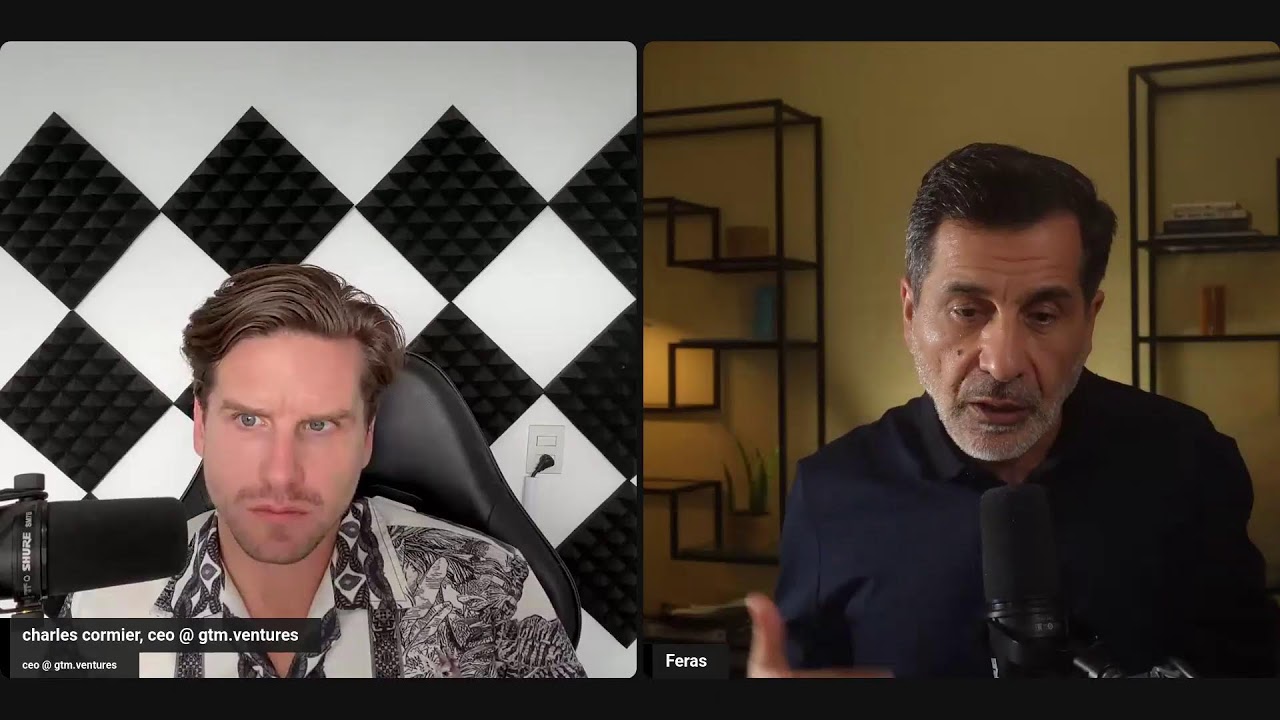
Feras Alhlou, a 7-time founder, built a web-design firm to an 8-figure exit, then grew a second company to seven figures in four years through content marketing and partnerships instead of paid ads. He now runs eSense and Startup with Feras, a coaching platform with a $5,000/month tier for consultants and a course called Black Belt Startup.
Chapters
Welcome to another Founder Wisdom podcast. We have Firas Alu with us today. Firas is a founder and CEO of a couple of companies. One is Startup with Firas. He's a speaker as well. Another is eSense. Been with the American Red Cross for what, like 15+ years or something like that? 10 years? I've done a bunch of things. He helps professionals start and grow consulting businesses. He helps you win your first clients. He's an author as well, 7x founder, $70 million in revenue generated, 8-figure exits. That's pretty impressive for us. Welcome to the pod. Tell us a bit more about yourself.
Yeah, thanks so much for having me here, Charles. A lot of hard work led to that exit, but it all started back in 2003. I was a VP of a cutting-edge tech startup here in Silicon Valley. And one day, the CEO walked into my room and said, hey, Ferriss, I want to talk to you. He closed the door. I said, oh my goodness, what's going on? He said, hey, Ferriss, tomorrow we have a layoff and you are impacted. That was a devastating event, probably one of the hardest events in my professional life where you start to questioning— you start to question everything, your self-worth, why me, what happened. all of that. But a couple of days later, I had a young family, a wife and 3 kids, and I was the sole provider at the time. So, I got to get back on my feet. I couldn't get a job at the time. It was a very, very dry job market. So, partnered with a friend of mine, we started a business selling websites to small businesses, very small businesses. In 2003, that was pretty cutting edge. And struggled a lot for the first couple of years. Didn't know how to sell, didn't know how to market, didn't know how to deliver. But we figured it out. We had to. And then got to 6 figures, got to 7 figures, and then eventually we got to 8 figures. And then we sold the business back in 2019. And since, I took a couple years off to work, to do some pro bono work for nonprofits, including the Red Cross and other things. And then back at it building and growing and helping other founders and other other entrepreneurs succeed.
And the 8-figure exit, was that Enor?
Yeah, that was Enor. Yeah, it was a digital analytics consulting firm here. Yeah.
16 years in the making. So overnight 16-year success?
Overnight success, exactly. Only the only time overnight success works is on social media. I mean, it took us, to your point, it took us 7, almost 8 years to get to $1 million in revenue, maybe in that first business. Then we built a sister company, same services, but in Dubai serving the MENA region and part of Europe. It took us 4 years to get to 7 figures in that business with some amazing co-founders. So, it did take a lot of time, a lot of effort, a lot of sacrifice the first time around. I depleted all of my savings with the blessings and approvals of my wonderful wife. I did tap and depleted my 401 at one point, but it paid off at the end. But yeah, it wasn't overnight.
Isn't that crazy, right? Like that you, it took you like what, a decade to get some lessons and then you applied these lessons in another company and you like 3x shortened The speed rate at which you could get to money. Do you feel you could just outsource these lessons to an AI agent nowadays and it would scale a company that fast? Or do we still need like a human to embody these lessons and apply them in new business?
On LinkedIn, you can. But no, I mean, jokes aside, I mean, I'm in the heart of Silicon Valley. I was in tech for a long time. Even some of the consulting companies we've built, around tech. So, you definitely want to incorporate tech, whether it was CRMs when CRMs were the cool things, whether it was ERPs or getting into mobile, I mean, or getting into the cloud and data engineering. We were in those spaces, but you still need people. I mean, AI is different. AI is a different— I think Bill Gates recently said it's like an alien.
No, agents precisely. AI, I mean, yeah, I think we're getting out of that phase, but agents are totally game-changing and replacing humans.
But I think there's still, like we use whether it's generative or whether it's agentic, we use that in our businesses and I talk to founders who are using it. I mean, can you really do a large complex B2B sale Without a human, I don't know. I mean, maybe in 10 years you can.
Not yet, but it's coming. It's like all the signs are pointing towards—
Yeah, so I mean, you don't want to be left behind. You want to embrace, you want to automate. I know you're big on speed and, you know, you want to automate, you want to streamline anything that's repeatable, but especially in consulting and services, the human touch I think is important. And I think maybe there'll be a bit of a bounce back. People want humans to be doing certain things. Well, we'll have to wait and see.
Yeah, yeah, no, there will be. The human component, you know, depends on what market you're in, right? Like, but if I am dealing with founders that are starting AI agentic companies, let's say Y Combinator in the Valley, like they'll be down for no humans in the equations, right? The human touch, that is. I think the human magic though, the, ability for the brain to match patterns and to find ideas and to make sense out of nonsense at a very low energy cost. I don't think that's going to go away. I think it's still going to be complementary to AGI to some degree, and that's not about to be cracked. But most humans are not that magical, right? Like some guy that places boxes from A to B, Or this copywriting assistant that I had 3 or 4 years ago, I mean, totally replaced, right? Like not useful. I had all kinds of roles in my agencies. I managed 10 of them the last couple of decades. I managed over 2,000 employees and freelancers and most of them are, at least their past version is obsolete. I'm pretty sure nowadays they wouldn't be like that much better. What'd you have to say about that?
I see certain things are impacted as we speak. You mentioned copywriting, you mentioned, you know, design, graphic design, video editing, some, you know, like you would hire an entry-level person to help you with certain things. 100%, you can do a lot of that with automation, with AI. Now, video editing, I have a YouTube channel, you have a YouTube channel. I have Don, my amazing video editor. He uses AI very, I mean, he went Oh, he went all in on AI and learned a lot. And he was hired to do some AI work for some companies. But you still need the creativity of an editor, of a creative director. You still need— he was very creative in how he used AI in some of the videos, like me, like my older self converting, having conversation with a lead when I was learning sales. So I think that's a very effective way of using AI, but will there be a day when you give a tool a raw video and then it comes out ready to go for, you know, for main stage? I don't know.
Yeah, it's very soon, very soon.
But everyone else will be doing the same. So I think you still have to be creative in how you're gonna package, what message you want to highlight, Like, no matter—
Like, yeah, your agent would be prompted to be— to take some of your brain, right? And, and to do things your way. It's like this video. Have you seen it around? Like the Michael song, like Hotel Lobby. Have you seen this one? Like with the 2 people around a microphone and just like, it's like Ferris and Charles around a microphone and rapping to Hotel Lobby. Like that one's everywhere, right? Not sure what company does that. I think it's Higgins AI. And everyone's pumping the same shit, right? To your point. So, but yeah, I think it's a couple of prompts away. But the thing is we're gonna evolve to new things, right? Like us humans, we're gritty and we're always good at coming up with new cool stuff, right? So.
And you work, you know, you work with founders, you advise founders. And I like, you can't just sit on the sideline. You have to lean in. Learn it, apply it, I think, in your own business as a consultant, as a founder, tech or consulting? And then also, are there ways, especially on the consulting side, can you also help your clients adopt AI? Because the issue, and I read what the McKinseys and the PwCs and the Big Four are doing, Clients, it's a change, right? So there's a whole lot of work around change management and applying technology. A lot of companies spend a lot of money buying tech, but they don't invest in properly training the people to use that tech or building, customizing the tech. So on the consulting side, I think there's a lot of opportunity for you to use it for your own business, but also to help clients properly Use AI in whatever workflow they're using, be it in your subject matter area or like in HR or like in operations or in IT or in marketing.
Yeah, huge market for that, like being a bridge. Talking about McKinsey, like, do you feel they have a future? I don't see good things for them. I mean, historically, yeah, hell yeah. McKinsey was— were ballers, man, like back in what, 1950? They were like the OGs, right? Like the smartest guys in all the rooms.
Yep. Yep.
But nowadays, shit, I don't see anything holding them on to life other than old school relationship with like old people buying their stocks or just deciding to deal with them because they don't know better.
That's a that's a good point. I did a actually, I think it was three or four months ago. I had a video on on. Consulting in the age of AI and my business co-founder, Eric, and I, we did a lot of research and read a lot of the reports by the consulting companies, the big ones, and the model had to shift. They would get 10 junior consultants in the past and then a senior consultant and then a partner and they would bill you accordingly. Well, now I think most customers are not going to pay for the hours for the junior consultants because they can the information is readily available, research, basic analysis, right? So, they're changing their models. They're going from that traditional pyramid to more sort of a thinner, much thinner pyramid and having, I think McKinsey or Deloitte, I forgot one of them. I think they were planning on having 20,000 agents to co-work with their consultants. So, you go to a client meeting, let's say in healthcare, in a specific vertical, you get subject matter experts, and then you get an agent to be with you throughout that whole process. So, they're changing the way— there's an article about the death of the hourly consulting. They have to change to survive. I think where they make a lot of money now, at least for now, is helping the big companies during this change management, like companies adopting AI. Companies need help with that. But long-term, yeah, I think concerned about junior folks.
Yeah, we have to do something. If I were them, I'd turn to a venture studio of some kind because like I said, there's still like something around human magic, right? And recruiting the smartest out there in the world and sort of for deploying them Palantir style into some other orgs. But yeah, I'd take equity and rev share in the orgs that I deploy in because yeah, they're model is under great jeopardy right now and they have lots of employees and so forth. Talking about consulting and your businesses, like how successful has it been since you've had your exit? I think you're at eSense now and then startup with Ferris. Like tell me a bit more about that.
Yeah, yeah, sure. Thank you. So eSense is a digital intelligence, digital marketing intelligence company out of Dubai. We started that business in 2012. Grew it, and then I had to actually unplug from that business because of selling the business in the U.S. I was under a non-compete, so I stayed out of that business for a while. And then when my non-compete expired, my co-founders there, they asked me to join back and be more of— I'm not involved in day-to-day. I'm chairman of the board, basically strategic support, networking, know people, know the industry. So that business is doing well. It's this last year, it hasn't been the quietest in the MENA region given the hostilities and the war. So, there was a bit of an impact on the business there, but it is, there's a lot of data and we help clients make sense of the data, marketing data. So, that business is doing well. I'm not very involved day to day, but I'm spending most of my waking hours with Startup with Feras, Eric and I and our team to really produce high-quality content, principles and playbooks for people to start, get into business. So a lot of our content is focused, you know, on YouTube, we picked a very, very specific niche, consulting, how to start and how to, if you started and you're struggling, how to get traction. But the concepts, you know, the mindset concept, the planning, all of that applies to all kinds of entrepreneurship. But we focus a lot on consulting on the YouTube channel and on LinkedIn. And we have, body of knowledge now that covers every aspect of starting a business from, from just having an idea to, to all the way to growing and hiring and, and all that good stuff. So, so it's been an amazing journey in terms of— my wife thinks I'm nuts. She said, why are you still working so hard? I don't know. I like to build and figuring out YouTube and understanding how to— the whole creator economy. I think there's a huge opportunity for creators. But it's not, again, an overnight thing. You might luck out, just like I always say, like, I don't buy lotto tickets, but it's like 1 in 293 million. That's your chance of doing an overnight success, especially with this content space. So yeah, we do a little bit of consulting. We search just from word of mouth. We get one-on-one consulting and we have a mastermind, but we're also putting a lot of emphasis on our content and we are about to publish a book. Hopefully before the end of the year that captures the whole framework, how to start, how to build, how to grow a consulting business.
And okay, so that's your main thing. What's your main offer, right? Like what do you sell to whom?
So our ICP, our specific person we help is someone who wants to leave corporate and start a consulting business or someone who just started and they're just not figuring things out. They're just struggling. So, we focus on going from like 0 to 1, not how to grow, not how to scale. Although some of the one-on-one consulting that people come to us for that, we can help them all the way through exiting. But the content that we have, the curriculum, the framework, we do have a mastermind. We have a site called Black Belt Startup. So, I'm into martial arts. So, we have the martial arts theme, flavor around our content. So, blackbeltstartup.com, we have a course you can buy and have access to all the modules. And then, you also can purchase the mastermind where you can get the course. And then, I have weekly calls with founders. We have like an office hour type setup where we answer questions and help them out.
What's the price for that? There's a lot of free content on the YouTube channel.
It's all the content, all free, of course, on the YouTube channel. Okay.
And you have masterminds, you have monthly products, right? You have courses. But ultimately, if I want to hire you as a coach, how much is it and what results should I expect?
So if you want one-on-one, it is— we do have that service. It's $5,000 a month. We meet weekly, we put a plan, and then my job is to help you achieve that plan. That's for the one-on-one, but for the mastermind—
What should that plan be around? Is it sales? Is it customer success?
Yeah, the one-on-one usually works. It doesn't work well for someone. I don't think it's set up. It's not set up for someone who's just about to start or someone who just started. The mastermind is perfect for that because you need to learn a lot of things. Like I was on a call today with someone and When I said, yeah, make sure your clients, when you're negotiating, make sure like it's net 30 or net 10, not net 60, not net 90. He didn't know what that is. So smart guy with patents, right? So you have to give them just the payment is different than revenue is different than, you know, profit, right? So you have to give them a lot of the fundamentals. So that's good. The mastermind is good for that. But for someone, let's say some of our clients in that category, the one-on-one is someone who is Well into 6 figures. They're maybe at $500,000, maybe they're at $750,000. They haven't done a lot of hiring yet. They haven't really done any sizable growth, but they're very profitable. And now they want to— they're just struggling to get to 7 figures, or they're struggling in setting up systems and processes. So that's where that one-on-one is helpful. It's very highly customized for the individual. And my background is is building growing companies. So with really the operator mindset, I look at what the founder is struggling with in this, let's say this month, this quarter, let's put a plan around that and make sure then you deliver to that plan.
How do you get these clients? What's your favorite go-to-market challenge?
So for, In previous businesses, when I learned marketing, I did everything, right? Failed at many miserably. But now, I mean, we focus on— in the previous company at Enoor and also at eSense, we leaned in a lot on content. So, at Enoor, we started selling web design, then we did search engine marketing and then pay-per-click and all that. And then, we focused on analytics and became one of Google's very few, a list of very few coveted certified partners in analytics. Over the years, we became one of the top 3 or 4, and then we became the number 1 global certified partners in analytics. So we focused on digital analytics. We dropped everything else off the plate, and then we started to write about that when blogging was a thing at the time. So, we were an early adopter of blogging and that worked really, really well for us. I think almost on every call I'm on, on a sales call or with my sales team later, and these were 5-figure, 6-figure deals, almost always one of the stakeholders would say, I read one of your blog posts and it was really informative. So the blog really contributed to our sales process. It didn't close the deal, but it was, and we valued content and case studies and being out there speaking at the industry conferences. We had our own conference at one point. So that kind of marketing really, really helped us. We didn't spend a lot of money on ads or those sort of things. It was more content and being out there that, Did wonders for us.
And how's been growth since you started the company? How much clients you run on typically? Is it 10, 20? And how's it been growing?
In terms of— sorry, I missed. There might have been a glitch. I missed. What was that?
Yeah, your number of clients, how's it been growing throughout the years?
Yeah, yeah. So, so In terms of like on the digital marketing space, we focused on the enterprise. Now initially we got whatever business we can get, just small business, get our processes going. But let's say for the eSense, the Dubai-based business today, we like, who's going to You need to have— for you to have meaningful data and meaningful analysis, you want to be spending money on marketing. So, by design, the service is oriented to companies that are spending money on marketing. So, we have Dubai Tourism, for example, as a client. We have Emirates Saudi Airlines. So, big, big clients. So, they need a lot of help in implementing the technology to collect data, and also they need help making sense of the data. So by design, the way we positioned ourselves is going after these type of clients. Initially, we didn't have anyone in that region when we started, but over time with a lot of cold calling, a lot of outreach initially, and later we leveraged content as I said earlier. But at this point, a lot of word of mouth and a lot of technology partners. And this is something I think a lot of founders, they underutilize is partner marketing. If you have a technology partner who is investing heavily in getting more market share and you can be part of that wave or part of that effort, you can ride that wave. Like when we became Google, I'll give you an example. When the first time when we became Google certified partners, Prior to that, our engagements were like $2,000 a month or maybe just implementation for $5,000. The minute we were listed as Google Certified Partners on the Google portal, we start to get all that inbound traffic with Fortune 1,000, Fortune maybe 2,000. And then the lead is already qualified. They're looking for help. We are already well positioned because Google said we're certified partners and their budgets, they're used to spending $10,000, $20,000, $25,000 with a consultant. So we had to, in a good way, pivot our approach and be a bit more polished and also deliver at a much higher sort of premium level service. So yeah, that's sort of the journey was start small, get the case studies, and then gradually with a growth mindset, start to go after larger clients, maybe mid-level. And then eventually, eventually we got to get Fortune 10. At one point we had Salesforce as a client, we had Google as a client, as a partner, and those are long-term contracts, very, very lucrative at the time.
How long did it take you to close these guys? How long was the sales cycle?
Oh my goodness. Months. So I always say like, I think there's some industry research as well. B2B enterprise in terms of a sales process, you're talking about 3 to 9 months. Again, this could be maybe made more efficient with AI on both parties, the buyer and the seller, but it takes time. There's just so many stakeholders involved. We also, just a side note, we also had the US government as a client, and then we ended up becoming certified on all the government portals and eventually became the number one digital analytics provider to the US government. So we had the Department of State, we had the Social Security, administration, we had the IRS, we had the GSA. I think we had 20 or so clients in the government and the cycle on those is even longer. A lot of times they do a lot of the government agencies, they look at a vendor the year prior and do that initial market research. They might send an RFI, request for information, one year prior and then when they have the budget planned, they start asking for bids like an RFP responses. So yeah, if you want to get into these large enterprises, which I think I recommend people do, just be ready that the sales cycle is going to be much longer. And then the payment terms and the requirements that these big companies ask of you is quite significant. So you have to be ready for that. The cash flow has to be there to support that kind of cycle.
And why is your branding all around martial arts? How did these change your life and how are they part of your everyday life?
It's, you know how you have ultra on your website? So this is martial arts is my ultra. So I mean, I started martial arts when I was young, when I was into karate, and then I almost got my black belt in Shotokan karate, but then my dad said, nope, that's it, because my grades were Not that great at the time, so I always wanted to get that black belt, and then you know get busy with life, and then got a little bit of judo, and then almost now twenty years ago I I got into aikido, and I wanted to get that black belt. That was my goal. I got the black belt, and then I fell in love with this with this art, and you know committed to it. I'm I'm an assistant instructor now. I I have a youth class. I I I read about it. I enjoy it. I practice it. The body still holds. So so it is. I think a lot of A lot of the you know you know about about setting up doing something difficult, doing something very aggressive like the the marathons that you run and the Ironman and and all these are difficult things to do. But that's how we learn. I think that's how we we not just physically we're able to do certain things, but also the mindset to get into something very difficult and going through it and completing that. It's it does. I think it impacts. your own way of thinking about problems in general, be it running or martial arts or obstacle courses or business. I think those timeless principles apply across, and we borrow some of those principles in our content and in the book that we're publishing.
Well, Firas, thanks for being on the pod. Where can people find out more about you?
Yeah, thank you for having me. And great content you have on your channel, on your podcasts. People can go to startupwithferas.com for the website, sign up for the newsletter, or just go on YouTube @startupwithferas, follow the channel, hit like if you like what you're seeing, and you can reach out to me on LinkedIn anytime.
Well, it's Ferriss and Charles for today.
More from Charles


Founder Wisdom: the audiobook, version 2 (5 hours of stories from founders and CEOs)

8 CEO Questions I Love Asking: the audiobook (64 founders answer, in their own words)





