👨💼 From Corporate to Foundership with Lon Stroschein Founder at Normal40
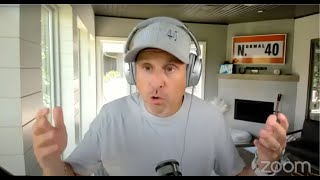
Lon Stroschein left a corporate M&A role at a company that sold for $2.1 billion to start Normal40, a coaching business. He uses one decision-making question: "Will I regret it if I don't?" He describes the loneliness and emptiness of high-earning executive roles, and shares tactics for delegation and knowing when to trust your gut over data.
Chapters
Another founder wisdom pod. Really fired to do that. One loan. Stroshine is with us in parenthesis dude on LinkedIn. Good job on that. I think I have like GPT outreach dude, so that we're two dudes on this podcast. Lon is founder at normal40. Hell of a storyteller. Been there, done that on his side. Highly successful guy as well. And I think an open book. You know, like we had a pre convo and he's straight up out there. He told me about CEOs coming up to him and just pouring their emotions out because they are not stuck in the rat race, but they are into something that is not fully aligned with either their best versions or their best values. We're going to dive deep into that today. So I'm really, really fired up for that one. This pod is brought to you by podpire.com, which is my company to start, scale or get invited to a podcast. Podcasting is great. Lon and I will talk about it today because Lon has his own pod. But it's just the opportunity to get to speak to amazing folks like Lon is the opportunity to get more subscribers, to develop a community, to get leads and even to get clients. So yeah, Lon will tell you about it a bit later on. For now, you can go on podpuyer.com if you want to start scale or be invited to Pod. Lon, I'm super fired up to have you today. Can you tell us a bit more about yourself and your background?
Yeah, absolutely. Well, thanks for having me on, Charles. I really appreciate it. And by the way, you said we had kind of a pre call to prepare for this. You didn't mention that. The pre call was about three and a half minutes. And we decided, yeah, we're going to get along just fine. Let's just go live with this. So here's a little bit about me. I'm a Midwest, United States born and raised farm kid and I always start out with that. My folks are still on the family farm. My sister operates the farm. And by and large, my happiest days are when I'm on the farm, sitting on the prairie all by myself, to be quite honest, just listening to the surroundings. So it is in my blood and it is a part of my life that I absolutely love. I had more success in my life than I expected to have. If I am being quite honest, I thought I was going to go home and run the family farm. It turns out in January, before my graduating semester, I got a call from a United States Senator's office. And he asked me if I would be interested in going to work for him. Long story short, they offered me the job. I said yes. I went to work for the United States Senate for about six years. In year six, we were starting a family. I was now married and a bank owner. He owned about. He still owns the bank. The family owns about a $4 billion bank. And they called me up and said, hey, I like what you're doing here. Would you be interested in coming to work for us now? I'd never lent a nickel to anyone. I lucked out. I made a positive impression upon someone, and he offered me a job doing something that normally is reserved for somebody who's got 10 years of experience. I said yes. There again, thinking that I might regret it if I don't. So that's always my. That's always the metric. Will I regret this if I don't do it? And if the answer is I'll regret it, then I do it. If I'll regret it if I don't do it, I should be clear, then I do it. I don't want to live with regret. So I said yes. I did that for six years. Then one of my clients in the bank was becoming the CEO of a public company, and he said, I love what you're doing. Well, you set up businesses for us around the world for a public company. Well, I'd never set up. I didn't even have a passport, let alone set up businesses. But there again, I didn't think that opportunity would come along. I thought I would regret it if I didn't say yes. So I said yes. And I spent 14 years with that company, having three jobs growing throughout my time there. And it ended in February of 2022 when we did an acquisition. I was leading mergers and acquisitions. We sold. It was a $2.1 billion transaction. I was on the sell side, leading as the executive in charge. And when we transacted, I didn't expect to get a job offer, but I did, because I was already having feelings about change and taking a bet on me. Long story short, I decided to separate. And I just quit and I left to go take a bet on me, to figure out what was for me next. And that somehow, some way, has led me to you, Charles. I'll turn it back to you, see where you want to go from here, man.
Wow. Okay. $2 billion. That is a lot of money. Were you nervous at the times of this transaction? How did you handle that?
Now? I wasn't nervous. Here's the secret of big transactions, the bigger they are, honestly, the easier. I mean, and I'm being honest, especially when we're public to public, I mean, it's just kind of what works. I would say I had more anxiety when we were buying. When we were buying companies and they were 30, 40, 50 million, then I had about. It wasn't just me, I want to be clear. It was the team of executives leading the transaction on the sell side, and our board of directors. I don't want to oversell my position here, but I was in charge of mergers and acquisitions for the company. And so it wasn't like this stressful thing. It just required a lot of work that we were prepared to do. So you were just going through the process, going through the motions, answering the questions, going, making sure communication was good, and you just going through the process. So I wouldn't say it wasn't. It wasn't. It wasn't nerves from the standpoint of, you know, I can't get this wrong or my job's online. It's just. You're just doing what you're trained to do.
How was that transition for you from corporate world to starting your own stuff? Is that. Is it something you've been tinkering long about? And was that transition uncomfortable or, again, it was like butterfly.
So here's what happened in probably just before COVID actually. So we're talking about the end of 2019, early 2020. I was at the top of my professional career. I had achieved way more than I had expected to achieve just 10 years earlier, honestly. I had a big title, I had a big job, I was making great money. I had nice cars, nice house. I had a good marriage, my kids were healthy. And on the outside looking in, everybody would look at me and say, man, this guy's got it. I mean, this guy's crushing it. How could he possibly be anything but just beside himself, thrilled with how he's living his life? And you know what? They're right. Why shouldn't I. Why shouldn't I be beside myself, Thrilled? But at the end of the day, about once every, I don't know, quarter, I would show up to my office, and I'd be the first one there. And I'd walk into my. I'd leave my nice house, I'd get in my nice car, I'd drive to my nice office, I'd go sit there by myself, and I'd go, is this it? I mean, is this. I mean, it's good. It's good. This is what I wanted. This is what I chased. But is this it? Is this what I'm going to do for the next 10 years of my life? Show up to this office and do mergers and acquisitions? And then I'd feel guilty. I'd be like, well, God damn it, why can't you just be grateful for this? Why can't you just be happy with all that you've got? Then that would buy me. Then I'd quit thinking about it, and that would buy me about another 30, 60, 90 days. And I'd show up in my office and we'd do it all over again. So, look, this itch started. This itch started in the end of 2019, and I separated in early 22. So I went a few years of going through these gyrations of, should I stay, should I go, should I bet on me, should I ride it out? And I finally decided that when my time came, this phrase entered my mind and I was afraid to leave. I didn't want to walk away from the money I wanted. I had this image that I didn't want to tarnish. And I decided that I wasn't quitting. I was finishing my work there was done. I was the mergers and acquisitions guy. The company that I was an executive of sold. My work was done. So I could just leave, feel great about it, and go do whatever I wanted to do next. So once I gave myself that permission, I gave myself the ability to think openly and freely about, hey, when is your work done? And what, are you clinging on too long? And I asked the same question. Will I regret it if I don't go now? I was 46 at the time. Will I regret it if I don't go? Take a bet on me. And I said, yeah, I'll regret it if I don't do it right now. So my work here was done. I set off. I had no idea what I was going to do. I never. I didn't have a resume. I hadn't needed one my whole life. I still have one today. And I just set out and I showed up on LinkedIn and I wrote about it. I told my story. Here's my story. Here's what I did, here's what I could have done. Here's what I said no to. I'm going to figure this out, baby. And my inbox lit up. Dudes from all over the world lit up my inbox, saying, how'd you know you had enough? How'd you know it was your time? What'd your wife say? What'd your Boss say, how are you going to make finances meet? Are you going to take another job? All the questions you'd think you'd have. Everybody came to me and I'm like, oh, I get it. People need help navigating this. I'm not alone. There's a lot of people. So fast forward a few more months. I decided to make a company around it and now fast forward a year and a few months. I've got a book and a podcast and I coach people through how you navigate that feeling.
She's just a hyper performer. Stuff that you do for you that might seem normal for others. It's like, yes, something kind of hard to accomplish. The book, the podcast, I think you were meant for this. I also think you had a lot of pent up energy. Maybe you were tinkering about this or maybe that was your normal in the career that you had. So my question for you, and I mean, yeah, you're obviously successful. You have clients like Ryan Morin. I saw the guy that I read his book, cool guy. How does one achieve that in that small period of time? I mean, the podcast, the book, you started that in 2022. I mean, you're not even like two years in. How did you do that?
A couple of ways. One, when you, when you get, when you are busy at work, busy being an executive. Busy at what? Whoever is, whoever can hear my voice right now. When you show up to work tomorrow and you're busy, you know when you're performing well and you know when you're not, you just do. And chances are, depending on what you're going to do at work tomorrow, whatever you've chosen to do for your career path, you probably found it. You probably. We decided to go there somewhere between 10 and 25 years ago. So if you're 45, somewhere around the age of 20, you decided to be a CPA or you decided to be an attorney, or you decided to be a doctor and go to law school, or you decided to be a public company executive, or you decided to be a banker, I don't care. You decided long ago when you were a different person what it is you want to do. And you, you started growing towards that. And over time you find out a bunch of things you like and a bunch of things you don't like. But you know what success is, so you just lean into that. But over time, when, when what you want to do leaves you, work feels different. It becomes a grind. It becomes this thing that, you know what success is. You know, you got to do A bunch of things you don't like to do. So you lean into it and you go do it. And that's where the grind comes from. When you're living off of mission, when you're living from the talents you have, not the talents you want to use, it becomes a grind. And it grinds you down and it makes you frustrated and it changes your mood from somebody who's usually pretty happy and loves to hang out with friends to kind of an asshole who doesn't even like to see their friends all that much because it's your ground down. So fast forward, that is. That is what I had become used to. And when I. When I started normal 40 and I just leaned into my talents and I got to do the things that I love to do, the things that light me up, you can tell this lights me up. I love talking about this because I love talking to dudes who are in it. They're in the knife fight, they're thinking they're alone and they're not. I want to connect with them. And the more I leaned into that, the more I felt on mission. And that is a term I use in my business. Are you on mission or off mission? You might be doing a mission, but is it yours? Are you on mission? So when I found out and I leaned into this and I just kept doing the stuff I wanted to do, the stuff that felt good, it got me on mission. So how did I do it? Quickly, I realized that I just did the stuff I like to do. And when you do the stuff you like to do, people notice and they want to be a part of that, and they show up and they participate. And so I just leaned into and with vulnerability, into LinkedIn, into social, started a podcast because a dude showed up to me, Adam Eaton is his name. He's spectacular. He showed up and said, I want to do a podcast. I'll do it for you. I said, good, let's do it. And so, I mean, just show up and say yes to the things that feel good, but say no to the things you know are off mission, and that's important. And then just chase it, man, just chase it. So that's. That's how I did it, I think. I, like I said I've had elements of luck, and I might have had some elements of luck in this part of my journey too.
Yeah. And just like being trained to be this, this Spartan, you probably don't even realize it to this day, but you're just this business killing machine and you had pent up energy as well. Plus you've got like a couple of serendipitous events, so good way to, to think about it. On mission, I will remember that I consider myself to be, you know, a pit bull. And when I grab onto something, I just don't let go. You know, that's how I view things. Am I on mission right now? Certainly. With this podcasting thing, think I'm scaling it. The problem is if I, if I allow myself to make a Navy SEAL analogy here. You know, there's always a commander and there's mostly executor, so the platoon leader and so forth. I'm the platoon leader for sure. I participated in the plan, but sometimes I'm so much in the action that I forget about the plan. Do you have any tips for that?
Yeah, I mean, you get the biggest thing is just to really understand yourself and be honest with yourself. So, and I'll use my own example when, and I think this is going to be true of most people. When you're in a position and you've got a team and then you have a boss, I mean, that's most of us. I mean even a CEO has a boss. It's called the board of directors. So when you're in that position, you realize that there's a whole bunch of things that you as the leader need to do. And sometimes we think that there's a whole bunch of things that we should do that good leaders should do and we start stacking on all of these shoulds. So we should of course go see our customers with our team. We should be a good mentor. We should understand the strategy, we should push people harder. We should meet our quarter end. We should, should, should, should, should. And you get so boxed in to just being an operator that you forget what you like to do and how to lead. So one of the things you've got to do is you've got to take a step back from all of that and you got to say, well, what am I good at? What do I really love and what am I just doing? Because that's what I feel like I should do. Now. Some of those shoulds you've got to keep doing. You can't delegate them. There's certain things, but there's a lot of things that you feel like you should do and you should be in charge of that you can let go of. And so I've become very clear in my solopreneurship on things. You know, this as I'm, I'm a one guy operation. I'm, I'M the only guy and I've got a lot going on. So there's a lot of things on any given day that I feel like I should be doing, but a lot of that I've learned to just hire somebody on fiverr or up upstart or something and just hire it out in upwork. Thank you. Hired out and get it, get it, get it off your plate, but keep the things you know you're good at and you want to continue to lean into. And I'm telling you that sounds easy and it sounds like a no brainer, but it is really hard, especially when you're a W2 employee, to tell your boss, hey, I'm not going to do this. That is wicked hard. But until you understand what those things are, you're just going to keep doing everything and you're going to burn yourself up.
Fully agree. And yet I replaced the word employee with bots nowadays because I've tried over 1,000 employees and was dissatisfied with results. Although I do have a small team right now. Good answer. I think we need to stick to our massive impact. We all have that superpower in us and then if we can massively generate an output in our own business and generate stats on the scoreboard, AKA money, I think we need to stick to that and the rest. Yeah, outsource it to bots or employees. Love that. Still have questions though with CEOs and execs that you talk about and they apparently put pour their heart out, heart out to you on these calls. What are they complaining about? Is it being stuck in a career they don't like? Is it a desire to go all into entrepreneurship like you did? Like what are these conversations? Heart melting conversations about what a good question.
And let me say, I'll start out by saying this. Over the course of the last 12 months I've had 451 conversations, one on one conversations just like this one with people who showed up to my LinkedIn site or my website which is normal40.com and they book a free call and I call them rambles and they just show up. But they know kind of what to expect. They know that I'm a dude who's done something that they are thinking about doing and it's free and they can just show up and explore what is it I went through and do I really understand what they're going through. So after 451 conversations, I know my guy, I know what they have, these people and chances are if you're on the edge of your seat right now tuning into this, going, geez, who is this guy? I probably know why, because I know what you have. You've got good income, you've got W2 income, and it's safe. And I know you have the ability to take nice trips, and I know that you have the. The obligation to be the provider for your family. And I know you have a great image and your image is important to you, not your ego. Your ego and your image are different. You get an image that you've set up, you've sought out to create, and you've done it. You've got the title and you've got a lifestyle that you really enjoy and you've got the memberships. I know what you have, and it's pretty darn good. And from the outside looking in, everybody wants what you have and you know it. But what do you feel? Well, you feel like there's a lot of days when you're on autopilot. There's a lot of days when you're kind of frustrated by the pace of things and that you don't feel better than you actually do. You feel controlled. You don't really have as much control as other people think. You have a lot of days you're unhappy. Some days you're lost, you're bored. Sometimes you're annoyed and you feel caged. It's lonely. Who are you going to talk to? Who are you going to tell about how you feel? No one. You know the clock is ticking. You're getting older. You can feel yourself getting older. You feel stale, lost. In a lot of ways, you feel stuck. And worst of all, right now, you feel like you've got too much to lose. You're making all this money. You've got all these things. You can't just walk away from this. Twenty years ago, you didn't have any of this stuff. Making a trade was easy. You've got too much to lose. So you feel guilty. You feel guilty for wanting something else, but getting everything you've got, everything you've already, you've earned. That's what you feel. So what do you want? You want some control? You want some balance? You want your energy back. Your energy isn't what it used to be. You want to do what you want to do without having to feel like you need to apologize for it or feel guilty for it. You want to stand in line at Disney World and not feel like you need to answer a text to your boss. You want some time with your family. You want friendships. You want to feel present. And this One's important. Dudes show up to me and they want to feel, they want intimacy and I'm not talking about sexual intimacy. They want intimate friendships. They want the ability to have a conversation just like you and I are having, Charles. But they want to do it deeply with people who they can trust to have a two way conversation with. They need some passion in their marriage. They need ease. And you know, the last thing they want is to laugh. These are the people who show up every single day and they talk to me. And why do they pour their hearts out? Because I'm a dude they've never met. I'm a name on a LinkedIn profile and I'm safe because I don't know their boss, I don't know their wife, and I don't really know their story, but I do. And they pour their hearts out to me and I'll be the first one they've told because I'm the first intimate conversation they've had in probably a year about how they feel. So that's why these conversations take on a lifestyle of their own. But that's why I keep showing up to say, dude, we can fix this, but you got to start showing up for yourself. Nobody's going to show up and do it for you, man. There ain't nobody who's going to fix this for you. It's on you. Wow.
Lot of power in that last two to three minute sentence. I resonate with pretty much everything that you say. The reason why I started level 96 is my community. The first level is free level 96 and then the ones are, are paid. A community is so goddamn important. Every point that you mentioned as well, although me, I can't relate to W2 stuff because I've been entrepreneur for the past 10, I still resonated with it. That's how good you are at speaking and like getting to these points, I could like picture myself in the shoe of that person. And I could relate to some points, you know. But yeah, definitely being a bitch to a boss is not in or man's DNA in testosterone, you know, like that's the very reason why I got started in business, you know, not only because I was smarter than my bosses, but because I didn't want to deal with someone that was telling me what to do. So can definitely relate to that part. And it's very. I didn't know that it was also lonely in that world because me, I talk to CEOs every time, every day, 10 to 15 times a day. I know how lonely it is in that position because you're sitting at the top. You know, who will you talk to? Your board? No, your, your board's not even on your side in most cases. So that's why communities come to the rescue here. And you can talk and you can pour your heart out in, in these conversations and, and just make sense out of what you're living. And I really love also appearing laughing, you know, it's so serious out there. Like why, why so serious? Why can't we have a laugh? Why can't we play? Why can't we have fun? Why can't we be kids, you know, and, and run and fight and, and be little boys? Sometimes I think it's a good thing to, to go back in her childhood and embrace her true nature. And especially in men. What I see and what I very much see in myself is being heart centered. I use, I use this as a weapon for God knows how many years. You know, it's a very, very lethal weapon. But what about the heart? There's so much wisdom in the heart for connection, to understand things that the brain cannot understand. And what if you go down the heart, you know, what is there? There's a gut, you know, to listen to that gut what it's telling you sometimes. So what do you think about, about these points in, in men and in executives nowadays?
Well, executives get where they're at by being really good with their head. They're being really smart, making good decisions, and they continue to climb by being really good with their mouth and being able to give orders, set a clear direction, communicate well. I mean these are the, these are the hallmarks of what, what leaders, what good, what leaders in companies look like. And I'll even say good leaders. You got it. You do have to be able to cast a vision and talk about it and communicate well. Those are table stakes for being a leader. But oftentimes we kind of quit there, we quit our development there. And what you learn, what I have learned since leaving especially, but especially since also becoming a coach, is that the best leading I do is informed not by my mouth, but with my ears and by listening to what others are saying and really digesting all the way in, listen to them all the way through and what are the nuggets of things that they are really wrestling with and it enables a completely new conversation. So, okay, that's my whole point of this is you get really good at using your mind and you think that if you don't have the stats and the proof and all of the information and Everything that's measured to make a decision. You won't make a decision. You wait, you send it. You go back to your team. No, I need to know what's the market share of this? And who's the number one seller? And you ask for all this bullshit information, which, by the way, isn't probably bullshit, but after your third or fourth time of sending someone back, it's bullshit. You're just afraid to make the decision. So what you have to do is at some point along the way, you have to balance your mind, which is trying to keep you safe, and your gut, which is trying to fulfill you and your mission. And you've got to reconcile that. And you can't do that when you're wielding the knife, when you're in the meeting, swinging a knife around, trying to survive the freaking meeting, you've got to do that by escaping. Take it some time to yourself. Get. I just told you in the top of this conversation, I told you how I love the farm. That's why my knives are down. I can just be by myself. I can think from my gut, and then I bounce it from my head, not the other way around. And I can do things and feel great about things that feel good. And so I am a big believer in trust your gut. And not everybody is in. Everybody's way are different. If you take an accountant, it's hard for them to trust their gut. Show me the numbers. I'm not an accountant. I come from more of the sales side of the organization. I'll make big decisions, huge decisions, with probably 35% of the information. That, too, is good and bad. So I'm not here to say that's the right formula, but I'm saying I know it. I know how I'm wired, and I know then how to. How to reason through it, right?
Depends, like, on how you're wired. But generally speaking, filling your brain out with information and then letting the heart and the gut do their things over the process of multiple days. It's funny, you know, like, me, I wake up on a daily basis with podcast insights. You know, like, okay, I wake up, and literally one minute after waking up, I have like, okay, you should do this, that and that. Magic, the transition. And exactly when I heard you say they should take a bit of time away from that world, I. I pictured that exact same spot as you. Just that me, it's like a little lake, and with a rock that I can sit at and meditate and look at the lake and a sunset or something. That's what I pictured the transitions an important topic here. Some might feel that they're kind of lying or not staying true to them, themselves, their companies and the execs they're accountable to. It's not really that way. I feel. It's just first, it might benefit their performance to take some time for themselves and think and journal and, and get some insights out of what they want from life is not necessarily stopping to have a setback. I think it will also help them in their, their pro career. But my question is it feels like there's still a very tough transition there, a hard zero to one transition. If they want to make the move first, like what kind of move can it be? Can it be to a company that is more aligned with their value in which they can have more power, in which they can have shares, in which they can be more entrepreneurs? Or does it need to be the 0 to 1 like full time entrepreneur like you did? Does it need to be that rough? Can it be a bit softer, a softer landing? Or does it need to be a hard landing?
So here's what I tell all my clients. So two things. One, I don't let companies hire me. So if a company wants to hire me for their employees, I don't do that. Here's why. Because if I'm talking to somebody who's not who after meeting 3, 4, 5, 8 or 10, they decide, hey look, I've got this passion, I want to go be a chef. I don't know some other thing I don't want to have to say, well, I can't talk to you about that. I want to talk to you about why you're not hitting your numbers. I will not. I mean that's the worst possible thing in the world for me. So I'm only hired by individuals. And the reason being is so that we can do, we get to follow them, we get to pull out of them what it is that lights them up. What it is they love to do, what it is they want to, who it is they want to help, where it is they want to live. And we can just pull all of that stuff out and it takes a long time because you forgot how to dream. If you are 45 and you have been an executive or you have been in your career for 20 years, you have forgotten how to dream. I am here to tell you so we got to go all the way back and pull these dreams out of you. And so we've got to start building it from there and then figuring out what does this look like? And I Tell everyone the same thing. I don't care what you do. I don't get to care what you do. I just care that you care what you do and that we know that what you're working on is where you want to go. If that is a bigger position in your current company, great. If that's better performance in your current position, awesome. If that's a similar job in another company, great. If that's saying, screw it, I'm out. I'm going to go start my own deal. Let's do it, baby. I don't get to care. The only thing I care about is that you're convicted by where you're going and that we've done the work to know that it's the right direction to go next. And then we go.
And how's that transition? Is it painful and hard, or can it be livable?
It's unbelievable. Once you feel. Once you know your work there is done and you have clarity on where you're going to go next, man, it's the easiest thing. You can't wait to get out. You can't wait. It's like you can let you know what you start hoping for. You hope for a downsizing. You hope you get laid off, because then you got a severance package, too. Now, don't get me wrong. I want to be clear. I'm not advocating quiet quitting. That is something completely different. That's bullshit. But my point is, you're so excited to go that it's a bonus if you get canned, because then you get a. You get a severance package to go start your next thing. So it is. It's not. It's hard. When you don't have a plan B, leaving your plan A is miserable. Whether they ask you to leave and you get fired or you leave on your own, you have a plan B and you're in control of it and you built it and you're excited about it. Forget it, man. You're going. You are. Good luck. It's good luck to them trying to keep you there.
Yeah, let me try to describe that. So without the coach, they would feel anxiety if they're really good. Yeah. Maybe that anxiety would go away in that transition, I don't know, over 14 to 21 days. But with lawn, they get way less anxiety. They get like a fatherly presence that accompanies them and tells them everything's going to be fine.
Yeah. And somebody who's done it before and somebody who's coached 451 people through this, you know I. I would have. I could have never imagined one year ago, Charles, that this would be my life. I mean, I just. I just couldn't. But as you can see, I've. I'm. I'm kind of into it and I'm passionate about it. But I'm so passionate about it. I wrote a book called the Trade, and this is exactly what we talk about. It's normal. And at some point in your life, you're going to feel called to something. And I don't mean that in a biblical sense necessarily. It might be in the biblical sense. Like I said, I don't care if it is great, if it isn't great, but you're going to feel called to do more. And in that moment, you're going to make some decisions. You're going to decide to grind it out and tolerate the cap. You're at your cap. You're as high as you're going to go, more than likely, and you're going to grind it out there. And maybe you get lucky in eight or nine years and you get the big job, or you're going to decide to take a bet on yourself. And to do that is not free. That doesn't just happen. You've got to trade something, you've got to give something up, but you get a whole bunch of things in return. It's not free, it's not easy, it's not obvious. It's a trade. And the whole book is about that. What you go through, what you feel, examples of other people who have traded. I talk about all of these things. Who are they? What do they have? What do they feel? What do they want? What will they do to get it? Those are the things that talk. And then I talk about my process. You can do it on your own. It's pretty easy. It's four steps now. It's way better. Hey, guess what? Algebra is easy to read the book and then go take a test or get a tutor and a teacher. It's usually help more helpful. But it's just four steps and you can do it on your own. But, man, if you've got a community, you got a coach, and you got somebody who's done it before, pretty good stuff.
Yeah. Love the niche, love the product, love the niche. Yeah, I'm really bullish on your business. Last question, though. I don't want to leave without that one. You talked a couple of times about relationships. I love talking to other founders and CEOs about relationship and to get tips on that before we leave. So nowadays, obviously, I'm busy running various businesses. I want to be there for my wife, want to be there for my kids, which are planned in less than two years. Any tips on that?
Can you be a little bit more specific on just making time for family more?
Yeah, it's way more than time. The question wasn't that great. It's like energy, right? Like, can I. How can I maximize the love? Not minimize the pain, but create the best life possible for each of them? My wife and my children, I guess, would be a better question.
The best answer I can give you is the best thing you can do as an individual and as a boss and as an employee, but certainly for yourself, is to have great discernment and your ability to really discern what is really important and deserves your energy and what isn't that important. Even though it can feel like the most important thing in the micro, in the. In the minute by minute, but in the macro, in your big life, in your big life, it really doesn't matter if you have that discernment. Your life and your ability to allocate time correctly. And it is more than allocating your time because you can allocate your time with zero energy left and you really haven't done anything. So you need to allocate your time and your energy through good discernment. And it takes a long time to develop that because when you're 33 and you're trying, you're. You gotta. You're on the path to the C suite. Your discernment says family, second or third or fourth, friends, colleagues, work one, two, and three. And look, that's normal. And I'm not here to judge whether that's right or wrong. That's up to you. But that is probably what's happened. And in time, what usually happens is what you choose to prioritize through different discernment changes. But you have to follow that up with action and energy or nothing changes. So I would say that's the biggest thing. Always take an inventory in the macro. Don't make decisions about what's important in the micro. Sometimes you got to react, sometimes you got to do those things for sure. But if every part of your life is a reaction to a conversation you're trying to avoid or a conversation you just had, you're doing it wrong. You gotta rise up above that and have a solid level of discernment.
Love it. And yep, let's never forget that we are our first priority. Like it's your own oxygen mask. First, right, and then second us as, as men And I don't want some prehistoric here, but we're out there hunting, you know, and our goal is to protect the family, make sure that they're healthy. That's the number one goal. And then yes, I really love the discernment part. You know, where do you want to invest your energy? And that takes a lot of experimentation. So thank you for that wisdom. Lon, where can people find out more about you?
A couple of places. Probably the place I show up most often is on LinkedIn and that's where most of my following is. Just Launch Droshine at LinkedIn or normal40 on LinkedIn. They're both going to find me. And I have a, I have a closed, free, private community in LinkedIn that you can join. I let people in one, usually once a week and you can come in and there's, there's a little over 3,000 of us in there and men and women feeling if, if what I described earlier, who you are, what you have, what you feel, what you want, if any of that's resonating with you, come on into that community because that's where we hang out. Nobody in big LinkedIn knows you're there. Nobody in big LinkedIn knows what you're. If you're commenting or liking or engaging, you can just come in and it's free. And I show up there on occasion and the community is great. So you can find me there. Find me in LinkedIn. I post every morning. The other place you can find me is normal40.com and I've got another community there. It's 25 bucks a month, but I'm there, I'm in there. I'm bringing this heat twice a month to the people who are in there and we're living it and coaching through it. And I've got a book. 3 weeks ago I put out a book, Charles, that I can't believe how well it's done. I self published it, I wrote it myself. And it's kind of blowing my mind with who's finding it. And the notes I get from people are blowing my mind with the, with the decisions they're making and the focus it's given them and the energy they get back when they, when they use these lenses that I'm talking about. And it's a quick read, it's 170 pages. Everybody can have six hours in their week to eke that out. So the book is called the Trade. It's available on my website, normal40.com or on Amazon. The Trade by Lon Stroshein. And you can. You can find me in those places, man. Oh, one more thing. I've got a podcast called normal 40 the podcast. I show up there. I do. I very similar to you, Charles. I don't know if I'm as big a deal as you are here, but I get some pretty. My podcast is unique because I just talk to dudes. Well, men and women. But I use the word dude a lot. You can forgive me for that. I just talk to people who are in it. They're in the fight, and they tell their stories, and some of them. And their stories are incredible, and we just keep it real.
Love it. Lon. Yeah. Dudes and dudettes. Podbuyer. Com. If you guys want to start a podcast, Scala podcast, get invited to one. I'm Charles Cormier, your host.
More from Charles


Founder Wisdom: the audiobook, version 2 (5 hours of stories from founders and CEOs)

8 CEO Questions I Love Asking: the audiobook (64 founders answer, in their own words)





