Gigi Gupta - Founder & Chief Success Officer Arcis
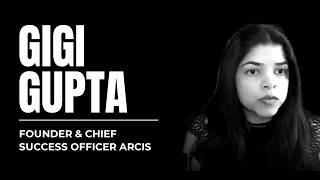
In this Founder Wisdom Podcast episode, host Charles Cormier interviews Gigi Gupta, founder and Chief Success Officer of ArcSys (Arcus), a private, year‑long leadership cohort for women executives. Gigi shares her 20‑year career spanning investment banking, hospitality, AI, and education, highlighting how building a brick‑and‑mortar childcare business (Children's Lighthouse) taught her the power of empathy, servant leadership, and culture. After selling that business, she led AI chatbot and cloud migration programs at Marriott, then returned to entrepreneurship, co‑founding Arcus with two fellow coaches. Arcus offers immersive retreats, a proprietary curriculum, and a small, intentional cohort of 10 senior women leaders. Gigi discusses her coaching philosophy—blending powerful questioning with deep industry expertise in AI and marketing—her go‑to‑market tactics (warm outreach, LinkedIn, partnership with Women in Cloud), and the current challenge of filling eight remaining seats. The conversation also touches on the role of human connection versus AI, the importance of empathy as an energy source, and how her co‑founders complement each other through cross‑coaching relationships. Gigi provides contact information (gigigupta.com, LinkedIn) for listeners interested in the program.
Chapters
Welcome to another Founder Wisdom Podcast. We have Gigi Gupta with us today. She's the founder and chief success officer at ArcSys. ArcSys is a private year-long leadership cohort for women executives. She's been a founder at a bunch of other companies, which we're gonna discuss today. She's all about leadership strategy, advising. She's also a bestselling author in Dallas. Area. So, Gigi, welcome to the podcast. Tell us a bit more about yourself and what you're up to.
Thank you, Charles. Thank you. I'm very happy to be here. I first of all want to congratulate you on becoming a new father. I just saw that. How's everything? To a beautiful daughter, Maite. Is that how you say the name?
Yeah, Maite. Thanks. Thanks for that. Yeah, it's amazing. It's great. Are you a mom yourself, or—
Yes, yeah, I have two kids. I have a daughter and a son. Yeah, nice.
How's that, how's that been for you?
It's been great. Yeah, well, my daughter is about to go to college this year.
Oh, that's a long time ago, so 20 years already. Time passes quick. Any lessons for us from being a mom? Like, uh, how's that, uh, benefited you, challenged you?
Oh, that's such a good question. Yes, it's, um, I believe in the fact that they learn more from watching you or seeing you, what you do, rather than, you know, you telling them what needs to be done or what they need to do. So always, always they're watching and learning, and I'm always surprised what I miss. That I was being a certain way, they always notice. So just know they're watching.
Yeah, that's a good one. So yeah, tell us a bit more about yourself and what you're up to nowadays.
Yes, yeah, so about me, um, I have spent about 20+ years at building things, learning, growing, and leading in multiple industries That's where my strength comes from. I've been with investment banking, hospitality, IT, journalism, AI, education, public service, franchise ecosystem, small business, nonprofits, startups, coaching, advising. So that variety is what taught me to notice patterns fast and connect the dots. And my passion for leadership started when I built and scaled an 8-figure business. It was a brick-and-mortar business. And, um, for 7 years, then I sold it. Then I went back to the corporate world with the Marriott, and I led AI and cloud programs there. Then I spent the last year deep into the startup world where I was leading the product and marketing for some really exciting ventures. By the end of last year, I was like, I need to go back to building my own thing. And so taking whatever I could, I sat with myself and I thought this was, this was who I was, a coach and advisor, you know, and I had been doing that for some time. So Arcus was born with two of my other co-founders and And so, so that's what we launched end of last year, and it's a transformative and private year-long leadership cohort and immersive retreats for a group of 10 women at a time. So we kept it intentional, small, and for C-suite, VP, director-level leaders, women leaders. And alongside that, I advise founders and executives who are scaling fast, but they're starting to feel that the machine is running them rather than them the other way around. So they're getting burnt out and, you know, running out of runway. And so I love going into the chaos and kind of solving that along with them, being a strategic partner. And I've spoken in front of large audiences and still do, of up to 10,000 people, about courage and designing your life.
That's intriguing. Tell me about the, uh, yeah, the, uh, child— childcare slash children's lighthouse business that you built for 7 years. Like, uh, what prompted you to start your own business? Um, yeah, there's various intriguing parts of it. Let's, let's start with that one.
Yes, yes. Um, so my kids, uh, right, my daughter was born in 2008. And, um, that's when— and, um, um, me and my kids' dad, my ex-husband, uh, at that time, uh, we were both working in full-time jobs and, um, very time-consuming everything. And so my daughter was going to a childcare center and it became like a second family to us. And, um, so, and then they were doing you know, some kind of presentation on, you know, how to run a childcare center. And we thought how, I mean, I personally thought that this, that was almost a kind of service to the families who are working to take care of their children. And so that's where it was born. And at that time, at that time we were in New Jersey and the weather was very cold. So moved to Texas and, there was a lot of land here. So that's where, you know, I thought this is a good time. And so my kids were still small when, when I built it from ground up. And yeah, learned a lot there. Building something from scratch is a lot and taught me just about everything I know about leadership today.
That's pretty bold. To build something from scratch? Why not buy something? And how could you reimburse the expenditures of investing like, or, 2 or 3 million to building something new over 7 years?
Right, right. Well, it is, it was very intriguing to build something which would have our own souls, right? Like building something which which would mean more to us, and rather than taking, you know, something pre-designed. Yeah, that was it.
Very bold move. Why did you sell that one after 7 years? Like, wasn't that a part of you and like who you literally became? Why let go of your baby?
Yeah, it was a personal, Something was going on with my personal life. And so I sold it at a very— it was very highly profitable at that time when I sold it. So, you know, how at a certain point in your life, you know that, you know, it's not serving you anymore. I would say my heart grew a million times at that time, you know, seeing it could hold 250 kids at a time. And, um, I met hundreds of parents at that time and, um, I just felt like I needed to do something else at that time. And, um, that seemed like the right time to sell it.
And you said your heart grew a million times. Yeah, that's good. What, uh, other deep human or business lessons did you learn from your time there?
Yeah, amazing question. Human lessons is that empathy and kindness, I would say, is a survival skill. And I mean, always be kind, always choose to be kind. It always works out. And I learned a lot about myself. I didn't even know at that time that servant leadership was a phrase. And people told me that, oh, you are a servant leader. And I just became more and more of that myself there. And I think that's the best way of leadership that there can be, just rolling up your sleeves and jumping into the trenches. And so feeling how your team feels like taught me a lot about culture. The culture is everything. My book is about that. I tell a lot of personal stories there where, You know, culture feels like something which is good to have, but I say that is a necessity, a good culture in a company which impacts your profitability in the long run. So I talk about that because sometimes business owners, CEOs, they only hear the word profitability and they're like, you know, why do I invest so much in building the culture or team building activities? But it, it really does go a long way in terms of profitability. So I learned that there.
Yeah, I think, um, empathy is like energy abundance, right? Like, it's hard to have empathy when your tank is empty. Um, so I guess your job is like trying to make that tank full and manage your energy. But then once you start practicing it over and over again, empathy is the type of skill that fills your tank over and over again. So you become like more energetic and more enlightened, sort of. I, I won't claim I'm there. I'm certainly like working, uh, on it every day. But yeah, it's, it's also a skill that will survive like, um, this AI revolution that's happening right now, right? So like being more human, uh, AIs can sort of fake empathy, which, uh, is still valuable, but I feel they will lack like a couple of heart neurons here and there, you know. They will claim to understand something. Not sure if I don't know if that happened to you, but you reach out to an AI when you're in a not so good situation and then the AI really messes understanding your situation and is like, oh shit, I was naive for believing that this AI could actually listen to me and understand me.
I completely agree with you and I have been doing that. You know, a victim of that. You know, you do these days process stuff with AI. I do that all the time, and I have been in situations where I did that and I then decided I'm not going to do that ever again, and then I go back to it too. But there is no comparison of AI, and I don't know, I don't know with, you know, AGI, and there will be advances, I bet there will be, you know, progress and all, But at least right now, or really in the future as well, human connection, nothing beats a walk with my friend, you know, and, or, and then talking over it, or sitting with my coach, or going to my therapist. And I mean, even my therapist, I always request her to meet me in person, not virtually. If I can see you, it just feels different. And AI does does lose context. And my personal experience, I mean, you know, the chats run out of tokens and I'm like, oh, I think it's running out of tokens, it forgot about that certain thing.
Yeah, I have a question for you for, uh, Children's Lighthouse. How did you make sure that the buyer would fit with your values and that they would pick up the torch from you and keep on like the great service and the maintain the vision that you've set for the company?
That's a good question. My answer is not something you might expect. I sold it to my ex-husband. So he was not involved before, but then, so he had, he knew all the people and so he's, I think he's doing good. So he was the best buyer that I could find. Yeah.
And after that, you went back to corporate. Like, what was that decision about? Like, do you feel you can and still swim in the corporate lane, or you're fully dedicated to being a founder and entrepreneur again?
No, I did take a little break about, for about a year, and I truly sat with myself to see what I want to do for the rest of my life. Although I truly believe in being adaptive and, Setting goals, yes, but then pivoting if needed. So, so that's what I said with myself when I was running the childcare center. Almost all my clients were executives and leaders and they would talk to me. I've talked to them just about every day and they would tell me that you need to look into coaching because, you know, we talked to you, you gave us a lightbulb moment. Some of them said you were almost like the alchemist stone and changed my life. They really actually said that. So That made me think. I never knew about coaching before that. I looked into it. I ran into John Maxwell's program about leadership coaching and I went through it. So I did a lot of different coaching learning and I also fell into agile coaching. So I trained executives into that field. I was with an agile coaching training company for a little. Then I got this really good leadership position with Marriott and I was intrigued by AI. And so I ran their AI chatbot program for about 3 years and also some switches from legacy to cloud, like migrations. So learned a lot there, worked with a lot of vendors and AI chatbot, completely switched their customer service from agent-based to AI chatbot. So, but also I truly believe in effective altruism where, you know, where you put your time into, it's important. And a human on an average works for 80,000 hours in their lives. And, um, and where are you putting those hours into? So I would love to keep going with the chatbot and some other stuff with the hospitality world, but then I found these bunch of startups which were— which felt like truly giving back to the the society. And so I switched to that, and, um, I still feel coaching leaders, um, my, my impact or the ripple effect goes the farther, the farthest away. So that's where then my heart is.
And what are your greatest strengths in business and, uh, greatest challenges right now?
Right now Right now, we are going to market and I'm working on registering these 10 female executives. I have 2 seats filled. I want and need to fill 8 more seats. We just had a beautiful masterclass on leadership in the times of AI with a really big group of Women in Cloud and 250, more than 250 women leaders registered, and we saw the need of them trying to understand how to navigate these changing landscapes. So there is a high need, and I'm talking to several executives right now and trying to build an intentional cohort. So that is my challenge as well as my, my focus right now. The immersion, the first immersion we are doing in Palm Springs this year in July. It's in July, so I still have 2 months, uh, but I do want to fill it up as soon as possible.
And the business, the coaching business, there's so many other coaches out there. How do you make sure to distinguish yourself from, uh, the other offers in the market?
Yeah, so coaching has different schools of thought, you know, uh, ICF is a coaching, a golden standard of coaching. And they say that coaches only ask questions and they ask powerful questions. I do that, but I also bring in my expertise. And like I said earlier, connecting the dots between different industries. So I bring that, I can see their patterns. I know which questions to ask based on, and I have tremendous knowledge in AI, in the AI world as well. So I see myself as a, combination of coach and advisor, strategic partner. I sometimes jump in with them for their social media marketing. I'm like, do this or that. I built my website using Lovable. I don't know if I'm advertising for them, but so I had those kind of, yeah, those kind of experience. And I work, I love working hands-on and jumping in with them. I'm not sure if all the advisors do that.
And even the women focus is quite specific, right? I'm on, uh, ArcSys website and I think, uh, yeah, it's quite exclusive, right? Like, uh, almost, yeah, 18 months long, so like a year and a half, uh, multiple virtual cohorts but also like physical cohorts, right? Um, tell me about more about the physical aspect of it and Yeah, like how, how does it stimulate transformation quicker?
Yes, so imagine, so the first immersion, we are calling them immersive retreats. They are, uh, it's in— if you go to the Emerge tab, you'll see the picture of the villa we have booked. And, uh, you know, they'll have their own rooms. It's a very immersive experience where we'll start our days with the meditation and some some mind-body work, and because that is so much needed. And there, there will be— we'll be sitting in circles and talking about walking our leadership journey. So very, very deep human connection kind of experience. And it's all also very structured. So we have a proprietary curriculum that we are— it's very specific to our KISS. And that, according to that, will structure the, the days. And, um, uh, and then also all the, the, the meals will be chef— we'll have in-house chef and they'll, they'll be preparing seasonal meals. So I think all of that all together is a very, you know, mind-body kind of experience, which I bet they need. So there are, uh, whoever does the whole 18 months— so this, this immersion by itself is standalone They don't need to buy the whole experience, but if they do, they'll be going through 3 of these experiences.
So tell me about like the precise funnel you use also to get, uh, these women executive in. Is it cold emails? Is it LinkedIn outreach? Like what do you do to get, uh, potential clients?
Yeah. And I was reading about you. I thought I'll need to book a call with Charles Cormier to talk about it, but, um, also What I'm doing is very organic right now. Is the first one, the first approach I'm taking is very warm outreach through my connections, my past connections. And the two seats that I've filled honestly have been my past connections in leadership. And because they know they can bet on me, you know, they know if I'm doing something that's gonna be really good and high quality. So they saw the program and they loved it. And similarly, I have passed this on to friends and family. So I know, you know, new business, you've got to do that. And then the other one is just seeing whoever is my first connection on LinkedIn and is in a leadership position. So I'm going and learning about them and messaging them. I have gotten some interest through that. And the other one is just now our case, partnered with Women in Cloud. They have 250K women leaders and we are getting some leads from there. So that's, those are my only, I have not used any automation. Maybe that will be helpful. I have, I have used in my past company things like Instantly and what else? Yeah, build some agents and all, but for some reason right now didn't, didn't start with that. And I do, I do plan to in the future when it grows, you know, this is just the first cohort. Yeah.
How did you meet your co-founders, Jill and Elise, and how are you all complementary to one another?
Such a good question. Thank you. So we three of us met through coaching each other as coaches. When we are in leadership coaching, we have to collect some coaching hours. So the coaches do a lot of this, which is called cross-coaching. And so for cross-coaching, we started meeting each other and then it turned into every Saturday morning meetings. And this is over the past 2 years of Saturdays that the last year was when it started unfolding that we need to build something like this over the stories we were sharing with each other of, you know, what we are seeing in the corporate world. The burnout and women being the only woman in the room, in the boardroom or the, any company, uh, as decision makers. So kind of feeling lonely at the top. So we thought this will be a good idea to build something of a hive mind or a room of mirrors, as we call it, you know.
Um, yeah, I think the niche of women executive, uh, coaching is, is ripe. You know, like, there's also more and more women founders. I can think of like 2 clients of mine that would be a good fit for, for your program, and they run podcasts as well. I think, uh, that's, that's a must for you, right? When you talk about the GTM, like, you having your podcast and interviewing other high-performing women, that would be like probably your, your best top of funnel. Uh, but no, it's really cool. I like your background. It's really special, like 7 years at, uh, Children's Lighthouse and Empathy and then corporate and then like finally you going in your coaching practice again. I love it. Where can people find out more about you, Gigi?
Well, I have my own website, gigigupta.com, as well as Arcus. The email is all over there. And my LinkedIn is, I think, the best place to just message me or, you know, connect with me. And I will always respond to you within the day.
That was Gigi and Charles Cormier for an
More from Charles


Founder Wisdom: the audiobook, version 2 (5 hours of stories from founders and CEOs)

8 CEO Questions I Love Asking: the audiobook (64 founders answer, in their own words)





