🍏 he has coached Apple’s leadership for over 25 years
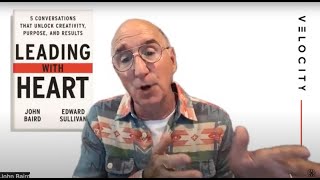
John Baird, chairman of Velocity Coaching, has worked with Apple's leadership for 30 years and coached founders at DoorDash and MasterClass. He discusses how leaders must understand their own identity, manage their energy around their team, and navigate the tension between hiring similar high-performers and building neuro-diverse teams.
Chapters
Welcome to another Founder Wisdom podcast, Coaching edition with John Baird. That's what well pronounced, right? John.
John, yes.
There you go. John's a legend, basically. We've been talking together for the past 10 minutes about Steve Jobs, Johnny Hive and how to manage you, man. So this is going to be a, a fun one. John, can you briefly introduce yourself before we get in our last convo?
Yes. Well, I'm chairman of Velocity, which is a coaching firm that coaches founders of startups. I had 17 years at San Jose State University. I left after a year at Apple. Apple bought my time from San Jose State, and that's when Steve Jobs came back. I had just the opportunity and honor to be able to work with the iPhone group. I never coached Steve Jobs, but coached a lot of people around him. I still do work at Apple, so yeah, I, I work with founders. I like startup journeys. I like taking them from the beginning stages to, you know, series B, series C. And I love taking companies public. So I'm on the journey with founders I work with, which I love.
I was talking on mute. I was saying it. I'm very honored to have you on today. I have a lot to learn from you. So let, let's get back into our last topic, which is Johnny Hive and Steve Jobs having a Venn diagram over the, the performance, the high performance and their expectations. I think one of the reason of my failure also I, I wanted to mention is my energy, right. Like yesterday I tried to describe myself and I, I used the bezels analogy, which is weird to describe yourself as that. But I'm, I'm long, hard and smart, you know, because most of my life nowadays is work, so that's how I describe myself. But I'm also that way in personal life. And the heart is intensity and the long is. That means my energy, it goes a very long road. And I feel that with all the employees that I had, they never really had that energy. So I think we weren't compatible for, for that reason. My glass, it's like a 10,000 liters glass and theirs is probably a 10 milliliters. And as soon as I'm around them and my glass over spills, right? There's just too much water for them, too much information, too much weight. So what do you think about that? Should I surround myself with similar folks to me?
Yeah.
Yeah.
Well, you know, getting back to connecting this somewhat, Charles, to Steve Jobs, right? I mean, he was very, very clear on who he was. And when I coach people, oftentimes I'll say, you know, regardless of whether this is good or bad or people like it or don't like it. Who are you as a leader? He was so clear on who he was. He was very good at zooming in and zooming out. I mean, there were things he really was very concerned about. He was into the details of how things looked and felt and plugs on things. And he loved to problem solve. But he's also good at zooming out and giving things away to people. I mean, he hired Tim Cook, so. And he hired people actually to be able to work issues that were things that were not in his space at all. So it's interesting, he was very clear on what he expected, what he wanted. Even though it was challenging for people, the challenges were very clear. I like clarity of leadership. Who are you as a leader? And for you, Charles, who are you as a person? What's your style? What, what, what do you like? What do you don't like? How does that work with people?
Long, hard and smart? So there you go. Very, very high performer. And I mean I've developed my EQ over the last year, but I feel that this is just to compensate, like you said, for me not being clear about my expectations. I'm a hyper performer. I'm at $10,000 an hour and I hire $10 an hours to work with, you know, so my, my next thesis is instead of hiring, I'll just work with some partners, either co founders or like strategic partnerships, and only work with high performers. So that, that's going to be my thesis with, with humans on the short term.
So they're going to be people that are like you. I mean, are you hiring people that are more similar to you or people that are different from you?
I like different neural diversity because it brings angles that I wouldn't normally get. I I guess like 80% neurodiverse and 20 similar to me.
Yeah, I like that. I like the 8020 concept there. I, I work with a lot of teams that are not as neurodiverse or diverse in general as I would like to see. And you know, the more, I mean, diversity does matter, you know, all the McKenzie research, I don't know whether you've looked at that research, but it's very exciting to see that diverse teams actually take longer to solve problems because there's just so many things to work through. They end up getting to a better solution that is high performing and increases the ROI for the company. So it's not just a nice thing to have with diversity. It is really going to actually affect the Bottom line. So I wish the teams I work with were more diverse than they are. That is being worked on boards, particularly because I do a lot of coaching work that also impacts boards. I wish the boards that are actually managing and investing were more diverse.
The heart could have Steve Jobs use. Have used more of the heart to lead. Or do you? Because I'm reading Elon's bio by Walter Isaacson right now and it seems that both share that asshole that we were talking about and it seems that it works a lot. It gets people moving. It is like scarcity and urgency injected into people's lives. And when that happens, humans get shit done. Is that what they're meant to do? Probably not. You and I were talking about AI. But is the heart a falsehood in this capitalist system? Is it compatible with my investors goals?
I think it is. I think it is. And by the way, I think Steve Jobs had a heart. It's. It's not something that's really talked about but everybody has a heart. Everybody feels everybody has that often. The often is what's talked a lot about. But he did so many things with heart with people that's never written about. Because the things that people want to read are all about the sort of negative side of that. I think heart is really important. Assholness works really well when you are really credible, innovative. You have this stature, this sort of like almost guruness about you because you've done these things that are very innovative. They can get away with a little more of the ness. Because Steve got away because he was so brilliant, so creative people wanted to be with him. It was like I want to, I want to be in your presence. We're developing something so creative and innovative. So again I think that is a part of this whole thing with heart and. But I think I. I like seeing heart. I like coaching heart. You can still be tough, really direct expectations, high performance. I'm not sure it's assholeness. I have a lot of people that I coach that are really good leaders that balance that heart and that head. They're both needed. People want that particularly down through the organization. They need it. So I think top teams often get the assholeness right and they can take down through the orgs as people are executing et. They need to be supported, cared for and have heart. So yeah, very different. The top and also through the org. Yeah.
Such a slippery slope though. Once you get market confirmation, you know you want market confirmation as a startup for sure. Product, market fit.
Yeah.
But it. Once you get it too much, you become Mainstream and you become full of yourself. Pretty sure that Steve went through these valleys and highs of that. So how, how can you make sure not to let it get over your head? Because when that happens, usually your downfall. Answers.
Yeah, that's such a good question. Charles around just. And I see the cycle. I often coach people through that cycle. If I'm with them, Charles, for a period of time and oftentimes I am with them for a year, two years, sometimes longer. I do constant check ins. We all have a dark side. There's a interesting about. I mean I think if I wrote another book, it might be about the dark side. And I manage the dark side because everybody has it, I have it, you have it. But I, if I'm coaching them and I see the dark side and I hold up the mirror and I'll say it's time for feedback. And once I hold up the mirror and people give the feedback and say, oh my gosh, you've changed, it's different. Then they can deal with oh, I like the change or I need to come back a little bit. One standard deviation. So one little change or nuance can make a difference. Hold up the mirror, check in, give them feedback and get them back on track to who they are. So again, I think feedback is critical to that.
Who or what companies have you coached in the last few years and what have you seen as main challenges and founders?
Yeah. So Door Dash is a company that I've done a lot of work at early stages with. DoorDash Masterclass. You know Masterclass as a company. Do you know them?
Yeah, yeah, obviously they're big.
They're big. Yeah. So just, just evolving with them through their journey.
Yeah.
And then I still do work with Apple. This is actually my 30th year working at Apple. So yeah, so I was there when she and I've just been a consultant and I've continued to work and coach there in general. So those are some of the companies that I'm working with right now. There's more, a lot more, but those are a few.
What are challenges that you often see in humans that like I guess like 80% pertains to mindset and Lego blocks that they don't have or bad LEGO blocks that they put on themselves. So what are these precise Lego blocks?
Yeah, the LEGO blocks that people have. I mean some people are very command and control and as you evolve through the startup, you have to be able to show support for the team care. How do you balance. So the Legos are. How do you balance that Heart and that head together. Some people have too much heart. We talk about this in the book. It's like overdone consensus, everything. It's like there's a great need to be liked and conflict avoidance. If you avoid conflict and have a great need to be liked, good luck as a leader. That's a really hard one to change. I don't know if you've known people like that, Charles, but I mean they, people love them and like them, but there's no correlation between likability and effective leadership. Lots of correlation between respect and respect, but, but not likability. And so the Legos, I try to build the, the direct communication Legos with the one who wants all the support, command and control. How do you bring some heart into that in your conversations with people? So I'm always balancing head and heart in the coaching.
Want to ask Apple? Apple has some ness to the brand as well, but on the other side they promote. I wouldn't describe it as woke, but we, we see that dichotomy which is like, hey, this is a thousand dollar phone right there. And on the other side in Apple Fit, they're all about inclusion. So I'm, I'm not sure about Apple's brand nowadays. This is like off topic. But would you, would you describe Apple the same way? Don't you feel there's a dichotomy at play here? Is it because Steve is not there or is it Steve's legacy to be like, hey, include everyone for money and oh, 1k a phone. What do you think about that? Controversial take, contrarian one.
So the question is what? Charles, it's like rephrase the quite. I think I know what it is, but I want to be clear.
Yeah. The dichotomy of the brand here and it's, it's, it's almost an attack towards Apple, which is like one of my favorite brands because it's luxury. But on the other side, I think that they tried to be woke on a branding level. So my question is, do you feel that there's a dichotomy here or is it hypocrisy in plain sight to be like, oh, we have $1,000 phones, but hey, this is for everyone. Is there an agenda at play here?
Yeah, I don't know. I don't think they think about that. I'm not sure that Apple, I mean, all the time I don't think they think about that. I think they think about making good products and doing things in the right way. I mean, I feel like with, with all of the sustainable stuff in terms of their products. I don't know whether you watch. Did you watch the introduction of the phone? Did you see that whole, that whole thing where they have a whole sort of piece on sustainable products and how they want their products? Not that, you know, the planet, all of that. I think they really believe all that. I really do. And I think it's. And I think it's a company that really definitely believes in inclusiveness and diversity. I, I don't know. I. It's not something that I think a lot about. I think the brand itself, it's not a conflict for me at all. I like what they. I like the products they make. I also like the way in which they talk about their brand and what Apple is all about. And it's very real, I think, within the company.
Interesting. Yeah. The last conference I didn't watch because I was disappointed in the fact that they think that putting titanium on a phone is like innovation. This seems like such a Tim Cook era. I think if I was an investor in Apple, I'd be really happy with them because that's what they try to maximize nowadays. I do think that the Apple vision is going to be a game changer. I haven't tried it yet. You probably have that privilege, but not really.
You mean the whole the AR thing?
Yeah.
No, I have not. I mean they don't. No, they don't. I mean people I coach at Apple. But you don't have. They're very secret about those kinds of things. They really are.
Yeah. I'll buy it.
I think, Charles, what's interesting about Apple is that they're, you know, because their products all work together, they kept that organization very flat purposely. They're only 100 plus vice presidents. That's not very many for a company that large. Yeah. So that Tim really wants people across the organization. You know, iPod versus AirPod, you know, you know, iPhone, itunes or. They wanted all the products actually, Charles, to work together. So it forces a lot of cross functional communication which takes time for innovation, but it makes the products all work together. It's a company that works cross functionally very well. They are forced to work differences out and they push the decisions down, which takes longer. I wish they were faster at times and more urgent about innovation. But I think they like the idea that they're forcing the kind of integration of the products, which is like I use all their products. They all work nicely together.
There you go. And I think that's a huge advantage right there. Yeah. And being kind of a Crab in the bucket. They're at the top, you know, and so they will face more criticism. I think it's valid criticism as well because they have a bunch of users and yet, like, Tim is sort of the dream CEO. He's very ocd about every detail. And having everything work together is a challenge. You know, these AirPods connect to my MacBook, then to my iPhone, to my iPad work.
Yes.
It's complicated and it only gets more complex. So, yeah, I'll keep that one for another podcast. But I want to ask you, as a coach, what are your top three goals for the remainder of this year?
For me, as a coach, yeah. It's really to push my clients to the next level. Right. I have this concept called the left hand. I don't know your left hand. Do you know what the left hand and the right hand, you know that concept? This is a really. The right hand is what's being said, what's being talked about in a coaching relationship. Right. My left hand is what I'm thinking but not saying. So as a coach, I want to use my left hand. By the way, I like hearing left hands in meetings. The more left hands there are, you're very left hand oriented. You speak very freely, very open. I think Steve Jobs was one walking left hand column. He was a left hand.
Right.
You just knew. Exactly. He didn't hold back on anything. As a coach, I want to use my left hand. I want to push people. So one goal is to push them too. I want to measure my impact on the company. I want to be able to have that coaching has an impact on the roi, the quarter, whether that means the quarter gets better because the CEO is pushing things. We're coaching. Retaining people is a metric. So I want to have more metrics for coaching. And thirdly, I want to take more companies public. So I'm a business coach. I want the coaching dynamic, the way that we're working with people to make a difference in the business. So. And I'd like to. There's, there's companies that I'd like to invest in. Sometimes as a coach, we take investments, sometimes we don't. It depends. I'm like you. I have some companies out there that I'm interested in as well. So those are my three goals.
And last, last but not least, the TLDR version of the book. What are these five convos that can unlock creativity, purpose and results?
Yes. So I would say to you, Charles, what are your gifts? What are you best at? Right. Are you doing what you're best at more of the time. Right. You know, what are your needs? What are your needs around the way in which you work, your space, your time, your nutrition, you know, your sleep, all that. What are your desires? What really motivates you? Right? And some of those desires can actually derail you. That's the dark side, right. Of it. What is your biggest fear? What are you afraid of? What are the things that actually you think about in terms of your confidence, etc. The fear chapter is really an interesting one. And then finally, what is your purpose in life, in your company and with you? So those are three questions, and we use them with teams. We use them in our coaching, and they actually start really good conversations. So good coaching starts with the right question and the right conversation.
Wow. Gonna unlock a sample of the book right there to. To read more about it. Thank you for the wisdom, John. Where can people find out more about you?
Yes, John, at velocitycoaching.com is probably the best place to reach me. And I'm on LinkedIn and Instagram, all those kinds of things. So anyway, Charles, great conversation. You're a deep thinker.
I am, yeah. That's one of my strength. Independent thinkers, systematic thinking. And the fear was like, oh, finances, most probably. And the purpose is definitely helping out humans. The same humans that I don't want to work with, ironically. I do want to help them. I don't think it's by enslaving them in my company, but I do want to help people grow. And it's not to make them feel happy. It's just to help them grow. You know, that's my definition of happiness. Quantum quote. Or a scalable one at least, because if you're 100% of the time happy, I don't think that scales. Yeah, it was nice having you. That was John Baird, and that was another founder. Wisdom podcast.com if people want to start scale be invited to podcast, they can go to podfire.com, my podcasting agency.
More from Charles


Founder Wisdom: the audiobook, version 2 (5 hours of stories from founders and CEOs)

8 CEO Questions I Love Asking: the audiobook (64 founders answer, in their own words)





