He invested in Open Table, Zappos and Turing.com
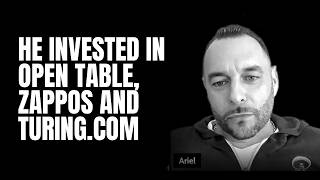
Ariel Giadis of Brainstorm Ventures discusses early bets on OpenTable, Zappos, and KIO Networks, and explains why Mexico's large digital market with minimal VC presence drew the firm's focus. He also covers Turing.com, which reached a $2.2B valuation by providing AI-trained remote engineers and data labeling for OpenAI and Anthropic.
Chapters
Welcome to another VC Wisdom pod. We have Ariel Giadis with us today. He's a venture capitalist and an impact investor at Brainstorm Ventures in Miami, Florida. I had a good time talking with Ariel so far. Found out he was a— he's still an ex-Argentinian living in Miami for sure, and Kauffman fellow, which is always a good sign. Had a non-common career, I would say, and Just glad to have him on to talk about all his investments, deal flow, how he raises from LPs. So Ariel, welcome to the podcast. Tell us a bit more about yourself and what you've been up to.
Thank you for having me. Yeah, I'm happy to talk a little bit about my past and what we do at Brainstorm Ventures. How far back do you want me to go?
Zappos, I guess. Zappos is like the first thing that caught my— Yeah.
So let me give a little bit of context. So, um, my partner who I run Brainstorm Ventures with, he, uh, founded the firm after having a successful exit as an entrepreneur. Um, and at the time he was thinking of it as a one and done fund. He didn't have aspirations to build, you know, kind of a multi-fund generational firm out of, out of that. Um, fortunately that first fund, you know, this is while I was still in college. Um, was first investor in, in OpenTable, um, where we held the board seat and got pretty involved with that company. Um, first investor in, in, in the first round with Zappos, um, and, and Tony Hsieh's company. Um, and then also we were the first investors in this company called KIO Networks that became the first, uh, unicorn in Mexico. Um, ended up getting acquired by a, by a, uh, a private equity firm. And so that was a fun one. My partner and I met at one of the pioneering impact investment firms that he had gotten recruited to help build out when impact investing was kind of this new idea in the early 2000s. I met him there, and then for a number of re— we ended up getting pretty close. And for a number of reasons, I convinced him, you know, we were seeing a lot of deal flow. That we were super excited about, like early-stage tech deal flow. We were both based in Silicon Valley and had interesting networks, um, especially him with all of the prior work he had done at Fund 1. Um, but none of those companies were a fit for the Impact Fund. Um, so eventually I convinced him like, hey, why don't we go back to what you started at Brainstorm and build it out? So we ended up doing, um, Fund 2 together, which was vintage 2018. Fund 3, which was vintage 2022, we're just finishing up investing out of that fund. And then now we're transitioning to Fund 4. So that's a little bit about—
That's Eduardo, right?
What was that? Eduardo, yeah. Eduardo.
Okay. And yeah, we, let's go even before that fund. Like you were born in Argentina. When did you move to the US? And yeah, tell me a bit more about your background.
So I was actually, I'm the only person in my family born outside of Argentina. I was born and raised in New York City. My parents had fled Argentina in the 1970s, grew up in Manhattan, went to public school in Spanish Harlem. I have dual citizenship, so I consider myself Argentinian, Argentinian-American, American. My entire family is in Argentina, so I go back pretty often to visit them, which was one of the dozen or so reasons why I chose to move to Miami. From San Francisco back in 2020. Um, yeah, so grew up in New York City, um, with my mother. My father had moved to LA when I was like 5 years old or so, um, ended up moving to LA as a teenager, um, went to Berkeley, studied engineering, worked at Intel, um, in Silicon Valley, which once upon a time was a really interesting, innovative company in Silicon Valley. So that was, that was a great experience. Um, and then went off to business school. Um, did a brief stint with the United Nations Development Program in Caracas, Venezuela. Um, worked at, um, this group called BridgeSpan, which at the time was still part of Bain and Company. It was a consulting practice that worked with a lot of nonprofits, foundations. So we did a ton of work with the, with the Gates Foundation as well, as well as with governments. Um, did that for a couple of years and then landed at this pioneering impact investment fund where I ended up meeting Eduardo and, and kind of began my career as an investor. So that's the—
nice. And you guys have roots in Mexico City as well? Is that the Eduardo sign?
Yeah, so, um, Eduardo actually grew up in Cuernavaca, Mexico, and Mexico City. Um, we even now— I mean, each of our funds I would say about 20%, maybe a little less than that, of the portfolio companies are companies that are based in Mexico. Um, sometimes it might be like an Argentinian founder team, but they're, they're launching in Mexico because it's a larger market. Um, so that's been a small part of our investment thesis from, from day one. Um, funny enough, we just recently— not recently, but a couple of years ago, we invested in the, the next company of that founder who had founded Mexico's first unicorn, KIO Networks. He now has a new company that's in the same industry but more kind of tailored to the new reality with AI. Um, and it's a data center play. Um, so we're investors in that company now, which is also a Mexico City-based company.
Nice. Yeah, I'd love to talk to this guy. I'm in Oaxaca, as you know, and always love meeting people physically. Uh, do you see something in Mexico? I mean, yeah, there's certainly high population growth, high quality of entrepreneur in Mexico City specifically. What's your thesis on, uh, on Mexico?
Yeah, good question. You know, so on the one hand, a lot of the frontier innovation that's happening is— we think is really happening outside of Latin America at this point. It's happening more in Silicon Valley, United States, maybe in, in a couple of places in Europe, in the Middle East, um, um, whether that be kind of stuff at the intersection of AI and biotech, or a lot of the frontier AI models that we all know about. Um, what we find interesting about Mexico is that several things. One is when you start thinking about Spanish-speaking Latin America as one region, um, it's large. Um, it's— I think it's third only to the US and China in terms of market size. Um, there's high levels of digital penetration in Mexico. Um, at the same time, there's relatively low venture investment. Um, and, you know, just a couple of anecdotal examples, and I'm probably getting this wrong, but I think Mexico City is or was Uber's number one market in the world as a city, or number— maybe number two, number three. Um, Spotify, Mexico City has been up there. Um, so— or maybe Mexico as the country was— is number—
a small joke on Mexico City. You know why it would be their number one city? Because people would stay one hour Uber cab to go 1 kilometer away.
Fair point, fair point. Yeah, traffic is horrendous in Mexico City. It's one of its few, uh, few downsides. But yeah, so there's a bunch of— and then obviously it's like uniquely situated on the border with the US, and there's just— there's a lot of interesting, um, reasons why we, we were still bullish on Mexico and the Latin American region as a whole as a small part of our investment thesis. Um, I think another thing that's You know, it's something we've believed in for years, but it's slowly now coming to fruition, or is this kind of nearshoring play where, you know, we're in this economic war with China and Mexico is very well positioned to play an important role there. Um, so we find that pretty interesting as well.
OpenTable, how did you guys get in on that deal?
Yeah, so OpenTable, so the, the, the business that my partner, um, co-founded and exited prior to launching Fund One was in the restaurant space. It's a very scalable quick service restaurant concept, um, that was tech enabled that scaled to 30 or so locations before they sold it to a strategic. Um, so the intro to OpenTable was natural given that they understood the restaurant industry, but at the same time they understood technology. Um, so that's how Eduardo was connected to OpenTable. You have to remember at that point there wasn't, you know, restaurants were still operating on pen and paper, right? In terms of reservations, it's not the competitive environment we see now where there's, you know, on the reservations side, there's a ton of players that are competing with each other and driving down costs. But then also with the Toasts of the world and all of these other providers, there's a pretty complicated tech stack in the restaurant sector. None of that existed when we invested in OpenTable.
Interesting. And Zappos, tell me a bit more about that deal.
Yeah, I mean, again, I wasn't personally involved in that deal. I was still studying engineering and not knowing what venture capital was, but it was, you know, which ends up being the case for a lot of our investments. We tend to be very network-driven in terms of where we source our deal flow. So that intro came through someone from our network. They, you know, thought very highly of the founders and they connected us, and then we bought into the vision and made that investment.
And do you think sometimes the genius of founders like Tony Hsieh is also like a double-edged sword? Like, what do you have to say about founders and controlling their— I don't know, their demons and putting their energies into productive places? Like, have you seen a lot of founders, uh, struggle with mental health, like, while building a unicorn?
Um, fortunately, no. The Tony Hsieh story is obviously incredibly sad. Um, not only Eduardo, but other person— people that I— that I'm close with that knew him well, um, said nothing but the best things about him. Everyone thought super highly of him. So, you know, obviously he did have his demons, and, you know, what ended up happening was really sad. That's not something that we've seen in, you know, our small subset of, you know, half a dozen or so unicorns, um, fortunately.
But I mean, anxiety, deep anxiety of just building something and the expectations of returning the capital to your investors, the stress of always wanting to be ahead, I guess. Like, do you see some of that in your founders? How do you advise them when they come to you with these types of issues?
I mean, I think everyone's different, and I don't think that's something unique to the founders that were successful. I think there's founders that, you know, struggle. Sometimes they actually might have—
or VCs—
or VCs. Um, everybody's different, right? I think you have to treat people on an individual level, and for that, there's, you know, there's a, a relatively large— you know, again, so we're— we haven't really gotten into this, but we typically don't lead deals we typically don't take board seats. That being said, there's some percentage of founders in our portfolio that we end up getting very close to, particularly in the kind of the early days of that company's trajectory before they go out and raise subsequent funding rounds. And we play a smaller role in that founder's network. And yeah, I mean, everybody, it's just people, right? It's managing relationships. It's being there for people, it's being compassionate, it's being understanding. And I think that's, it's, I think with Ven— I think being a VC, it's equal parts soft skills and kind of like IQ, quantitative rigor, potentially more like, more successful VCs are probably even stronger on the soft skills EQ side. So I think that's an important skillset and it, to your point, I mean, when you're, when a, regardless of whether you're on the board or not, when a founder chooses you to be a mentor to them or somebody that they open up to, you have to be there for them, right? 100%, that's what you're signing up for when you make the investment, so.
Turing.com, I've heard of them, they're pretty big, especially in the AI revolution, but I haven't studied them. Tell me a bit more, like, about what they do and how Did you guys get in?
Yeah.
At what size and do you expect to make an IPO or exit for that one?
Yeah, so Turing, it's kind of beginner's luck. That was my first investment as a quote unquote VC and not as an impact investor at my prior firm. Someone we're close to, he runs a lot of the Stanford entrepreneurial community and the co-founders of Turing Both did their master's degrees in computer science at Stanford. So that's where that connection came from. We invested in the first funding round. It was a $15 million valuation at the time. Their original premise, and this is something that they, and this is something we like to see where you, you land on a problem that you yourself experienced. They had founded another company prior to Turing. And with that company, both of them are, are both of the co-founders are, grew up in India. And with that prior company, they ended up building out their engineer— a lot of their engineering team were remote engineers. And so they realized that there was an issue with onboarding and managing these remote software engineers. So the original premise for Turing was let's build— and their first company was in the AI space as well. And so with Turing, their original premise was let's build an AI automated platform that can find, assess, like build deep developer profiles for onboard and match soft, high quality, like top 2% software engineers around the world. So if you're like an insanely good software engineer in Nigeria or in Argentina, you go, you, you know, like you sign up for Turing, you go through this AI, like automated Assessment not only of your technical skills, but also of your, your soft skills and your communication skills. And then eventually you, if you're one of those top-tier engineers, you get, um, matched with a company which increasingly became Fortune 100, Fortune 500 type companies like a Johnson Johnson or a PepsiCo. Um, and then that software engineer is working from Nigeria, from Argentina, getting a pretty good salary for their cost of living. And so that was the original premise, AI-driven. They got some tailwinds with the pandemic that they were scaling that initial business really, really quickly. They skipped their Series A, they skipped their Series C. So, you know, and the founders were like, they're incredible to watch operate. And then by chance, and again, I might be misspeaking a little bit, but one of their clients was actually OpenAI with that legacy business. And so because of that relationship, when AI models, you know, hit the market, they then were recruited or started kind of a new business line to play a role in training that data. And helping those models. And so now that's one big product line, right? Where they are working with Anthropic, OpenAI, Google, Microsoft, like all of the large frontier AI models, NVIDIA, on advancing them, on advancing generative AI. Their other business is still very similar to what their legacy business was, where it's using this amazing automated platform that they built. They are working with Fortune 500 companies on building out their own in-house Agentic solutions based on their own proprietary datasets, et cetera. So that's, that's kind of their, their model right now. And yeah, they've, they're doing incredibly well. The la— their last reported valuation was at $2.2 billion, but that was over a year ago. They've since more than doubled their revenue. So yeah, it's been— they've given us— them and a couple of other folks have given us like a really cool front row seat to this kind of frontier revolution we're living through. So it's been fascinating to watch.
Yeah, because they've been involved with OpenAI, I see here, but they've sort of pivoted into talent. No, it's interesting. It's like, um, it's like a Scale AI play, right? Like sell, uh, picks to miners, to gold miners, sort of.
So the, the line of business where they're supporting the Frontier models is at a high level similar to Scale AI. I would say that their approach is much more sophisticated, um, and Scale AI just had like incredible volume, um, but it is— that is a very good comparative, uh, comp for that line of their business, for that half of their business.
But still like a very intriguing place to be in, right? Like AI talent, we've seen at some point, I mean, it's news, it's headlines, right? But $100 million bonuses for top AI researchers. If they're the middleman between that, it's like, I don't know, take 20% of that. That's a little $20 million for one guy.
I mean, there's not a lot of these folks on Earth, but Um, and the other part that's interesting is they sit in an interesting place where the frontier models aren't in the trenches, um, with the companies that are implementing their tools. Um, and then the, the Fortune 500 companies are not at the frontier models really deep into, um, what those frontier models are capable of. And then Turing's kind of in the middle. Um, so they're, they're really well positioned.
Um, how do they make their money? Is it the business model I described, like a percentage of placements if they place a human, or is it contracts? It's— is it the Upwork of AI on AI steroids, or—
it's evolved, um, on the, the, the, their legacy business model, which is now kind of evolved into, um, building the agentic solutions for the Fortune 500 companies. That was originally priced, yes, as a percentage of of the salary, like everything goes through Turing and they would take their cut. The, with the Frontier models, I think it's more contract-based, but it's evolved a lot. So I'm probably not the right person to speak to what their current pricing strategy is.
What, yeah, if you, I mean, I wish I would have like a small window on Frontier AI and I'm about to through various clients that I work with. What does it feel like to speak to these founders, right? Like, these guys have sort of the key of the world in their hands. I asked an AI the other day, like, what would be the most impactful profession right now? And it seems to be that it's AI researcher, right? Because once you sort of crack AGI, you sort of impact the full world pretty much forever, and there's no turning back. Do you feel, do you feel, uh, that, yeah, AGI is a thing, that super intelligence is gonna happen, as a guy that has like a sort of front view windows on what's happening there?
Yeah, I mean, I think it depends how you measure, but I think to some extent it's, it's already happened. Um, I, and I also think that there's other, you know, there's these large language models, they have one form of, of, uh, of operating, right, or they're based on one structure. There's other types of AI that we've yet to see. So I think we're still in the very, very early stages. Similar, we haven't invested in anything in quantum yet, but then quantum opens up like a whole new realm of possibilities that aren't currently feasible. So, yeah, I think we're just in the very, very early days. So it's both frightening and fascinating to watch at the same time. You're on mute.
At what stage do you use, uh, AI in your VC business? Do you use it for deal flow, for vetting, for due diligence? Where, where do you integrate it?
Yeah, it's kind of funny because I, I, and this is just me by nature, I would say we're within the, the realm of VC firms, we're probably on the later end of being adopters. Um, so we use it. It's not ingrained into our internal processes. We're a 2-person firm, depending on how you count, maybe a 3-person firm. So it's, it's easier to get away without implementing it. The, the ways we use it most are, um, getting smart on topics, uh, fast as an aid, um, as part of our due diligence or what have you. And then also in terms of, uh, uh, like storytelling, copy, that type of thing. Um, you're on mute again.
Are you guys raising a new fund nowadays? Like, what's your top priority for this year?
Yeah, so, um, we're raising our Fund 4. So that's obviously— it'll be— it's a— it'll be 2026 vintage funds. Um, and, you know, we've kind of stayed at this even keel where every 4th year there's— we have our next Vintage. Um, so yeah, that's the top priority. Obviously supporting our— there's some founders in our portfolio that we're working pretty closely with, so continuing to support them, and then, and then deploying capital, both follow-ons and initial, uh, um, initial investments.
When you say support, yeah, it's financial, but how do you support your founders specifically? A bunch of founders say they do support their founders, but most of them just sit back and watch. So what's your, your— the best way to support your founders?
Yeah, so we I don't believe in a platform approach, like, uh, where we, we like put our founders into a cohort and we support them all to the same extent. The most important thing is to not detract value, is to not, um, create more friction for them, create more work for them to do, and, and annoy them. The, the, the way— so there's some founders where we don't— we wire our funds and then we sit on our hands and wait. If they're looking for a very particular type of hire or they're raising a round, we might make a couple of intros and that's about it, right? There's not a lot of value you can add. I'll just give you an example. Like, so we're in a few companies that are kind of at this intersection of computational bio and AI. We just don't have a lot of value to add there. We're just happy that we're along for the ride. There's other companies where, you know, we're investing in the pre-seed, seed round, either it's a more novice founder, um, or they're operating— it's a founder that's operating in a space that we're more familiar with and we have, um, both insights and more introductions to make. Um, so those are the companies that we tend to get more involved with. I would say that where we add the most value for some of our companies is on punching above our weight. Again, as a small firm, in, um, and making really impactful customer introductions. So it's more on the revenue side. So customer introductions, business development type introductions, teeing up partnership opportunities. Um, where I think we're average in terms of helping our, our, our, uh, founders raise subsequent capital or fill out the existing round that we participated in. And where I think where there's a lot of funds that do a lot better than us is on playing the role of like a recruiting firm. So if one of our portfolio companies is like, oh, you know, we're ready to hire our first chief marketing officer, or we need a new backend engineer, we're not, we're just not wired to come up with a candidate list and present that to the founder. We, we're just not very good at that. So that's a place where we have not added a ton of value except for a random kind of exception here or there. Uh, so yeah, so that's, that's— but yeah, I would say on the revenue side is where we've added the most value.
I want to talk about one last portfolio company of yours that's quite intriguing, Varda. Um, yeah, it's, it's like sometimes my brain is like, why try to develop things that are so complex out there if you're gonna need to invest shit tons of energy and you're super smart? Why not spend it on frontier AI stuff or stuff that is more simple and could have a greater impact. Maybe, maybe I'm wrong about the second point, the impact point, because Varda, um, yeah, and maybe they've pivoted, who knows. But back then was, uh, yeah, like putting, uh, making drugs in space, right? It seems like pretty far-fetched, like bringing the thing into space and making experiments in space, potentially even with robotics, right? So yeah, it's obviously very impressive. And yes, they can create innovations for humanity by doing that, just like DARPA, right? And defense organisms have created a bunch of innovations that have used in other space. But yeah, one, do you, do you agree with like the thesis, like why SpaceX when there's easier stuff? And two, do you think there's commercial viability into building drugs in space?
Yeah. So it's funny you bring it up because someone who's very close to us that we're incubating something with, um, is, is with— was with DARPA yesterday, and the Varda's chief revenue officer was there also. And so he got to meet Varda's chief revenue officer, which was kind of funny. So it's funny you bring it up. But, um, so yeah, so let me try to explain. So Varda, they're— when originally, when we first saw Varda they were actually thinking of manufacturing fiber optic in space, not drugs. The reason they, they're manufacturing drugs in space, and the reason they had considered fiber optic cables in space, is that there are certain product types that have crystalline structures that are just made better in low gravity environments. And so for the—
why not build a low gravity machine?
So for the—
on Earth So for—
it's actually for the— like, in terms of just raw economics, for the first time it's actually economically feasible to shoot up raw materials on a SpaceX rocket, put them in an unmanned, uh, manufacturing plant, AKA a satellite, manufacture the product, and then drop it back down to Earth in an unmanned re-entry vehicle, which Varda, um, pioneered, and now they, you know, there's a new line of business around just having that re-entry vehicle that they've created. Um, and so I would say relative to a lot of other aerospace-type companies, Vardar is pretty straightforward. It's just they're, they're building the, the capacity, the capability to manufacture products in orbit that everybody knows come out better with less defects, etc. When you do it in a low gravity environment. So it's kind of a pretty straightforward business model relative to a lot of the other stuff you see. So I don't even see Varda, like if you think about the technical risk with Varda versus the technical risk with a lot of other things, it's actually de-risked to a larger extent than people would think.
I believe you. I'd rather go with simpler space tech, for example, Copernic Space, that's about to become a client of mine that actually is building a, payment infrastructure for space for payloads. That's smart, you know, it's like on Earth, but it's off Earth at the same time. And it's, uh, yeah, but it's intriguing, right? Ariel, thanks for, uh, being on the podcast today. Where can people find out more about you?
Yeah, no problem. So I'm, I'm kind of unique in that I've never had social media, so LinkedIn's probably the best bet. Um, and then, you know, our website's brainstorm.vc. Um, and, and yeah, just hit me up on LinkedIn. I'm pretty good about responding to messages.
I was
More from Charles


Founder Wisdom: the audiobook, version 2 (5 hours of stories from founders and CEOs)

8 CEO Questions I Love Asking: the audiobook (64 founders answer, in their own words)





