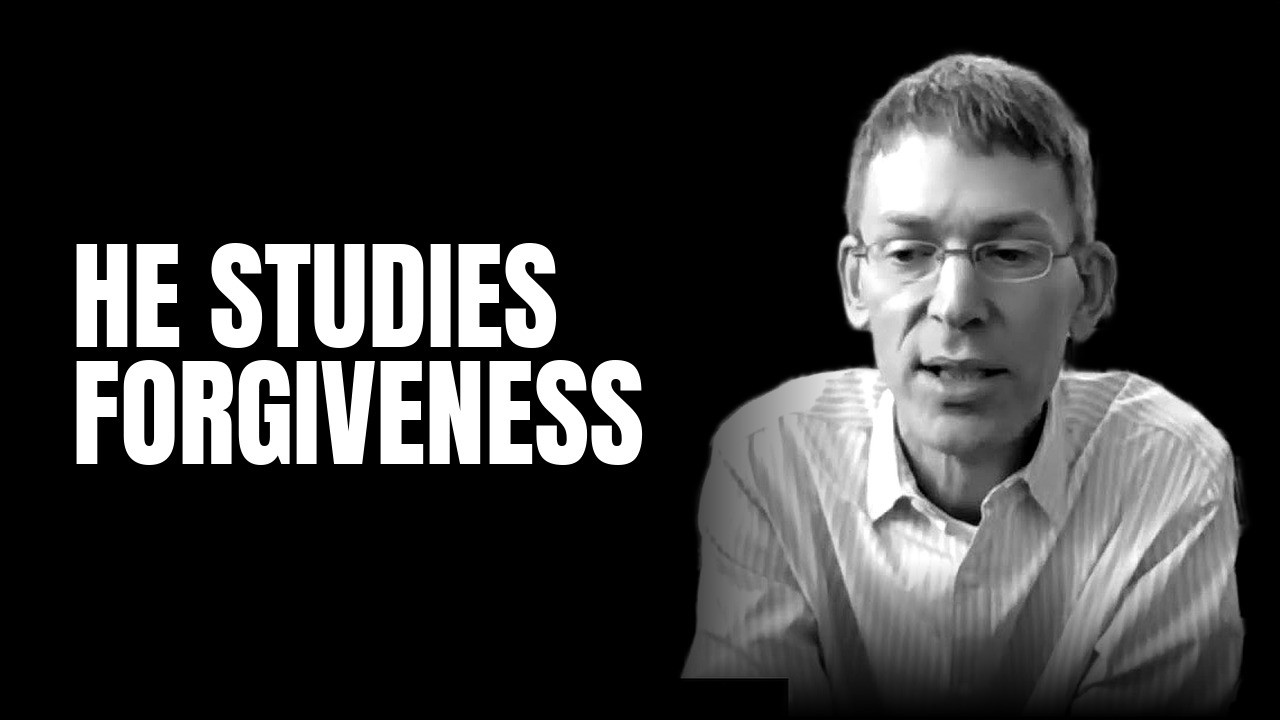
Lauren Toussaint, a Luther College professor, has spent 25 years studying forgiveness. She explains how it reduces cortisol and anxiety, boosts productivity by 25% in some workplaces, and works best as a learnable skill practiced over time using tools like the REACH model.
Chapters
Welcome to another Charles Cormier podcast. We have Lauren Toussaint with us today. Lauren's a professor at Luther College. She's an expert in forgiveness, has studied forgiveness more than pretty much anyone I ever spoke to. President at the Forgiveness Foundation and Discover Forgiveness Advisory Council. So Lauren, welcome to the pod. Tell us a bit more about yourself.
Yeah, thanks for having me. This is a lot of fun. I always enjoy talking about forgiveness and especially trying to help people understand what this thing really is. You know, we're in the middle of trying to understand forgiveness every day, and we do a lot of research on the topic. I've been studying forgiveness for probably 25-plus years now, and always with just a, you know, an aim toward Helping people do it better and then hopefully helping them to enjoy the benefits more.
How did you get into forgiveness? What was the— when was the first time that this caught your attention and how the hell did that make a career out of itself?
Yeah, it's a good question. You know, I had a very religious and kind of spiritual upbringing in the Christian church. It's a highly, highly prized value in that practice. And so I think that was a big part of it. But I also landed at just kind of a, you know, kind of right place, right time sort of thing. About the time I was getting my PhD, this thing called positive psychology was starting to really blossom. And I just ran into some really, you know, I was fortunate to run into some people that served as really good mentors for me. And got me started doing this stuff and understanding it from a kind of scientific perspective. So it was just good fortune and I think upbringing and background that led me to the question.
Why is it an important value specifically and how the religion you were brought up, is it also in multiple religions? Yeah. What are the physiological effects of forgiveness?
Yeah, those are super questions. Um, first of all, yes, it is perhaps the most widely shared value across all major world religions. You can look across almost anything and you find that there's some, some instruction, some, uh, kind of, in some cases, requirement, and sometimes it's more of a, a really highly, highly valued thing. So yeah, of course there are, you know, across the world lots of people that value forgiveness. And of course, even for folks that are more secular-minded, there's a whole kind of philosophical tradition that supports forgiveness. And when you ask about the benefits of forgiveness, there's a list, but I'll try to be brief here. It improves your mental health by decreasing depression and anxiety. It reduces perceptions of stress. And it improves your physical health primarily through your heart and through engaging the relaxation response, which we often don't quite give full credit to. But there is a whole kind of relaxation physiology that occurs in us as we try to, you know, kind of fend off the slings and arrows of a stressful day. And forgiveness seems to help us kind of engage that.
In the first place, what was the mechanism, mechanism or evolutionary reason behind anger, right? And holding on grudges? And how has that became like too much for us, too much of a load? How did, how did that not evolve with our environment?
Well, one thing we know is that revenge feels good. And anger is a natural emotion that we all feel in response to injustice. So, when somebody treats you poorly and you get angry with them, that's very normal. And, you know, you shouldn't really be ashamed of that. It's what you do with that anger that matters and what counts. One of the things that we know is that oftentimes anger can lead to rather destructive tendencies, especially as anger leans into more of the form of what we might call hatred. And hatred— there's— Anger might fuel the aim toward justice or a just cause. People sometimes get angry and then they activate networks and social systems that help them correct what is a perceived injustice. Hatred is never that. Hatred is always the desire to destroy, to hurt, to see someone else suffer. And so, there's some benefit to having negative emotions. They focus us. They teach us lessons. But they are limited in what they can do in the long term. And of course, in the long term, we're social creatures. We need each other. And you might make me angry and I might be very upset and I might want to, you know, strike back at you. In the short term, that might make me feel better, but in the long term, it means that I have one less person that can help me get through this world.
But is it also because our tribes were pretty small back then, just striking back brought like immediate benefits, and when the tribe got larger, this didn't scale, and forgiveness, I, I guess, became the de facto. Because if you strike back on this guy, then he had cousins and dads and, and family that would strike back on me and ultimately like not, uh, help me. Is that like the reason behind why forgiveness happened ultimately?
Yeah, so, you know, in terms of evolutionary value, especially if you think about small groups and families, Um, you know, the whole point is to kind of get your genes back into the gene pool again, right? And the kind of survival of the fittest and passing along your, your traits. If you strike back at someone and you're in a kind of a smaller context, a more intimate context, um, that actually defeats the purpose of, you know, the, the value of having people around you, the value of increasing your survivability. the value of being able to pass along your traits is all diminished by a kind of revengeful attitude. And so while you might, you know, revenge might be useful in establishing order or leadership in a small tribe or in a chimp colony, um, there's obvious reasons why that might be useful. But taken to the extreme, it almost certainly means your own demise. And so for that reason, another Another kind of adapt— more adaptive response had to evolve. And I would, I would argue that's what forgiveness is here for.
That's so interesting. Forgiveness, does it naturally feel good as well? Did our brain evolve as fast to provide like a reward to this, or does it just physically feel good because immediately you, um, you disarm a ticking bomb, sort of? And also, let me ask, let me ask that second question based on that. Is it beta behavior, right? Like in a human group, is it like beta behavior to sort of forgive and you're like, you're standing in your place, you're not challenging, uh, the alpha, whoever wronged you? What do you think about that?
Yeah, I think, I mean, for one, We know less about the kind of neurological functioning that's going on in forgiveness than we do about the neurological functioning in anger and hatred and kind of the negative side. It's been some time, maybe 100 years or so, since the founding of psychology and the study of things like brain and behavior. It's probably been about 25 years since we've looked at some of the more of the positive side. But what we do know is that forgiveness engages a lot of the areas of the brain that are involved in making assessment. And so, you kind of, you make an assessment of, is this a potential relationship that I want to hang on to? That's evaluation that you can put kind of a, at least the brain can put a kind of number on. Then it engages major parts of the brain that are involved in empathy. And empathy is often one of those things that kind of does make us feel good. And we kind of see someone else's perspective. We connect with them on kind of an emotional level. And we understand other people. And then the third thing that's key in the brain is that those mechanisms— often we think of like the frontal lobe as being the kind of the executive, the central executive. And forgiveness relies on our ability to inhibit are otherwise sometimes more banal impulses. And so you engage parts of the brain that are, you know, often involved in, in kind of what you might just call, for lack of a better term, peacemaking and restraint. And so, yeah, to the extent that these things lead to more pleasant outcomes, almost always, right? I mean, you can strike back and you can bloody the nose of the person that just bloodied yours. That's perfectly all right. But in the end, that situation isn't much better than the one that you started with. And so, forgiveness offers us kind of an alternative off-ramp where I might be able to bring this to a more peaceful close that's better for all of us involved.
For sure. I mean, it's the better behavior for sure in the world we live in nowadays because we're It's such a big world. There's so much competition, right? And also there's other people that don't think that way that might be spiteful, right? And try to have a revenge, right? And then as a CEO and a founder, you create like enemies and it's gonna bite back sooner or later. But isn't the— what's released there like oxytocin? Is that what's released in the brain when you forgive mostly?
Yeah, so, you know, we call it the love hormone and forgiveness is certainly an example of love. that when you think about love, you're expressing affection and care and concern for someone. And forgiveness fits right into that. Oxytocin is released. It reduces cortisol. It reduces other inflammatory agents that are not great for our heart or our other aspects of well-being, pain and swelling and so forth. Those are all great, wonderful benefits of forgiveness that flow from that collection of positive love-based emotions. You mentioned the effect that it might have for people in leadership. And I think this is critical. That some years ago, we published a study on some financial advisors that were trained in how to forgive. That's all we did is we trained them how to do better with forgiveness. This was not extensive. We didn't go on, carry on for a year, but it did go on for a couple months. And what we found is that those people had about a 25% increase in their productivity. And that's not with any other training, like making them better financial advisors. That's just the, that's just the benefit of dropping the baggage. And I think what we often don't realize is how much energy that takes from us to hang on to that and to hold on to that grudge, that, that kind of revengeful motivation. And when you let go of that, you're surprised at how much more energy you have for other things.
So, oh yeah, 100%. And that's just like one thing, right? Like what about carrying the stress of life and not just other humans, but all your responsibilities? The brain is just too much for your brain. It overloads, right? It burns out. A good case study is actually myself. Like 2 weeks ago, I did not finish a race I signed up for. 125K. I did like 94K. And still up to this day, my brain is processing it and it's like, somewhat of a hard time forgiving myself. What is there to say about, like, uh, forgiving oneself even before talking about others, right? Like, guess most humans have problems forgiving their own selves because they can think of themselves from the first person. They can evaluate themselves from a, a third person, right? Like, what is there to say about that?
Yeah, yeah, there's a lot to say about that. One of the things that I'll say first is that the benefits of self-forgiveness in, in many studies have, have shown to be about twice that, roughly speaking, of forgiving others. I think the primary reason for that is someone else can hurt you and then they kind of drift off into the, you know, the dark night somewhere. You forget about them a little bit. You forget about what happened. There's no reminder. But when you let yourself down, which I think is kind of what you're referring to here, is you get to, you know, the 94th kilometer and you say, That's it. I'm out. That's really hard to let go of because you're, in a sense, the one that's doing the hurting of yourself, and yet you can't get away from you. So you're constantly faced with the kind of reminder, the thoughts, the rumination. They don't go away, and you you just kind of have constant you know triggers of thinking about oh geez you know I don't know why I didn't prepare better or I don't know why I didn't eat better. I don't know why I didn't stretch better. Whatever it was that that held you back from the last. A little bit of that race, and it's really hard to get past that. And so self-forgiveness, in, in, in my view, is about 3 things: accepting that we're imperfect, finding the lesson that you've been taught in the wrong that you've done or you believe you've done, and then committing to change and re-establishing a sense of yourself that won't make that mistake again. So that's, that's to me Self-forgiveness. You you you recognize what I did is what I did, you know, and then but I did learn this, and you know because I did, I'm gonna try not to do that again in the future.
My case, it's interesting, right? Because I tend to not be like self-flagellating and like quite forgiving towards myself. But this one, I sort of feel it's deserved. You know, it's like it's always like Mr. Ego and being like, oh, I can. Do this, and this is easy, right? And I talk shit a lot, and this like, okay, bitch, now you know, you know, like you failed. You're not you're not gonna you're you're not gonna win all the time, you know, and you need to have that. So there's also some of that, right? Like but yeah, I guess most people aren't wired that way. Most people constantly nag their own selves, especially I guess they had like a tough. Childhood, right? And like, if their caregivers weren't like forgiving, right? And if they were always like putting the, the bar super high on them and that nothing was ever good, right? So what's a, what's a good like self-forgiving and forgiving other type of therapy? Let's say you come from that background, right? And you didn't learn like how to respect yourself and to be good with yourself and with others, right? To forgive them. And you're holding on to all that baggage, what's a good— what's a good way to, to start on, on the path of, uh, recovery and, uh, being lighter on your feet?
Yeah, so I think to be clear, there's 2 different paths. If it's, if it's someone that has hurt you that's really causing the weight and you're carrying around the weight because of, you know, the, the hurt that someone else did, you want to go down the path of forgiving that other person. And that's— there's some really good methods. The one that I have the most kind of experience with and that I love to share with people is the REACH method. And it stands for Remember, Empathize— the A of REACH stands for Altruistic Gift of Forgiveness— C is Commitment, and H is Holding On. And so what it really boils down to is You got to be specific about what you were hurt about, how someone hurt you. Try to understand what they were thinking, what they were feeling. And oftentimes when we do that, that's like a fulcrum point. And you can kind of, you can see things going in your favor. Give them a gift of forgiveness. Forgiveness is never deserved. It's never earned. It's just a gift. It's pure altruism, right? And the great thing about forgiveness is that no one deserves it. But if you can give it, if you can offer it genuinely, You're the one that wins most of the benefits. Then commitment and holding on are really about maintaining that because you're going to be challenged. You can think, oh, I forgave them and I feel so much better. As you said, light on my feet. There's one study that suggests that when people are estimating the angle of a climb, this is great for you because I know you're thinking when you're running uphill or something, it's like, oh man, I wonder how much of an incline this is. People who have forgiven, they estimate the angle of climb as being less than those who haven't. Those who Haven't forgiven. They see the challenge in front of them as being greater physically. So, you know, if you're working on getting past something someone has done to you, then we call that the Reach Model. It's available. If I haven't mentioned already, the website that I just love and I'm supporting every time I get the chance is discoverforgiveness.org. And that workbook, there's a workbook you can download. It's like 35 pages. You work through it. Might take you a while to get through it, couple hours or something, but You probably don't want to sit down and try and do it all in one sitting. If you do that, that's great. I think you'll see benefits. And we have, you know, psychological evidence that shows that it works. If you're working on yourself, then it's the 3 things I mentioned earlier. I have a little workbook that's called Restore. And that's all focused on acceptance, benefit finding, and commitment to being a better person. There's another workbook for self-forgiveness. It's called Moving Forward. And that's got a few, few other exercises, a little more things that you can work on. But a lot of it is just kind of recognizing that you've made a mistake and that you want to kind of improve and do better and become someone who, you know, doesn't have to forgive themselves repeatedly because you come— you really become a better person.
What about like using AI? Like, can't AI like role-play and help you? forgive close ones without you having to ever talk to these people, which can quite be shitty still. Like, I mean, toxic people, most of them don't change. Like, reaching out to them also is like— I mean, you don't need to reach out to them, I'm pretty sure, in your model. But can AI like help with that, like psychologically?
Yeah, it's a key— it's a key thing you bring up, and I'm really glad you brought it up because first of all, we want to make sure we say forgiveness is entirely within you. It doesn't mean you're going to reach out and make a relationship with someone again. That's called reconciliation. And if forgiveness leads to reconciliation, I think it's kind of intended in some part to do that. It doesn't have to. And certainly, no one should ever feel forced back into a relationship that they don't really want to be in. I think your mention of AI is a great one because I am really interested And as I suppose are many people, but I have a colleague that tells me that one of the biggest uses of AI right now is counseling. It's really, it's quite impressive. Because I'm interested in forgiveness, I have spent some time talking with Chat and with Gemini and just saying, you know, like, hey, so here's an example. Someone did this to me and I'm really upset about it. What do you suggest I do? And it's impressive. So yeah, I think there's a lot of space out there that could, could mean the development of an AI tool that helps people facilitate the forgiveness process when it comes to forgiving others and when it comes to forgiving oneself. I think there could be a lot of potential there. And for reasons that you mentioned, sometimes I don't even want to really bring this up with a friend. I don't want to say, you know, so-and-so did this because then it feels like I'm gossiping or something. And You know, or maybe it's, you know, maybe it's work dynamics. I don't want other people who might be competing with me for the next promotion to know that the boss yelled at me and I'm not real happy and the boss didn't realize it. There's all kinds of dynamics that might prevent me from really talking to people the way I want to about these things. So AI could provide a tremendous help to people in these kinds of situations. I absolutely agree.
And what kind of training do you need to provide to your brain to constantly forgive? Because I guess I've been like in and out personally of like forgiveness. Sometimes it's like good, um, all vibey and stuff, but like a year after, like, uh, I'm like, yeah, fuck that guy. And I've become like unforgiving again.
Yeah, totally. I hear you. I'm right there with you. Um, I wish I could say, hey, you know, I've studied this for 25 years and I've got the key to that problem. You know, you just do this or you think this way or that way. The one thing we know is that you can't fight your own thoughts, right? You're gonna even a year later, five years later, there's gonna be times when things just kind of randomly pop into your brain. They're gonna upset you, and yeah, you're gonna say, you know, screw that person. They are a jerk. What was I ever thinking forgiving them? All that is is just it's a momentary relapse. If you talk to anyone who's ever struggled with substance abuse addiction or Any kind of addiction, they'll tell you there's temptation and relapse temptation all over the place. It's not— if you're having those instances, it's not evidence that you haven't forgiven. It's not evidence that you failed. It's evidence that you have a normal human brain. The key is what you do and how you respond to those things. Maybe you put yourself in a situation that's not a good one, and now you've felt like you've been reinjured. Okay, well, learn from that. Don't put yourself in that situation again. Maybe all you need to do is go back and kind of re-practice some of the steps. And one of the things we know about effective forgiveness is that people who are good at it work at it, and it becomes almost like a way of life for them. And so their first option is to try to consider forgiveness instead of their first option being, hey, I'm going to get, you know, I'm going to get my strike back in here. I think that's hard advice, but it's the kind of advice I have to— I take myself. That one of the things we know about people who get better at forgiveness is they spend a lot of time working at it. And we know that that's true of other skills. Forgiveness is just a skill like any other. It's valued by religion and spiritual traditions, but it really, when it comes down to it, it's a skill. It's something that some people get better at doing and some people don't. And if you get better at running Ironmans, it's because you worked at it, right? It's not because you thought about it for a while, and then when things started to hurt again in six months, you said, "I better not do that anymore," right? I must have failed.
Thanks for being on, Lauren. Today, where can people find out more about you?
Oh well, in that case, you can look up my webpage at Luther.edu, and just you just. Google, you know, Lauren Tucson at Luther. Um, you can find me on Facebook, Twitter, LinkedIn, Instagram, you name it. Um, I've got some footprint there.
Uh, so Lauren and Charles, for another
More from Charles


Founder Wisdom: the audiobook, version 2 (5 hours of stories from founders and CEOs)

8 CEO Questions I Love Asking: the audiobook (64 founders answer, in their own words)





