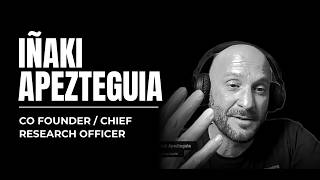
In this Founder Wisdom episode, host Charles Cormier interviews Iñaki Apesteguía, co‑founder of isabalsecofund.org and Chief Research Officer at Crossing Capital. Iñaki recounts his eight‑year journey in digital assets, beginning with a fascination for Bitcoin’s white paper amid Argentina’s chronic inflation. He built a media presence—six seasons of a crypto TV show filmed across Buenos Ayres, Europe, Latin America, and El Salvador—to educate audiences, emphasizing that crypto still requires explicit teaching unlike mature technologies such as AI. He explains Crossing Capital’s evolution: originally focused solely on crypto, the firm now offers traditional market products to address investor hesitancy and diversify liquidity. Iñaki highlights user‑experience hurdles in crypto, noting that many Argentinians now buy Bitcoin and Ethereum through conventional brokerage interfaces, blurring the line between decentralized and traditional finance. The conversation shifts to macro‑level capital flows: Iñaki observes that large crypto‑derived liquidity, especially from Bitcoin mining companies, is moving into high‑profile IPOs (SpaceX, Anthropic, OpenAI). He cautions that such moves involve whale‑scale investors and may inflate valuations. On the political front, Iñaki reflects on Argentina’s volatile monetary history, describing his initial intent to emigrate before President Javier Milei’s election. He views Milei’s pro‑market stance as a potential, though not magical, catalyst for economic stability, while noting ongoing legal scrutiny over Milei’s involvement in a crypto‑related “Libra” incident. Throughout, Iñaki underscores the cultural side of crypto—meme‑driven hype, community humor, and the blend of serious investment with light‑heartedness—while stressing the need for pragmatic, educated participation. The episode concludes with pointers to his social media and Crossing Capital for further engagement.
Chapters
Welcome to another Founder Wisdom pod. We have Iñaki Apesteguía with us today. He's the co-founder of isabalsecofund.org, which is the same, and chief research officer at Crossing Capital. He helps persons and businesses all over the world to invest in smart ways in digital assets. That was a live translation from Spanish to English. English with my AGI brain. Uh, Iñaki, welcome to the podcast. Tell us a bit more about yourself and what you've been up to.
Hi, Charles. Well, it's a pleasure to be here. Thanks for the, for the invitation. Well, as you said, I, I am dedicated to digital assets, uh, since 2018, so it has been really quite, uh, entertaining 8 years. Nowadays. I mean, I have been, I have been doing a lot in the crypto space, especially from Argentina, but also I have been abroad, uh, doing content and doing documentaries in El Salvador, in France, in Spain, also in Qatar, uh, for the, for the World Cup. So, uh, but everything related to digital assets. Well, so I have a company, I help people to invest in digital assets, but in the last 3 months we also include traditional markets because we felt that we are struggling with the digital asset environment. I mean, people are, I think that they are still a little afraid of crypto, of digital assets, to put money on crypto. So, uh, we, we choose to add a new, a new alternative. Uh, so we are doing well with that.
Interesting. Um, how did you get started in crypto, right? Because you're from Buenos Aires in Argentina, various times the currency has been devaluated, and it's a strong crypto hub, I would say, because of the distrust and the government, and Buenos Aires in Argentina is quite advanced as well if you compare it to other countries in LATAM, right? So there's a strong crypto and Bitcoin culture there. So how did you get, uh, started on that path on your end?
I think that the Argentinians, we have— we, we had crypto on our, our DNA, and— but we didn't know. I mean, because When we found about, when we heard about Bitcoin in a country that we are used to be with inflation, I mean, I have, I am 43 years old, my whole life I have been living with inflation, but also my folks have lived with inflation and my grandparents, they have lived with inflation. So it's like something that is pathological here. So when we found that with crypto we can have an alternative, we can do that without the government putting their hands on our money, I guess it was meant to be. I mean, when I was studying technology, I mean, previously to crypto, I was— Yeah. Related— I was, I was involved in innovation management in companies, so I, I was always reading new stuff and trying to, to be noticed about every technology that was circling. Uh, so I got Satoshi Nakamoto's white paper. Uh, when I read that, I— it blew my mind. And I thought that that was going to be something really big in my life. So I just start studying it, talking about it, trying to speak with every person I could find that want to give me, I don't know, 5 minutes, 10 minutes to speak about Bitcoin and crypto. So I went to a lot of radios and TV shows. Then I had my own TV show. So I shoot 6 seasons with crypto content around the world. We shoot seasons in Buenos Aires, in France, in Spain, in Colombia, in Brazil, in El Salvador. I went 3 times to El Salvador because I wanted to feel the— I want to—
The fever.
Exactly, the fever, and to actually feel in the place, uh, what was the meaning of legal tender. Because you, you heard about it, but when you see that, uh, applied in, in the whole country, I mean, that is different. And so I was always, always, uh, eager to, to learn more about crypto and to, to apply that to every— to any business, um, my own especially.
So I guess the DNA part, the inflation, right? But did you also make large quantities of money with crypto? Is that a large motivator, or was it the fact that you were invested in it and it's like, yeah, just promote the full movement so that you can see your stake go up?
Yes, I mean, I entered the crypto space not necessarily for the money. At first, I was in love with the technology. For example, when I read the white paper, I didn't buy Bitcoin. I didn't buy it. Maybe I bought maybe 6 months or 9 months later because I really wanted to learn about it. I really wanted to see what was this major change that was promoting. And especially that when I, when I put my foot in the space, it was bear market because it was 2018. So during my study, I, I only watched the price going down because it went, it went up to $3,000. Wow. In early 2019. So I wasn't paying attention about the finance part. I was trying to get the most about the technological part.
And what have you done since then? How have you evolved as an entrepreneur? It seems you're advising companies nowadays on, uh, digital assets investment. How's it panning out?
Yeah, I mean, uh, first I, I think that the, the major topic that I was involved to promote any business was education. Because when I, when I try to explain this to people, maybe to, to buy Bitcoin or to use crypto or to use this or that, I knew that I had I had to explain about crypto. I mean, this is my thought. I mean, when a technology is, is get, get adopted, I mean, has adoption, you don't have to explain the technology. But we are not in that level with crypto. We still have to explain crypto to people. Uh, for example, if you, we speak about, um, AI, you don't have to explain AI to people. I mean, they know how to use it like, I mean, instantly. But with crypto, people think that is a sophisticated thing and a lot of technologies are involved, cryptography, peer-to-peer, blockchain. So people get the wrong idea. And so my companies were built because of education. Then if I have an educated audience, so I was, I felt that I was, I was able to sell stuff to them. So at first I sell content because I had a TV show. So, and then I had to promote different apps and different products. So I was doing that from the educational part. And then when I start my company, Crossing Capital, at first we had to do a lot of education because people, they weren't sure about putting money on Bitcoin or putting money in crypto. Yeah. So for us to have an educated audience is the best of the world.
And isn't by definition the best technologies like super easy to use? AI, for example, I'm saying that 'cause AI is like obvious, is like you log on ChatGPT, start a convo and you feel value immediately. Bitcoin, you need to invest. Very few humans are in a position to invest money, right, on this planet Earth. Dude, if they invest like $100, they'll see like $3 in like a year. Like, who gives a fuck about $3, right? So, and also just to play devil's advocate here, although I do believe in Bitcoin precisely, right? It's way better than fiat for many reasons, but it's— you need to create accounts. I guess Coinbase, shout out to Coinbase, that greatly facilitated crypto adoption, but— there's still like a distrust, generally speaking. And I'm intrigued to hear about like the Argentinian distrust because up here in Canada or in the US, right, there's been a lot of scam on the Bitcoin and crypto side of things. And people are just like not enticed to lose their money. I mean, people fall prey to like phone scams nowadays, right? So imagine now Bitcoin and crypto, which is a space filled with like people that are money motivated. And like don't have the best intentions generally. Don't you feel that plays against the full thing and like sort of jeopardize what you're saying about Bitcoin being a great technology in itself?
Yes, I mean, it's maybe contradictory because I mean, it's a great technology, but it's not that easy to use. I mean, the user experience, it still demands a little struggle to the potential user. And as you said, AI is way, way, way easier to use. And so that's, that's the goal. I mean, that's why I said that, I mean, this technology and the, the user experience are evolving, but the actual evolution, for my, for my point of view, is not going to be only from the decentralized ecosystem. I mean, because the money is still in the banks, the money is still in the traditional market. And for example, in Argentina nowadays, the traditional markets, they are selling Bitcoin and they are selling Ethereum. And the user experience is the, is the usual. I mean, it's not the crypto experience, it's the traditional experience of buying a stock or a bond. So that is, uh, I mean, that could be also a goal because, uh, people are not asking about how, how this or how that asset is backed. I mean, if that is backed in Bitcoin or if it is backed in Ethereum. I mean, people rely on the broker, rely on their account executive. And if your regular broker recommend you Bitcoin or recommend Ethereum, people buys. And that is— that— I mean, uh, I guess the traditional scene is getting some advantage over the, the decentralized scene. I think that, that is changing.
But I see a lot in the Bitcoin community, and just like the GameStop degenerate traders, it's an opportunity for a community that has been well less served to get together and sort of to rebel against something, which is the best thing I can see about Bitcoin, by the way. It's not even the technology. I do believe that AGI is the best technologies of our time. I think AGI will create a bunch of Bitcoin technologies with like more better security, better infrastructure. But everyone sort of hates banks, right? Like, and including myself big time. And that's definitely something I can get behind. Tell me about the SpaceX IPO and what they did. What did they do on the crypto side of things? Why did Elon made history again?
I mean, the IPO, first of all, I guess the the, the IPO scene is taking a lot of liquidity from the crypto, uh, industry.
How so? Tell me.
Uh, because a lot of liquidity is getting out of crypto in the last couple of months. So one of the thesis is that the, that liquidity is going to the IPO, not only of SpaceX, but to Anthropic and OpenAI, that they are coming in the next months.
And are these like a couple of whales, or are these like not whales?
No, these, these are whales. Yes, definitely. But especially also the, the Bitcoin mining, the Bitcoin mining companies, they are—
I'm saying like, who's taking out their crypto? Is it like whales like the Winklevii brothers? Like, are these the guys that you suspect are taking out their Bitcoin to invest in these IPOs, is my question.
Not necessarily the Winklevoss, but probably the Bitcoin mining companies, because, you know, Mara Holdings, they sell a lot of Bitcoin and they build infrastructure to provide services to the AI industry.
Okay.
So, uh, that, that was a major change, uh, so, and that, I mean, there are a lot of, uh, some other examples, but I guess that is maybe the, the biggest one because the, the actual company that is building the new Bitcoin is, uh, is getting more power to, to put on only on the AI industry. Um, but you know, I think in my opinion that the, the SpaceX Um, stock is a little overvalued because if you read the balance sheet of the company, it's not a successful company yet, but the values of the stock represents a company that values, I don't know, uh, 135 times more. So It's some kind of a bubble in these days, so you have to be really careful about investing in SpaceX in these days because you know that only 5% of the stocks are on the market and 95% of the blocks of the stocks are blocked and they, they will be released in the next, in the next months. So when you release that stock, people will, will sell that stock, and probably the stock price will go down, uh, roughly.
Yeah, I think it doesn't make any fucking sense, but Elon is a magician and you never bet against Elon. That's like one of the Ten Commandments. Yeah, enemies like at the top 10, but like Elon's probably the worst enemy to make, so It's like when you check Sam Altman winning his lawsuits, like, yeah, good luck, dude, against Elon Walrus.
Yeah, I mean, I, I, I bought some SpaceX stock, but not, not as a major investment, but I mean, to be, to be in the game. I mean, as you said, you cannot be, uh, in the, in the opposite side of, of Elon Musk because of—
This is all a meme, you know. It's like 80% bought stocks just to say to the moon. Right, that's what it is. That's like, that's the gameplay.
Yes, exactly. It's basically to mean, to mean everything.
I mean, uh, that's what I like about crypto community as well, is like, people should relax in life, right? They should just like have fun and crack a couple of jokes, right? Like, and not take everything so seriously. Uh, Elon's also that way as well. I don't think he could survive his, uh, stress cycles without humor.
No, definitely, definitely. I mean, um, I guess a lot of people in the crypto space are really fundamental, but also toxic fundamental. So when that happened, I guess that you couldn't— you can never rely. I mean, you can never be chill because you are always against something. Um, I realized across my whole career that at first I was like against this and that and that. And you know that when, when you travel around the world and you see how the, the system works, you have to accept that some things, they are not going to change, or maybe they are— they will change in the next 20, 30, or 50 years. So, and what can we do in the meantime? I mean, we are always be like struggling, like fighting. No, I mean, we had to do to take the best part of what we know and to put that in a situation where you can provide some products or some service or some benefit to the, to the, I mean, to the humanity.
Humans are very like incentive-based creatures, right? And energy efficient So most of people, what they would do instead of trying to change Argentina, well, they would end using the national currency. They would start using Bitcoin. That's one. But most inhabitants in the world, before they do that, they would just leave their fucking country and just go into US. And that's like the brain drain advantage and moat of the US. And that's also sad sort of for the rest of the world, right? There's very few people coming back to their— initial countries to change how things are, and that slows their countries up. Because I mean, yes, it is complicated to change a country, but like from a first principles perspective, if you have like full control and you're very competent and I don't know, you're powered by AIs to make decisions and to take, to take action, it shouldn't take that long to, to change a situation in a country. But it's just that. humans are rational and just like, I'd rather leave and go build elsewhere rather than to change my country's situation.
Yeah, I mean, uh, before, before the, the new president of Argentina, before Javier Milei, I was thinking about leaving the country. I mean, I was probably heading to Brazil or maybe to Mexico because I was tired of the things that I was feeling, that I, I had the feeling that they, they will never change. I mean, they, they were never going to be going to change. So when this guy arrived and we felt that something new was being built in Argentina, uh, so I take my— I took my bet and I stayed in Argentina.
Uh, how's Javier? I heard he was, uh, sort of a psycho, but he was also good at some things. Uh, probably. Yeah. Uh, how's, uh, he has a president— he's, he's like open to crypto, is that what you're saying? Like, what's his stance on Bitcoin?
And not necessarily, he's, he's not, uh, I mean He has done some things about crypto that they didn't help us, especially the Libra incident. I mean, he was involved in that. I mean, something that the justice is investigating. But so that didn't help at all. But I mean, besides that, my feeling is that he's He's trying to build the, the rational thing that a country needs to, to grow. I mean, it's not that— it's not that difficult to, to, to know that if you have, uh, this income, you cannot expend more than that. I mean, it's just mathematics, but you know, uh We have been in, in, in for the last 70 or 80 years in Argentina with different policies. Sometimes we have like a nice, a nice moment. I mean, sometimes we have 2 or 3 years where we feel that we are doing the things right, but eventually everything collapses. We have a new management, a new administration, a new— sometimes a new symbol. I mean, sometimes a new currency. So I am 43 years old and I have lived with 4 monetary symbols. That's insane. It's not usual. I mean, imagine doing that with an American or— Yeah. To think that you are going to change the dollar for another symbol, it's not common. So I think that Milei's policy is doing something good to the country, but it's not going to do magic. I mean, he's not going to do everything that he can do in the first administration. He needs a new administration. Yeah. Uh, so I mean, these days he's struggling with, uh, of course with the, the opposition, but I still have the feeling that he has a nice opportunity to continue.
Thanks for showing up today, Iñaki. Where can people find out more about you?
Oh, they can find me in my social media, is, well, my name Iñaki Apesteguía, or my company Crossing Capital. So I will be around if they need information, education, or to have some kind of service to portfolio management. We are, we are the guys.