Jack Renteria - Founder at Generation Global
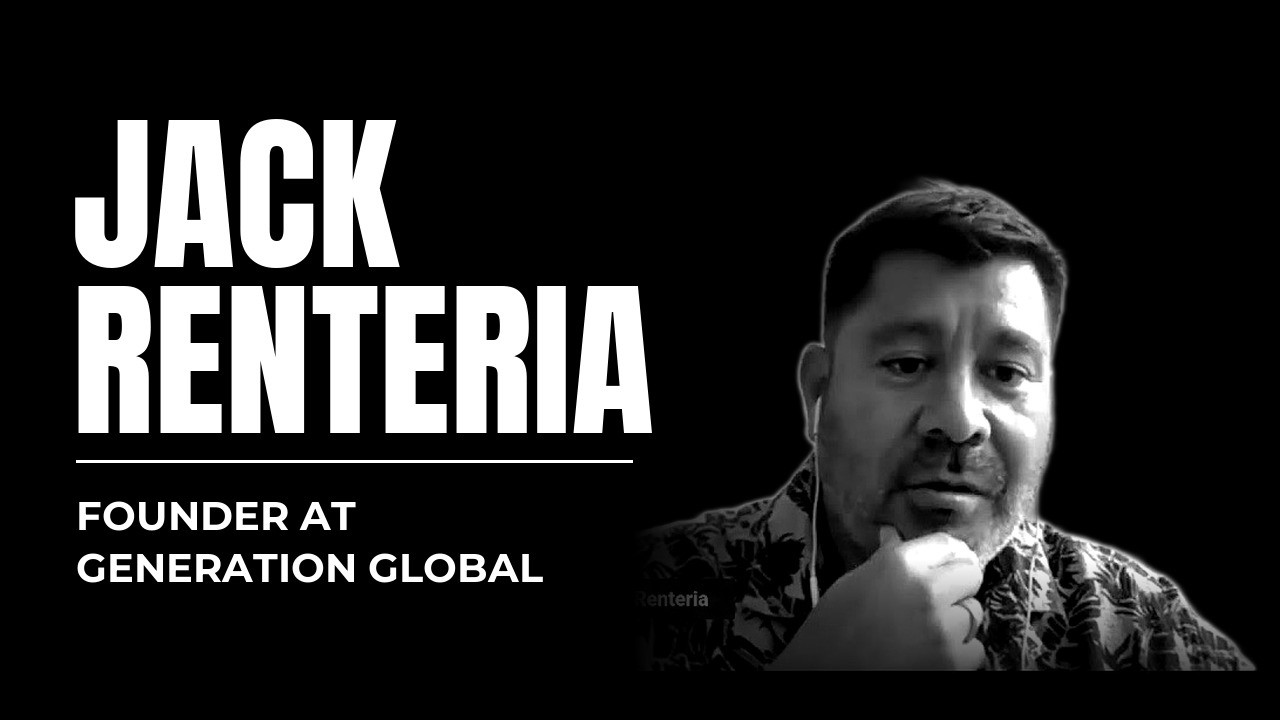
Jack Renteria built Generation Global to help architecture firms enter new markets by selling Danish design principles worldwide. He spent twelve years at 3XN and worked with the Danish Trade Commission, learning that Danish architecture prioritizes people and sustainability while Canadian firms often just follow client briefs. His consultancy helps firms identify markets, navigate regulations, and manage fees.
Chapters
Welcome to another Founder Wisdom pod. We have Jack Renteria with us today. Jack is a founder at Generation Global. He bridges capital, design, and housing. We're going to talk about Danish design today. So Jack, welcome to the pod. Tell us a bit more about yourself and the business.
Thank you very much. My name is Jack. I live in Copenhagen, but You know, I've been working in Canada and Denmark for many, many years, and what I do is I work with architects on market entry strategies, exploring new markets, going into new places, and a lot of it started with like meeting Danish architects and helping them go abroad, and now after 20 years, I mean, you see Danish architects everywhere, all over the world, And, you know, it's now a time where I start thinking about me being Canadian, and maybe it's time for Canadian architects to start looking at going global.
Yeah, um, your background, right? Like, I see you, and we talked about it last time, you worked at L'Oréal, um, I'm in charge of marketing there and product. Like, what had you— when did you actually discover about, like, Danish design and sort of pivoted your career all into this?
Yeah, well, um, to be honest, I mean, I actually was exposed to Denmark very, very early on. I, I, I'm originally from Western Canada, uh, British Columbia, and, um, I did a Rotary exchange right after high school and was told that I was going to Denmark. And, um, I thought, to be honest, I had to look it up on the map to see where it actually was. And then was sent over to Denmark to live for a year. And, you know, I was very young. I was 18 years old. And everything surprised me about this country. I was so surprised that they invested so heavily in design, that it was really important for them in terms of the way they viewed quality of life. And so, that always stuck with me. And then after that, you know, I continued. I went to university. I had always wanted to be an architect, so eventually I made my way to the University of Waterloo, which is how we know, or how we met, and thought I was going to be, go to architecture school, and instead I studied economics and international trade, but I was still interested in architecture and design, and so my first job was actually L'Oréal. It was marketing and it was really about kind of selling a dream. You know, I worked with luxury products, so it was fragrances, Ralph Lauren, Giorgio Armani. It was really about positioning these products and explaining why they brought quality of life. You know, and so I think a lot of those thoughts transitioned or helped me in being able to give words to what architecture does for people.
What was that exactly? Why was it so revolutionizing for you to— yeah, what's crazy about like Danish architecture, right? And when did you actually when you first discovered it, like the first on-scale project? You showed me a couple last time, right? When did you get a wow moment of what it could be, yeah, like potentially impactful for, and when did you actually see the impact on humans?
Yeah, so, you know, from L'Oréal, I kind of took a leap. I saw this job advertisement for the Danish Trade Commission. In Toronto, and it would be promoting Danish companies in Canada. And shortly after I got there, there was a publication that was put out. It was called the Danish Architecture Policy, and I read that and I thought, this is amazing. It was called Settings for Life and Growth. So it sounds a very simple, you know, almost obvious title, Settings for Life and Growth.. And I thought, wow, like this is really, really simple. It talks about good daylight, natural materials. It talks about functionality. It talks about things that, that are kind of super obvious and you wonder, is this only Danish? But it gave words to explain Danish architecture to almost anyone. I could speak to an investor. I could speak to a developer. I could speak to the head of city planning and very clearly explain what is Danish architecture. And then through that, I was actually kind of hired to come and work for a Danish practice called 3XN. Very— now it's quite a well-known firm with offices all over the world. I worked with them for 12 years. But thanks to the Danish architecture policy and those— that identity that it gave, I was able to kind of work in 14 different countries talking about what Danish architecture and then what 3XN was as an architecture firm. And I thought that this was really kind of amazing because this is a very small country. It's about 6 million people. And yet it's got a very, very big Danish design industry. And we're talking about product design, we're talking about architecture. And so I think last time I was telling you, Charles, that for instance, if you take a look at all of the revenues for Danish architecture, 17% of those revenues come from services that are done outside of Denmark. So that's a lot of export. And whereas in Canada, you know, the percent of revenues that come from exports outside of Canada is only 2%. So, it's kind of amazing that a country like Denmark actually exports more in architectural services than a country like Canada, which is 6 times larger in population-wise.
And what's special about that architecture? I mean, I could show some images, right? But it's like the minimalism and the innovation, I guess, the practicality, right? Like of Danish architecture, it stands out as well. It's all about the details, the simplicity, living in community. You and I talk about that triangle here so that people don't look down and are scared of heights. You know, it's like small details like that. What's special about Danish architecture?
Well, you know, the Danish architecture policy was updated in 2014 and then also last year. And in 2014, It was called Putting People First. And I remember having one of my clients, um, when I was at 3XN, say that he almost fell off his chair when he saw that. Because the world of real estate development is really about looking at buildings as assets, right? It's not necessarily looking at buildings as products that are tailored and designed towards a specific group. Quite often in real estate development is speculation. You think, okay, well, you know, the office sector has grown this much in the past year, let's build an office and then somebody will rent it. I think one of the underlying things or red threads throughout Danish architecture is that they are always wondering who is going to work in this building. Who's going to live in this building? What are their pain points? And how can we solve those pain points? And not just solve those pain points, how can we make it a joy to actually live and work here? That's a very different kind of perspective than what we were seeing from many other places. And I, I don't want to sound rude, but Maybe if I were to contrast that with Canadian architects, this is going out on a limb here, but—
It's like comparing Mexican cuisine to Canadian cuisine.
Well, no, I want to say that Canadians are known as being very nice. Canadians are known as being very friendly. They are avoiding conflict usually. They're really, really looking at kind of solving the the thing calmly.
But I would say this, less than the Europeans and Danish people, uh, or should I say that, I mean, not Danish and Finnish, but like if you talk about Europeans generally, I think they're more conflict avoidant than Canadians because we're stuck, uh, right next to the US, right? So that we're like a bit more direct, uh, thankfully.
I think this is something new. I think this is something new because I would say that The Canadian architects that I've known in the past have always done what the client has asked. If the client has said, "I would like this," then the Canadian architect will say, "Yeah, okay, I will design it, and I'll design it the nicest I can according to what you've said." A Danish architect will provoke the client, will say, "No, I think this is wrong. I think we should relook it." They might not be, you know, they won't be rude, but, you know, they'll be a bit more provocative. They'll challenge the brief., and I feel like that's something Canadians can kind of learn from Europeans, from Danes, that it's okay to challenge the client, and that results, I think, in better architecture.
Yeah, and in any space, right? Like, if you just follow what the client says all the time, I mean, you're in for a not-so-nice ride, right? Because ultimately what client wants is results. They don't really want you to comply with everything they says, other than if it's a very specific niche that's compliance heavy, right? But they want results. And me, when I started my career, for sure, as a founder, I would always say yes, right? And sort of be scared of my clients and so forth. But with time, I realized pretty much the opposite. If you want to make a gigantic impact and be wealthy, you need to go your own way and you need to have full trust. And The equation is quite simple. It's just you spent at least 100 to 1,000 more times than the client thinking about these things and practicing these things. The client don't— doesn't have a clue usually, right? Um, and if, if you go with like a real estate developer that is very much focused on profits, you'd be like, dude, just that design itself will, one, attract people, and two, retain them, and increase property value like 200-300% more than your normal project would. Of course, you'll probably need to invest a bit more, but it's not gonna be another project. And, uh, the main argument that I would use with these real estate developers, right, their ego is like, you'll have the building everyone will talk about, right? Because these guys are so about like having that, the tallest skyscraper scraper and getting the attention. Ultimately, a lot of them do it for that, right? Some building that stands out. Um, do you think— by the way, do you think that could be Danish? Because the designs are quite special, but it's not like the most outrageous thing, right? So do you think— well, is what I just said true, right? Like the fact that the buildings attract the attention more and retain people better, is that true?
Well, So, if I could just make one other comment to something you said here. I think that the two most important things for the developer and for the investor is staying to budget and staying to timeline. So, those are the two absolute most important criteria for them. And so, I think in understanding who your client is, rather than just saying yes to what they say, but understanding what keeps them up at night, That's super important. And so if you can say, I know that the budget is this and we will stick to that budget, and I know you need it to open, you know, 1st of January, 2028, we will stick to that time. That takes a lot of weight off their shoulders. Then after that, that's when the magic happens because then you have to design a building that fits all of the local regulations, all of the local rules, but within that you can be very creative. You can design apartments where, you know, each unit somehow has a little bit of a view of the lake. You can— and that of course increases the property values, increases the value of the apartment. So, I think in understanding who the client is rather than just taking everything they say or everything that's in the brief as a given, it allows for a much more creative collaboration and value creating collaboration between the architect and the client. And I think this is where we have an opportunity for Canadians to start really shining through, and especially in what they can offer to Europe, because I think it's high time that Canadian architects start working in Europe.
And precisely, give me all the advantages of Danish architecture Finnish. I can't keep forgetting Danish. Okay, um, what are the exact advent— are they more eco-responsible as well? How are they centered around humans? Give me like a clear example, right? Like, I see this building, one, what's my reaction? Two, I enter that building, what's my second reaction? Uh, three, I go to my place, right? Like, how is it different than other condos, for example? Can you walk me through like all the wow moments?
Well, I can tell you what some of the strengths are, definitely. And I, so first and foremost, the thing that really was a wow thing for many was that putting people first thing and thinking about who will live here, who will work here. But then you mentioned sustainability and the Danish building code is one of the most sustainable and most rigid, most demanding building codes on the planet when it comes to sustainability requirements. And as a result, the Danes are quite used to designing with this kind of perspective right from the beginning. It's almost built in. But on top of that, they've been kind of, you could say, very, very forward thinking when it comes to things like circular economy or design for disassembly. You know, here we actually start seeing a lot of innovation where people start thinking, okay, what is the life cycle of this building? You know, I remember we had a client once that said, we have a 30-year investment plan for this building. And I thought, oh, well, why don't we design it for disassembly so that we can build it It will last for 30 years. We'll disassemble it and we'll have a material passport that will tell you the value of all of the materials in real time. So you even know what the building's materials are worth when you disassemble it. I mean, to me, that's really, you know, that's the innovative part. I think that's what we can see is fun when we're talking about Danes.
And the architecture in Canada, where does it come from? Is it like the American way? No.
So I think this is like the most underplayed, untalked about story that exists right now because Canadians understand a couple of different things very, very well. One is that they understand how to design for climate. We have climates in Toronto and Montreal that that go from -30 in the winter to +30 in the summer. That's a huge variation of climate, and the buildings need to be able to thrive during those periods. And then you've got Vancouver, which is wet year-round, and so designing for that kind of climate. So Canadian architects are very, very aware of these kinds of fluctuations and how to design for this. The other thing that they're world leaders in is designing with timber. Timber is now becoming increasingly the material of choice here in Europe, for sure. I mean, we're starting to see a lot of people talk about how, you know, first of all, how sustainable it is to design in timber, how healthy it is. And so here is a great opportunity for Canadian architects to say, hey, we know something about this, we can come, we can work with you, and design something pretty interesting.
And your work, how do you get these contracts, right? How do you prospect clients and what does it look like to work with you?
Well, I think what I love is usually when it's an architecture firm that says two things. One, they will either say, we've just won a commission and we are now going to work in say Canada, or we just won a commission, we're now going to work in the UK or in France or Denmark, and we've never worked there before. Can you help us figure out how to do that? And then I help them with the contract, with the scope of work matrix, how they partner with a local architecture firm because they always need to partner with a local when they're just starting out. I help them with their fees, I help them with figuring out how they're going to design the product together with a local architect and client. And so that's one way. The other way is when you have a firm that says, you know, we're now getting to the size where we have strong competencies in some areas, we think that there's a lot of opportunity in, say, the UK or in Canada, and we'd like to start working there. Or a firm that says, We now know there's a Canada-EU free trade agreement and that we can start working in Europe. And then I would say, yeah, I can help you figure out which markets are best for your architecture firm.
Interesting. And what's the price for that? Like, what should I pay you? What should I expect? What's your— what are your KPIs?
Well, what I love is being embedded in the company. So, I like saying, okay, we're going to start this off. So, I'm going to be part of this whole market entry for a couple of months as we get this kickstarted. And so usually it's on a retainer basis, and it really can depend because if it's, you know, just one project, it's usually quite, you know, it's a certain number of hours or it's, you know, it's limited. But if it's really looking at the business of architecture and putting in strategy for how they will do business development in other countries, looking at who could be all of the potential customers for them, then it's a little bit bigger. And then it's almost, you know, it's a lot more hours. But one of the things I really like to do is work with their existing teams. So many medium-large firms or even small firms have a business development team or somebody that is responsible for business development. I love working with those people because I help them kind of change the way they work and put in place new processes.
And what's the link to, uh, business dev people? I'm not sure if I got that. I thought you were more like on the consulting side of things. You mean like also helping sell these projects, or describe like, uh the work to end clients?
So, for instance, when you get a project in a new country, say, the firm I used to work for got their very first project in Australia. You know, there's so many resources that go into that that it's obvious that you may want to get a second project in that country. And so that's where business development really is very important in getting out to meet other potential clients, getting to know the city planning department, getting to meet the professional organizations and the media, all of these different parts of the building ecosystem in different countries, different cities. And so that whole methodology of how to get to know those 5 spheres is what I called them, how to get to know those other spheres or ecosystem I help companies do that because that's really what is required to get the next project. And these projects can be worth a lot. I mean, you know, these are projects when an international firm starts working on projects, you're talking about quite a lot of money, you know. We're now going into like the $100 million, $500 million kind of budgets.
And how do you— how big is that, Tam? You know, like your total addressable market, you and your clients? Like, how big is it? How many folks are there, decision makers?
Well, what I like to look at is how many firms. Are you talking about like, what's, what's the size of the market?
Yeah, for you, for your clients.
Yeah.
Oh, how many clients of yours, potential clients of yours?
So I think what is in There's a couple of things to look at. The number of architecture firms that are ready to work internationally. You have to have a certain size, a certain resource of people and of budget to be able to start flying internationally, doing business development, meeting with international partners. And then how many possible clients are there out there? Well, it depends on what kind of typology. So if we're talking about universities, or if we're talking about new luxury condos, or new Grade A office space, well, there's always a certain number of clients that are developing those projects, investing in developing those projects. So that's where I come in and say, okay, if you're talking about Sydney, or if you're talking about Los Angeles, you want to be able to zoom in and identify who they are, and that's what I do. So, it varies. I know I didn't answer your question exactly, but it varies depending on the location, on the country and the city.
But it's basically any architecture firms that want to go the Danish way more, right? That's your town.
You know, I think, well, I work around the world. I mean, I've been working in 14 different countries. So, and kind of sometimes did it from scratch, you know, where I never had worked in China before and all of a sudden we had a project in China. And then you have to kind of learn how do we do a project in China. And you try to follow the same model that you did before, and then you figure out that there are differences, different people in regulation. And so, that's why I always say there's these 5 spheres because I always look at who are the clients, who are the local authorities, the media, you know, the professional organizations, and universities.
Right. Is that scalable? Can you scale, like, let's say you target more than architectural firms, right? Target real estate developers as well, housing innovation, prop tech, urban development. Can your business like hyperscale, or are you the bottleneck?
You know, this is actually, this is a great question because it's super important. If an architecture firm has ambition, and I'll give you an example, one of the, one of the architecture firms in Denmark and in the Nordics and in the world that has had the most ambition I've ever seen is Bjarke Ingels Group. Big had ambition. They've got offices all over the world. You know, wherever they went, they thought, well, what is the potential for building buildings here? And so they've got building offices in Barcelona, they've got offices in New York, they've got offices in Copenhagen, in Asia. I mean, this is really an interesting kind of thing because they have said, we want to put our brand all over the planet. And their ambition goes so far as to Mars. And I like this about them because there's no limit to their imagination. I mean, if you're really rooted in practicality, you say, okay, well, as if we're going to be building something on Mars. But they've dared to say, well, what would it take to build on Mars? So is it scalable? Absolutely. Do you have the ambition to do it? That's the other question.
Yeah, yeah, yeah, I get it. Thanks for being on the show, Jack. Where can people find out more about you?
Yeah, so I'm at www-generationglobal.net, and, um, it's, um, Generation Global is the company.
There you go. So it's Jack and Charles
More from Charles


Founder Wisdom: the audiobook, version 2 (5 hours of stories from founders and CEOs)

8 CEO Questions I Love Asking: the audiobook (64 founders answer, in their own words)





