Jeff Helfgott - Chief Executive Officer Boardroom Salon For Men
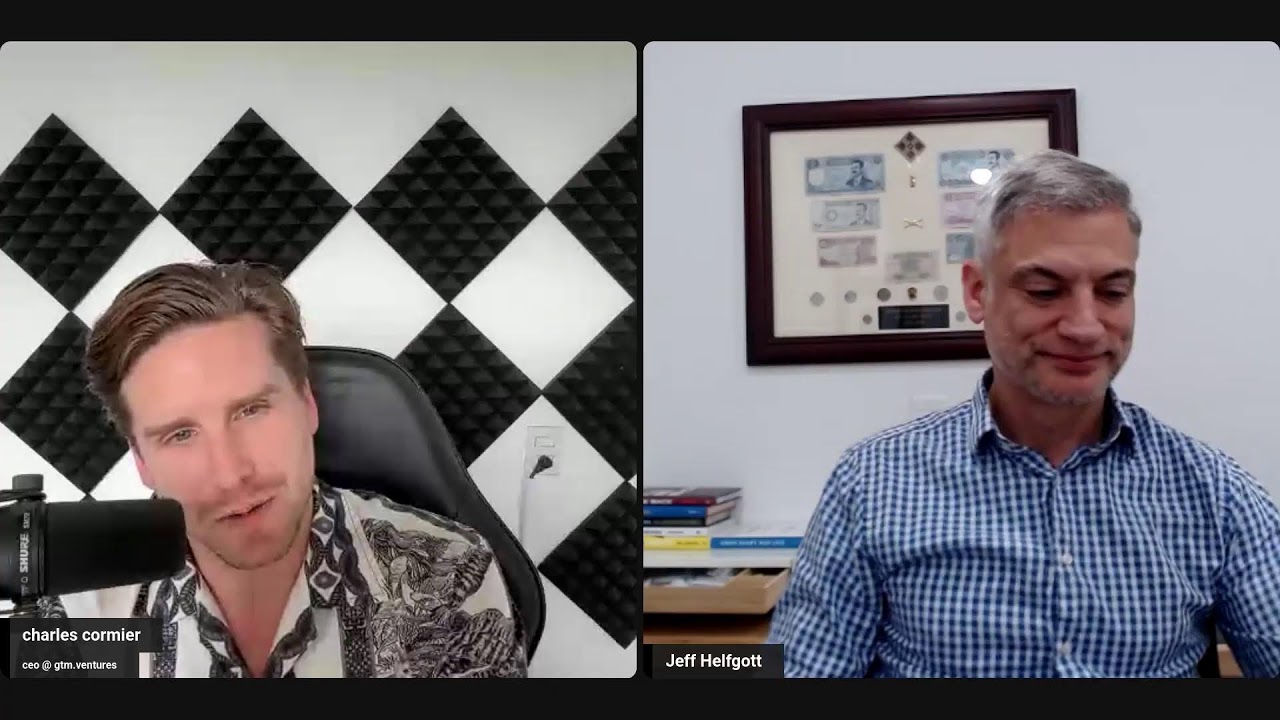
In this CEO Wisdom interview, host Charles Cormier talks with Jeff Helfgott, a multi‑unit platform CEO and board member, about his journey from a high‑school web‑development hobbyist to a military officer, then to corporate roles at USAA and McKinsey, and finally to scaling private‑equity‑backed consumer and health brands. Jeff explains how his military experience shaped his leadership mindset, the transition to consulting, and the lessons learned from startup work. He highlights his biggest “home run” – scaling Excel Fitness from 16 to 92 locations and delivering top‑quartile private‑equity returns – and later building a med‑spa platform with Shore Capital. The conversation then shifts to his current role as CEO of Boardroom Salon for Men, a premium men’s grooming franchise with 55 locations and $1 M average revenue per unit. Jeff details the franchise’s unit economics (startup cost $550‑$700 K, 3‑year payback, subscription haircut model), growth strategy (adding 3‑5 franchise partners this year, focusing on AI‑proof experiences), and his emphasis on hiring veterans and building partnerships rather than over‑diversifying services. He also shares his daily CEO routine (coaching, big‑picture thinking, marketing, franchise sales) and future objectives, including expanding the franchise network and mentoring veterans. Contact information and mentorship opportunities are provided at the end.
Chapters
Welcome to another CEO Wisdom podcast. We have Jeff Halfgott with us today. He's a multi-unit platform CEO and board member. He's scaling private equity-backed experiential consumer and health brands. His main one, I guess, is CEO at Boardroom Salon for Men. Jeff, welcome to the pod. Tell us a bit more about yourself and what you're up to.
Yeah, great to be here. Thanks for hosting. Background, started off in, in the running a web development company way back in the high school days. Thought I was going to be a programmer forever. Ended up joining the military in college, uh, right around 9/11, and thought I was going to do that for the rest of my life, um, and got injured on the job a couple times, so transitioned to corporate world and been running PE-backed businesses for over 10 years now.
Which one was your first, uh, success? Well, let's start with the military actually before we get to that. How, how did the military shape your mindset?
I think it adds perspective. Um, you know, someone once told me, uh, in a, in a mission where I was getting a little fired up over something, they said, hey, calm down, no one's getting shot at here. And it's a, it's a good mindset to bring into a lot of things. Things seem monumental and consequential. And I think that experience provides some context that, you know, most of this stuff doesn't matter. 5 years from now, you're not going to remember this irritation. Just drive on. Uh, second, I think it really highlights the importance of good people. Um, you know, I was very fortunate. Not everyone had this experience in the military, but I was surrounded by some pretty awesome leaders. I had some really great soldiers and just taught me how meaningful that could be in your life when you're surrounded by great folks who are invested in your development. And, you know, the military is an apprenticeship just like a lot of other businesses, but very few as much as, as the military, as you learn by watching the people who are more advanced than you in some good ways, some bad. And I've tried to take that mindset into business.
And you manage over 65 humans. How was that in the middle of chaos?
You know, I think that was pretty straightforward. You have a good team of people who have been in the military at times much longer than you that are helping on the blocking and tackling. Um, so while the, the stakes are certainly higher, I think there's a, there's a good support network in the military to make sure that you're successful.
And was the reason you joined really like 9/11, like I need to do something about this? Ultimately, uh, also what was the reason why you quit and, uh, started, uh, consulting career?
Yeah, ultimately, I joined because it looked like fun. You know, there's, there's a desire for adventure at that age. And there's a, in my mind, a noble purpose that I was a single guy, didn't have other people that were dependent on me. So if anyone should be taking a risk, it should be someone in that stage of life. So I think it was a blend of adventure seeking, but also, you know, higher purpose. I didn't understand Until much afterwards, some of the benefits that come from military service in terms of employability, veterans benefits, which, you know, I live in the state of Texas, they are very kind to veterans here. Um, all those were, were added benefits that I discovered down the line. I only ended up leaving because, again, I got hurt on the job a couple times, and eventually Uncle Sam said, why don't you find another line of work?
Right. Yeah, I mean, it looks all adventures and games, right, like when you're young, but, uh, yeah, what happens when you see your buddy's head explode next to you? Like, did you ever had like such a shock and realization that war wasn't that fun?
Yeah, you know, 99% of the time it's, it's actually fairly enjoyable. Like, there's the trope about you sit around bored all day until something exciting happens, but yeah, you're surrounded by people your age who generally share your values that are, you know, generally pretty funny people, um, and you're getting to do really cool stuff. Now, that 1% of the time when something sucks, like, it sucks bad. And I think for me, my wake-up was Christmas Eve, 2003, we had a couple guys get hit with some shrapnel from mortars, um, in my unit, and they passed away. And, you know, the first time you see an American die, it helps you realize like this is for real. Uh, it's a little different when it's the bad guys, but when someone on your side, that changes the dynamic a little bit.
And did you feel something changing in you from that point on, like as a leader, or what was the, the mindset back then?
I think for me, the major change actually did happen in 9/11. So I was in college when that happened. I was already in ROTC, so I was on that path to the military. But when 9/11 happened, like, it, it to me made it a lot more real that there are bad people out there that are looking to do harm, and I'm most likely going to be sent at some point to go deal with them. And yeah, like, you go from a college kid that's having fun drinking on the weekends and partying, and you do ROTC on the side, Um, to all of a sudden realize, like, hey, this is a career path and you got another year or so to get ready, so it's time to buckle up. And I think that really shaped my mindset pretty substantially. Like, it's for real. Yeah.
And after the Army, you went at USAA, and after that McKinsey. How did you get in McKinsey? How did that, uh, sort of change your brain and your life?
Yeah, I had a great mentor at USAA, and she said, Jeff, you're great here, but you could be better somewhere else where you could be more strategic, kind of operate at the top of your license. So she wrote me a great letter of recommendation that got me into grad school, and she encouraged me to look at consulting because she had had that in her background. And her perspective was, you know, academics is a great way to learn theory, but consulting is a great way to get a lot of reps of practice. Um, so graduate school again taught me a lot of great ideas about marketing, business strategy, people management. When you get to peek behind the curtain of some of the world's largest companies and see What's working and what's not and how to effectively lead in all those different cultures. I think it was a really accelerated path to becoming a grown-up executive.
And 2 years there, what happened after that? Were you like a startup consultant after that? Like, how does one go from McKinsey to startup consultant? Isn't that like the opposite, corporations and startups?
Yeah, like consulting is very much Big brain plotting out strategies that might take 3 to 5 years. Startups, very much how are we making revenue tomorrow? 'Cause we need to pay payroll. In the middle there, I did some work for a student loan refinance company called SoFi when they were launching way back when it was 25 people at the Presidio. I built a really great reputation as someone that was helping them when they had their initial 10 schools that they were doing from a go-to-market. I helped them figure out how to build the playbook to expand their loans. And the school that I was at where I was acting as a supporter for them, Kellogg, we ended up doing 10x the number of loans that the other schools that they had launched in had done. So they brought me on board to teach them how, and I kind of conveyed that experience into a startup launched by a friend of mine from Kellogg. And you're right, it couldn't be much different. Like McKinsey's big business, great reputation, people recognize you by the name. Uh, in a startup, you're trying to get your foot in the door with people who might not necessarily realize that they have a need for what you're trying to push, and maybe they don't because you haven't figured out product-market fit yet. So wildly different ends of the spectrum. And for many, it was the career step backwards, but I'm glad I did it because it taught me a lot about hustling and it gave me a lot of respect for the idea, like, if you're running your own business, you are always in sales mode.
Right. Which one was your first home run? Was that at the startup level? Was it, or was it Excel Fitness Holdings? Was, which one was your first home run in terms of, yeah, revenue you brought to business?
Yeah, I think objectively my startup experience was successful, but the Excel Fitness, which was a Planet Fitness franchisee, was a grand slam. We Started with 16 locations. I was the first employee hired when a private equity group partnered with the founder. We later sold with 92 locations and we were able to give equity down to the store manager level. So, I had some managers get 3 times their annual salary when we sold the business. So, that was objectively a grand slam. Even in private equity terms, it's probably top 3% return.
And how did that happen? What did you do exactly?
A lot of hustling, you know, scaling businesses, scaling people, process, and systems. A lot of times as a leader, you gotta spend a lot of time there as a player before you can be a coach. And as you vet the thesis and show there's real value that can be captured by spending time here, that allows you to make a more thoughtful investment in other systems to bring automation or more talented people to come in and and actually make the most of the value that you helped identify as a possibility. So that was really my role, is I would go to where we felt like the greatest need of the business was. I would demonstrate the value could be created there that would help us scale faster while bearing less risk. And then we'd backfill me with someone who actually knew what they were doing in that specialty area to get it to its full potential.
Interesting. And who would buy these fit— these fitness centers? Like, why was it a good opportunity for franchising?
It's a great business. I, I still think being a franchisee is one of the best paths to wealth generation, um, you know, because it's a playbook that has been defined by other people. Your other franchisees in the systems are financially motivated to make sure you're successful, because the more successful every franchisee is, the more valuable the entire brand becomes. So you get to share best practices with a level of transparency that you would not otherwise get. And then finally, I would say You know, just speaking selfishly and, and without much humility for a moment here, uh, if you are a franchisee, your franchisor is fully dedicated to helping you, and you might not have access to someone of that prestige otherwise. Like, you talked about my background— military, McKinsey, multiple private equity-backed businesses. Every one of my franchisees gets to pick up the phone and call me for advice for free. And I charge a lot on an hourly rate for people who are not a franchise. So I think it's one of the best paths to wealth creation for someone because you don't have to solve numerous different things about your business. You take a playbook and you execute it really well in your community, and you're probably going to do okay.
And what was next after that? I see, uh, Empower Aesthetics, and I also see Core Development and Management, uh, still in the fitness slash med spa space.
Yeah, the, the med spa was a full-time role there, and I was the CEO, uh, for a platform that was looking to build med spas through mergers and acquisitions. So backed by a great private equity group, Shore Capital. If you ever get a chance to work with them, you know, as one of your listeners, I would take it. They are phenomenal at teaching you a playbook for how to scale business very rapidly. Um, so we had a great outcome there, uh, beginning to build the business from scratch. That's very much a 0 to 1. You have an idea, you find the first business that would be a good fit for it, and then you build the platform around that business. Where most private equity comes at a larger size of business, Shore is very good at taking concept from the ground up and then building it. I've had a couple other board roles. The core development was one of them. I did another one for a European wax franchise. Those are ones where I'm more of a CEO whisperer, helping the CEO navigate mistakes that I've made so that they don't make the same ones. Uh, but my current role, Boardroom, is a, a franchise brand I'm the CEO of. We have franchise partners and also corporate stores, and we're going to be growing through adding more franchisees.
And why is that your space? Is that because you were thrown in that environment, or do you actually have a passion for fitness and wellness and looking good?
Yeah, I think life is about experiences now, and, you know, the biggest competition with most of these businesses is the couch. You can get almost anything delivered to your house. You get pizzas, you can get Amazon dropping things off. I was out in LA and they got little robots wheeling stuff up to your door. Drones are gonna be doing it soon. So you can put any movie you want on demand. It's incredible the options that are available to you. So my passion is how can we create a good enough experience that makes someone wanna leave the couch where they're comfortable and they're known? to come out and get a great experience outside of their home. That's a fun problem to solve. And frankly, that's where I think a lot of value is gonna be created in tangible experiences in a time in which AI can more and more accurately replicate a lot of the experiences that you might otherwise get.
So boardroom salon, right? It's like luxury/premium experience, getting your haircut, maybe a massage, whatever. Uh, that's trending right now, right? Like, I guess men want to have a break and have, um, yeah, just relax for, I don't know, 30 minutes, an hour. Like, uh, how do you plan to scale that?
Find great franchise partners. I think we're very lucky that our unit economics are very strong. We have something called the franchise disclosure document. So if you have any of your listeners that are interested in franchising, every franchise is required to create one of these as a way of disclosing what are the economics of investing in your franchise based off verifiable results from other franchise units. So it's a good litmus test or a barometer for comparing a number of different brands at once. And, you know, we're able to show, I believe, to be the highest revenue in our category for men's grooming because we built a great mousetrap. Our new client traffic is up 44.3% year to date. That means our marketing engine is just flying. And we're able to bring in more people than we ever have before. We're able to retain them with a monthly recurring revenue model that we have built for one haircut a month on a subscription basis that effectively de-risks your occupancy. And now you're just playing with upside. So it's a great business model. We're finding a lot of people who are pretty sophisticated operators that are looking to diversify out of restaurants and be something that is AI-proof right now.
How many locations you have? Like 30, 30 plus?
We're actually at 55 now and, uh, plan to be growing pretty aggressively this next year.
And when was it started? When you— did you join like 2 years ago?
Yeah, it started about 2 and a half years ago, but it was founded way back in 2004. Again, classic founder, had an idea, uh, bet it all on it, and it rewarded him very generously. He, uh, took some private equity investment in 2018 Retired from the day-to-day management to allow, you know, a professional manager like myself to step in afterwards. And yeah, he and his wife built a great business. I'm thankful I get to be the one at the helm today.
And how do you complete them? You know, typical founder, I mean, they've got the grit, the hustle, the creativity. An operator like you is more the capital and scaling side of things. You look at the economics and you just cut the nonsense and double down on what works. What's the— how do you complete them there?
Yeah, I think one thing there, you can't cut your way to growth. And I look at where we are as a brand. I am doing whatever I can to be growing it. And that sometimes means it's the life cycle of a business. You're making big investments knowing that it's going to pay off in the future. I'm not a zero-to-one guy. I look at what Bruce and his wife Heather did when they launched this business, and I just give tremendous respect to them. I don't, I don't have the guts to be taking something completely from an idea and then putting personal guarantees on it from zero. I am very good at taking a good idea and making it even better by leveraging my experience and bringing great people around me.
And the average revenue per location is $1 million. How much would it cost me to start my franchise, for example?
Our FDD shows a general build cost depending on the size of the building that you tend to lease out is between about $550K and $700K to get started. So we're targeting a 3-year payback on your investment. That's what seems to be the golden metric for most multi-unit operators. A good return on capital is within 3 years, then you get the rest of the term to benefit from that initial investment.
And that would outperform like a McDonald's or a Subway, or—
Well, Subway right now is a pretty low bar to clear. They're struggling. Um, yeah, I think that's it. It's like there's a life cycle of brands where eventually they just kind of become tired if you're not investing it. I look at Taco Bell as a a great example of a brand that refreshes itself and spends a lot of money in R&D in order to keep top of mind. You have other brands that just kind of fall out of favor. And, you know, frozen yogurt's a great example. My rule of franchising is the faster it climbs, the faster it's going to fall. And if you're a sophisticated investor and you want to, you know, bet on the upswing knowing that it's going to come down just as fast, then again, make an educated investment decision. But I'd say for 90% of franchise owners are Individual folks like you and me that you know want to build something that they can run for 20 years. I would stay away from the fads and hair; it's not going anywhere.
I love that. Um, and I guess owning one of these is cool, right? It's just like hey, I own a premium salon and you can bring your buddies there and so they can relax, have a good time. It's like a spa for men, right? Why not have like a sauna in there or cold plunge? I don't know. Like Uh, like bring, bring the full experience in, fitness center or something. Have you thought of that, like integrating the two?
I think it's a great opportunity for a partnership. I'd rather stay and be really good at one thing. And what I call is like the, what you're describing there, something a lot of entrepreneurs fall in is like, we're gonna do this and we're gonna do this and we're gonna do this. I call that the, the Denny's buffet. I would rather do one thing really well and be known as the place where if you want the absolute best, you go for that thing. And then build partnerships with other people who are exceptional at what they do. That's why I don't do hands and feet. I'm not going to have my team, who's exceptional at cutting hair, peel off some dude's socks and get to work on his toes for a pedicure. No, like, if you want a pedicure, go to a place that specializes on that. We're gonna be world-class at making you look good from above the shoulders.
Right. Um, what's next for you? What are your objectives for this year, for this company?
This year was the year that I wanted to grow thoughtfully in order to prove the muscle of being able to onboard new franchisees. So the thought was get 3 to 5 new, uh, teams on board. We're gonna hit that, and then next year is where we kick off the training wheels and we fly, and it's going to be a lot of fun, right?
What does a day in your life look like nowadays?
I see travel a lot, you go to conferences, but the typical CEO day in your life I try to spend probably 20% of my time coaching the team, giving direction, probably 20% of my time thinking about big picture stuff. AI is probably certainly invested in that. I spend a decent amount of time building relationships in the industry and telling our story because at this point I'm trying to sell the business now that it's fixed. Um, so I, I look at those as some of the main categories, um, and then I do spend probably another 20% of my time micromanaging the one thing that we have yet to be able to show that we can do consistently well. Um, and just like when I first got here, marketing was a place that we were struggling in. I was very hands-on because that was critical for me to be able to do other things like sell franchise. So we need the unit economics at 4-wall level to work, if I'm not bringing new people, I don't know how we can sell new businesses. So once we have that fixed, I've stepped away and I spent almost no time on marketing because we built a great team that's crushing it right now. I am very hands-on in franchise sales because we have not yet demonstrated competence in doing that to the level that I expect, and that's where I'm going to be spending my time until we do.
Um, veterans, do you hire them as franchisees? I see that, uh, you give them a discount. Like, why can they be top operators?
I love people that have a get-stuff-done mentality. Like, the end of the day, information's become a commodity. You can type into ChatGPT and get 80% of what you would have gotten from a McKinsey, Bain, BCG team, you know, 3 to 4 years ago. So to me, the, the what needs to be done is no longer the question. It's who has the work ethic to actually do the work, and veterans are a great population for that. So what I need is someone that can be a good spokesperson for the brand, that's willing to do the work. I prioritize those kinds of relationships.
Love it. Where can people find out more about you, Jeff?
I'm on LinkedIn. I also have a personal webpage, jeffhealthgod.com. If you are a veteran and you're looking for a mentor, I accept applications for free mentorships as my opportunity to continue to give to the organization that gave so much to me. And I'm always at jeff@boardroomsalon.com.
It's Jeff and Charles for another CEO Wisdom.
More from Charles


Founder Wisdom: the audiobook, version 2 (5 hours of stories from founders and CEOs)

8 CEO Questions I Love Asking: the audiobook (64 founders answer, in their own words)





