Jeffrey Johnston - Founder & CEO Brightn
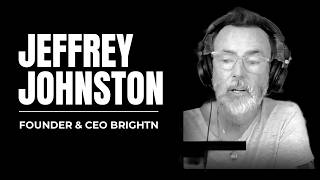
Jeff Johnston, a former wealth advisor, lost his son to a fentanyl overdose and nearly took his own life in 2021. He credits psychedelic-assisted therapy and Stoic philosophy with his recovery, and founded Brighton, an AI mental-wellness platform named after his granddaughter, to help others avoid the same despair.
Chapters
Welcome to another Founder Wisdom podcast. We have Jeffrey Johnson with us today. He's the founder and CEO at Brighton. It's an AI-powered mental wellness startup. Uh, Jeff is also an author and the founder of the Living Undeterred project, keynote speaker in Cedar Rapids in Iowa. So Jeff, welcome to the pod. Tell us a bit more about yourself and what you've been up to.
Well, I appreciate this opportunity. Um, Wow, what I've been up to. What, what a, what a long-winded answer I could give you. Um, I'll give you the Reader's Digest version. Uh, I'm, I'm old enough to know what that means. A lot of times when I reference Reader's Digest, some of the younger people can't understand what I'm trying to say, but I'll give you the short version. Um, for my whole life, I was really interested in wealth management. I wanted to be an investment advisor. That's what I went to college for and did that for 36 years, roughly. And then in 2016, at the peak of what I thought was my life, I had the big house, the fast car, married the love of my life, had a TV show, had a radio show. I mean, pretty much everything I aspired as a young man, I thought, or at least as I know now, it was an illusion. I thought I'd checked those boxes. And then on the morning of October 4th, 2016, I got the call every parent just dreads, um, and become a member of a club you didn't ask to join and one you certainly can't leave. And our oldest son Seth, age 23, was found dead in a chair in a hotel room, needle still clinging in his arm, tourniquet laying on his bed. And he had run into fentanyl, um, on his, you know, 8-year addiction substance abuse, uh, experience. And that's the first time in my life, Charles— I was 50 at the time, I'm 60 now first time where I just really was humbled, uh, as a man, as what I thought, you know, I was a successful businessman and I missed these things over 8 years that I learned now in hindsight that I could have been a better dad. Um, I don't torture myself anymore because that doesn't bring him back, but I can certainly pay it forward with the lessons I learned through death to inspire other people to not make the same mistakes I made, right?
I think humble is not even the right word, right? It's like, uh, an asteroid impact. Yeah. And you're like, you're struggling to stay alive, uh, for weeks at a time. I can only imagine, right? Like, uh, I had a daughter a couple months ago and we had a healthcare, uh, on day 2 or 3, and just that moment of waiting and just being powerless is like, was enough to shatter a part of my soul, right? So And, uh, and, and obviously there's always— and, and the fact that you mentioned that you don't torture yourself, I mean, I'm, I'm not guilty of that. I think I'm doing well, but obviously I'm not perfect. I do a bunch of mis— oh, we're back online. Streamyard, um, is, is failing again, but we're back now. And I— yeah, sometimes it's like, how much is enough introspection and just like you could be better? You and I, we talk about the Stoic philosophy. When you're dealt like a very bad hand like that, how long do you actually analyze what happened and come up with solution before you turn the page? And can you fully turn the page?
And do you want to turn the page? That's the whole thing. I think there's a difference between moving on and letting go. I have no intentions to move on ever. I talk about Seth. I keynoted yesterday at a big event. And I talked about him, I cried. Um, I don't, I don't want to move on. Uh, I think there, his death that started it all, um, really catapulted me into this spiritual journey that I'm on. Um, and I'll finish the story a little bit because I think it's important to know the full context. But so for, um, a year and a half, I took off from work. I, I told my team and all my clients I needed to work on my mental health and with my wife because she was really, really struggling. But all I did is sat home and got drunker, Charles. So I had been a full-blown alcoholic for 32 years, and that was something that people didn't know. I was a high-functioning— I could drink, I could get up, I could work. And that is great until it doesn't work. And Seth's death, I— it exposed a lot of cracks in my armor that I thought I was superhuman. I thought I was this alpha male that in reality I wasn't. I was a coward. I was pathetic. I was weak. What I saw in the mirror I didn't love. And, um, and so after about a year and a half of sitting home and getting drunker, I finally looked in the mirror one day. My wife walked by me on Christmas Eve of 2017 with a glass of wine in her hand. It was Christmas Eve, and I remember looking at her and all I saw was defeat. This beautiful, 9 years younger than me woman, done. She— the moment I told her Seth died, Charles, she died. And it took, you know, a couple years later for me to realize it, that I'm losing her too now. And so that day, that night, 2:00 in the morning, I went into the bathroom and poured my glass of Sangiovese out. And as it— I'm writing about this in my second book— as it trickled down the sink, so did my desire to ever drink alcohol ever again. Since that moment, 2:00 AM Christmas Eve of 2017, I haven't had one thought, one sip, one, one anything about alcohol. I've completely erased it as if it never existed on the planet. I still had a dog named Caymus, by the way, which was our favorite, my favorite brand. Yeah, so I didn't change his name. Um, but, and I bought drinks for— if you and I were at a bar, I'd buy you a drink, man. I, I'm not anti-alcohol. I'm anti-alcohol for Jeff Johnston. That's it. For me, it didn't work. Um, but unfortunately, you know, unfortunately it didn't help my wife. And on June 29th of '21, um, one day after our youngest son turned 18, my wife died from alcoholism at the age of 46, and she had 13 prescription bottles next to her as well. So You know, man, from 50 to 55, when most of my friends are talking about retiring and second homes and traveling and all their conquests, and I'm burying my family, and then my mom died 3 months later, and that was it. I was done. Christmas weekend of 2021, I went in my closet. I've got a place marked in my closet, still there, that I have complete reverence for. Opened my safe, took my bread out, sat down cocked it back. 3 days later, man, the biggest fight I've ever been in my life. I, I— 3 days later, my business partner's wife knocked on my door, and I'm laying in my living room sleeping on a pillow on the floor, gun in my hand. I made it. The biggest fight in my life, man. When you get that close to ending your life, and there's so much great things in your life that you just blocked out, I feel I can handle anything. I really do. And I feel like when I walk into a room, people may look at me and think, man, I feel sorry for this guy. It sucks that he went through this. And I don't want anyone to ever feel sorry for me. I want people to say, how can I help you, Jeff? I don't want thoughts and prayers. I want, how can I help you achieve what you wanna do with your advocacy, your mission, your app, whatever you are doing, Jeff. I want to help you and support you. And those are the type of people that I'm looking to find in my life right now, not the ones that feel sorry for me and give me pity. Because, you know, Charles, you have a story. I don't know you, you don't know me, but it's your podcast, so I'm sharing mine. But if you're on mine, I'm sure you could tell me some things you've been through. And, you know, I wouldn't say thoughts and prayers to you, Charles. I'd say, how can I help you, brother? How can I be there for you? Because I think that's a big difference in what we do to help people, is to actually ask, how can I help?
Yeah, or how can I listen, right?
Yeah, there you go. Good one. I like that one too.
Um, I mean, me, what I see today in front of me is a warrior, right? Like, and you've made your fair share of mistakes, but you were also— you were also dealt like the shittiest hand ever. Like a terrible hand, right? Like, there's— I've rarely spoken to people that had such a hand dealt to them and Surviving that is incredible. And you mentioned 3 days, right? If you mentioned the details of that, it's like a constant battle with your thoughts. Should I do it? Should I not? Right, right. Do it. Like, and then you're standing like in the middle of fucking room thinking about stuff.
And, and I'm a coward because I can't even kill myself. I'm like, I'm like, you can't even— you can't do anything, you pathetic coward. You can't even pull the trigger. And that's what, that's what suicidal ideation is. So horrific because you tell these lies to yourself. I wasn't a coward because I couldn't kill myself. I was a rock star, man, you know. But I realize that now because I made it to your show, I made it to today, and I'm so proud of me. I was asked the other day, what's your biggest accomplishment? And most people would say, oh, their, their exit or their whatever. And I'm like, no, I didn't pull the trigger. That's my, that's my biggest accomplishment, more than my children. Yeah, the fact I didn't kill myself.
It's a triple ultra marathon. That's how I see it, right? Because it's like, yeah, and but, but ultimately what pulled you out, right? Like what, what gave you the motivation not to do it? And what is the, the action and the momentum that led you? Is it like the, your business partner's wife finding you and just waking you out of that very dark spiral and that pit of darkness? Or was there something else?
I can tell you, that's a great question, Charles, because it is important context here. But there's two really reasons why I didn't pull that trigger. One is short-term, it's funny, and it kept me alive. The other is long-term, and it's why I'm on your show. First one is I had my expensive suits hanging up behind me. It's not ridiculous. And I'm sitting there thinking, okay, I don't want to move, I'm too tired, I'm worn out. I mean, I was— I hadn't eaten in day or whatever. I'm just like worn out. And I'm like, well, who's gonna clean up this brain spatter on my nice expensive Italian suits? Now it's funny, right? But it's like, dude, it helped. And then, and then after, I kind of thought, you know, that's kind of petty. But hey, Jeff, it worked. You know, you lived another 30 seconds. I'm literally trying to tell myself 30-second, uh, pep rally so I can make it to, to whatever I was trying to make it to. Getting out of the closet wasn't even my goal. It was just to get to the next, like, minute. And, um, and then I started thinking long term. I'm like, God, I have 2 boys left, man. I have 2 out of my 3 boys, you know.
Imagine if you leave them with that, you know, like they'll probably do the same. Like, if so—
well, I knew that the statistics on deaths of despair— so in the United States there's 900 people that die every day from overdose, alcohol, suicide. Okay, that's pathetic. 900 a day. I thought to myself, if I pull this trigger, my two boys would have lost a brother to drugs, a mom to alcohol, and a dad to suicide. Now you are a pathetic coward. Now you are that thing. You've just validated how pathetic you are if you pull this trigger. So I started playing these real competitive games with me, like, you, you got this, you made it, Jeff, you did another minute. Now you talk to— you told yourself another story. So, you know, if Stoic philosophy started creeping into my mind, you know, Epictetus and Marcus Aurelius and Seneca. I'm like, why not me? Why not me given this opportunity to become a better human versus a bitter human? Like my wife did. She went the bitter road and she's dead. I took the better road and I'm still here fighting. And not— days aren't great. I cry every day. I suffer. I had a hard time getting out of bed this morning. It's like, yeah, but now I— now I respect all this as part of the lived experience. You know, Charles, 99.99% of every human that's ever lived is dead. You don't think most of them would trade places to be with me, to have the ability to suffer and to cry and to feel pain and to make mistakes and to lose things and to love things? People that are dead have no chance for any of that. So it's like, as much as it sucks, I, I'm in love with suffering, man. I'm in love with pain in a way that maybe a triathlete is, you know. I know you are very, you know, you're into that that stuff. I'm not, but I think there's that same reverence you have towards pain when it comes to preparing for a race or whatever. Would you agree with that?
Yes. And you'd be a very good triathlete. Um, yeah, I think the pain is wisdom, uh, if you know how to digest it, right? If you have systems to make sense of it. Most people don't. It's like pain— oh, a primal self— get, uh, get yourself away from pain immediately. But yeah, when you understand that pain is, is a different source of energy, it puts you in a different place, and, and you can make sense of it all, uh, it helps a lot. But in your case, like, your, your curse is also your blessing, right? It's, um, call it like a God-given set of hands. Like, you can help so many people. That, that's your purpose. And it's so obvious to me, and I, I think it's obvious to you too, right? It's like That's your thing. That's, that's how you can help people. And you do that nowadays through speaking. Yeah. Brighton app, right? Like, tell us a bit more about that.
I'm happy you asked, because there is a beautiful, unbelievable, like, part of this story that just is woven into my experience is 3 weeks after Seth died, his daughter was born. And we didn't know about her, Charles, for a year. Really? So, so I'm sitting at home and Justin, my son's best friend, calls me on the phone. I'm like, that's kind of weird, Seth's been gone a year, why is Justin calling me? And I pick up the phone, he goes— here's what he said, he goes, Jeff, are you sitting down? And I'm like, dude, I'm like, dude, not another one. I go, come on, I've had— I was like, everybody I know is dying, it's like, God, can I just have a weekend where somebody doesn't call me and says, are you sitting down? And he goes, no, no, You know, I think you have a granddaughter. And I'm like, oh my God, best day ever! Are you kidding me? I mean, I get chills right now just repeating this story. Oh yeah, are you kidding me? And he goes, yeah, I think Seth— I think Seth has a daughter. And I'm like, damn, that's awesome! So I tell my wife, you know, it's like, I think we have our first grandchild. And my wife's like— and I'm not trying to throw my wife under the bus, trust me— but she, she wanted nothing to do with anything to do— when Seth died, she would— she was done. She Yeah, I became an advocate. I wrote a book, I started the podcast because that's how I wanted to— I wanted to keep— I figured if I didn't continue these stories, Charles, then Seth actually dies. Yeah, yeah. Who doesn't talk about Seth? He— no one's ever going to talk about him. So I felt like an obligation to continue his story. My wife, on the other hand, is like, too painful, didn't want to do it. So I actually decided after about a year and a half— so Brighton now is almost 2— we had— I never met her. Because I was, I was gonna be insensitive to my wife. I said, I screw this, I'm gonna go meet her. If you don't want to meet her, that's— I can't get you to stop drinking, I can't get you to, you know, I can't get you to make you see our granddaughter, but I want to see her. So I took my son Roman, we drove a couple hours up, and I met her, and I fell in love with her, man. She's 10 now, and you know what, do you know what her name is?
What?
Brighton.
Really? With like an N like this?
I took the O off, so it's B-R-I-G-H-T-N. So I made a post today on my LinkedIn about— I detest the word founder. I detest the word startup. So I did my talk yesterday, it's called From Darkness to Brighton: A Father's Story. Because I'm not a founder. Brighton's not a startup. We're a legacy company. We're a legacy initiative. I'm a dad, man. I'm a husband. That's all I am. I'm not, I'm not a founder. I hate that term. I'll be in Chicago next week pitching to— I hate the word pitching— telling my story to investors. And because we're starting the seed round now, we just oversubscribed our pre-seed over the holidays, and, um, we're starting a good-sized seed raise. And I'm going to stick with this theme. And I know some investors, they like to play the vernacular and use the terms, and I'm like, I'm— that's— I'm not that guy. I'm not the guy to bet on. I'm the guy you bet on if you want to have someone that dies on a hill, that runs through a wall for you. I'm that guy. But I'm not going to sit there and tell you all these. So I— so again, going back to my thought about Brighton was that if I named this after my granddaughter and if I committed to either get this in the hands of millions of people or be my death nail, that's my commitment to this initiative with Brighton. So that's, that's another reason why I didn't pull the trigger in the closet was my granddaughter, was I kept thinking about, oh my gosh, imagine if she loses. Can't do it. Can't do it, Jeff.
Yeah, stay around. Also, like, the burden was that big that not only did you have to mourn your son, but you had to carry your, your wife and have— yeah, and try to have her survive that as well during all of these years. It's like, it's, it's almost like an impossible weight to carry. It's like, how did you make it like that far, you know?
It's like Well, I'll tell you something. I, I get the impression your show is pretty open, right? I, I can talk about most things. Yeah, anything. I was introduced by a billionaire friend of mine in Omaha by the name of Omani Carson. He was on the COVID of Forbes, I think, 2 months ago, and he's dedicated his life to 3 things: world hunger, water purification, and mental health. And his, his, his— him and his wife Jeannie have this flourishing spiritual community that they are, um Uh, they're betting pretty heavily on psychedelic-assisted therapy of being a very big part of, um, of mental health. And so I got called into his ranch 3 years ago, suicidal. You know, my wife had died. Um, I just, I was done, kind of like the closet again. And I made a post on LinkedIn that to this day has been my biggest post ever. I don't really post pictures of Seth and Prudence. I just don't feel like I want to be that dad that constantly does that. I talk about him. I don't post their pictures a lot. Well, he reached out to me and said, Jeff, I think I can help you. And I knew of him because we're in the same industry. He does advisory wealth management as well. And he invited me to come out to his ranch, and I turned around 3 times. Omaha is a 4-hour drive, but I turned around 3 times, Charles, because I, I knew it was psychedelic. I've never even like smoked pot or anything. I was just a drunk. Um, and I knew psychedelics. I, I had, I had guests on my podcast that ran ayahuasca retreats and ibogaine, and so I knew Joe Rogan's had guests on. So it's like, I, I know that space is like kind of out there, but I'm like, man, is this what I want to do, you know? And I did. I went out there very naive, and, uh, it, it, it is the reason why today I'm still above ground. I, I'm, I'm not going to lie, my experiences with psilocybin, ketamine, 5-MeO-DMT, my ego quieted. I got to see Jeff for the first time in my life, man. I got to get out of this thing I hated, this, this thing called Jeff that I just hated. And I got to see and have empathy and say, you know what, give this guy a fucking break, man. This guy's been through a lot. No, this guy's a good guy. Quit beating him up all the time. And you almost get to have these conversations with yourself outside of yourself. It's that duality, that separation. And I needed that because my ego was just was killing me. I was, I was guilty. I was shameful. I was, uh, I was embarrassed. I was like— and the psilocybin and the ketamine and the 5-MeO allowed me to view this thing now, Jeff, and just say, man, would you treat— would you treat Charles this way if Charles lost his son and his, and his wife and he was suicidal? I mean, would you, would you beat him up every day? Well, then why do you do it to yourself, man?
Yeah, it's called bullying, right? Yeah. And that's weak. It's weak to do that to someone, right? Just like low-hanging fruit is like not being thoughtful and not being kind. Kindness has a very high ROI, not just in business but as a human being. And, and to yourself, if you're being kind to others, you're being kind to yourself, right? So yeah, no, the, the alcohol— alcoholism, uh, runs in my family as well. Arguably, I was an alcoholic from like probably 16 to 20 or 21, I would binge drink like Friday, Saturday, and I had over 200 blackouts, which is like, man. Oh yeah, 200. Like, it's, it's like, what, what happened last night? You know?
Yeah, I remember those days.
And when, when I asked myself back then, was I an alcoholic? It was like, no. But looking at it that way, maybe not 200, maybe like 100 or 150. But even that is like way too fucking much.
Oh yeah. Yeah, yeah, yeah.
Uh, and what that does to brain— fortunately I optimize my brain for some time, so it's not like if I, I have like some sequels of that. But, um, yeah, it's like I asked myself the question, why did I go that way, right? It's like I was a kid, no one would really understand me. Me and my friends would get into competitions of like who could drink the most, get the most girl, and all of that. But ultimately it was like suppression, right? Then it was energy that had nowhere to go. In your case, you, you did that for 30-plus years and you were very financially successful, I must guess, right? So what do you have to say to, to people that are like, oh, money makes happy?
I— what I— one thing that the psychedelic experience did for me is remove all attachments to money. So, um, end up selling my house, sold my sports car. I've sold everything that I thought I needed to impress other people. That was my criteria. If I If I have this for the reason that someone needs to see it, I'm selling it. And so now at 60, um, I, I know, you know, everything I've done has just been simplified. Every 2 or 3 years I'm dividing everything I own by half. So, uh, ultimately I want to be 75 and live in a cave in Tibet. That's what I want to do. And I'm not going to do it overnight, but I don't want any possessions. I've already got a nonprofit set up to give away whatever I make when I sell Brighton. Um, And there's some unbelievably liberating thing when you free yourself from something that you were so addicted to for so many years as a financial advisor. Um, and I saw so many people that had great net worths, but they were going through divorces and affairs and bankruptcies. And I'm like, I'm gonna be that guy if I don't watch it. And now with Seth's— the Prudence's death, it afforded me the opportunity to reframe my life as, why not me? You know, why not me? Apparently so far I can handle this. I'd like to have some time where people I care about don't die or I don't get cancer and things like that. But you know, if it comes up, we're all one phone call away. I mean, every single one of us every day is a call away from that, hey, what's going on? Why are you sitting down? You know, it's like, so I think I've got that respect level now that I live every day, even though, you know, It's hard, um, and it literally could be my last. And I really mean that for Jeff. Like, it— every day really could be my last.
Um, so you're more in the moment, sort of? You live like by the minute, by the second even, which is like the— which is Buddhism, right? It's like being in the moments, like, and then don't think about what-ifs. Um, what is your mind like nowadays? Is it more agitated? Is it on the road to, uh, full presence and consciousness? Uh, what work have you done on your mind?
I think my meditation practice, uh, I don't do it as frequently as I would like, but I don't also want to hold myself and judge myself that I have to do it in a certain manner, like, like work. So it's like I meditate when I feel like I want to meditate. I don't get up and say I gotta meditate. It's more like I get the opportunity to meditate, you know. It's like when you run in a triathlon, you aren't saying, I gotta do running a triathlon. You're probably saying, I get the gift to run in a triathlon, right?
I mean, I would assume maybe you're in the pain cave and I have all sorts of very negative thoughts.
Yeah, I've never done what you do, man. I couldn't even run down my block, my knees and my back and my Achilles, and I've got more injuries from sports. But I do my elliptical. I do 7 miles on my elliptical a day, and that to me is like—
that's good, dude.
That's awesome. Yeah. Yeah, but anyway, back to the mindset thing. So the meditations help me, stoicism's helped me, sobriety's helped me. Um, I have no toxic, like, relationships. So even though I've been widowed 5 years, I haven't been on a date. It's not something of interest to me. I've had opportunities, but it's like, if I did entertain a relationship, like, selfishly to, like, help me, I'd have to sacrifice— I'd have to probably put less into what I'm doing with the app or less into other things that right now is where my heart really lies. And I'm young enough that, you know, the universe will help me as it's done in the past. It gave me Brighton, not just the app but a granddaughter. It gave me good health. Um, and so if I'm patient, I think the right person will pop into my life. Like, I met my wife, um, I met my wife on a day when I just broken up with somebody, and I went out to the bars with my friends and I said, hey, I want to get drunk, I don't want to talk to women. You know, I was 30 years old at the time. I've never been married. I'm like, I really like this girl. And I'm like, I don't want to talk to anybody. And you know what happened, Charles? Just taking the movies, front door of this bar opens, and here comes this Madonna-looking thing, like 9 years younger than me, in this white flamingo outfit. And I turn to my friend, I go, that's the last effing thing I need to see tonight. I married her. So it's like It's like, I know that love will come back in my heart, but I have to give it before I can receive it. And I've been a, I've been, I've been a guy that just kept everything tight and didn't trust people. And I think, um, now I'm at the point at 60 where I'm willing to take that risk again. But right now I love life and I love myself, which, God, I've hated myself for so many years, Charles. And now it's nice to look in the mirror and say, you know, I kind of like this guy, you know.
And, and that's, that's like what It's all about like, that's a major victory. Um, Jeff, we're gonna do round 2 because 30 minutes wasn't enough. Uh, where can people find out more about you till then?
Yeah, so Brighton is spelled without the O, so like my, my, our, um, our, our website is called Brighton App or Brighton Wellness, I think, on the App Store. But if you just put in, you know, Jeff Johnston with the T, put in Brighton, B-R-I-G-H-T-N, um, and I'm on LinkedIn, I'm on every you know, myself or my team is constant. I don't post on TikTok and Instagram, my team does, but I do almost every post on LinkedIn. I write those myself, uh, Facebook as well. Um, and I'm out there. I mean, if you can't find me, you're not looking hard enough. Kind of like with you, when I first looked up you, you're all over the place out there too. Um, so I put myself out there. I speak, I crawl, I swim, I'll fly anywhere to help anybody never have to go through a fraction of what our family had to go through. Um, and once I did that, uh, so many great things have happened in my life, and so many great people have just kind of came in at the right time when I really needed them, you know.
Yeah, well, thanks for, for staying in our world, right? Like, I think we need humans like you. So that was, uh, Jeff
More from Charles


Founder Wisdom: the audiobook, version 2 (5 hours of stories from founders and CEOs)

8 CEO Questions I Love Asking: the audiobook (64 founders answer, in their own words)





