Jeffrey Johnston - Mourning, Sobriety, Mental Health
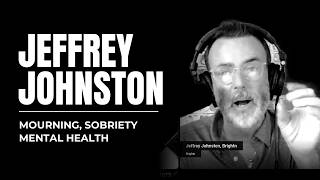
In this Founder Wisdom podcast episode, host Charles Cormier sits down with entrepreneur Jeff Johnson for a second conversation, marking the five‑year anniversary of his wife Prudence’s death and the ten‑year anniversary of his son Seth’s passing. Jeff reflects on the intertwined grief of losing his spouse and child, describing how these losses shape his daily mindset and purpose. He recounts his past entrepreneurial success, the highs of having millions and a Cadillac CTS‑V, and the lows of losing wealth, using these experiences to critique the common belief that money buys happiness. Jeff explains how his personal tragedy became a competitive advantage, driving him to build Brighton, a mental‑health platform he frames as a legacy rather than a typical startup. He discusses his founder mindset at 60, confronting imposter syndrome, relentless fearlessness, and a sales‑like approach to fundraising. Jeff outlines how he measures progress through health (sobriety, nutrition, workouts), creative output (writing his second book, "The Upstream Mind"), and time prioritization. He mentions supplementing his income with speaking and coaching, having liquidated much of his net worth, and emphasizes internal motivation over external belief systems. The episode details Brighton’s current fundraising round—a $3 million raise at a $15 million post‑money valuation—its go‑to‑market strategy of positioning the app as an employee‑wellness investment, and Jeff’s desire to find a lead who adds operational value. Throughout, Jeff and Charles exchange perspectives on legacy, the role of money as leverage, and the importance of impacting others, concluding with contact information for Brighton.
Chapters
Welcome to another Founder Wisdom podcast for round 2 today with Jeffrey Johnson. Jeffrey was on the pod last time and I liked the guy so much I thought I would have him for round 2. Uh, today we didn't really have the time to explore Brighton. We talked about his past, right? He has a hell of a story. Um, and yeah, today marks, uh, 5 years anniversary of, uh uh, his wife's passing. And so we, we're sort of here to commemorate that as well. So Jeff, welcome for round 2 again. Uh, tell us what's new since we last spoke, which was a month ago. It felt like—
I know, something. Yeah, when you have a good conversation, it feels like yesterday. Um, yeah, I'm happy to be back. And kind of like you said, I think last time we talked a lot about my past and what I've been through and kind of where the idea for this, this, um resource that we built in the mental health space. But yeah, I woke up this morning and, and like, you know, with, with my son now coming on 10 years of his death, and Prudence today would be 5 years, you kind of forget about these anniversaries. They, they kind of like, you know, they're coming, and you think about the Fourth of July, and then my son's birthday was, um, the day before my wife's death anniversary, so everything gets kind of jumbled together. So this morning I didn't even realize that it was 5 years. Um, I mean, I did, but I kind of like consciously blocked it. And I'm kind of having my tea this morning and thinking about 5 years. Wow. You know, just think of like not just my pain and suffering, but what my wife missed. Like, missed our son getting married, missed granddaughter, you know, Brighton, missed just some great, uh, things about being alive. Um, even though there's a whole bunch of crap in between. But my heart goes out to her that she has not been here to be able to witness these things. And, you know, selfishly, I miss her, no question. You know, at 60 years old, I didn't plan on being widowed. That wasn't in the— that wasn't in the cards, you know. But here I am, you know. That's, as you'll find out, and you already have, I assume, Charles. But life doesn't always, you know, doesn't always cooperate. And certainly people don't die in the right order all the time. You know, sometimes it's just the opposite.
Yeah. And you posted a picture of her on your LinkedIn today. Prudence was beautiful, man. Beautiful woman.
Listen, I outpunched my coverage, as they say in football terms. She's 9 years younger than me. And the funny story was, when I first met her, she walked into this bar and I had just come out of a relationship and I was really like not wanting to meet anybody. I just wanted to drink with my friends and be with guys. And there the door flings open and it's like Madonna in a, in some flamingo white outfit. And I'm like, that's the last thing I need to see right now. And ended up marrying her.
Yeah, I think last time we left, uh, you, you told that story, but, um, yeah, how— discuss about your success back then, but like still the empty, hollow feeling, and ultimately what led to, to Brighton. Because we discussed about Seth, we, we discussed about Prudence as well. But you had, yeah, a drinking problem, right? But you were super successful. We're talking about your Cadillac CTS-V, which is a hell of a fucking car.
Yeah, I know.
Um, and but I often hear on podcasts that money doesn't make happy. I don't fully agree with that. Like, I think money like solves a lot of problems, and I think if you're somewhat mentally healthy, I think money will solve a lot of things for you. Obviously, if you're— if your demons are surfacing, it's just gonna amplify them. But what's, um, yeah, tell me about your financial success and how did it evolve to today's, uh, philosophy with money.
You know, I do agree with that statement that, that, you know, like, money doesn't solve everything, or money's the root of all evil. And a lot of times you'll hear that from people who've never had money. I had millions. I've lost millions. I've had millions. I've lost millions. I mean, I'm 60 years old. I've had the ups and downs like every entrepreneur. So, when you have something and then you lose it, that creates a different level of perspective and wisdom. I think it's easy to say, "Oh, going to the gym and being all strong, that's just a waste of time." But when you're in the gym and you're strong, you don't feel that way. So, it's like, I think sometimes when you have something, and then it's taken from you, whether it's a poor business decision or in my case, you know, death or something, I think it— I think you get a lot better, like, reverence into what really is important in your life. So as I— as a young man, and I aspire to do all these things, like, like I think everyone does, is you— is you think, especially today on TikTok and Instagram where everybody's making billions, and why aren't you, you fool? You know, it just makes you feel bad every time you see how well everyone's doing. You start thinking about, well, why don't I have a piece of that? You know, it's like It must be easy to be a founder. Everyone's raising millions. It's like, once you've been through the rope and been through the wringer like I have been, you just realize that a lot of it's a lie. A lot of it's an illusion. Most people are not doing as well as they say they're doing. I would say the majority of people on planet Earth are hiding behind a mask at some level, whether it's their looks or their physique or the car. Like, in my case, I had a Cadillac CTS-V I bought after Seth died because I'm like, I don't want to buy a dog or a cat. I need to have this thing to stroke my ego, to make people know that I'm doing okay. And I drove it around town feeling like the biggest loser on the planet. It's like, that thing needs to sit in my garage. I need to get rid of it. And I sold it. But I think, I guess the point I'm trying to make, Charles, is like, you have to try things. You have to try what you think you need in your life and what you think is your pathway to recovery or to a good quality lived experience. And when somebody says money doesn't make you happy, well, I think you need to go find out yourself. I mean, that, that may be their perspective, but you're right. Money, no question, gives you the opportunity to spend time with loved ones that you probably couldn't. You can go on vacations. Um, it's not necessarily the— you can be philanthropic. I mean, to write a check to $5,000 to a homeless shelter, holy cow. It's like, what, what great feeling would that be to be able to do that? Well, people that don't have money can't do that. So, Money's a leverage. It's a way to get to another place in your life. And I think the older you get, you realize how futile it is to chase it because at some point, you're just going to be a photograph in somebody's garage sale at some point. And no one's going to know anything about the car you drove or the big house you had because someone else will be living in it, probably having the same problems or worse than you had when you lived in it.
Yeah, that's deep. And I guess like your main purpose nowadays is Brighton, right? Like you find purpose in there. That's where you invest your time and energy because it's fully aligned with who you are, your values and your purpose on this earth. Right.
Yeah. And really the idea of it, you know, I, like when I was in Chicago last week talking to a group, I said, you know, I'm not a founder. I'm a father. I'm a husband. I'm a grandfather now with, with Brighton. This isn't a startup. This is a legacy. There's a big difference. Someone asked me what my competitive advantage is, and I said, you just heard it. I've lost half my family. That's my competitive advantage. I will figure out a way to make this work. I can't explain to you LTV and CAC and all this stuff that a lot of investors want to see. But if you want to bet on somebody that's going to get something done, it's going to be me. May not be the way that it should be. There's no textbook. Hell, there's no textbook when you lose a child. There's no textbook when you lose a spouse. I mean, there's no textbooks in these things. And I think I think that's what separates me as a founder, is that I have a, a curse, I guess, in that I'm resilient. Um, I'm a little naive in this space because I— my startup took 36 years. I'm 60. I don't have 36 years for this startup.
Um, so, but you had success as well, and you're savvy, you're financially savvy as well. You have like that operator, uh, experience under your belt as well. So you're very investible in my opinion.
But I never felt successful. It's, it's, it's imposter syndrome. It's, it's just lack of confidence. And, and, and you get, I gotta put on that confident face. I have a presentation in a couple hours today with the VC outta Chicago and I gotta put on that face. But, you know, like a lot of people that are, are leaders or people who are innovators, I think, I think they always have this, like, I'm not doing good enough. It's like, and I, I don't wanna lose that because That's what drives me. That's what gets me out of the bed. When my feet hit in the morning, I'm like, okay, I got, I got a full day, man. I'm not dead. Like, I'm here. I go, you know, what's the worst thing that's going to happen today? Well, there's only one worst thing, and that's me dying. Other than that, I can handle anything else. So bring on that email, bring on that investor telling me to piss off, bring on that client that doesn't renew a contract. It's like, okay, next. It's like, bring it on. It's like, you have to have that sense of fearlessness or Or you're going to have a really tough time going through life because life ain't fair. It's not fair. And no one's going to come save you. Some investor is not just going to show up on your doorstep and say, Jeff, I love your story. It's too bad you lost your family. Here's $1 million. Go save the world. That ain't going to happen. I'm going to have to tooth and nail, scratch and claw, knock on doors like I sold life insurance for 2 years door to door in the late '80s. And that was hard. And I'm right back in that same boat at 60 years old is I got to sell the dream door to door. I got to go find the investors. I got to find the partners. And I've got a lot of people betting on me right now, and I don't want to let them down.
Do you also like supplement, um, let's say, do you inject money in the business from your speaking gigs? Because you're very hireable as a speaker and all these other activities. I'd hire you as a coach as well. I know that we talked about confidence and stuff as well, but to me, there's, there's no other people that I've met, and I've talked to a lot of founders and CEOs, around 10,000 to 15,000 the last decade So I've heard a lot of stories, and probably the most inspiring one— it's the most dire story, the darkest one, but it's also the most inspiring. And me, I feed on these dark stories, right? Like, I relate a lot to Goggins, even if I didn't have, uh, that past myself, right? So do you also supplement, uh, this, uh, your income with like, uh, speaking gigs, coaching?
And I do, but I, I've, I've liquidated most of my, my liquid net worth at this point. Um, but when you have no relationship anymore, that money held me so powerless that now I don't— I just don't care anymore. I, I know, I know that if I put out the best vibrations, the best frequency, align myself with people that really are raving fans, that it'll work out. And again, this is coming from an agnostic. I'm not a believer in, in like the religious God from those contexts, so I can't like say, oh God, please help me, because if he was going to help me, why wouldn't he have helped me with my son and my wife? So it's like, I, I certainly don't want to go to that well again.. So, for me, it's all internal. It's all like, I need to figure this out myself. Maybe that's Generation X. We get a lot of credit, our age, of just being ways to figure it out. Millennials and Gen Zs get criticized for certain things, but I think our strength as Gen X is that we just learned to figure things out on our own. We didn't have anyone there protecting us. If we wanted to build a tree fort, we just went out and built a tree fort. We didn't get on YouTube and figure out how to build a tree fort.. And that, that resiliency now at 60 has made me very, probably different than somebody who would be going through the same things that would've been maybe taken care of a little bit more in their youth. I mean, I had 3 brothers and my dad was a doctor on call all the time, and we just had to like figure things out. And I think there's something to say about that resiliency that now, now that's like, I'm, I'm cashing in those chips now, you know? Playing those cards that I was dealt. Um, but I also do think— I, I have a believer in humanity, Charles, and I think most people, you included, would probably be doing something similar to what I'm doing. You know, maybe not at the same delusional level that I'm at, because I really don't care about my, like, my financial situation personally. I was like, I, I'll sacrifice everything to get Brighton where it needs to go. I know a lot of founders that say that, but then when it comes to cashing out their IRA or their children's 529 plans or their mortgage, they're like, I'm gonna go get another. No, this is it. I, I committed to myself I would either, quote, save the world or this would kill me. It's like there is no, like, middle ground.
Yeah, I, I can relate to, to that. I mean, not, not because I had— I mean, I had light trauma, like, not, uh, not hard like yours, but, um, it's like relative though.
It's all relative, Charles, you know. I mean, If you don't have any kids, your dog gets hit by a car, you know, it, it still, it still hurts, you know.
Well, yeah, it's a dog's like not your kid or your, uh, spouse. But me, it's like I have an addictive personality, right? And I've, I've been going like all in since day one. I think like that's, uh, that's my personality. That's mostly because I'm a degenerate like genetically, uh, but I also have a purpose which is not like directly related to to my past, but I think AI will basically replace all jobs, and I think that the transition will be very ugly, and I think it will even replace me if I don't move fast enough. And my vehicle to solving this is promoting entrepreneurship and foundership and having people start businesses. I think like 9-to-5s stand like no chance against AI, and that's my full purpose. And I know that if I don't move my ass, like, my family's security will be, uh, jeopardized. So that, that's like my big why. What do you think about it?
Yeah, I, I agree. It's like, um, I told my, told my boys after Seth died, I said, you know, there is no staying the same anymore. Either you either get better or you get worse. You— it's impossible to stay the same after something like this. You can't go back to the life you once had because there is no life you once had, and that, that life was an illusion anyway. Um, you know, so idea of us going through life like, like, like time is, is some, uh, some, some measure of, you know, like a measurement of time. It's, it's like time's a human construct. I mean, all you have is right now. There is no such thing as the past. There's no such thing as the future. But we can feel the past. You know, you can look at a picture of my wife and I can feel that energy, that pain, that love that was there. Love does— doesn't evaporate. It goes somewhere after somebody dies.. And so I have a lot of respect for my past, but I know I can't go back there. I don't want to go back there. I don't want to be that guy. I don't want to be married again with 3 boys in that big house in a fast car because I'm just setting myself up to being disappointed because that's not possible. And even tomorrow, it's like, yeah, I'd like to have crypto and all this stuff sitting there and looking at my investments every day, go, man, I'm going to be doing pretty good. Then I get hit by a bus. It's like, it doesn't matter. None of this stuff really matters. The only thing that matters is what you and I are having right at this moment, this conversation, and who's listening, who's being helped, who's being inspired, who's struggling right now, or who's in a really good position to help other people. That's always a great way to go through my days. Always think, who am I motivating to help other people? That ripple effect that we can have on people. But we don't live that way today. We just don't. We're so captured in thought of— of what we should have done differently or how we should have lived. And then like, I wish I had more. Like, you'll find out when you get to be 60, you know, men sit around, start adding up their chips and you're just, again, you're doing, you're setting yourself up for disappointment. The poker game isn't over. I'm not cashing in my cards. So I think it's important to have a baseline. Like, I don't want to be destitute, but, um, the, the minute you start thinking you got shit figured out in life, that's when something horrific happens.
Oh yeah, fully agree with that. Um, isn't it frustrating to think that our human nature always like tries to bring us to square one? Um, how do you measure progress and how do you like actually know that you're moving forward and you're not following the same traps as before?
Good question. Um, I mean, measuring progress, I think of a couple of different like lanes to focus on. One would be my health, like sobriety, eating. I've got— I've really the last few weeks have been really focusing on intentionally eating healthiest I've ever eaten in my life. And what I'm feeling is more energy now that I've had last couple of weeks. If I take a nap in the afternoon, it's 30 minutes instead of an hour. Workouts feel stronger. The intensity of my conversations are more intimate. Everything's better. And so, that's like one lane. You know, that's a process and I got to stay on that because I know that the consequences are good if I put in the time to eat healthy. You know, then I like to read and write. That's another thing I like to do. That's a big therapy for me. So, I'm on my second book called The Upstream Mind: Solving the Mental Health Crisis Before It Starts. I love it. I just, I love to write. As a matter of fact, I'm afraid of ending the book because then I got to start another one. And someone asked me the other day, an investor asked me, he goes, "How do you find the time?" I said, "All we have is time, man. That's all we have." What do you mean, how do I find the time? You're just not prioritizing it well. If you have to ask that question, you're not prioritizing your time well because we all have the same time. All we have is time. And if you're just not getting things done because you're just not prioritizing—
so yeah, do you put stuff in your calendar that's not important for you, that's not aligned with your values, right? Like, I feel a lot of people are being torn apart because they, they put stuff in your calendar, in their calendar, that does not matter to them. They meet with people they don't like, and that's when the crisis of the '50s or '40s midlife crisis happens, right? It's just they, they blow there's like, it's too much, it's enough, I don't like my life, you know, I'm waking up and I don't feel driven by this, right? You've probably had a bunch of friends come up to you with similar issues.
Yeah, I'm gonna ask you, I'm gonna ask you a question. So let's say you're 85 years old and you're in a nursing home. Well, I'll say 95. At 85, you'll probably still be running marathons. So 95, you're in a nursing home and somebody comes up to you and says, Charles, what's your top 3 biggest regrets?
I know the first one. I ask myself that question at least weekly. And first one is to be part of the AI revolution and not create it. Create it. That is, um, I think like if I'm not creating actively this revolution, I'm gonna miss out and Elon's probably gonna be responsible for my life and my well-being and my security, right? And I don't want that. So that, that I think would be my biggest regret. And it's not something sentimental, like, I don't know, like, uh, spending time with my wife and daughter, because I think I spend adequate, uh, time and energy. I have great moments with them, and I film them with, uh, my Meta glasses, like, pretty much every day. So I think I'm good on that. I've always tracked lifestyle, and then I don't know, dude, like, um, I don't have like a second good answer to that. Well, I think the answer you expect also—
no, that's fine. There is no right answer. I think, I think, I think what the ant— what, what the— what you won't say is, I wish I had a bigger house over all these years. I wish I had more cars. I wish I had— right. I mean, no one's gonna say that. And if they are, then they're just a miserable—
spend more time with my parents also because they're aging, right? Like, um, or spend more time with guys like you, right? Like, you're phenomenal, you're legendary, and I think you can have a gigantic—
well, it's experiences and the world, right? Experiences and relationships. Yeah, it's experiences and relationships. That, that, that is the crux of the human experience. And I lost it. I, I was completely off the rails for, for all the way up until Seth died. So age, what, 50s when he passed away. So, for the first 50 years of my life, it was, you know, my favorite movie was Wall Street, which I even put on, I think, on your form. I put on Wall Street.
Gorgeous.
Because that was the movie that got me into— Yeah. That was the movie. I had a t-shirt, Money Never Sleeps, when I was in college. It's like, that was the movie that got me interested in money. And I kind of wish I never would've seen that movie because I wish I would've got into another line of work because even though I met great people, And I did make a lot of money over the years, which fed my gambling addiction for about 10 years. So, you can know where that money went that I made. But I can't, you know, it's like there's moments in your life when you look back and you say like, wow, it's like, what happens if I wouldn't have watched that movie or wouldn't have met that person? And I feel like now just in 3 years of doing Brighton, the mental health advocacy part, I feel like I never was a financial advisor. I feel like I never ran my investment company. I feel like I never had a TV and radio show. It's like, literally, I've expunged those memories from my brain and I've rewired through neuroplasticity, let's say, new memories, literally edited my old memories into new ones. And I kind of like that. I really do. I don't think about my— my old life a lot anymore, even my married life and stuff. I do when I have a day like today when, when, uh, it's been 5 years that Prudence died. It's like those are the times that I go back and think about my married life, but for the most part I don't visit it.
Yeah, I also think, um, I mean, it's okay for you to want to make money and protect your family, right? Let's not like downsize that. And making money is hard as well. In your case, I did— I do think it did feed like a, a toxic part of you that was like, um, wants to make money at all costs and Gordon Gekko. In my case was Wolf of Wall Street, right? By the way, I covered Jordan Belfort this weekend on my podcast.
Same type of movie.
Yeah, yeah, same time. It's, it's pretty toxic. Um, this guy in Hollywood, and there's a scammer that financed his movie. I'm not sure if you know, but Joe Low, right? He ran away with a billion dollars from— yeah, the Malaysian funds. Um, yeah, and yeah, it needs to feed a part of your motivation, but it's not a playbook anyone should follow because he scammed a bunch of people, right? And then that's just not good for humanity. But I think you made money, that's good, uh, just like with some, some twists in, in the methodology, right? And I, I think you still have that within, and that's great. Um, nowadays, uh, just to, to finish this off, right, like you're doing things differently. You have like a purpose now, um, you want to impact the world, you want to save lives. What, um, as a, as a VC, right, from like a rational perspective, like how can this make money while making good?
Yeah, I think there's a couple ways to look at it. Um, there's, there's, there's something called aggregate supply, and these are the organizations, these are the, the companies that are like starting now to put together like a super app, like they're having the nutrition and the wearables and the, the sleep, uh, help and all that into like one portal. And then you have like Brighton where we're trying to aggregate demand. We're trying to get the engagement, the, um, the adoptions. We're trying to get the users on the app actually using the app. It doesn't do any good to build something nobody uses. I mean, that, that's like the frustration from, uh, insurance brokers and enterprise companies and health payers and providers. Is that, you know, no one's going to use this app you built, Jeff. I mean, that's what we heard early on when we were out pitching this. And, and yeah, reality is the, the utilization rates in an EAP is like 1 to 3%. The bar is so low that, that, that's not really a something I could argue with because we were young, we didn't have a lot of efficacy, and our rates really weren't that high. Well, now they are, and we can come and we have a much more compelling story now. So if I can focus on showing the employer that, hey, not just we built something that's cool and that people are using it, but they're using it a lot and they are improving their mental health. So what does that, what does that translate to you? Do you look, do you look at this as an investment in your employees or a cost to keep your employees happy? How you answer that question will depend whether or not you end up working with us, because if you view this as a cost, you probably aren't going to work with us. If you view this as an investment, you probably will. And the reason I say that is we invest our houses, we invest our cars, we invest our bodies through disability and life insurance. Why wouldn't you invest your— why wouldn't you— I'm sorry, insure, I meant. We insure our houses, insure our cars, insure our bodies. Why wouldn't you insure your employees who make all your money for you? Like, tell me where I'm missing that story. You know, and that's, I think that's the reframing that we're trying to do. Our, our sales team is, we're talking to people. I understand cost is important, but I think if you could look at this as an investment, like you do when you insure anything, um, or maybe you look at insurance as a cost. I always looked at it as an investment.
Yeah. No, I, uh, I think it's, it's great. And I'm eager to, to help you in that journey. I, I think, uh, it's, you're so investible for, for so many reasons. Jeff, where can, uh, people find out more about you? With you and the company?
Yeah, well, we have it, we have a deck, and we just, uh, I met with the lawyer and our board chair last week, and we just finalized the term sheets, officially ready to go. It's a $3 million raise on a $15 post. Um, got my first investment last week, so one of our existing pre-seed cap table investors, uh, reached out to me and said, hey, I want to invest some more. He kind of wishes he would have done more on the pre-seed, um, but now he's coming in, uh, at, you know, 3 times valuation change in just a year or so. I can, my email is jeff@brightonapp.com. And Brighton is spelled B-R-I-G-H-T-N. So there's no O, it's Brighton. So it's jeff@brightonapp.com. I'm on LinkedIn. I'm on Facebook. I'm on Instagram. I'm on TikTok. So I'm out there quite a bit. But yeah, I would entertain, you know, right now I'm trying to interview for a lead. So I used to say, I'm trying to find a lead. No, we'll find a lead. I'm interviewing for a lead. I want to find somebody that's going to help us more than just write me a check. So, you know, if there's an invest, if there's a VC out there and they're industry agnostic and they can write me a check for a million and I got a VC that can write me a check for half a million, that's a healthcare-focused VC, I'll take the half million any day.
Yeah, dude, um, thanks for being on again for round 2. We're probably gonna have a round 3 soon. Jeff, um, where can people find out more about you? Brightonapp.com, right?
Yeah, and the website is— well, just put in, uh, and on the App Store, we're on Android and, um, on Apple as well. So it's, uh, just B-R-I-G-H-T-N and then app, and then I think it's Brighton Wellness or Brighton App Wellness? I don't— I haven't downloaded the app in a while, but there you go.
Yeah, brightonapp.com. That was Jeff and Charles.
More from Charles


Founder Wisdom: the audiobook, version 2 (5 hours of stories from founders and CEOs)

8 CEO Questions I Love Asking: the audiobook (64 founders answer, in their own words)





