Jim Donnelly - Co-Founder / CEO Humanaut Health
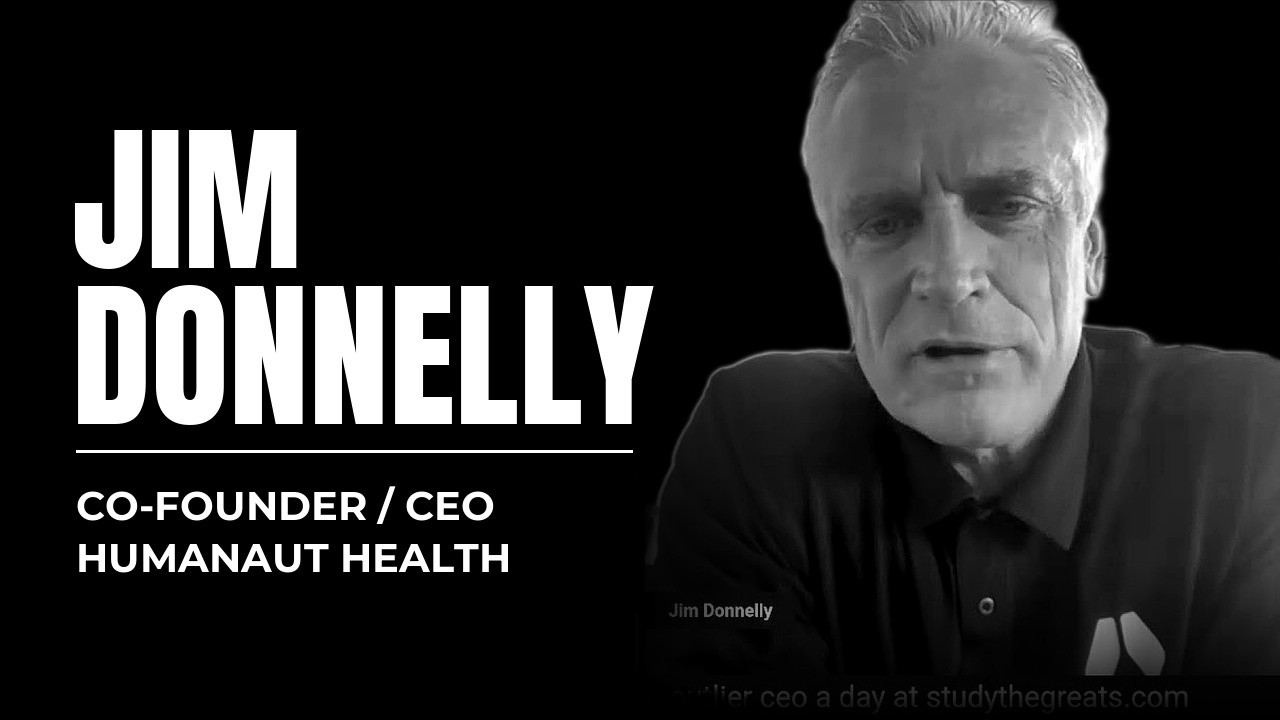
In this CEOism podcast, host Charles Cormier interviews Jim Donnelly, a serial entrepreneur and co‑founder/CEO of Humanaut Health. Donnelly recounts his first venture—a golf‑ball recovery business started in graduate school—highlighting early lessons about hands‑on work, margin creation, and resilience after a partner stole the company’s funds. He then describes subsequent startups: the travel platform I Go, You Go (sold to Travelocity), the Charlotte‑based lifestyle and real‑estate group Pursuit Group, the intergenerational social network Kin Valley, and the wellness chain Restore Hyper Wellness, which grew to a $140 million valuation before his exit. Personal turning points include his father’s death, a near‑fatal car accident, and a transformative stem‑cell treatment that inspired the creation of Humanaut Health. Donnelly explains Humanaut’s integrated, data‑driven model that combines regenerative medicine, AI‑enabled coaching, wearable integration, and tiered memberships ranging from $3,000 to $65,000 per year, targeting both affluent and health‑conscious consumers. He outlines the company’s scaling strategy—corporate clinics, selective franchising, and joint‑venture partnerships—aiming for 25‑30 new locations per year and eventually 100‑125 clinics worldwide. The conversation also covers his daily biohacking regimen, stress‑management practices, leadership philosophy of building ego‑less teams, and his view that preventive, performance‑based medicine will become mainstream. Finally, Donnelly shares his family’s entrepreneurial culture and offers advice for parents encouraging kids to pursue their own ventures.
Chapters
Welcome to another CEOism podcast. We have Jim Donnelly with us today. Jim is a co-founder and CEO at Humanoid Health in Austin, Texas. He's also an author, keynote speaker, previously CEO at Restore Hyper Wellness, Skin Valley, Pursuit Group, I Go, You Go. So serial entrepreneur here. Jim, welcome to the podcast. Tell us a bit more about yourself and what you're up to.
Yeah, thanks for having me. I really appreciate it. You know, like you said, I'm a serial entrepreneur for the last 20, 25 years in the health, wellness, and medical space. I'm super excited about getting real traction with Humanote and opening up around the world. We'll have our first locations in Latin America and Asia in the next few months, and we'll continue to add a bunch of locations in the United States.
Interesting. What was your first company? Uh, because last time we talked about you starting out in the Army, right? Then Coca-Cola, Citigroup, and I think I was— I go, you go, right? Your first home run.
Um, actually my first was, um, when I was 21. I was in grad school. I wrote a business plan competition for, of all things, a golf ball recovery company called Repeat Performers. And so we got all the recovery rights for the courses in Georgia and in North Florida, and we would get the golf balls out of the water hazards with divers or this special tractor equipment. And then we'd send millions of balls to a factory, then we'd package them, Lost and Found in America, and send them to France, Sweden, and England to distribute through retailers like Decathlon. And that was a very unsexy business, um, guys in water hazards with alligators and snakes and, you know, all kinds of unseemly characters you had to deal with. But, um, it teaches you some lessons. Teaches you you got to get your hands dirty sometimes. Teaches you that your business doesn't have to be super sexy to be successful. Teaches you you got to think through things like succession and all that. When I, when I went into the military and had to go to Ranger School, I hired some— somebody to run it for me, and he stole all the money while I was in Ranger School. Never saw him. Close the bank accounts. Um, you You know, so learned a lot from that business that kind of set me up for later on.
So you would pick up the golf balls in America and ship them to France, is that correct?
Yeah, the, the used balls like Titleist, you know, which is the top golf ball brand, you could sell them for 2.5, 3 times more in, in France and England than you could in the United States. And these were nice balls, they were the ones that looked really good, um, they called them Pearls. There was a whole vernacular around that whole industry. And, um, like I said, it's very unsexy. When I would train the new divers, I'd have to take them to the water, um, the golf course that had the most alligators. And, um, so it was a wildlife preserve at Jekyll Island, and you'd have 10, 15 alligators on the bank on the other side, and you'd walk in and then they'd walk in, and, you know, a little scary at first, but you just at some point you get used to it. You don't go in during mating season. There's a couple of rules, but yeah, it was in hindsight, like I said, a very silly business. But you know, the funny story is I was diving in a course, I come out, I'm dirty, I'm gross, and there's a guy on the bank with a golf club about to hit me. And he's like, holy shit, who are you? What's going on? And I said, listen, I'm just, this is my job. And he goes, man, I gotta tell you a story. My wife just left me, just got laid off. I thought that I was, you know, in a really bad spot, and then I saw you and you made my day. I know now it can always be worse. Meanwhile, I'm just got my MBA, I've got this business in Europe, I'm making a bunch of money. And so it just goes to show you, perspective matters. That guy thought I had the worst dynamic in the world. Meanwhile, you know, it's pretty good.
Oh man, that's, uh, and he was about to hit you. He thought you were some kind of, uh, lake monster.
Some kind of lake monster.
Yeah, some kind A walking alligator, walking alien. Yeah. No, that's fascinating. I'm just wondering, right, like shipping all these golf balls, they're very heavy to France. How could you make up your margins? And there, if that's so heavy and yeah, it must be by boat, right?
Or yeah, you'd send them by boat, you'd send them in bulk and, you know, the balls were cents to get together and then you'd sell them for— you'd sell a dozen Titleists for $25. And so probably cost you 5 bucks, 4 bucks to gather them and reprocess them. And it's, you know, just a little bit of shipping in there, but there's plenty of margin.
Yeah. Have you thought about like doing that for tennis balls as well on roofs, right? Like roofs of schools. Like, uh, you just pick like a tennis court that's located to a place that is inaccessible by foot, right? And you just, uh, start that business. Uh, what about the volume?
Would be very different. I mean, we would literally ship millions of golf balls. Balls, you know.
So you—
a really good golf course, you'd probably get 100,000, 150,000 balls a year. And, you know, and there's thousands of golf courses in Georgia and Florida. So it was actually a pretty big business. Um, I Go, You Go was definitely the first what I would call fun, cool, technology-based business. But, um, like I said, it was a good start. Um, you know, you, you get humbled in a business like that a little more easily than, than an I Go, You Go. Um, I Go, You Go is flashy and a travel company and and you're getting invited to every new cool travel thing in the world. You win a Webby Award for the top travel site in the US, and you know, you think you're pretty clever at that point. The golf ball business had a way of always kind of bringing you back down to reality.
I still have more questions about the golf balls. One, why not resell it to the same golf course? I don't know, in the driving range. Yeah, we would do some of that.
Yeah, we would do some of that, but the balls just didn't sell for as much in the US. And so we sold to driving ranges, we sold to cruise ships, we sold all kinds of different customers, but the best balls always went to Europe. Yeah, back in the day, people would hit golf balls off the side of cruise ships. Then, you know, that became, um, out of vogue because people were worried about the— what it was—
hitting a seal.
Well, or even worse, like putting something bad in the ocean. I mean, these golf balls weren't going to hurt the ocean. But, but anyway, it was what it was, man.
Yeah, back in these days, Ryan. How did you get the insight that these could sell, uh, to 3x the markup in Europe?
Uh, I mean, you know, like I said, it was a business school project and I had 4 classmates. This became one of our main parts of our MBA, and, and so we divided and conquered. And I had a guy kind of look around the world and see the best markets and see what we could sell them for. And, and, um, yeah, it was It was great.
Like, I mean, how crazy is that? Because most of student projects never go nowhere, right?
Well, we were, we were, um, also, um, proud because we would enter competitions with like the Stanford kids and the Harvard kids, and we were at the University of Georgia. And so we probably had a little bit of a, of a thing where we wanted to beat those kids, and, and we did. We, we beat them in all the competitions. I won Young Entrepreneur of the Year when I was 22, um, so, you know, as named by a couple universities and So it was fun. And like I said, a little bit of the us against them mentality. Um, you know, I— Georgia was great. It's got a really good entrepreneurship program, but you're still gonna rear up a little when you're going up against the Stanford kids that everyone thinks are better. Um, but, um, you know, like I said, I, I'm not— I don't, I don't really think like that too much, but every now and again I'll rear up a little bit.
And how did the golf business wind down?
Well, I went to Ranger School. I had the military commitment. And, you know, when you're in Ranger School, you're sort of out of circulation. So the guy I hired essentially stole all the money from the bank accounts and ran away. I never saw him again. So when I got out, I recovered sort of what I could. And then I sold the business to, you know, to another entrepreneur, probably not for as much as I could have. But, you know, once again, I was in the military. I was on my way to Korea. I was on the DMZ for a year. And so the last thing I needed was a, was a business back in the United States selling golf balls all over the world.
So some guy literally stole your money and, uh, never heard from him ever again, even like 40 years later?
Never heard from him again. I assume he's dead now. He was a bit older than me, um, and it wasn't like it is today, you know. This was old school. There was no internet, there was no social media. It was a lot easier to disappear, so to speak.
Nice. Um, did that traumatize you, like, have someone betray you like that?
No, not really. I think it, it kind of was good for me in a way. I think that if you have early success and you don't have obstacles, it can maybe make you think that everything's going to always be easy. And so I kind of took it for the lesson that it was. I, you know, I was young, had lots of Yeah, I was literally 23 years old, so I, I didn't think like that. My dad had been bankrupt 3 times when I was a kid, so my dad was a, you know, I love my dad, he was a great guy, great human, great father. He wasn't the best entrepreneur. And, um, so I kind of grew up in a household where, you know, as long as you don't cheat anybody or do anything bad, when you have a bankruptcy, you get to restart the next day. So when this, this guy stole all the money. I kind of looked at it like that. It's like, okay, I'll start something new. I'll, you know, I'm an entrepreneur. These things happen. Better, better when I'm 23 than when I'm 43 or 53. So I've always had a pretty resilient sort of perspective on that. I've, I've had, for the most part, amazing partners all throughout my career. I've, I had one other partner that I would say betrayed me and, and, um, went behind my back, but It happens. I, you know, I always say about those people, their punishment is they have to be them the rest of their life.
Oh yeah.
And my, my reward is I get to be me the rest of my life. So yeah, I'm true. You know, I don't, I don't really let it hold me back.
Yeah, for sure. And I Go Hugo, that was a digital business.
Yeah, it was an online travel company. Um, it was back before user-generated content, and we, we basically got really robust travel journals people and then other people. We used an algorithm to match you to travelers and you could follow in the footsteps of real people. And, you know, we went to all the top travel magazines and travel companies. They all said we were stupid. No one will listen to other people's travel advice. And, you know, at the time, I think, you know, Tony, my, my co-founder and I, we were named sort of number 7 on the top 10 influential technologists because of the user-generated dynamic we created. And that was just a really fun business. Um, you know, I was passionate about travel. I traveled all my life as a military kid and, um, just got to see some amazing things, build a really great culture. And we ended up selling that business to Travelocity, so that enabled me to be an entrepreneur obviously for the last, you know, 25 years. So that was a great outcome.
Yeah. Um, 5 years at that one, starting the dot-com bust, right? So yeah, I guess prove them wrong. And then Pursuit Group, which one was that one luxury business?
Yeah. So when we sold I Go, You Go, I'd just gotten married and wanted to have kids. So my wife and I decided we didn't want to do it in New York City. So we toured the country. We ended up in Charlotte, North Carolina. And if you've lived in New York City for 10 years, you know, you have kind of a high bar for what entertainment looks like and food and everything else. And so Pursuit Group was literally a company to make Charlotte a more cool place to live. And so we opened, you know, a men's grooming lounge, which is sort sort of a men's med spa. We opened the Charlotte Athletic Club, which is like the Equinox-level health club. We opened a really cool real estate projects where we'd go buy old bank buildings and sell condos and whole floors to people like Michael Jordan and Cam Newton and Daughtry. And so lots of really cool projects. To this day, still the highest dollar per square foot real estate when we did the project with Michael Jordan. Um, the men's grooming lounge is still there. My health club, you know, 20-plus years later, I still own a part of that. And so these were things that people in Charlotte really recognized, because that's more cool than what we had before. And so you get to know everybody, and it was just a really fun way to be a part of the community. And Charlotte was great, but it probably wasn't my scene. I always say it was a little white bread for me, a little too bankery. It's a big bank town. And so I ended up, after selling those businesses, ended up coming to Austin, Texas, which kind of suits me a little more. It's a little more, you know, a little more entertainment, maybe a little edgier, certainly a little more nuanced, and, and great for entrepreneurs. And that's how I ended up in Austin. And I, and I'd gone to UT undergrad, so I'd always wanted to get back to Austin.
I love this. And how, uh, did you— yeah, did you exit that one in 2010, uh, or do you still have stakes?
I exit parts of it. So the— as a company that kicked out different ideas. I sold the condos, um, you know, we sort of sold all of them, um, had a couple that didn't work. Like, I bought an old church that looked like a castle, and the idea was I was going to turn it into a preschool because kids would love coming to a preschool. And so, and, you know, of the 10 businesses we started, I'd say 2 or 3 of them didn't work, 2 or 3 of them were a huge success, and, you know, 3 or 4 of them were kind of middle, middle of the pack. Um, and so, you know, everyone talks about their success Everybody puts their successes on their resume. They don't talk about the ones that don't work. Um, but those— the ones that don't work sometimes are the ones that lead you to the next ones and the ones that do work. So I, I think a good entrepreneur, like I said, is really resilient and can kind of learn from things and, and, and do the next one a little better because of those learnings.
And I guess that led to Kinvalley, right? Like the online home for families.
Yeah, Kin Valley was interesting. It was probably, if I look back at it, the most beautiful business I'd built. It was an online social network that was intergenerational, so you could have kids in the same spaces as adults, and there was a neat permission system. But it was this really lovely visual interface where you would create a home in a valley, and in that home you could put up all kinds of visual things that showed people what was going on in your life, and coaches and teachers and grandparents and everyone could be in the same environment as a kid, which is not, you know, which is illegal. You can't do that on Facebook. You have to be a certain age and all that. So it was kind of an idea before its time. I partnered with some folks from Disney and it was just the most beautiful visual interface I'd ever created. But, you know, you also had to navigate— things are moving from the desktop to mobile. And, you know, we were probably a little slow. Our biggest customers was the Girl Scouts. And the Girl Scouts are great, but they're a hard partner. Every Girl Scout chapter's a different set of women running it. It's not a very sophisticated organization. And so if that's your best customer, it's hard. Love, love, lovely, lovely customer in that the people really cared about what they were doing. And Girl Scouts was perfect for Kin Valley. But, you know, this, this is where you have some traction, but you have to decide, like, I only have so much time., and I knew my time would be better served doing something else. And so rather than keep plugging and, and going really slow, I said, I'm going to shut this business down so that I can go do the next business, which has way more potential. And that next business was Restore Hyper Wellness. And so I think my instincts proved to be right in that regard. And Restore was a rocket ship, whereas Kin Valley was sort of a— maybe it's called a Volkswagen going down the highway.
And restore what, uh, what happened? Why leave it if it was a rocket ship?
Well, I was there for 8 years. I do have a little bit of an entrepreneurial thesis that I'm sort of a 5 to 7 year guy. I like to create things, I like to build new things, I like to create a brand. And when you get to the 8-year mark, you're really doing very different things. It's a lot of spreadsheets and HR issues, and you, you get sucked out of the beauty and the creative stuff. And I think there are people that are better at that, people that can optimize 8 years in versus people that build and create. And I'm in that first camp. I get a little bored after, you know, after 6, 7 years. And I was just at that point, you know, with Restore, we know we had massive success. You know, we sort of about the 6-year mark, we had General Atlantic invest $140 million for less than 26% of the company. So you can do the math. That was a great outcome. Got to take some money off at the table. And then the idea was I would run the company for a while, but 3 things happened. Number 1, I didn't particularly enjoy working with General Atlantic at the time. They had different ambitions than I did, which is fine. General Atlantic's a great company, really smart people. You know, sometimes you have to agree to disagree, and a lot of times private equity disagrees with founders. Number 2, my dad died of cancer, and I had strong conviction that I wish I'd had something more medical. We could have caught his cancer at stage 1 instead of stage 4, and I might have been able to save them. And then number 3, I got hit by a drunk driver going 65 through a red light. I was 65 through a green light. About killed me. More importantly, it really damaged me. And so I was pretty miserable for many years, for certainly for over a year. And, um, I went around the country, tried everything, and then I did stem cells. And stem cells completely brought me back. So I was like, there's something here I want to— I don't want to do just a stem cell business, but I want stem cells to be a part of my next business. And it is. It's a big part of of what we do at Humanaut, along with many other things.
And that's crazy. How did you survive that impact? That must have been, uh, shockingly, like, hardcore impact. 65-65. Were you like fishbone or— well, fortunately, I guess, and not physically.
No, it was about— it was sort of diagonal, so not straight head-on but diagonally head-on. Um, listen, I was driving a big truck. Um, this is another example where it pays to be in shape. I was in really good shape. I think that certainly helped me. And, you know, you got to get a little lucky. If, if, you know, his car had been a sort of foot to the left or the right, I might have been dead. And, um, and I wasn't. And, you know, and people ask me all the times, like, you know, what did you want to change after you had that experience? And I was fortunate and am fortunate, and I said, nothing, man. I got perfect life. I'm married to my girlfriend for 20 years. I'm like, my kids are amazing. I love my kids. They're crushing it in life. I, I'm working on a business that's meaningful with people that are passionate. And, um, you know, are there little things maybe I'd tweak here and there?
Yeah.
But in the grand scheme of things, I was like, you're pretty damn lucky. And, you know, and I, I think that, you know, I'm— if when you talk about sort of faith and all that. I, I think it was probably God's way of saying, is don't get too full of yourself, don't get too big-headed. Let me, once again, let me knock you down a notch so that you can think about this in the right way. And, and I always talk about currency. I say get your currency right. And, you know, when, when money is your main currency and all the other stuff is secondary, I think, you know, you have worse outcomes. Money should be a byproduct of doing great things and doing it the right way with the right people. And You know, it goes to your head a little bit when a company puts $140 million in your bank account. So like I said, probably, probably God's way of saying, hey, let's, let's, um, let's reboot, buddy. And so that's the only way, you know, you got to find a way to think about these things.
And stem cells, I guess that was physically, but mentally, what did you had to reboot in your own head, in your own, and your daily life habits, right, uh, to get back on track?
Yeah, I mean, the, the, the, the hard part about it was just physically I was broken. I was in pain, and pain's really hard to get through. Um, and, and so really just finding coping mechanisms, you know, there were certain things like PEMF helped me a little bit, cryo helped me a little bit, you know, all the things that I had in my life at Restore helped a little bit, but I could never quite get fully back until I did stem cells. Um, but from a mental perspective and all that, you know, I wouldn't— I, I didn't— I didn't— once again, I didn't— there was no trauma, so to speak, that didn't bother me. I got right back into the flow of things as soon as I could. Um, but, but definitely the physical part was hard. Like, there were days where I couldn't sleep at all, and, and so those are miserable days. Once I got the physical dynamic fixed I didn't really have a lot. I had to reboot mentally, you know. Now some people would say, dude, you did— you do have some trauma you need to figure, work through. You do. Um, but I've, I've not processed it that way. I kind of processed it in a more positive way, that once again there was a purpose and, and it all worked out.
What a crazy story. And then you, you decide to launch a business around that time? Humanoid is like more protocols-based, right? Like more medical-based. How's it different from your last one?
Yeah, you know, I use the education analogy. I think of Restore as sort of elementary school. It's very basic entry-level stuff. A lot of the biohacker stuff, heat, cold, pressure, things like that. By the way, good for you. All things that people should incorporate in their regimen, but it's not the real medical stuff. It's like the stuff before the stuff. Like, and a lot of people at Restore, a lot of customers would make that mistake. Well, I did cryo today, I don't need to exercise. No, no, no, cryo was not to replace exercise. Cryo was to make it easier to exercise. So I, I wanted to do something that was more the real stuff as opposed to the stuff before the stuff or the ancillary stuff. And so I think of Humanod is, is much higher level. I would, I would use the, the education analogy once again. I'd say HumanOps, like your PhD, it's the synthesis of understanding movement, nutrition, and sleep, stress reduction, cognitive health. It's understanding how to build a really interesting technology stack so you have all kinds of AI enablement. It's how to get care plans to people that are personalized so that you get really great results. And then it's about having all the tools in the toolkit that are important. So everything from regenerative medicine, all the exogenous molecules, peptides, hormones, supplements, medications, having some in-clinic treatments when you need it, whether it's shockwave or once again stem cell procedures or all kinds of other things, having some wellness stuff on the side, hyperbaric oxygen, you know, little chili box, which is cryotherapy, you know. So it was really about curating all of that in one environment so people didn't have to go to 5 or 6 places to pull it all together.
I'm on the website. I love what I'm Seeing here, there's so many treatments. Seems you target high-net-worth people as well, right? So it's like $3,000 a year, or, uh, tell me a bit more.
Yeah, so that we have a variety of memberships. The idea is I do want it to be approachable and democratized. And so $3,000 a year, you get quite a lot. You get about $5,000 of in-clinic services. You get quarterly diagnostics. The idea is you get about $10,000 of value for that $3,000, and there's a way that we curate that that can— makes it worthwhile for us to do. But the idea is that you've got to have a certain level of engagement, you got to have a certain frequency of interactions, and you got to be giving people enough of these services and other things in order to make a big difference. And, and so that's how we think about it all the time. Like, we, we are a place that we want engagement, we want interactions, we want to be able to calibrate and recalibrate, and we want to be data-driven. And so all of that comes into play at Humanaut. We have memberships all the way up to $65,000 a year, you know. So that's kind of the flip side. That's a 6-person dedicated care team, 24/7 interactions, you know, one of the top longevity doctors in the world. You get some services within that— your peptides and your hormones and things like that are included in the membership. And so we're really trying to meet different people at different levels. Um, you know, I would say that anybody that's interested in their health, if they really prioritize it, can tap into that lower level membership. The Concierge membership does tend to be sort of C-suite entrepreneurs, you know, folks that have sort of gotten to a different stage in life. Um, the lower level membership tends to be people 35 to 50. The higher level membership tends to be people over 50, different stage of their life, um, certainly from a, from an affluent perspective, right?
Because insurance doesn't pay for it, right? And it's mostly preventive rather than, uh, cure. I mean, injury is different, right? But, uh, yeah, is that the future of health right there? Because I mean, as you know, uh, the government and humans nowadays don't prevent stuff, they fix it once it's broken. In 20 years from now, do you think that would be the standard? That the government would eventually cover that?
Well, I think the government will eventually cover some of the stuff I, I do. I think, I think the way the world should go, and in some ways is headed that way, is number one, proactive and preventative, and then number two, sort of what they call managed performance-based medicine. And so the things that produce results receive more funding. And at the end of the day, Humanaut is managed care. Humanaut is performance-based care. If we don't get good results, people don't spend their cash on what we do. So the ultimate arbiter is the fact that people are paying for it out of pocket. And I think that is the way that traditional healthcare wants to move. Unfortunately, it's, it's hard to move a, you know, a big ship when all the incentives are misaligned, but this, this notion of proactive and preventative, it is certainly what you hear out in the ether. It's what you see lots of startups doing. And so I do believe it is the future and I can give you some stats. It's kind of the present as well. And so. So I take Metabolic Health. Metabolic Health— metabolic dysfunction affects over 90% of Americans. So some type of metabolic dysfunction might be weight, might be insulin resistance, it might be all kinds of things like that. Um, so the stat that I tell people all the time is 87% of people who come to us with metabolic dysfunction, within 6 months they have zero sign of metabolic dysfunction. So if you can solve that at that high level for that many people that quickly, you are solving a massive, massive problem in America. And metabolic dysfunction is the single biggest driver of healthcare costs in America. And so if we can fix that, then there will obviously be something down the road with the traditional system that will, that will work.
Right. Is autoimmune related to metabolic?
It can be. Autoimmune can be its own category. There are some things within autoimmune that I would say come from metabolic dysfunction. And so there's a whole nother stat that something like 70% of all Americans have some type of autoimmune disease that, you know, causes inflammation some way. So those are the big things. The— fortunately, we're good at that too. I would say autoimmune, metabolic dysfunction, and pain are the 3 things that we're particularly good at. We also happen to be good at heart health. The, the issue with heart health is heart health is so far out in the future for a lot of people. So it's less interesting for companies that are trying to bend their cost curve because you have an employee and you help them with their heart health. Well, it's not going to manifest for 10, 15 years. You're probably not going to have that employee. Than— so, you know, we work with a lot of companies and they tend to care less about some of those things because it doesn't have as big an impact on their bottom line in today's world.
How do you use your own protocols on a daily basis? Walk me through a day-to-day life.
Yeah, I mean, I, I go pretty deep. Number one, I'll try everything. Um, but, but, you know, I always say that everyone knows Humanaut and they think that it's all the cool fancy stuff like stem cells and therapeutic plasma exchange. That's the last stuff you do. That's the last 5%, 10%. The main stuff is I have a very, you know, dialed-in movement and weightlifting and cardiovascular health program. So that's the— that's the beginning. I really try to optimize my sleep. It's probably the hardest thing for me because I've got a lot going on and a little bit of stress building a company. But, you know, we have a whole plan around my sleep. We have a whole plan around my nutrition. And, you know, for instance, over the last 3 months, I've lost 15 pounds. I've got another 15 pounds that I'm working on losing. So I'll be at my sort of college athlete weight. And, you know, so there's a daily back and forth with my coaches about what did you do today, what can we tweak today. There's a bit of effort around stress reduction because that is one of my biggest issues. You know, I'm a 57-year-old that's been starting companies for 25 years, so my my sort of adrenal glands and that sort of thing. Those, they're sort of tapped, and, and so they're cooked. And so figuring out how to manage that and, and, and, and get, get some of the cortisol levels down and things like that, that's a big part of it. And then a little bit of brain stuff. I've got a family history of dementia with my grandparents, and so I do some stuff there. And then once I kind of have that on a very good path, then I will do some of the other specific things. I do stem cells on a pretty regular basis. I've done it both when I've been injured, like in the car accident, but I've also done it proactively. I try to have a regular cadence for my knees, for instance, where every 2.5, 3 years I'll do a stem cell injection in my knees. My knees are like my 30-year-old knees now. I have no pain, no discomfort, and I like to keep it that way. I think a lot of times people wait too long. Like, don't wait till you're totally tapped out and on your last leg. Egg come in before. So I'm proactive about stem cells. I'm pretty proactive about things like therapeutic plasma exchange. That's where you drain your blood plasma, and by doing that, you get rid of your heavy metals, microplastics, and dead senescent cells. And so I do that a couple times a year. I'll do EBO2, which is another blood filtration thing. Um, I do just basic things like I drain some blood every other month, where literally I'll just take a big bag and I'll fill that bag with my blood, and, and you want to get that out of your body so that your iron levels and, and ferritin levels are, are lower. And so some of it's very sexy and high-tech, and some of it's about as low-tech as you can possibly be. But, but putting it all together and managing it and looking at the data— so every month I look at the data, um, I'm going to test 200 blood panels, I'm going to do about 25 other diagnostics Every other year I'll do a full body scan and sort of dive into that. I mean, I could go on and on, but, but I'm pretty optimized and, and pretty studied and poked and prodded and all that kind of stuff.
And all these machines, they're costly, right? And you might have what, like 10, 15 of these per location? So like a million-dollar investment at least per location, correct?
Yeah, it's a little more than that per look if you include equipment and the upfit of the space and some working capital and a marketing budget. It, it takes close to $2 million to open a Humanott Clinic. Um, we, we do have a good bit of equipment in our, in our space. In our procedure room, we've got all the stuff you'd expect— the C-arm and X-ray and, you know, all that sort of imaging type things so we can be precise. Um, we've got wellness equipment like, you know, the high-end hard shell hyperbaric oxygen therapy. I mean, I could go on and on, but, but we're pretty careful about how we curate it and are efficient about it. The only thing we don't have in our clinics— we don't have the full-body Tesla MRI machines, and, and we don't want them in our clinics. We, we use them, but we refer out to our partners. The reason we don't want them in the clinics is they take up a bunch of space. They add a million or so dollars to your capital expense. The technology continues to get better and better, and so I don't want to have to constantly sort of trade things in and out And then because our clients do it so infrequently, it's actually better to not have it in the clinic because a lot of our richer clients in particular, they would want to do it all the time. And it's, you know, there, there is some downside to doing it again and again and again. You, you know, people become hypochondriacs that they did a body scan every month. You know, it's like, come on, we don't need to do that.
Yeah. Have you seen the Midjourney Medical? You know, like the AI video company that randomly pivoted to building this new AI body scanner that, uh, puts your body in water. Have you seen that one?
I haven't seen that one. I've seen like Nico, um, which is the Spotify founder that's got the new type of scanner. That's a pretty cool one. That's N-E-K-O. Um, obviously there are things like Prenuvo and companies that have sort sort of made the body scan business sexier. And we work with, with all of those companies. We work with both of them, um, because once again, we want to make sure you get the best option. I have not heard of the one you mentioned, but I'll check it out.
Yeah, yeah, check it out. It's, it's funny because this was like a permanent AI video company, right? Like Midjourney. Now you prompt it and they return a fancy AI-built video, and then they, they launched that, and the, the trailer is so good, you know, it's like, uh And it all makes— it seems to make sense because water is conductive and can map your body. Um, coming back to the economics, so you had to raise, right, for that when you're not going to franchise it, right? You're going to own pretty much all locations, or—
No, we, we have 3 ways we propagate. We have corporate locations, which are mainly around Central Texas. Fortunately, Central Texas has 4 of the biggest cities in America. We will franchise across much of the United States and in some international markets. Units. Franchising for us, those a little different. We'll have a total of under 20 franchisees, incredibly capital capable, very experienced. So we handpick them. They have to do multi-units, and the, the whole model is a little more interesting than a typical franchise model. In addition to the normal franchise economics, we also partner with the franchisee on the medical care. We hire, train, and provision the medical professionals. So we take a bit of the economics of that. And so it feels closer to corporate economics, but it is a franchise model which keeps the capital efficiency and helps us go really fast. And then we also do some joint ventures where we'll partner on the ground and it'll be a combination of an operator and corporate involvement. And so it's allowed us to go really quickly. You'll start to see, you know, a minimum of 1 to 2 clinics opening per month in 2027. By the end of this year, we'll open another 3 locations and have 6. But in 2027, we'll open order of magnitude 25 to 30 and keep doing that every year till we get to 100, 125 locations.
That's big scale right there. Yeah, I understand when you say that your cortisol level as a CEO, how do you manage stress? Is it workouts? Is it— do you meditate as well? How do you manage that cortisol?
Yeah, it's, um, it's, it's a lot of working out. It's, um, it's, it's either meditation or reading is actually kind of brings me down. I read quite a bit. That's, that's sort of my wind down at night. Um, I also, you know, I just have a great life. I, I've, I love spending time with my kids. I love spending time with my life. And I just have lots of outlets. And then I would also say that you get to pick the culture you create at work. You get to pick the people you work with. So I've got a world-class team that— it doesn't really look like a startup team, it looks way more advanced than that. And I, you know, I like to say I'm relatively egoless. I don't have any of the bad ego, so I can find people that are good at the things I'm not good at, and I don't mind them getting credit. I don't need to take all the oxygen in a And so we've been able to create a great team that works well together and divide and conquer. And if I tried to do everything, I'd kill myself for sure. But that doesn't work. Like if you're gonna build something big and scale it quickly, you have to bring great people on the team. You have to let them get the credit. You have to let them do what they do. And I think that that's one of the things I've been known for as an entrepreneur. Building great teams, building a great culture, and then letting great teams do the things that they're good at.
Right. Your kids, are they entrepreneurial? How did you educate them throughout the way?
They're very entrepreneurial. Everyone in my household's an entrepreneur. My wife's an entrepreneur. She's got a company called Chili Box that makes the best at-home and clinic cryo machines in the world. My daughter had her first company when she was 11. She did these fish camps that taught kids how to fly fish for $250 a kid, 25 kids at a time. She got Yeti and Poncho and a bunch of big companies to sponsor it. She's been doing that for 5 years now. She's also got a big balloon business called Stellar Balloons where she creates like the big balloon activations for things like graduations. My son just started a, a, an AI business with with my nephew. My nephew's a 32-year-old Duke Law School grad that's really clever, and my son's been doing businesses since he was 14. Um, and so to be quite frank, we talk a lot about entrepreneurship in the house, and I am the one we talk about the least. Um, it's a lot more about the kids, and, and, um, it's, it's lovely, man. It's like they're, they're crushing it. They— it's just part of their DNA at this point. It's part of how they think. And I, you know, I think that the only advice I'd give to parents is have big expectations for your kids and let them run. And, you know, if you don't limit them, it's amazing what they can do and the big things that they can create. And I'm, you know, obviously I could brag about my kids. I'm very proud of them. But I think unambiguously most folks look at what they've done and they're like, holy mackerel. That's pretty cool. And they all— they always say the same thing, which is flattering. So I get it, you know, they watch you and your wife, of course they're entrepreneurs. But, um, but they had to take it and run with it. Um, you know, if they weren't entrepreneurs, I wouldn't push them to be. I think you got to let them be what they are. And, and unfortunately, you know, they're all the things that I value. They're good athletes, they're good students, they're good entrepreneurs. And, um, it makes it real easy to be a good parent when, you know, the raw material is such that they do cool things.
How extreme is the difference between, uh, biohacked and a non-biohacked CEO?
Well, I, I think that cognitively wise, right, and energy-wise, like their output at work, you know, once again, I, I see some, some— I, I know all the people in this space, you know, you name someone and I'll generally either know them pretty well or I've interacted with them. And I do think there are kind of 3 camps. There's a camp where someone's really good at the fundamentals and they really just focus on the main things— sleep, movement, nutrition, a couple other things. Then you've got the CEOs that, man, they're myopic as hell. They are— they're getting a certain amount of red light every day. They're microdosing 5 different things. They're— they're on 6 peptides and all that. My personal opinion is that can consume you, and I'm not sure you get much better benefits from it, although maybe you get a little— I'm kind of in the middle of those two. I take care of the foundational stuff, and I definitely do some of the other fringe stuff and try everything. And then the third bucket are the CEOs that always rationalize, well, I'll get to it, I'll get to it. Meanwhile, they're killing themselves, and, you know, and they look in the mirror, and oftentimes it's too late, and they're like, holy crap, like, who is that? That dude that I'm looking at. And that's their kind of come-to-Jesus moment where they either say, I've gotta get balanced and do some of the other stuff, or they don't. Um, and I see it far too often where many of them don't. And they, like I said, they justify it. I'll get there after this next exit, after I sell this next company, I'll start to take care of myself. And I just don't think— I actually don't think it's good in the short term. If you're not a little balanced and healthy, I don't think you can be as good a CEO as you would be otherwise. So I never advise that bucket. And then, like I said, the first two buckets, it's just a matter of degrees, how far on which side of the spectrum you are. But yeah, you know, there, there isn't much I haven't tried. I, um, you know, maybe there's some of the psychedelics I haven't tried, but there are some that I have tried. I'm definitely into peptides and many of those things. I'm a big fan of hormone optimization. But, you know, once again, I'm a bigger fan of really getting your movement and exercise down and getting your nutrition down down and, and getting your sleep to a, to an acceptable place. You do those things, you're generally gonna be pretty good.
Just one last question about, uh, the company itself. So you're launching this marketplace, right? Can you tell me a bit more about that and the wearable integration and the app, the AI that would give me advice, right? Like, yeah, these two projects.
Yeah, well, first of all, data is super important, and some of the best data you can get is from wearables. And so we, we do have wearable integration. Doesn't matter the wearable, we can integrate with all of them. We, you know, we pair that wearable data with all of the data we get from your diagnostics, and then we have a very regular cadence we interact with people. It's— I think the coaching platform that we have is underrated in that people don't think about it as much. But at the end of the day, all of that wearable data, all of the exogenous molecules, all of clinic services, they mean nothing if you can't create behavior change. And so we have all kinds of AI integration and AI tools that bring that stuff together. We do have AI coaches, but, but I always say there's a reason Humanaut is the brand. There is human dynamics in everything we do. There's human dynamics in the coaching, there's human dynamics in the care plan, and then the sort of the aut, let's just say that represents the science part of it. And so there's a lot of technology as well, and it's the perfect combination of the two. And so once, once again, we use AI in a consumer-facing way, we use AI in a clinician-facing way. We want to make our consumers efficient, we want to make our clinicians efficient. It is all about getting great results. It is on the clinician side, it's about making them more efficient so they're not wasting their time on stupid stuff and they're focused on the real On the consumer side, it's about getting better results. And, and once again, if you can't create behavior change, you will never create great medical results.
I love it. Jim, thanks for being on the pod. Where can people find out more about you?
Yeah, obviously go to humanhealth.com, and then you can find Jim Donnelly on LinkedIn. I do respond to the messages. That's probably the easiest way to get in touch with me if you ever want to interact.
This is Jim and Charles Cormier for another
More from Charles


Founder Wisdom: the audiobook, version 2 (5 hours of stories from founders and CEOs)

8 CEO Questions I Love Asking: the audiobook (64 founders answer, in their own words)





