Josh Katz - Sutton Place Ventures
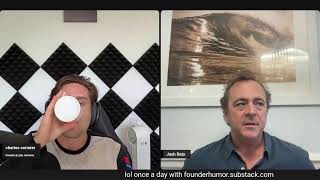
Josh Katz built EMG, a background-music service for hotels, then founded YellowHeart, a blockchain ticketing platform that collapsed after the crypto downturn. Now he runs Sutton Place Ventures, which buys stakes in private companies like Anthropic and SpaceX while building a regulated secondary market for their shares.
Chapters
Welcome to another Founder Wisdom podcast. We have Josh Katz with us today. He's a founder and CEO with multiple exits, uh, previously in music and, uh, technology. He was an early builder and pioneer of blockchains, an expert in AI and crypto. Uh, he does early-stage investing, advising. He's also a board member, uh, mostly focused on secondary markets, right? So Josh, welcome to the podcast. Tell us a bit more about yourself and what you've been Yeah, hey Charles, thanks for having me.
Uh, yeah, so I've been working on building rails for, um, secondary market transactions, uh, for private companies where you have more companies now than ever before that are, you know, achieving valuations of $1 billion up to a few hundred billion dollars but are remaining in the private sector. They're not going on to public markets, and we're building rails for people to be able to invest into those companies and hold that stock, uh, whether it's an early investor, early employee, a VC founder looking to find liquidity, and, uh, you know, the general public, institutions, family offices being able to actually buy and sell the stock in those private businesses.
Interesting. And yeah, you were telling me that you were the guy behind the music in restaurants, the boring music in restaurants and boutiques and shopping malls or whatever. Is that EMG? Tell me a bit more about that one.
Yeah, EL Media Group is a company I built and sold, you know, over like 20 years ago. We sold it, um, 7 years ago, and that company really pioneered what I call background music, um, commercial music. So when you go into any hotel lobby, any restaurant, any retail store, we were powering the music going into those establishments. Um, prior to that company, there was a company called Musak that did that music, and it was really remakes of songs. And we kind of pioneered licensed music going in, remixes, and all the cool music you hear at retail and in restaurants today.
Interesting. And how did that go? Did you have an exit in 2017?
Yes, we exited that business into a roll-up. Um, you know, we had a, uh, you know, investment company who was rolling up companies in that space, and we were part of that. And we exited the company then.
And 13 years at this company, like, was it worth the while?
It was, it was quite a journey. You know, it's all about the ride is how I look at it, and it was an amazing ride. Um, you know, it was a real— like, we built it from scratch, uh, we bootstrapped it. We never raised any money, which it very— you know, a lot of times was painful you know, not having, you know, outside capital, but we controlled it and we built it. And the best part of that business was our customers. We were dealing with restaurant owners, hotel owners, uh, you know, retailers. But in the restaurant space particularly, and the hotel space, amazing people all around. You know, most people in the restaurant business are doing it for passion. They love food, they love hospitality. They're not there trying to just make money. Obviously they want to make money, but the real first passion is hospitality. Mentality. So working with them on creating a vibe, creating, you know, good sound and ambiance, and understanding and being part of that customer experience was really a lot of fun building that business.
And then you transition to, uh, Yellow Heart. What was Yellow Heart about?
Yeah, so, you know, really the idea around Yellow Heart really started in, uh, '16, um, when we had EMG. We had lots of DJs working at business, and these DJs were always at the cutting edge, whether it was trading sneakers or other, other cool stuff like that. And, you know, I'd say around 13, 14, crypto came into our office, mostly Bitcoin, and I got intrigued by it. I was super interested in digital currencies and in blockchain. So, you know, because of that, I started hosting in our space one of the New York Ethereum meetups. In '16 and into '17, I started thinking about after we sold EMG, hosting these meetups, what could I do that kind of transcended music hospitality with blockchain? And blockchain really fascinated me beyond crypto. And YellowHeart became a ticketing play within blockchain where we were building live event ticketing on the blockchain. That company, you know, early on after I founded it, I started, uh, I partnered up with the Chainsmokers, you know, the DJ duo. They got involved, and then we partnered up with Live Nation and Ticketmaster, and we went on a really interesting journey with that company.
What, uh, how did that one pan out? I think it, uh, ended 2024 or something.
So that company went on a wild journey where we were building with Ticketmaster, a blockchain ticketing platform, getting ready to launch, and then COVID happened. And when COVID happened, all ticketing for live events went away for almost 2 years. Over the course of that period, I was very involved with the crypto community and blockchain community, and I was one of the early adopters launching what you probably remember are called NFTs. So we launched at Yellow Heart, we kind of, you know, really pivoted into launching music NFTs initially. NFT because tickets didn't exist at that time. And we launched the first ever music NFT with the band Kings of Leon, rock band. And that became a huge, huge moment in music where they released their album with us for the first time, where we were selling these as NFTs with redeemables where you could redeem to get first row tickets, you could redeem to get merchandise, you could redeem for all types of interesting stuff. And then we continued and we did this with a lot of other artists. We did it with Jerry Garcia from the Grateful Dead, Maroon 5, Sexxtasyon, G-Love. We did it with the, uh, John Lennon estate, um, and Julian Lennon, his son, and a lot of other artists where we were putting together really innovative digital packages for the fans. Um, and then ticketing came back about a year later and we started ticketing all types of live events, uh, through blockchain.
And how does that, uh, translate to today? Are NFTs and music still a thing today? Are you still spending time in that space?
No, company completely died at the end of '22 into '23, which was an incredible lesson, obviously, for any founder having a company fail. And it really was an unbelievable experience going down with that. It really, it was wild because we had such a trajectory where we were making so much money right out of the gate and really just killing it. Anything we put out, we were selling tons of. The company was literally, for lack of a better term, minting money. All of a sudden, all the sentiment around Web3 and NFTs just shifted, and the company literally went out. And then FTX happened, and from there, the whole industry just slid into the gutter, and we kind of slid with them. Ticketmaster, Live Nation, who were our largest investors, would not support us. They would not get behind us. A lot of conversations with them about it, and they didn't want to adopt the technology, and that was it. And we kind of just slid out and went under.
And you were making great quantities of money with that one because you had an extensive network. These artists would listen to you and you had the great product. You had a no-brainer for them. Is that a good summary of why it was so successful?
Yeah, I mean, the artist loved it. The artist being able to control their fan base. Imagine as an artist, right, where you could control how many albums you release, okay? You release them to your fans, a new format beyond streaming where artists do not make that much money. And every time that collectible album is resold, you make a royalty. You're able to communicate directly with your fan base through the album. So you put out an album to your fans, you can message your fans, you could sell them more merch, you could communicate with them, you could do all types of interesting things. You could sell them tickets. When you sell them a ticket, through that ticket you're messaging them. You're continuing to sell the merch, you're upselling them other items. So the fan— the, like, the artist and the fans loved what we were doing. The industry did not love it as much because the industry had this massive infrastructure, both for music distribution and ticketing, that they did not want to change. And ticketing in particular is controlled by a major monopoly, Live Nation Ticketmaster. It's a huge monopoly in the US, and they just didn't really want to change their infrastructure. They didn't see a need.
Interesting. Yeah, um, Seven Rooms, your strategic advisor there. Uh, but what is Beach Lane?
So Beach Lane is my, um, my investment company. I've invested into close to 50 businesses through Beach Lane over the last 15 years, um, all types of startups that I've supported the founders and their visions. Um, you know, I've had some success there, I've had a lot of failures there as well, but amazing experiences all around.
And how does that transit into Sutton Place Ventures? That why you started, uh, this one?
Yeah, so Sutton Place Ventures started a year ago, and the way it started was, um, um, really formulating SPVs to invest into all of the emerging, um, companies, what I call the magnificent companies— Anthropic, SpaceX, Stripe, uh, ByteDance, and the whole slew of these, you know, companies worth hundreds of billions of dollars that remain private. So we started doing SPVs into a lot of these, plus a bunch of other interesting companies, smaller companies that we just thought were cool. And as we were doing this, we kind of realized that the secondary market around, um, you know, private businesses has no infrastructure. There are no rails. It's really cowboys on WhatsApp, uh, lots of bad actors, lots of interesting people trying to either sell secondaries or, you know, scam people. It's just a really wild west out there. So we've pivoted now where we're really working on building infrastructure for secondary market transactions across private markets.
Isn't AngelList doing that?
Yeah, AngelList is doing it, and a few other companies are doing it, but, you know, they're doing it really B2C. And there's some great companies that are doing it—EquityZen, um, Hive—where they're basically taking you know, someone's stock. If you own stock in a private business, you could go on there and you could list it and you could sell it. The issue there is it generally doesn't come with company approval. And a lot of companies, you know, want to control who's on their cap table. They don't want just random people buying their stock. Um, it comes with, you know, employees who maybe do or do not have the rights to sell it, trying to sell it. Um, and what we're trying to do is really, you know, create a much better infrastructure where the companies enable the sale of the stocks, whether it's early employees VCs, founders. You know, I've spoken to a lot of founders that are very wealthy on paper but are cash poor, and they love a situation where they could take their early employees, take some of their venture capitalists who were early in the company and their own stock, and put it together and go bring it out to the investors and bring new investors onto the cap table and, and put some cash into their pockets. So that's what we're building right now.
Interesting. Yeah, I didn't know that the market was shady. I'm involved in this market, have clients that do this. I'm launching my own SPVs. I have a fund as well. So, um, but you're saying that some people sell that like if it was Percocets and on the street?
Well, not quite at that level, not quite there. But what it is is you have a lot of non-broker dealers who are not licensed, who go out and they say, for example, oh, I have $50 million worth of Anthropic. I could only show it to you if you give me a proof of funds and an LOI. So now someone who's looking for Anthropic will produce an LOI and proof of funds. A lot of times that person doesn't even have the stock. They'll literally say, oh, now guess what, I have a buyer for $50 million. Is anyone selling? And they'll go shopping with that person's LOI Yeah. And it's really the wrong way to do things. I've also heard cases, particularly with ByteDance, of people using AI to forge stock certificates and sell fakes. A lot of bad actors. So there's just— it's the Wild West. There's really no infrastructure around it, particularly with the major institutions and family offices right now and the banks. There's no set infrastructure for them to deal in these private markets. And how will you make money with this? So the goal will be for companies to be able to list properly, where the documents are all substantiated, the stock certificates are all substantiated, and then our ability to basically bring, you know, banks on who could then have their, you know, various RIAs and other people selling the stock, and us taking a fee for allowing that to go through, for them to take a seat. But we never actually touch the stock. We'll never custody any stock or any money. Uh, we'll just literally be the technology technology that the banks use.
And you'll take a percentage?
Not potentially a percentage, um, and also a fee on, on, you know, allowing people to have access and allowing the companies to list.
What's your go-to-market plan for this one? How do you want to get clients?
Yeah, so the way that we're working right now is we've built the first iteration of the technology and we're looking to bring on design partners right now. So we're speaking to various RIAs and banks about coming on and being our earliest partners and helping us really design the initial, you know, proof of concept by using the platform. So that's our go-to-market, is to bring on the earliest customers/partners, have them use it, have them give us feedback, and then really, you know, fine-tune the product as, you know, per their feedback, really.
Interesting. Will you raise capital for this one, or—
We're working on that right now, so anyone who's listening, please reach out.
Yeah, let's talk after that. I can potentially help you raise. And yeah, I'm, uh, I think it's a good concept. SPVs are coming on people's radar, right? Like, if you explain also the purpose of SPVs as VCs, like fast to deploy and it's only focused on one specific company, right? Can you explain the history of SPVs and why they're trending nowadays?
Yeah, you know, SPVs, you know, initially started as people raising capital. Um, special purpose vehicle is what SPV stands for. And they'd raise the capital and they say, okay, we're going to raise, and then when we have the raise, for example, we're going to raise $100 million and we'll go find the company to buy. And generally what would happen initially is they'd find a public company, and they find a public company and they buy that company, um, with the money raised in the SPV. And then they buy, you know, use that vehicle as a public stock and potentially acquire other businesses with an already listed company, and that stock price would go up, and then they'd become liquid as a holder, and they'd be able to sell into a private market. The use of SPVs has greatly shifted, where now people are going out and they're raising much smaller SPVs— for example, $5 million, $10 million, $20 million, $50 million— and they're investing into private businesses. Where we, you know, we could go out and we could raise from friends, family, investors $20 million and go buy some stock in Stripe, for example.. And now as an SPV, you know, holder, you'll own the stock in the company through the SPV. As the, um, company itself, you don't have 20 different people coming onto your cap table. You have one entity, that SPV, on your cap table, but the SPV might have 20 different people as members. So there's 20 investors through one vehicle. So it works out well. Um, the person initiating the SPV usually takes a carry on that where they'll take, you know, anything from like a 5% or up to 20% carry, and that's how they'll make money as the administrator of the SPV.
How would you describe the investment, the, the market sentiment nowadays on the VC side of things? Is the market colder nowadays? Are people still as hot about tech investments?
What have you seen? Oh my God, AI. AI, AI, it's just booming. Everyone is in on this. It's a gold rush. It's the Industrial Revolution times 100. Everything's changing. I mean, AI is literally changing the world, changing the workforce, changing everything about the way that we do business. So it's the hottest time to invest ever in history. And that goes for VCs, it goes for private money, family offices, um, everybody. And the world of just investing into the various stock markets is over. People want into all these companies now.
Yes. Isn't it like winner takes all times a thousand nowadays? Like only a few companies are actually investibles and they eat all other companies, which makes starting a company potentially less attractive as a founder. And or if you're at the right place at the right time and you're a genius, it makes the starting a company component super obvious. Um, does it also dilute— is it probably the worst time to start a VC fund, in your opinion, if there's like so much competition out there? Uh, what do you have to say about that?
So, you know, listen, I just have my opinion here, and my opinion is, is that it's actually a great time to be a founder because everything's up for grabs. The way things worked literally 3 or 4 years ago are all changing. The workforces are changing, where agents are replacing employees. The whole way that we look at business is changing. It reminds me, just for our generation, of when the internet first came out and you had this world of retail and all these other brick-and-mortar businesses that were just saying, "Oh, you know, what do we need a website for?" And like 5 years later, they're gone. You know, now you have businesses who, if they don't adopt AI, they're gonna be gone and it might be sooner than 5 years. So everything's changing, but that also paves the way for, um, you know, entrepreneurs to go out there and start these new businesses that could grow very, very quickly, that could grow quicker than ever before. Uh, so it's a very, very exciting time. Um, on the VC side, I think that there's more money out there than ever before and the opportunity to invest in more companies than ever before. So, um, I don't, you know, I'm not in, I don't I'm not a VC. I've always just been a private investor, but it feels like if I was a VC, there'd be more companies to look at than ever before.
Random tangent and questions, but what are your thoughts about, um, Sam Bankman-Fried investing in Anthropic, Cursor, Robinhood, and that other company that recently IPO'd? Oh yeah, Anthropic, Cursor, uh, SpaceX. And Robinhood, making his investments $100 billion today.
Yeah, I mean, listen, Sam is a brilliant, brilliant guy, you know. Listen, you know, he saw everything ahead of everybody. He unfortunately broke a lot of laws, so he ended up in jail. But at the end of the day, he's brilliant, and he was able to see what was going on in crypto at that time. He built out the largest exchange, um, he was able to see the future of AI, and he's a brilliant guy that unfortunately broke the law. So it's just a shame that he broke the law. If he wouldn't have done that and he would have stayed on the straight and narrow, you know, obviously he would have made just a ton of money. He was, you know, applauded by everyone. I mean, at that time, I remember what was going on with FTX because I was deep in the crypto space. They were the kings of the hill. They really were. And with good reason. But they were also cowboys who believed that the laws didn't apply to them. They were down in the Bahamas doing whatever they wanted. And they should have just really, you know, stuck to, um, you know, not breaking the law.
Yeah, it's crazy how much in the future Sam lived, right? And that would make him, by the way, the most successful VC of all time. Yeah, uh, $100 billion in, in what, 3 years? That's unheard of.
Like, not surprising. I mean, I, I didn't spend much time around him, but I spent time around people that work for him, and it a brilliant group of young people who were cutting edge and doing things that no one else was. Unfortunately, once again, they were cowboys that thought the law didn't apply to them, but they saw the future brighter than anybody else did, right?
Any comments on the SpaceX IPO, like 83x valuation?
Yeah, yeah, super exciting. You know, I think what Elon is doing is unbelievable. I think that, you know, his ability to, you know, really see the future is better than anybody else's. And I think SpaceX right now is actually a bargain. I think this is going to be the most valuable company in the world by far for many years to come.
They're going to be in multiple spaces, and Elon is so infrastructure-minded. Um, the only risk with Elon is like his health, right? Yeah. Uh, have you thought about that? Like, if Elon is like— his biological age probably like 75. Uh, because he doesn't take care of himself a lot. What if he goes away?
That's a big problem.
I think, I think the mode fades away, right? And yeah, that's, that's what would make me very worried. Um, as in, he cannot keep on going like this forever. He's not a superhuman. If anything, he's normal, uh, from a genetic standpoint. From a health standpoint, his brain is not normal for sure. Like a genius, but that's worrying.
So here's the thing, okay, the way I would think about it is— well, first let me tell you the first part. The first part is that on the SPV side, just on my side of it, space infrastructure is something I'm fascinated with. It's something I'm spending a lot of time studying right now, those companies. So big believer in that. On the Elon Health side, the way I see it is this: he is obviously the most important entrepreneur, um, you know, tech person in our world today. But look at Steve Jobs. You know, Steve Jobs surrounded himself with brilliant people like Elon is as well. And when he passed, everyone thought Apple was over. But guess what? They kept going and they've still become and still continue to be one of the most important companies in the world. Elon has formulated SpaceX with all the various ventures there, and he's going to keep going. And if, God forbid, anything ever happened to him, I think they'd be okay. Right.
Apple, uh, the next predecessor, I believe, uh, Tim Cook is, uh, is moving on. Is that a good thing for the company? They've been so slow on the AI front.
I think so. I definitely think so. I think new blood coming in there really helps things, and I think that that company has now become a blue chip. It's part of everyone's everyday, everything we do, um, and I think they're going to just continue to be a great hardware company.
Josh, what's the next priority for you for this year?
Yeah, this year I'm just very, very focused on the private market infrastructure that we're building. Uh, you know, right now I'm a little obsessed with the World Cup, and, uh, you know, just trying to, uh, really get SuddenPlace moving within these private markets. There you go.
And where can people find out more about you?
Uh, yeah, they can find us at suddenplace.io. Um, you can find me on Twitter, Josh Katz YH, and, uh, you know, DM me anytime. That was Josh
More from Charles


Founder Wisdom: the audiobook, version 2 (5 hours of stories from founders and CEOs)

8 CEO Questions I Love Asking: the audiobook (64 founders answer, in their own words)





