Kevin A. Damoa - Founder & CEO @ Glīd
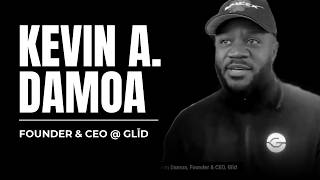
Kevin Damoa, CEO of Glide, is building autonomous trucks that transfer freight to trains. Seventy-three percent of U.S. freight moves by truck while rail sits underused. Glide's three products handle the autonomous vehicle, the transfer, and the logistics software to make rail accessible again.
Chapters
Welcome to another Founder Wisdom podcast. We have, uh, Kevin A. Damoa with us today. He's a founder at Glide. Glide's a very interesting company. Uh, like I told Kev, I reached out to him about a year ago. Uh, Kev's gonna explain in a moment what they do, but, uh, yeah, it's pretty fascinating. Kev's a next space expert. They got tons of press in the last couple of years, and, um, yeah, he's building something fascinating. Looks like a Cybertruck. It basically carries container, and I think it's self-driving. So I, I really love the concept. So, Kev, a quick intro about yourself and Glide.
Charles, nice to meet you, brother. Carlos in Mexico. Uh, Kevin, the co-founder, CEO of Glide. Uh, we're the world's first autonomous road-to-rail solution, and what we want to do is, uh, make, uh, rail, uh, more accessible. Uh, we corridor balance You know, a lot of freight is stuck on the road, 73% to be exact. And rail is severely underutilized because it's inaccessible. It takes a bunch of different pieces of equipment, cranes, forklifts, dredge trucks, hauler trucks, train, train carts, a bunch of touches and an army of people in order to move like one container or one trailer from road to rail. And we want to solve it by having all of those, you know, components from road and rail into one core technology that's fully autonomous, right, with human in the loop so that we don't put people out of a job. We actually, you know, add jobs, you know, as next generational jobs within the logistical market. So that's exactly what we do at Glide. So happy to be here.
And the on-rail move, right? Isn't that move intriguing? Why did you choose to go on-rail? Does it still make logistical sense to use railroads?
Absolutely. Railroads are the most underutilized resource that we have here in the United States. Back in 1916, we had about 250,000 miles of rail. Today that number sits around 140,000, and we only use, you know, maybe 47% or less of our rail throughout the United States. Everything else is transported via road. You know, on road we share the road with like passenger vehicles and semi-trailers, which makes things extremely dangerous. You know, we lose over 5,000 people a year to semi-trailer, you know, accidents. And no, plus the cost of transporting on road is going way up while rail kind of remains the same. You know, once you remove that, that in-between touch of material conveyance, the unit of economics makes a lot of sense. You know, it's faster. It's safer. You have, you know, jobs that you can start creating in these marginalized communities. And, you know, you can use American infrastructure for what it's actually used for. So I think it makes sense.
And is this one platform? How many products am I seeing here? There's like the lift, there's the rail ones, like, or is it one thing? Tell me a bit more about that.
Yeah, of course. So we actually have 3 products. So Raiden is what you see on the screen now. It's the world's first autonomous road-to-rail solution, the Cybertruck twin. Didn't want it to be that way, but I guess that's starting to unfold. And then you have the Gliderim that you see here. And Gliderim was our first entrance into the market. If you think about the flywheel motion of moving things from road to rail, at first glance, it seems crazy and scary. So how do you make folks feel safe in that environment, you put a human in a truck so you can look over and say, okay, it's safe, there's a person up there while we make that transition. So the Glider Rim is essentially our transload in a box, able to pick up a fully loaded 20-foot container, put it on the back of itself, drive over to the railroad tracks, get on the tracks. It's fully certified right off the line when we ship it out. And that's in order to make folks feel safe with that and actually get them used to seeing things transition from road to rail. In parallel, we have Raiden, that's our autonomous vehicle that will run on contested logistics as well as industrial parks as we build our chops around certification and homologation. And then you'll see Gliderim and Raiden working in tandem with each other. Raiden will go 24 hours, Gliderim will work a regular truck shift. And we will serve the world. We say don't ship it, just glide it. We see ourselves as another new way to ship goods. You can go road, rail, air, ocean, or the GlideWay, right, in order to actually ship products. So that's, that's the vision.
That's just fascinating. What about Ezra? Like, what?
Yeah, yeah, Ezra 1.6 is our AI orchestration tool. What it does is it pairs static infrastructure, roads and rails, with dynamic nodes. So think about vehicle speeds, telemetry, weather patterns, road congestion, rail allocation, and as well as the commodities that we actually ship. So we move anything that moves on road. Think about containers to, you know, to aggregate, to agriculture, to defense commodities, to, you know, defense vehicles eventually. You know, Azure 1.6 monitors all that and controls the heartbeat of all the vehicles. And it provides our customers with what we call ITV, in-transit visibility. So essentially, you know, transportation at the fingertips, but within a digital twin environment.
Why does that look like Palantir? Like, you know, I just named the Cybertruck first and then it's Palantir. You're building like stuff that is so sexy.
Yeah, thank you, I appreciate that. Yeah, I mean, my whole goal is to make logistics sexy again. Uh, I, I've been in logistics my whole life Uh, so I'm a little biased, but I think it's one of the most sexiest things out there. You know, we move people, goods. We don't move without logistics. Nothing moves without logistics, right?
So yeah, yeah, maybe you should have started with that. Like, what's your background? You were in the military. You seem like a pretty chill dude as well. Like, most veterans that I talked to have witnessed like pretty heavy fucking stuff, and they're serious, right? Like, you have a flag behind you. Is this Trinidad and Tobago, or Panama. Panama. Oh, you— so you're Panamanian, right? Panamanian origins. Nice. Tell me a bit more about your, your background and your story.
Yeah, so I'm Panamanian, um, and then I, I, I— well, obviously the flag, um, but, um, I joined the Army at 17. Um, I, I did 2 tours in Iraq. I was a Cav Scout, uh, Go Brave Rifles, 3rd ACR, uh, and I was a logistician as well where I did railhead operations where I moved our commodities from road to rail, our tanks, our Bradleys, all of our material. And that's when I came in contact with this problem. And then I went over to the Air Force National Guard where I served as a logistician and firefighter here in California for almost 13 years. And then, you know, worked at SpaceX. You know, I invented their flight module logistics organization. So it was an organization that was purposely built to transport the rocket from site to site. So I'm the first person in the world to commercially launch ship and then eventually recover, you know, a rocket. Um, it did that for almost 4 years. Was at Northrop Grumman as a weapon bay door engineer and program manager, um, at, at, at Northrop Grumman on F-35 fighter jet. And then I worked in startups for a while, man. Romeo Power, Exos Trucks, Canoo, um, you know, helped them all go public, uh, via SPAC as well. Um, and then my last, uh, gig before Glide was at, um, Harley-Davidson's offshoot Serial One. Where I helped with building e-bikes and distributing them throughout the entire world. So that's a bit about my background. Yeah, the, the— I don't know, the, the sound went out.
Oh shit, sorry, I'm muted. Um, you had various trials by fire. I was saying, um, the Army's definitely one, uh, but the most impressive one, in my opinion, or the one that's relevant to what you're currently doing, is SpaceX, right? And Surviving under Elon for 4 years is no easy feat. So how did you make it that long, Juan, and what did you learn from your time there?
Yeah, so at SpaceX, what I learned, you know, especially coming from the military, is, you know, surrendering. Surrendering to the mission, surrendering to the purpose in which you're there for, right? I mean, a lot of folks go into, you know, operations or jobs and they're like, I'm the best at what I do. I've been doing this for a long time and screw this boss or screw this big guy. He doesn't know what he's talking about. But when you remove ego and you surrender to the mission, you actually propel through it. So what I learned was, first, lead with grace and be a servant leader. The next was to engineer with excellence. Anything is possible. You don't pull yourself back. From doing the impossible, um, and to, uh, be mission-focused, you know, all the way. And, you know, I learned all that, you know, working underneath Elon. Um, I think he's really brilliant, and, um, he sacrifices himself for the greater good of our community. Um, you know, regardless of what folks, you know, think about him, what he's provided, uh, us as a human race is, you know, excellence. You know, he's made us an interplanetary species, and, you know, thought about, you know, electrification in ways that other folks didn't at the time and brought about a new age of, you know, how to move folks forward. You know, everything that he does is logistics. So I, I, you know, I'm a, I'm a big fan.
So, you know, and one thing about slides, uh, the sexiness factor, which is also synonym with simplicity and making someone understand something complex incredibly quickly— did you learn that at SpaceX? Because SpaceX also have these GIFs on their website that makes everything so easily understandable in like seconds, which is, in my opinion, magnifies like the attention and the success of a brand so quickly because there's, there's a lot of folks like in your industry doing complex stuff and they can't really explain it succinctly to their clients, right? So are you the guy responsible behind that? Like, who's, uh, who's responsible behind like showing so quickly what you guys do and so in such a sexy manner.
Yeah, and I appreciate that, that, you know, bringing sexy back to logistics. Um, but yeah, I'm the brains behind it all, you know, the color, the graphic, the name, you know, the logos, um, the black and white.
I love black and white.
Yes. Yeah, a little green, little pops of green. It's, uh, it's all important, man. And it really tells the story where folks really resonate with it. I mean, you know, I don't kid anybody. What we're doing is something— is a— is really hard for one, For two, it's been around for a long time. Roads and rails have always been around for the most part, from the Transcontinental Railroad until the time that I was like, you know, when road really like made its chops, when we started to build highways. You know, it's a really old, unsexy industry. You know, how do you bring, you know, legacy with like emerging technologies together in a way that everybody understands it and is excited about it? Right? I want to, you know, take these, uh, this, this silver age of logistics, you know, where folks are not coming to work to move around boxes or to drive trucks or to be a railroad engineer, and then have the next generation of folks saying, you know what, this is a really cool job, I want to do this. I don't have to like launch rockets or do AI, um, I, I can just like drive a glider, right? I can like operate logistical things in order to move forward, um, and support everybody in between it.
So yeah, tell us about the importance of logistics in winning wars. Like, historically, pretty much all wars have been won because of logistics, right?
Absolutely. Yeah, yeah. It's, uh, General Eisenhower said it best, you know, all wars are, are won or lost on the backbone of logistics, right? If you can't feed the warfighter if you can't arm the warfighter, if you can't preposition, if you can't identify where, you know, your combatants are, you're going to lose, right? You're going to starve out, you're going to, you know, not— you're going to run out of supplies, or you're going to position in the wrong, wrong places. And it's critical, you know, to understand how you preposition in garrison, you know, how you move the thing from a motor pool or a depot to where you're training. To, you know, getting them overseas and prepositioning them so they can actually launch. Those are the most critical pieces of winning. If you think about a fight, you know, you know, on the battlefield, it doesn't last that long. Right? It's, you know, it's, it's hours and, you know, a couple days at most, you know, you don't hear about week-long battles, but the, you know, the buildup to it, you know, takes years. And months, um, in order to, you know, build up to preposition to get there. And it's all done by logistics.
So yeah, a couple of examples that popped to my mind— you've probably studied this case— but Blitzkrieg, uh, it's like, I mean, yeah, of course we're not on the German side, but it was so beautifully executed and it was like perfect example of how to win a war quickly. Um, Then I would say, yeah, the Allies winning over Germany at the end of the war, the squeeze in the Russia front. Obviously Germany had nowhere to take their supplies from. Or Napoleon's— the last war that he lost. Yet he was stuck, right, that all of his carriages were stuck. He couldn't get the supply in. His men were dying from cold. All right, like no coats literally, or tents like to house themselves, right? What battles do you like studying or that you like thinking about, and how can Glide help not reproduce or reproduce the outcomes of these battles?
Yeah, absolutely. Yeah, so I fought in Iraq, right? So Iraq was a war that was, you know, a lot of logistics. You know, Iraq really big, big country. Um, and so, you know, prepositioned materiel was, was, was really important for that war. Afghanistan is the same, same way, you know, you're fighting, you know, in mountainous terrain. Uh, so getting, you know, your goods out to these, uh, austere and disparate locations was, was really, really important, um, to, you know, be able to fight in that war.
Uh, you know, donkeys, right?
Yeah, with donkeys. Exactly.
Probably the number one way to get your stuff in the mountain.
Yeah, absolutely. Donkeys and air strat, right? And you're dropping a lot of palletized goods there. But if you think about that process, right, the chain associated with getting a good to that donkey, right? There's a lot of steps, a lot of touches from the time that person that puts that stuff in that box, that wraps it up, puts it onto the pallet, wraps the pallet up, loads it onto the plane, plane flies over, gets refueled. And in position to go into battle and then drops onto the field and that's unwrapped and then put on the top of the donkey and we're riding donkeys. That's a complicated process that a lot of folks make easy, but a lot of hours goes into it. So, you know, big shout out to every logistician in the world. Keep striving and gliding.
And yeah, I guess Iraq and Afghanistan was air, right? Like that was the main team. A lot of airstrike, helicopter support, chopper support. Nowadays, if there's— we check like Ukraine, Russia, it's a lot of drone strike, unmanned drone strikes, right? Like, where is warfare going and how is Glide gonna introduce itself into this?
Yeah, absolutely. So warfare is going fully autonomous, you know, removing the warfighter off of the battlefield. I mean, I think that's really important, right? I mean, all of our lives really matter. And, you know, when you're fighting a combatant that utilizes mostly autonomous systems, you have to meet them where they are. So, you know, a big shout out to the Department of War and the different services for starting to, you know, look at that so that United States again has an unfair advantage on the battlefield. But, you know, how GLIDE fits into it is first in garrison, you know, taking goods from depot, whether it's munitions or fuel or water or tanks or positioning people eventually from road to rail, you know, in the silent of the night or whatever it may be where it's safe to preposition to go overseas. And then on the battlefield, you know, we're looking at ways to take containerized systems, you know, to the warfighter, you know, or to support with drone systems there or be a carrier, the CASIVAC, or to do some reconnaissance systems or deliver, you know, larger goods., you know, out to other drones or human beings, you know, being that shuttle, you know, in ways that the warfighter has never seen before. If you look at infrastructure like in Ukraine right now, they have rails, but they don't use any of the rails as a part of the war, and that's because the trains are loud and it takes a lot to hook up, you know, the train carts and pull them. You know, imagine a glider like like going from road across, you know, the sands directly onto an unused rail line, going silent down the rail line, and then jumping onto a forestry area and then deploying drones out from a container right behind enemy lines, whatever it may be. So, you know, it's a— it's an advantage that the warfighter hasn't seen yet, and I feel we can, we can provide that to them.
Because that was my next question: what if they bomb the railways? But Glide can just go out of the railways and then go in with pretty effing genius. But, uh, can it be undetectable as well? Like, can it— yes, silent, of course, but like, if there's a drone watching it, can it be— can it glide undetected, uh, from a visual standpoint?
Yeah, from a visual, not yet. I mean, I, I guess you can put bushes around it, right? That's what the folks are doing now, putting like trees and, and cages around, or image jammers, I guess.
Image jammers, right?
Like, yeah. That'd be cool, man, to have a cloaking device on a glider. Come on, come on, Carlos. You know, we're building some real stuff real time here, man.
I have good ideas for you. Um, no, it's just fascinating, like, what you're building. Uh, since TechCrunch in 2025, you won the competition, which was— which is what caught my attention. Uh, what has happened? Did you guys get massive funding? What have you produced since then? Tell me about, uh, what happened timeline-wise.
Yeah, absolutely. Yeah. Since TechCrunch, it's been, it's been crazy, but it's been such a blessing. And I say crazy in the, in the, in the best way possible. Uh, we've onboarded great talent. Uh, we, we're, we're continuing to build out, um, product and, um, as well as onboard great customers. We've, uh, stepped directly into, uh, the dual use, uh, market, you know, with heavy conversations with, uh, defense folks from the Army to the Air Force, uh, to the Navy as well. So we can help out the warfighter where they are. We've started a lot of conversations with railroad operators as well as ports. We have signed agreements with folks out in Texas, California, and then now Indiana. And now we're looking to go into different states as well. So from a fundraising perspective, we raised additional funds. We have over $5 million that we've raised to date, and we're about to go back out to the market to raise a bigger round so that, we can build a lot of radon vehicles, uh, to serve the warfighter, um, and the rest of the world.
So yeah, uh, for good fundraising, that's what I do professionally. Um, have you caught the attention of Palantir, Anduril, and Elon yet?
Uh, not yet, not yet. Uh, but, but shout out Palantir, Anduril, and Elon. Let's, let's glide together.
I'm pretty sure you got their attention. They haven't reached out yet, but that's— it's pretty cool what you guys are doing. You have such a fascinating background. Tell me about your co-founder and how you guys complement each other.
Yeah, so, uh, Matt Mueller, um, uh, he, uh, he was at SpaceX as well. Um, so he led, uh, you know, manufacturing and production there. He was at Hadrian, um, as well as Honeywell. Um, so big quality guy, loves operational excellence. Really brilliant. So, you know, we worked together, uh, there and then met up later on in life through a mutual contact, which is an investor friend. Um, they run Generational Partners, and, uh, it was like love at second sight. And, um, you know, we, we worked together to, you know, build out, you know, what you see today. And, uh, we've been gladden ever since. He's now, um, a board member and advisor. Um, so it's, uh, it's really cool.
What's your take on veterans? Uh, I'm guessing you hired a bunch. As you know, when we started, uh, being in the military is really fucking hard on the psyche. You see like stuff that you can't forget, right? Um, then there's two— I mean, there's more types of people, but mostly two, right? Some of them get traumatized by what they saw, and some of them overcome and become savages and beasts like you, right? I'm— from what I know about you, right? Um, yeah. How do you recruit veterans? And do you feel that these guys have a moat in the workplace?
Yeah, absolutely. So how we recruit veterans a lot of the time is through our network. So we're at Capital Factory in Austin, Texas. And, you know, it's a great hub for, you know, veterans to come there. And then I'm a part of the Third ACR ecosystem, Brave Rifles, to all the Third ACR folks out there. Then from social media, I speak to veterans directly through my social media. I'm a proud veteran. The moat that is encompassed by veterans to me is just the hard work and determination. They're like, "No nonsense. I'm here to serve. I don't care about ego." Mission-oriented, right? Absolutely. It's a little taboo, but you meet a lot of smart people on this journey, whether it's SpaceX or Romeo Power or Northrop Grumman, whatever it whatever it may be, and folks that haven't served, but they served in certain ways. But what I've seen is there's some entitlement, right? With veterans, what I see is like, they're really smart, they're really robust, but they don't feel entitled. They're like, I have to be on this mission, I have to solve this problem, and I don't care about anything else, right? I care about the people that I'm going to save on the other side of this. You know, if I have a really, really hard day and I feel lonely, I'm gonna lean into the mission, I'm gonna lean into my team. And that's, that's what we look for here at GLIDE because we have a lot of hard days.
Well, for better or worse, let's put it that way, right? Like you guys have been put through life-threatening missions. So anything after that is sort of easier, right? Like you're working in a cubicle. Well, not in a cubicle, but like in a protected space. You're not getting shot at. Yes, it's like, okay, that's easier, but you still have this sense of mission. The discipline is gigantic in the military. Nothing happens without discipline. Uh, talking about that, what does a day in your life look like nowadays?
Yeah, a day in my life. Uh, so I always start my day up with affirmations. I'm a big prayer as well as meditator, so I get up, meditate, pray, uh, and then, uh, journal. For my day, I work out and love to stay physically fit, and I jump right into work. So, you know, checking out my emails and getting in with my teams. I do one-on-ones, you know, every week with my team as well. And then project planning to just see, you know, how we're executing the things. A lot of customer interactions these days, a lot of investor interactions and traveling around and spending time with the customer at their place. To see some of their pain points, to make sure that we're not hallucinating our solution, to make sure that we're, you know, building, you know, the right thing for the right time for the right folks. So that's my day. And then, you know, I'm a father as well, so being able to spend time, you know, with my kids a lot of times now at the end of the day from the work day, and then like taking it off to reboot and do it again.
So Yeah, playing music. I see guitar behind you.
Yeah, were you always that chill or, uh, no, man, I, I, uh, I've been just chill over the past, like, I don't know, man, like decade, you know, a lot of counseling, you know, the military does.
Yeah, you did work on yourself, right? That was my next question. What do you, what do you think about the power of psychedelics, uh, for PTSD?
Yeah, it's amazing. So I invested in this great company called, um, IWA, and their, their founder, uh, Vic Yacosta, the there. And I feel it's really helpful for it. I've never done it myself. I use meditation and prayers as my drugs of choice these days, and I'm deep into it. And my turmeric shots— shout out to all my team. But I think that especially folks that experience combat, psilocybin is the way to go for them. Especially ones that, that is directed directly to, you know, their specific source of pain. So that's exactly what I would do. I'm doing a plug and shout out to that amazing company because it's going to change the world.
So yeah. Yeah. Shout out to Brian Johnson as well, which has experimented a lot with psilocybin as of late and shared his finding. Kevin, thanks for being on today. Amazing guy you are and the company. I'm very bullish on you guys. Where can people find out more about you?
Yeah, absolutely. You can check me out on LinkedIn, or you can find us at glidetech.us. G-L-I-D— there's no like weird macron on that, but glidetech.us. Um, and yeah, reach out, you know, we love to, you know, talk with folks, hear about, you know, how they see the world of logistics and where it's going. Um, but yeah, thanks so much for this opportunity to hang out, Carlos.
That was Kevin Charles
More from Charles


Founder Wisdom: the audiobook, version 2 (5 hours of stories from founders and CEOs)

8 CEO Questions I Love Asking: the audiobook (64 founders answer, in their own words)





