Kristi Kandel - Founder at Local Real Estate Developers
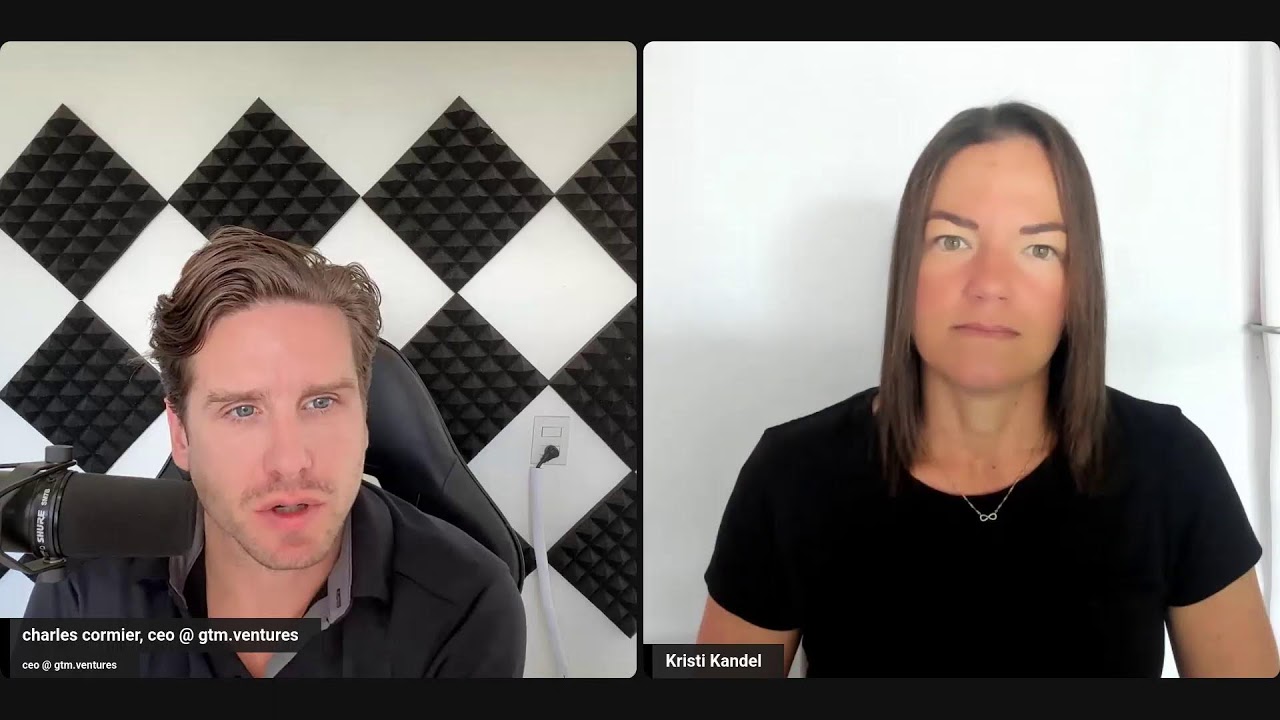
In this CEO Wisdom Pod episode, host Charles Cormier interviews Kristy Kandel, a two‑decade veteran real‑estate developer and founder of IND Consulting, Local Real Estate Developers, and the Elevate sports‑and‑wellness community. Kristy recounts her transition from a high‑paying W‑2 role in California—where she built shopping centers, mixed‑use projects, and hydrogen fueling stations through public‑private partnerships—to entrepreneurship in Southwest Florida. She explains how she created cash‑flow through consulting, short‑term rentals, and value‑add multifamily projects, then leveraged that capital to fund her own developments. Recognizing that small towns (under 10,000 residents) lack local development expertise, she launched Local Real Estate Developers to educate and empower residents, using a hybrid capital stack that blends accredited investors, community crowdfunding, and nonprofit public‑private partnerships. Kristy also details Elevate, a community‑focused sports and wellness destination that opened its first phase in Bonita Springs and is expanding to Fort Myers Beach and potentially St. Pete. Elevate aims to provide a “third space” for adults to gather, play sports, and build social connections, with built‑in technology that allows future updates. The conversation touches on the future of real‑estate amid AI and construction tech, the importance of commercial over residential investments, and the broader vision of replicable community hubs that generate economic, health, and happiness benefits for locals.
Chapters
Welcome to another CEO Wisdom Pod. We have Christie Candle with us today. She's a real estate developer with $450 million plus in built real estate. She's the founder at IND Consulting, local real estate developers. She's building Elevate. She's helping locals become developers in Fort Myers Beach, Florida. So Christie, welcome to the pod. Tell us a bit more about yourself and what you've been up to.
Yeah, thanks for having me. So yeah, like you said, I'm in Southwest Florida. I've been a real estate developer for 20 years. And a couple years ago is when— and a majority of my career was actually out on the West Coast in California where we were building shopping centers, mixed-use development, multifamily. And I actually then started building hydrogen fueling stations. So we have hydrogen-powered cars and semis. And so for about a decade, we were building that throughout California. Doing different public-private partnerships, working with the state of California, all of the major car companies, venture capital, all of it. So, and in 2015 is when I started IND. So then in 2024 is when I founded Local Real Estate Developers. And that was just when I came to an understanding that we need to be able to empower our locals to be the ones doing projects. And that way, instead of outsiders coming in, We we can have our our locals who have the insider knowledge be the ones who are doing projects. So I started that because I just I got to a point in my career where I've done hundreds of real estate developments, and I understand how to do it no matter where you're at in the country or if you're in a small market or a large, and that someone needs to to take the time to teach our locals how to do it. So founded that, and then last year we started. Elevate, which is a sports and wellness community destination. And we have our first location. We opened in Bonita Springs. We're working on our second, Fort Myers Beach, right now. And then also actively working on finding a spot up in St. Pete in the Tampa Bay area.
And what got you out of your W-2 and prompted you to start your own stuff?
Yeah, I have always been an entrepreneur. So as a kid, whether it was selling bags of candy, raking the leaves and charging kids to pay to race the course, and the best one got it back. So just, I've always done things that, that made money. So I got to a point in my career when I was in Southern California and I realized I had the golden handcuffs on, that I was getting paid a lot of money to make someone else's dream come true. And I knew if I did not take the leap then, then I would never— the cost would be too much to switch and start my own company. And at the same time, I knew I I could always come back to those golden handcuffs, but I could never go chase my own dreams and make them come true. I could, so I ended up taking the leap. And when I did it, it was interesting because I said, okay, what's the worst that can happen? And once I realized, okay, you're not going to die, then I was like, oh, well, maybe I'll be homeless. I won't make any money. I'll never get another job. That's it. So I bought an SUV. And as I was evaluating them, I actually laid in the back of All of them and said, okay, I could be homeless in my car, uh, and ended up picking a Nissan Rogue and took the leap and went from there.
Did you have a family back then?
No, that was the other thing too, because it was, hey, it's just me. So very worst case, it's just me on the line. So what, my pride, my ego? Like, I gotta bet on myself. I gotta go try and make my dreams come true, right?
And what obstacles did you face in your first companies? Real estate is not necessarily like shortest, uh, ROI, you sort of wait on your stuff, which I would hate running as a business, but how did that go for you?
Yeah, so very much is the case is that real estate is the long game and development can take 3 to 5 years before you ever get a payout. So along with starting my own projects, I then realized, oh, I need to do consulting too, because consulting is a fast way to have money come in the door while I'm waiting for my projects to make money. And through that, I ended up— that's how I actually ended up working through with different national and regional brands and helping them through their projects. I also got tied into some hydrogen, pretty much anything hydrogen, honestly, in California I've worked on because they had the technology and the money and the grants, but they didn't know how to do development in California, which arguably has the most red tape and hurdles and obstacles to go through outside of— like New York, Boston, Miami, some of the other major cities. So the— there's— in running any business, there's always major hurdles and obstacles. But I think initially is how do I get cash to come in the door? And so that was then be scrappy and work with everyone. Then you over time get to go, nope, not working with you. It's not worth that risk reward. But then that also opened doors to the hydrogen partnership that we went on for a decade to where We came in as the development partner and ended up being that, that whole part of the team. And they were the operations partner who was able to run the station. So plenty of twists and turns and challenges and oh crap, and holding your head in your hands going, did I just totally mess this up? What am I doing here? But it's all part of being an entrepreneur.
But you had cash flow as well with IND Consulting, right? And then—
Yeah.
You took some of that money and you invested in real estate. Was that like the general model?
Yep, exactly. So it's, it's create the business. So I'm a big fan of real estate because if you can, if you can put the money in an asset and let it continue to appreciate and cash flow and make money for you, I'm a huge fan of that. So I created the, the consulting company that would create the cash flow. The cash flow then got invested into a variety of development projects and syndications in And just even small multifamily, um, to where my, my very first personal property— because I was always terrified that if I had a house that I lived in, that was putting down roots and I was meant to fly and wander. So, uh, my very first property was a short-term rental that I house hacked to where, um, I rented out the first floor, lived in the second, and we shared the third floor. Um, but because I traveled so much for work, I was only there maybe half the year. And I realized, I'm like, Holy cow! That the short-term rental ended up paying for my mortgage, HOA, and utilities that I live for free, and I had an asset that was growing in value. I'm like, whoa! So I started, and that was in the Tahoe market. So bought several more properties there that continue to print money. It's ridiculous. I'm also a big fan of value add to where whether it's an adaptive reuse or even just one to six. unit property that if, if the uglier it looks, as long as it's in the right area, oh, we will turn it around. And then that way you know that the bones are good because you've replaced the plumbing, you replace the electrical, you've, you know what's there and what to expect, um, and the quality of the work too. So, and then of course there's all sorts of tax incentives and advantages you get when you do that work as opposed to buying turnkey.
And how long will the real estate, uh, boom Last, you know, because I am an AGI guy. Like, I believe we're cracking pretty much everything with this, and the cost of real estate will drastically reduce, as it should. I don't think people should pay that much for property, right? It's mostly like artificial values, in my opinion. And I think we're going to be able to build $10,000 mansions pretty soon. Like, nothing's stopping us from a first principle basis. As an investor, like, is it still still attractive for me to invest in it, or at least a part of my portfolio, I guess, which is low risk?
Yeah. I mean, I think one of the biggest things that I really hope that technology does is that our construction industry is outdated. It's archaic. We should be able to do things much cheaper. And I mean, it's the labor. The labor is a huge cost of it, but then also the materials. So I think we can drastically impact that. that does, I mean, like you said, it's very subjective when it comes to primary residences and single-family homes and 1 to 4 units to where if they're not set up to be a business and it's meant to be a residence, then it is very arbitrary. It could be, I need that perfect tree in that location in my backyard, so I'm willing to pay $1 million for that one. Whereas this house over here, I don't want because it doesn't have certain features and it makes no sense. And it is emotional, which is also why I don't like residential real estate. Um, when it comes to commercial and when you're turning it into a business, Then you're working on the pure numbers, and now you're talking about the operations. So whether it's a short-term rental, a midterm rental, a commercial building with tenants, now it comes down to how are you operationally set up. Because you can control your, your expenses to, to some standpoint, and then your, your income based on who you put in, what tenants you put in, um, and, and what value you can— you've provided to be able to get, um, in return for rent. So When it comes to that, again, I don't, I don't really want to play in the residential world. So when it comes to the commercial where I would be investing my dollars, that makes the most sense, that should hedge AI bets is what about that flex industrial space where you can put in a plumber, an electrician, a carpenter, like basically certain things that are going to take longer to disrupt. Now, I certainly think every aspect of the industry could and should be disrupted, but just thinking about what are the harder ones to be able to get into? And to be honest, that's where for a couple years, it's been really hard to make things pencil development-wise for several years now. And it gave me a lot of sleepless nights in her brain because I'm like, I don't want to work on a project that is 3 to 5 years when it could be irrelevant by the time I'm done with it. So that's, that's honestly when we landed on Elevate, which is our sports and wellness destination, because it's like, okay, this is a project that AI technology, everything improves. We are still physical humans that still physically go places and we want that connection and that interaction. And so creating that spot where you can come play pickleball, volleyball, basketball, where you can have a wellness building and do studios, or you can see an athletic trainer for the missing middle healthcare, or you can swim, or you can have childcare, or you can watch movies or have food in the park. Basically creating that, that third space in our community. So you, you sleep somewhere, you work somewhere, but where do you gather? Where do you hang out? So to me, it's let's build that space that we can gather but incorporate the crap out of technology. So that way, when, when technology and things change, we've already built that into the property, and it's basically just a software update to go, okay, well, this changed.
Boom.
The whole, the whole property itself is already screens, is already this, or it's already computers. Now we've updated the software and we're good to go.
Yeah, Elevate looks like my utopia. How far are you in that project?
Yeah, well, we're 13 months in. We got phase 1 open on June 1st in Bonita Springs, so in Southwest Florida. We're on the verge of getting a location potentially in Fort Myers Beach, and that would also open fairly quickly. So it's it's already there. It's already proving the concept. The number of people I can't even like who have since June first and being open, and we've got volleyball leagues, basketball leagues. We throw community events. We throw Elevate Open. So we throw tournaments and farmers markets and have that to get people together. But the feedback is already incredible in the sense that people are telling us they're like, "Oh my gosh! I just moved here and I didn't know how to make friend." One, how do you make friends as adults? I didn't know how to meet anyone.
How how I was going to stay active and play sports.
And we've removed the friction because even if you build volleyball courts or pickleball courts, you still have to find the people to then go play with. And we literally build in these scrambles to where you sign up, you pay the $5 to $10, and you're going to be guaranteed games. And we're going to constantly mix it up and you're going to meet people along the way. So now we're— we just finished our second round of leagues. And the friendships that are forming and the bonds that are happening, like people are already going on vacation together and people are Are— they've— it's just incredible to, to see what's happened. And we got a text from someone saying his daughter made the high school volleyball team because they, they've been playing and practicing so much, and it's something good. We've got other people who are coming in going, oh my gosh, like, my kids are no longer hanging out with losers because they're at your place every night, and so they're staying healthy and active and out of trouble and not doing bad stuff. So it's on top of all the adults who are getting the, the benefit too. And it's just that's the social element that we're proving to go, okay, people want and need this. They do want to gather in person.
Yeah, I'd buy that for sure. So I want to have like my own country one day called Founderland, and there would definitely be a bunch of these pickleball courts and all of that. And even nowadays, I would spend, I don't know, 2 hours a day, 30 minutes being competitive in pickleball, then volleyball 30 minutes after, then basketball 30 minutes after. I'd do that for sure. Ideally with other high net worth people, CEOs, founders, investors, right?
That sounds like utopia.
High net worth, like I'd still do it, right? Like I'd still hang out with cool people and just for the social and mental wellness aspect of it, which has an ROI elsewhere in my business life for sure.
100%. I mean, that's actually what we're tracking too is yes, we're tracking the economic impact on the region, but we're also working with different groups to both put on the variables and track the data, but also to track the health, happiness, and wellness impact, because that is something that can be measured. It will take time. But that way, because the whole goal is to create the blueprint that can then go to other communities and go, here's how you do it. You want to create that in your utopia? Great. Here's the blueprint for how you pull that all together. And then it's, you know, whether you're raising capital, whether you're working on a public-private partnership. And so you want to work with a city or county and say, hey, let's do this to public land. You're going to have to then have a boat. And you're going to have to get the community to buy in on it. So it will literally show the community members who will vote on that project that how much their life will improve, both monetarily and just from a quality of life. And I think more and more we all just desperately want that. We just, we want the friction to be removed and to make those friends and have those connections because you just, it's an intangible that you just walk away and you're just So much more happy and peaceful and yeah, feel good.
Yeah. And like fractional ownership of that. Didn't WeWork try to build that? Like we could scale that across the country, right?
Yeah. And well, and that's, yeah, go ahead. That's part of the funding model. So it is purposely a complex capital stack, but we'll have the traditional accredited investors, but through local real estate developers, if you need to raise more than $4 million of equity, we can turn that on and now it's crowdfunding. And so now the community can put in $500 or $5,000. So now you don't need to be an accredited investor. You need to have hundreds of thousands of dollars to invest. You can literally become part owner because you live here. And then the third part being the nonprofit public-private partnership part to where by partnering with that, like it will be membership-based, but we want the community just because they live here to be able to come, not to even have a $50 a month membership keep someone out. So it will need to be a complex capital stack. But when you do that, the ownership and the unity that you're creating in that community is so incredible because now no one feels left out. Now no one thinks that, oh, I'm kicked to the curb because I don't make enough, or I don't know enough, or I don't— yeah.
What about the— another model I'd explore for my lifestyle pretty soon would be the boat one. So you just spend your life on a cruise, right? And just drop into countries. And then there's pickleball courts and all that on the boat, right?
I personally would go stir crazy. I am not a cruise person. I have done it. I need taller ceilings. I need fresh air. I need to be outside and even in cruising in warm weather.
But the Maybach project is like a mega yacht and it's, uh, that's the ceilings are high and everything is like great.
I think if we did, so there's actually spud barges too, um, that some, some guys are doing and they've got some prototypes in Miami. If you created a spud barge, like community and you did a pop-up and, and to where you, you're almost creating like your islands within the ocean. I mean, first of all, how much more land does that give us? Because we're, you know, in some areas running out of land. Um, I do think you could create a water, uh, community. I think you'd have extra challenges there, but that— I would say with where we're going with everything, why would we limit ourselves? Why couldn't something like that be created? Because if you could have a way to transport yourself quickly from spot to spot and not just be in the water, well, now you've made anything possible.
So it's also tax attractive, right? Like if you're on the water, I think there's like big tax advantages.
Well, and then who, who's the government that controls each part of the water and how does that go down?
It's Founderland.
Yeah.
Okay.
Okay.
I'll collect the taxes. No, I won't because I'm not for taxes. I think it's a very archaic model.
Well, and, and what's to say that we don't come up with technology that allows us to live underwater?
Oh yeah, that'd be wild, like Atlantis style.
But, uh, yes, I mean, one day, like, if we can live on the water, why wouldn't there be some kind of contraption that would allow us to be? I don't know.
Yeah, I mean, being underwater, the advantage is like it's very safe, right? So in case there's a nuclear war or something. But even before that, like, uh, there's boring type of technology, like Elon, what he's like boring tunnels under it, I think. that's gonna pick up traction before anything else. But even that, I'm not sure how they'd make money with this, right? It's like they've raised $10 billion as of late. That was pretty— have you followed that, or—
I haven't. But I mean, when you do get to a point where you're not, um, when your basic necessities are covered, and then you get to a point like you want the next challenge, you want the next frontier, and then people— there is a crap ton of money out there, and people are willing to Put money towards things. So it doesn't surprise me. And everyone probably knows it's a long shot, but the biggest thing, even no matter what long shot you do, just by taking those steps to try, you're probably gonna get further than you ever imagined. But what doors or opportunities or windows or ideas are going to come out of it because you started down a path and then you can pivot and course correct and go, oh, well, we thought we were doing this, but boom, we're actually doing this.
Yes. And I think Elon solving a gigantic pain, which is transports, right? Like airports. Still doomed, you know? Like, I hate traveling for that reason. It's such a crappy experience. It's so slow.
I spent a whole day going from the East Coast to the West Coast last week.
A whole day. You arrive burned out, you know? It's like you arrived like a zombie. So it's always— it's— and even if you buy the premium stuff, and the premium stuff is ridiculous, right? The lounges are not that great. First class is not that great, right? Um, the whole experience needs to be reinvented, and that's That's one thing I like about Elon because there's a lot of things I don't like, but he's like, how can I bypass all the bureaucracy and all that bullshit? It's the same with data centers, right? He doesn't want to have to deal with like local municipalities, which are full of politics and slowness and bullshit, right? Like just like, let's bring it directly to the consumers with less people in between the zero to one.
Yeah. Well, and even with the car, like we said, we can't get cars down to a certain price. And he's like, well, if I make a self-driving car, I can get rid of the steering wheel, I can get rid of this, I can get rid of that. And all of a sudden it's like, oh, interesting. So yeah, I like the way he challenges the way things have always been done. And that's the biggest thing I say in development to people is when someone says no, ask why. Because most likely if you figure out the core reason, you're going to have another way that you can get to it that actually doesn't destroy the project and probably makes it better. But figure out the root why.
Yeah, you're good at communities, right? Elon's not so good at communities. Uh, why— how did you get that insight, uh, right, that it was local? And why do you want to make local people accountable? Which makes all kinds of sense to me because I'm all about economic empowerment. I think that's the basic, basic in to scale a society, right? Even before environment, even before woke type of conversations, right? Like, give them money first and most humans can figure it out once they have the money. Was that also the insight you had?
So I spent the majority of my career working on massive developments in primary and secondary markets. So I'm working in big cities. Um, I grew up in a small town of 2,500 people in Ohio. I have lived in— I currently live in a town that's 3,000 people. I lived in a place in Tahoe that was 9,000 people. I tend to gravitate towards those, and I've traveled the country many times by vehicle. My dog had me get a truck and a truck camper. So when COVID happened, we're like, great, even our public hearings are on Zoom. So I got to see lots of places. I also did hundreds of development projects that outside of the big cities, even in all the small towns in California that we're working in. And I just noticed we're dropping in these national tenants, these cold brands that come in. They push the local grocery store and mom and dad out of business. They push the farmer pharmacy out of business. They treat the store and the people and the employees like another number, and the sense of community gets lost. And while we got really excited when we got our first Dollar General in town because it was great, we didn't have to drive 45 minutes to the next big city, it also— like, personally for us, it made our grocery store shut down, which tells you, like, yeah, there's other issues there. So, so I come from, from that background, and then I also where I live now in, in, uh, Southwest Florida, we got annihilated by Hurricane Ian in 2022. Like, literally annihilated. We're 4 years into a 15-year rebuild, and the very first thing that happened was that an outside developer swooped in and bought 4 acres for $50 million, which meant they were going to take our quiet little beach town and turn it into it— you know, if you own property, you're going to win from that standpoint in the future, but we're going to have massive towers built that are going to bring in luxury and premium brands, and it's going to bring in tons people and dollars in a different way, but it's going to completely change how the community looks. And I just heard every single person saying how much this is changing and impacting their community. So one, you have that, but then the other flip side is that in the smaller communities, so like the small town I grew up in, in Ohio, no outside developer is ever going to come there. They're never going to see the return on their dollar. It'll take them 15, 20 years, and that's just not how they underwrite things. So the I started to go back to and why I started Local Real Estate Developers is that we have 16,000 communities in the United States that have a population of less than 10,000 people, which means if you have that, you can not only flip a house in that community, but you can take that downtown building and you can bring it back to life. You can put a couple businesses on the first floor, you can put updated housing in the second and third floors, and now you've— instead of impacting one family in one life, you're impacting multiple families. You're creating employment opportunities, you're creating housing opportunities, you're now generating more tax dollars that can go back into the city to invest in the roads, the utility, the infrastructure. And most likely the businesses and people that you put into that building are going to be things that your community actually wanted and needed because you know it, because you live there and you know what's missing. So it just became very, very clear and evident that we just need to empower our locals. And it's— development is not linear. There are many moving pieces, and because it's complicated, that's why people don't get started. So if to me, if it was just an education piece, it was like, well, I have been blessed to have done hundreds of development projects in my career, which most people only do 3 to 10. And because of that, I know the steps. So I'm like, yes, every town is different, but every town is also the same. So it just, it is a, it is a passion project. It is a labor of love. Um, it will definitely not make me any bit of money compared to development projects, but the meaning and the impact that come as a result, that's what matters. That's why I keep going. And we hosted our first local real estate developer meetup in Louisville back in the end of August, and we had, I don't know, 30 to 40 people there in person. And it was so incredible because you do feel like you're the lone wolf doing it by yourself at times. And so we truly actually want to build that community and network of people because the more we grow that outreach, the more it'll empower locals to go, Oh, I can do it. And then we, we have the Local Real Estate Developer Podcast that we've done 70 or 80 episodes so far, but specifically sharing those stories of locals doing smaller projects in their towns. So that way when people hear it, they can go, oh, well, if, if Jason can do it in Bellefontaine, Ohio, and if Katie can do it in Bryan, Texas, and they didn't grow up as developers or have connections, but they can do it, maybe I can too.
Yeah, I love that. Thanks for being on, Christy. Where can people find out more about you?
Yeah, if you go to christycandle.com, it'll take you everywhere else. So K-R-I-S-T-Y candle, K-A-N-D-E-L, and then that'll go to IND, to local developers, to Elevate, to all of it.
More from Charles


Founder Wisdom: the audiobook, version 2 (5 hours of stories from founders and CEOs)

8 CEO Questions I Love Asking: the audiobook (64 founders answer, in their own words)





