Laura Patterson - CEO at VisionEdge Marketing
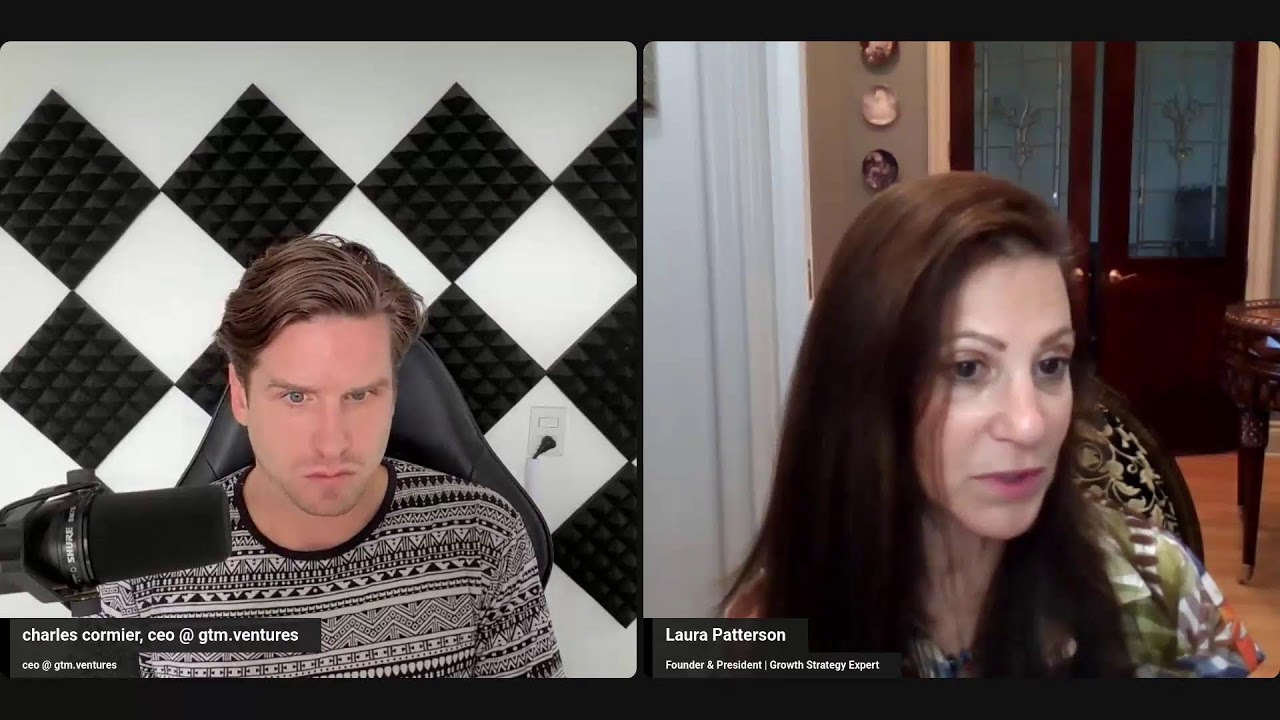
In this CEO Wisdom Pod interview, Laura Patterson, CEO of VisionEdge Marketing, discusses her three‑decade career helping B2B companies grow by aligning customer value with enterprise value. She explains the foundational idea that creating value for customers drives business value, referencing Peter Drucker. Patterson outlines the typical challenges her clients face—expanding share of wallet, entering new markets, and shortening sales cycles—and how VisionEdge uses research, market, and competitive insights to help leaders make better growth decisions. She describes the firm’s service portfolio: free content (newsletter, worksheets), low‑cost advisory reviews ($350‑$500), DIY workbooks, workshops, and full‑scale consulting projects, noting who delivers each service. The target market includes mid‑market and larger firms in infrastructure technology, industrial manufacturing, supply‑chain logistics, and biosciences, with decision‑makers ranging from CEOs to CROs and strategy officers. Lead generation relies heavily on referrals, speaking engagements, and case‑study visibility rather than paid acquisition. Internally, VisionEdge leverages AI for tasks like social‑media copy and FAQ generation but does not deploy AI for client work, emphasizing the value of human expertise. Finally, Patterson shares 2027 goals: expanding advisory work, increasing on‑site workshops, and growing paid speaking engagements.
Chapters
Welcome to another CEO Wisdom Pod. We have Laura Patterson with us today. She's helping CEOs turn customer value into enterprise value at VisionEdge Marketing. She's also board of directors and advisors, an international certified Vistage speaker, and an author down in Austin, Texas. She has this fun newsletter. You can find it on LinkedIn and Substack, I believe. So Laura, welcome to the podcast. Tell us a bit more about yourself and what you've been up to.
Charles, thanks for having me. I'm looking forward to this really fun conversation. So I hate to date myself, but I've kind of spent the last 3 decades really focused on a personal passion, which is helping organizations grow. I believe that that is what's really important. And I've had the privilege of working with hundreds of B2B companies, which is where we specialize. Predominantly in places like technology, industrial manufacturing, logistics, and other industries that have complicated products that have a long sales cycle and multiple people involved in the buying journey. But I actually started my career pretty young. I saw this really interesting comic strip the other day about all the things that us people of my age did early in our lives to earn money. And one of the things I did early in my life to earn money was I sold chocolates door-to-door. And I was probably about 9 years old. And I really didn't know at the time that I was actually learning something that was going to be applicable to my entire life and to my entire career, which is people buy when they see value for themselves, right? That old saying, what's in it for me? So really, that's an idea that has permeated my entire career, whether it was at State Farm or Motorola or tech startups. or being at the helm of VisionEdge Marketing since 1999. Just a quick last point is when I've had the privilege of working with all these companies, I can say that I see a common pattern. Most of the people we work with, they're great companies. They have a lot of smart people. They have really good products. The teams are talented, lots of activity going on. But their growth efforts, they're not always connected directly to what customers need and want and to the business outcomes that their customers are trying to achieve. And so that's really the foundation of what I'm doing today, which is how do you be more customer-centric in your growth strategies and connect, as you said so nicely, customer value to business value? So that's a long answer, but I hope it was helpful.
And what does that mean in plain, non-corporate words? It's like customer value and enterprise values. Is this like win-win and give them more value so that ultimately they can give back more? And what are specific use cases for that? What are low-hanging fruits for other CEOs listening on how to do that?
Good question. So I'm sure you've read a lot of different books over the course of your career. I have too. And one of the books that I read very early on was, uh, and our works that I read early on, Peter Drucker. And what Peter Drucker basically said is the purpose of business is to create a customer, right? And he said essentially that there is no business, you cannot create business value if you don't have customers. And you can't find the right customers and keep the right customers if you don't create something that's of value to them. So if you want to grow your company and increase the business value of your company, you have to create a lot of value for your customers. So that's the relationship. If you can create customer value, you will create business value. You can't create a lot of business value if you don't have any customers.
How do, how do you create value in your own customers nowadays?
Yeah, so our customers typically come to us with very specific things they're trying to do in terms of growing, and they might have problems like, for example, we are doing a pretty good job of getting customers, but we maybe aren't doing as good a job of getting— increasing our share of wallet or getting more business inside the customers that we're working in that are large companies. Maybe we work with one business unit or 2 business units, but we want to expand. How do we do that? What do we need to know to do that? Or we're— we'd like to think— we think we would have the opportunity to go into a new market or a new market segment. What do we need to know to do that? How would we compete? How would— what is it we need to do from a value proposition? Or we would like to improve the customer, the sales cycle, the buying cycle. What is it we do or don't know about the way our customers buy and who they are, and what are the stages and gates that they go through in order to make a final decision to purchase from us? Those are the kinds of questions. They're not the only kinds of questions, but those are oftentimes the questions that we're helping them grapple with. All of those questions have one thing in common, which is why I'm using them, and that is you need to know things about your customer, about your market, and about your competition. So we help them figure out what they need to know. And in some cases, we help them get what they need to know so they can make better decisions. Because really, that's our number one goal. How do we help the people we work with make better growth decisions? How do we help them decide what they should do and conversely what they should stop doing? So that's kind of a key place where we start. And we have frameworks to help them do that. And, you know, we, we try to help our customers think about growth from an executive and board perspective in addition to the customer, because you are, after all, at the helm of a company and you are accountable to producing value for the people that are shareholders of your company.
Right. At the top of funnel, do you provide value as well for free? Was more my question, right? Like, how do you incite them to come in your funnel through free value? And if so, what is that? type of value? I know you have a newsletter, but like, how do you make stuff valuable so that you attract the bees to the honey?
Yeah, well, we do have a newsletter, and the newsletter essentially provides, at the moment, although we're making a few modifications for 2027, uh, content. So we have a lot, a tremendous amount of content at laurapatterson.co. It's all free. We have free assessments, we have free worksheets, And we have things that are very cost-effective, like workbooks that they can do on their own for the do-it-yourselfers. Um, we will facilitate workshops— are not free, but they're usually very affordable. So there's a lot of ways that we try to do things that will be of value and get them on their way, um, and to help them achieve, you know, what they're trying to achieve.
Okay, got it. Um, who do you target and how much clients do you have right now?
Well, we have a lot of customers, as you can imagine, as we head into 2027, because one of the things we do is planning. We help people prepare customer growth strategies that are tied to planning for their coming fiscal year. So that's a very— now is very, very busy for us all the way pretty much through February. That's a common planning timeframe. And it depends on who we're working with. I mean, candidly, do they just want us to get them sort of up and running with a workshop, or do they actually want us to do a plan for them? Do they want us to help them with the research that's needed to support the plan? Those are all different kinds of projects. But things we, you know, and some people just want us to look at their plan. You know, we see a lot of plans, and then we give them some feedback. So we typically will look at a plan and give them some feedback. And, you know, we might charge something as little as, you know, $350 to $500 to do that, somewhere in that range, very, very affordable. Most of our customers are mid-market or larger companies, not startups.
And any specific verticals you target, any specific titles you work with? Is it CEOs only? How do you get to these So we work predominantly in B2B.
Most of our customers are either in what I would call infrastructure technology or industrial manufacturing, supply chain logistics, bioscience, life science. Those are very common markets for us, and we have quite a few customers. And if you are at the laurapatterson.co and you go into the knowledge center, you can click and see all the logos we're allowed to publicly share regarding customers that we have worked with. And we typically work with people who are in the role of strategy, the role of growth, generating growth, customer success. So it could be the CEO, it could be the COO, it could be the Chief Growth Officer, the Chief Strategy Officer, sometimes the Chief Marketing Officer, depends on if they're focused in a more strategic way or they're really a marcom function. And sometimes a chief revenue officer, again, if they're focused more around strategy as opposed to what are, you know, this month's quota or this quarter's quota. So it sort of depends on who we're working with. But does that answer your question?
Sort of. How do you get in touch with these clients? It's like purely referrals. It's like, what's your best lead generator tool and how much leads you generate per month?
So yes, we have a lot of repeat business because we've been at this since 1999 and we have a good reputation, which we are very blessed to have. We have like over 40 case studies on our website, which is pretty good for a company our size. And we get a lot of referrals from people that we work with. I'm asked to speak regularly about our— or to do programs regularly. And that oftentimes will generate interest from people that are in the audience who are saying, hey, that sounds like something I'd like to have a conversation with you about. So those are very common ways.
And how much leads is that per month? And are you still like in hypergrowth mode? What's the state of the business?
Oh, we're, yes, we're a very, you know, our business is very healthy and I think it will continue to be that way as we head into the coming year. We, like every organization, have had to make our adjustments as people try to think about what can I have AI do that I might have had someone do. But here's a common example of where that begins to fall apart. As I mentioned, we do a lot of research. One of the things we often do is help people build their instruments, whether they're going to go into the field, whether that's a survey or a focus group discussion guide or some other type of research instrument. or whatever they are going to be using. Over the last year or so, some people thought, oh, I can just get my handy-dandy friendly AI to write my research instrument. But there is a lot more that goes into creating a research instrument than just asking AI, I want to do X, Y, and Z, and these are the people I want to find out, and this is what I want to know. Write a survey for me. It is not quite that simplistic. There's a little bit more that goes into crafting an instrument. So people have come back saying, okay, well, we tried that, we didn't really get what we needed to know, so maybe we do need some additional help from people who have, uh, some experience. So I think that there is a lot to be said for human capital, people who have been doing something for decades. They know to think about things that unless you know to think about them so you can train the AI, you'll stumble a little bit more than someone who has been doing it a lot for a long time.
And what agents do you currently have running on your company?
What agents? You mean like AI agents? Good question. So we don't have— we have a lot of AI stuff that we do for our company. We don't use AI when we do work for our customers. They're hiring us and our expertise. So we're not actually— we don't deploy an AI to do our customers' work. We do that work. For ourselves, you know, we might use AI. For example, today we had a podcast come out with the CEO of a manufacturing company and I want to do some social media for that person. I'll put the content from that into one of our handy-dandy chat folks platforms, AI platforms, and I'll ask it to create a couple of posts for me and whatnot. That's how we might use AI for our work. Or anyone who reads our articles will see we have an FAQ at the end of every article. That's written by an AI. I give them the article, we write our own content, and then we'll say write the FAQ that will be SEO and AI optimized, and they'll write the FAQ for that. We always tell people if something's been written by an AI, we, we own up to that.
Got it. Um, and your ticket size, it starts at $500 if I want to hire you for— what's the specific service you just mentioned?
Social media? No, advisory services. If someone comes to me and says, could you take a look at this plan that we're thinking about and give us some feedback? Or could you take a look at this segmentation model? Or could you take a look at this message map? Or could you take a look at whatever it is? That's advisory services. I'll say, send it to me. We'll sign an NDA. I'll— or someone on my team that's an expert, it's an area that I'm not an expert in, for example, like pricing, I'm not an expert in pricing, or whatever it might be. If it's a go-to-market plan for a new product launch, you know, might be a couple of us that will look at that. And then we will provide some feedback. And we'll get on a call with you and say, here's what we think you might want to consider reviewing.
Okay, and what's the cost of that? What's the pricing cost starts at? What's the average price you charge?
Between $350 and $500, depending on what it, what it is.
Okay. Why so low? And is it recurring or—
Uh, no, it's, it's to answer a very specific question, right? It's not, we're not making their plan. So Charles, if they came to us and said, we're thinking about doing X, or would you take a look at Y? We're willing to do that for people. Because we want people to be successful. So you're not getting an hour, you're getting only an hour or 2 of our time. You're not getting a day. We're not on your, at your facility. We're not leading a workshop. We're providing good counsel based on experience and expertise and making some recommendations. We're not implementing those recommendations.
Okay. Okay. So it's only advisory. Is it mostly consulting or do you actually do stuff for them?
It depends on who it is. So yes, we actually do things. You asked me what is the lowest way to get engaged. That's the lowest price point to get engaged with us that involves us. We have online products you can buy that you do yourself. Those are much less expensive and you can just go online and give us your credit card. But for, uh, if you want us to actually do a project, then we would scope that out and that would be a traditional, you know, consulting firm statement of work. You know, tell us what the project is, we'll have a conversation, we'll scope it out, and we'll create a statement of work around that.
Okay, got it. Um, and these prices, they're recurring and I'm guessing they're higher ticket also. Who's serving them? Is that you or do you have teammates?
No, we're a company. We have people on our team that do and have areas of expertise and depends on what the project is. We have people who have very strong research and data chops. If it's high research, high data chops, we have people who are much more maybe focused on customer journey mapping or things along those lines. Usually, depending on the project, I'm usually involved in some way. Because typically I've had conversations with this company or customer and, you know, I want them to feel like they're getting a lot of high touch from, from us.
Okay, got it. What are your goals this year? What do you want to accomplish with the company?
Oh, well, we're— for our— we have actually written our own plan already for this coming year. So goals for our company are, you know, customer work. Both advisory and actual engagements, as well as more speaking engagements, paid speaking engagements, some workshops. I'd like to— I think that people are starting to realize that it's important to build the skill set and competencies of their people. And so we're seeing a lot more requests for on-site workshops on various topics. And so we're working on being able to deliver more of those.
Got it. And where can people find out more about you, Laura?
Well, LinkedIn, of course. I think if you type in Laura Patterson, I'm usually the first one that shows up. Of course, welcome to getting an email at laurap@visionedgemarketing.com. That's my email. And those are the best probably ways to start.
More from Charles


Founder Wisdom: the audiobook, version 2 (5 hours of stories from founders and CEOs)

8 CEO Questions I Love Asking: the audiobook (64 founders answer, in their own words)





