Libby Dalcamo Harris - CEO at Strategic Book Advisors
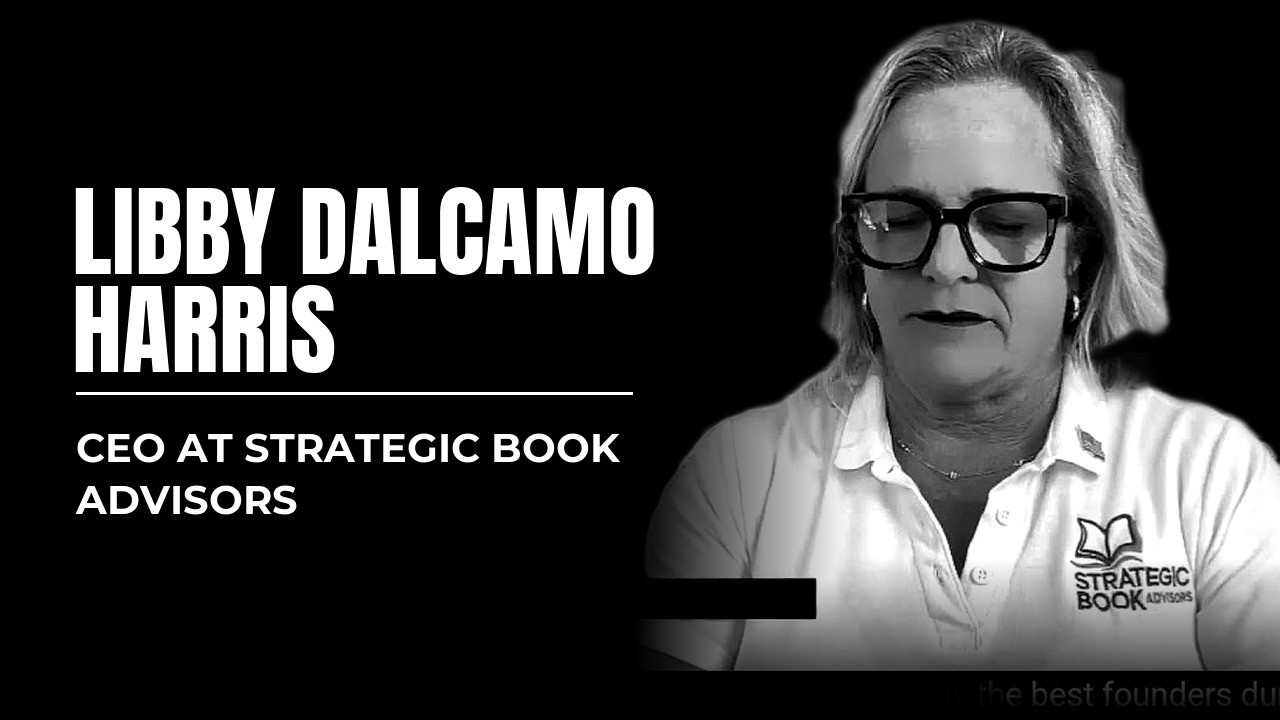
In this Founder Wisdom podcast episode, host Charles Cormier interviews Libby Dalcamo Harris, CEO of Strategic Book Advisors and author of over 30 books, many focused on teen athletes and mental toughness. Libby explains how her company helps experts—CEOs, founders, coaches, athletes, attorneys, and other professionals—turn their expertise into authority‑building books rather than chasing bestseller status. She outlines a structured, hybrid workflow that starts with a deep questionnaire and recorded interview, leverages AI for research, employs human ghostwriters to capture tone and emotion, and finishes with professional design, SEO‑optimized titles, lead‑magnet integration, and a year‑long automated marketing sequence (email, podcast interview, ads). Libby discusses the role of AI as a tool, not a replacement for human storytelling, and emphasizes the importance of differentiating a book through personal “secret sauce.” The conversation also covers pricing dynamics in the book‑agency market, competitive positioning, and her own background in sports performance, nutrition, and mental‑toughness coaching that led to her first books. Marketing tactics for her business include LinkedIn outreach, podcasts, Facebook ads, and a focus on multi‑channel promotion, though she notes there is no single “holy grail” growth hack. Throughout, Libby stresses that a book’s primary value is as a strategic asset that opens doors—speaking gigs, higher fees, investor credibility—rather than direct Amazon royalties. The episode ends with a call‑to‑action directing listeners to Strategic Book Advisors for a free strategic consultation.
Chapters
Welcome to another Founder Wisdom podcast. We have Libby Del Camo Harris with us today. She's a best-selling author, she's the CEO of Strategic Book Advisors, she published 30+ books, and she's helping experts become authors and industry authorities in Lenexa, Kansas. So Libby, welcome to the pod. Tell us a bit more about yourself and what you're up to.
Well, thanks so much for including me today. I'm super excited to be here and I'm just going to be fully transparent and say this is my very first podcast. And funny, I have a podcast after this one where I'm interviewing one of our authors. So this will be a good warmup for that, right?
Yeah.
I'll just see how you do it and then I'll just jump right into that. So yeah, I, uh, I am an author. I've published over 30 books, some bestselling. My main area actually is teen athletes and I got into publishing about 5 years ago and then was coaching people on publishing their own books and then that company went out of business. So like any good 60-year-old, I decided, hey, why not start a business now? So here we are with Strategic Book Advisors and that is our primary goal is to help experts really open doors with books. That they— that we create for them.
I love that. Yeah, in the first podcast interview, I mean, it's, uh, it's great that you're starting your podcast, right? That you're on the other side of the mic. Being on both sides of the mic is also helpful because it helps you understand the guest, and empathy is, I think, critical for great conversations. There's benefits being on, um, on both sides. In my opinion, there's more benefits of being on my side of the mic and interviewing because you can get data on people, plus you can scale how many people you interview, right? So, vs. like, if you constantly ask to be on podcasts, it's not predictable. Sometimes you might get shitty hosts and they might just not show up as well, right? So it's a fun thing and it's directly related to what you're doing, right? Like, if you speak to people, that's content. You can package that into a book. I've tried to do that for some time, but yeah, like nowadays, uh, I'm cooking ideas on, on that, uh, in that regards of things. So probably like feed an AI to take all my content and build like some kind of book. Is Amazon, um, Kindle publishing still profitable? I, I remember some of my books generating a couple of dollars per month.
Is that right?
Is it fully an authority play?
It's really an authority play. And you know what's interesting is that people, we see a lot of people coming to us and going, okay, I want to be on the bestseller list, you know, the New York Times bestseller. And I want to just, I have to sit them down and say, okay, is that really what you want? Because that's, that's more of an ego stroke. Or are you looking to really build your business and take your business to the next level? Because that's what our book is going to do. It's going to establish that authority. And credibility. And then you get other stuff with it, a podcast interview like we mentioned, a lead magnet embedded in the book, a year's worth of email marketing. Because a lot of people will create a book and think that's it. Okay, here's my book and everything's going to come to me. You really have to be proactive but use that book as the foundation. So Amazon, you're right, 100% does not pay that great. Not going to lie. However, having your book out there will create dividends that you can't even imagine, as long as you're smart about getting your book out there in various ways.
Your clients, who are they? You said athletes when we started. I see some veterans as well. Just good, good type of clients. Discipline, usually have a story, right? And sort of hustlers. Do you work also with founders, CEOs? So what are your criteria? They need to have a story, right?
Yeah. Well, not everybody has to have a story per se, but they have to have a little bit of secret sauce that they're willing to put into their book. What separates them from the guy doing the exact same thing next to them? Maybe it's years of experience. Maybe it's they've developed up this super cool system, whatever the case may be. We wanna get that down into a book, right? So we work with CEOs, founders, consultants, coaches, financial planners, even attorneys, because we're looking for people who want to get their expertise down, share it on a broader scale, but also bring people to them, right? I mean, imagine if you're looking for investors, 'cause I know that's something that you do, and I know I've got an investor meeting about my business in a week, I send them over my book and I say, "Hey, really looking forward to meeting with you. This is a little bit more about me. Here's my book. Super excited about our meeting." You send that to them. Imagine how the conversation changes from the first moment. They're not getting to know you, what are you about, all that kind of stuff. They're ready to jump in and go, "Man, you've got a lot to offer here." This is fantastic. It's a whole different mindset.
Yeah, I love it. And books, do you feel that they're diminishing in value because there's so many out there? There's also lots of AI thing. I wouldn't call it AI slump because AI is like smarter than most humans, but as soon as people see that it's AI, they get like, uh, cold feet for some reason, for, for very humane reasons. Um, yeah. Do you feel that books are still like a good medium to show that you're serious? Because sometimes I see like these people with books and it's like, oh, okay, yeah, just like playing the book angle to communicate that they're serious, but they just look like pretty much all the other coaches with books, right? So tell me a bit more about that.
Yeah, I definitely think there's, there are a ton of books out there. Let's not, you know, mix that up. And now with technology being the way it is, My dog can write a book. And actually my dog has written 3 books as a matter of fact. But, um, I still believe that the book, the published word is really where you can separate yourself. Now when we're working with clients and they're giving us input into their book, we tease out of them, you know, what's, what makes you different from the guy next to you? Let's get that down. Let's get that feeling, that passion, whatever the case may be. Expressed in words so that you can differentiate yourself from the, the dude next to you. And in regard to AI, I'm not anti-AI. We use it as a tool, but it's a tool, not the be-all end-all product, right? Because you can read a book that you know is AI written and somebody just slapped the COVID on it and published it. Personally, I would never do that because I don't want my name associated with that, because I can read a book and know in the first 3 paragraphs whether or not it's AI generated.
So when you start with a client, you sit down with them, you have them fill out documents, you deploy AI to do some deep research. What's your, your full process?
So if, if you got started today, you get a comprehensive questionnaire Who are you? Do you have a secret sauce kind of thing? What's your goal for your book? Where do you want to take this? What's, what's your bigger vision? And then you work with a dedicated project manager one-on-one, and we start to deploy things like AI for deep research. Then we have a ghostwriter because all of our books are touched by a human, and we have a ghostwriter that really works with you, exchanging emails back and forth. Here's my next chapter. We want to get your tone. Your rhythm of speaking, all of that kind of stuff captured in that book. Then once the manuscript is finished and you've approved it, then we format it. We'll create an amazing cover that's a scroll-stopping cover because most people, I'm sure if you've ever been on Amazon, you look at some of those covers and you go, what on earth is that? And we've got to really make sure that you're conveying your message in a simple and effective way, but it's also eye-catching. Right? So people stop and go, "Ooh, what's that? I want to know more." Same with book titles. We really utilize SEO to develop a title. And then we go to a lead magnet. So a lead magnet inside your book might be something, "Hey, I've got 10 tips for performance anxiety. Put your— go to this link, put in your name and your email, and then you get that downloaded." So in addition to you publishing a book, if somebody's curious enough to read your book, then they're going to go and get additional information from you that has value. And now you're starting to capture leads right away, right? It's pretty outstanding. And then we've got, like I said, the year-long automated email sequencing for prospects, a podcast interview, and that lead magnet that I mentioned. And it's all bundled up beautifully so that you have that book, but then you also have a marketing plan that goes with it. How are you going to use that book for the next step?
How do you compete with all these other agencies, right? I had a couple of my— on my pod, and yeah, you know, the agency, I think it was Texas-based, uh, JM McCormick or whatever, Scribe, I think it was called. They created the Goggins book, right? I think that was, that was one of the highest success stories. Is that what you're also seeking to become here?
Not necessarily. That's not really our end goal. Our end goal is the success of the client. So when a client comes back to me and is like, oh my gosh, my book, I got, you know, 3 new speaking gigs, or I've got this client that I initially was thinking, oh, I'll charge this much. Then we talked about my book and I realized my book created credibility so I can actually start charging more. So for us, there are a lot of companies out there that promise you the moon. There's no two ways about it. And their price tag is kind of orbital, not gonna lie. So, you know, we are reasonably priced. We're really geared for the entrepreneur, founder, business owner, CEO doing like $200K a year and up. But you've got these, some, some of these companies will charge you $100,000 for a book. It better be written in gold leaf. That's all I can say about that.
Uh, doesn't Barack Obama have his publishing house? I believe that's what he would charge minimum per book. But yeah, I'd probably have like very good writers on his payroll. I guess that would be his counter argument. Um, do you still feel that humans can compete with a very good, well-prompted AI in terms of writing?
AI to me is still a machine, and it's not a human without human experience. I think that's the differentiation, and what we try to utilize with our extraction system is getting that human experience down into the book so that if I picked up a book that you had written, you using us, I would know more about your personality And I think that's where the human connection comes into play.
Okay, so I mean, what you're probably referring to is taste, right? It's like catching patterns and hints that an AI wouldn't catch either because it doesn't have the data or the memory or— yeah, like finding these patterns, like pattern recognition, right? You've seen it in some of your other clients and now you're like, oh, you have that and we need to absolutely need to tell that story and go with that angle. It's like that gut feeling, right? Like that, that human mote. How do you actually do that? Is it like, is it deep listening? Is it asking the right questions?
Like, how do you get there? Yeah, so when we bring a client on board, we have an onboarding process. I mentioned we have that questionnaire and then we have, it's about an hour, 2 hours, just a deep conversation. We record the whole thing, capture it all, and we talk about, you know, what kind of tone do you want? Tell me this story. And then we can capture the emotion because we're recording it. And all of that information goes then to the ghostwriter, and then they get it down on paper. And they, because being a human relating to a human, they can write down that experience with the emotion.
Interesting. And part of this is, is, is there like a process interviews? Is the podcast part of your process as well? Do you use like podcasts to even start your lead gen process? Like where does the, the actual physical interview with you, uh, is in that process?
So the podcast happens after their book is published and it's an interview all about the book. Tell me more about your book. Why did you write it? The person I'm interviewing later today wrote a book about finding true love. It's a matchmaker's guide to finding true love. So we'll be discussing her book, why she wrote it, what does she want people to get out of it, what kinds of, um, connection do they want to have to the book, those kinds of things. So we do that afterwards, and then we provide that podcast to our client, and then they can use it on their website. They can snip it up to make ads, whatever the case may be. So it's their tool to use moving forward. Certainly we can guide them on creating all of those assets from that one podcast. But yeah, that's how it works.
Interesting. Your company, um, so if I check out your background here, uh, you've been at Harris Associated Consulting for like 15 years, right? Like, what prompted you to start the strategic book advising stuff?
So Harris Associated Consulting, not gonna lie, is my husband's company. And so, you know, I helped him in between the nooks and crannies of what I was doing. And then when we started Strategic Book Advisors, I delicately said, I have to leave. I'll still be here if you need me, but I really need to focus 100% on what I'm doing.
Yeah, interesting. Um, but why, why like books? Um, have you been like an avid reader this whole time? You've deployed books yourself. Have you seen like a level of success on your own books? Like what prompted you to launch a company about that? You need to have a, a specific thesis and potentially a track record, right, to do so.
Yeah, so I got into publishing because I wanted to help teen athletes and their parents perform better, realize there's more to sport after, you know, everything. And so I have a series, actually, here's one of my books right here, Teen Athletes: Mental Toughness, right? And I got started in that. I'm a parent of a D1 athlete and realized there are a lot of parents out there who need to realize that sport isn't everything. It's got great lessons in it, but it's not everything. So that was my catalyst to start writing my own books. Then I started working with a company that's not listed on my LinkedIn where I was working with thousands of indie authors and helping them navigate the waters of how do I format my book or what's a good book, all of that kind of stuff. And then when they went out of business, I thought, you know, I love helping people realize their dream in a book. Let's continue on with this path. And so That's when Strategic Book Advisors was born.
And the teen grit stuff, how did you get into that? Like, you're gritty yourself, right? You, you run distances and so forth. Like, why was that important enough for you to actually write a book about it?
So as a parent, and let me give you a little bit of background. So not only do I have a did I parent a D1 athlete, but I have a background in exercise science. So I've worked with countless athletes of all ages on performance. And then when I was parenting my kid, I would see what other parents were saying to their children. And I thought, oh boy, do we need to like take a step back? In addition to all of that, I'm a certified nutritional counselor. I was a D1 a sports performance and nutrition counselor. And then I'm also a certified mental toughness trainer. So anyway, so I wrapped all that together into these books. And the first book is Mental Toughness for Teen Athletes. It's really geared for parents to understand how to help their kid perform better without being that nagging voice, right? Of, well, I don't think you did this right, or I don't think you did that right. And I have to say, The biggest aha moment of my life was my daughter said, like I said, she was a D1 athlete, 5-time state champion, 8-time All-American. She was an excellent swimmer. And I can remember saying something to her because I swam, and she looked at me and she said, Mom, why don't you let the coach be the coach and you be the mom? That was the best lesson I ever had. And so from that point on, I did exactly that. And then I noticed how all of— many of the parents that I would see would do this coaching role. And I would think to myself, last I checked, I never saw you in any Olympics. So I think you should let the coach do his job and let the parent be the, you know, the parent. You're there to support your kid. And I learned language that I could speak with my daughter and not be aggressive, but things, you know, just completely like, how'd that feel? How was that race? You know, and she would tell me. It's not like I needed to say, man, you totally sucked on that, because she knew. She would know, right? So I just would be very casual. And so that was really truly the catalyst. I mean, yes, I've done marathons and triathlons, like I said, and trust me, a marathon is, in my mind, it's just 4 hours of work, whatever I'm going to do, I'm just going to keep on going, right? But, um, that was really the catalyst for me to get started with my own book journey. And then from there, it just kind of became this passion that I love.
Yeah. I love that. And your methodologies, you've applied it on your own children's. Uh, do you see that, uh, most parents still operate on old frameworks that don't contribute to the active development of their kids?
So my kids are in their 30s and 20s now, so they're beyond that. But when my son was in high school, he was a marching band guy and swimmer. And I can remember sitting in the stands and listening to parents yakking to their kid down on the field and thinking, dude, just zip it. You're not helping him focus on what he's doing. Because, you know, I can pick my mom's voice out of a crowd of 10,000 people, right? That's the one voice I hear because I've trained to hear it. So you yakking to your kid about, hey, you know, you need to do this and you need to do that, it's not helpful. It's more distracting than anything. So I'd like to say, yeah, I see parents really, you know, embracing thoughtful parenting around athletics, but I can't say that it's true necessarily, which is too bad, but it is what it is. That's why I wrote the book.
And it seems like how you talk to others, how you talk to yourself, right? Is there something to say about like your inner voice? Like when you're in doing this half marathon or you're running a distance and you're in pain, how do you talk to yourself?
Well, I can— I crack myself up looking back. I'm so funny because at the beginning of each race I'd be like, you know what, this is it, this is my breakout race, I am going to totally dominate and win, yeah! And then by mile 13 and everybody else, you know, the winners are done and they're having, you know, cupcakes and whatever, and I've still got 13 more miles to go, I'm like All right, so today's not my day, but you know what I am going to do? I'm going to finish this because that's what I came here to do. I came here to finish it. And for the most part, I would get through it with that kind of self-talk like, oh, it's only a mile more. You've done this before. It's not that hard. You can do it. You survived. Just keep going, one step in front of the other. So that was kind of my own self-talk, but I have a whole section in my books about self-talk for, for parents and for kids and helping their child get a little bit more positive self-talk. Because there's nothing worse than, um, beating yourself up over a mistake for the rest of the game or a match or whatever. And I think if you've ever watched— did you ever watch Ted Lasso, that show?
No, heard good things about it.
It's a great show. I love it as a he's a sports performance person. I really love it. But he says, you know, you got to be a goldfish. When you make a mistake, forget about it. Goldfish has a memory of 3 seconds. Forget it. You're here because you're good. You can play at this level. Just let that mistake go. Forget about it and move forward.
Your business, right? It's almost brand new. Um, how's it going so far? You like in client acquisition mode? Like any, uh, challenges or lessons so far?
So when we first started the company about a year and a half ago, we were focusing on serving indie authors and we realized that was not going to be the best platform for our company. So we switched. So now we talk to clients about strategically building their business and scaling their business using the, a book and their published assets as a way to make that happen. The strategy. So I coach a lot of people on let's get the book done. Where can we take it from there? Can we do courses, workshops, speaking gigs, all of that kind of stuff? And so it's going well. And we are in, of course, massive lead and client acquisition mode. I was joking to everybody. I'm like, this is the marketing year. We are focused 100% on marketing. That's what we're doing. Marketing. We have our systems in place. We've done everything smoothly. We've got it all ready to go. It's marketing, marketing, and more marketing. And then marketing some more.
And what's your, your number one growth hack in terms of marketing?
Well, doing a lot of LinkedIn marketing. Right? But I have to say, I'm not 100% convinced yet. So we're trying podcasts, we're trying, you know, LinkedIn, Facebook ads, all that kind of stuff. And I have to say, I haven't found one thing that I'm like, that's the holy grail of marketing. I'm not even sure there is one thing that is the holy grail of marketing, because I look at marketing as you've got to have this piece going and this piece and all of these different ways to get your name out there and what you do. So I can't say I can put my finger on one thing in particular. Maybe it'll be podcasts.
I have 3. Yeah, no, podcast is one for sure. It's exponential, right? You interview people and you're like, hey, let's take the content of our podcast and I can— here's like a microbook I produce for you. You can publish it on your LinkedIn, would be built by AI or something like mostly automated. "If you want like the full thing, you can hire me for this package, right? It's a couple of grand per month or whatever." The second one's another challenge I had quite a lot of success with. Again, it's with AI. It's all about energy efficiency and scale in my opinion. It's faceless YouTube channels, right? So you cover, use like NotebookLM to cover some books, some like classics, especially in business like John D. Rockefeller, "whatever," and you publish it on YouTube and you have a link in the actual description, which is like, "Hey, you want like a book that sounds like that? Just book a call here." And the last one I think is like the hardest in my opinion, but it would be to publish like a bestseller, which is incredibly hard, right? But it's obviously like what you do, and I think that could bring in a bunch of clients. What do you think?
Yeah, I agree that the bestseller, certainly on the New York Times bestseller list, would definitely elevate you. I know getting to the New York Times bestseller list is organically is pretty difficult. 9 times out of 10, the people that are on that list, like the publishing house, bought tens of thousands of books. To elevate them to that level, right? And so I always look at that and I go, is the New York Times bestseller really a true measure of how good my book is? Not necessarily. Or what my book has to offer? I don't think so. I really don't think so. And I think, I mean, if you want to be like, uh, you know, Michelle Obama and have the publisher buy tens of thousands of your books Okay, but that's not the goal of our book creation. Our book creation is to elevate your business, right?
It's, it's hard, um, for sure. And, um, yeah, like Michelle Obama, it's a bit cringy, her books nowadays. The Obamas, you know, it's like, it's good, they're great speakers, but feel like they're— I don't know, they're too polished, right? And like, I'm definitely not a Trump guy, but Trump's thing is that he came up with like no polish whatsoever, and people like that. Um, yeah, I haven't even—
definitely raw. He's, he's a raw dude, and he's—
people watch Raw nowadays also.
Yeah, they definitely do.
Like, people want Raw more than they want the truth.
It's like, that's probably true, right? And I think there's nothing wrong with being honest, right? But you also have to preface your honesty with a— like I always say, it's kind of like an M&M, right? You got a little bit of a sweet shell on the inside and something on the inside that you're gonna get. So, right? And then I'm gonna wrap it up with the other side of that, that M&M. So—
oh yeah, yeah, that's so good.
You know, there's— yeah, chocolate covered Yeah, exactly.
Where can people find out more about you, Libby?
So if you just head over to Strategic Book Advisors, it's common spelling, no quirky spelling or anything like that. You can find out more about us. You can set up a strategic business consulting. It's free. We can talk about your book, what you think your book will do for your business. Brainstorm ideas on how your book can help elevate your business and then go from there. It's completely free. And, um, we truly are a company. We don't have clients typically. We have family. We just haven't met you yet. It's kind of like Ancestry DNA, like, oh look, I have a cousin that's, you know, 10 times removed. Great, come on in. Because that's We are so passionate about helping our clients achieve their goals that at the end, it really does become like a common, common theme of—
Yeah, I love it.
Support.
Libby, thank you so much for showing up today. That was Libby Dalcamo Harris.
More from Charles


Founder Wisdom: the audiobook, version 2 (5 hours of stories from founders and CEOs)

8 CEO Questions I Love Asking: the audiobook (64 founders answer, in their own words)





