Madeleine Poteat - Founder & CEO at MP Consulting
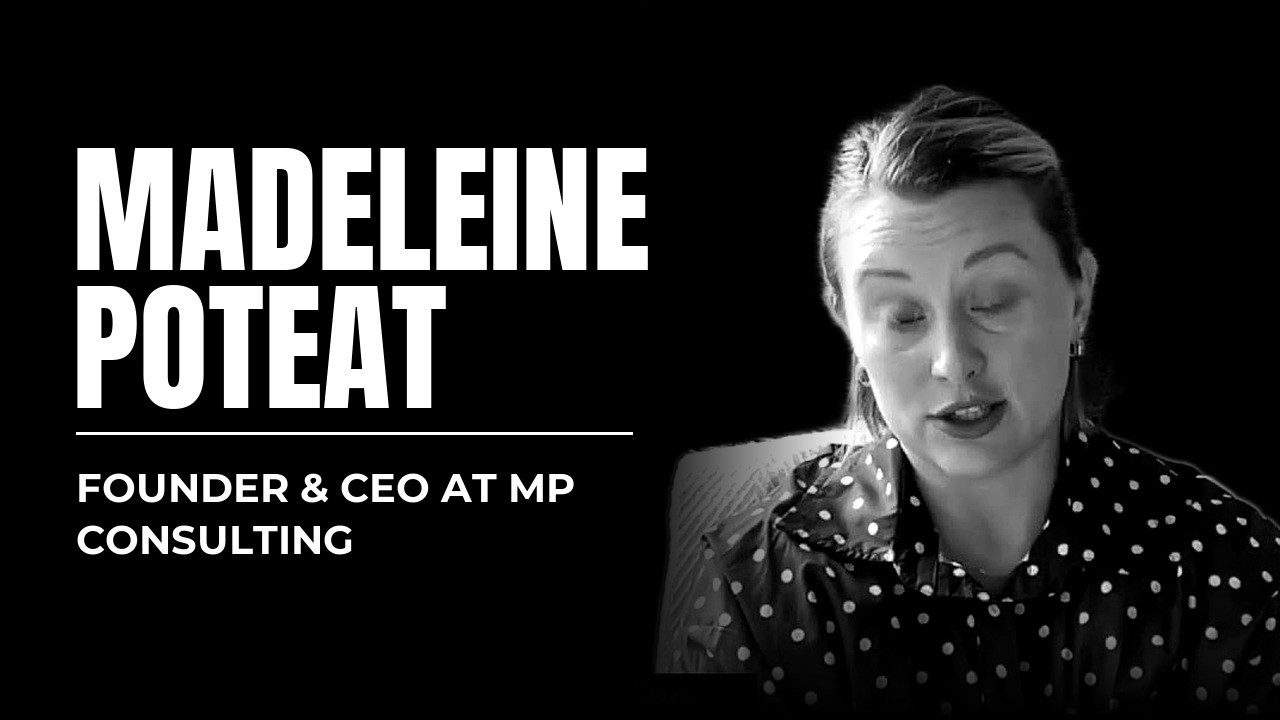
Madeleine Poteat built MP Consulting from a solo operation in 2018 to a 15-person Nashville agency serving 87 small-business clients. She scaled by automating work and documenting systems rather than hiring aggressively, focusing on social-media management as the entry point and targeting mid-size businesses that already understand marketing basics.
Chapters
before we go. Welcome to another Founder Wisdom podcast. Today we have Madeline Potite with us, Michalik is her maiden name, I guess. She's a founder and CEO at MP Consulting in Nashville, Tennessee, and she's been running the business for almost 10 years now, which is quite a lot. That's a long run. So Mad, welcome to the pod. Tell us a bit more about yourself, what you've been up to.
Yeah, thanks for having me, Charles. Appreciate the time. Like he said, you know, I run an agency called MP Consulting here in the Nashville area. I personally live in Franklin, Tennessee, which is a little bit south of Nashville, more of the suburbs, but started the business when we moved to town and it was just a one-woman show. And now we've got about 15 folks helping small businesses across the country.
You started as a trainer and you, uh, played somewhat high levels of soccer, right, if my memory is good?
Yeah, yeah. So I went to a smaller school in Nebraska, played soccer there. It was called Hastings College. That's where my husband and I met. Um, he was also a soccer player. And then we, after college, we both lived in Omaha for a couple years, coached soccer, worked for a programmatic ads company there. And then we moved to Nashville in 2018, and that's when I started the business.
And vending machine merchandiser for 4 years, how was that?
Yeah, so growing up, my parents are— they are full-fledged entrepreneurs. They have run— yeah, all types of businesses. But they put vending machines in a lot of their small businesses in the— in Nebraska. And so in high school, they let me run those. And so I was, you know, running to Sam's Club, filling up the carts with pop and soda, taking orders from different places, making sure I was buying the right, um, the right products that would sell, hauling those into every store. I mean, it was, it was manual labor, Charles.
I love it though. And is it a good business? Because I've seen like all these videos of like gurus trying to have you start like these merchandise, uh, these vending machine businesses. Is it a good business in the end?
Yeah, I mean, it's I mean, my parents only have like 4 or 5, so it's not like they have a vending machine empire by any means, but it paid probably half of my college tuition, so not bad.
So they do that part-time or why?
Yeah, they just put it in the stores that they own, so it's just another revenue-generating avenue.
Interesting. But yeah, what's cool about these businesses is that they're somewhat automated, right? Obviously you need to pay humans to stock these machines, but it's just like you— what about the ATMs? Have you analyzed that business, like running ATMs?
No, I think they had one or two in there. What was really great were the penny smashing machines. Have you heard of those?
No, but I know what they are, but I've never heard like or seen.
Yeah, so they, they owned a few businesses in like tourist areas of Nebraska, which doesn't seem like they would be, but there are a few places that people travel to in Nebraska, um, for fun. And so they had these penny machines in those stores, and those made a lot of money. You put like 3 quarters in and then a penny, and then it would, you know, put like the Nebraska symbol or like our capital on the back, and then, you know, something on the front. And it was pretty neat. But those—
what's the Nebraska economy like? Describe Nebraska. I've never studied Nebraska as a state.
Okay, so you've got two kind of metro— metropolitan areas on the east side. So Omaha, Nebraska is the, the largest city, and then Lincoln is the capital. Lincoln sits a little bit southwest of Omaha, much smaller, but still, um, still important because you've got the capital there, but also the University of Nebraska. And so that's— that fuels a big part of their economy in that city. And then Omaha They have a number of Fortune 500 companies that make their headquarters there. It is growing, I would say, you know, it's definitely boomed since I left, which was 8 years ago. And then the majority of the rest of the state is, is flat, and very agricultural in terms of what drives their, their economies.
That's home of Berkshire Hathaway, right?
Yeah, so Berkshire Hathaway is down there. Union Pacific has their headquarters in Omaha. Um, I know ConAgra used to. I think they moved a few years ago, but that was a big one down there. There's another, um, number of other ones.
Um, it's very basically flat and tranquil. So like Warren would leverage this away from the noise to make better business decision, I guess. Sure.
Yeah, there's, um, there's not a ton that goes on there. Like if you're a big baseball fan, College World Series brings a ton of people in. Berkshire Hathaway event every year brings, you know, lots of people in. We've had the Olympic swim trials there for a number of years. And then of course, you know, we don't have a professional football team, so the Huskers, that's what we all root for in terms of football. So during the fall, um, that's a big, big driver of tourism.
And where did your football slash soccer— we call it football here in Mexico— where did your— what, where did these ambitions end? You know, because it's very hard to play professional and to scale, like Did you have your dreams broken, I guess, when trying to go for that career?
No, I never had the desire to do that. I was really, really happy with playing 4 years in college, um, and I was ready to move on to a professional, uh, professional environment. It was, you know, I played since I was probably— I could walk, so that's 18, 21 years of soccer. So by the time I was a senior in college, I was ready for something else. I was ready to get out of my sweatpants every day. I was I was ready to not train at 5:00 AM in the morning and then again in the night. I was ready to make some money. So it was a great transition for me.
Right. So you leveraged that mindset. Your parents were entrepreneurs as well and you launched your first agency, right?
Yeah. Yeah. It definitely took me about 5.5 years to get there. I really wanted— I had worked for my parents throughout high school and college just doing random jobs. I worked in their salons. I did the vending machine thing. And then, you know, they did want me to come back and work for in their businesses after college, but I really wanted to go and work for somebody else more on the larger side of things to see how larger businesses run. And so that's why I took the job at Sojourn, which is headquartered out of San Francisco, but they started in Omaha and they're a programmatic ads company that focuses on the tourism side or like the travel side of the industry. And that gave me, you know, the taste of a more corporate style environment. It was definitely a startup when I, when I entered, but as they grew pretty rapidly, more systems came in place and it became a little bit more corporate. Um, and so I was able to see kind of all sides there, which was great for me. It taught me a lot about how, um, how you need to be able to pivot as an entrepreneur, how, you know, you got to be okay with change. But it also taught me how to scale and how to systematize things so that, you know, you're not the only one who can do it. And if something goes wrong, you know, it doesn't just fall on you. You've got layers and layers of help behind you.
But even then, if your parents were entrepreneurial, launching your own thing's pretty crazy, right, off the, the get-go. I've been there as well. I think I launched my agency in 2017. We almost launched at the same time, and I'm a bit crazy for sure. Like, uh, I'm super ambitious, almost fearless. I have very high tolerance for pain and stress management. Although when we— before I started, I told you my— maybe my stress levels are a bit high nowadays, but I have a very good machine to manage it. How's it been for you? And do you, do you feel that was the only path for you?
I think after working for that company for about 5 and a half years, I was definitely ready for a new challenge, but I didn't set out to start my own business. That was was never my intention. It kind of happened organically, but I think it— unbeknownst to me, you know, God was pushing me that way. Um, I just didn't realize it until I had 3 or 4 clients and I was like, well, shoot, I could, I could build this into something, or I could, you know, continue to do this on the side and look for a full-time job. And because my parents have owned their own businesses, it wasn't crazy to me that, you know, that was an option. I think that was just the normal next step to try. I also think I grew up with a very strong safety net. My husband has a great job, and so there wasn't that fear or that risk if it all falls apart, I've left with nothing and I'm on the street. So I think I had the right support system, I had the right people around me and the right upbringing to have the confidence to take that step.
I love it. And you scaled to 87 clients. How do you manage that without the plane crashing down?
Well, I'll say most days it feels like the plane is crashing and we're flying and we're building it all at the same time.
Yes.
Um, but I would say the systems and the team I have in place are what drive us forward and keep things from, you know, falling apart. And it's, it's the tools that we use, it's the software that we've invested in, and it's the SOPs that we've built, um, along with the training that we've implemented across our team so that everybody knows what they need to be doing the Expectations are there, and we have layers on layers of checks and balances to ensure things don't fall through the cracks.
So, um, I've done the human, uh, part of things in agency, and I quickly realized this wouldn't scale, for lack of better term. Employees drive me nuts. I don't think employees are made to be employees. Humans are made to be gritty and have their own stuff. That's my own thesis, and I think it won't scale in the age of AI, and I think most of tasks can be automated. It, just that founders are too lazy to automate them. So about like 4 years ago, I let go of my full team. Um, I've hired like over like a couple thousand freelancers in the last 10 years.
It's—
and back then when I had employees, we were about 200. So I had like a major downscale, and it's been probably my best decision ever. Uh, my business have scaled also since then. So it wasn't about like running a lifestyle business for my sanity, right? Was literally like doing stuff that scales forever. What percentage of your, uh, vision for scale is like human-based vs. like building automations and AI to scale the agency?
Yeah, I think I am much more focused now in scaling without additional headcount than I have been in the past. So we have a solid team right now. We've got, you know, 2 marketing coordinators, 3 marketing managers, and then our team of implementers behind them. So, you know, 10+ other part-time folks, um, and that seems to be a good size for us. And so I'm more focused on getting them, uh, more experience, more confidence, and upleveling them as professionals than adding additional headcount, because I think we— if we employ the right pieces, software, again, processes, and implement that correctly, we can continue to scale as a company without adding additional employees. And so that's really where my focus is right now.
Interesting. And what, um, who's your ICP? Let's start with that. These 87 clients, are they mostly small business? You focus on one specific industry, one specific role, size of business?
Yeah, we dove into our ICPs about 6 months ago again to kind of take a look at them because we added a salesperson to our team. And so that kind of forced us to again systematize and make sure everything's written down and out of my brain because I, you know, was the only salesperson before. But what we found is that we have multiple. I would say because our mission is to provide affordable marketing solutions to small businesses, just in overall, we're going to be pretty general in who we take on. However, it's— we did find that there's a size in there that fits our abilities really well. And it's not someone who's too small, not someone who needs to bootstrap everything, but it's also not someone that's really, really big that has needs or has projects that maybe our small team can't handle. It's going to be that middle ground. Businesses with 2, probably 5 to 50 employees. Um, revenue-wise it doesn't matter because nowadays, you know, like you and I just talked about, you can run a super successful company with, you know, not very many people. Um, but it's more about the deliverables and, and the partnership. So, you know, we get on those onboarding calls and, and we are looking for folks who are going to be invested in the process Part of how we handle things is not just dump it on our plate and let us run. We really do like to build that relationship with them and have them involved in the decision-making and, you know, the goals, the strategies to make sure that we're aligned. As much as we try and be a member of their team, at the end of the day, they are the ones that know their business the best. And so we do, we try and leverage that, that information as much as we can. So I would say there is no one industry that we work in, um, but we have had success in a few industries. And so if you look at our book of business, we've got a number of, um, optometry clinics, dentist offices, real estate agents, restaurants, and then kind of in like the home building, home renovation, interior design area. Um, but that doesn't mean we can't work with, you know, your your random other businesses that come our way.
Yeah, inside joke as a sales guy— more of a sales guy than a marketing guy, although I started in marketing, uh, technically— um, is that I've been obsessing about my ICP like every day for the past 15 years, right? Because it's such a complex and rich equation of knowing like who your product is made out for. And even after like 10, 15 years of doing that, I'm still constantly asking myself questions, right? Like, um, especially not just on the demographic side of things, like their size and all that, but their psychographics, right? And one hack that I found is like, work with people I want to be like. That's, that's like the best definition ever because they're, they're just ballers, right? And you work with people that give you energy and don't take energy from you, plus they're rich, right? So it's they don't mind paying you. Um, what kind of psychographics do you aim for? Like, who are your clients? How do they behave?
I think that's a great point. I think when I'm out talking to folks who are looking for our services, it's definitely like, what's their vibe? Like, is this someone that we're going to get along with? Is this someone that we can have a really good partnership with? And I think it's someone who has a decent understanding of marketing. It's not, um, you know, a brand new person who just thinks marketing and sales are the same thing, or like lump all of, you know, advertise everything together. It's someone who has a little bit of an understanding of that, but also places value on that. Um, I know we've, we've had clients in the past that just don't, don't get why you would spend money on those things, especially if their business is doing well at the time. Um, and no matter, you know, how much we've tried to educate them, it just, they just don't come around to it. So I think that's a big one is they, they find value in, in what we offer from the get-go. And then that they are passionate about their own business, but in making it better. So they're not just passionate about what they're selling because a lot of small business owners get into it because they love what they did. So like, let's say they're a restaurant owner because they love to cook. They're not a restaurant owner because they love to run a restaurant business. Or, you know, we've worked with artists. They created a studio because they love to paint, not because they love to run a studio as a business. We like to find that person who has a little bit of both. They have the business savvy, but they also love what they do. Um, so, and that's tough.
Yeah, it's like best-in-class product, like that's what we want, and then we can potentially tolerate, um, unaligned beliefs of theirs if they're willing to change, right? Yeah, that's the thing, because what you— what most marketing agency owners don't realize, especially when they start, is that you literally spend 100 to 1,000x more time studying and practicing your craft than the business owners that you're serving. Most of them don't know shit, and when you start listening to them, it just puts in jeopardy like the full service and product. Like, that's like an expert tip, right? Like, that most agency owners don't know, especially when you start and you have like low self-esteem and imposter syndrome. A lot like just totally modify the curve or the direction of their product to fit the client's needs or beliefs, right? While the client is just plain wrong most of the time. And if they just adapt to your program, they'll be successful, but it's so hard to convince people, right? And just to stand up and say, "Hey, you're wrong." Because like, especially when you start, that's what I've found out over the years, and that's a major hack that if I'd have to advise myself like 10 years before, um, as a young founder, like, I would definitely put that into action. What other, um, tips or, uh, action items, actionable items would you have for someone that starts their own agency?
Oh my gosh, my, my, this, I get this question a lot. My go-to answer is always build out your systems and your processes. So, you know, starting from scratch, I had everything in my head, as most business owners do. You're the one doing it, you're the one who knows it. But then you go and hire someone and they sit there, they're like, well, what do you want me to do? And it's like, I don't have anything to point you to. I don't have it. I don't have a CRM. I don't have a project management tool. I don't have SOPs. And so then you, as you're trying to build the business, you're also trying to build all of these different reference materials and and information buckets, and you can't really do both well. I would say if you're just starting out and it's just yourself, make sure you're documenting everything that you're doing so that when you do get to a place to bring in additional people, you have that stuff already laid out and you guys can just run together.
Yeah, I love it. Your product, right? We talked about offering best of class product. You do SEO, you do ads as well. What are you the greatest at? What's your number one product out of your inventory?
I think we do the most social media management. If you look at our portfolio, where the, the majority of our revenue comes from, it's social media management. So if I had to choose one, I would say that. But honestly, the way that we've set up the business, we really bring in the experts in each of those different channels. So our marketing managers and our marketing coordinators, while we expect them to have an understanding of every specific offering that we— or the services that we offer our clients, we don't expect them to be like masters in that. We go out and hire the masters in order to implement that on the backend. So then our— the expectation for our marketing managers and coordinators is that you have to be really good at the strategy and the communication and project management so that you can be a great middleman between the client and our implementers. So while I say social media, I, I really feel super confident in all of our services that we offer, um, because of the backend folks that we have on our team.
But you need a Trojan horse, right? Which is like social media marketing.
Typically that's our, that's a great introduction product for us because it's a lot. Most people don't like doing it. It's something that takes a lot of time. Off of owners' plates. It's something that, especially for the, the older generation of business owners, it's something they don't fully understand, nor do they want to learn. So it's a really great way to get in the door. And then once we have them, you know, on the hook for that, we can start talking about the additional services that would benefit their business.
And precisely, you referred to posting on what, LinkedIn, mostly getting likes of their ICPs and funneling them down to a website in which they can take an action?
So actually, the majority of our social work is going to be brand awareness. And so most of our small business clients don't have like the backend CRMs or tracking systems. They're not advanced enough to take the social media all the way through like a conversion funnel to figure out if they became a customer. And that's something that we'll build out for clients. But a lot of times they're not interested in that. They're just looking looking for, um, you know, how many new people can we reach. And then we use other channels on, on the current conversion side. So in terms of social media posting, we run most of our stuff on Instagram, Facebook, TikTok. And then for our more professional-based clients, we do post on LinkedIn.
How do you justify ROI and brand awareness? Because me as a technical sales guy, it's like it increases my close rate if I look good online, right? Like maybe by what, like 2-3%? And if you increase my close rate by 2-3%, that might be tens of thousands per year, right? So I can justify Maddie's ROI. How do you do it on your end?
Yeah, I would say that it's a very similar conversation that we have. I think it's, uh, first understanding what their goal is. So if their goal is you know, convert or purchases in their store, or if it's they're selling houses, or if it's purchases online, regardless of what it is, there is a component to really looking, having a great, a great look and feel online when people are searching for you. So it's, it's having that conversation. It's also utilizing those platforms to get in front of people that you normally wouldn't. And so we do a lot of promoting of posts posts to specific audiences, boosting that reach. And then we do also engagement and monitoring for these people so that they're not just stale accounts. We're going out commenting and engaging in different groups and on posts to make sure that it feels like a personal— like a person is actually running the account and not just an agency. Um, and we find that, that in tandem with our other services, it really does help build or craft the right narrative to push people down the sales funnel.
I love it. Maddie, thanks for being on. Where can people find out more about you?
Sure. So I've actually got a number of areas. Um, so MP Consulting is just one of the businesses that I run, but you can check that out on mpconsultingfirm.com. Um, and then, you know, we have a balloon install company that complements our marketing pretty well. That's franklinballooncompany.com. Uh, and then if you're in the Omaha area and you're thirsty, go check out our coffee shops. Those are called Base Camp, um, basecampcoffee.com. And then you can check, you know, go to social media, you can find us all there. And then I also have my personal account, Madeline Potteet, and you can follow all of our adventures that we have with our new baby daughter.
That was mad
More from Charles


Founder Wisdom: the audiobook, version 2 (5 hours of stories from founders and CEOs)

8 CEO Questions I Love Asking: the audiobook (64 founders answer, in their own words)





