Marie Lepske - General Partner at Constructor Capital
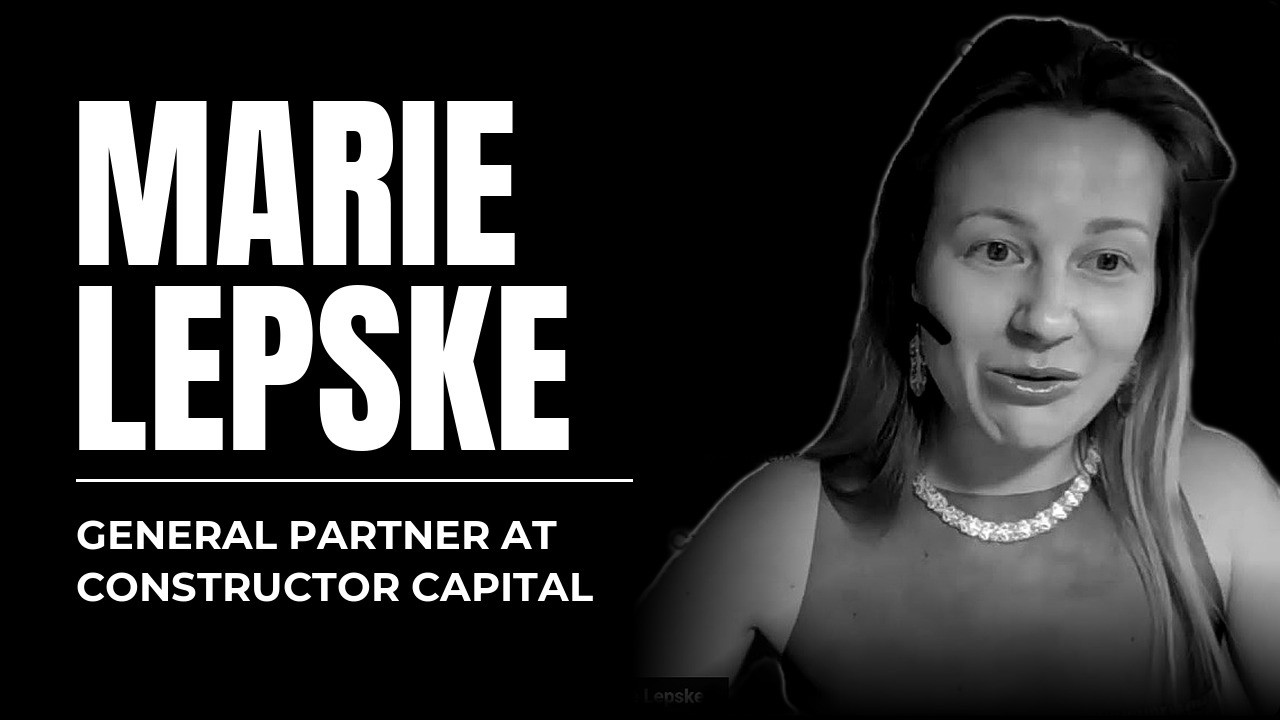
Marie Lepski is a General Partner at Constructor Capital, a $110M venture fund investing in quantum computing, photonics, and B2B infrastructure software. The fund has backed QuEra, a quantum computing unicorn, and has deployed 60% of its capital across 35 companies. Lepski came to VC from applied mathematics and founding a location-based advertising startup.
Chapters
Welcome to another VC Wisdom podcast. We have Mary Lepski with us today. She's a VC in quantum, deep tech, software, and edge tech, GP at Constructor Capital in Cyprus. Mary, welcome to the podcast. Tell us a bit more about yourself.
Yeah, hi, Charles. Hi, dear audience. Nice to meet you. As Charles mentioned, I'm GP at Constructor Capital, ex- Physicist, uh, so physics is my background as well as mathematician, focusing on investing in quantum technologies for the last already 8 years, uh, and worked at several venture funds, had my own startup, uh, and invested in already, uh, 2 quantum unicorns.
I think— and you started as a math professor?
Yes, I started actually as a mathematician, applied mathematician, uh, and was focusing on control systems. And after that, moved directly after I finished university, I moved to venture space, worked at several family offices, venture firms, had my own startup. So already like 14 years in venture, but in different— from different angles and in different entities.
What was your company? I guess that was the transition from startup to VC world. What was your company?
Yeah, so actually my company where I was one of our co-founders and as well as early investor and chief operational officer was called Kinyan. And we did below-the-line solutions. So when, for example, you're entering a theater, cinema, supermarket, their particular place could contact with you when you are near it or inside it, not when you're at home, and propose some, you know, personal advertisement, whatever. So we were just providing actually SDK and IT ecosystem to make it happen. So we were not providing advertising, but we provided IT system to make it happen. So this was a startup, uh, and actually I had it in, uh, you know, in the middle of my venture career. Uh, so I worked before in family offices, then I made this startup actually out of this family office, and after that I again returned in venture space, uh, in venture funds. So this is how my venture path Right.
And why did you choose the venture path? Why not keep on launching companies?
Uh, I mean, uh, I, uh, tried with this company, uh, for over 3 years, uh, and, uh, we, uh, did quite successful seed fundraising. Uh, at that time it was, uh, 2016, so 10 years ago already. So we raised approximately $1 million, and at that time it was good seed round, and it helped us for a year and a half or 2 years. Uh, in parallel, we were also accelerating our go-to-market strategy, and actually we realized that yes, we need to go to US market at that time. And also we need to fundraise in the US market. And we went to US market and we failed. So it was a failure story, but it was very helpful, you know, to understand how startup works, which processes are happening inside the startup, and how you're paying salaries to employees and not paying to yourself. So it was quite, you know, useful process when now you're investing startups actually understand how startups work.
Right. And Constructor Capital, how did you become a GP in that one? I think it was started by Sir Bill, right?
Yes, yes. So we have a Constructor Group ecosystem. This ecosystem includes Constructor Knowledge. This is our core part of Constructor Knowledge, is Constructor University in Bremen, the biggest private university in Germany with campus. Uh, we have more than 2,000 students there, 500, uh, you know, headcount, 100 professors, big scientific advisory board. And this is— this university is focusing, you know, in between science, technology, and business. And in parallel with this university, we also have Constructive Technology, which is educational tech platform which provides different products for universities, which we are using also for our university, for schools, for corporates, for example, learning management systems, proctoring, adaptive learning software, and so on and so forth. So this is software business. And third component is constructor capital, which is just classical venture fund. We have our first vehicle now, and in this vehicle we're investing in next-generation computing, in infrastructure software, and also in research, knowledge and scientific technologies. Uh, they're already 3 years old fund, uh, soon it will be 3 years old fund. Uh, and, uh, yeah, so I came, uh, working with Serge for already 8 years. Uh, we started together to structure capital. This was a story. Before that, I worked also with Valuna Capital team, uh, and also very closely, uh, at the time with Serge because he was, uh, somehow leading want to, uh, you know, focus inside Runa Capital, which he founded before Constructor Capital.
And your specific role in the firm, you just do what other GPs use, or you specialize in one thing? You just analyze deal flow? What does your day-to-day look like?
I would say that actually, uh, on the one hand, yes, this is more about deal sourcing, pipeline building, due diligence, term sheets, sheets and then closing deals and then executing companies, sitting on boards and helping these companies driving, uh, on the one hand. On the other hand, this is also peer relationships, uh, which I'm mostly also focusing on as well, uh, and, uh, also, uh, as I mentioned, like portfolio monitoring and helping to portfolio companies, which is very important, uh, as well, uh, And some operational work, you know, also cash flow and so on and so forth. So this is like joint position when you do many things in parallel. But I would say that for me, mostly this is first of all pipeline building and working with portfolio and of course working with our dearest limited partners.
And I'm looking at the portfolio, it's very diversified, right?
Yes.
AI, 3D optical computing, quantum, AI recruitment, right? So what's your thesis? If it's not like a specific niche, is it like the founders? How do you decide if an investment is ripe if you're like targeting all these different verticals?
Yeah, so actually we are investing mainly in 2 verticals. One of them is next generation computing, and inside this next generation computing, many quantum, you know, pipeline and portfolio, quantum technologies, uh, and, uh, it could be quantum computing, quantum sensing, quantum communication, quantum internet, whatever is appearing in this market, we are taking a look, uh, and we have now more than 5 quantum investments in our current portfolio. Then also inside next generation computing topics, this is also, you know, photonics, optics enabling technologies, uh, in this topic. So we have several optical and photonics companies already in our portfolio, like Lumaya Photonics, for example. Uh, and this is one part, big part of our portfolio. Another big part is, uh, infrastructure software, software technologies, uh, B2B software. Yeah, so this part is mostly related to the expertise of our founders, uh, Sergey Bell, Oleg Menikov, who built before many B2B platform software businesses like Acronis, Parallels, Virtuoso. So this part is related to this particular expertise because for us it's very difficult, you know, to make mistake when we're investing in B2B platform software businesses just because of huge expertise in the topic. So we have this 2 main focuses. But yes, each of these focuses are very, very diversified, I would say. So there are many subtopics inside. Uh, for me personally, I'm more focusing on next-generation computing due to my background, due to my, uh, you know, expertise for last 8 years in these topics.
And how much do you raise from LPs on a yearly basis?
So actually, we have fixed $110 million fund, which already fixed, and we are calling capital. So for now, for your reference, we invested approximately 60% of the fund.
Okay, so $110 million. And is that Fund 2, Fund 3, or—
This is, I mean, with this this particular vehicle, these 2 topics, main topics, as next-gen computing and infrastructure software. Uh, so this is first vehicle in, you know, this particular direction and with this particular GP, this particular LPs. But yes, as I mentioned before, our partners were also working, uh, also together in our previous funds where we are focusing, for example, in quantum, as well as Aruna Capital 3rd fund. But it's fully independent funds with different, you know, GPs, with different limited partners, uh, but where we also participated for a long time before we started Constructor Capital.
Got it. And the LPs, uh, what type of LPs do you raise your money from? Where are they located? Tell me a bit more about that process.
Yeah, so we have actually, uh, many of our LPs are software entrepreneurs, investors who also earned some money together with us. For example, in Acronis, Parallels, uh, other software companies which were founded by our founder Serge and his partners. So actually they know very well in what and why we invest, just because they also invested with us, built with us other companies. before, yes, in software market. So most of them located across Europe, UK, US, some of them Singapore as well, for example. So this is main locations of our limited partners, some family offices as well. And we are speaking now for the next fund, which we are planning to start to fundraise soon. We are speaking also with institutional investors as well.
Got it, got it. And the, the company's $110 mil, uh, in what time period would that be spent? In a year or 2?
Uh, for now, as I mentioned, we spent already 60%. So, uh, as fund— how fund is working, we should keep something for follow-ons, like 25-30% of the fund we should keep for follow-ons. Uh, and the rest of the amount, yes, during half a year from now or one year, we aspect. Yes, but for loans, it could be kept longer, and depending on when your portfolio companies will need this money for loans.
Who are some of the favorite companies and founders you've invested in and you have weekly or monthly coaching calls with?
Yeah, so, uh, our star of the portfolio, uh, QuEra Quantum Computing Company out of Harvard and MIT. And we invested in this company in very early stages when they were stealth mode even. And we invested in this company several times, so we did several follow-on investments. And after that, last year they became unicorn. Google invested together with SoftBank significant amount of money, several hundred million dollars. So this is our star of the portfolio called Datom Quantum Computing Company. Also, we help them, you know, with attracting management team, and we spent with them significant amount of time. Uh, this is maybe one of stars in our portfolio. Not maybe, but it's one of our stars. But also we have, for example, a great optical computing company called Lumai out of Oxford Lab. Uh, and we know the team for, you know, for many, many years before they started the company. Uh, and then actually the team came to us and asked Okay, we have the idea of the company with this type of product related to optical computing system. And they asked us, what do you think, is it worth to start a startup? Will we be able to fundraise to the startup? Will you help us, you know, to set up a company, find management team? And actually, we were interested and we started this process with them. So from early, the first stage of the company, uh, and now this is quite big growing story. Uh, they already have a working product. Uh, I mean, they're selling in the market. So this is quite, you know, nice path. This is long path, but quite interesting when you're doing this together with the company. Uh, so maybe this is like a second star in our portfolio and also my personal star because I somehow made this happen.
Do most of your investments— are they outside of the US? Is that where you're looking typically, like underfunded and under-attention founders that are not in the US?
Uh, so now in our portfolio we have 30, 35 investments already, 35. And from these 35 investments, one-third, uh, like 11 investments we have in US, uh, and all the rest we have across Europe, different countries, yes, and UK, and also South Asia, for example, like Singapore. Singapore, also Middle East, we have one investment. But I would say that, answering to your question, that we— I mean, when we see some very interesting company in US market because of, you know, huge valuations and such type of approaches that in US community valuations should be higher, yes, we are trying also to find out if there are some such type of products and teams in European or Asian market as well. So this is one of our approaches. I would not say that we fully not looking at US. No, this is not the case. We are looking and we have 11 investments there, but— But yes, we are trying, you know, to figure out not only the best companies but the best deals for us.
Right. Hardware is hard. I guess most of your investments are in hardware. How do you make sure that these investments are the right one and that they don't get stuck in supply chain logistics and all the hardware problems?
Yeah, first of all, you know, we are doing quite deep, significant, and relatively long due diligence. So they are not the funds who can invest during 2 weeks or 1 week. So we like to dive deeper in the product, in IP, in science, in technology of the company, especially when, especially when this is very early stage when you have only, you know, patent articles and optical table. So you need to find out if it's something worth to put money in or not. And in early stages, this could be much more difficult than in later stages. And yes, we as a fund who is doing quite deep due diligence, usually we're asking, you know, more than 10 experts in science, IP, also go-to-market industrial experts, if needed. And we have, as I mentioned already, quite extensive network and quite extensive constructor group ecosystem where, for example, in our university we have scientific advisory board which consists of not only, you know, professors from our university, actually it consists of professors from other universities all over the world. So they're coming to them asking for their help with due diligence, scientific due diligence, for their advices. And either they could provide by themselves or they could direct us to particular experts in the field. This is very important. And we can do this cross-check. We, after that, are coming to our companies, to pipeline companies, and asking some particular questions based on this due diligence. So I would say that quite huge, you know, deep due diligence is helping here, especially when you're investing in hardware. Also, you're coming to your portfolio companies and all to your ex-portfolio companies who already exited in these topics, because community is not super big. It's big, but in some particular topics, it's not super big. So experts know each other, experts know us. we know them. This is how this type of very specific network is working. Regarding software, for example, yes, we are coming to our experts in Acronis or Parallels or Constructor Technology. So this also helps a lot because actually why we invest in infrastructure software, because we know how to build it. And our, you know, management teams and experts in these other portfolio companies or companies which we built, they also know how to build infrastructure software. This, okay, yes, this particular focus, but anyway. So network, our construction group ecosystem, our larger ecosystem, which is including software companies which we built and our ex-portfolio, for example, in Quantum as well, from which we already exited, are helping a lot when we are conducting due diligence. Also, we have, you know, sorry, one more comment here, uh, from our 10 team members in the fund. We are not a huge fund, yes, in terms of the team as well. They have 6 physicists under background. So this also helps a lot when you're investigating, uh, hardware startups and especially the future of computer startups. Yes.
Yeah, yeah, love it. And I checked a couple of these, uh, they look pretty promising. So what, uh, are your goals for the remainder of this year? There's 3 months left. You want to pull a couple more investments? Are you guys still raising? What do you want to accomplish for the rest of this year?
Yeah, so actually we have already several more investments in our, you know, term sheets which we already signed. So we're executing now these deals, uh, and we are probably conducting now, uh, conformative due diligence, for example. Yes, so this work in progress, and I hope you will see soon, soon more deals in our website or in our LinkedIn, which will come during next several months. So some deals already in deep, deep progress, and we are finalizing them on the one hand. On the other hand, yes, some deals are in early due diligence stage, and let's see if we will decide to go in them, we'll close them, or for example some of them will go to the next year. So let's see, don't know for now, I will not promise anything. Uh, and yes, as I mentioned, we are starting our second fund, we're starting setup for the second fund, uh, and, uh, thinking, uh, you know, uh, about fundraising processes as well. So this is something which we plan to do next several months.
Thank you, Mary. Where can people find out more about you?
Yeah, I mean, uh, I'm happy to, to connect via LinkedIn. Uh, I'm quite responsive in the LinkedIn, uh, or in Facebook, for example. So happy, happy to chat, happy to have one-to-one calls and messages and answer questions and find some joint points of collaboration.
So that was Mary and Charles for another
More from Charles


Founder Wisdom: the audiobook, version 2 (5 hours of stories from founders and CEOs)

8 CEO Questions I Love Asking: the audiobook (64 founders answer, in their own words)





