💼 Marty Gilbert Founder/CEO at NorthShore Executive Network
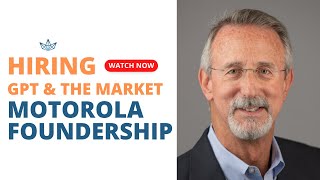
In this episode of the CEO Wisdom Podcast, host [SPEAKER A] interviews Marty Gilbert, founder and CEO of the North Shore Executive Networking Group and a veteran job‑search coach. Gilbert recounts his global marketing career—starting as a copywriter at Dentsu in Japan, a 15‑year stint at Motorola expanding into emerging markets, and leading a sports‑analytics firm that inspired the movie Moneyball. He explains how he leveraged that experience to launch a networking community 13 years ago, which now approaches 11,000 members and places at least one person in a new role every day. Gilbert emphasizes that job searching is 90 % marketing: positioning, packaging, messaging, and outbound campaigns, with LinkedIn and personal networking driving roughly 70 % of hires versus the 15 % from online ads. He discusses the impact of AI and GPT, warning that generic, robot‑like resumes lack the human personality needed to stand out. Gilbert also shares his view on entrepreneurship for older workers, noting high failure rates, age bias, and the necessity of becoming an expert salesperson for one’s own services. Throughout, he offers tactical advice—focus on research, create champions, adopt a “flywheel” approach, and eat your own dog‑food—while reflecting on cultural experiences in Japan and Hong Kong that shaped his adaptability and curiosity.
Chapters
And we are live another edition of CEO Wisdom Podcast with Marty Gilbert with us today. He is founder and CEO and job search coach at North Shore Executive Networking Group. He's got one of the largest group out there to help some specific folks find a job. He's got a nice background in marketing as a VP marketing at various companies. And I'm excited to talk to him because lately been replacing lots of my team members with GPTs and hopefully Marty can disprove this theory or tell me how to recruit superstar in my business. Marty, welcome to the pod. Glad to have you on. Can you tell us a bit more about yourself and what you're up to nowadays?
Sure, and thanks for having me on. You know, as you mentioned, my career has largely been around marketing. Started out early in my career in advertising. I was a copywriter. I was recruited by the largest advertising agency in the world. Happens to be a company by the name of Dentsu. It's a Japanese firm, they're headquartered in Tokyo. I found myself early in my career moving to Japan. Worked there for about two and a half years. At the time I worked there, Dentsu had 6,000 employees, but only five were not Japanese. And I was one of the five. We were helping some of the most famous products in the world advertise their products to the United States, Europe, other parts of Asia and Latin America. Products like the Sony Walkman, the vcr, the microwave oven, of course Toyota, Datsun, which is today, Nissan, Honda were all clients as were all the largest manufacturers of camera equipment and electronics. And everything I wrote appeared every week in Time, Newsweek, businessweek, Fortune magazines. There was no Internet back then, so that's where my career started. I then went on to work for. I came back to the United States, went to work for Motorola and stayed there for 15 years helping them expand their business internationally, particularly into places like Japan, China, Brazil, a lot of growing markets. And then got involved and had an opportunity to, to run a company, ran a sports information company for any of your viewers who may be familiar with the book or the, or the movie Moneyball which starred Brad Pitt and Jonah Hill. The company I was running actually was the, the genesis for the, for that story and it was about how do you find baseball players who were undervalued. It was all based on data and analy. That company eventually got sold off to Fox TV and since then I've really been working for a lot of mid sized companies. But I started up the North Shore Executive networking group about 13 years ago when I was in a job search. I'VE changed jobs a fair number of times in my career. Got very good of it, particularly because of my marketing background and what started out with a very small group I pulled together five other people who, like myself at the time, were in a job search has grown over the 13 years that I've been doing this and I since have left the corporate world about four years ago to do this full time. We now are on the verge of reaching the 11,000 member mark probably in the next couple months and we've got more than one person in the group landing a new job every single day and that's been going on for over six years. I'm not a recruiter, but I am a job search coach and provide a lot of the materials and guidance and my coaching consultation to help people be able to position, package message and engage the audiences that they're trying to reach. Because 90% of the job search is marketing, this is not an activity about trying to get close to HR departments or talent acquisition teams. Those people typically don't have any authority. They don't have the decision making power or the money to hire you unless you're looking for a job in HR. So you got to find ways, particularly using LinkedIn and other networking tools, to get to the right people and get your messaging out.
Right. Before we get to that one, I want to uncover some parts of your background that flash through my eyes right there. So I went to Hong Kong as an exchange student and that changed my life. It seems that you also went to Asia in Japan. More specifically, you also had a job in Hong Kong to be precise. How did that impact the rest of your career?
Well, as I mentioned early on, Japan, Japan is such a special culture and so different. It's probably one of the reasons why I enjoyed it so much. I think I just found a lot of similarities between my character and the Japanese. And while we, we looked and act very different from one another, I had just a tremendous appreciation for what they did. I learned a fair amount of Japanese while I was there. All my, most of my friends were Japanese and made me a and subsequently 10 years later I found myself working for Motorola in Hong Kong who had moved me over there. And the Chinese culture and Japanese culture are very different from each other. The languages are entirely different. They sound nothing alike. But the way the people conduct their business and interact with one another, actually very different from one another. No different than other Western cultures that are very, very different. But one thing that I always made a point of doing is you've got to have the sense of adventure you got to have, the curiosity and the, the willingness to experiment. And when you go to a foreign environment, it's around you all the time. And I love that, particularly in Japan. I mean, I looked so different from everybody else, particularly because I'm 6 foot 3, I'm extremely tall compared to a lot of my counterparts in Japan. I even played a lot of, you know, a lot of base. And the Japanese are crazy about baseball. And so I had an opportunity to be selected to the Japanese national all Star softball team that played other Asian teams throughout the territory. And it was just a phenomenal experience. I've since been back to Japan a few times, still have a lot of friends there. And of course, many of the people that I worked with in Dentsu. It's such a prestigious company that people want to work their entire life at this company. And it says a lot about the firm and the way the company treats its employees. And I can't say enough very positive things about what they did for me personally. Wow.
Yeah. The culture shock side of things, I would recommend young folks to just throw themselves into that. Even if you don't know word of Mandarin or Japanese, you know, it just changes you to the court. It teaches you that you can swim out of your comfort zone. You know, we all think we're going to sink, but we end up swimming and thriving. And that is enough to spark massive change in one's life. Motorola. How does one work for a company for 15 years? Granted that people cannot keep a job
for 15 months nowadays, well, it's a sign of how the economy, but more importantly, how companies have changed. Now. I worked for Motorola early in my career, and back then, I mean, Motorola was this incredibly phenomenal firm. When I worked there, they had a hundred employees. I, you know, during the 15 years I was there, I saw the company grow from 3 billion a year in annual revenue to 30 billion. Pretty phenomenal growth. And of course, we were the inventors of the cell phone, and the explosiveness associated with that was pretty phenomenal. But back then, companies were loyal to employees. It was not unusual at Motorola for people to stay with this company for 20, 30, or as many as 40 years because the company felt an obligation to its employees. And in return, the employees felt an obligation to the company. Those days are long gone. Even in a place like Motorola, there's people turning over constantly. There's so much pressure on companies to perform, but to perform right away. And unfortunately, it's oftentimes at the expense of people who have been contributors and sometimes are deemed, you know what, too old, too expensive. Let's replace this person with two younger people and we'll school them up on, on how to perform, you know, some of these job functions. It's really sad to see what's happened to that company because it was the best at everything it did and subsequently have sold off pieces of the firm and and now is, you know, a relatively small piece of what it once was. But in any large company you've got to be able to maneuver and navigate the, you know, the environment, particularly in large firms. And they can get very political. You have to understand who are the players and, and you know, for a lot of people, you know, it's hard to get visibility for the contributions they make. Right. That's oftentimes tough. And so you have to figure out, you know, how you can make a mark for yourself and get recognized for the contributions that you provide to the firm.
Right. Makes me think of BlackBerry Canadian company that yeah, was also behemoth and had to shut down. I'm eager to see the movie about that one and makes me think sometimes, you know, because governments, they tried to break businesses apart mentioning that there's monopolies. But me, I'm nowhere near scared any big businesses because I know that there's no such thing as energy that constantly recycles itself and forever systems that keep on giving. You constantly need to reinvent yourself. That is until we hit the age of AGI. That will yeah, bring certainly some competitive problems. But yeah, Motorola, it's so hard to maintain a unicorn, a rocket ship to keep on delivering. You know, there's no such thing as a monopoly and having a solid advantage that no one can this place. That being said, the stats company, the one that Moneyball was created upon, which is one of my favorite movie. What did you learn from that? It's just a fascinating take on sports. I interview lots of sports company CEOs today. You know, I interviewed one that was into sports analytics. So I guess that's a very similar field. They deploy SAS for that. What did you learn from your time there? Could you take some lessons as per how to hit the ball as hard and as much as possible and transition that to hitting a home run in business?
Well, I think, you know, there were a lot of lessons that were learned from this and for me this was a huge change because I had gone from this, this company of 140,000 employees to a company now that, you know, had a few hundred. And I was the chief operating officer of the firm and I think, you know, I got very, very hands on and I got, you know, I got an opportunity to really expand my skills. Because when you work in a large company a lot, a lot of times your focus is very narrow. Okay, I kind of sit in this lane and other people do other things to support me. And when you're working in a smaller firm, the support infrastructure around you is so much smaller, if it exists at all. So you've got to wear many hats and you've got to make yourself particularly, you know, if you are running the company, you've got to have the capability to pivot from finance to operations to sales to marketing and hr and really know and understand and develop an appreciation for how each one of those different organizations interact with each other and can complement each other. I think also, you know, the whole idea of growing an organization, how do you grow the people? How do you get the people excited and motivated behind what they're doing? And believe me, there were plenty of very motivated people in the company, Stats Incorporated, because it was just infested with people that were crazy about sports. So the enthusiasm was absolutely there. I think the big challenge was there were a fair number of products that weren't worth repeating year in and year out. Financially, kind of a waste of time. And so convincing people that some of the things that have been going on in the company for several years, long before I came, are things that their days had come and gone and it's time to rid ourselves of, of them and get in line with the online businesses in a bigger way. Fantasy sports, for example, was, was coming on and just in the early stages. And. And so, you know, from my standpoint, it was a better use of money and people to put them into things that I felt had a much greater growth opportunity than just continuing to, you know, publish books and things that, that never really, you know, garnered much in the way of earnings for the firm. So those kinds of changes sometimes can be difficult to get people to embrace. But if you can show the hard numbers and be able to put together projections that if we were to change this, this is what it impact could be financially on the firm, you can start to get people behind it.
Love it. Thirteen years at the helm of your own company, you've occupied both seats, the employee and the employer, the middleman. Also, do you think humans are made to work?
Without doubt. Without a doubt. Now, is everybody as motivated as you would like them to be? No, no, there's varying degrees of that. But, you know, I hear people talking about artificial intelligence a lot lately. Right. And, and there are a lot of people's jobs who individuals feel are highly at risk. Writers are one of them. Right. We see, we see this today. There's a huge strike going on in the United States in Hollywood. And, you know, you've got, the writers are on strike because they're, they're not being treated fairly. And of course, that bleeds into a lot, a lot of jobs here in the United States. And. But in the end, you know, there's only so much that a piece of intelligence or software can actually do. You kind of have that, that human aspect that's going to interject the personality of the person, the perspective. And, and only a human being can, you know, can add that value. And, and I know there's people out there that are in job searches that think that they can get ChatGPT to help them, you know, do their resume or to write their LinkedIn profile. And it's, it comes across very robotic and it does not convey them as an individual. And when you're in a job search, you need to think of yourself as a new product being launched into the marketplace because people don't know who you are and how do you stand out. And that's where you've got your capabilities to convey your true value. And a piece of software, artificial intelligence, simply can't do that to the degree that you yourself should be able to do and convey.
Yeah, this market is quite competitive and GPT is probably 6 or 7 on 10, and what you need is 9 on 10. And that involves creativity. It involves your own brain. It involves pushing your limits. It involves doing something different than what you see out there. So definitely do not use GPT. That is if you're not a master prompter, you know, because if some people are quite good at writing these huge prompts that deliver probably 8 on 10 results. The writers Guild in Hollywood. Well, my, my first, like, somewhat hateful comment here is if they would stop producing crappy Marvel movies. Whoever writes all scripts quite critical with Marvel nowadays, I think they're declining. DC Comics is doing quite a good job. So whoever writes these scripts, good job, keep on doing that. And then the second thought, which is less hateful, and the first one is, well, I mean, it's probably on the same segment. It's if these, well, humans are selfish by nature. Right. And this is okay. We always want the best for us first. And then we can probably give some of that accident to the next person and help other folks, especially if we drive, especially if we're at the self realization stage, these Hollywood writers and I'm not putting anyone in the same boat but again, they would need to think about the end customer. Right. And their value in this market. And also the fact that we live in an international economy and if it's not them, someone else is going to do it. And the 1% rider out there, they don't need to go on a strike because they've got contracts pretty much all the time. So it's pretty much supply and demand. I think that the future is everyone writing for themselves as freelancers. Globalized economy with the help of GPT. What do you think about that future? Do you think most people are going to be entrepreneur and they're really going to be focused on the client and not on themselves?
I don't think most people can be an entrepreneur. It's not easy. It's really hard and very risky. Right. And you've got your own business. I have my own business. And I can tell you at least nine out of every 10 startup businesses fail within the first six to 12 months. Right. They run out of money. They have, they don't have enough cash. Okay. And you know, the fact is, is that anybody starting up a business has got to take a really hard look at how long can they last without any income coming in. And unfortunately a lot of people in particular, the average person doesn't have enough money to last them 30 to 60 days if, if they're out of work. And so that's really hard. So I, I don't see, you know, are there more entrepreneurs today than than before? Absolutely, there' people and a lot of people have been forced into that situation particularly because they're now over the age of 50. Companies are replacing them with people that are 10 and 20 years younger than them and they are finding it very difficult to get re employed. Now this is a category I really specialize in and I work with a lot of older job seekers to get re employed because there's ways to get around age discrimination but it's rampant. But it's those people that unfortunately in many cases have to find a way to do some things on their own as consultants or people that are managing projects and starting up their own businesses. But it's, I would never, you know, you know, persuade somebody to, you know, to absolutely go all in and don't think about alternatives because it is difficult to do. And I just see a lot of people because they're subject matter experts at what they do. What they forget about is you also have to be an expert Salesperson, because it's not enough to have the knowledge and the skills you've got to be able to sell and because that's what's going to pay the bills and that's what's going to bring the top line, you know, growing. And so, and a lot of people just are not comfortable selling and particularly selling themselves. Okay. Themselves as a service. And so, you know, I, I, I'll tell people that, you know, you gotta, you gotta take a very serious look at this and see whether or not you think you're cut out for it before you make that huge, you know, leap of faith.
100. So much wisdom listening to you. You know, you've been there, done that. Thank you for your, your perspectives here. Talking about your own entrepreneurial venture and you heading your, your business. You've been at it for the last 13 years. I think I started my first venture 10 years ago.
Ish.
So I've been long enough in the game and I'm not employable, that's for sure. I don't ever want to be employable. I think that employees on the other side, they're being crafted or carved to stay in that market, to be good employees. And I don't want to discuss the ethical part of it or philosophical part of it. I want to go with a more tactical question, which is you've been long enough in business, you were quite successful. Apart from sales, what made you still earn very good money, similar money to when you were employed at the ELM of your own business? Like what, what models did you apply there? What made you successful?
Well, I think for me personally, probably two very important things. One is I have, I had been a job seeker on multiple occasions before I decided to start up a job search group. So I've been in the shoes of the audience that I'm trying to address, which meant I really knew and understand the needs of, of the, of anybody who's in a job search, whether they're fresh out of college or they've been in the workforce for 30 or more years. And so from that standpoint, I know what they're going through emotionally and the challenges they might be facing financially. And I knew and understood the tools that they've got to have in order to be successful so they can find their next great opportunity as quick as possible. But the second thing is that I had this very strong foundational marketing background because when it comes to job search, it's 90% about marketing. It's positioning, packaging, messaging, you know, engaging your audience, defining it, and then you Know, putting together an outbound marketing campaign to get the word out on you. We do this for all new products that we launch into the marketplace. The only difference now is that you as a job seeker are that new product. And we got to get people out there familiar with who you are. And it requires doing things online, through social media, through email marketing. LinkedIn is a great tool for it. But then of course, the human element, which oftentimes is in the, the form of networking, you got to do it. Networking leads to at least 70% of all the jobs that anybody acquires. And unfortunately, a lot of people spend an inordinate amount of their time answering online ads. And what's interesting is online ads represent about 15% of all the hires that take place in companies, at least here in the United States. So it's a very small portion of the hiring that takes place. And when I hear about job seekers that are spending anything more than 15% of their, their time chasing after online ads and responding to them, I go, it's not a good use of your time. Got to spend it on researching companies and connecting with people who can connect you into the people and creating champions inside.
Right? Outreach to these folks directly. Understand the role and the structures and the companies, their fundamental business model and so forth, and how you can be a value into that. How to be a value? Not think about yourself, but think about this company first. I really love also that I call it the flywheel model. Eating your own dog food. I talk to a lot of entrepreneurs nowadays that do not eat their own dog food. You know, like they're into email marketing deliverability, but they don't even have their own email marketing campaigns, you know, so it's quite important that what you preach, you actually do on yourself. You know, you are the, the, the lab rat. I always have problem with that word, lab rat. Thank you so much for the value you've shared today, Marty. Where can people find out more about you?
Well, they can certainly look at my website. It's nsengc.com they can connect with me on LinkedIn. They can email me at mgilbert S-N-Inc.com I do tweet things from time to time, but I am very active on LinkedIn. I post probably about three times a week and people should, you know, go to my LinkedIn profile and, and click on the bell and you'll be notified every time I put something out there on the platform. So we've got events going on every three weeks. The membership is free. You're going to be able to network with a lot of, of great, talented people. And you're with your membership, you're going to get two free webinar recordings from me on job search. So there's absolutely no downside and the opportunity to get some tools that can help you.
More from Charles


Founder Wisdom: the audiobook, version 2 (5 hours of stories from founders and CEOs)

8 CEO Questions I Love Asking: the audiobook (64 founders answer, in their own words)





