Marvin Pohl - Founder at Clarecast
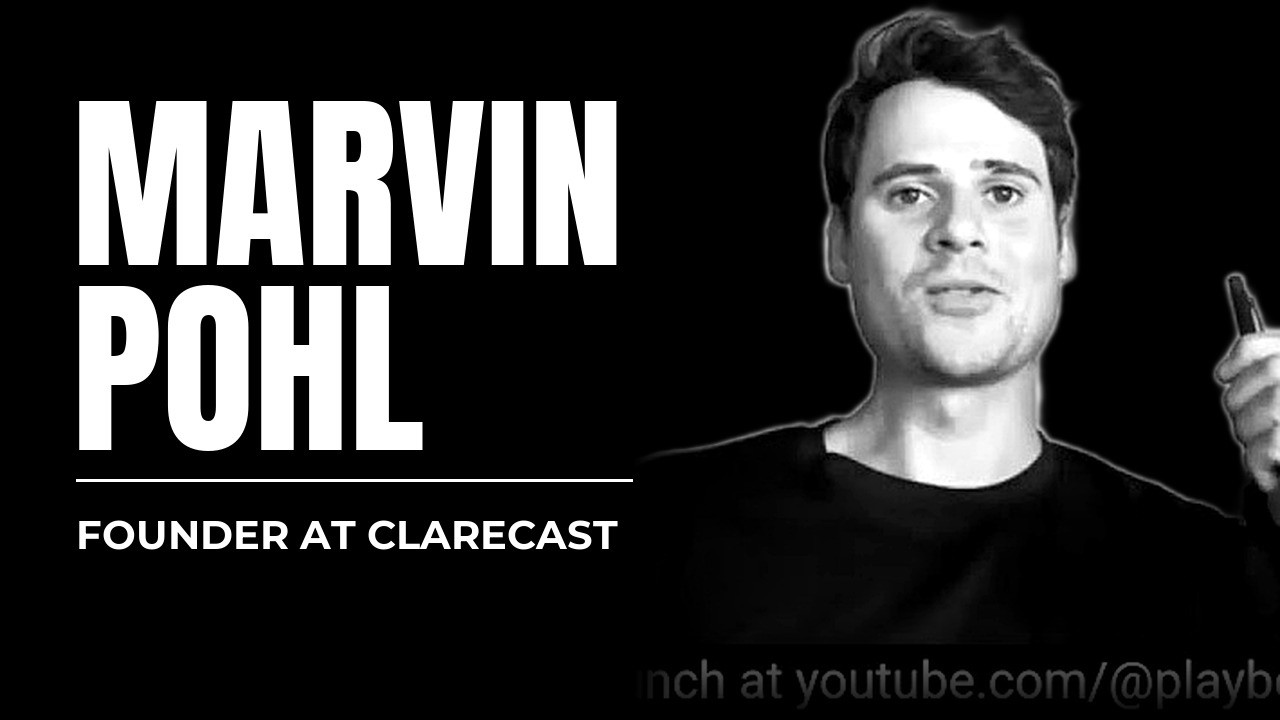
Marvin Pohl, a physicist-turned-data scientist, co-founded Clearcast to forecast headcount for six million U.S. companies. The product evolved into B2B lead generation after early customers pushed them that way. They built it on Databricks, charge four-digit contracts, and are bootstrapped with no plans to raise capital yet.
Chapters
Welcome to another Founder Wisdom pod. We have Marvin Paul with us today. He's, uh, data and AI at, uh, Clearcast. Uh, we're going to talk about what Clearcast does. Marvin's a PhD, I believe. Uh, yeah, you've launched this company, uh, after, yeah, somewhat, uh, long career as a PhD, right? Like 10 years in machine learning and being a research fellow. So Marvin, welcome to the pod. Tell us a bit more about yourself and what you're up to.
Charles, good morning. Thanks for having me here. Really pleasure talking to you. Um, it was the right summary. It was a short one. So, uh, the longer version of this is I did a PhD back in Germany. I studied at Freie Universität Berlin. So my background has always been in atomic and molecular physics. I worked a lot in labs and, you know, all these kinds of fun things. Really enjoyed that time, but thought, okay, what's even out there? So I did the leap and went to the United States in, let me think, it was 2019 when I went to a professor that I worked closely with in the past and he invited me into his lab. This was then my work at, it was kind of shared between UC Berkeley and Berkeley Lab. I did kind of the same things going forward there, enjoyed my time a lot. I was always thinking, okay, what am I going to do in the future? And I mean, it was 2019, 2020. It was kind of before the inflection point of ChatGPT. So these days, you know, everyone knows what AI is. Like if you ask your grandmother on the street, she knows what that is and she probably also has used it. It was a different time in 2019, 2020. We called it machine learning, was part of AI. It was kind of, you know, you sit there, train your models, whatever it is, but it kind of was already the shadow and was very prominent. In the whole Bay Area, everyone was talking about this, right? Not even in, you know, not even in STEM, like even the social sciences. If you go into the buildings, they try to figure something out with AI. So it was really prominent and there was a big hype already back then. And this is when I was thinking, okay, this is interesting. I want to actually get into it. So I kept on working at Berkeley, always tried to kind of figure out a way to put AI into my research work. Didn't work out that much. So I kind of thought, okay, what am I going to do here? So I really sit on the side now while doing my day work. I sit in the nights and was teaching myself, okay, what do I need to do? I need to go to be better at coding because there wasn't, I mean, there was some scripting that was involved in my research work, but I did never actually code, right? So I need to learn statistics. I need to know machine learning. I need to do all these things because I wanted to get good in these things because I already got the feeling there. All right, it's not the shining star right now, but I can already anticipate like AI will be the next big thing. And this is kind of the bet I put myself into, which kind of worked out. So eventually I went back to Germany and got a position as a data scientist at BASF, which is a global chemical manufacturer. Worked there for a couple of years, got then promoted back to the US, worked here as a senior data scientist for a while. When I finally got in contact with my co-founding team. So I co-founded late last year Clearcast, which I will come into in a moment. So, and I founded this with my two co-founders. The one co-founder is one person I already met in the Bay Area when I was working at UC Berkeley. He back in the time was, you know, working as a manager for Databricks. Which probably your audience will, uh, know. Um, the other co-founder is someone I met here in— when I came back from Germany. So now I'm in Michigan. He worked a lot in the insurance space and kind of went through the problems that we want to try to solve with Clarkas right now.
Interesting. Um, yeah, tell me a bit more about Clarkas. Seems like a data engine, right? Like, what prompted you to to start that because your PhD is in like molecular physics, right? Like, and this seems, this seems like an Apollo or some kind of platform like that. Tell me a bit more about it.
A moment out of the session. I'm not sure if you noticed.
Yeah, you're there.
Sure. Claire, so, so we came together originally when we were thinking this was kind of a problem that, you know, my, my, my co-founder had in the time he's coming from the insurance space. And they always faced the problem, okay, you know, they're selling to brokers, they're selling to companies that, you know, where their revenue actually is highly dependent on, you know, how many people are working at the given company, how many insurance policies can they sell to a certain person. So, and this whole industry, they're kind of flying blind. This was his experience, right? He was working as a chief strategist. And they were always in these board meetings and thinking, okay, We have a certain customer base. This is our portfolio. Do we even know what's happening to this portfolio? Are they expanding? Are they shrinking? Are they losing people? Are they hiring people in? Which is kind of directly the proxy of like, how well are we doing? Like, are we able to sell more policies next year, next quarter, or are we not? Are we shrinking with our portfolio? So in order for us to know more strategically, strategically in what direction we need to move, we also need to understand better our, you know, customer base. And this is where we came together as ClearCost. Okay, we need some technical people, and this is basically us as a founding team to figure these things out, to make these, you know, together this information that's out there, get data into the company, buy data, and make these headcount forecasts. And basically on a country base, we have now forecasts for, you know, over 6 million companies. Basically every big company in the United States, we can tell you how their headcount evolves within the next 18 months into the future. So this is what we are offering. So this is how we started. And by doing this, you know, we already worked with early pilot customers and, you know, we talked with them, you know, presented them our idea, thought how we, how we think they can use our data, how they want to, you know, act on it, how they want to put it into dashboards, or if we should, you know, build an app experience around them. And what we figured out is that like at least our early customers— and this is kind of a little pivot, a little use case pivot we are doing right now— the early customers They were interested, hey, you have all this information about all these companies, where they're at, what they're interested in, if they're growing or shrinking. Can you just give us these company names? Basically, can you generate leads for us? And this is kind of a use case we figured out, okay, this is something we should actually go into right now. Because what we learned along the way is there has been a decade of startups building B2B services. So every big enterprise has now a brawl of products like go-to-market. Like there's so much things that people do. Like there's, you know, black magic to it. It's my connections or I use ZoomInfo, I use Apollo, I do whatever. Then I do enrichment. The best companies these days, they use now Clay, you know, to enrich the data that they get from ZoomInfo. Everything is clear at the end of the pipeline because everything ends up in your CRM, everything ends up in your Salesforce and you go, you know, you do your reach out from there. But everything before CRM, it's kind of okay, What are we even doing here? And this is kind of what our pilot customers told us. I mean, we don't know what to do. Our job is what our company is, right? We are a recruiting firm, we are an insurance firm, we are a manufacturer, whatever. This is our expertise, but we also need to be experts in generating leads. Can you help us with doing this? And this is a big use case that, you know, we kind of found that we are trying to heavily invest right now.
So is your niche sales? Are you competing with Apollo here?
Sorry, can you repeat this? I think you're on mute.
So is your niche sales? Are you competing with Apollo here?
I'm not sure what's happening, if it's on my end.
Yeah, it's your speakers. The speakers.
Can you say something again?
Test 1, 2.
Okay, so this is working.
Are you competing with Apollo? Is like sales the main focus right now?
Sorry, can you say it again?
Yeah, are you competing with Apollo? Is sales the main focus right now?
We're not— I wouldn't say we are, you know, competing with Apollo right now. We are kind of competing within the whole space. We try to, you know, innovate in that whole space. Um, if you think about Apollo, you know, you have to go in— I mean, they also have a chat experience, I believe, right now where you can let yourself generate leads, but it's kind of like you have to, you have to think strategically. Okay, what is my product? So what, what, what companies could be interested in my product? What is my ideal customer profile? You have to, you know, you have to come there by your own, by research, or, you know. And our platform, we start one step earlier. We take your information. You tell us, hey, your company is operating in this space. This is the kind of products you are selling. This is kind of the regions you historically sold. Hey, give us your book. We can also look at your data, what worked and what didn't work in the end. And then our platform is basically helping you to iterate with you onto a good ideal customer profile. And we tell you, hey, we think from what we see in your data, what we see in our data, which basically covers the whole US market, and what also fits to your product, we would say you reach out to this cohort of customers. You reach out to This role— you're reaching out. I don't know, I'm cutting out all the time. So, right, so it's going to be an agentic-first platform. And we figure out all this information with our help, with the information you give us, and then we tell you, okay, this is kind of the profile we want you to reach out to. And then we are able to, you know, given our, you know, huge repository of companies and people working at these companies and the background information we also gather from these companies, we tell you, okay, you should reach out, you know, to these persons at these companies on this cadence and with this kind of, you know, content material. It's gonna be an email first. This email should be hyper-personalized. I mean, you probably also have noticed right now you get a lot of personalized emails. They're super bad personalized because people try to create AI slop at scale these days. They write, hey Charles, figured out you have a podcast. Have you ever thought about buying gummy bears? So it's something totally unrelated. It doesn't help at all. And it's immediately obvious for you that this is just AI slop, right? So we try to be much more intentional about that, you know, how we personalize the thing. We really want to have like agents doing some research on, you know, the context you actually reach out to. This is also a learning that we had, you know, early on we thought, okay, no, people don't want to read a lot of text, right? They just want to get some hook line that kind of fits to their experience and then there should immediately be the call to action. Everything else is, you know, considered as spam. In the last couple of weeks, we figured out, hey, actually, if you actually put in an agent that does the work, that actually researches your LinkedIn, that researches your background, that actually, you know, maybe even summarizes the market and puts your product that you want to sell within the perspective of that market, that works much better because people want to be, you know, they want to be educated first and then basically get presented the call to action. We saw that like the pray and spray is not working as good as like us telling, no, you should not reach out to, you know, 1,000 prospects a week and, you know, have maybe a tenth of a percentage conversion rate. No, we think we can find actually 10 prospects that are actually interested in our product, and we think our conversion rate is now in the double digits.
That's intriguing. I mean, I've been using these tools for, what, 7 years, right since their inception. I run a cold email agency, and I'm even building my own tools, right? So that's the lens I'm looking at these tools from. What's your price points? Like, if I want to use you, what should I pay you?
You know, that's the part I cannot talk about this unfortunately right now. You gotta reach out to us. It's not a SaaS? It's not a SaaS. It's right now you know, custom, custom pricing.
Okay, but give me an idea, is it like 4 figures, 5 figures? Also, do I get like consulting on top of that? Like, why, why is it not SaaS model?
So right now, because we're working with, uh, we don't have a self-service platform right now, we are not there yet. We intend to have this by the end of, you know, next month. At that point, we also will have a self-service pricing model figured out. Right now it's consulting-based. You're gonna reach out to us, you tell us what your goal is, and we will, you know, figure out the price point with you, which will be in the 4-digit range.
Okay, 4-digit range. And yeah, my objectives, like, usually I want, I don't know, like 30,000 contacts per month, right? Do you have like an email creator platform as well, or do you just tell me how to create these emails on whatever platform I'm already using?
So we will create, we will be able to create what we call these intelligence packages for you. So we have a content generation engine and this content can be anything you want. Let's say you have a prospect list, right? You created your, you know, you work with our platform, you iterated on your ideal customer profile. You say, okay, this is kind of the profile that I want to have. Now you pull your prospects from it, you pull your leads, and what are you going to do with these leads? Now, Of course you can enrich them, you can get the emails, but now you can create content for them. And this content can be anything that's important for you. It can be an email, it can be a follow-up email, it can be a voicemail script, it can be, I don't know, it can be research. Maybe you just want to research on these and get information about these, right? And this is going to be a consumption-based model, which we have built out right now, but it's not able, I mean, we are not able to, you know, GA this right now. So that's why we also don't want to publish a price point for this. At the moment, it's probably going to be consumption-based. That much I can tell you.
Why that?
Because you have— because this is— this works to our model. This works to the whole token economy, right? We on the backend, we also work with large language models, so they are also token-based. So we also kind of need to mirror this in order to cover our costs. And in general, I feel like that the whole software industry is going away from a seat-based model more to a consumption-based model.
Yeah, yeah, yeah, for sure. Um, how do you get your own clients? Uh, do you use your own platform? Do you dogfood? Or, uh, yeah, how do you work on that?
We dogfood for sure. We use our own platform. Uh, we have Hi again. Thank you again. Right, so we, we don't use any of those SaaS tools that I just described. We don't use any ZoomInfo, any Apollo. We do everything with the data we have. Um, which is just the, you know, obvious thing for us to do because we heavily invested in all these data providers, which are actually also the backbone of these other tools that we just talked about. So we have all this data. If we want to reach out to a company, um, it's usually a company right now that's within, you know, our beachhead, which is insurance, and which is within West Michigan right now. Because we want to be— right now we want to be more consultant-based, we want to be more white glove and work very close with our customers because we are right now building the product. So we want to have this like immediate feedback. But it's a young platform, right? There will be a lot of issues all the time. So we also want to have the personal connection to, you know, resolve issues as they come up. So yeah, we reach out to, you know, local businesses in our area using the own data we have in our platform. Yeah. So yes, that was the answer is yes, we are dogfooding our own platform and we— that's actually something we want to, you know, that, that's our That's our creed, basically. We should be the best users of our platform, and I think everyone should do that, um, because only then you're gonna know, you know, what, what is best for our customers if you only experience it yourself.
Are you raising capital?
Uh, we are not raising right now.
Why not?
Um, internal, internal issues. We want to bootstrap as far as we can. We have a very capable small team right now. Um, we wanna— before we want to make the decision that we need actually expand our operations and grow the team, we want to make sure that we are leveraging, you know, AI tools to the greatest extent, which we think we're doing a great job right now. But we also at the same time think We are not, you know, there's still room to grow into. So we always question ourselves, hey, do we need a, you know, let's just make something up. Do we need a security engineer here or can we repurpose, you know, the resources we already have in the company and make these people more effective, you know, get themselves to teach themselves, you know, security-related topics and work with, you know, name your coding assistant, be it Codex, be it Cloud Code, be it, whatever Google offers, and, uh, being able to, you know, close that gap with, you know, technology rather than with a new head. Um, for that reason, we are not in the immediate need for capital right now. Um, that's why I'm saying we're not raising right now. That doesn't mean we are not raising, you know, early next year, but that's, you know, TBD.
Interesting. How does your role differ from your, uh, differ from your co-founder? How do you guys complement one another.
So if you put us on a spectrum, then, you know, I'm the— as a chief data scientist, I'm the very technical part. I'm coming from a technical background. On the very far end of the spectrum is then Bradley, my, you know, my co-founder, who's coming from the insurance space. He worked as a strategy officer. He built a, you know, um, you know, a company in the insurance space which was eventually sold to private equity. So, um, he knows this industry in and out. He built a company, exited a company, so he's kind of the, you know, business, business, uh, head in our company. In between is my third co-founder. He worked as a manager at Databricks, so he has also, um, a business background. He actually studied business but then transitioned very fast into data, worked as a manager at Databricks. So he's kind of in between these two worlds. So he's kind of the translator between me and Bradley. So this is kind of how we are set up. And it's a pretty good team. The same way we also split up our, our, you know, our team inside the company, that we have really clear responsibility what team is led by what person.
And how did you guys meet?
So I met Jonathan back in the day when I was in Berkeley in the Bay Area where he was working for Databricks. We have a common connection because my wife Um, is, uh, sorry, his wife went to the same high school with me. So this is how we, how we have a common connection with each other. And, and the biggest coincidence then on top of that is that while I was in the Bay Area, he was also in the Bay Area with his wife. So we got back into contact with each other, met there, and kind of had loose contact over the years, um, till that time. So this was around 2019, 2020. Then I went back to Germany, Jonathan went back to Michigan where he originally comes from. And one day he just reached out to me, hey, I got to know this person, which is Bradley, our third co-founder. He wants to build this AI startup and we really need someone that has a data science background. Would you be interested? And I said, all right, sounds like an opportunity to me. And this is how we met and this is why we are here.
And Databricks, was it because of his experience? Why build on Databricks? Is it a sound decision? Databricks, why build on the Databricks platform?
Building on Databricks was the first big decision we made as a company, to heavily invest in Databricks, for a couple of reasons. First off, we are We are experienced in Databricks. So for my professional career, I always worked within Databricks, so I know a lot of the ins and outs. Of course, my co-founder, he's coming from Databricks, so he has a natural bias. But it was clear that we need a data platform to build on top of things, right? So I mean, the hyperscalers, they have some tools, but I am of the strong belief If you look at the products, the offerings, and also the product velocity of Databricks and how they develop as a company, they just have the most complete package when it comes to data warehousing, when it comes to compute, when it comes to running machine learning workloads at scale with their PySpark pipeline. They invented PySpark, which is something we heavily utilize. You got to think if you want to do forecast for millions and millions of companies, you got to process them highly parallelized. For this reason, you need this particular technology to do this, which is native in Databricks. This is our natural place to live in. Now also, if you look at what Databricks is doing right now, I'm trying to follow them and it's really hard actually to follow them because they are putting products out every single day. They're releasing Genie Code, which is kind of a, a great way. I mean, we are— our data engineering team is now done by only a handful of people because they heavily utilize Genie Code, which is a kind of a cloud code but within, within Databricks where you can just talk to it and it helps you build pipelines, write the code and stuff. So we're really happy with Databricks.
Interesting. Uh, where can people find out more about you, Marvin?
Please go to klakas.com and check us out.
That was Marvin and Charles for another Founder Wisdom.
More from Charles


Founder Wisdom: the audiobook, version 2 (5 hours of stories from founders and CEOs)

8 CEO Questions I Love Asking: the audiobook (64 founders answer, in their own words)





