Mastermind Dinners, AI HR and Millenials
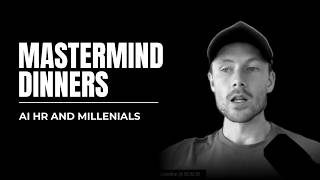
Brandon Amaroso, founder of Skellius, an AI recruiting platform, uses in-person mastermind dinners across the U.S. to build pipeline. He co-hosts with complementary partners like ChartHop and Attesto, keeping costs low while creating high-impact networking events for remote recruiters who value face-to-face connection.
Chapters
Welcome to another Founder Wisdom pod. We have Brandon Amaroso with us today, the founder at Skellius. Really intriguing guy. Um, first he was on my Spark thing, got my attention, his background. I think you're like into what, like millennial stuff, Brandon? Like, I speak a lot about millennial, two millennial founders. You're one yourself. You had an exit Uh, you're in Florida, probably Miami or someplace like that, and I love your brain. I'm very bullish on you. Uh, currently we're working together on the fundraising. Pretty sure you'll reach like all the objectives we'll, uh, we set together. And I just wanted to have you on the pod and learn more about your background and everything. So how's it going? What's, uh, what's up with you, Brandon?
Good, just got back from a, uh, busy week in San Francisco. We had 4 dinners out there, uh, one in Oakland, one in SF, one in Palo Alto, one in San Jose, and then took the red-eye back to Miami last night. So powering through today with coffee, but we hosted over 51, uh, CHRO all the way down to like senior technical recruiters across the Bay Area at those dinner events and even brought in a couple of co-hosts, uh, Jack and Jill, and then, uh, LifeLabs Learning. And, uh, the dinner series has been like one of our core tenets this year in terms of where we want to invest and spend time, just given how much we're able to learn and take away from them as well. I mean, every night there's a new tidbit or, you know, insight that I'm learning from, uh, the folks who are in the tools on a day-in and day-out basis, uh, whether they're customers of ours already or not. And I'm able to bring that back into the product and continue to innovate with all of those insights. So it's been a really great way for us to stay close to market and then also just build relationships and network in the space, which is pretty close-knit and a lot of tight circles and communities. So getting our foot in the door there has been important.
And that's one thing that caught my attention with you because I also work with Merve Isler. She's the founder of Marvelous, which is a software that helps you close while you do these events, right? Directly related to the convo we're having right now. Me personally, I'm not sure if I would show up physically to try to close prospects. I understand that it's higher ticket closing in person. It's more trust. It may fit better some markets than some others. I wouldn't recommend it to everyone, but I also know that you're incredibly successful doing that on your side. So And especially as a millennial, right? Like what led you to actual physical event and not being so obsessed like I do, uh, with networking behind a screen with the podcasting system and so forth. Tell us a bit more.
I mean, over the last 2 years, you've definitely seen a massive push and trend in the direction of more IRL experiences. And one of the things that, you know, we saw is even at companies where, you know, teams might be going hybrid or in-person, like a lot of times the recruiting function may still be remote. And so, you know, usually 80% plus of the individuals who are coming to our dinners, they're working in a fully remote environment. And so they lack that, you know, connectivity and interaction, especially when they're on smaller teams and they don't have other, you know, recruiters to bounce ideas off of. And so they find it extremely valuable to get to learn from others as well. And a good example was Wednesday night, you know, you had someone there who had just come back from maternity leave. And their company's at 100 people, roughly like 100, 110. They need to get to 250 by the end of the year. Obviously a massive hiring sprint. Another attendee there had sort of been there, done that already a couple of years ago. And so then the two of them were able to go down a, you know, a rabbit hole for 25 minutes about all the things to think about and, you know, the trials and tribulations that the attendee who had already gone through that process, like what she had learned from it and, You know, and I was just sitting there getting to listen and learn as well myself. And so that's just a great example of some of the value that comes from that. And, you know, we don't have Workday or like Deal style budget where you can go spend, you know, an infinite amount of money on conferences and online and out-of-home activations and things like that. So dinners have been a very cost-effective way for us to, you know, go from a, go to a quality, not quantity approach, you know, be laser focused on who are the individuals that we wanna be speaking with and having those conversations with and learning from. And that has been a way that we've been able to stand out despite having a limited budget, you know, as a startup who's just coming onto the scene. And I gotta eat dinner every night of the week anyways, so might as well make it kill two birds with one step.
So what is the cost per event? Let's dissect that.
So we've started to have larger, and I would say, uh, fancier is the easiest way to explain it, events. And then we will bring in a co-host, so that helps cut down the cost pretty significantly. So typically you're looking at anywhere between like $60 on the low end to $120, maybe a little bit more on the high end, on a cost per attendee.
Yeah. 15 attendees?
15 typically. Um, we've done as large as 35. When we did 35, we brought in 3 other co-hosts. And so actually my cost per attendee there personally was $41 because it was split across all 4, um, co-hosts. So that helps a lot. Um, and they're also able to bring in their networks and it's just sort of a compounding effect. Um, and like, you know, in June, over 70% of our dinners are co-hosted with another vendor. So when I go to New York and Boston, we're doing all 6 of our dinners with ChartHop. When I go to Chicago, we're doing all of our dinners with Attesto. And we also have like, you know, technology relationships as well. So it helps, you know, further entrench our relationship together as go-to-market partners.
But how do you pick these partners? How do you filter them?
So if they're like, you know, directly competitive with us, Obviously usually not like a great fit for, you know, doing a dinner together though. Honestly, I would do it. Um, I don't think, you know, the more old school, like legacy platforms would, would think of that as something that would make sense, but the TAM is like ginormous and these dinners are also not salesy in any way whatsoever. They're meant to be informational and networking and, you know, we're not a point solution. So most of the time the attendees that are coming is not even like You know, there's a hard sell here where we're trying to get them to buy the product. I mean, they could be stuck on a contract for the next year and a half. It's more just about networking and relationship building, which in turn has made the dinners more successful because, you know, they're used to having to come to a dinner and then like listen to a 30-minute pitch and like have it be super, you know, structured and like an agenda, like, and, um, I wanted to go completely against the grain in that regard and not do it in that fashion. Um, for identifying the partners, I mean, one is willingness to like go to market like this. You don't— I haven't found the more mature, like, you know, been around for a decade type of organizations are interested in going to market with a, you know, new up-and-comer like a Scalys. Whereas when we were in New York, we did all of our dinners with Warp. Which is an AI, like, payroll and compliance platform. I want to say they're Series A or Series B, but, you know, we're both on that same upwards trajectory and want to support one another in getting there. Whereas, like, you know, an ADP, you know, payroll platform, they're, they're not going to co-host the dinner with me, you know. So that's part of the equation. Second is, like, what are our customers currently using that are, like, ancillary, that don't sit in like the sourcing to offer letter signed bucket but are complementary in some regards. So like ChartHop is like headcount planning and HRIS, so that makes sense. LifeLab Learnings is like executive training and coaching and things of that nature. So, you know, having it be adjacent but not like directly overlapping is important as well.
Fascinating. And then you described a conversation that you had, I believe yesterday or earlier this week. How does that happen physically? Like, is it round table and then like 3 people listening to 1 person. My brain has a hard time computing the physics for that.
It depends on the size of the dinner. Like Monday night was, uh, 13 or 14 people, so it was just a long, you know, rectangular table. But we're in, you know, a private room, so it's not loud, so everybody can hear one another. And so the way that we always start every dinner after like a, you know, 15 or 20 minutes is, well, Go around the room, do an icebreaker, do our intros, and like that in and of itself typically sparks a lot of conversations. And then the attendees will start to like rabbit hole down different discussion topics. Some of the dinners end up being very tactical. Some of them end up being like more of a good time than anything else, which isn't necessarily a bad thing either. I sort of let the attendees dictate the way that the dinner flows. And we have some like, you know, questions in my back pocket that I'll pull out to, you know, spark some interesting conversations. But the attendees are usually coming there with specific questions or pain points and they want to learn and hear from others. And so we often don't really have to facilitate much. We just let the conversation sort of happen naturally. But then on like Tuesday night, since we had 18 people, it was 3 separate tables. And so each table, you know, was diving into their own like discussions. And then towards the end of the dinner, we'll start to like circulate and move around, you know, once we're getting towards the end of it to be able to get to connect with everybody as well. So that's the way that we do it. It's very informal. It's no even like assigned seating or anything like that. It's—
any thoughts on like, it's my turn, it's a table of like 6 or 7 people, I go with my problem and I listen to 6 versions of the solutions. Is that Is that a good model? And what about— that, that's one idea. And second is, uh, speed dating. So multiple tables that accommodate two people, and then everyone switch so that they can talk to each other once for like 5 minutes or 10. What do you think about these two concepts?
Yeah, we thought about, um, doing like seat rotation. Um, it's not something that we've actually rolled out yet because usually we see more value in like getting to go really deep with a smaller set of individuals versus having like more high-level or like cursory conversations with the entire audience. So up until this point, we haven't done it yet. It's something that we've thought about and having like more of a structured feedback in format. But one of the other things that we like to stress, stress is, you know, not everybody has an opinion on everything necessarily or has a shared pain point. And we're bringing together a variety of different industries as well, which there's a lot of benefit cuz there's parallels and overlaps and you can take learnings from one to another. But a good example would be, uh, we had like a large charter school organization, you know, at our dinner, uh, well in SF, but more specifically the one back in LA. And a big topic of conversation was fake, uh, candidates. They don't have that problem at all because, you know, teachers are in person, they have to show up in person, at least at this point. And so, you know, there's not a whole lot of insight that they could provide to the group as related to that. And so when you think about like, oh, let's all sit around and add in our like insight here, that's not necessarily the best case in every regard because there's different pain points in different industries. Um, and that also helps me learn about other challenges and problems. Like when I went to Knoxville, Tennessee, and did a dinner there, everyone there was in blue-collar recruiting for the most part. So the pain points and challenges they're facing are entirely different than, you know, the Bay Area AI company that's trying to hire that, you know, 0.1% engineer.
I want to get back to the problem you mentioned because not the first time I hear it and there's more to talk about that because I cannot see that problem. Like you said, right, I don't have that pain point and I can't even foresee how, but yeah, maybe it's me being naive. You are cracking a chicken-egg problem, like, literally every time you make one of these events, right? Because what if, like, there's no one that actually shows up, right? So you need a great GTM machine underneath. So how do you get all of these people to trust you and to be like, yeah, it's worth my time showing up there? Like, what's your full system?
So as we've gotten larger, both from a customer standpoint, we've just done more of these dinners. We're getting a lot of referrals coming from previous attendees, and then also our, our HubSpot, which is where everyone lives who's ever had a demo with us, who has ever come to a dinner, continues to expand. So we're always starting there first and foremost, and that usually can fill out even like the whole table in and of itself. Then we've got Apollo and Instantly set up, so that way we have— and right now we have like campaigns running for the next 6 weeks of dinners. So like we're going to LA June 15th to 18th, went into Apollo. We already have our ICP, uh, personas in Apollo. We'll put in the Los Angeles area. We'll go through, you know, select them, run it through Neverbounce, or, um, yeah, usually use Neverbounce to ensure it's not going to bounce. And then we drop them into those Instantly Outreach campaigns. Those have, you know, a bunch of different variations. They're using the spintax so that we can make sure that we're not getting blocked by any of like the email providers. And it's just a two-part email sequence, like one email, is this something you'd be interested in? A quick follow-up. That's it. Um, they're always going and looking though at like my LinkedIn or the company website, like, you know, who is this? If they haven't heard of us before, though, what's been cool to see is a lot of people have heard about us now because we've been doing so many of them. And one of the benefits to doing the dinners is we'll post about it the next day and people will reshare it with their networks. And so like we're becoming more of a known commodity and like less of a threat. And then they also see that it's not like, you know, just some sort of a sales tactic to try and get them into a room and give them some hard sell on the, on the Scalus platform. Um, and at least one or two attendees who always come to the dinner, they're like, yeah, like we've, you know, we stalked your LinkedIn profile and saw that you've done 45 of these already this year. And like everyone's feedback has been really positive about the events. And so that's the reason why they're they're choosing to respond to begin with to our outreach. So our cold outreach continues to become more effective just as we build more social proof in other areas across the web.
So bottom line, it's a gold mine. It costs you $1K per event. You do like 5 of these in a row in a week. So it's time efficient, right? Time is super valuable for minds like yours and eyes, even if that means a red eye. It's $5K USD. Investment, you probably get at least $50K MRR from these, uh, over the long term if you calculate that over a 12-month period, because you won't close them instantly like you said. Um, that's working very well for you. Your background, uh, maybe we should have started with that, but yeah, who are you? Like, why were you built that way? I'm pretty sure you know that you are quite different from your childhood friends. Like, how did you end up that way?
Uh, so I had a, uh, very close family friend who's, uh, entrepreneurial, and, uh, I got to sort of sit back and watch and see what that journey looks like until I became— I think it was like I was 14 or 15, um, and then I started working for him while I was in high school. I ended up taking a gap year between high school and college and worked full-time there as well. So I got a behind-the-scenes sort of look at how things operate at a level that like I probably should not or would not have had the purview into seeing, you know, how do even like board meetings function? What is fundraising like? What is it like to take a team from 20 to 120 people or even beyond that? Or what is it like to take a team from 100 to 50 when, you know, things might not be going in the direction that you think are in, in the most positive direction. So, uh, that was like a, you know, a master class in entrepreneurship in and of itself. And then when I was going to USC, left there and started freelancing for a bunch of small businesses like in and around the LA area to help and support them with their Shopify storefronts. Think like 1 or 2 person mom and pop shops doing anywhere between like $50,000 a year to half a million in revenue on the Shopify platform. And I was like a generalist for them. Took about 9 months to build up enough like case studies and reviews to the point where I started to do outreach to your like Shopify darlings of the world, like the Soylents, the Fashionovas, the Bombas, the TRX. Um, I abused my usc.edu email like aggressively because it gets through the filters at the corporate companies pretty well. And also people are very like willing to help college students. I wish I still had that USC email. I would still be using it. And so that's how we got our foot in the door with a couple of those companies. And then just got it to a point where before graduation I was able to bring on 2 full-time team members and then moved into a crappy little office in a coworking place with no windows in Chinatown, Los Angeles. COVID hit, moved down to San Diego, and then, um, you know, just continued to grow and expand the team from there. So got up to about 65 full-time team members at the end of it. And we used LinkedIn predominantly as our sourcing platform and then our applicant tracking system. And we were spending an inordinate amount of money on, you know, either external agencies for placements or job board advertising. And I was never seeing any improvement in the quality of candidates that were coming through our pipelines. You know, from day 1 to day 1,500, maybe 5% of the applicants we'd receive were even remotely qualified for the roles we were looking for. And then about 4 months before selling that business, my younger brother came to me and showed me the job seeker side of the experience, specifically the recommendations that he was receiving from these traditional job boards and the new sourcing platforms that have spun up. And they ranged from he should go be the CTO of a Fortune 500 company to an air traffic controller at the Dallas airport, neither of which he should be doing. And so we took his experience, overlaid it on mine, and decided we wanted to go solve the root of the problem, which is the actual recommendations themselves. Like, why are all these platforms so bad at matching the right candidates to the right open roles and vice versa? And then it turned out to be a blessing in disguise to have a 2-year earnout because, you know, AI came blazing onto the scene in late 2022. So we got to see all of that transpired there from a development and technology standpoint. But B, we got to see the negative impact it has had on hiring and recruiting, which was unique because any other business function, you know, sales, development, finance, legal, they've all experienced the massive increases in efficiency. But if you look at the data from 2025 to 2022, applicant volume has exploded by almost 600%. Time to hire is up by 2 weeks, and the average cost per hire is up by about $2,000. So it was that data coupled with our shared experiences that really excited us to dig in here, and ultimately how Skalos was born. So technically, the idea for Skalos was incepted like 2021, but we didn't actually start, you know, truly building until the beginning of 2024. And then ultimately launched in late summer, early fall of last year.
And when was the exit of the Shopify agency?
April of 2022.
Was that game-changing for you? Was that validation? Was that, how did that feel?
It enabled, I mean, I looked at it as a stepping stone. It enabled us to be able to do what we're doing now at Scalus. I mean, not only the fact that we had that pain point and lived it. But, you know, from a capital standpoint, being able to bootstrap and get a platform up and running off the ground without having to bring in like VC capital was really beneficial for us and allowed us to have more of like a long-term view and approach to how we built the platform. We were very stubborn and did not want to go to market with a point solution that would have been significantly cheaper to build, and it also would have generated revenue faster because we wanted to make actual change within this category. And we still see it as a completely wide open space, uh, for us to be able to, to own. So all in one plus the dual-sided nature, I mean, there was just a lot that had to be built for us to come to market. But because we did that and because we brought in all the actual end users themselves from the Greenhouses of the world and Ashby's and whatnot, that has enabled us to come out of the gates already supporting these full rip and replaces into the system despite, you know, not being a business that's been around for, you know, 5, 10 years. So.
And what have been the struggles with the Shopify agency and then for Skellius? Tell us about the challenges you faced.
I mean, the Shopify agency was very people-oriented. It was an agency. So at the end of the day, It's a people-first business. And so that was a, a quick masterclass in like how to manage, you know, a team and build organizational structure and processes because it was very process dependent and oriented, especially once we got past like 40 team members. You know, I couldn't be the one managing every account. Also had to deal with like the transition of, you know, the early clients who were used to Brandon like doing whatever and whenever at any point at any time for them. And like transitioning that more into like an actual functioning, you know, agency with processes and procedures. So coming into Skalys, you know, a lot of learnings in terms of how to build and empower a team and provide them autonomy and ownership while also keeping checks and balances in place and having process and procedure so that stuff doesn't start to break as you scale and that you're enabling, you know, the 80th team member the same way you're enabling the 5th team member who got to have more of a white glove onboarding experience from me, making sure that that doesn't fall apart as you continue to grow. Um, and a ton of like, you know, client relationship management strategies and like making sure that the first week of that customer onboarding is, uh, phenomenal because that sets up the relationship for long-term success, whereas if it goes the other way, it's almost impossible to pull back from that. So Having that same philosophy and mindset coming on the other side of it as a vendor, and also taking a lot of the tidbits that we like didn't like with how we were treated or the way that things worked on being on the other side as a user of some of these technologies has been really impactful for us. And then just the overall mindset of continual improvement. I think a lot of organizations, especially as they get larger, like everything is so rigid and set in stone and it takes like, you know, 19 different meetings and months to make any like real change within a process or within the platform. Um, and so I make it very clear to everybody that like just because this is the way that we're doing it today does not mean this is the way that we should actually be doing it. And we're not here to hire robots, we're here hiring people with, you know, because we value their opinions and ideas and making sure there's a lane for them to be able to bring that to the team and actually have that come through and to fruition while providing them the ownership to actually get to like own it and take it through the business. So like the most impactful thing I did at the last company was have everyone submit 3 things we should be doing that we weren't doing on a quarterly basis. Uh, and I did not make it anonymous cuz I think there's, you know, definitely time and place for anonymous like feedback, but this was one where You know, when those ideas were submitted, I wanted to be able to actually work with the individual who had brought that forward in terms of how are we actually going to deploy this into the company. And so by the end of it there, you had like 180 ideas every quarter, and we would have an hour and a half long team meeting where we would go through each one. They'd be bracketed into, you know, their particular segments, and we'd talk about how we are going to address them, how we're already addressing them in different ways. How, I mean, some of them were ridiculous, like, you know, pay off all of my college debt. So obviously not able to do that. Um, and not a ton of value there, but the vast majority of them were like very impactful. And then because they weren't anonymous, it gave the team so much more like ownership over the company as a whole because they got to actually then take that idea and see it through to fruition. And I would just ensure that they were enabled and not blocked and given the proper resources to have that actually materialize.
And True Electric, I'm looking at your LinkedIn here. You actually began investing in some of your clients, or they gave you shares against your services. How did that work and how did that pan out?
Yeah, so, uh, combination. Um, in the early days, I would do, uh, like, let's say we're going to charge you $10,000 a month. Okay, we're only going to charge you $5,000 a month, and the other $5,000 will be in equity, uh, in the company. Um, as we grew and as I got more experience in e-commerce and a little bit more, um, I guess Cashay would help a lot of the vendors that were entering into the market, uh, with, you know, as an advisor. So in that case, it was just advisory shares for supporting primarily tech, like new tech entrants into the Shopify ecosystem. Because we were at that point in such deep relationships with some of the larger players in the space like Klaviyo and Recharge and, and Rebuy and whatnot. And they wanted to understand, you know, why, how did they get to that point, how do they interact and engage with us as an agency, and what they should be thinking about as they try and like, you know, grow and scale within the Shopify ecosystem. And then a little bit before the exit, but primarily after, then investing in a lot of the the deals that would come across my desk from a pre-seed to like Series A range. And then a couple of funds, but typically not in e-commerce, like usually the funds I would use for exposure to other things. So like 81 Collection in Chicago is entirely focused on like not the non-sexy businesses, I think is the best way to put it. They're not SaaS, they're not AI, they're the plumbing of the infrastructure of the United States type of deal. Um, and I— that's not my area of expertise, so typically I'd go like the fund model for something like that.
And you've worked with so many founders. Um, what traits have you observed, uh, in the ones that were quite successful and the ones that panned out, the ones that didn't?
I think, uh, approachability, um, within the organization. Like not having a walled garden around like the founder and C-suite from the rest of the team, especially as you, you grow, you know, team, team member number 70 still having the same access to you as, you know, your first couple of hires and creating that collaborative environment, which also leads into like not having this founder ego, having humility, and, you know, obviously having the comp— you need to have confidence. I think that was Actually one of the biggest lessons for me with our team members as we grew and I was putting them into places of authority, having that confidence, because confidence shows up across even a Zoom with the customer. I mean, you could have the greatest idea in the world, but if you present it as like a question, as opposed to like a declaratory statement, they feel like you might not know what you're talking about. Whereas obviously we wouldn't do this, but like you could literally say something that is blatantly not true, but if you've said it in a confident manner, like They're paying you for your— yes, exactly. They're paying you for— like, you're the expert. You need to be coming in and providing, you know, that level of confidence. But I've seen, you know, some founders get a little bit too much in their own head, especially as they start to see some early success, that like, you know, it— you forget about there's luck involved, there's timing involved, there's so many other variables at play that factor into this. And then the last thing is just obviously an undying motivation and passion for whatever it is that you're building, where not that you necessarily need to be working, you know, like 16 hours a day around the clock, but that when you do it, it's not— it doesn't feel like it's a job, you know, you're doing it because you're passionate about it. And this is a problem that you're very invested in solving. And then that just funnels throughout the rest of the org too.
At first I wanted to compare also like the Mastermind dinner funnel with like the podcast funnel, which I think you've also tried the podcast funnel, right?
Like, uh, yes, funnel at the, at the last business.
And okay, why not use it for Scaleless as well?
We will. Um, we already had it set up when we were very early. We have a Scaleless career hack, which is for job seekers, and then Scaleless talent hack, which is for, uh, actual like in-house recruiters and agencies. Um, but it is even more limited in scale than the dinners cuz it's one-to-one typically. And I only have so much time in the day. And so as I offload some of these like early stage responsibilities that all are just like falling onto my plate, I'm gonna pick those back up. Um, because they are certainly valuable and they also have downstream, like, content distribution effects where, you know, one podcast can turn into multiple social clips and, you know, we can distribute via email. Then you also need to have that, like, infrastructure set up because if you're just, like, creating a podcast and, like, that's all you do, like, what's the point? You know, you need to have all the other aforementioned steps to make sure that you're giving it the visibility and getting the ROI out of it that you should be getting from it.
So What's your mental model with sales themselves? Because I won't hard pitch someone, but I will throw questions their way so that they can lead themselves towards the sale without obviously being pushy or anything, right? And but I'm not gonna also pretend I'm not trying to get something out of these mastermind dinners or these podcasts, for example. So what's your, your mental model with that?
Yeah, I mean, everyone knows what the score is at the end of the day. Um, I mean, we don't have the dinners be salesy. They're not a hard pitch at all, but it's pretty clear that like, you know, the goal with these is to get in front of them and at least get their feedback around what it is that we're doing and to dive a little bit deeper, whether it's a 15-minute call or a 30-minute call at some point after the dinner. And not even necessarily a hard pitch because again, they could be stuck on another contract for like 2 years or something. So it's much more just like informational gathering. However, a lot of them, like through the pain points that are discussed at dinner, through the pain points that are talked about on a call and with a renewal cycle coming, it just sort of falls into, okay, well, this makes sense to actually explore deeper here. And so then we're in the active sales cycle and we're able to close those businesses like relatively shortly thereafter. We're actually hosting the dinner events, but you know, we closed somebody last week who came to a dinner of ours in September of last year. So there's— that all happens all the time as well. But that first touch point was the dinner that we had.
Your ultimate, um, goal, entrepreneurial goal and life goal, because you built an agency, now you're building a SaaS, uh, obviously there's money behind each. Like, what do you want? Where do you want to be, say, 5, 10 years from now?
Uh, so in 5 years, I want us to be sort of the preeminent place where you know, you find a job and where you hire a candidate, you know, at least in the United States, um, and get to a quality, not quantity environment. And we continually are going down this path of just quantity and not quality. And there's so much noise in the market and there's no, there's no solution out there that is looking to condense both the employer and the job seeker into one system to create this shared data intelligence layer that actually will be able to reduce the noise on both sides and improve the outcomes for each of those sides of the equation. Um, and a lot of that has to do with misaligned incentives. You know, if you're a job board, you make money off of clicks and traffic. You don't make money off of outcomes. So I paid LinkedIn way more money because we were getting a ton of unqualified applicants, cuz it wasn't enough for me to just get 50 candidates. I needed 5,000 if only 3% of them were gonna be even remotely qualified for what I was looking for. And then the job seekers, you know, now they have AI at their disposal. And so you can sit there and submit 5,000 applications in a day through these job seeker tools, and it's adding even more noise to the employer side. And so it's like, it's this vicious cycle. They're submitting, they don't hear back, the employers are overwhelmed, and so it continues to spiral out of control. So my goal more so than anything is to improve the quality of outcomes for both the recruiters and the job seekers alike. And we're very bullish on the fact that the only way to do so is to have both inside of the same ecosystem to create that shared data intelligence layer. So ultimately, that's my, my goal.
And personally, where would you be? Is there a net worth goal? Is there a life goal? You've traveled to Costa Rica not so long ago. What kind of life do you want to build for yourself?
I love exploring and always being on the move and experiencing new things and you know, sharing that time with, uh, friends, family, loved ones. And, you know, part of what is nice about, you know, having a, your own business is the experiences that come, you know, from that. I think I've been in like 32 different cities already this year. Um, and so like my personal life of wanting to travel overlaps with the work side of things. I mean, we'll be out somewhere and it's like, oh, well, let's just stay the weekend and then I'll go on Monday to the next set of dinners that we're doing. And so having that work-life integration, although it's, you know, very fast-paced and hectic, is something that I've tried to like curate my life around so that I can have both without like totally going off the rails on one side or the other. But ultimately, I'm going to end up in like, you know, Hawaii, just hanging out on a ranch somewhere with some horses. And, you know, that'll be like 15, 20 years down the road. And I think my ideal state would be helping and supporting other entrepreneurs, which I will be able to do far more effectively if I have more capital resources from successful business ventures and supporting others on their goals and journeys and continuing to help innovation.
Where can people find out more about you, Brandon?
LinkedIn, definitely the best place. It's Brandon Amoroso, or I do have my website, brandonamoroso.com. Always open to chatting with other founders, other people in the HR tech space as well. And my email is just brandon@scalys.ai.
So that was Brandon and Charles Cormier for another
More from Charles


Founder Wisdom: the audiobook, version 2 (5 hours of stories from founders and CEOs)

8 CEO Questions I Love Asking: the audiobook (64 founders answer, in their own words)





