Michael Tanguma - Founder & CEO at Onramp
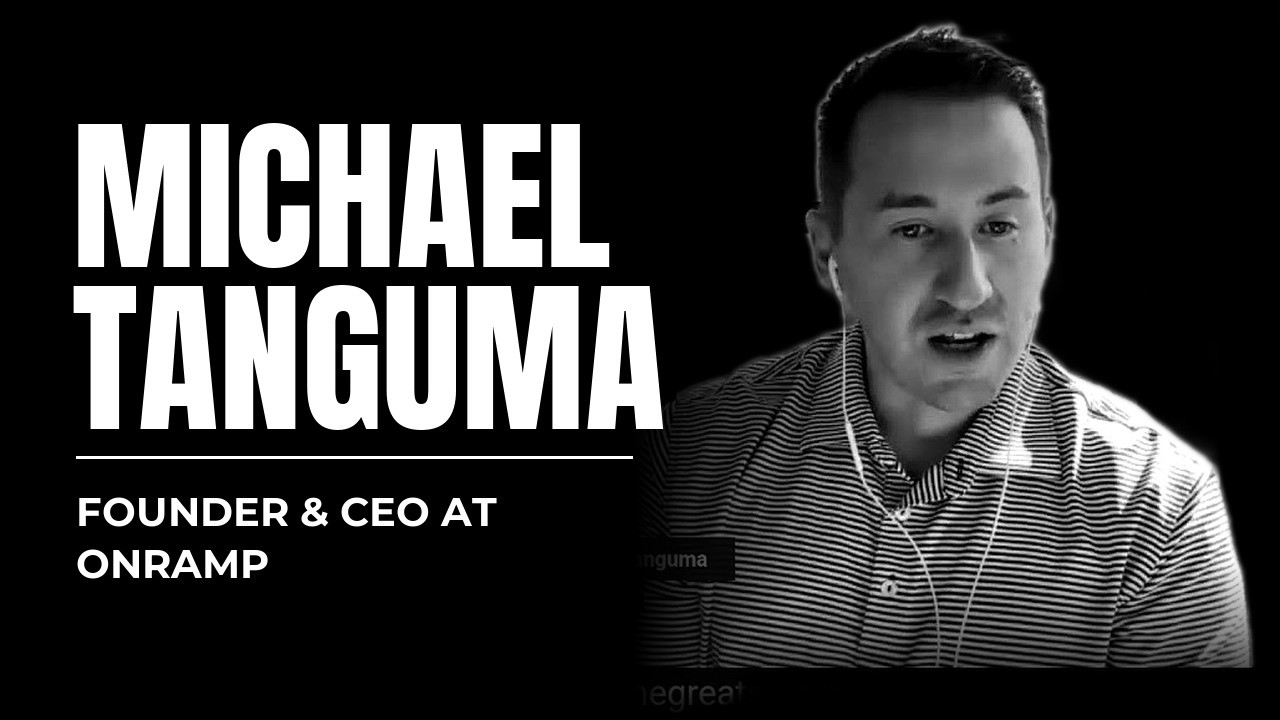
Michael Tanguma, CEO of OnRamp, built a custody platform for Bitcoin and other scarce assets to fix what he calls the broken dollar. The company closed a Series A at $135 million valuation and offers everything from free retail accounts to Bitcoin-backed loans and enterprise custody, with expansion plans across Latin America and the Middle East.
Chapters
Welcome to another Founder Wisdom pod. We have Michael Tanguma with us today. Michael is a founder and CEO at OnRamp. He's a GP at Early Riders. Um, he's in the multi-institution custody, uh, for Bitcoin, securing general, uh, generational capital across jurisdiction custodians and legal frameworks. Live in Austin, Michael, welcome to the podcast. Tell us a bit more about yourself and what you're building.
Yeah, thanks for having me on. And always fun to do a pod early Monday morning, get the week started off right. So yeah, we're building a— I like to think of— we can't necessarily call ourselves, but a bank of the future. Had a background in traditional tech, got, you know, went deep down the rabbit hole. We talked about it last week with Adam Neumann and WeWork in '17, and the joke was lighting money on fire while I was learning about money and could never look the other way. Got into the Bitcoin ecosystem, moved back to Austin, Texas, and started building venture companies and realizing that there was a real unit economics problem. I've seen this. I'm actually funny enough with Travis Kalanick's new Adams business, started going down the rabbit hole with Uber, reading Super Pump, the original book, and really realizing like capital. Bill Gurley was right at the time that all that capital, you know, really killed the business. And I saw this at WeWork. I saw this with other firms I was employees at. And so when we built this business, we bootstrapped it and we're very intentional. I think that there's a place for venture capital. We obviously have our firm, but the reality is because the dollar is so cooked from storing value, it kind of distorts all signals, whether it's from an LP investing, a GP investing. Or the ultimate allocator, which is the entrepreneur, because that's what nobody talks about. At the end of the day, you have to make more dollars and spend. But when you're told to just kind of spend on everything to grow at all costs, which is historically how the technology world has operated, you really start to lose— how do you deliver value in the world? And we're starting to see this, you know, in 2026, where most of the market is recognizing it.
Yeah, I love that. Just this weekend, I interviewed the guy Duncan Logan, and we were talking about WeWork and Uber, he had some kind of WeWork hybrid themselves with Y Combinator and Soho House, and he used to host all of these guys, Travis and Jason, Jason Calacanis, that invested in Uber, $40K that turned into $100 million. And yet, like, it's— I mean, back in these days, especially WeWork, right? Like, SoftBank was way too much. And Mazda dropped like a billion dollars in them. So that's That's more risk than returns, in my opinion, when you do that for a startup. Um, tell me about your background and WeWork. How wild was that ride for you?
It was incredibly wild. It's something I would never take back. I think, um, the thing that gets lost is like WeWork and specifically Uber— specifically Uber— are like world-changing ideas and technologies. I think what is generally lost is how much bigger they could have been. Travis Kalanick was recently on a podcast with Mark Andreessen, I believe, from a16z, and they were referencing what would have been. And there was this notion that at the time— I don't know what the current number is of market penetration from DoorDash, but I would imagine it's anywhere between 40 to 80%. At the time it was 5%, and they were supposed to just take over everything that related to any kind of delivery. And the point being is they really lost their way because they had, between SoftBank and other investment firms, thrown billions of dollars, lost the governance, and they ultimately burned a crazy amount of capital in China specifically, but all over the world with global expansion. And I think that that's ultimately like an order of operations thing, that if you're bootstrapping or you're more thinking about unit economics, you're going to take a more intentional effort because the market's punish you. And you could have still got to China or across the world, but you would have done it in a more deliberate way. And then you would still be CEO and they would still, you know, they'd have a 10x the market cap or whatever. And so I think a similar thing happened at WeWork, although I don't think the scale and opportunity was necessarily as big because at the end of the day, you have physical real estate and it's just a harder thing to You back? Yeah, I might have lost you for a sec. I'm not sure if I was online or—
you're back now.
Um, but point being is that WeWork, it was a very similar phenomenon where there was too much capital invested and the growth spread out across the world. Um, and then when you really think about the headcount coupled with with market forces of going to every city and then you lose the unit economics and how do you deploy into that. At the same time, the thing that I would never take back, and I think the thing that gets lost on most of that, call it 2008 to 2014, '16 era, was this was like Silicon Valley at its heyday when you had the investment bankers, the people at the top of the class from engineering moving into this field. And so when you think about like network effects, growth hacking, all the things that like effectively are playbooks for today that you see the Frontier Labs working on and other firms were pioneered there. And so the time at WeWork, the thing I'll always take from it was the operational excellence from the individuals and the entrepreneurial endeavor. Like that's the thing that I think gets lost on people, you know, TBD on Adam Neumann on like where you can go, but from a operator and entrepreneur perspective, outside of Jeff Bezos, Travis Kalanick is probably the number one, you know, might be the go. And the story is not over yet. And the reason why is because people forget that Uber didn't actually pioneer the peer-to-peer ridesharing. They pioneered— and it wasn't Travis, it was Jared Kemp or David Kemp.
But yes, Jared Kemp, legend.
Yeah. From Canada, as you know. But the point being is that they had the black car.. And then it was really whatever— I forgot the name before.
Um, uh, cab, Uber cab, something.
Oh yeah, but it was really Lyft because there was a name before, but Lyft pioneered the peer-to-peer, uh, which was like put more people, uh, on the road. Everyone has a car, everyone has a phone, and then they just went and took that and then they ran much further. So the point is, is like the idea doesn't necessarily matter and, um, it's really the execution. And so he was able to do that through that time period. And there was— so point is that they hired the best people there. And so we were working with those people and working at the highest level, even though the firm didn't necessarily execute on the intended plans, has always stuck with me. Similar with being at Google, that the operational excellence, you want to put yourself in the same room with the right people if you're going to grow a generational business.
Yeah, I think it was Uber being on a— Uber Travis being on a podcast not so long ago. I think it was TBPN, and he mentioned one important thing and I think it is that, yeah, PR back in their days was like unfair, right? Like we're always looking for a scapegoat, even us founders, right? We're so competitive that we're sort of happy when like a competitor goes down and both Travis and Adam like got like a shitload of bad press, even like books written on them that are not super flattering. Super Pump is like on the limit, right? But Billion Dollar Loser user is definitely like not so nice about, uh, Adam. And I think that's changing, right? Like since Trump took power, one thing that's not directly related to him, but it's just that there's more freedom in what you can say as an entrepreneur. And, um, we've seen that with Elon as well. There's less backlash, right? So I think it's a better environment, uh, for them to come back and build. If I were them, I would still like, um, strap up on PR, right? Because PR can really destroy your company really fast, even if you have the best product, even if you have took a lot of time to rebuild your brand. I think like the hordes and people can get against you like very quickly. And I think that's something that is easier nowadays. Would you agree?
Yeah, it's an actual great point. I hadn't really thought of, but it sat as an undertone through that period in cancel culture. You saw this very heavily and you know that it influenced influenced a lot of the venture capitalists that were pushing back and ousted him in that time. There was other things. You can always make the case that first time, this was his real first time big deal capital. It starts to get with your head. But on the other side of that, you have to— I think that people will get— it gets lost that specifically men, and this will get crushed from some, but as you said, Trump's in power, or in office, we can say these things. They're still true no matter what. It's like, you can give a man either destruction or to build. Like, that's their, their general nature. You see this with like a child, uh, when you give them some blocks, they're going to build them up or they're going to, they're going to tear them down. And I think that we underappreciate— if you're going to build a company the size of WeWork or specifically Uber, it takes, you know, certain screws loose or incredibly right. You can go either way in your brain, and that naturally is going to have you very aggressive. And so that management of aggression is two sides of a coin where you saw it was embedded. The only way you can win at that scale globally is that you have to empower that kind of competition and that kind of autonomy, like an entrepreneurial thread that ties all the way down to the driver, to the city manager from Travis. And so that goes both ways and you're naturally going to overstep those bounds. And now we have phones, now we have PR, we have writers that are there. But you can imagine the same things probably happened 10 times worse, uh, 100 years ago, let alone 1,000 years ago when somebody was trying to take over a city or whatever it might be.
So you keep talking about these greats, right? Like, how, um, what are you building with Onramp, right? And how can it become a billion/trillion dollar play for you?
Yeah, so I think that at its core, um, there's maybe unknown. You, you— the whole notion is you want to be like non-consensus and right. And I think that the big non-consensus, uh, view all the way to Silicon Valley, which I pinch myself because it feels so consensus or so obvious, is that the dollar is broken, um, and that it will need— in, in the— in any economic flourishing, you need some kind of unit to operate, uh, to coordinate economic, um, uh, or you need to coordinate for economic value to move. You need to be able to build things. How do you actually, uh, measure it? You need that unit. And we haven't had that. And that's really the underpinnings when you see across the civilization, including the United States, whether it's socialism in New York or you see bankruptcies or just all the different things permeate from— you have this unit that is constantly moving and being devalued. So with all that, you see this in Silicon Valley with the smartest people that they say AGI is coming in the future, 10 years, artificial intelligence, and you won't need any money. I think a lot of them are just saying it because it's talking their book versus— I think a lot of them have a first principle understanding that you cannot grow and flourish if you don't— you can't coordinate economic value or economic productivity. And so the idea is that if you need to do that, you're going to naturally go back to something with scarcity. And that's really where gold and Bitcoin come in, and specifically Bitcoin. Bitcoin naturally in 2026 and definitely 2030 you're going to not only need to store your value personally, but when you think about coordinating value online, whether it's via, you know, Agenta Commerce, just a new way. If you look back at how the internet was created, you know, there was no necessarily payments built into that. So you have all of these different kind of like broken walled gardens in the first version of the internet. So that's what we're effectively building is a bank of the future. We incorporate what we think of as, you know, monies, which is dollars to earn rewards, gold if you wanted to hold it. But then specifically where we started from was Bitcoin.
And OnRamp, I mean, is not the only company doing this right now. What, what is making you guys, uh, different?
Um, so where we really, uh, you know, cut our teeth and what is different, we pioneered something called multi-institution custody. And so it's ultimately this deep understanding that What I'll say is Bitcoin's more of a common sense test than an IQ test in the sense of, well, there's only 21 million. If people subscribe value to it, you don't have to go really deep to think, okay, well, there's some value here. Now how do I like underwrite it and think about, you know, how much money I would like to put in it? The problem is that usually when you tell somebody about Bitcoin, they think it's a Ponzi or speculative because you're ultimately giving them a problem because all they've ever heard is it gets lost.. And so that's generally what keeps people out of ever allocating any material wealth to store their value protected. And so that's because you either have to leave it on an exchange and then generally it gets lost, or you have to put it on a hardware device. And most people don't want to put that on a piece of plastic that, you know, they all— they hear is it gets lost in the UK. And so multi-institution basically takes that away. I like to joke and say it's like throwing— we ship MacBooks when you think about in the '70s era, that's where we're at in Bitcoin. Historically, you had a bunch of people meet, go to a meetup, and they all fought over what does a motherboard look like, what does a hard drive look like, what does the desktop look like. And then you had entrepreneurs that were effectively like, what if we just ship people the computer? I open it, I get all the value, then I close it. And so that's what we do, is we make it as simple as your grandmother, an individual that are ready to go and buy significant amounts of Bitcoin. And click a button and get the best security on the planet Earth without any of the friction. And then we layer all the financial services around it because most people only allocate small percentages of their wealth to start with Bitcoin, and they need to manage, uh, their financial life across that, whether it's, you know, direct deposits, sending stablecoins globally, uh, or allocating to gold. And then obviously downstream of that, wealthy people need a plan for dynasty trust inheritance, everything that you would need around that asset. Bitcoin is still, uh, less than 1% penetration. We talked about it last week, that chart. Bitcoin and AI are very eerily similar in like the diffusion into the market. Most people aren't using Bitcoin as it's supposed to be, meaning storing their wealth, in the same way most people aren't using AI in the way that it can be used today. They're maybe using it as a Google 2.0, um, and so we're very early in the journey.
Tell me about some of your products that caught my eye here, especially Bitcoin-backed loans. That's pretty interesting. Sounds risky on your side, but tell me a bit more about that one.
Yeah, so my— I have a pretty deep background in the Bitcoin lending space. My previous firm was the only, uh, retail lender, meaning lending to individuals, that never suffered a dollar loan loss while everyone blew up in '22. And it wasn't really rocket science, it just takes real prudence and pragmatism, pragmatism, meaning very conservative, uh, so low loan-to-value ratios, uh, meaning that you want— for generally speaking, for every dollar you take out in a loan, you want to be posting at least 2 to 3x that in BTC because of its volatility profile. Um, and the reason why that matters, and it's a part of just like the market structure as Bitcoin is going to grow, is because it's such a volatile to the upside asset that as it appreciates, you don't necessarily want to sell it because once you understand it, you believe it's going to hundreds of thousands and millions of dollars. And if you sell it, you do two things. You lose out on the upside, but you also incur a capital gains event. And so people want to put down payments on houses, they want to propose to their partners. And so it's a way to get liquidity while still maintaining the upside and then reducing the tax obligation. So used appropriately, It's a great tool, but to your point, it is risky if you don't necessarily— if you use it to lever up, that's when a lot of misery generally happens.
Super interesting. I'm looking at your plans here. So it starts free, right? Uh, $100 if you want an IRA. Uh, do you take a percentage of some of these trades as well in that free plan?
Yeah, so OnRamp Finance costs no— uh, it's nothing to sign up. And the core idea there is it's like somebody's either entry level, uh, for OnRamp, or their friends or family link, because generally, as you know, people will get into Bitcoin, they have to like play hot potato, and they have to go to all these different providers for different, uh, solutions. Or they have to, as they level up their exposure, they have to jump somewhere else to a security profile. So Finance has the ability to store, uh, dollars and get up to 5% on them. They can, uh, execute trades at the lowest cost in the industry, meaning they can go buy Bitcoin for the first time or DCA at no cost. They They can set up an IRA, to your point, for $100. They can take a loan out. So all of that's really at no cost. And then once you start to level up and want to use our custody solutions and some of the other products, that's when naturally there'll be either a flat fee on the assets or some kind of percentage depending on your tier.
Interesting. You've got higher plans as well. So Core starting at $250 a month, 0.04% for private and then business. Can you tell me about the ICPs for each plan? Finance is more like a retail, right? Um, what about the 3 others? Is it more high net worth individuals, even some enterprises? Tell me a bit more.
Yeah, that's exactly right. Like, our solution, um, you know, it's a little like complex because we're so early, but for the uninitiated, like, it's so robust. We worked with the first UK pensions that got their exposure to Bitcoin, work with family offices. Our clients span from having, you know, free accounts and maybe half a Bitcoin all the way to thousands of Bitcoin. And that's really where those tiers go, that somebody that has significant amount of wealth with us want private wealth type services. They want somebody they can text in the middle of the night. They want somebody that can onboard their daughter and their, their significant other so they can set up their accounts, they can set up their inheritance. They may need to take a loan out. They may want to invest in venture capital. Those are the different things that we can support with. And then to your last point, businesses are a huge opportunity in this space because just like we talked about, if we're in the '70s today, there's not really many places that you can get Bitcoin exposure and then get the governance and controls that you would traditionally expect with a bank account, right? When anybody that runs a traditional treasury management with dollars, they have controls in place for their finance department, whether it's who can send the wire, how do you initiate it, how do you manage it. Anybody using Mercury is a great example. For businesses holding Bitcoin on their balance sheet, that doesn't really exist. The custody solution doesn't exist within the layer above that. How do you say that if I have 5 executives that need to participate in a transaction, how do I create a 3-of-5 before it can ever get teed up that maybe the CEO or somebody else sets up the transaction, but then you need certain controls to set up. So those are the kind of like areas we work on today. We're expanding globally. We have a firm in Latin America that we're partnering with, and then in the Middle East they're working to get licensed with the central bank. And so the idea is that this custody solution end of this year, early next year, we'll be able to API in and then be infrastructure as a service. So other fintechs, banks can leverage Multi-Asset. Institution to expand their business.
I want to talk before you go about your Series A that you raised at the $135 million valuation, uh, while the Bitcoin, I think, wasn't doing so well. How the hell did you pull that out?
Yeah, so I mean, the conversation started before the, the full kind of like bear market I would say we're in, um, but the reality is that it's actually I was hoping to get to use this maybe on the pod we're going to record after this, but this is a good time to use it. So right after the dot-com busted, there was a vacancy in Silicon Valley, like in 1998, 1999, it was, I believe, 0.05%. When the dot-com bubble busted, it was 20%. So 1 in 5 offices were empty. And what I'm sharing I'm sharing that with you is because it was known as crazy to go out to Silicon Valley to go start a business. And that's effectively when Travis— this is like '05, '06, '07. It's when Travis Kalanick and Uber started, among other firms. And so there's asymmetry in if you know the long term and then you're building. And so we've seen that when the price kind of collapses is when real foundational businesses come out. And so there's the angle of when Bitcoin appreciates. There's no robust solutions for custody. But more than that, we're not just a Bitcoin business, we're a money business. And so by, uh, the time right now to infuse gold into our platform, and then with the GeniusX stablecoins in bank accounts— we're bringing in FDIC-insured bank accounts as well— that we are well equipped to effectively span outside of any kind of bear market in digital assets. Because if you think about in the future, people just go to honor it because they want to preserve their wealth and they want to move money in a better way. They don't want to deal with banking fees. They want to earn more on their dollars. They want to wire funds. They want to maybe have an agentic wallet, whether it's Bitcoin or AI, so they can participate online. So there's a much bigger, like, opportunity set here than just becoming, like, a Bitcoin custodian or Bitcoin financial service firm, which I still think is a very big opportunity. But our core ambition is just to be, um, you know, what we talked about, the, the second wave of what a financial institution looks like in the digital age.
I love it. You and I need a round 2. Till then, Mike, where can we find out more about you?
Yeah, you can go to honorandbitcoin.com, book a consultation, reach out, Michael at Honor and Bitcoin, or on Twitter, @mtanguma. You can shoot me a DM or follow. We talk a lot about, you know, Bitcoin, AI, and kind of the state of the markets.
Love it. So that was Michael and Charles Cormier for another CEO Wisdom Podcast.
More from Charles


Founder Wisdom: the audiobook, version 2 (5 hours of stories from founders and CEOs)

8 CEO Questions I Love Asking: the audiobook (64 founders answer, in their own words)





