Mike Labbe - ceo @ homeopportunities.ca
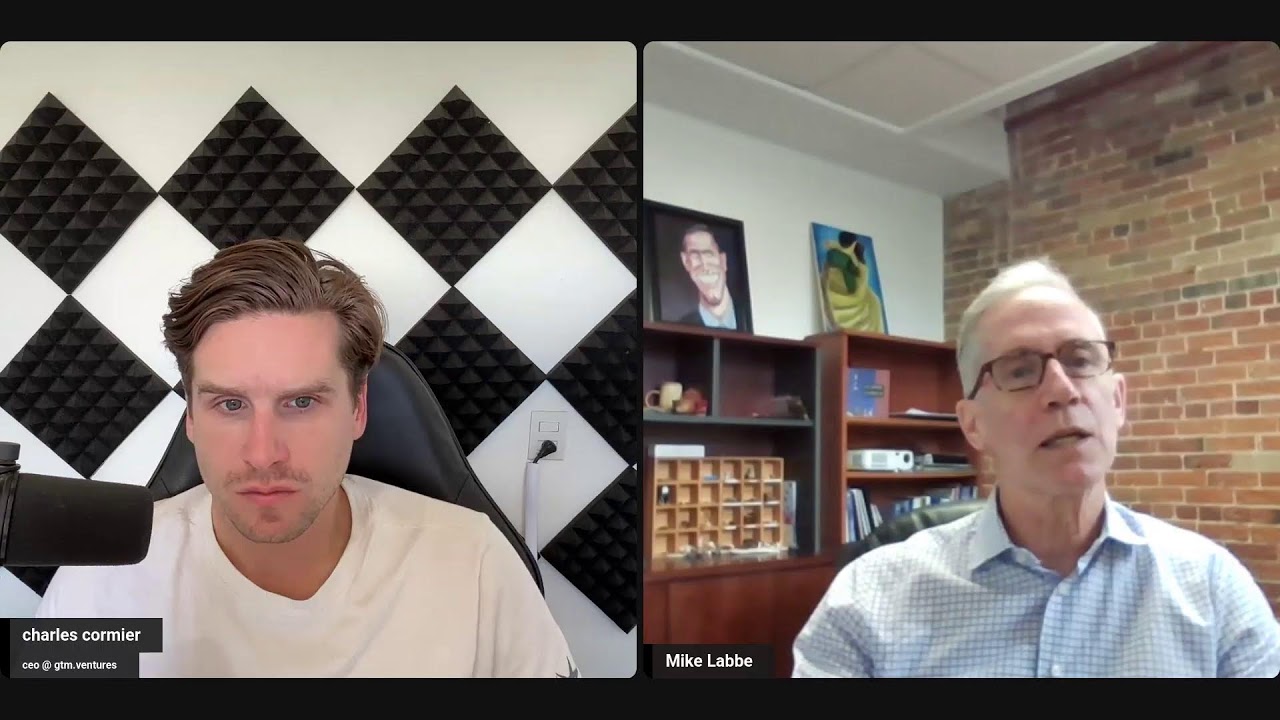
Mike Labbe runs Home Opportunities, a Toronto nonprofit that helps low-income Canadians buy homes using an equity-share second mortgage. Buyers put down just 5 percent and get a mortgage for half the purchase price. Labbe says ownership is cheaper to build than rental housing and comes with real benefits: better mental health, higher income mobility, less crime.
Chapters
Welcome to another CEO Wisdom podcast. We have Michel Labbé with us today, aka Michael Labbé. With us today is the president and CEO of Home Opportunities in Toronto, Canada, is giving the opportunity to any individuals and family with income as low as $35,000 a year to own a home, which I guess is a hot topic nowadays. So Mike, welcome to the podcast. Tell us a bit more about yourself and what you're up to.
Yep, pleasure to be here. Thanks for inviting me. Um, yes, I've been working at affordable housing for 45 years now. Um, main takeaway from my perspective is that the solution to affordable housing works through the homeownership side of things, not the rental side of things. That was a discovery I made in 1993-95 when the government here in Canada cut off funding to rental, and if you wanted to do affordable housing, your only choice was ownership. But it turned out that ownership was less expensive to build and operate than rental, so it became a focus of mine through a company I created called Options for Homes. And we now have a— an iteration of that called Home Opportunities, which focuses on the ability to find financing that can be paid back when people sell. allowing people to carry a much lower mortgage, which is what creates the affordability, without needing grants and subsidies.
Interesting. So your company helps them find that mortgage? Like, how do you negotiate that when they sell the house? Give me a bit more information about what you actually do for your clients.
Yes, so we organize the financing associated with the financing that is paid back when people sell. So that is roughly on average about 50% of their purchase price. They themselves go out and get the rest of the mortgage in the normal way that you would get a mortgage. So they might be buying something at $800,000, but they're going to carry a mortgage of $400,000. They still have to clear for that mortgage based on proper income, proper credit rating, proper debt servicing. So it's all the same rules except it's a much lower Smaller income, therefore it— a mortgage, therefore it serves a smaller income.
And is that a nonprofit, or do you actually make money from this?
So we are a nonprofit. We're paid as a development and marketing consultant on behalf of the future owners of a condominium. So we perform the role of a developer, but we do it for a fee. It's also our role to work with the private sector to get them to act as contractors, sales agents, etc. But because we're acting on behalf of the purchasers, we're able to negotiate a reasonable rate of return. So there's a control on the rate of return. We are a nonprofit ourselves but are not a charity. And by being a nonprofit, we have to act for social purpose, but we're not targeted exclusively at the needy, which is often what happens through a charity, and it restricts their ability to act, whereas our ability And why did you start that organization?
Like, when did it strike you that there was a problem there?
Well, unfortunately, affordable housing has been a problem for decades and decades. And so the organization that I first was with, called Lantana Nonprofit Homes, did subsidized rental projects until the government funding ended. So the creation of Options for Homes was a result of there being no funding in the system and us still wanting to produce something that was reasonably affordable. Through that system, we used the surpluses left over once you paid for the project to provide help with people's down payments, which started us down the line of where can we find money to help people with their down payments so it becomes more affordable. And that help that we provided was protected by a second mortgage because the idea was when you were done with it and you didn't need it, you gave it back to us and we'd help someone else. So we had the mechanism then to move on to Home Opportunities where we found other funding sources that didn't need to get paid back until you sold. So it was dealing with the circumstances at hand. The first buildings that we did, people could own them at a carrying cost at the average rent level in Toronto. Which told us a lot because if you can do that with ownership, then you know you can do it without subsidies. What we've recently done is just increase the loans that we could get and therefore reach lower incomes for a portion of the project. So all projects have blended incomes top to bottom, starting at minimum wage all the way up to whatever income somebody has that wishes to live in the building. And by having a mixed income development, you can go to scale. So 1,000 units where there's a mix of incomes is a perfect neighborhood. And so that's what we've been working on as we grow and become more knowledgeable.
And what's the down payment? Are we talking about, I don't know, $40K on a $300K total value, 1-bedroom apartment? Is that accurate?
No, the down payment that somebody has to come up with is 5%.
Right.
With 10% beyond $500,000. So for the first $500,000, it's $25,000, and then it's 10% after that. Any additional down payment is provided as a loan to get their mortgage down to where it works for their particular incomes. So, you know, if you're dealing with minimum wage, you're dealing with a single individual. That single individual could then consider a studio unit. The studio unit might be $350,000, but the person can only carry $120,000. So the $230,000 differential is a loan that they pay back when they sell, and it shares equally— it shares proportionately in the appreciation in the home. So it's actually to their advantage to carry a bigger mortgage if they can manage, but if they can only imagine $120,000, that's where they start, and then they can grow from there.
And when they sell, you take 50% off the profits? Like, how does that work?
No, it's proportionate. So in the case where there's $230,000 of help and $120,000 is what they're carrying, then proportionally that's roughly 65%. So we would take 65% and they would get 35%. In a case where they're carrying a $175,000 mortgage, that would be 50/50. So it's always proportionate to how much they carry and how much we effectively carry.
Okay. And you can pay yourself quite good money with that as an organization, or do you pull most of it back into the pool? How does that work? How much percent is social? How much percent is like for-profit? Sort of my question.
Yeah. So what we do is we work to a fee structure, and the fee structure works from 1.5% to 2.5% depending on the size of the project. That money goes into Home Opportunities as a corporation. We pay reasonable salaries to the people who work for us, but we do operate under a principle of the top-paid person can't be paid more than 5 times the lowest-paid person. So we're, we're a social enterprise that focuses on improving society, not making vast returns for any particular group of people. Any money left over at the end in a nonprofit has to go back into the nonprofit for the purposes of the nonprofit organization itself. So there, there isn't anybody who benefits from money left over at the end. It simply allows the organization to grow.
So with your org, pretty much anyone can own a house if they're functional adults, right? Is that correct?
That's right. If they're financially functional adults, all you need is a steady income. And the income level is not the critical factor. The critical factor is, do you have a good credit rating and do you have a low debt load?
Because $30,000 a year is like minimum salary, right? Like, even minimum salary is like $40,000 a year in Canada, right?
Correct. It's currently $36,000 in Ontario. It's higher in some other provinces and lower in others. So it's still not— it's still a reasonable income. But a lot of those individuals are paying 50% of their income towards their, their house, which means that they have relatively little left over at the end of the day. So our target for an income that low is 32%.
Okay, and what's the problem when you rent and you keep on giving money to something that doesn't pay out in the end? I guess there's a financial portion, right, like retirement money when you sell a house, and also like Morally, right? I guess it's depressing to keep on paying for something that you don't own. Tell me a bit more about that.
Yeah, so, so the, the situation is, of course, that if you're renting, you're in, in someone else's property, right? So you're— you have rules that are there, and some rules are not very fair. So for instance, you know, if If somebody's father wants to move into their unit, they can evict you. And so there are things that can happen to you that add to, to your stress and your burden. So when you become a homeowner, your control over your properties is so different that it actually, in my opinion, has a positive benefit on your overall mental health. And when you're talking about families, parents who have good mental health have kids that have good mental health, and it plays out throughout society. So one of our objectives is to give everybody who's willing to work for it a chance to become a homeowner. And we have people that have purchased from us that have committed to increasing their income in order to get into larger units to accommodate their children. That is quite stunning as to how hard they will work once they know they have a chance to become a homeowner. You know, we have people that have gone from $40,000 to $50,000 in order to be able to afford, and any other affordable unit for them would have been going to $80,000. You can't go from $40,000 to $80,000, but you can go, you can go from $40,000 to $50,000 if you focus. And so that's, that's the kind of experience we're having, is we're changing people's lives.
And ultimately, uh, there's less crime, right? And taxpayers need to pay less money to fix the broken stuff at the bottom in society.
Well, that's exactly the point. If we address the housing problem, and it can only be addressed through programs that don't require grants and subsidies because the government does not have enough such things, then we are in a position to start creating a positive contribution and a complete contribution. So Home Opportunities isn't trying to do all of this themselves. They're actually trying to create a framework and a template that other nonprofits can join and start delivering. We're actually trying to create a sector across Canada that would be a cooperative sector composed of delivery agencies that would deliver these types of projects, these condominiums, across the entire country. So our vision is large, but our starting point is specific to the Ontario market and growing from there.
Okay, your org cannot serve everyone, right? Like, how big is the Problem right now? I guess you— it's capped, right? Your org, how can that scale? Because it's still a widespread problem throughout Canada, right?
Well, our cap will be our own determination as to what we want to do. So to stick to Toronto, because that's something I know very clearly, Toronto at this point in time needs 10,000 units a year of affordable housing in order to to basically satisfy the one year's need. The trouble is they've gone 30 years without even building anything. So they're 300,000 behind. So technically, to get caught up, they need to get to 25,000. With all of the government financing they currently have, they can do 3,000 to 4,000. So every year we're still falling behind. So we're not talking about changing 3,000 to 4,000. We're talking about policies that allow us to work above that to reach the 10,000 and beyond. To reach 25,000 a year, we would need 12 to 15 organizations like ours delivering just in the Toronto area. So to do what the country needs, we need 50 or 60 across the country. So, so we're, we're not, we're not exclusive in our operation. We're open, but people have to deliver the model within the context of how it's been designed or else it doesn't work.
Okay, so you're saying developers should build more of these units, is that the point?
I'm saying it should help them build more of these economically affordable units. Yeah, I'm saying that nonprofit organizations should be supported by government to partner with the private sector, primarily through contractors. So we work with contractors, not developers, because we provide the development expertise. So nonprofits working with the private sector to produce the affordability we can, then access the financing that allows us to reach the rest of the affordability that we have to. So the steps are nonprofit-private sector partnership, ownership rather than rental so we can do it without grants and subsidies, and then loans that allow us to reach all income groups so we can serve everybody. And then the last piece is, of course, we need to double the production of the construction industry. And we do that by producing 50% of the homes in factories because it's easier to train factory workers than on-site construction workers. So you put those 4 pieces together, you can produce all of the housing that any country needs for its population.
Okay, double-click on the, uh, factory housing. How advanced is that industry and what do you— why are you doubling down on this? Like, how much does it cost to buy a factory house? Because it's mostly the land you need to pay, and to your point, it's like cheaper. But I haven't heard that much about factory housing before. Tell me a bit more about the state.
Yeah, so factory production to us is sort of the next level of activity. We are working with a number of factory housing producers, and why I use factory housing very specifically, because this can be components. We're not talking about these rectangles heading down the street as one large piece of a house. It's panels, panelization. Sometimes they have kitchens that arrive as a kitchen. Sometimes, you know, it's whatever can be produced in the factory and delivered to the site is what we're talking about. It doesn't have to be one particular mechanism. There are many, many different groups trying to make this work. The reason they can't make it work very successfully is that the design of buildings, each one is different. We are capable of controlling the design so that every building is similar. Once you do that, then you can produce orders at a scale that allow the factories to be successful. But we ourselves will not be producing factories. The private sector will, and they'll provide it— be providing us with what we need.
Okay, but tell me a bit more about prefab homes, uh, companies, right? Like, can they produce, uh, one home per day? Also, I thought you were like in complex units, like Why individual homes? What's the cost of these? And yet, like—
Oh no, no, factory production doesn't— there are 3 major factory producers in Toronto, in Ontario, that produce 20 and 30-story high-rise buildings.
Okay.
Okay, so they keep using the example of you put it together like Lego. The pieces come and you assemble them on site and you go up 20 floors. So we're not talking about individual homes at all in, in case of what we do. And we use a similar approach when we do do what are more ground-related units, but we build 6 units at a time. So those components come to the site and are assembled on site. So it's, it's an assembly process that can do anything up to 20 and 30-story buildings. And that's what we're aimed at. If you want to learn about this kind of production and what it can do, Europe is 60 years ahead of us, and they produce all kinds of versions of that kind of production, and they build all kinds of large complex projects that way. So we just have to— but if you look at the projects, they're building all the same units over and over again. And so we want to do something similar here because that's where we're going to go. But our operation right now is if it's less expensive to build the old traditional way, that's how we're going to build. until we reach a volume. So to have a healthy factory for high-rise, you would want to be doing 1,000 units a year. To have a healthy factory for low-rise wood construction, you want to be doing 100 units a year. So you need to have quite the production for it to be successful.
And how is it more economical to piece these things up on-site rather than to build them on-site? My brain cannot understand that.
The reason that it's cheaper to do it in a factory if you're doing sufficient volume to cover the capital cost of the factory is because there's no downtime for weather. The people that you train in factories do not have to be skilled tradespeople, and so their pay level will be different and appropriate to their skill level. And you can build year-round, and so things can just spew out of the factory and you do the installation when the weather is right. So it gives you more control, and if you have sufficient volume, that control allows you to save money. But there isn't sufficient volume right now, which is why you're right when you say I can't see how you're saving money. And until we are, we're not using factory production, but eventually that we will be able to.
Okay, and as a developer, is it very profitable for me to develop these, uh, Lower economically feasible buildings for this community, or is it more profitable for me to build luxury stuff?
So around the entire world, the greatest profits are luxury. That is true of Africa, South America, everywhere I've gone. The $250,000 homes are where you make your biggest profit. And so, uh, from a development point of view, the development industry should stay in the high-end market. That's where the profit is. We aren't chasing profits. We're, we're chasing a rate of return that is sufficient for contractors. So yeah, we're not worried about developers jumping into this space. We are interested in contractors and land developers because what we can do today, you can't sell land to develop for condominiums. It has zero value, so no one's going to sell. We can come in and pay fair value for the land. The landowner helps us get through the approval process so we line up our financing, and then they get a sale. So if you're a land developer, yes, we can help you. If you're a contractor who's trying to keep their, their workforce busy, we can help you. But if you're a developer, you're going to have to wait for the market to come back so you can start selling at the high end where the profits are. In the meantime, they're building rental. They're building purpose-built rental, right, in Canada.
But I still think that if I'm a developer— and let's— I, in my mind, developers also constructors, like one big company that does it all. But maybe I'm wrong. But—
Oh no, you're— yeah, you're, you're right. Some developers have a contracting arm.
Yeah.
And we have worked with their contracting arms. We just don't work with the development arm.
Yeah, like Cogeco, for example, right?
Like, yeah, or Tridel in Toronto. Um, there's a lot of them that have contracting arms. Uh, Daniels has one as well. So we can work with their contracting arm, which keeps their people busy until the market recovers, right?
What I was about to say is that I still think there can be, uh, profits even serving like underserved community like this. Um, capitalism is this beautiful thing, right? And when applied properly, it's win-win for sure. And why I'm saying that is that in the luxury space, there's not that many people. In the lower classes, I think there's way more, or middle-lower class, and that's more cash flow for me, right? If I have more of these contracts, that's more cash flow. I can invest that money into some other things versus luxury that tends to take longer, um, and it's also like more upfront cost for me. and it's less cash flow because I have less clients, right? So can't you find like the just middle and make it like for-profit so developers would be happy and people would get their homes too? Has that been attempted historically?
Yeah, that was something that was quite common in the '50s and '60s. As we drifted—
It wasn't pretty, right? Like in New York, like the projects and all that.
Yeah, if you, if you drift into the '70s and '80s and then beyond, what happened is there was a rapid acceleration in what people could sell housing for. And so we started heading into these booms and busts. So in, in, in, in the early 2000s into 2010s, the market got really excited because the interest rates went down. Because the development industry maximizes profits, They then produced at such a high level that everybody got used to it, including the lenders. And so the lenders needed to see a certain profit margin. When the interest rates went up and that profit margin was no longer possible, it doesn't matter where you're trying to sell, you can't produce that profit margin. So the development industry on the for-sale side, especially in apartments, is stagnant right now.
I don't think that's true.
We work our way around it. By having equity come in that takes us down to a place where the lenders can feel comfortable and we work with effectively next to no profit margin at all, which would not be viable except for the way we're doing the housing. So in this condition, there isn't a place for developers. Where developers have gone is to purpose-built rental, which still pencils out. So they've had to pivot. At this point in history, the development industry is not the solution to the affordable housing needs because they don't have the mechanisms to make it work. There will come a time when they'll have the mechanisms to make it work. And then of course, when it starts working, they go to the higher end where the profits are. So it's tough to get a developer— the term that developers use is you shouldn't leave any money on the table. Going down to the lower-end housing is leaving money on the table in their estimation. So we have this— we have the space pretty well to ourselves. Habitat for Humanity operates in the space, a couple of other nonprofits, but we generally have the space to ourselves.
And how many clients do you serve a year?
We, we are currently working at a few hundred. We expect in 3 years to be up to 500. We expect in 5 years to be up to 1,000. Our pipeline right now is 5,000 units. Wow, that's great. It takes a while to deliver, right?
Yeah, yeah. Well, good job on that, Mike, uh, for that problem you're solving. Where can people find out more about you?
Uh, homeopportunities.ca. Nice and simple.
There you go. That was Mike and Charles for another CEO Wisdom podcast.
More from Charles


Founder Wisdom: the audiobook, version 2 (5 hours of stories from founders and CEOs)

8 CEO Questions I Love Asking: the audiobook (64 founders answer, in their own words)





